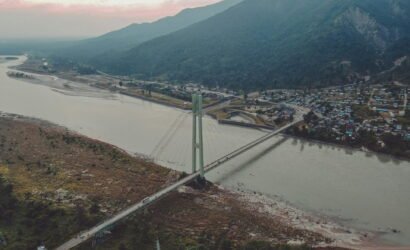
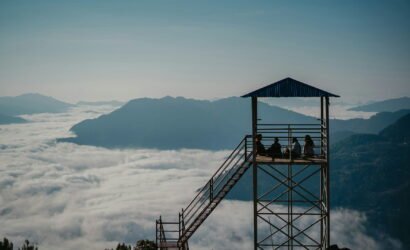
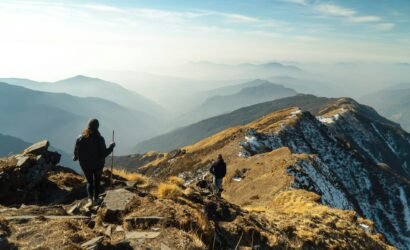
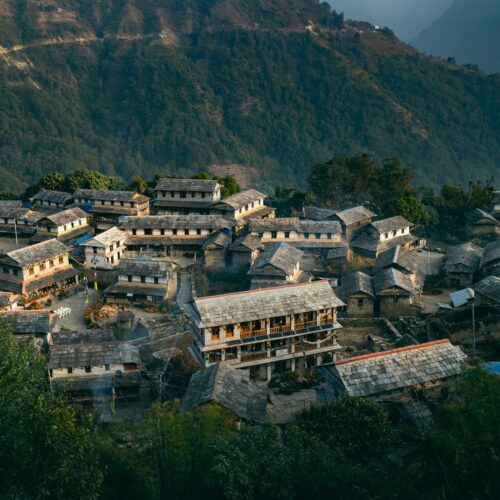
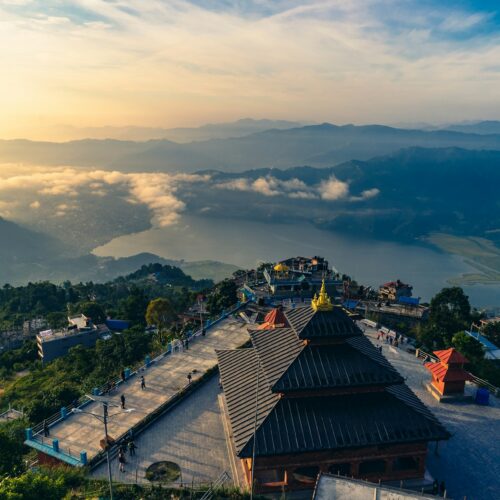
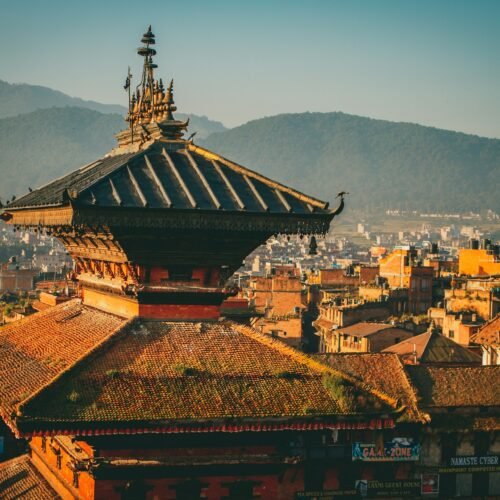
We first drove to Lo Manthang in 2009, a year after the kingdom fell and the road was still a scar across a closed landscape. Since then we’ve completed this journey 187 times. Every year the track gets a little wider, the guesthouses a little more comfortable, and the cellular signal a little stronger. The place is still extraordinary, but the window where it feels like a living medieval kingdom is narrowing. This page gives you everything we know—every permit detail, every road condition, every elevation profile, every cost—so you can decide if this is your year.
Quick Facts
| Detail | Information |
|---|---|
| Tour Duration | 9 days Kathmandu to Kathmandu (shorter/longer available) |
| Maximum Elevation | 4,230 m (Lo La pass, en route to Lo Manthang) |
| Destination Elevation | 3,840 m (Lo Manthang) |
| Tour Type | 4WD jeep tour with short cultural walks |
| Restricted Area | Yes – Upper Mustang (special permit required) |
| Permits | Restricted Area Permit ($500 for 10 days) + ACAP ($30) |
| Best Months | May–October (June–August surprisingly green) |
| Start/End Point | Kathmandu (flight to Pokhara, drive to Jomsom, jeep to Lo Manthang) |
| Group Size | Private 1–6 per jeep; larger groups use multiple vehicles |
| Accommodation | Teahouse lodges & guesthouses (no luxury hotels) |
| Road Type | Rough, unpaved mountain track; river crossings |
| Local Guide | English-speaking Mustangi cultural guide, born in the region |
Overview
The Upper Mustang Jeep Tour replaces what used to be a 10–14 day trek with a 4WD journey along the Kali Gandaki corridor into the Trans-Himalayan rain shadow. You still see the same lunar-like cliffs, thousand-year-old cave complexes, and walled citadel of Lo Manthang. But you do it without the camping gear, the altitude sickness that hits trekkers who fly straight to Jomsom, and the long, dusty walking days.
This tour is for people who want the cultural depth of a restricted Himalayan kingdom without the physical toll of a multi-week trek. It’s for photographers who can now carry proper lenses because a jeep carries the weight. It’s for travelers who’ve done the Annapurna Circuit and want the next layer of Nepal, or for those who simply want a road trip into one of the last intact Tibetan Buddhist enclaves on earth.
We run this as a Kathmandu–Pokhara–Jomsom–Lo Manthang loop. You fly one direction (Pokhara to Jomsom), drive the return, or we can arrange a helicopter exit from Lo Manthang if time is tight and budget allows. The standard package uses the overland return to Jomsom then flight back, which is the best mix of experience and efficiency.
Why Choose This Package Over Trekking or Cheaper Tours
Let’s address the obvious competitor: the Upper Mustang trek. It’s an incredible walk, but it’s 12–14 days of 6–7 hours of walking at an average elevation of 3,500–4,200 meters, much of it on a dusty vehicle track sharing the road with jeeps. The trek is not a pristine wilderness experience; it’s a road walk with incredible views. The jeep tour gives you the same views, lets you sleep at the same villages, and leaves you energy to explore the caves and monasteries when you arrive, rather than collapsing in a teahouse.
Compared to cheaper jeep tours on aggregator sites, the difference is in what’s not mentioned. Many list “Upper Mustang Jeep Tour from $1,200” but exclude the Restricted Area Permit ($500), the ACAP permit, the Kathmandu–Pokhara flight, the Jomsom flights, and meals. Our price is all-inclusive for the core package with transparent add-ons. More critically, most aggregators subcontract to a random Pokhara transport company. We own our jeeps and employ drivers who have navigated the Dhakmar–Lo Manthang section in monsoon washouts. When the Kali Gandaki river crossing is too high, our lead guide knows the alternative track through the eastern bank because he grew up herding yaks there.
History of Upper Mustang
Upper Mustang wasn’t part of modern Nepal until 2008. For centuries it was the Kingdom of Lo, a semi-autonomous state paying tribute to the Jumla and later the Gorkha rulers, but essentially independent under the Lo king (the Raja of Mustang). The kingdom was founded in the 15th century by Ame Pal, a warrior from the Tibetan plateau who consolidated the Bhotia communities of the upper Kali Gandaki. Lo Manthang was built as a walled city in 1380, pre-dating the kingdom’s formal establishment. It’s one of the best-preserved walled settlements on the Tibetan plateau, with original mud-brick ramparts, four gates, and the king’s palace still standing in the center.
The region was sealed to outsiders until 1992. The first foreigner allowed beyond Kagbeni was the French anthropologist Michel Peissel in 1964, who entered with a royal permit from the King of Nepal, documenting a medieval society barely touched by the 20th century. After 1992, a limited number of trekkers were permitted annually. The road from Jomsom to Lo Manthang was built by the Nepali government and Chinese contractors in phases, reaching the capital around 2015. The monarchy was abolished in 2008, officially ending the kingdom’s political status, though the ex-king still lives in Lo Manthang and holds immense cultural authority.
Today, Upper Mustang is in an accelerated transition. Solar panels charge smartphones in 500-year-old houses. Young people ride motorbikes to Pokhara for school. The Tibetan language and Buddhist rituals remain dominant, but the material changes are visible. That’s why we emphasize: this isn’t a time-capsule fantasy. It’s a living culture adapting fast. Come now to see it before the paved road arrives, projected within the decade.
The Former Kingdom of Lo
The Kingdom of Lo covered roughly 2,500 square kilometers north of Kagbeni to the Tibetan border. Its historical importance came from salt trade. Caravans of yaks and sheep carried salt from the Tibetan lakes south through Mustang to the lower hills, returning with rice, barley, and textiles. Lo Manthang was the royal seat, controlling the lucrative route. The salt trade collapsed in the 1960s when Indian salt flooded the market, economically marginalizing the region.
The Bhotia people (Mustangis) are ethnically Tibetan and practice the Sakya school of Tibetan Buddhism, distinct from the Gelugpa dominance in Lhasa. The region’s monasteries—Thubchen, Jampa, Chöde—contain wall paintings that art historians now rank among the finest 15th-century Buddhist art outside Tibet. Until recently, these were poorly conserved; heavy rains (a new phenomenon in this rain shadow) caused water ingress. The Jampa Lhakhang restoration by the Annapurna Conservation Area Project and international partners stabilized the most delicate mandalas.
Lo Manthang: The Walled City
Lo Manthang sits at 3,840 meters on a flat plain surrounded by eroded hills. The city is a rectangle roughly 1 km in circumference, enclosed by whitewashed mud walls up to 8 meters high. There are four gates, each oriented to a cardinal direction, though the main entrance is the eastern one. Inside are about 150 houses laid out in a grid, a distinct layout that indicates planning rather than organic growth. Alleyways are narrow enough that a loaded yak barely passes.
You enter the city on foot. The jeep parks outside the main gate. The king’s palace (Raja’s house), a four-story white structure with a central courtyard, dominates the cityscape. The king, Jigme Dorje Palbar Bista, passed away in 2016, but his family still resides there. You may encounter the ex-queen or the prince in the streets; they’re approachable but greet them with the traditional “tashi delek” and a slight bow, not a handshake unless offered.
Spend at least two nights in Lo Manthang. One night allows a hurried tour of the monastery and maybe a walk to the northern wall. Two nights lets you visit Chhoser and the sky caves, explore the labyrinth of alleyways at dawn, and sit with a family in their kitchen drinking salt butter tea. This is the core of the entire tour, and we structure the itinerary to protect that time.
UNESCO World Heritage Status Discussion
Upper Mustang was on Nepal’s tentative list for UNESCO World Heritage under the criteria of cultural landscape and outstanding universal value, with a focus on the unique blend of Tibetan Buddhist architecture and the cave complexes. As of 2026, it has not been inscribed. The inscription is controversial locally. Some residents fear it would freeze development, preventing them from modernizing their homes. Others hope it would bring preservation funding. At the moment, the old city is protected by local building codes (mud-brick only, flat roofs, no concrete facades), enforced informally by the community and the Mustang Rural Municipality.
Tibetan Buddhist Culture
The Sakya school dominates, characterized by its reliance on the Lamdre teachings and its grey-earth painting traditions in monasteries. The monastic community (sangha) is small but influential. In Lo Manthang, the Chöde Monastery is the principal gompa, with an annual cycle of masked dances (cham) during Tiji and other rituals. Prayer wheels line every village path. Turn them clockwise. The mani walls (stone slabs carved with “Om Mani Padme Hum”) are sacred; never sit on them or place objects on them. When you pass a chörten (stupa), walk to the left (clockwise).
The local lamas perform pujas for rain, health, and safe passage. You may witness a home puja if invited—remove your shoes, accept tea with both hands, and don’t point your feet toward the altar. Our guide is from Tsarang and can translate cultural nuances that tourists routinely miss. For example, the white khatas (ceremonial scarves) you see on statues are placed by devotees, and if you wish to leave one, buy it from a local shop, not a tourist stall, to support the monastery’s economy.
Restricted Area Information
Upper Mustang is a restricted area under Nepal’s Immigration Act. Foreigners must obtain a Special Restricted Area Permit from the Department of Immigration in Kathmandu. You cannot travel independently. A minimum of two trekkers/travelers is required, and you must be accompanied by a registered trekking agency guide. The permit is issued only to groups, not individuals, which is why solo travelers book with us—we pair you with a guide and handle the group designation.
The permit is time-limited. The standard tourist permit allows a maximum of 14 days in Upper Mustang. Overstay is penalized heavily (up to $50 per day) and can result in deportation. The restricted area begins north of Kagbeni; even with an ACAP permit, you cannot cross the checkpoint at Kagbeni without the additional Upper Mustang Restricted Area Permit. Rangers check permits at Kagbeni, Tangbe, and Lo Manthang.
Detailed Day-by-Day Itinerary
This is our 9-day standard itinerary. It balances driving hours with cultural immersion and includes necessary acclimatization. Every day is adjustable based on weather, road conditions, and your interests.
Day 1 – Kathmandu to Pokhara (Flight or Drive)
Morning flight to Pokhara (25 minutes). We prefer the 8:00 a.m. Buddha Air flight because morning reliability is highest and the mountain views from the right-side window are spectacular. After landing, we transfer to a hotel in Lakeside. The rest of the day is for repacking: separate the luggage you’ll take in the jeep from what you leave in Pokhara. You’ll want a soft duffel, not a hard suitcase; the jeep space is limited. Your guide briefs you on the route, the cultural norms, and the permit documents (already pre-arranged—we handle all paperwork). Overnight in Pokhara.
Day 2 – Flight to Jomsom, Drive to Kagbeni (2,800 m)
We take the 6:30 a.m. flight to Jomsom (20 minutes). This flight is weather-dependent; winds in the Kali Gandaki gorge can cancel it. We monitor conditions from 5:00 a.m. If it cancels, we switch to a jeep from Pokhara (8–9 hours to Jomsom), and we adjust the itinerary. Assuming it flies, you land in Jomsom (2,720 m), a windy airstrip surrounded by apple orchards. Our jeep meets you.
We drive 30 minutes north to Kagbeni. Kagbeni is a medieval trading village at the junction of the Jhong Khola and Kali Gandaki rivers. It’s the last unrestricted village. Permits are checked at the police post. In Kagbeni, we do a short acclimatization walk to the old monastery and the red-brick ruins of the ancient fortress. Sleep at 2,800 m. This is your first night at elevation; hydrate aggressively.
Day 3 – Kagbeni to Ghami (3,520 m) via Chele
Today the real Upper Mustang landscape begins. We cross the Kali Gandaki riverbed and climb steeply out of the gorge on a switchback road carved into the conglomerate cliffs. The track is rough, with loose rock; our driver engages four-wheel drive low ratio for the incline. We pass the village of Chele (3,050 m), then continue through the dramatic Samar and Bhena segments, with views of Nilgiri and the arid badlands.
We stop at the red cliffs of Dhakmar for lunch at a local lodge. The rock formations here look like drip-castles built by giants. In the afternoon, we descend into Ghami, a large village of whitewashed houses clustered around a dzong-like monastery. Ghami is the third-largest settlement in Upper Mustang. Visit the long mani wall (the longest in the region) and walk the irrigation canals that green the barley fields. Overnight at a teahouse.
Day 4 – Ghami to Lo Manthang (3,840 m) via the Lo La Pass
This is the climax. We climb out of Ghami and drive across a wide plain before ascending to Lo La (4,230 m), the highest point on the route. From the pass, the first sight of Lo Manthang—a white geometric shape on the brown plain—is a moment that we give you in silence. The road descends and crosses the river (sometimes dry, sometimes a shallow ford). We arrive at Lo Manthang by midday.
After checking into the guesthouse, we do a gentle orientation walk through the city gates. This isn’t the full exploration; it’s just to let the city sink in. Late afternoon, climb to the roof of your lodge for the sunset light on the whitewashed walls and the distant snow peaks. Overnight in Lo Manthang.
Day 5 – Full Day in Lo Manthang
Morning visit to the three main gompas: Thubchen (the assembly hall, with massive 15th-century murals of the mandala), Jampa Lhakhang (the oldest, containing a central Vairocana statue and a secret serpent protector shrine), and Chöde Monastery (the royal monastery, where you may see young monks debating). We arrange the monastery keys through the lama’s assistant; a donation of $10–20 per group is appropriate and goes directly to conservation.
After lunch, explore the city’s alleyways, meet a local amchi (traditional Tibetan doctor) who runs a clinic using herbs from the mountains, and visit a few households where women weave yak-hair blankets. In the evening, if the ex-king’s family is in residence, we can request a brief audience (not guaranteed, but possible). Overnight in Lo Manthang.
Day 6 – Lo Manthang to Chhoser and the Caves
We drive north 1.5 hours to Chhoser, a satellite settlement near the Tibetan border. The landscape becomes even more desolate, a high-altitude desert of yellow and ochre cliffs. Here are the famous sky caves—a complex of human-dug chambers in the vertical rock face, some dating back 3,000 years, pre-dating Buddhism. The most accessible is Jhong Cave (also called the Mustang Caves), a five-story complex carved into a single rock pinnacle. You can climb the internal ladders to the top chamber, which served as a monastery, granary, and refuge.
Further north, the Chhoser Nyamdo Monastery overlooks the border. We climb to the ridge for a view into Tibet—just a line of hills, nothing official, but the knowledge that the territory you’re seeing is the Changthang Plateau is powerful. Return to Lo Manthang by late afternoon.
Day 7 – Lo Manthang to Syangboche (3,800 m) via Ghar Gompa
We begin the return journey, but not retracing exactly. We take a different route eastward, visiting Ghar Gompa (Lo Gekar), the oldest monastery in the region, dating to the 8th century and associated with Padmasambhava (Guru Rinpoche). Its name means “house of the white image,” referring to a self-arisen stone image of the deity. The simple, ancient structure contrasts sharply with the later elaborate gompas. The caretaker lama is a gentle, weathered man who will open the inner sanctum for a donation.
We continue to Syangboche, a quiet village with one of the best sunset viewpoints in Mustang, looking back at the Annapurna massif. Overnight at a teahouse.
Day 8 – Syangboche to Jomsom via Samar
A long driving day, descending through the landscapes we saw on the way up but in different light. We stop at Samar for tea and to appreciate the poplar grove that forms an oasis. The road feels easier now because you’ve acclimatized and you know the terrain. Arrive Jomsom by mid-afternoon. You can shower at the hotel, enjoy a well-deserved apple pie (Jomsom’s apples are the best in Nepal), and celebrate with the team. Overnight in Jomsom.
Day 9 – Flight Jomsom to Pokhara to Kathmandu
Early morning flight to Pokhara. Connect to Kathmandu by afternoon flight or tourist bus (we book based on your preference). Tour ends. If flights are canceled due to wind, we have contingency plans: jeep to Pokhara (8 hours) and then flight to Kathmandu next day. The cost of this contingency is included in the package; we absorb it.
Transportation
We use Toyota Land Cruiser 78 series or Mahindra Scorpio 4WD vehicles, specifically modified for the Mustang road. All are fitted with heavy-duty suspension, all-terrain tires, and a high-clearance chassis. Each jeep carries 3–4 passengers maximum, so everyone gets a window seat and the ride is not cramped. The driver is a Mustangi who has driven this route for over a decade. He knows how to cross the Kali Gandaki river when the water is knee-high and which rocks to avoid.
The drives are dusty. We provide a sealed bag for your electronics, a neck gaiter (or bring a bandana), and advise you to wear sunglasses and a hat. The jeep has a basic first aid kit, oxygen cylinder for emergencies, and spare tire (two, actually).
Road Conditions
The road from Jomsom to Lo Manthang is 80 km and takes approximately 8–9 hours total driving time, split over two days. It’s a single-lane, unsealed track with steep drop-offs, river fordings, and sections of loose scree. There are no guardrails. The road is closed by snow from late December to March. During monsoon (July–August), landslides and swollen rivers can cause delays; we build a buffer day into the itinerary for this.
The roughest segment is the climb from Kagbeni to Chele, where the gradient and loose surface require the vehicle to crawl. The section near Ghami has notorious washboard corrugations. Despite this, the road is generally safe when driven by an experienced local driver. Accidents almost always involve speeding or an inexperienced driver attempting the route in a 2WD vehicle—both of which we avoid entirely.
Accommodation
Accommodation in Upper Mustang is in teahouses and small guesthouses. Do not expect hotels. The rooms are simple, with twin beds, thick blankets, and shared bathrooms. In recent years, some teahouses in Lo Manthang and Jomsom have added attached bathrooms with solar-heated water, but hot water is not guaranteed. We stay at the cleanest, most reliable lodges we’ve used for years: the Mustang Holiday Inn in Lo Manthang, the Red House Lodge in Kagbeni, and similar. All are family-run.
In Kathmandu and Pokhara, you stay in our standard 3-star hotels (Comfort tier), upgradeable to superior on request. The contrast between the two is stark—and intentional. The simplicity of the teahouse is part of the Upper Mustang experience.
Meals
All meals from Day 2 dinner to Day 9 breakfast are included in the package price. In the teahouses, meals are simple and carbohydrate-heavy: dal bhat (rice, lentil soup, vegetable curry), thukpa (noodle soup), momos, and Tibetan bread with honey. Vegetables are limited at high altitudes; the menu often features potatoes and cabbage. Meat is available but we advise against it above 3,500 meters, as it’s often transported without refrigeration.
We carry a supplementary food bag with energy bars, nuts, and powdered electrolytes. If you have dietary restrictions, tell us in advance. The lodges can prepare simple vegan or gluten-free meals but options are limited—we’ll pack extra provisions as needed.
Permits
Restricted Area Permit (RAP)
Issued by the Department of Immigration, Kathmandu. Cost: $500 per person for the first 10 days. Each additional day is $50 per person per day. The permit requires your passport details, a copy of your passport photo page, and a confirmed itinerary from a registered agency. We obtain the permit on your behalf; you just need to send us the documents.
Annapurna Conservation Area Permit (ACAP)
Cost: NPR 3,000 (~$30) for foreign nationals. Obtained in Kathmandu or Pokhara from the ACAP counter. We include it in the package and handle the paperwork.
Trekkers’ Information Management System (TIMS)
Not required for the jeep tour as it’s not a trek, but if we do any walking sections beyond the road, we register a TIMS card anyway as a precaution (cost included).
We must have copies of your passport and visa at the time of booking. The permit process takes 2–3 working days; last-minute bookings can be accommodated with an express fee ($50) which we don’t charge if it’s due to our error.
Permit Costs Breakdown
| Permit Type | Cost (per person) | Validity | Where Obtained |
|---|---|---|---|
| Upper Mustang Restricted Area Permit | $500 (10 days) | 10 days from specified start date | Immigration, Kathmandu |
| ACAP (Annapurna Conservation Area) | $30 (NPR 3,000) | Single entry | ACAP counter, Kathmandu/Pokhara |
| Extra RAP days (if needed) | $50/day | Per day | Immigration |
The $500 RAP fee is fixed by the Nepali government and non-negotiable. Any tour operator offering the Upper Mustang package at a price that seems to exclude this fee is either not including it or is absorbing it unsustainably. We itemize it transparently.
Difficulty and Physical Requirements
This is not a trek, but it’s not a luxury bus tour either. You sit in a vehicle for long stretches on rough roads. The jolting can be tiring. At altitudes above 3,500 m, simply walking up a flight of stairs can leave you winded. There are short walks around villages and to caves, but the total daily walking is under 2 hours at most. You do not need trekking fitness. However, you do need a baseline level of health, and you must be able to manage altitude without distress.
The primary challenge is altitude, not exertion. If you’ve previously been to 3,500 m without severe AMS, you’ll likely be fine. If this is your first time above 3,000 m, we’ll discuss preparation and possibly add a day in Kagbeni for extra acclimatization.
Altitude Profile
| Location | Elevation |
|---|---|
| Kathmandu | 1,350 m |
| Pokhara | 827 m |
| Jomsom | 2,720 m |
| Kagbeni | 2,800 m |
| Chele | 3,050 m |
| Ghami | 3,520 m |
| Lo La Pass | 4,230 m |
| Lo Manthang | 3,840 m |
| Chhoser | 3,900 m |
We sleep at progressively higher elevations, with the biggest jump being from Kagbeni (2,800 m) to Ghami (3,520 m). This is within safe acclimatization guidelines (no more than 500 m sleeping elevation gain per day), but we monitor everyone. Our guide has altitude training and carries a pulse oximeter.
Health and Acclimatization
Our first defense against Acute Mountain Sickness (AMS) is the itinerary, not medication. We’ve built in the Kagbeni night at 2,800 m. We also enforce a strict “no alcohol, no sleeping pills” policy above 3,000 m until you’re fully acclimatized. Our guide checks oxygen saturation and pulse daily. If symptoms of mild AMS (headache, nausea, loss of appetite) appear, we stop, hydrate, and delay ascent. If symptoms worsen, we descend immediately. The jeep allows rapid descent—a crucial advantage over trekking, where descending on foot can take hours.
We carry an oxygen cylinder and a comprehensive medical kit. The nearest hospital is in Jomsom (basic), with better facilities in Pokhara (helicopter evacuation required for severe cases). Travel insurance that covers helicopter rescue up to 4,500 m is mandatory.
Weather in Upper Mustang
Upper Mustang lies in the Himalayan rain shadow, so it receives significantly less precipitation than the southern slopes. The climate is dry, cold in winter, and windy year-round. Afternoon winds are a constant—expect gusts of 40–60 km/h whipping through the valley from 11:00 a.m. onward.
| Season | Months | Day Temp (Lo Manthang) | Night Temp | Conditions |
|---|---|---|---|---|
| Spring | Apr–May | 12–20°C | -2 to 5°C | Warming, clear skies, some afternoon cloud |
| Summer/Monsoon | Jun–Aug | 15–25°C | 5–12°C | Greening landscape, occasional rain; surprisingly beautiful |
| Autumn | Sep–Oct | 12–20°C | -5 to 5°C | Best visibility, crisp air, post-monsoon clarity |
| Winter | Nov–Mar | 0–10°C | -15 to -5°C | Road closed, extreme cold, heavy snow at passes |
The road is only open reliably from late March to November. December to February, snow blocks Lo La pass and the track is impassable. In late November, the pass can close unexpectedly, so we stop operations by mid-November. Spring and autumn are the best seasons for visibility and comfort.
Best Time to Visit
We consider mid-May to late October the operational window.
- May–June: The landscape is green from the snowmelt; the barley fields are emerald against the red cliffs. Fewer tourists. Temperatures are pleasant but not hot. This is a superb photography window because the contrast is highest.
- July–August: Monsoon months in Nepal, but Mustang gets only 130 mm of rain annually. The track can get muddy and river crossings may swell, but the villages are vibrant and fields are golden before harvest. We run tours, but we factor extra buffer days for potential delays.
- September–October: Post-monsoon clarity. The air is washed clean, mountains like Dhaulagiri and Nilgiri are visible from Lo Manthang. This is the peak season, so we book teahouses months in advance.
- November: Clear but cold. Nights below freezing. If you don’t mind the cold, November offers the most stable weather and fewest tourists.
We don’t recommend April because the road may still be blocked by spring snow, and the weather can be unsettled.
Photography Guide
Upper Mustang is a photographic pilgrimage. The light is unlike anywhere else in Nepal: harsh, direct, and tinted by the mineral colors of the soil. Here’s what to know:
- Lenses: A telephoto zoom (70–200 mm) is essential to compress the layered badlands and isolate the white city from the brown hills. A wide-angle (16–35 mm) captures the vastness of the plateau. A standard mid-range zoom covers street and monastery interiors.
- Dust: The ultra-fine dust will destroy a camera without a rain cover or a makeshift wrap. Never change lenses outdoors. Bring a sensor cleaning kit.
- Monastery photography: Flash is forbidden in the inner sanctums as it damages ancient pigments. Use a fast prime lens (f/1.4 or f/1.8) and high ISO. Ask permission before photographing monks.
- Blue hour: In the high desert, twilight lasts only 15 minutes. Position yourself early. The white walls of Lo Manthang pick up the last alpenglow.
- Sky caves: Bring a headlamp and a small tripod for interior shots inside Jhong Cave, where the light is faint but the carved walls are incredible.
Ancient Monasteries
Thubchen Gompa
Built in the 15th century, it’s the largest monastery in Lo Manthang. The main hall has 40 pillars and a massive throne. The murals, recently restored, depict mandalas of Vairochana and the life of Buddha. The colors—lapis blue, malachite green, vermillion—are original mineral pigments.
Jampa Lhakhang
Even older, possibly 14th century, it’s considered the most artistically significant. The inner chamber walls are covered in a pantheon of Bodhisattvas. A hidden serpent deity shrine (Lu Khang) in the back corner is a pre-Buddhist element incorporated into the monastery.
Chöde Monastery
The royal monastery, active. If you visit during morning puja, the deep guttural chanting and horns reverberate through the earthen walls. Sit quietly at the back.
Ghar Gompa (Lo Gekar)
The “Temple of the White Image,” built by Guru Rinpoche in the 8th century, making it one of Nepal’s oldest Buddhist sites. The image is a limestone protuberance on the wall, revered as a self-manifestation.
Sky Caves of Mustang
The sky caves are a mystery that archaeology is still unraveling. Thousands of human-dug caves riddle the cliffs of Mustang, some at heights of 50 meters, inaccessible without climbing gear. Excavations in the early 2000s uncovered human remains, manuscripts, and artifacts dating back 3,000 years—long before Buddhism arrived. The caves served as burial chambers, meditation retreats, and defensive refuges during tribal wars.
The most accessible for visitors:
- Jhong Cave: A five-story pentagonal cave near Chhoser, carved into a freestanding rock tower. You can climb to the top. It was used as a monastery, with murals, a granary, and a dungeon-like lower level.
- Chhoser Cave Complex: A cluster of caves opposite Nyamdo Monastery. Some still hold ancient stupa molds and charred wooden beams.
- Luri Gompa: A remote cave monastery near the Tibetan border (requires a day hike from Lo Manthang). Contains rare 13th-century paintings of Mahasiddhas and a concealed stupa. This is a special add-on for those with time and a guide who knows the trail.
We visit Jhong Cave on Day 6. If you’re a history enthusiast, you can request an extra day to hike to Luri Gompa (additional $80 for the guide and porter).
Lo Manthang Palace
The palace is a four-story rammed-earth structure built in the 15th century and expanded over time. It’s not officially a museum; it’s a private residence. You can visit the courtyard and sometimes the royal chapel on the ground floor. The upper floors are family quarters. The ex-king’s daughter-in-law occasionally opens a room displaying royal garments, photographs of the king’s trip to New York in 1968, and gifts from dignitaries. The palace was severely damaged by the 2015 earthquakes and has since been partially restored.
Tiji Festival
The Tiji Festival (Tempa Chirim) is a three-day ritual performed in Lo Manthang’s main square, usually in May. It celebrates the victory of the bodhisattva Dorje Jono over a demon who brought drought and suffering. Masked lamas enact the epic story through slow, stylized dances. It’s the most important festival in Upper Mustang. The dates are set by the Tibetan lunar calendar and announced a few months in advance.
If you wish to attend Tiji, you must book by February. Accommodations in Lo Manthang fill completely. We run a special Tiji departure with guaranteed rooms, slightly modified itinerary to accommodate the festival days, and higher cost due to demand. Contact us for dates and pricing.
Local Lifestyle and Economy
The Mustangi people grow barley, potatoes, and apples in irrigated fields. Yaks and sheep graze the high pastures. The salt trade is gone, but a new trade is growing: sea buckthorn berry products. The orange sea buckthorn is indigenous to Mustang and is processed into juice and oil by a local cooperative in Chhusang. You’ll see it sold in Lo Manthang; it tastes sour and rich in Vitamin C—worth trying.
Remittances from Mustangis working in the Gulf countries and tourism income now sustain many families. The exodus of young people is a real issue; in winter, the villages are largely elderly and children. Our tours contribute to local lodges, employ local guides, and support the monastery restoration fund.
Packing List
Luggage: One soft duffel bag (max 15 kg) and a daypack. Hard suitcases rattle themselves to pieces on the corrugations. We provide a waterproof bag for the jeep roof.
Clothing:
- Thermal base layers (top and bottom)
- Fleece or lightweight down jacket
- Windproof and waterproof hard shell (the wind is the main problem)
- Trekking pants (2 pairs)
- Warm hat, sun hat, neck gaiter
- Light gloves (even in summer, mornings are cold at passes)
- Sturdy walking shoes (closed-toe, ankle support helpful for caves)
- Sandals for the teahouse
Equipment:
- Sunglasses (high UV + glare off white walls)
- Sunscreen SPF 50+ and lip balm
- Reusable water bottle (we provide boiled/treated water)
- Headlamp (for power cuts and caves)
- Power bank (solar charging in teahouses is limited)
- Dust protection: a sealed bag for electronics, a bandana or buff
- Trekking poles (helpful for descending loose scree on short walks)
- Sleeping bag liner (teahouse blankets are heavy but not always freshly washed)
Documents:
- Passport (with valid visa)
- 4 passport-size photos (for permits—we need them)
- Travel insurance policy (printed copy)
- Cash (NPR and small USD for permits/tips)
Internet and Electricity
Upper Mustang has 3G/4G signal in most villages thanks to Ncell towers installed in 2018–19. Lo Manthang has 4G. Data works for basic WhatsApp, email, and social media. Streaming video is unreliable. Power comes from solar panels and micro-hydro. Most teahouses have solar charging USB ports in the dining area, but winter or cloudy days mean limited electricity. A 20,000 mAh power bank is your lifeline.
Money
The NPR is the only accepted currency in Mustang. Carry enough cash from Kathmandu or Pokhara. There are no ATMs beyond Jomsom. Budget NPR 3,000–5,000 per day for personal expenses (tips, drinks, donations). The permit fees are pre-paid by us. Tipping the guide ($10–15 per day from the group) and driver ($8–10 per day) is customary if you’re satisfied.
Safety
Mustang is politically stable and safe. The primary safety risks are altitude sickness and road accidents. We mitigate altitude through the itinerary, daily health checks, and oxygen. Road accidents are minimized by using experienced local drivers, maintaining vehicles rigorously, and never driving at night. We also avoid the road in active rain if river crossings are dangerous. There is no political unrest in the region.
Insurance
Travel insurance is mandatory. It must cover:
- Helicopter evacuation from altitudes up to 4,500 m
- Medical and repatriation expenses
- Trip cancellation and interruption
- Loss of baggage
We recommend World Nomads, Global Rescue, or a specialist adventure insurer. You must provide us with the policy number and emergency contact before departure.
Solo Travelers
We welcome solo travelers. Since the Restricted Area Permit requires a minimum of two persons, we pair you with a guide to form a “group” of two (the guide counts as the second person for permit purposes, though a “porter-guide” arrangement may be needed for trekking; for the jeep tour, we use one guide and one driver, and the guide serves as the permit companion). The single supplement is $350, which covers the extra room in Kathmandu, Pokhara, and the teahouses where private rooms are limited.
Family Travelers
We’ve run this trip with children aged 10 and up. The jeep eliminates the physical demand of trekking, but altitude remains a concern. We strongly recommend no children under 10 due to the difficulty of assessing AMS symptoms in young children and the remoteness. For families with teens, it’s an extraordinary educational journey.
Responsible Tourism
We follow a strict leave-no-trace policy. All non-biodegradable waste is carried back to Jomsom for disposal. We avoid single-use plastic bottles by providing boiled/filtered water daily. Our guide ensures that donations to monasteries go directly into the donation box, not into individual hands. We also donate a portion of each tour to the Upper Mustang Cultural Preservation Fund, supporting the restoration of Thubchen murals.
Cost Breakdown: Upper Mustang Jeep Tour
The price below is based on 2–3 persons sharing. Private jeep for 2 is slightly higher per person; larger groups reduce the per-person cost.
| Item | Detail | Cost per Person (USD) |
|---|---|---|
| Restricted Area Permit | 10 days | $500 |
| ACAP & TIMS | Conservation area + trekking card | $30 |
| Domestic flights | KTM–PKR–JOM–PKR–KTM (4 flights) | $380 |
| Accommodation | 2 nights hotel KTM/PKR, 6 nights teahouse | $180 |
| Meals | All meals from Day 2 dinner to Day 9 breakfast | $200 |
| Private 4WD Jeep | Fuel, driver, maintenance, all transfers | $650 |
| English-speaking Mustangi guide | Cultural and logistics guide | $180 |
| Permits processing fee | Agency service charge | $70 |
| First aid, oxygen, communication | Group equipment | $30 |
| Government taxes | 13% VAT, service charges | Included |
| Total Base Package (per person) | $2,220 | |
| For 2 persons sharing jeep | $2,220 | |
| For 3 persons sharing jeep | $1,980 | |
| Single supplement | *+$350* |
Optional add-ons:
- Helicopter return from Lo Manthang to Pokhara (1 hour, save 2 days): $950 per person (minimum 3)
- Luri Gompa day hike extra guide and porter: $80 per person
- Extra night in Lo Manthang with Tiji Festival positioning: variable
All inclusive. No hidden fees. Compare to competitors who quote $1,500 but exclude permits and flights—when added, those costs bring the total to $2,500+. We’ve built this transparently.
Package Includes
- All permit fees (RAP $500, ACAP $30, TIMS)
- Round-trip domestic flights Kathmandu–Pokhara–Jomsom–Pokhara–Kathmandu
- All accommodation as per itinerary
- All meals from lunch Day 2 to breakfast Day 9
- Private 4WD jeep with experienced Mustangi driver
- Professional English-speaking cultural guide from Mustang
- All entry fees to monasteries, caves, and Lo Manthang Palace
- First aid kit, pulse oximeter, oxygen cylinder
- All ground transfers
- Government taxes and VAT
Package Excludes
- International flights and Nepal visa ($30 on arrival)
- Travel insurance (must show proof)
- Personal drinks, bottled water (we provide filtered water)
- Sleeping bag (can rent in Kathmandu for $25/trip)
- Tips for guide and driver
- Any extra days due to flight cancellations beyond our contingency (we cover the first delay; extended delays may require additional accommodation costs)
- Anything not listed in inclusions
40 Frequently Asked Questions
These are from our actual clients. No marketing speak—just direct answers.
1. What is the Upper Mustang Jeep Tour?
It’s a 9-day 4WD journey from Kathmandu to Lo Manthang, the ancient capital of the former Kingdom of Lo, through the restricted Upper Mustang region. You travel by jeep with a guide, visiting Tibetan Buddhist monasteries, caves, and the walled city.
2. How much does the Upper Mustang Jeep Tour cost?
Our base package is $2,220 per person based on 2 sharing. The price includes all permits ($500 RAP), flights, accommodation, meals, jeep, and guide. Full breakdown above.
3. Do I need a permit for Upper Mustang?
Yes. A Restricted Area Permit ($500 for 10 days) and an ACAP permit ($30). We arrange both.
4. Can I travel to Upper Mustang independently?
No. The restricted area requires a registered agency guide and a minimum of two persons. Independent travel is illegal.
5. Is the road to Lo Manthang dangerous?
The road is rough and unsealed with steep drops, but our drivers are locals with decades of experience. We never drive at night or in dangerous river conditions.
6. When is the best time for the Upper Mustang Jeep Tour?
May to October. June–August is green and less crowded, September–October has the clearest mountain views. Winter is closed.
7. Can I see the Tiji Festival?
If you book early (by February), yes. The festival is in May. We run a special Tiji departure.
8. What vehicle do you use?
Toyota Land Cruiser 78 or Mahindra Scorpio 4WD with heavy-duty modifications. Maximum 4 passengers per jeep.
9. What is the altitude of Lo Manthang?
3,840 meters. The highest point on the drive is Lo La pass at 4,230 m.
10. Will I get altitude sickness?
It’s possible. Our itinerary includes acclimatization nights and we monitor health daily. Descent by jeep is fast if needed.
11. Are there ATMs in Upper Mustang?
No. Last ATM is in Jomsom. Carry enough cash from Kathmandu or Pokhara.
12. What is the accommodation like?
Simple teahouses with twin beds, shared bathrooms, and common dining rooms. No luxury hotels. Clean and warm.
13. Is there Wi-Fi in Upper Mustang?
Cellular 4G is available in Lo Manthang and most villages. Wi-Fi is rare. Bring a local SIM or use data.
14. What food is available?
Dal bhat, thukpa, momos, Tibetan bread. Vegetarian options are standard. We carry supplementary snacks.
15. Can I charge my devices?
Solar charging in teahouse dining rooms. Power can be limited; a power bank is essential.
16. Do I need a sleeping bag?
Not essential, but a sleeping bag liner is recommended for hygiene. Teahouses provide thick blankets.
17. How difficult is the tour?
Not physically demanding except short walks. The challenge is altitude and the rough road. No trekking fitness required.
18. Can children join?
We recommend ages 10 and up due to altitude concerns.
19. What if the Jomsom flight is cancelled?
We’ll switch to a jeep from Pokhara. The first day of delay is covered by us; extended delays may incur extra accommodation costs.
20. Is Upper Mustang safe?
Yes. Political stability and low crime. Main risks are altitude and road, both mitigated.
21. What permits do I need?
Restricted Area Permit ($500) and ACAP ($30). We handle the paperwork.
22. How far is Lo Manthang from Kathmandu?
By flight to Pokhara, flight to Jomsom, then 80 km jeep drive. Total travel time about 2 days each way.
23. Can I fly directly to Lo Manthang?
No airport. Only helicopter (we can arrange as an add-on).
24. What language do the people speak?
Tibetan dialects (Loke) and Nepali. Your guide speaks English, Nepali, and Tibetan.
25. Can I visit the sky caves?
Yes, we include Jhong Cave. Luri Gompa requires an extra day hike.
26. What is the Lo Manthang Palace like?
A 15th-century mud-brick royal residence. You can visit the courtyard and sometimes the ground-floor chapel.
27. Do I need travel insurance?
Yes, covering helicopter evacuation up to 4,500 m.
28. How much cash should I carry?
About NPR 15,000–25,000 for tips, drinks, and donations.
29. Are there toilets on the way?
Basic toilet facilities at teahouses and some stops. Bring hand sanitizer and toilet paper.
30. What is the road condition in monsoon?
River crossings can swell, but the road is generally passable. We build extra time for delays.
31. Can I extend my permit?
Yes, $50 per extra day, arranged in advance or with our guide’s help.
32. Is there a medical facility?
Basic clinic in Jomsom; helicopter to Pokhara in emergencies.
33. What are the monasteries like?
Ancient, active Buddhist gompas with incredible 15th-century murals. We visit Thubchen, Jampa, Chöde, and Ghar Gompa.
34. Can I take photographs inside monasteries?
Yes, but no flash. Ask permission. Video may be restricted.
35. What is the weather like in October?
Clear, sunny, 12–20°C daytime, -5°C at night. Cold mornings, pleasant days.
36. Do you run tours in winter?
No. Road is closed by snow from December to March.
37. How many people per jeep?
Maximum 4, but we prefer 3 for comfort. Larger groups use multiple jeeps.
38. Can I rent a jeep and drive myself?
No. The restricted area requires a local driver with a valid permit.
39. Is the Upper Mustang Jeep Tour worth it?
If you want to see a living Tibetan Buddhist kingdom, ancient caves, and stunning desert landscapes with all logistics handled, yes. The permit cost is high but it funds the restricted area management.
40. How do I book?
Email us or use the inquiry form. We’ll respond within 4 hours. A 20% deposit confirms; balance due 30 days before departure. We send a detailed pre-trip guide after booking.