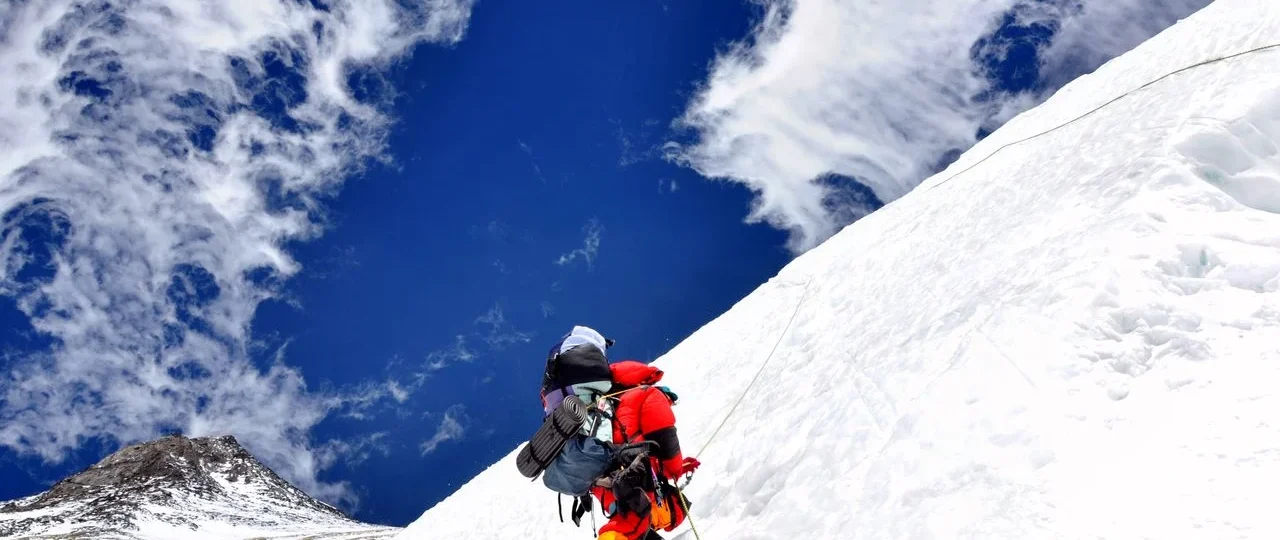
High Altitude Expedition
High altitude expedition is a term that describes a multi-week mountaineering objective in an environment where the human body cannot fully adapt. It involves technical climbing, multiple camps above base camp, and a level of logistical support that goes far beyond anything a trek requires. In Nepal, high altitude expeditions typically target peaks above 6,000 metres, with the most serious objectives reaching 7,000 and 8,000 metres. The 2026 season brought significant regulatory changes that affect how these expeditions are planned and who can attempt them. This guide explains what a high altitude expedition actually involves, how it differs from trekking and peak climbing, what the new rules mean, and how to evaluate whether an operator is worth your trust.
What Is a High Altitude Expedition?
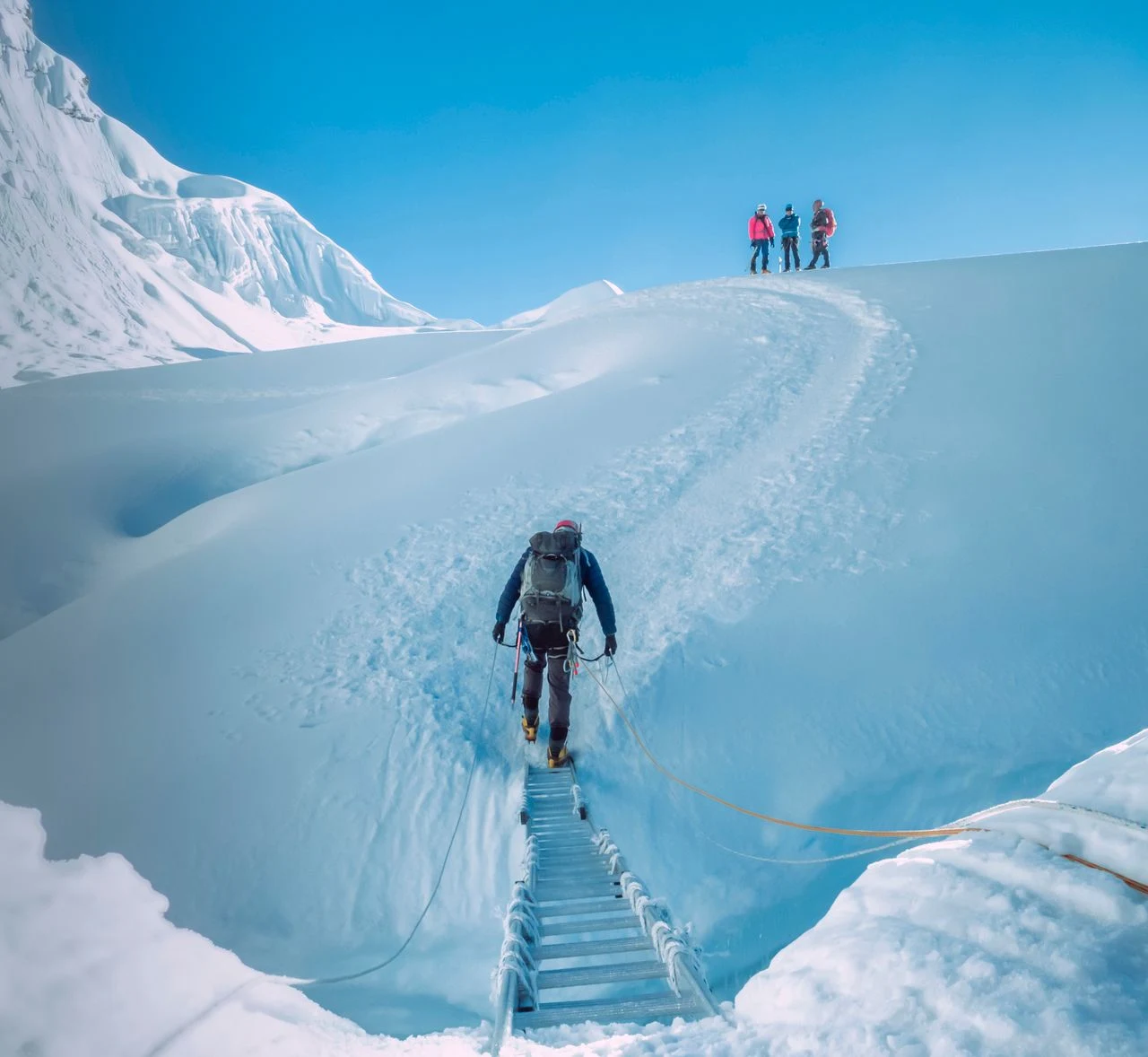
High altitude expedition is defined less by altitude alone and more by the combination of altitude, technical difficulty, duration, and support requirements. An expedition is not a trek. It is not a hike to a base camp. It is a mountaineering objective that requires climbing skills, specialised equipment, and a support team capable of managing logistics in an extreme environment.
The term “expedition” also describes a style of climbing. Expedition-style climbing, sometimes called siege climbing, involves establishing a series of stocked camps on the mountain leading to the summit. These camps are supplied by porters and support teams, and the route is often equipped with fixed ropes and ladders. This is the standard approach on most Himalayan 7,000m and 8,000m peaks. It is in direct contrast to alpine-style climbing, where a small team carries all their own supplies and moves quickly without fixed ropes or supplemental oxygen.
High altitude expedition in Nepal is managed by the Ministry of Tourism’s Department of Tourism. These are the mountains that require full expedition permits, liaison officers, and royalty fees. The Nepal Mountaineering Association manages a separate list of trekking peaks — lower, less technical mountains that serve as introduction to mountaineering — but those are not expeditions in the regulatory sense.
What Altitude Is Considered High Altitude?
High altitude is defined differently depending on whether you are reading medical literature, mountaineering guides, or operator marketing. Understanding these variations prevents confusion when comparing expedition objectives.
The International Society for Mountain Medicine classifies altitude into three tiers: high altitude (1,500–3,500 metres), very high altitude (3,500–5,500 metres), and extreme altitude (above 5,500 metres). This is the framework used in clinical references and mountain medicine.
Mountaineering sources often use different thresholds. Some define high altitude as above 3,000 metres because that is where technical climbing objectives typically begin. Others use 2,500 metres as the point where altitude illness becomes common with rapid ascent.
For expedition planning, the most useful distinction is between trekking altitude (up to approximately 6,000 metres), expedition altitude (6,000–8,000 metres), and extreme altitude (above 8,000 metres). Above 5,500 metres, the body cannot fully acclimatise. Above 8,000 metres, the body is deteriorating rather than adapting. Expeditions operate in these zones, and that is what makes them fundamentally different from trekking.
| Category | Altitude Range | Physiological Notes |
|---|---|---|
| High altitude | 1,500–3,500 m | AMS possible with rapid ascent |
| Very high altitude | 3,500–5,500 m | AMS common; HAPE/HACE possible |
| Extreme altitude | Above 5,500 m | Severe hypoxemia; acclimatisation limited |
Trekking vs Peak Climbing vs High Altitude Expedition
High altitude expedition is often confused with trekking and peak climbing, and the confusion causes real problems when people try to plan their progression or compare costs. The three categories are regulated differently, require different skills, and operate at different altitudes.
Trekking is walking on established trails, typically up to 5,500 metres. It requires no technical climbing skills. The Everest Base Camp Trek is the most famous example.
Peak climbing is the next step. Nepal’s 33 trekking peaks are managed by the Nepal Mountaineering Association and range from 5,587 metres to 6,476 metres. These are serious high-altitude objectives that require ropes, ice axes, and crampons, but they are generally below 6,500 metres and use a simplified permit system with fees ranging from $250 to $500.
High altitude expeditions are the highest category. These are mountains above 6,500 metres regulated by the Department of Tourism. They require full expedition permits with royalty fees that reach $15,000 for Everest in spring and $3,000 for other 8,000m peaks. They involve multi-week durations, multiple high camps, supplemental oxygen on 8,000m objectives, and full support teams.
| Factor | Trekking | Peak Climbing | High Altitude Expedition |
|---|---|---|---|
| Altitude range | Up to ~5,500m | 5,800–6,700m | 7,000–8,848m |
| Technical skill | None | Basic alpine skills | Advanced alpine skills |
| Duration | 1–3 weeks | 2–3 weeks | 4–8 weeks |
| Support level | Guide + porter | Guide + porter + climbing Sherpa | Full expedition team |
| Cost range | $1,000–$3,000 | $1,500–$3,500 | $35,000–$230,000+ |
| Risk level | Low to moderate | Moderate | Serious |
The progression pathway in Nepal typically moves from trekking, to trekking peaks, to technical peaks in the 6,000–7,000m range, and finally to 8,000m expeditions. Each step builds experience, acclimatisation history, and technical skills.
Why Nepal Dominates High Altitude Expeditions
Nepal is home to eight of the world’s fourteen 8,000-metre peaks: Everest, Kanchenjunga, Lhotse, Makalu, Cho Oyu, Dhaulagiri, Manaslu, and Annapurna I. No other country has as many. Beyond the 8,000m giants, Nepal offers a comprehensive progression of expedition objectives — technical peaks like Ama Dablam (6,812m), 7,000m objectives like Himlung Himal (7,126m) and Baruntse (7,129m), and a deep infrastructure of expedition logistics.
The 2026 spring season saw 492 Everest permits issued, a record number despite the royalty increasing from $11,000 to $15,000. Across Everest, Lhotse, and Nuptse, 701 climbers were active this spring, the highest number ever recorded. That demand reflects Nepal’s enduring position as the world’s premier expedition destination.
The country’s advantage is not just geography. The Khumbu region has an established network of trails, teahouses, and base camp facilities. Kathmandu is a global hub for expedition logistics, with equipment suppliers, permit processing, and experienced support teams. The Sherpa community has generations of high-altitude experience and provides the backbone of expedition support across the Himalaya.
2026 Nepal Expedition Regulations: What Changed
High altitude expedition planning in 2026 requires understanding the new regulatory framework. Nepal’s Department of Tourism introduced stricter rules for the Spring 2026 season, and some widely reported restrictions remain proposals rather than current law.
What is currently in force:
-
The Everest royalty increased to $15,000 for spring, $7,500 for autumn, and $3,750 for winter or summer.
-
On peaks above 8,000 metres, at least one high-altitude worker or mountain guide must accompany every two expedition members. Solo expeditions do not satisfy this staffing rule.
-
A $4,000 garbage-management deposit per expedition team is required, with human-waste carry-out requirements above base camp.
-
Climbers must bring back at least 2 kg of waste from above Camp II, in addition to the existing 8 kg quota collected at Base Camp.
What remains pending in the Tourism Bill:
-
A proposed prior 7,000m summit requirement for Everest climbers has been widely reported but is not yet authenticated law.
-
Broader medical eligibility rules and universal GPS tracker requirements are also still under debate.
The regulatory environment is evolving. Anyone planning a 2026 or 2027 expedition should verify the current status with the Department of Tourism or a licensed operator before making commitments.
What Makes High Altitude Expeditions Challenging
High altitude expedition is challenging because it combines extreme environmental conditions with physiological stress and objective danger. The challenges are not sequential. They overlap and compound.
Altitude is the defining challenge. Above 5,500 metres, the body cannot fully acclimatise. Above 8,000 metres — the Death Zone — the body is deteriorating rather than adapting. The risk of acute mountain sickness (AMS), high-altitude pulmonary edema (HAPE), and high-altitude cerebral edema (HACE) increases significantly. The Himalayan Rescue Association operates aid posts in Nepal specifically to address altitude-related illnesses, and data from their Manang post showed that 11.6% of visitors between 2018 and 2023 suffered altitude-related illnesses, including 274 cases of AMS, 40 of HAPE, and 11 of HACE.
Weather at high altitude is unpredictable and severe. Wind speeds at 8,000 metres can exceed 100 km/h. Temperatures can drop below -40°C. Storms can trap teams at high camps for days. The 2026 Everest season began with a massive serac collapse that blocked the Khumbu Icefall and delayed rope-fixing operations by two weeks.
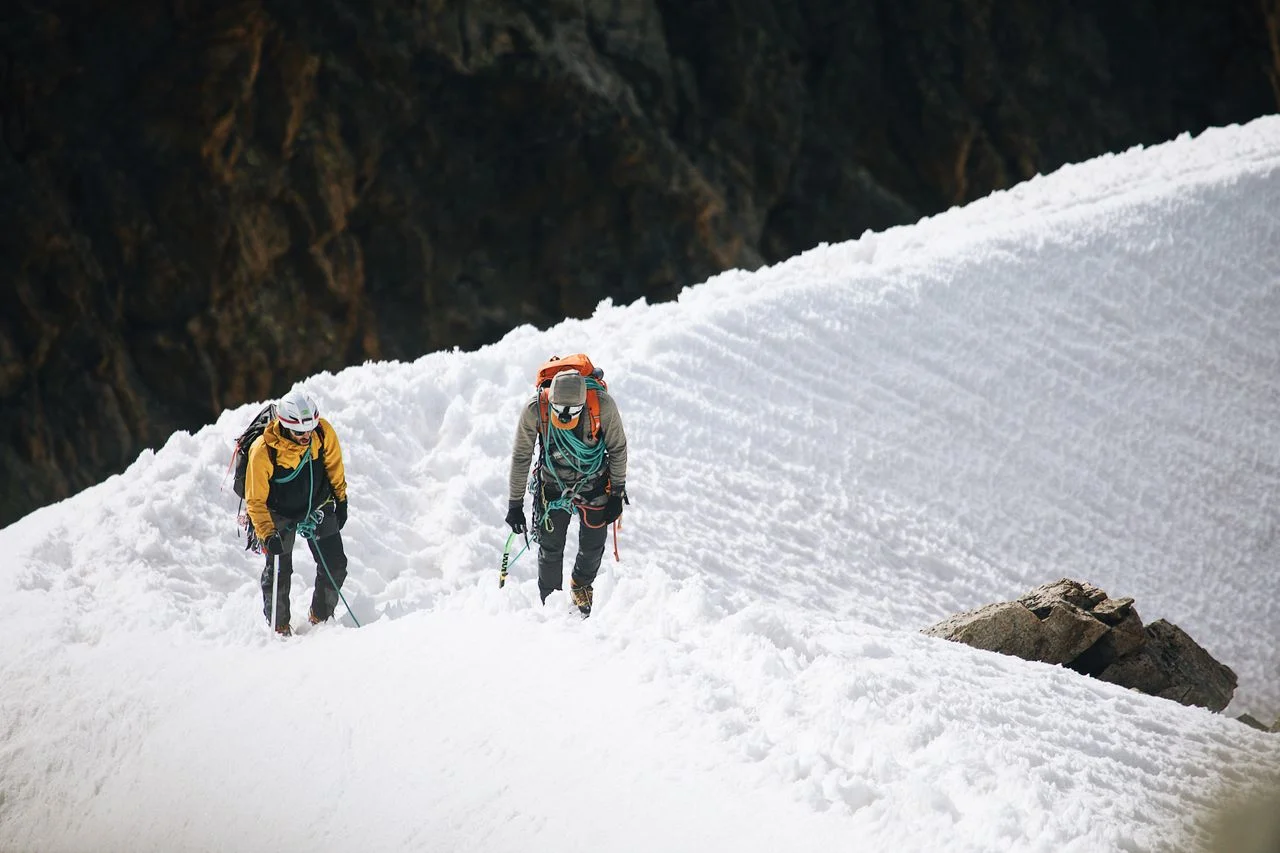
Objective hazards include crevasses, icefall, avalanches, rockfall, and serac collapse. The Khumbu Icefall on Everest is one of the most dangerous sections of any expedition route. The Lhotse Face is a 40–50 degree wall of blue ice where a fall is almost always fatal.
How Long Does a High Altitude Expedition Take?
High altitude expedition duration varies by category and objective, but the underlying principle is consistent: expeditions cannot be rushed. Acclimatisation requires time, and weather windows cannot be predicted.
| Expedition Category | Typical Duration | Acclimatisation Approach |
|---|---|---|
| 6,000m peaks | 2–3 weeks | Basic rotations |
| 7,000m expeditions | 4–5 weeks | Multiple rotations, 2–3 high camps |
| 8,000m expeditions | 6–8 weeks | Extended rotations, 3–4 high camps |
A 7,000m expedition like Himlung Himal typically runs 30 days. An 8,000m expedition like Manaslu runs 43 days. Everest expeditions run 60 days or more. These durations include trekking to base camp, acclimatisation rotations, summit push, and return. They also include buffer for weather delays, which are common.
Duration is determined by physiology and conditions, not by schedule. The body needs time to produce more red blood cells and adapt to lower oxygen levels. Expeditions that cut acclimatisation short increase the risk of altitude illness and reduce the chances of a successful summit.
Expedition Logistics and Support
High altitude expedition logistics involve permits, guides, support teams, base camp infrastructure, and safety systems. The complexity is one of the main reasons most climbers use a licensed operator.
Permits and regulations are the first consideration. For 2026, expedition teams must submit applications for climbing permits at least two days in advance, include full details of support staff, and designate a Sardar (head guide). Rescue operations must be reported in detail to the Department of Tourism and the Tourist Police Office.
Guides and support teams are the backbone of any expedition. A typical 8,000m expedition includes a Sardar, climbing Sherpas, base camp staff, cooks, and porters. The guide-to-client ratio varies by operator. Premium operators may provide 1:1 guiding plus additional support guides. The 2026 Everest rules require at least one high-altitude worker or guide per two members above 8,000 metres.
Base camp and high camp infrastructure varies by expedition. On Everest, base camp is a temporary village with medical tents, communications, dining facilities, and supply storage. High camps are progressively more spartan. Camp 2 on Everest is described as “really like a mini base camp” with dining tents, while Camp 3 on the Lhotse Face consists of tent platforms carved into ice.
Oxygen systems and safety equipment are critical on 8,000m expeditions. Supplemental oxygen is typically used above Camp 3 on Everest. Medical supplies, rescue equipment, and communications systems are standard.
What Does a High Altitude Expedition Cost?
High altitude expedition costs vary significantly by category, objective, and level of service. The price range for Everest in 2026 runs from approximately $33,000 for a basic Nepali Sherpa-guided expedition to $230,000+ for an ultra-luxury Western expedition. The industry median for a South Side Everest expedition is approximately $54,995.
| Expedition Category | Cost Range | What Drives Cost |
|---|---|---|
| 6,000m peaks | $1,500–$3,500 | Guide ratio, logistics, permits |
| 7,000m expeditions | $6,500–$20,000 | Support team size, oxygen, logistics |
| 8,000m expeditions | $33,000–$230,000+ | Permits, oxygen, Sherpa support, insurance, logistics |
Cost drivers include permit fees and royalties, guide and support team size, oxygen systems, logistics, insurance, and garbage deposits. What is typically included: permits, guide services, base camp services, high camp equipment, meals, and logistics. What is typically excluded: international flights, personal gear, insurance, tips, and personal expenses.
The price gap between budget and premium expeditions is not cosmetic. A 2026 investigation found that 23 of 26 fatalities across the 2023 and 2024 seasons occurred on at-or-below-median priced expeditions. The correlation is statistical, not deterministic, but it reflects real differences in oxygen logistics, Sherpa ratios, guide experience, and safety systems.
How to Evaluate an Expedition Company
High altitude expedition company evaluation is one of the most consequential decisions a climber makes. A poorly chosen operator can compromise safety, logistics, and the entire expedition experience.
Here is an eight-criteria framework:
| Criteria | What to Look For | Red Flags |
|---|---|---|
| Licensing | Registered with Nepal Department of Tourism; NMA membership | No verifiable license number |
| Guide credentials | Certified guides; documented summit history | Vague claims; unverifiable experience |
| Safety systems | Oxygen, medical support, rescue protocols, insurance | No safety documentation; unclear protocols |
| Success rates | Realistic, verifiable figures | Inflated claims; undefined methodology |
| Group size | Reasonable guide-to-client ratio | Overcrowded teams; unclear ratios |
| Transparency | Clear inclusions/exclusions; honest about limitations | Hidden costs; vague pricing |
| Local expertise | Nepal-based; deep regional knowledge | No local presence; outsourced logistics |
| Ethical practices | Fair treatment of staff; environmental responsibility | No waste management; unclear staff policies |
Most climbers compare operators on price. This is the wrong variable to start with. Price matters, but it is a consequence of the other criteria. An operator that cuts corners on safety, guide ratios, or logistics will be cheaper — and that is precisely the problem. Ask for the Sardar’s summit history, the guide-to-client ratio, written safety protocols, and references from previous clients.
Responsible and Sustainable Mountaineering
High altitude expedition responsibility extends beyond personal safety to environmental and ethical considerations. Nepal’s Sagarmatha Pollution Control Committee (SPCC) manages waste collection, monitoring, and recycling in the Everest region. In the 2026 spring season, the SPCC stationed rangers at Camp II for the first time to ensure climbers carried waste down from the high camps, and the cleanup removed 90,329 kg of waste from Everest.
The new requirement for climbers to bring back 2 kg of waste from above Camp II closed a gap that had allowed waste to accumulate at Camps III and IV season after season. The SPCC plans to expand the ranger system to Camp IV next season.
Responsible expedition practices include packing out all waste, using reusable containers, treating local staff fairly, and respecting cultural and religious sites. The Nepal Mountaineering Association sets rules and guidance that every traveller should adopt before climbing.
Planning a High Altitude Expedition in Nepal?
Wonder Hikes Nepal is a Nepal-based trekking and mountain adventure company. If you are researching high altitude expeditions, comparing operators, or trying to understand what an expedition actually involves, we can help you work through the logistics, the permits, the acclimatisation requirements, and the realistic expectations before you commit. We do not guide 8,000m summit expeditions, but we do provide expert guidance on trekking in the Everest region, peak climbing preparation, and responsible mountain travel in Nepal. If you would like to talk through your plans, get in touch — we are happy to help.
Frequently Asked Questions
What is a high altitude expedition?
A high altitude expedition is a multi-week mountaineering objective in a high-altitude environment, requiring technical climbing skills, acclimatisation, logistical support, and often weeks of commitment. It is distinct from trekking and peak climbing.
What altitude is considered high altitude?
The International Society for Mountain Medicine defines high altitude as 1,500–3,500m, very high as 3,500–5,500m, and extreme as above 5,500m. For expedition planning, 6,000m+ objectives are typically considered high altitude expeditions.
What is the difference between trekking and an expedition?
Trekking is walking on established trails, typically up to 5,500m. An expedition involves technical climbing, multiple high camps, and altitudes above 6,000m. Expeditions require mountaineering skills; trekking does not.
How long does a high altitude expedition take?
6,000m peaks take 2–3 weeks, 7,000m expeditions take 4–5 weeks, and 8,000m expeditions take 6–8 weeks. Duration includes trekking, acclimatisation, weather delays, and summit push.
Why are Himalayan expeditions difficult?
They combine extreme altitude, severe weather, objective hazards, and physiological stress. Above 5,500m, the body cannot fully acclimatise; above 8,000m, it deteriorates.
What are the major risks of high altitude expeditions?
Altitude illness (AMS, HAPE, HACE), weather, crevasses, avalanches, icefall, rockfall, frostbite, hypothermia, and the psychological stress of prolonged exposure to danger.
Why is Nepal popular for high-altitude expeditions?
Nepal has eight of the world’s fourteen 8,000m peaks, a comprehensive progression of expedition objectives, established logistics, and the Sherpa community’s generations of high-altitude expertise.
How much does a high-altitude expedition cost?
6,000m peaks: $1,500–$3,500. 7,000m expeditions: $6,500–$20,000. 8,000m expeditions: $33,000–$230,000+. Costs depend on permits, guide ratios, oxygen, logistics, and insurance.
What does an expedition company provide?
Permits, guide services, base camp and high camp logistics, meals, equipment, oxygen systems (on 8,000m), safety systems, and communications. What is excluded typically includes international flights, personal gear, insurance, and tips.
What should I look for when choosing an expedition operator?
Licensing, guide credentials, safety systems, realistic success rates, reasonable group sizes, transparency, local expertise, and ethical practices. Ask for references and specific guide histories.
What is the difference between 6,000m, 7,000m and 8,000m expeditions?
6,000m peaks are entry-level, requiring basic alpine skills. 7,000m expeditions require multi-camp rotations and glacier travel. 8,000m expeditions require extensive prior experience, supplemental oxygen, and full support teams.
Do I need prior experience for a high altitude expedition?
Yes. Most 7,000m and 8,000m expeditions require previous high-altitude experience. A proposed 7,000m prerequisite for Everest is pending in Nepal’s Tourism Bill but is not yet law.
What is the best time for high altitude expeditions in Nepal?
Spring (March–May) and autumn (September–November) offer the most stable weather. Winter expeditions are possible but more challenging.
How do I prepare for a high altitude expedition?
Begin training 3–4 months in advance with cardiovascular endurance, strength training, and high-altitude-specific preparation. Gain experience on lower peaks first. Consult your doctor.
What is the Death Zone?
The Death Zone is the altitude above 8,000 metres where the body cannot acclimatise and is slowly deteriorating. Supplemental oxygen is required, and exposure time must be minimised.