Walk through 1,500 years of living history in a single valley — golden stupas, medieval palace squares, cremation ghats on a holy river, and courtyards where the same festivals have been danced for centuries.
The Kathmandu Valley holds one of the densest concentrations of cultural and religious heritage anywhere on earth: seven UNESCO World Heritage monument zones packed into an area you can cross in under an hour. This tour is the way to see it properly — not as a checklist of photo stops, but with a licensed local guide who can read the iconography on a temple strut, explain why a living goddess still looks out from a wooden window in Durbar Square, and tell you which of these buildings fell in the 2015 earthquake and how they were brought back.
This is a private, guided Kathmandu Valley heritage tour built by people who grew up in these neighbourhoods. We keep groups small, we tell you the truth about crowds and timings, and we design the day around the light, the rituals and your interests rather than a rigid coach schedule.
- Licensed, English-speaking cultural guides (many of them Newar, the valley’s indigenous builders and artists)
- All UNESCO site entry fees, private vehicle and guide included — no surprise gate charges
- Genuine cultural depth: architecture, religion, festivals and food explained, not just named
- Small-group and fully private options; family-, child- and senior-friendly pacing
- Honest scheduling around ritual times, festival days and the best photography light
US$79 per person — all-inclusive. Flexible dates and pickup from anywhere in Kathmandu or Patan. Send us your dates to check availability.
Tour Highlights
Everything that makes this Kathmandu Valley tour worth your day, at a glance:
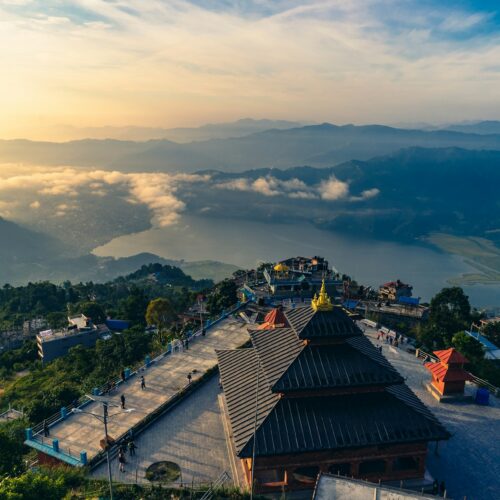
- Swayambhunath at the right hour. The valley’s oldest and most sacred hilltop stupa, with a 360-degree view over Kathmandu — best in soft morning or late-afternoon light, before or after the crowds.
- Boudhanath, the beating heart of Tibetan Buddhism. One of the largest stupas on earth, ringed by monasteries, where pilgrims walk the kora spinning prayer wheels. A genuinely moving place, not just a monument.
- Pashupatinath, Nepal’s holiest Hindu temple. Open-air cremations on the Bagmati, sadhus in ochre robes, and evening aarati — a direct, unfiltered encounter with how Hindus meet death and the divine.
- Three medieval royal cities, not one. Kathmandu, Patan and Bhaktapur each kept their own Durbar Square, palace and artisan traditions from the era when they were rival kingdoms.
- Changu Narayan, the valley’s oldest temple. Fourth-century stone inscriptions and some of the finest early carving in Nepal, on a quiet hilltop most tour buses skip.
- A guide who explains the culture, not just the buildings. Newari architecture, tantric iconography, the living Kumari, and why Hindu and Buddhist worship share the same shrines here.
- Honest, unhurried pacing. Time to sit, watch a ritual, take the photograph and ask questions — the opposite of a rushed coach tour.
Quick Facts Table
| Package | Kathmandu Valley Tour — private guided UNESCO heritage sightseeing |
| Price | US$79 per person (all-inclusive, fixed) |
| Duration | Full day (approx. 7–8 hours); comfortable extension available |
| Sites covered | Swayambhunath, Kathmandu Durbar Square, Patan Durbar Square, Boudhanath, Pashupatinath (Bhaktapur & Changu Narayan available as an add-on) |
| UNESCO status | Kathmandu Valley inscribed as a World Heritage Site in 1979 (seven monument zones) |
| Valley elevation | Approx. 1,300–1,400 m (mild climate year-round) |
| Best time to visit | October–April (clear skies Oct–Nov; warm spring Mar–Apr) |
| Difficulty | Easy — light walking and some temple stairs; suitable for most ages |
| Start point | Your hotel in Kathmandu or Patan (Lalitpur) |
| Guide | Licensed, English-speaking cultural guide (other languages on request) |
| Currency | Nepalese Rupee (NPR) |
Tour Overview
Most first-time visitors arrive in Kathmandu thinking of it as the gateway to the mountains — the place you pass through on the way to Everest or Annapurna. That undersells it badly. The Kathmandu Valley is one of the great cultural landscapes of Asia, a bowl in the Himalayan foothills where, for well over a millennium, Hindu and Buddhist civilisations grew up side by side and produced an extraordinary density of temples, palaces, stupas and courtyards. UNESCO recognised this in 1979 by inscribing the whole valley as a single World Heritage Site made up of seven monument zones.
This tour is designed to show you that heritage with real understanding. In a comfortable full day, your private guide takes you to the essential sites — Swayambhunath, the ancient hilltop stupa; Kathmandu Durbar Square, the old royal palace complex and home of the living goddess Kumari; Patan Durbar Square, the artisans’ city across the river; Boudhanath, the great Tibetan Buddhist stupa; and Pashupatinath, the holy Shiva temple on the Bagmati where cremations take place in the open. If you have more time, Bhaktapur Durbar Square and the fourth-century Changu Narayan temple make a natural extension into a second day.
What you get is not a rushed procession past monuments. It is context: why the pagoda roof was invented here and exported to China and Japan by the architect Arniko; what the eyes painted on the stupas mean; why non-Hindus stop at a certain gate at Pashupatinath; how the Newar community, the valley’s indigenous people, built and still maintain all of this. That context is the whole point, and it is what separates a guided cultural tour from wandering the same squares with a paper map.
Why Choose This Package
There are countless “Kathmandu sightseeing” listings online. Here is exactly why travellers choose this one, stated plainly enough that you can check it.
- Local guides who live the culture. Our guides are government-licensed and, wherever possible, Newar — members of the community that built these monuments and still performs the rituals inside them. They read the iconography, know the festival calendar, and can tell you which stories are history and which are legend. That depth is the single biggest reason a guided heritage tour is worth booking over doing it alone.
- Honest scheduling, not a coach conveyor belt. We time your visits around ritual hours (the evening aarati at Pashupatinath, morning prayers at Boudhanath), festival days, and the light. We tell you honestly when a site will be crowded and how to work around it. Big operators run everyone through at the same hour; we do not.
- Everything included, no gate surprises. UNESCO entry fees in the valley add up quickly, and they are revised periodically. Our price includes all entry fees for the sites on your itinerary, your private vehicle and your guide, so nothing is sprung on you at the ticket counter.
- Real respect for living religion. These are not museums; they are active places of worship where people pray, grieve and celebrate. We brief you on etiquette — where to remove shoes, when not to photograph, which areas are for devotees only — so you experience the culture without intruding on it.
- Flexible and genuinely private. Pickup from anywhere in Kathmandu or Patan, a pace set by you, and the freedom to linger where you are moved and move on where you are not.
- We will tell you what to skip. If your interest is Buddhist sites and you have half a day, we will build you a tighter loop rather than upselling you a full itinerary you do not want. Honest advice is how we earn repeat guests.
Detailed Itinerary
Timings are indicative and shaped by traffic, ritual hours and your own pace. Your guide adjusts the order on the day to dodge the worst crowds and catch the best light.
Morning — Swayambhunath and Kathmandu Durbar Square
After hotel pickup, you begin at Swayambhunath, the valley’s oldest stupa, set on a wooded hill west of the city. Reaching the main stupa means either the long eastern stairway (365 steps, rewarding) or an easier approach by road from the west — we choose based on your group. From the top the whole valley opens up beneath you, and your guide unpacks the meaning of the painted eyes, the thirteen gilded rings, and the mix of Buddhist stupa and Hindu shrines that sit together here.
From Swayambhunath you drive to Kathmandu Durbar Square (Hanuman Dhoka), the old royal heart of the city. Here your guide walks you through the palace complex, the towering temples of the square, and the Kumari Ghar — the ornately carved house where Nepal’s living goddess resides and, at certain times, appears briefly at her window. This is also where you see the earthquake story most clearly: some temples stand fully restored, others are still under conservation, and your guide explains what fell in 2015 and how it was rebuilt using traditional techniques.
Midday — Patan Durbar Square and lunch
Crossing the Bagmati River into Lalitpur (Patan), you reach what many consider the most refined of the three Durbar Squares. Patan is the city of artisans, famous for metalwork and stone carving, and its square is a tight, beautiful ensemble of Newar palace architecture, the stone Krishna Mandir, and the Patan Museum — widely regarded as the finest museum in Nepal, housed in a restored palace wing. You break for lunch here (Newari cuisine recommended, see the food section below).
Afternoon — Boudhanath and Pashupatinath
The afternoon shifts to the valley’s great spiritual sites. At Boudhanath, one of the largest stupas in the world and the centre of Tibetan Buddhism in Nepal, you join the flow of pilgrims walking clockwise around the base, spinning prayer wheels, beneath the watchful painted eyes. The surrounding monasteries and rooftop cafés make this an easy place to slow down.
A short drive brings you to Pashupatinath, Nepal’s holiest Hindu temple, dedicated to Shiva, on the banks of the sacred Bagmati. Non-Hindus cannot enter the main temple, but the wider complex is open and deeply affecting: cremation ghats where funeral rites take place in the open air, sadhus in ochre and ash, ancient shrines, and, if your timing allows, the evening Bagmati aarati — a lamp-lit ceremony that is one of the most powerful things you can witness in the valley. Your guide handles this sensitive place with the respect it demands.
You return to your hotel by early evening.
Optional extension — Bhaktapur Durbar Square and Changu Narayan
Bhaktapur and Changu Narayan lie east of the city and genuinely deserve unhurried time, so we offer them as a comfortable second-day add-on rather than cramming them into an already full day. Bhaktapur is the best-preserved of the three medieval cities — a living museum of Newar life with its 55-Window Palace, the towering Nyatapola Temple, and pottery squares where wheels still turn. Changu Narayan, on a nearby hilltop, is the oldest temple in the valley, its fourth-century inscriptions and carvings a highlight for anyone interested in early Nepali art and history. Ask us to add this extension when you book.
Transportation
Your tour includes a private, comfortable vehicle with a professional driver for the whole day, with pickup and drop-off at your hotel. The valley’s sites are spread across Kathmandu, Lalitpur (Patan) and, for the extension, Bhaktapur, so a private vehicle is the sensible way to move between them without wasting the day in taxi negotiations.
Traffic in central Kathmandu can be slow and the air dusty, especially in the dry pre-monsoon months, which is one more reason to travel with a driver who knows the back routes and the best times to move between zones. For guests who prefer it, we can arrange a smaller, more agile vehicle or a comfortable SUV for families and seniors. All in-valley transfers on the day are included; long-distance transport to or from other cities is arranged separately on request.
Accommodation
This is a day tour, so accommodation is not included by default — most guests join it from their own Kathmandu or Patan hotel. That said, we know the valley’s lodging well and are happy to help you choose or book:
| Area | Character | Good for |
|---|---|---|
| Thamel | Central tourist hub, walkable, lively | First-timers, budget to mid-range, nightlife and shopping |
| Patan (Lalitpur) | Quieter, artistic, close to the museum | Culture lovers, calmer stays, boutique hotels |
| Boudhanath | Around the great stupa, serene mornings | Buddhist pilgrims, a peaceful base away from the centre |
| Bhaktapur | Medieval old town, atmospheric evenings | Travellers extending to the eastern sites |
If you would like this tour turned into a multi-day cultural package with accommodation, meals and additional valley experiences, tell us and we will design one — that is a separate, quoted package, kept distinct from this day tour so pricing stays clear.
Meals
A relaxed lunch is built into the day, and where you eat is part of the experience. We steer guests toward authentic Newari cuisine — the valley’s indigenous food culture is one of the richest and least-known in South Asia. Depending on your route, that might mean a traditional Newari eatery in Patan or, on the extension, in Bhaktapur.
- Lunch is included in the tour on request, or left open if you prefer to choose your own spot; tell us your preference.
- Dietary needs — vegetarian, vegan, Jain and other requirements are easily met; Nepali and Newari cuisine has deep vegetarian traditions.
- A note on hygiene — we take you to places we trust. Drink bottled or filtered water, and your guide will point you to the safe, genuinely local options rather than tourist traps.
More on what to eat in the Local Food section below.
History of the Kathmandu Valley
To understand what you are looking at, it helps to know the arc of the valley’s history. Human settlement here is ancient, and by the early centuries of the common era the valley was ruled by the Licchavi dynasty, whose stone inscriptions — the oldest at Changu Narayan date to the fifth century — mark the beginning of the valley’s recorded history and its first great flowering of art.
The valley’s cultural golden age came under the Malla kings, who ruled from roughly the twelfth to the eighteenth centuries. In the later Malla period the valley split into three rival kingdoms — Kathmandu, Patan (Lalitpur) and Bhaktapur — and the competition between them was a competition in beauty. Each court tried to outbuild the others, which is precisely why the valley has three magnificent Durbar (palace) squares within a few kilometres of each other rather than one. This era produced the pagoda temples, the carved courtyards, the metal and stone masterpieces, and the festivals that still define the valley.
In 1768–69, Prithvi Narayan Shah of Gorkha conquered the three kingdoms and unified them into the beginnings of modern Nepal, making Kathmandu his capital. The Shah dynasty and, later, the Rana prime ministers shaped the city that followed. Through all of it, the Newar community — the valley’s indigenous inhabitants, and the builders, artists and traders behind its monuments — kept the cultural traditions alive.
The most recent chapter is the earthquake of 25 April 2015, a 7.8-magnitude disaster that killed thousands and badly damaged many monuments across the valley, including structures in all three Durbar Squares. Reconstruction has been substantial and, in many cases, done with real care using traditional materials and craftsmanship. Today you will see most monuments restored to their former splendour, a few still under active conservation, and, in the rebuilding, a living demonstration of the same skills that raised these buildings centuries ago. Your guide will show you both the loss and the recovery honestly.
UNESCO World Heritage Sites of the Kathmandu Valley
In 1979, UNESCO inscribed the Kathmandu Valley as a World Heritage Site, recognising its outstanding universal value as one of the world’s richest concentrations of cultural heritage. The listing is a single site made up of seven monument zones:
| Monument zone | Faith / character | Highlight |
|---|---|---|
| Swayambhunath | Buddhist (with Hindu shrines) | Ancient hilltop stupa, valley views |
| Boudhanath | Tibetan Buddhist | One of the world’s largest stupas |
| Pashupatinath | Hindu (Shaiva) | Nepal’s holiest Shiva temple, Bagmati ghats |
| Kathmandu Durbar Square | Royal / mixed | Hanuman Dhoka palace, the living Kumari |
| Patan Durbar Square | Royal / mixed | Newar artistry, Patan Museum, Krishna Mandir |
| Bhaktapur Durbar Square | Royal / mixed | 55-Window Palace, Nyatapola Temple |
| Changu Narayan | Hindu (Vaishnava) | Oldest temple in the valley, Licchavi art |
Because the sites blend Hindu and Buddhist worship so completely — the same shrine is often revered by both — the valley is also a rare living lesson in religious coexistence. The sections below take each site in turn.
Swayambhunath (the “Monkey Temple”)
Swayambhunath is the valley’s oldest and one of its most sacred stupas, crowning a forested hill west of central Kathmandu. Its origins are ancient and wrapped in legend — the name means “self-arisen,” and tradition ties the site to the mythical draining of a primeval lake that once filled the valley. Whatever its exact age, it has been a major Buddhist pilgrimage centre for many centuries.
The dome is topped by a gilded square tower painted on all four sides with the eyes of the Buddha, gazing out over the valley in every direction; between them, the curl that looks like a nose is the Nepali numeral ek (one), symbolising unity. Around the base, pilgrims turn prayer wheels as they circumambulate. What makes Swayambhunath so characteristic of the valley is that it is not purely Buddhist — Hindu shrines and deities share the hilltop, and both communities worship here.
The nickname “Monkey Temple” comes from the troops of rhesus macaques that live in the surrounding trees. They are entertaining but can be bold, so keep food and loose items secured. Early morning and late afternoon are the best times: softer light, cooler air, fewer crowds, and a real chance to watch pilgrims and monks at prayer.
Foreign entry fee (indicative, subject to periodic revision): around NPR 200, included in your tour.
Boudhanath
Boudhanath is the spiritual centre of Tibetan Buddhism in Nepal and one of the largest stupas in the world. Its vast white dome, crowned by the same all-seeing eyes and a golden spire strung with prayer flags, rises above a circular plaza ringed by monasteries, shops and cafés. The area, long home to a Tibetan and Tamang community, became even more central to Tibetan Buddhist life after 1959, when many Tibetans settled here.
The living practice is the point. At dawn and dusk especially, pilgrims and monks walk the kora — the clockwise circuit around the stupa — spinning the prayer wheels set into its base, murmuring mantras, prostrating. The 108 niches around the dome hold images of the Buddha. Sit on a monastery rooftop with a cup of tea and watch the circuit turn, and you understand Boudhanath better than any guidebook can tell you. The stupa was damaged in the 2015 earthquake and was carefully restored and reconsecrated within a couple of years, largely through community and donor effort.
Foreign entry fee (indicative): around NPR 400, included in your tour.
Pashupatinath
Pashupatinath is the most sacred Hindu temple in Nepal, dedicated to Lord Shiva in his form as Pashupati, “lord of animals,” and one of the most important Shiva temples in the entire Hindu world. It sits on both banks of the holy Bagmati River, and its history as a temple site reaches back to at least the Licchavi period.
The main pagoda temple, with its gilded roofs and silver doors, may be entered only by Hindus, and only they reach the inner sanctum. Non-Hindus can freely explore the extensive surrounding complex, and it is extraordinary: dozens of smaller shrines and lingams, ash-smeared sadhus who have renounced worldly life, and — most movingly — the riverside cremation ghats, where Hindu funeral rites are performed in the open. Watching a cremation is not voyeurism if done with respect; it is a direct encounter with how a great religion faces death, and your guide will explain the rites quietly and tell you where it is and is not appropriate to photograph.
If your schedule allows, the evening Bagmati aarati — a choreographed ritual of lamps, bells and chanting on the riverbank — is unforgettable. Pashupatinath is busiest and most charged during the festival of Maha Shivaratri, when hundreds of thousands of pilgrims and sadhus converge.
Foreign entry fee (indicative): around NPR 1,000, included in your tour.
Kathmandu Durbar Square (Hanuman Dhoka)
Kathmandu Durbar Square was the royal palace complex of the Kathmandu kingdom, and it remains the ceremonial heart of the old city. Named Hanuman Dhoka after the statue of the monkey god Hanuman guarding the palace gate, it is a dense collection of temples, courtyards and palace buildings spanning several centuries of Malla and Shah architecture.
The square’s most famous resident is the Kumari — the living goddess, a young girl selected from the Newar Shakya community and revered as an embodiment of the goddess Taleju until she reaches puberty. She lives in the beautifully carved Kumari Ghar, and at certain times appears briefly at an upper window; photography of the goddess is not permitted. Around her rise landmark temples and the old palace with its museum. This square suffered significant earthquake damage in 2015 — including the collapse of the historic Kasthamandap, the wooden pavilion that may have given Kathmandu its name, which has since been rebuilt — so it is also the best place to understand the valley’s recent history of loss and restoration.
Foreign entry fee (indicative): around NPR 1,000, included in your tour.
Patan Durbar Square
Across the Bagmati in the city of Lalitpur, Patan Durbar Square is, for many visitors and specialists alike, the most harmonious of the three. Lalitpur means “city of beauty,” and Patan earned it: this has long been the valley’s centre of fine metalwork, stone carving and the arts, and the square is a jewel-box of Newar architecture at its most refined.
Standing out among the pagoda temples is the Krishna Mandir, an elegant stone temple in a style quite different from the surrounding woodwork, carved with scenes from the Hindu epics. The old royal palace along one side now houses the Patan Museum, widely regarded as the finest museum in Nepal — a masterclass in Nepali bronze and religious art, beautifully displayed in restored palace rooms, and worth lingering in. The living craft traditions are still visible in the workshops of the surrounding lanes, where artisans produce statues and repoussé metalwork using techniques passed down for generations.
Foreign entry fee (indicative): around NPR 1,000, included in your tour.
Bhaktapur Durbar Square (extension)
Bhaktapur — “the city of devotees” — is the best-preserved of the three medieval cities and the highlight of the eastern extension. Because it was less overrun by modern development than Kathmandu, walking its brick lanes and squares feels like stepping into the Malla era. Its Durbar Square holds the 55-Window Palace, famous for the carved wooden windows that give it its name, and the exquisite Golden Gate; nearby stands the Nyatapola Temple, a five-storey pagoda that is one of the tallest in Nepal and survived the 2015 earthquake intact, guarded by its ranked stone figures.
Bhaktapur is also the valley’s living centre of traditional craft and food. Pottery Square is exactly what it sounds like — an open square where potters still shape and dry their wares in the sun — and the city is famous for juju dhau, the “king of curds,” a rich sweet yoghurt set in clay pots. The 2015 earthquake hit Bhaktapur hard, and its ongoing restoration is part of the story you see here.
Foreign entry fee (indicative): around NPR 1,800 (about US$15), included when you add the extension. Bhaktapur’s fee is the valley’s highest and is revised periodically.
Changu Narayan (extension)
On a quiet hilltop north of Bhaktapur stands Changu Narayan, the oldest temple in the Kathmandu Valley and one of the oldest in Nepal. Dedicated to Vishnu (Narayan), it is a treasure house of early Nepali art: the stone pillar inscription here, dating to the fifth century, is among the oldest historical records in the country, and the temple complex is surrounded by exquisite stone and metal sculpture spanning the Licchavi and Malla periods, including celebrated images of Vishnu in his various forms.
Because it is a little out of the way, Changu Narayan is far quieter than the marquee sites, which is much of its charm. For anyone interested in the roots of Nepali civilisation and the origins of the art you see everywhere else in the valley, it is deeply rewarding. There is also a small local museum and the traditional Newar village setting around the temple.
Foreign entry fee (indicative): around NPR 300, included when you add the extension.
Architecture of the Valley
The Kathmandu Valley is, above all, an architectural landscape, and understanding a few basics transforms what you see.
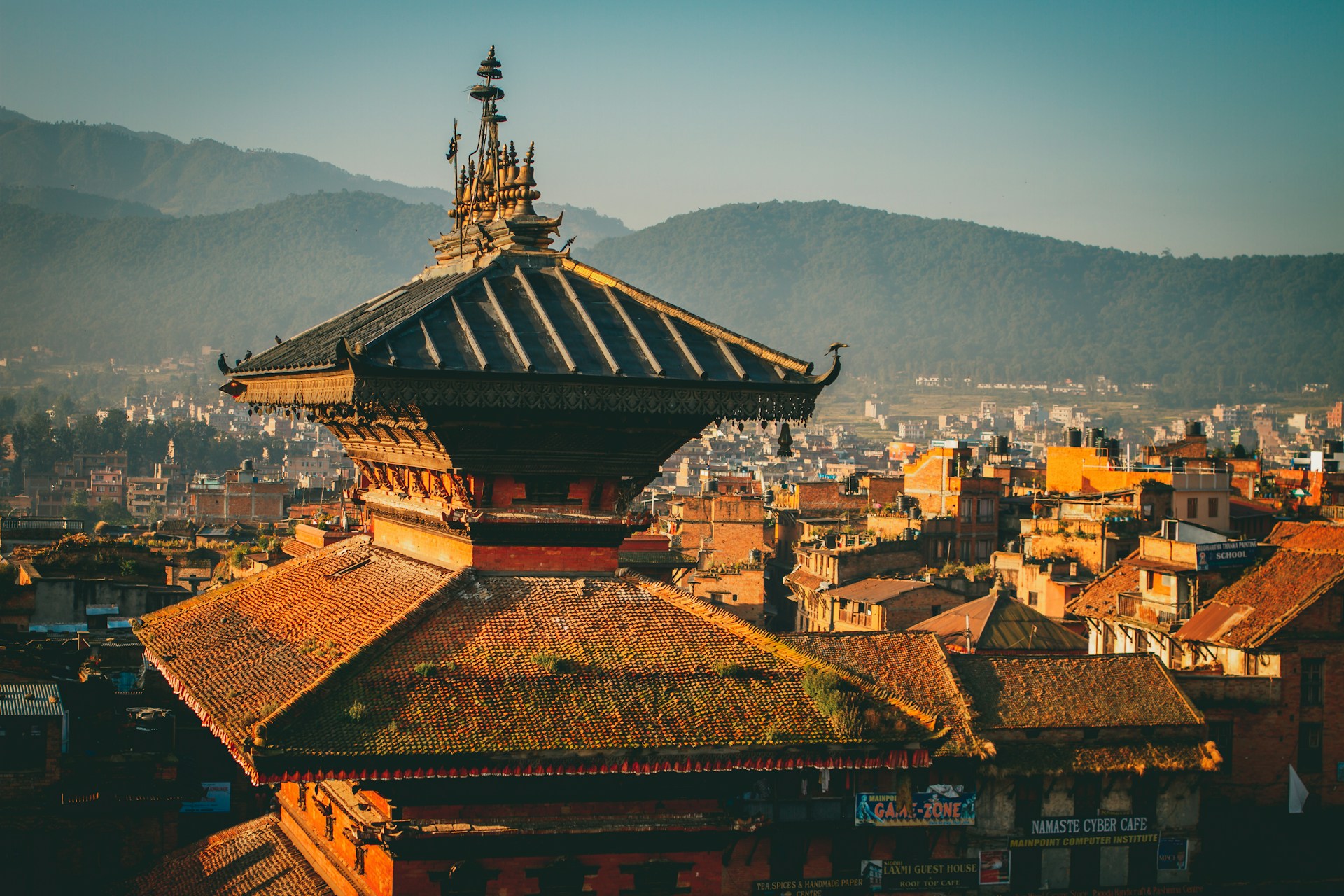
The signature form is the multi-tiered pagoda temple — a square sanctum rising in diminishing storeys of tiled or gilded roofs, supported by carved wooden struts (tunala). It is a common misconception that the pagoda travelled to Nepal from East Asia; in fact the influence ran the other way in a key episode. The Newar architect and artist Arniko led a group of craftsmen to the court of Kublai Khan in the thirteenth century and carried valley building and metalworking techniques into China, influencing architecture across the region.
Alongside the pagoda you will see the stupa (the domed Buddhist form of Swayambhunath and Boudhanath), the North Indian shikhara style (the stone Krishna Mandir at Patan is the great example), and the Newar residential courtyard house, built of warm brick with intricately carved wooden windows and doors, arranged around private courtyards (chowk). The carving is where the artistry concentrates: struts depicting deities, latticed windows, and the famous peacock window of Bhaktapur are all worth seeking out. Materials are local and honest — brick, timber, stone and metal — and the craftsmanship, still practised today, is the reason these buildings could be rebuilt after 2015.
Newari Culture
None of this heritage makes sense without the Newar people, the valley’s indigenous community and the creators of nearly everything on this tour. The Newars are not a single ethnic group in the usual sense but a whole civilisation built around the valley — with their own language (Nepal Bhasa), a sophisticated caste and guild system, and an unusually rich material culture spanning architecture, sculpture, painting, music and, especially, food.
Newar society blends Hinduism and Buddhism so thoroughly that many families honour both, and the same festivals and shrines serve both faiths. Their guilds of craftsmen — the silpakars and metalworkers of Patan, the potters of Bhaktapur — kept the building and artistic traditions alive across the centuries and are the reason the valley looks the way it does. The living goddess Kumari, drawn from the Newar Shakya community, is one striking expression of this culture. When your guide is Newar, you are not just hearing about the culture; you are hearing it from inside.
Festivals
The valley’s calendar is packed with festivals, and catching one turns a good tour into an unforgettable one. A few of the most significant:
- Indra Jatra (around September) — Kathmandu’s great street festival, centred on Durbar Square, when masked dancers perform, the Kumari is paraded in her chariot, and the whole old city celebrates.
- Bisket Jatra (around Nepali New Year, April) — Bhaktapur’s spectacular chariot festival, involving a giant wooden chariot hauled through the streets and a tug-of-war that can turn genuinely wild.
- Dashain and Tihar (around October/November) — Nepal’s biggest festival season; Tihar, the festival of lights, is especially beautiful in the valley.
- Maha Shivaratri (around February/March) — the great night of Shiva, when Pashupatinath fills with hundreds of thousands of pilgrims and sadhus.
- Buddha Jayanti (around May) — the Buddha’s birthday, celebrated at Swayambhunath and Boudhanath.
Festival dates follow the lunar calendar and shift each year, so tell us your travel dates and we will tell you honestly what, if anything, coincides — and adjust the itinerary to make the most of it.
Religion
The valley is where Hinduism and Buddhism meet and mingle more completely than almost anywhere else on earth. The dominant faiths are Hinduism and Vajrayana (Tibetan) and Newar Buddhism, and rather than competing, they interweave: a single deity may be understood in Hindu and Buddhist terms at once, the same shrine may draw worshippers of both, and many Newar families observe both traditions without contradiction.
For visitors, a little religious literacy goes a long way and is a matter of basic respect. Walk clockwise around stupas and shrines. Remove shoes and leather where indicated. Ask before photographing people at worship, and never photograph inside sanctums where it is forbidden. Non-Hindus should not attempt to enter the restricted inner areas at Pashupatinath. Dress modestly — shoulders and knees covered — at temples. Your guide handles all of this naturally and will quietly steer you right, so you can engage with living faith rather than blunder through it.
Photography Tips
- Chase the light, not the checklist. Swayambhunath and Boudhanath are best in early morning or late afternoon; midday sun is harsh and the crowds are thickest.
- Boudhanath from above. The rooftop cafés around the stupa give you the classic elevated shot of the dome, the eyes and the prayer flags — and a tea while you wait for the light.
- Respect the rules at Pashupatinath. Cremation ghats can be photographed from a respectful distance, but be discreet and humane; never photograph grieving families up close. Do not photograph the Kumari at all.
- People make the picture. Pilgrims spinning wheels, a potter at Bhaktapur, a sadhu in ochre — these tell the valley’s story better than empty architecture. Ask first; a smile and a small gesture usually earn a yes.
- Go wide and go close. A wide lens for the squares and stupas, a fast prime for portraits and courtyard details and carvings.
- Mind the dust and the monkeys. Bring a lens cloth for the dry-season dust, and keep gear secured at Swayambhunath.
Shopping
The valley is one of the best places in South Asia to buy genuine handmade craft — if you know where to look, which is part of what a good guide provides.
- Patan is the place for fine metalwork: bronze and copper statues, repoussé work, and singing bowls, often made in workshops you can visit.
- Bhaktapur is known for pottery, wood carving, and traditional handmade lokta paper products.
- Thangka paintings — intricate Tibetan Buddhist scroll paintings — are found around Boudhanath and Patan; quality and price vary enormously, so buy from reputable studios.
- Pashmina, textiles and jewellery cluster around Thamel and the old market lanes of Indra Chowk.
- Bargaining is normal in markets and with street vendors, less so in fixed-price craft shops and cooperatives. For authentic pieces that support artisans directly, ask us about fair-trade cooperatives such as the long-established handicraft associations.
Local Food
Newari cuisine is one of the great under-appreciated food cultures of Asia, and eating it well is part of this tour. A few things to try:
- Newari khaja set — a platter built around chiura (beaten rice) with an array of sides: spiced meats or vegetables, bara (lentil patties), pickles and more.
- Bara and chatamari — savoury lentil cakes and the Newari “rice crêpe,” sometimes called Nepali pizza.
- Choila — spiced, grilled marinated meat, a Newari classic.
- Momo — Nepal’s beloved dumplings, everywhere and always worth it.
- Juju dhau — Bhaktapur’s rich “king of curds,” a sweet yoghurt set in clay.
- Dal bhat — the national plate of lentils, rice and sides; wholesome, endlessly refillable and a good vegetarian default.
For drinks, try chiya (spiced milk tea) and, if you like, the local Newari rice liquors aila and thwon (in moderation). Your guide will point you to genuinely local, hygienic spots rather than tourist canteens, and can arrange a fully Newari lunch on request.
Best Time to Visit and Weather
The valley’s mild, mid-elevation climate makes it a year-round destination, but some seasons are clearly better than others.
| Season | Months | What to expect |
|---|---|---|
| Autumn | October–November | The best overall: clear skies, comfortable temperatures, festival season, mountain views on clear days |
| Winter | December–February | Cool and dry, chilly foggy mornings, low crowds, pleasant midday sightseeing |
| Spring | March–April | Warm, generally clear, blossom and good light; a strong second-best to autumn |
| Pre-monsoon | May | Hot, hazy and dusty; early mornings are still fine |
| Monsoon | June–September | Warm and wet, lush and green, fewer tourists and lower prices, but rain and haze can interrupt sightseeing |
Autumn (October–November) is the classic window — clear air, the great festivals of Dashain, Tihar and Indra Jatra, and the best chance of distant Himalayan views. Spring (March–April) is the close runner-up. Whatever the season, the sites themselves are open and rewarding; we simply plan the day around the day’s weather.
Difficulty
Easy. This is a cultural sightseeing tour, not a trek. You will do a moderate amount of walking on paved and cobbled surfaces, and some sites involve stairs — most notably the long eastern stairway at Swayambhunath and steps up to temples and viewpoints. None of it is strenuous, and where stairs are an issue we choose the easier approach (Swayambhunath, for instance, can be reached largely by road from the western side). The valley sits at a comfortable 1,300–1,400 m, low enough that altitude is not a concern. Tell us about any mobility limitations and we will plan a version that works for you.
Who This Tour Is For
Families. This is an excellent family tour. Children are fascinated by the monkeys at Swayambhunath, the prayer wheels at Boudhanath, the potters at Bhaktapur and the sheer scale of the temples. We keep the pace flexible, build in breaks and snacks, and pitch the storytelling to keep younger travellers engaged rather than bored.
Senior travellers. The easy pace, low elevation and private vehicle make the valley very manageable for older visitors. We minimise stairs where possible, keep drives short and comfortable, provide plenty of places to sit and rest, and can arrange an SUV for easier access. Ritual-watching and people-watching at the great sites are low-exertion and deeply rewarding.
Children. Beyond the sights themselves, the living rituals — bells, drums, incense, monks, festivals — are genuinely engaging for kids, and Newari food (momo above all) tends to be a hit. We brief families on the few etiquette points that matter and keep the day child-friendly.
Accessibility. Honesty matters here: many valley monuments are centuries old, with steps, uneven cobbles and thresholds, and were not built for wheelchairs. Full step-free access to every site is not realistic. That said, several areas — parts of Boudhanath’s plaza, Patan Durbar Square, the Pashupatinath complex from certain approaches — are more manageable than others, and we can build a route that maximises access and comfort. Tell us your specific needs and we will give you a frank assessment of what is and is not feasible before you book.
Responsible Tourism
These are living religious sites, not theme parks, and how you visit matters.
- Respect worship. Give space to people praying, grieving or performing rituals; follow your guide on where photography is and is not appropriate.
- Dress modestly at temples — shoulders and knees covered — and remove shoes and leather where indicated.
- Your entry fees fund preservation. UNESCO site fees go toward the conservation and reconstruction of these monuments; paying them is part of keeping the valley standing.
- Buy authentic, buy fair. Support genuine artisans and fair-trade cooperatives rather than mass-produced imports; it keeps living crafts alive.
- Tread lightly on fragile heritage. Do not climb on monuments or carvings, and follow barriers around areas under conservation.
- Support local. Local guides, local eateries and local craftspeople keep tourism’s benefits in the community that maintains this heritage.
For official information we point guests to the Nepal Tourism Board (ntb.gov.np) and the Department of Archaeology, which oversees the monument zones.
Travel Tips
Money. The currency is the Nepalese Rupee (NPR). Carry cash — many temples, small shops and eateries do not take cards, and site ticket counters are cash-only. ATMs are widely available in Kathmandu and Patan but can have withdrawal limits and occasional outages. Change money at banks or licensed exchanges. Tipping is appreciated but not obligatory; a fair tip for a good guide and driver at the end of the day is a kind gesture.
Internet. Wi-Fi is standard in hotels, cafés and many restaurants across the valley. For reliable data on the move, buy a Nepali SIM (Ncell or Nepal Telecom) with a tourist data pack — cheap, easy at the airport or in town, and useful for maps and messaging between sites.
Transportation. Within the tour, your private vehicle handles everything. Outside it, Kathmandu’s traffic is heavy and chaotic, taxis rarely use meters (agree a fare first), and ride-hailing apps operate in the city. Walking is the best way to experience the old squares and lanes once you are dropped at each zone.
Safety. The Kathmandu Valley is generally safe for tourists, including solo and female travellers, with normal city precautions. Watch for traffic (crossing roads takes care), keep an eye on valuables in crowds and around the monkeys at Swayambhunath, and be mindful of uneven surfaces and steps. The dry-season air can be dusty — a light mask or scarf helps if you are sensitive. Nepal is seismically active; your hotel and guide can advise on basic earthquake awareness. For most visitors, a valley tour is low-risk and smooth.
Travel insurance. Not included and strongly recommended — comprehensive cover for medical care, cancellation and belongings. If you are combining the valley with trekking, ensure high-altitude activities are covered separately.
Tour Cost
This Kathmandu Valley tour has one clear, fixed price — US$79 per person — covering everything on the core itinerary: your licensed cultural guide, private vehicle with driver, and all UNESCO entry fees for the sites on the day. No confusing ranges, and no surprise charges at the ticket counters.
| What you pay | Price per person |
|---|---|
| Kathmandu Valley Tour (core full-day package) | US$79 |
The price stays fixed year-round so you can book with confidence, whatever the season.
| Season | Months | Price per person |
|---|---|---|
| Peak | October–April | US$79 |
| Off-peak / monsoon | May–September | US$79 |
Private and group rates: the per-person price is lower for larger private groups and can be quoted for your party — send us your group size for a fixed group rate.
Optional extension. Adding Bhaktapur Durbar Square and Changu Narayan (a comfortable second-day experience, including their entry fees) is priced separately and confirmed before you book, so your total is always clear in advance.
An honesty note. Be wary of unusually cheap “all-inclusive” day tours — rock-bottom prices usually mean shared coaches, rushed timings, unlicensed guides, or entry fees quietly excluded and charged at the gate. Everything in our US$79 tour is spelled out below under Includes and Excludes, so you can compare like for like.
Package Includes
- Licensed, English-speaking cultural guide for the full day
- Private air-conditioned vehicle with professional driver
- Hotel pickup and drop-off in Kathmandu or Patan
- All UNESCO World Heritage entry fees for the sites on the core itinerary (Swayambhunath, Kathmandu Durbar Square, Patan Durbar Square, Boudhanath, Pashupatinath)
- Bottled water during the tour
- All local taxes and service charges for the above
Package Excludes
- Lunch and personal drinks (lunch can be added on request)
- Accommodation (this is a day tour; we are happy to help arrange hotels)
- Travel insurance
- Personal expenses: shopping, tips, extra snacks
- The Bhaktapur and Changu Narayan extension and its entry fees (priced separately)
- Nepal visa fees and any international or domestic airfare
- Anything not explicitly listed under Package Includes
Frequently Asked Questions (40)
1. What is the Kathmandu Valley tour? A private, guided full-day sightseeing tour of the valley’s UNESCO World Heritage Sites — Swayambhunath, Kathmandu Durbar Square, Patan Durbar Square, Boudhanath and Pashupatinath — with a licensed cultural guide, private vehicle and all entry fees included.
2. How long is the tour? A comfortable full day, roughly 7 to 8 hours including travel between sites, with hotel pickup in the morning and drop-off by early evening. Bhaktapur and Changu Narayan can be added as a second-day extension.
3. What does the tour cost? A clear, fixed US$79 per person, all-inclusive of guide, private vehicle and entry fees for the core sites. Larger private groups get a lower per-person rate — contact us for a fixed group quote.
4. Which sites are included? The core tour covers Swayambhunath, Kathmandu Durbar Square, Patan Durbar Square, Boudhanath and Pashupatinath. Bhaktapur Durbar Square and Changu Narayan are available as an optional add-on.
5. Can I see all seven UNESCO sites in one day? Realistically, no — doing all seven justice takes two days, because Bhaktapur and Changu Narayan lie further east. We cover the five central sites well in the full-day tour and offer the eastern two as a relaxed extension rather than rushing them.
6. How many UNESCO World Heritage Sites are in the Kathmandu Valley? Seven monument zones, inscribed together in 1979: Swayambhunath, Boudhanath, Pashupatinath, the Durbar Squares of Kathmandu, Patan and Bhaktapur, and Changu Narayan.
7. When were the sites made a UNESCO World Heritage Site? The Kathmandu Valley was inscribed as a single World Heritage Site in 1979.
8. Is the tour private or a group tour? It is private by default — just your party, your guide and your vehicle. Small-group joining options can be arranged on request.
9. What is the best time of year to take this tour? October and November are ideal — clear skies, comfortable weather and festival season. March and April are a close second. The sites are open and rewarding year-round.
10. Is the tour suitable for families with children? Very much so. The monkeys, prayer wheels, potters and living rituals engage children, and we keep the pace flexible with breaks. It is an easy, enriching family day.
11. Is the tour suitable for senior travellers? Yes. The pace is gentle, the elevation is low, and a private vehicle keeps drives short. We minimise stairs where possible and can arrange an easier-access vehicle.
12. Is the tour wheelchair accessible? Partly. Many centuries-old monuments have steps and uneven surfaces and cannot be made fully step-free, but we can build a route that maximises access. Tell us your needs for a frank, site-by-site assessment.
13. How much walking is involved? A moderate amount on paved and cobbled surfaces, plus some temple stairs. Nothing strenuous, and we choose easier approaches where stairs are a concern.
14. Can non-Hindus enter Pashupatinath? Non-Hindus cannot enter the main temple or inner sanctum, but the wider complex — shrines, ghats and viewpoints — is open and deeply rewarding to explore.
15. Can I watch a cremation at Pashupatinath? Yes, from a respectful distance; open-air cremations are part of the living site. Your guide will explain the rites and advise on where photography is and is not appropriate.
16. Why is it called the Monkey Temple? Swayambhunath is nicknamed the Monkey Temple for the troops of rhesus macaques living in the surrounding forest. Keep food and loose items secured around them.
17. Can I see the living goddess Kumari? She lives in the Kumari Ghar in Kathmandu Durbar Square and appears briefly at her window at certain times, though appearances are not guaranteed. Photographing the Kumari is not permitted.
18. What should I wear? Modest clothing that covers shoulders and knees for temples, comfortable walking shoes, and layers for cool mornings in winter. Slip-on shoes help where you must remove them.
19. Are entry fees included in the price? Yes — all UNESCO entry fees for the core itinerary sites are included in the US$79 price. The extension fees are included when you add Bhaktapur and Changu Narayan.
20. How much are the entry fees if I go alone? For foreign visitors, indicative current fees are roughly NPR 200 (Swayambhunath), NPR 400 (Boudhanath), NPR 1,000 each (Pashupatinath, Kathmandu and Patan Durbar Squares), NPR 1,800 (Bhaktapur) and NPR 300 (Changu Narayan). Fees are set by the authorities and revised periodically.
21. Is lunch included? Lunch is not included by default but can be added on request; we recommend authentic Newari cuisine and will take you to a trusted local spot.
22. Can you accommodate dietary requirements? Yes. Vegetarian, vegan, Jain and other needs are easily met — Nepali and Newari food has strong vegetarian traditions.
23. Where does the tour start? With pickup from your hotel anywhere in Kathmandu or Patan (Lalitpur). Tell us where you are staying and we will arrange the timing.
24. Do I need to book in advance? Advance booking is recommended, especially in peak season and around festivals, to secure your preferred date and guide. We can often accommodate short-notice requests too.
25. What languages are your guides available in? English as standard; other languages including guides for specific interests can be arranged on request — just ask when booking.
26. Is Kathmandu safe for tourists? Generally yes, including for solo and female travellers, with normal city precautions around traffic, crowds and valuables. A guided tour is low-risk and smooth.
27. Was the valley damaged in the 2015 earthquake? Yes, the April 2015 earthquake damaged many monuments, including structures in all three Durbar Squares. Most have since been restored, some with ongoing conservation, and your guide explains both the loss and the recovery.
28. What is Newari culture? The Newars are the valley’s indigenous people and the builders and artists behind its monuments, with their own language, crafts, cuisine and a blend of Hindu and Buddhist practice. Their living culture is central to the tour.
29. What is special about Patan Durbar Square? Patan is the valley’s centre of fine arts and metalwork, and its square — with the stone Krishna Mandir and the outstanding Patan Museum — is considered by many the most refined of the three Durbar Squares.
30. What is special about Boudhanath? It is one of the largest stupas in the world and the heart of Tibetan Buddhism in Nepal, ringed by monasteries, where pilgrims walk the kora spinning prayer wheels — a serene, moving place.
31. How far apart are the sites? All within the valley and generally 20 to 45 minutes apart by vehicle, depending on traffic. The eastern extension sites (Bhaktapur, Changu Narayan) are further out, which is why we give them their own time.
32. Can I customise the itinerary? Yes. Tell us your interests — Buddhist sites, photography, architecture, food — and we will tailor the route and pace. Customisation is one of the advantages of a private tour.
33. Is photography allowed at the sites? Generally yes in open areas, but not inside certain sanctums, and never of the Kumari. Be discreet and respectful at Pashupatinath’s cremation ghats. Your guide will advise throughout.
34. What is the evening aarati at Pashupatinath? A lamp-lit riverside ritual of chanting and bells on the Bagmati, one of the most atmospheric experiences in the valley. If your timing allows, we build the day to catch it.
35. Are there festivals worth planning around? Yes — Indra Jatra, Bisket Jatra, Dashain, Tihar, Maha Shivaratri and Buddha Jayanti among others. Dates follow the lunar calendar; tell us your dates and we will tell you what coincides.
36. Can this become a multi-day cultural package? Yes. We can extend it into a multi-day valley experience with accommodation, meals and more sites — quoted separately so pricing stays clear and simple.
37. What should I bring? Comfortable shoes, modest layered clothing, sunscreen and a hat, cash in NPR for lunch and shopping, a water bottle, and a camera. Slip-on footwear is handy at temples.
38. Do you offer sunrise or early-morning starts? Yes — early starts are ideal at Swayambhunath and Boudhanath for soft light and calm before the crowds. Tell us if you would like a dawn start.
39. Is the tour good for photographers? Excellent. We time visits for the best light, know the rooftop vantage points at Boudhanath, and give you time to work a scene rather than hurrying you along.
40. How do I book? Send us your preferred date, group size and any special interests, and we will confirm availability and your guide, and lock in your fixed price. Flexible dates and short-notice requests are welcome.