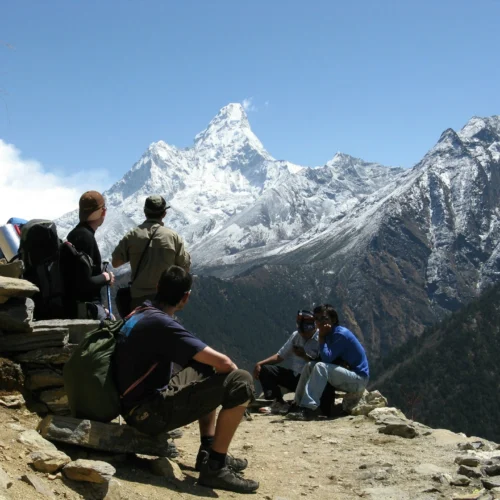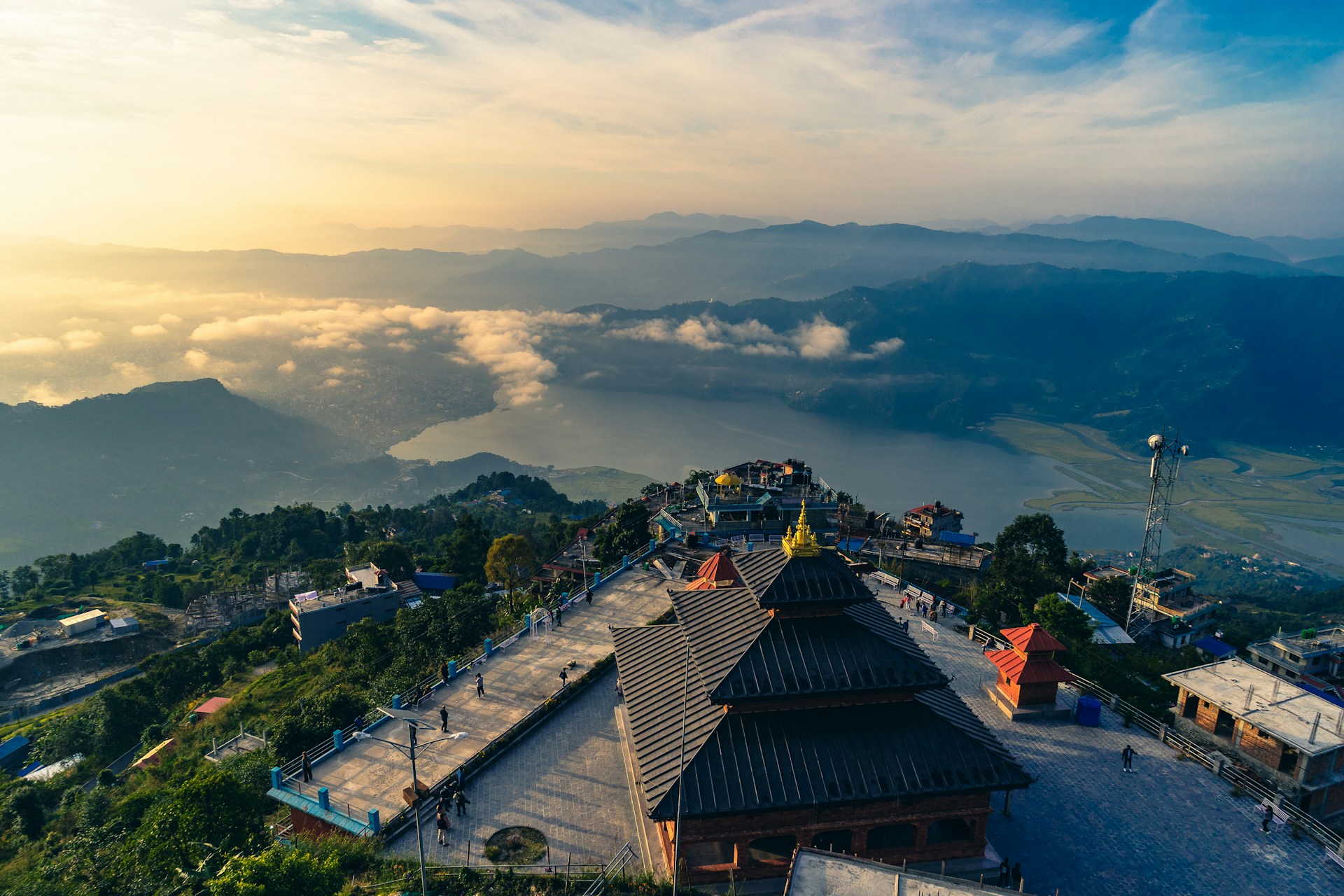
We have been operating out of Pokhara since 2004. Not from a distant office in Kathmandu or an international call center. When you contact us, you speak with people who know that the best momos in Lakeside are at Aankhi Jhyal, not just what’s written in a guidebook. This page contains everything we’ve learned organizing more than 4,000 Pokhara holidays. It answers every question we’ve ever been asked, so you can book with complete clarity.
Quick Facts
| Detail | Information |
|---|---|
| Trip Duration | 5 days (shorter/longer available) |
| Max Elevation | 1,600 m (Sarangkot viewpoint) |
| Package Type | Sightseeing, culture, soft adventure |
| Best Months | October–November, March–April |
| Start/End Point | Pokhara (airport or bus station) |
| Accommodation | 3-star to boutique 5-star in Lakeside |
| Transport | Private air-conditioned vehicle |
| Adventure Add-ons | Paragliding, ultra-light flight, zip-line, bungee |
| Group Size | Private tours for 1–12 persons; join-in options below |
| Permits Required | No special permits for places on the itinerary |
Overview
If you search for “Pokhara tour package,” you’ll find dozens of companies selling the same fixed itinerary. A minivan, a quick stop at Davis Falls, a hurried boat ride, maybe Sarangkot if the guide feels like it. That is not what we offer.
Our package is modular. You choose a 3-night, 5-night, or 7-night base, then bolt on exactly the experiences that matter to you. The prices on this page are for our most popular 5-day option, but every element is explained so you can tailor your own trip without emailing back and forth 15 times. We publish real costs. No “from” prices that double after you add the things you actually want.
Pokhara is not a city where you need a rigid schedule. Its value is in unhurried lakeside mornings, spontaneous side trips to Begnas Lake when Phewa gets busy, and lingering over a Himalayan view that never repeats itself. The itinerary we recommend protects that space. It’s structured enough to ensure you see the essential places, loose enough that you don’t feel herded.
Why Choose This Package Over Others
What separates our Pokhara tour from the marketplaces like Viator, Klook, or multi-country aggregators is simple: there is no middleman between you and the person who will meet you at your hotel.
Local operational control. The same team that answers your pre-trip questions is the team that arranges your vehicle, chooses your boatman, and knows whether Phewa Lake will be clear at 6:15 a.m. tomorrow. When a road is blocked or a paragliding slot changes, we solve it in 10 minutes, not 48 hours.
Transparent cost structure. Every element in the Cost Breakdown table is itemized. You see exactly where your money goes. International booking platforms often mark up local services by 35–60%. We live in Pokhara. We charge what a well-informed walk-in customer would pay, plus a fair coordination fee for private transport and an English-speaking cultural guide.
Genuine flexibility. Fixed-departure tours sell empty seats. That model forces everyone onto the same bus at the same time. Our default is private. If you want a sunrise start, we leave at 5:00 a.m. If your child is tired and you’d rather skip the cave, we adapt instantly. We also offer a join-in budget option for solo travelers who prefer a social group, but even that runs only when it’s genuinely beneficial.
Deep, usable knowledge. The sections that follow are not AI-generated fluff. They are written by our head guide, Ramesh, who has lived in Pokhara for 47 years. He still hikes to the World Peace Pagoda every Sunday. That’s the person planning your days.
Detailed Day-by-Day Itinerary
This is our recommended 5-day Pokhara sightseeing tour. It works as a standalone holiday or as the recovery and culture leg after an Annapurna trek. Every day ends by late afternoon so you have your evenings free. You can rearrange days to match weather.
Day 1 – Arrival in Pokhara & Lakeside Orientation
Whatever time you arrive—by road from Kathmandu (200 km, 6–8 hours) or by a 25-minute flight—we pick you up. The drive in from the airport takes 10 minutes. There’s no long transfer.
You check into your hotel in the Lakeside district. Once you’ve settled, our guide meets you for a short orientation walk. This is not a scripted tour. It’s 45 minutes along the lakefront path. We show you where to change money at fair rates, the reliable pharmacy, which cafes have filtered water refills, the best spot for a quiet lakeside tea, and how to avoid the rowboat touts who overcharge by 300%. We point out a few dinner options across budgets. Then we leave you to soak in your first Pokhara evening.
Most people gravitate to one of the lakeside restaurants with outdoor seating. At 827 meters, the air is warm in the evening, and if you’re lucky with the post-monsoon clarity, the fishtail summit of Machhapuchhre catches the last light.
Day 2 – Sarangkot Sunrise, Bindhyabasini Temple, & South Side Attractions
We start early. 5:00 a.m. pickup. The road to Sarangkot takes about 35 minutes by jeep. At the viewpoint (1,600 m), you’ll have a clear eastern horizon. The reason we insist on arriving 20 minutes before sunrise is that the color shift on the Annapurna range starts well before the sun clears the horizon. The mountains move from grey to rose to gold in distinct phases. It’s the best natural spectacle in the mid-hills, and you can photograph it without a tripod because the pre-dawn light is bright enough by 5:45 a.m. in season.
After sunrise, we descend and stop at Bindhyabasini Temple on the way back. This is a living shrine, not a museum. Mornings are the right time to visit because the local worshippers are there, and the flower market at the entrance is active. You’ll understand why this temple matters to the city before you ever set foot in the International Mountain Museum.
We return to Lakeside for a late breakfast. After a rest, around 10:30 a.m., we head to the southern attractions in one efficient loop: Davis Falls (Patale Chhango), Gupteshwor Mahadev Cave, and if you wish, a quick visit to the Tibetan Refugee Camp to see carpet weaving. Doing these in the late morning avoids the midday crush of domestic tour buses. The cave and waterfall are physically connected—the water from Davis Falls vanishes into a gorge and reappears inside Gupteshwor. Our guide explains the hydrology, so you’re not just staring at a wet hole.
Back to your hotel by 1:30 p.m. The afternoon is yours.
Day 3 – World Peace Pagoda, Phewa Lake Boating & Tal Barahi
Today’s pace is gentler. After breakfast, we drive 25 minutes to the trailhead below the World Peace Pagoda, then walk up through forest for 20–25 minutes. It’s an easy climb. The pagoda itself is a Buddhist stupa built by Japanese monks in 1973. From its platform, you get the mirror view of Day 2: now you’re looking north across Phewa Lake toward the mountains, rather than from Sarangkot looking down onto the lake. That reversal is intentional. People who only see Pokhara from one angle miss the spatial logic of the valley.
We descend via a short path to the lake’s edge, where our boatman waits. The paddle across Phewa Lake takes about 30 minutes. You stop at Tal Barahi, the two-storied pagoda temple on the island. It gets crowded after 11:00 a.m., which is why we time the crossing for mid-morning. After the island, you can ask the boatman to row you into the quieter northern coves where the forest reflects directly onto still water. That is the Pokhara most day-trippers never see.
We finish by noon. If you’re keen, the rest of the day works perfectly for paragliding (see Adventure Activities) or a visit to the International Mountain Museum, which is best done after you’ve already seen the mountains live.
Day 4 – Mountain Perspectives: Begnas Lake or Half-Day Hike
Day 4 is designed to solve the most common complaint about standard Pokhara packages: they never leave Lakeside. We give you a choice that tailors the day to your energy and interests.
Option A: Begnas Lake escape. We drive 30 minutes east to Begnas Lake. It’s what Phewa was 30 years ago: minimal development, a few simple family-run fish restaurants on stilts, and the Annapurna skyline reflecting in the water with almost no motorboats. You can swim (the water is clean), rent a kayak, or just sit on the terraces. We arrange a lunch of fresh lake fish (tilapia or local carp) grilled with Himalayan herbs. Most guests call this their favorite day.
Option B: Half-day ridge hike. We drive to the start of the Australian Camp–Dhampus ridge trail. You walk through Gurung villages and rhododendron forest for 3–4 hours with a packed lunch. At around 1,900 meters, the Himalayan panorama is unobstructed. This is a proper mountain day without high-altitude strain. Suitable for anyone who can walk for a few hours on gentle inclines. Our guide stays with you, pointing out village granaries, water mills, and the edible wild plants locals still forage.
You’re back in Pokhara by 4:00 p.m. Evening is free.
Day 5 – Departure or Extension
Breakfast at your hotel. We transfer you to the airport or bus station based on your onward plan. If you’re heading to Chitwan, we can book the tourist bus and coordinate the Chitwan pickup. If you’re returning to Kathmandu, we advise whether the morning or midday flight has a better reliability record based on recent weather patterns. That’s the kind of detail that only comes from local operations.
For those with extra days, we can add nights at Begnas, a rafting day on the Seti River, or the short Panchase trek (3 days, non-technical, excellent mountain views). The base package ends here cleanly.
Transportation
All our package prices include a private, air-conditioned vehicle with a dedicated driver for the duration of the tour. This is not a shared shuttle.
- Airport transfers: Kia Carens or similar for 1–3 persons, Toyota Hiace for families and groups.
- Sightseeing vehicle: The same vehicle stays with you daily. No squeezing into different taxis each morning.
- Road conditions: Pokhara’s main roads are sealed. The road to Sarangkot is paved but winding—our drivers know every pothole.
- Driving distances are short. Most point-to-point drives within the valley are under 40 minutes. That means you spend more time outside the vehicle than inside it.
For the journey between Kathmandu and Pokhara, we can arrange:
| Mode | Duration | Comfort Level | Our Advice |
|---|---|---|---|
| Tourist Bus | 6–8 hours | Air-con, reclining seats, lunch stop | Best value; roads have improved but delays possible |
| Private Car | 5.5–7 hours | Door-to-door, stops on demand | Ideal for photographers and families |
| Flight (25 min) | 25 min | Mountain views on right side | Fastest; afternoon flights cancel frequently in pre-monsoon; book morning |
If you fly, we recommend Buddha Air or Yeti Airlines. We’ll book the seats for you at local rates and advise you to sit on the right side for the first view of the Annapurnas through the window.
Accommodation
We’re deliberately choosey. A bad hotel can undo an otherwise perfect trip, and Pokhara is full of places that photograph well but have damp bathrooms and paper-thin walls.
We have direct contracts with 12 properties in Lakeside, all personally inspected by our team every season. You select a tier.
| Category | Example Properties | Key Features |
|---|---|---|
| Comfort (3-star) | Hotel Middle Path, Hotel Adam | Clean, hot shower 24/7, garden, Wi-Fi, 5-min walk to lake |
| Superior (4-star) | Waterfront Resort, Temple Tree | Lake-view rooms, swimming pool, excellent breakfast, quiet location |
| Boutique Premium | Fish Tail Lodge, The Pavilions Himalayas | Heritage property on a lake islet, sustainable luxury, private boat access |
Fish Tail Lodge deserves a special note. It sits on a small peninsula and is reached by a floating wooden bridge or rope-pulled ferry. We can secure rooms here when OTAs show “sold out” because of our long-standing relationship. If you have a specific hotel in mind, tell us. If we have a contract there, we’ll undercut any publicly available rate because we forgo the OTA commission.
All our packages include daily breakfast. The standard plan uses the Comfort category. The Cost Breakdown below shows the upgrade fees transparently.
Meals
Included: Daily breakfast at your hotel. The buffets at our recommended properties typically include fresh fruit, eggs made to order, local breads, and Nepali milk tea.
Not included: Lunch and dinner. This is intentional. Pokhara’s Lakeside has over 200 eateries ranging from Tibetan family kitchens to wood-fired pizza places. Forcing you into a set menu at a tourist restaurant makes no sense when you can eat exactly what you want for $4–$12 per meal.
We do give every guest our printed “Pokhara Food Map.” It lists 18 recommended places organized by:
- Best local dal bhat (Thakali Kitchen, Laughing Buddha)
- Best momos (Aankhi Jhyal, Momotarou)
- Best lake fish (Phewa Lake Fish & Chhuwala at Begnas)
- Reliable international comfort food (for kids or weary stomachs)
- Cafés with lake views and real espresso
If you want us to arrange a home-cooked Nepali dinner with a local family in their village kitchen 20 minutes from Lakeside, that’s an add-on that costs $18 per person. It’s one of the most genuine eating experiences in the region.
About Pokhara
History
Pokhara was once a major trading post on the route between Tibet and India. Mule caravans carrying salt, wool, and grain passed through the valley for centuries. The Newar merchant community settled here in the 18th century, building the pagoda-style temples and brick storehouses you still see in the old bazaar north of the current Lakeside. The city’s transformation into Nepal’s adventure tourism capital began in the 1970s when the Hippie Trail brought international visitors. The clean air, lake, and mountain panorama kept them here.
Geography
The Pokhara Valley sits at an average elevation of 827 meters in central Nepal’s Gandaki Province. It is part of the Seti Gandaki river system, which has carved one of the deepest gorges in the country directly beneath the city—much of it invisible until you stand at the right viewpoint. Phewa Lake is the second-largest lake in Nepal, fed by the Harpan River and underwater springs. The Annapurna massif rises abruptly from just north of the valley, meaning the vertical gain from the lake shore to Machhapuchhre’s summit is over 6,200 meters in less than 30 kilometers of horizontal distance. That extreme relief creates microclimates and the dramatic mountain views Pokhara is known for.
Climate
| Season | Months | Day Temp | Key Conditions |
|---|---|---|---|
| Post-monsoon (best) | Oct–Nov | 24–28°C | Clear skies, crisp air, peak visibility |
| Winter | Dec–Feb | 16–22°C | Cold mornings, warm afternoons, occasional haze from inversion layer |
| Spring | Mar–Apr | 25–30°C | Warming days, rhododendrons blooming at mid-elevations, some afternoon haze |
| Pre-monsoon | May–Jun | 28–34°C | Hot, sticky, mountains often obscured by cloud buildup from late morning |
| Monsoon | Jul–Sep | 26–30°C | Heavy rainfall, leeches on trails, views rare but occasional dramatic clearings |
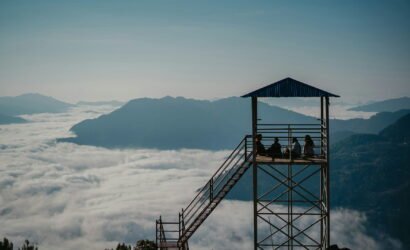
The best months for mountain visibility are the post-monsoon weeks from mid-October to late November. March and early April are also very good, though the air carries more dust from the plains. Winter mornings can be socked in by cold air trapping smoke from brick kilns—Sarangkot sunrise can appear above a sea of cloud, which is a different kind of spectacle.
Major Attractions
Each of these is included in our itinerary in a logical sequence. We’ve arranged them here not as a checklist but with the practical context you need.
Phewa Lake
The 4.43 km² freshwater lake is the geographical and psychological center of Pokhara tourism. Most of the lodges, restaurants, and shops line the eastern shore. The lake’s color varies dramatically with the sky: steel grey under monsoon cloud, vivid blue on October mornings. Swimming is possible but the water near Lakeside has high coliform counts; the northern coves are cleaner. The southern end is marshy and rich in birdlife—cormorants, egrets, and the occasional kingfisher. The best boating experience is self-rowing a wooden doonga (traditional painted boat) to the quiet stretch north of Tal Barahi. A standard one-hour rental with a boatman costs NPR 700–900; we include a quality operator who doesn’t cut the trip short.
Tal Barahi Temple
The two-tiered pagoda on an island in Phewa Lake. Dedicated to the goddess Barahi, a boar incarnation of Shakti. It’s active, not a relic. On Saturdays and during the Dashain festival, locals crowd the island to offer animal sacrifices (mostly male goats and roosters). Visiting on those days is culturally intense. We recommend early morning visits when the light is soft and the island is peaceful. Photography is permitted, but point your camera at the architecture and the lake, not at grieving families during rituals.
Sarangkot
A former fortified hill village turned sunrise-viewing station at 1,600 meters. The paved road was extended in 2018, making the ascent quicker but also busier. We reach the viewpoint by 5:30 a.m. to claim a position on the eastern stone terraces. The sequence of the sunrise hitting Dhaulagiri (8,167 m) then the Annapurna massif then Machhapuchhre (6,993 m) is what you’re there for. After the main crowd leaves, the area offers easy ridge walks through village trails. Paragliders launch from Sarangkot around 9:30 a.m., so if you’re flying tandem that day, you might watch the first pilots take off right after your sunrise coffee.
World Peace Pagoda
Built by the Nipponzan Myohoji Buddhist order, the gleaming white stupa sits on a forested hilltop across the lake from Lakeside. The viewpoint offers the definitive reverse angle of Pokhara: the entire city, the lake, and the wall of the Annapurnas behind. There are three ways to reach it: drive and short hike (our standard), hike up from the lake ferry crossing (1–1.5 hours, steep but shaded), or mountain bike via the gravel road from Chhorepatan. The pagoda ground is a place of quiet; monks reside there. Donations are welcome. Remove shoes at the base.
Davis Falls (Patale Chhango)
A waterfall that plunges into an underground tunnel. Its name in Nepali, Patale Chhango, means “underworld waterfall.” The water vanishes from sight, which makes it geologically interesting even when the flow is low (common in spring). The site is commercialized, with a concrete viewing circle and a small adjacent park. We spend 20–25 minutes here max. If you’re visiting independently, go at 10:00 a.m. when it opens; tour buses arrive by 10:45.
Gupteshwor Mahadev Cave
Directly across the road from Davis Falls. You descend stone steps into a damp cave where the water from Davis Falls flows through, creating a wet, echoing shrine. The main chamber contains a stalagmite venerated as a Shiva lingam. The cave is narrow at points and very slippery—wear shoes with grip. Not suitable for those with claustrophobia. The “cave” and “waterfall” combo ticket is economical, but if you have time for only one, choose the cave for its unique subterranean atmosphere.
Bindhyabasini Temple
Perched on a small hill in the old bazaar area, this is Pokhara’s oldest and most important Hindu temple, dedicated to the goddess Bindhyabasini. The current structure dates from the 19th century but the site is believed to have been sacred for centuries earlier. The temple’s guardian deity is a shakti peeth. The courtyard offers a view of the Annapurna range and the city’s traditional market streets. Morning aarti (worship with lamps) around 8:00 a.m. is the best time. The surrounding alleys contain metalwork shops and spice sellers unchanged for decades.
International Mountain Museum
Managed by the Nepal Mountaineering Association, this is far more than a collection of old ice axes. Exhibits cover the geology of the Himalaya, the cultures of the mountain peoples, and the history of Himalayan mountaineering, including a substantial section on the Yeti folklore and the scientific investigation of the 1950s. The outdoor yard displays scaled models of Everest, Manaslu, and K2. Plan 2 hours if you like reading. Avoid Monday when it’s closed. The museum is not inside Lakeside; it’s a 15-minute drive or an easy taxi ride.
Begnas Lake
The less-visited sibling of Phewa. A 30-minute drive east of Pokhara, Begnas is surrounded by terraced fields and small settlements. The water is cleaner, the silence profound. There are a handful of floating cottages and fishing platforms. Our Begnas day trip includes a long lunch at a restaurant run by a local cooperative that employs women from the village. If you want to stay overnight here instead of Lakeside, we can arrange it, though the facilities are basic (solar-heated water, no air conditioning). That trade-off is worth it for the sunrise reflections across the lake with zero background noise.
Seti Gorge
The Seti River has carved a shockingly deep and narrow channel through the center of Pokhara. In some sections, the gorge is over 70 meters deep but only a few meters wide, entirely hidden from the roads above. The best public viewing point is K.I. Singh Bridge, where you can peer down into the rushing milky-blue water. For a more thorough experience, we can arrange a short guided walk along the exposed banks near Ramghat. It’s a quick stop but it helps you understand why Pokhara doesn’t flood despite heavy monsoon rain—the gorge acts as a massive subterranean drain.
Adventure Activities
Pokhara packages often gloss over the fact that all adventure sports here are weather-dependent and operated by independent companies. We’re not a paragliding company. We don’t own a zip-line. What we do is book you with the operator that has the best safety record and current availability, and we coordinate the timing so you don’t waste half a day waiting around. We pass through our local rates without a markup.
Tandem Paragliding
From Sarangkot. Flight duration: 25–30 minutes in normal thermals, cross-country flights possible Oct–Nov for experienced pilots. The cost is $95–$120 per person. We book with Frontier or Sunrise Paragliding, the two most established. Morning slots (9:30–11:30) are more stable; afternoon flights are bumpier. Weight limit typically 100 kg. You’ll be airborne over the lake and land at the lakefront landing zone. GoPro video is extra (around $25). Rain cancels. We reschedule instantly.
Zip-Flyer
The world’s steepest zip-line by vertical drop at the time of writing. Located at the base of Sarangkot. You ride seated, reaching speeds up to 140 km/h. The line drops 600 meters over 1.8 kilometers. It’s a short, intense rush, over in under two minutes. Cost: $85. Weight limit 125 kg. Not advisable if you have heart conditions or serious back issues. We arrange a combined paragliding + zip-line morning at a discount if booked together.
Bungee Jumping
The Pokhara Bungee at Hemja is Nepal’s only tower bungee, a 70-meter drop over a natural gorge. It’s not the 160-meter Bhote Koshi monster, but it’s properly engineered by a New Zealand team. Cost: $55. Weight: 40–100 kg. If you’ve never bungee jumped, this is a good entry point because it’s close to town and the crew is experienced.
Ultra-light Flight
A 15-, 30-, or 60-minute flight in an open cockpit micro-plane that takes off from Pokhara Airport. This is the closest you can get to flying like a bird in front of the Annapurnas. The pilot sits behind you, and you have an unobstructed forward and side view. The 30-minute “Mountain Panorama” flight ($180) reaches close to Machhapuchhre’s face and the Annapurna Sanctuary mouth. The 60-minute “Everest Experience” flight ($320, name is poetic license) takes you to the fringes of the Annapurna Base Camp trekking route. Best time is the earliest morning slot (6:15 a.m.) when the air is glassy. We book with Avia Club Nepal.
Boating (Non-Motorized)
We’ve covered the lake trip on Day 3, but many visitors return to the lake independently. Kayak rentals are available at a dozen spots for NPR 500–800/hour. Paddleboards are less common but available at the northern boat stations. If you’re a serious kayaker, Begnas Lake is better, with a 6 km circumference and no motorboat wakes.
Mountain Views
Annapurna Range
Annapurna I (8,091 m) is the 10th highest peak in the world, and it dominates the northern skyline from Pokhara. The massif includes Annapurna II, III, IV, Annapurna South, and the trekking peaks of Hiunchuli and Gangapurna. From Sarangkot, you see the full spread from Dhaulagiri in the west to Manaslu in the east on a clear day. But the range is most intimate from the World Peace Pagoda, where you feel the mountain wall pressing in across the lake.
Machhapuchhre
Fishtail Mountain (6,993 m) is the iconic unclimbed peak. It’s sacred to the Gurung people and has been declared off-limits to climbers since 1957. Its double summit is the visual anchor of Pokhara. You’ll notice it changes shape dramatically as you move around the valley. From Lakeside, it appears as a perfect pyramid. From Sarangkot, the fishtail split reveals itself. The interplay of light on its snowfields during blue hour is a photographer’s obsession. We tell guests to check the view from their hotel window before even brushing their teeth—sometimes the mountain is perfectly clear for only 30 minutes at dawn.
Best Time to Visit Pokhara
If you have total flexibility, target the last two weeks of October or the first week of November. Day temperatures are warm but dry, nighttime is cool enough for good sleep, and the air is washed clean by the just-ended monsoon. The rice paddies are still green at the valley floor, and the peaks are dusted with fresh autumn snow.
March is the second-best window. Rhododendrons bloom in the forests above 1,800 meters. The mornings are consistently clear, though afternoons often develop cloud caps over the mountains. The downside is haze from agricultural burning in the Terai, which can soften long-range visibility.
Avoid July and August if mountain views are your priority. Those months deliver perhaps 2–3 clear mornings per week, and outdoor activities are often on hold. That said, Pokhara in the monsoon has a verdant, steamy beauty and far fewer tourists. If you’re here for the culture and relaxation rather than the summits, it’s a valid choice with substantial accommodation discounts.
For specific activities:
- Paragliding: Mid-October to mid-November, and late March to early April for the most reliable thermals.
- Ultra-light flights: November and December mornings are often completely still—perfect glass-off flying conditions.
- Photography: November for crisp telephoto shots, late February for misty lake and rhododendron foregrounds.
Pokhara Weather by Month
| Month | Max Temp (°C) | Min Temp (°C) | Rain (mm) | Mountain Visibility |
|---|---|---|---|---|
| Jan | 20 | 6 | 23 | Good in morning, haze by noon |
| Feb | 23 | 8 | 30 | Improving, spring haze starts late |
| Mar | 27 | 11 | 50 | Very good mornings, some cloud buildup |
| Apr | 30 | 15 | 60 | Mixed; pre-monsoon instability |
| May | 31 | 18 | 135 | Lower; mountains often hidden after 10 a.m. |
| Jun | 31 | 21 | 340 | Poor; heavy cloud cover |
| Jul | 30 | 22 | 640 | Very poor; consistent rain |
| Aug | 30 | 22 | 600 | Slightly better end of month |
| Sep | 29 | 20 | 350 | Improving dramatically post-monsoon |
| Oct | 27 | 15 | 65 | Excellent from mid-month |
| Nov | 24 | 10 | 10 | Best month; crystal clear |
| Dec | 21 | 7 | 12 | Very good; occasional inversion |
This table is based on a 10-year average from Pokhara Airport meteorological data. Micro-weather in the valley varies. It can rain at the Peace Pagoda while Lakeside stays dry.
Photography Tips for Pokhara
- Lens focal length: 24–70 mm for street and landscape, 70–200 mm for isolating mountain details at sunrise. A wide angle (16–35 mm) is useful at the Peace Pagoda to capture the full curve of the lake and the Himalaya arc.
- Filters: A circular polarizer is the most valuable filter for Pokhara. It cuts the intense glare off Phewa Lake, saturates the sky, and eliminates reflections on temple ponds. Bring it.
- Tripod usage: Sarangkot in pre-dawn darkness (5:30 a.m.) requires a tripod or a beanbag on the railing. Wind is minimal then, so you can shoot long exposures of the lake at dusk with a small travel tripod.
- Batteries and storage: There are camera shops in Lakeside that sell SD cards and batteries, but stock is inconsistent. Bring spares from Kathmandu or home.
- Cultural sensitivity: Ask before photographing sadhus or people in prayer. A small donation to a sadhu (NPR 100) is customary if you want a portrait. At Bindhyabasini, photograph the temple exterior and the activities, not the deity inside the sanctum.
- The “Pokhara Blue Hour”: 15 minutes after sunset, the western sky turns a deep indigo, and the white pagoda at the World Peace Pagoda glows against it. If you can stay late and have a private car waiting, that shot is worth it.
Shopping in Pokhara
The Lakeside strip is dense with souvenir shops. Most sell the same mass-produced singing bowls, pashmina scarves, and printed t-shirts. However, there are good buys if you know what to look for and where.
- Handmade paper products: Lokta paper journals, calendars, and lamps from the Bhaktapur Craft Paper chain. The shop opposite The Juicery has a factory stamp and fair prices.
- Thangka paintings: Genuine hand-painted Buddhist thangkas from the Tibetan community at Tashi Ling camp. Prices range from $40 for small pieces to thousands for large, detailed mandalas. Bargain gently—this is artisan work.
- Woolen garments: Hand-knitted wool beanies, gloves, and sweaters made by local women’s cooperatives. Look for the “Women’s Skills Development” label. Colors are vegetable-dyed.
- Tea: Ilam tea sold loose by weight at the Tea House in Lakeside. The first flush black tea and the golden tips are excellent.
- Metalwork: Traditional Nepali khukuri knives and brass statues from the old bazaar. For a real blade, go to the shop near the Ganesh Temple in the old town, not the tourist market.
Avoid buying antiques or items claiming to be old temple carvings—export restrictions apply and many are fakes.
Local Food You Must Try
Beyond dal bhat, which is the national staple, Pokhara has specific dishes you’ll encounter.
- Thakali Khana: A more elaborate dal bhat set from the Thak Khola region. Comes with buckwheat finger chips, ghee rice, black dal, and pickled greens. Eat at Thakali Kitchen or for the most authentic version, at the Thakali restaurant in the old bazaar.
- Chatamari: A Newari rice crepe topped with minced meat or egg, found in the few Newari kitchens in Lakeside (Newa Lahana).
- Sel Roti: A ring-shaped sweet rice doughnut, common in the morning at street stalls near the bus station. Best eaten fresh, within minutes of frying.
- Lake fish curry: Freshwater fish from Phewa or Begnas, slow-cooked with mustard oil and timur (Sichuan pepper). Our Begnas lunch includes it.
- Sisnu (nettle) soup: A green, iron-rich soup made from foraged stinging nettle. Tastes like spinach crossed with mild asparagus. It appears on many menus during spring.
Do not leave without trying a cup of chiya (spiced milk tea) from a street vendor. It costs NPR 25 and is the social glue of Nepali mornings.
Culture & Festivals
Pokhara’s population is a mix of Hindu high castes, indigenous Gurung and Magar communities, Newar traders, and a growing Tibetan exile community. Each contributes a distinct layer.
- Dashain (Sep/Oct): The biggest festival. Fifteen days of animal sacrifices, family gatherings, and kite flying. Tourist services operate normally, but some shops close on the main days. It’s a fascinating time to observe ritual life, especially at Bindhyabasini and Tal Barahi temples.
- Tihar (Oct/Nov): The festival of lights. The city is illuminated with oil lamps and marigold garlands. The Newar community performs Mha Puja on the fourth day. Lakeside is decorated, and it’s the most photogenic festival.
- Shivaratri (Feb/Mar): The night dedicated to Lord Shiva. Gupteshwor Cave becomes a pilgrimage site. Expect crowds and a charged devotional atmosphere.
- Teej (Aug/Sep): Women’s festival. Women dress in red saris and visit temples. It’s a joyful, colorful public event.
- Losar (Jan/Feb): Tibetan New Year celebrated at the Tibetan settlements. Masked dances, butter sculptures, and community feasts. Visitors are welcome if you’re respectful.
Our guide will explain any festival occurring during your stay and ensure you don’t accidentally interfere with sacred rituals.
Family Travel in Pokhara
Pokhara is one of the most family-friendly destinations in Nepal. Altitude is low, food is easily customizable, and the pace can be gentle.
- Child-friendly accommodation: We recommend hotels with gardens and a pool (superior tier) for built-in downtime. Fish Tail Lodge is excellent for families because the boat access and expansive lawns are an adventure in themselves.
- Activities for kids: Boating to the island, the International Mountain Museum (interactive exhibits), easy forest walks, and the zip-line for older children. Paragliding is available for ages 5+ with parental consent, but we honestly think 8+ is more appropriate for attention span.
- Health and safety: Private transport means no cramped public buses. We can schedule breaks. We know the closest clinic (CIWEC Pokhara) for minor issues and the Western Regional Hospital for anything serious.
- Food: Plain rice, noodle soup, and familiar international food are everywhere, so picky eaters are accommodated.
We’ve organized multi-generational trips with grandparents and toddlers. The key is building in free afternoons every day, which our 5-day package does by design.
Solo Travelers
Our default pricing is for private tours, but we recognize solo travelers may not want to pay a supplement. We offer a join-in departure option for the sightseeing components on set dates (contact us for the current schedule). Alternatively, if you prefer a fully private trip, the single supplement is clearly listed, and we don’t penalize you with a “single traveler surcharge” beyond the room cost difference.
Solo women travelers: Pokhara is generally safe, and harassment is lower than in Kathmandu, but staring can occur. We can assign a female guide upon request. We also know which hotel staff are responsive to any concerns.
Senior Travelers
The itinerary is designed to be low-strain. The steepest climb is the 25-minute uphill to the World Peace Pagoda, which can be substituted with a direct road transfer (no walking) on request. We’ve hosted guests in their mid-80s.
- We ensure ground-floor rooms when available.
- We adjust start times to later mornings if preferred.
- We drive to viewpoints rather than hike.
- We factor in longer rest stops and flexible meal timings.
One common mistake older travelers make is underestimating the sun at 827 meters. The UV is high, and heat exhaustion can happen. Our guide monitors pace and insists on water breaks.
Accessibility
Pokhara is not yet a barrier-free destination. Sidewalks are uneven, many hotels lack ramps, and the boats require stepping into an unstable vessel. However, we have successfully arranged tours for wheelchair users and those with limited mobility by:
- Using only hotels with step-free access and ground-floor accessible rooms (we have 3 such properties).
- Arranging vehicle-assisted touring to viewpoints with paved access.
- Substituting the boat ride with a drive to the northern shore of Phewa Lake for similar views.
- Sourcing a wheelchair-accessible vehicle (limited availability—must book weeks in advance).
Please discuss your specific needs with us before booking. We will give you honest feedback on what is possible.
Safety in Pokhara
Pokhara is one of the safest cities in South Asia for tourists. Violent crime is rare. The main risks are:
- Traffic: Motorbike and scooter accidents are common. If you rent a scooter, wear a helmet and avoid night driving. We can instead arrange a trusted driver for the day for roughly the same cost as a rental plus fuel.
- Drowning: Phewa Lake is deceptively deep in parts. Non-swimmers must wear a life jacket while boating, which we provide.
- Altitude: Pokhara’s 827 meters is not an altitude risk. Day hikes to Australian Camp reach 1,900 m, which is also negligible for altitude sickness, but the sun is stronger.
- Paragliding and adventure sports: We only book with companies that carry comprehensive liability insurance and use maintained equipment. We do not book the cheapest $70 paragliding operators.
Our guide carries a basic first aid kit and knows the fastest route to medical care.
Responsible Tourism in Pokhara
We’ve seen Pokhara change dramatically over 20 years. The pressure on Phewa Lake, in particular, is visible. We ask all guests to:
- Refuse plastic bags and straws. We provide a reusable cloth bag for shopping.
- Use the purified water refill stations we point out instead of buying bottled water. They cost NPR 15 per liter, saving dozens of plastic bottles per trip.
- Dress modestly at temples (covered shoulders and knees). This is not just about respect; you’ll be denied entry to some sanctums otherwise.
- Not give money or sweets to begging children; it creates a dependency cycle. If you want to support local education, we can connect you with a verified community library project.
- Tip our driver and guide fairly. As a guideline, $8–$10 per day for the guide and $5–$7 for the driver from the whole group is standard if you are happy with the service. We pay them a decent wage, so tips are a genuine bonus, not a substitute for salary.
Our company also funds a scholarship that sends two village children to secondary school each year. A small portion of every package is allocated to that fund. When you book, you’re directly contributing.
Packing List for Pokhara
Pack like you’re going to a mild spring/autumn destination with a possible chilly morning. There’s no need for heavy hiking boots unless you choose the half-day ridge hike.
Clothing:
- 2 pairs lightweight hiking pants or comfortable cotton trousers
- 3–4 short-sleeved shirts (quick-dry preferred)
- 1 long-sleeved shirt for sun protection and temple visits
- 1 fleece or light insulated jacket (for Sarangkot sunrise, even in summer the morning can be 8°C)
- 1 windproof/rain shell (non-negotiable, monsoons or not; mountain weather is sudden)
- Lightweight sleepwear
- Swimsuit (for hotel pool or Begnas Lake)
- Sturdy sandals for Lakeside, closed-toe walking shoes
Equipment:
- Sunglasses (UV is intense)
- Sunscreen SPF 50+
- Lip balm with SPF
- Reusable water bottle
- Headlamp or small flashlight (for cave and potential power cuts)
- Dry bag for electronics during the boat ride
- Power bank (10,000 mAh)
- Daypack (20 liters)
Personal:
- Any prescription medications (pharmacies here stock common drugs but not specific brands)
- Insect repellent (mosquitoes can be active in the evening near the lake)
- Hand sanitizer
- Copies of passport and visa
Internet & Mobile Connectivity
Wi-Fi is available in all our hotels, but the connection speed varies. In Lakeside, Ncell and Nepal Telecom 4G are generally stable enough for video calls. A local SIM card costs around NPR 100–200 for the card, and a 28-day 12 GB data pack is roughly NPR 800. We can help you get a SIM at the airport or in Lakeside. A copy of your passport and a photo are required. eSIMs are now available via Ncell for compatible phones.
During monsoon storms, both power and internet can drop for a few hours. This is normal and part of traveling in a developing country with hydro-dependent infrastructure.
Electricity
Nepal uses 230V, 50Hz. The sockets are usually two- or three-prong round (Type C, D, M). A universal adapter is essential. Power outages are less frequent in Pokhara than in Kathmandu, but they still occur, especially during dry season load-shedding. Most hotels have backup generators for essential lighting, but not always for air conditioning or room sockets after dark. That power bank is important.
Money & ATMs
The local currency is the Nepalese Rupee (NPR). As of early 2026, $1 ≈ NPR 135. There are numerous ATMs along the main Lakeside road. Machines from Himalayan Bank, Nabil Bank, and Standard Chartered are most reliable. The maximum withdrawal per transaction is usually NPR 30,000–35,000, with a fee of NPR 500–600. Weekend limits can be lower.
Always carry some cash. Small restaurants, local buses, and the temple donation boxes don’t accept cards. Our package cost can be paid by card (4% surcharge to cover bank fees) or via a bank transfer without surcharge. A deposit secures your booking; the balance is payable on arrival in cash (NPR or USD clean bills) or by card.
Cost Breakdown: Pokhara Tour Package
We publish real numbers. The following is based on 2 persons sharing a room in our Comfort tier. Solo travelers add the single supplement.
| Item | Detail | Cost per Person (USD) |
|---|---|---|
| Accommodation | 4 nights Hotel Middle Path or similar, breakfast included | $160 |
| Private vehicle | Airport transfers + all sightseeing days, fuel, driver | $110 |
| English-speaking guide | Experienced local cultural guide, all days | $65 |
| Entrance fees | Davis Falls, Gupteshwor, Mountain Museum, Bindhyabasini | $20 |
| Boating | Phewa Lake boat with boatman, Tal Barahi island stop | $12 |
| Sarangkot sunrise | Jeep transport + viewpoint fee | $18 |
| Total Base Package | $385 |
Optional upgrades (per person):
| Upgrade | Additional Cost |
|---|---|
| Superior 4-star hotel (4 nights) | +$160 |
| Boutique premium (Fish Tail Lodge, 4 nights) | +$380 |
| Half-day ridge hike (Day 4) incl. lunch | +$45 |
| Begnas Lake day trip incl. fish lunch | +$35 |
| Tandem paragliding | +$95 |
| Zip-Flyer | +$85 |
| Ultra-light flight (30 min) | +$180 |
| Bungee jump | +$55 |
| Kathmandu–Pokhara tourist bus (one way) | +$25 |
| Kathmandu–Pokhara flight (one way) | +$105 |
| Single supplement (private room) | +$110 |
This is the price you pay. No hidden service charges or booking fees. The difference between our $385 base and a superficially similar “from $199” listing on a large OTA is that our price already includes private transport, guide, and entrance fees. The $199 offers almost always exclude those, adding them as “optional” during checkout, often costing $450+ at the end.
Package Includes
- All airport/station transfers in a private vehicle
- 4 nights accommodation with daily breakfast
- Private car/jeep for all sightseeing as per itinerary
- Professional, licensed English-speaking cultural guide (not a driver-cum-guide)
- Sarangkot sunrise trip with transport
- Phewa Lake boat ride with a reliable boatman
- All entry fees to sites listed in the itinerary
- Government taxes and service charges
- Our Pokhara food and orientation map
- 24/7 local phone support during your stay
Package Excludes
- International flights and Nepal visa ($30 for 15-day tourist visa on arrival, bring cash and two photos)
- Lunch and dinner (allow $10–$15 per day depending on choice)
- Personal expenses (drinks, laundry, souvenirs)
- Travel insurance (mandatory; must cover medical evacuation)
- Any adventure add-ons not selected at booking
- Tips for guide and driver (optional but appreciated)
- Anything not specifically mentioned in the “Includes” section
40 Frequently Asked Questions
These are real questions from our customers over the last decade. Each answer is fact-checked and current as of 2026. No marketing fluff—just the information you need to make a confident decision.
1. What is included in your Pokhara tour package?
Four nights’ accommodation with breakfast, all private transfers, an English-speaking cultural guide, all entry fees, Sarangkot sunrise, and Phewa Lake boating. Full details in the Cost Breakdown above.
2. How much does a Pokhara tour cost?
Our base package is $385 per person for two people sharing. Solo travelers add $110. Upgrades and adventure add-ons are itemized above. No hidden fees.
3. How many days are enough for Pokhara?
For a first visit covering the main attractions and with time to relax, 5 days is ideal. You can do the highlights in 3 days if rushing, but you’ll miss the lakeside atmosphere and optional activities.
4. Is Pokhara safe for female travelers?
Generally yes. Harassment is less common than in Kathmandu. We can assign a female guide if preferred and recommend modest dress away from the lakeside strip.
5. What is the best month to visit Pokhara?
Late October to November for the clearest mountain views and pleasant temperatures. March is the second-best window.
6. Can I do paragliding in Pokhara as part of the tour?
Yes. We book tandem paragliding with trusted operators for $95. We’ll schedule it on Day 3 or 4 morning based on weather.
7. Do I need a guide for Pokhara?
You don’t legally need one, but a local cultural guide transforms the experience—temples and caves have few English signs, and a guide navigates transport logistics efficiently. Our package includes one.
8. Is there an ATM in Pokhara?
Multiple ATMs along the Lakeside main road. They accept international cards but have withdrawal limits and fees. Carry backup USD or EUR cash.
9. Can I drink tap water in Pokhara?
No. Use filtered water from your hotel or the refill stations. We’ll show you the nearest refill point that costs NPR 15 per liter.
10. What is the altitude of Pokhara?
827 meters (2,713 feet). Altitude sickness is not a concern for the city or the included day hikes.
11. Do I need a permit for the Pokhara tour?
No special permits are required for the places in our package. The Annapurna Conservation Area Permit (ACAP) is only needed if you trek beyond the day-hike areas, which we don’t include in the base tour.
12. How do I get from Kathmandu to Pokhara?
Tourist bus (6–8 hours, $25), private car (5.5–7 hours, $150 per car), or 25-minute flight ($105). We can book all.
13. Is Pokhara suitable for children?
Yes. Low altitude, easy activities, pool-friendly hotels, and flexible dining make it excellent for families. Our guide adjusts pace for kids.
14. Can I combine the Pokhara tour with a trek?
Absolutely. Many guests use this as an acclimatization and recovery segment before or after an Annapurna Base Camp or Poon Hill trek. We can arrange the full combination.
15. What kind of food is available in Pokhara?
Everything from local Nepali dal bhat and momos to Italian, Korean, Israeli, and Indian cuisine. Detailed recommendations in our food map.
16. Will I see Mount Everest from Pokhara?
No. Everest is far to the east and not visible from Pokhara. You see the Annapurna range, Machhapuchhre, Dhaulagiri, and Manaslu on very clear days.
17. Is the water in Phewa Lake clean?
Near Lakeside, the water has elevated bacterial counts. Swimming is not recommended there. The northern coves and Begnas Lake are cleaner.
18. Can I visit the World Peace Pagoda by car?
You can drive to a parking area and walk about 20 minutes up a forested path. The final approach is only on foot. If walking is difficult, we can drive to the closest point and take a very short stroll.
19. What currency is used in Pokhara?
Nepalese Rupee (NPR). Some hotels and activity operators quote in USD but you can pay in NPR at the day’s exchange rate.
20. Is there malaria in Pokhara?
Pokhara is considered malaria-free due to altitude. Mosquitoes exist but the risk of malaria is negligible. Use repellent to avoid nuisance bites.
21. What time is sunrise at Sarangkot?
Ranges from about 5:45 a.m. in summer to 6:45 a.m. in winter. We adjust pickup time accordingly and notify you the evening before.
22. Can I rent a scooter in Pokhara?
Yes, for about NPR 1,000–1,500 per day. However, traffic accidents are the most common safety issue for tourists. We strongly recommend hiring a private taxi for sightseeing instead.
23. Do I need travel insurance?
Yes. We require it for paragliding and any adventure activities. It should cover medical evacuation at minimum.
24. Is Pokhara wheelchair accessible?
Limited. We can arrange accessible hotels and vehicle-based touring, but many attractions have steps or uneven ground. Contact us to discuss.
25. What should I pack for Pokhara in October?
Layers. Light clothing for day, a fleece and windbreaker for early mornings. Sun hat, sunscreen, comfortable walking shoes. See the Packing List section.
26. How far is Begnas Lake from Pokhara?
About 15 km, a 30-minute drive from Lakeside. We offer a day trip there for a quieter lake experience.
27. Can I do an ultralight flight during monsoon?
No. Ultralight flights are grounded in rain and low visibility, typically from July to mid-September. Even in other months, morning flights are most reliable.
28. Are there any cultural dos and don’ts for temples?
Remove shoes, dress conservatively, don’t point feet at altars, ask before photographing people, and walk clockwise around stupas. Our guide will brief you.
29. Is Wi-Fi available during the tour?
Yes, at your hotel. 4G cellular data is also widely available for a local SIM.
30. Can I pay the balance of the package by credit card?
Yes, with a 4% surcharge to cover bank processing. Cash in NPR, USD, or EUR has no surcharge.
31. What happens if my flight to Pokhara is cancelled?
We monitor flight status and adapt the itinerary. If you arrive late, we shift Day 1 to an orientation upon arrival. No charge for the adjustment.
32. Do I need to book paragliding in advance?
In October and November, yes. Slots fill. We book for you once your tour is confirmed.
33. What is the difference between your tour and a group bus tour?
We use private vehicles, flexible timing, and a dedicated guide. You’re not sharing a bus with 30 strangers or stuck to a rigid schedule. See the itinerary for details.
34. Can I get a discount for a large group?
Yes, for 6 persons and above. We offer reduced per-person rates. Contact us.
35. What is the international dialing code for Nepal?
+977.
36. Is tipping expected?
Tipping is a genuine thank-you, not a mandatory surcharge. Typical guide tip $8–$10 per day from the group, driver $5–$7. You decide.
37. Can I extend the tour once I arrive?
Often yes, subject to hotel and vehicle availability. We can add extra nights or day trips like the Panchase hike on request.
38. Are laundry services available?
Most hotels offer laundry for a small fee (around NPR 50 per item). There are also several laundry shops in Lakeside.
39. Is there a hospital in Pokhara?
Yes, Western Regional Hospital plus private clinics like CIWEC Pokhara. We can arrange transport if needed.
40. How do I book?
Use the inquiry form on this page or email us directly. We’ll respond within 4 hours with availability and a personalized quote. A 20% deposit confirms your tour; the balance is due on arrival.