The Upper Mustang trekking season lasts only a few months each year, and the Tiji Festival takes place on just three of those days. This package places you inside the walled city of Lo Manthang when the monks don brocade robes, the horns echo off mud-brick ramparts, and the entire kingdom gathers to watch the dance that drives out evil. You don’t simply trek to Upper Mustang. You arrive during the moment the Kingdom of Lo has guarded for centuries.
This is not a standard Mustang trek with a festival footnote. Everything is built around the ceremony dates, the acclimatization pace required for the high desert, and the restricted-area logistics that demand a registered guide, pre-arranged permits, and a team that knows how to move through one of the most tightly controlled regions in Nepal. The Tiji Festival is the heartbeat of Lo Manthang. This journey puts you at its centre.
Quick Facts: Mustang Tiji Festival Trek
| Detail | Specification |
|---|---|
| Duration | Typically 17–18 days Kathmandu to Kathmandu (shorter private versions possible) |
| Maximum altitude | Around 4,200 m (Lo La pass or nearby viewpoint; Lo Manthang sits at 3,800 m) |
| Festival location | Lo Manthang, restricted Upper Mustang |
| Starting point | Jomsom (via flight from Pokhara) or Kagbeni |
| Ending point | Jomsom |
| Accommodation | Teahouses and basic lodges; hotel in Pokhara and Kathmandu |
| Transportation | Tourist bus or flight to Pokhara, flight to Jomsom; shared jeep possible for return |
| Difficulty | Moderate – long walking days, high altitude, rough terrain, but no technical climbing |
| Permits | Upper Mustang Restricted Area Permit (RAP) + ACAP (Annapurna Conservation Area Permit) |
| Region | Upper Mustang, Annapurna Conservation Area, Nepal |
| Best season | Tiji dates (usually May); spring only |
| Highest point | Approx. 4,200 m (day hikes around Lo Manthang) |
| Walking distance | ~100–120 km total depending on route |
| Group size | 2–12 (small group guarantee) |
| Guide requirement | Mandatory for Upper Mustang; provided by us |
| Internet | Very limited; some lodges have patchy WiFi; mobile data (Ncell/NTC) works sporadically after Jomsom |
| Electricity | Solar or micro-hydro; charging possible at most lodges (fee applies) |
| Meals | Full board during trek (breakfast, lunch, dinner); breakfast in cities |
Why This Package Exists – And Why It Matters
Most Upper Mustang treks are scheduled for convenience. The Tiji Festival pays no attention to convenience. It falls on dates set by the Tibetan lunar calendar. The monastery in Lo Manthang announces them months in advance, and everything – logistics, permits, accommodation inside the walled city – compresses into a tight window. Book too late and there is no bed inside Lo Manthang. Arrive a day too early and you burn restricted-area days without the ceremony. Arrive too late and you miss the unfolding of the three-day ritual.
We secure the following before you even buy a plane ticket:
- Permit registration aligned precisely with Tiji dates so your 10-day restricted-area window covers the entire festival plus buffer days for weather or altitude.
- Teahouse reservations inside Lo Manthang during the festival rush, when independent trekkers often get pushed to camps on the outskirts.
- A guide who understands the monastic calendar, the sequence of the dances, the meaning behind each mask, and the protocols for entering the palace courtyard during the ceremony.
Additionally, the itinerary balances the mandatory two-night halt in Kagbeni with a pace that reaches Lo Manthang with full acclimatization. You are not rushed from Jomsom to 3,800 m in two days. The body gets time to adjust in the arid Kali Gandaki valley. This is critical when nights still drop below freezing in May and dehydration sets in faster than in humid hill regions.
Complete Trek Overview: The Upper Mustang You Don’t Read About in Guidebooks
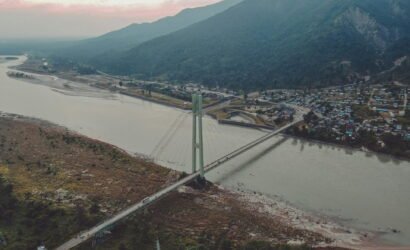
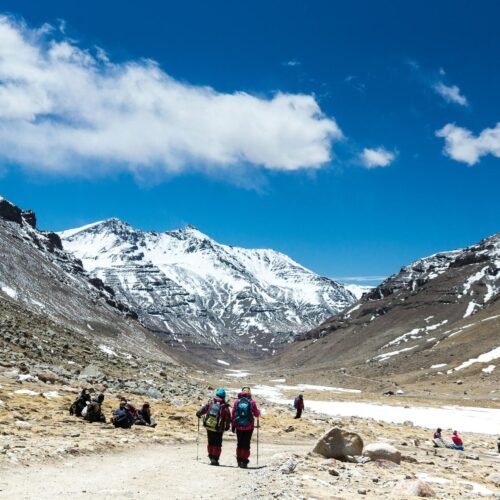
Upper Mustang is the rainshadow of the Annapurna and Dhaulagiri massifs. The monsoon dies against the southern slopes. North of Kagbeni, clouds rarely reach the ground. The landscape is a cold desert of eroded cliffs, wind-sculpted hoodoos, and caves dug into vertical conglomerate walls. The Kali Gandaki River runs grey with glacial silt. Villages are fortress-like clusters of flat-roofed houses painted with ochre and white stripes.
This was the Kingdom of Lo, a semi-independent polity that maintained its own monarch until 2008 and still retains a royal family inside Lo Manthang’s palace. The language spoken is Lowa, a Tibetan dialect. Prayer flags are strung across every ridgeline. Chortens and mani walls line the trails. The culture is Vajrayana Buddhism layered with pre-Buddhist Bon elements, visible in the amulets people wear and the rituals performed before spring planting.
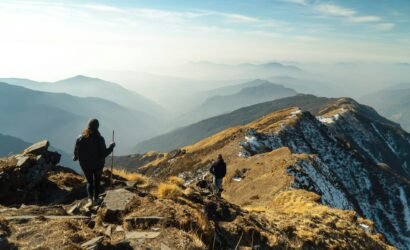
Trekking here is unlike Everest or Annapurna. There are no alpine forests, no terraced rice paddies. The elevations are high but the trails stay on ancient salt-trade caravan routes that once connected Tibet to the Indian plains. Altitude is the main challenge, not steepness. The air is thin and dry. Villages sit hours apart. The sun burns harshly by 8 a.m., and wind can whip through the corridors at 40 km/h by afternoon. You walk in a mineral world where every rock has a story – fossils of ammonites in the riverbed, caves that held meditation cells for centuries, chortens built over the bones of lamas.
During Tiji, this austere landscape transforms. Pilgrims walk from villages days away. The monastery in Lo Manthang becomes the ritual centre of the entire former kingdom. The festival is not a tourist event. It is a tantric religious practice conducted by the Choede Monastery monks. Outsiders are permitted to observe. That distinction – observe, not participate casually – shapes the entire experience.
History of the Tiji Festival: The Dance That Defeated Darkness
The word “Tiji” is a contraction of Tempa Chhirim, meaning “Prayer for World Peace.” The festival re-enacts the myth of Dorje Jono (also known as Dorje Shugden in some lineages, though careful – Dorje Jono is the deity specifically associated with this event) who descended to the demon-ravaged kingdom to restore balance.
According to the story preserved in Lo Manthang, a demon named Man Tam Ru was spreading disease, famine, and conflict. The people could not defeat him. Dorje Jono took birth as the son of a deity king and engaged the demon in a series of battles. The three-day ceremony depicts this:
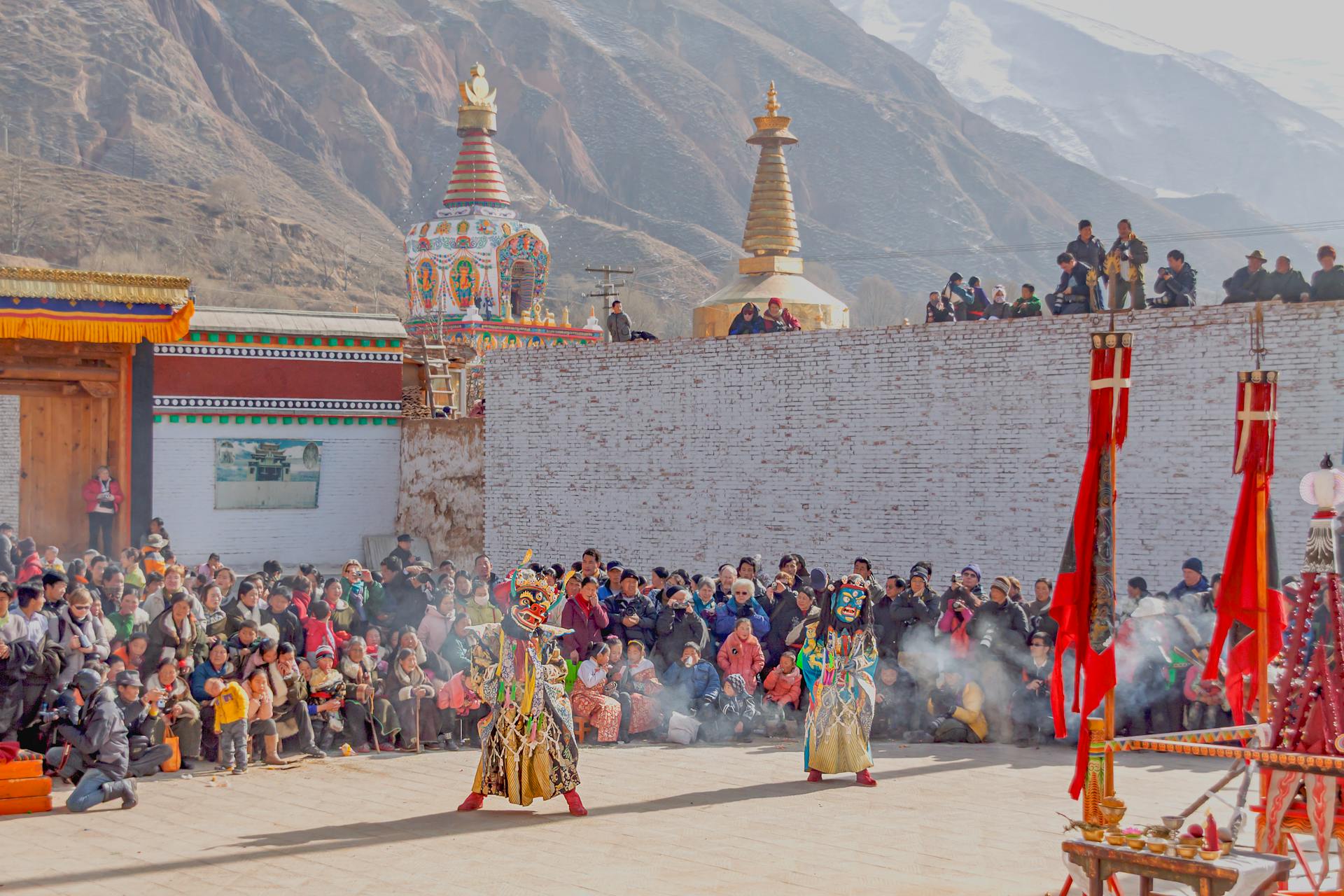
- Day One (Tse Chham): The monks perform dances in elaborate brocade robes. The horns drone. Dorje Jono tries to bring the demon under control through compassion and displays of power. The demon resists.
- Day Two (Nga Chham): The conflict intensifies. More wrathful deities appear. The demon’s forces gather. The atmosphere is charged. Locals believe that witnessing this dance purifies negative karma accumulated over the year.
- Day Three (Rakta Chham): Dorje Jono finally subdues the demon. A torma (effigy) representing the defeated evil is pierced with a phurba (ritual dagger) and then carried outside the city walls and burned. This act symbolically liberates the demon and restores peace to the kingdom.
Throughout, the monks enter deep meditative states. The masks are not costumes; they are temporary manifestations. Visitors must understand this: when a masked dancer emerges, the community sees the deity, not the person.
The king’s palace opens its courtyard. Formerly, the royal family would preside. Even without an official king, the Raja of Mustang often attends, and the palace gates are flung open for the final day’s burning ceremony. The entire town gathers on rooftops. The sound of gyaling (oboe-like instruments) and long horns reverberates off the palace walls in a way that no sound system could replicate. It is raw, unrehearsed in a theatrical sense, and profoundly local.
Photography etiquette: you can take photos during the public dances in the monastery courtyard, but do not use flash. Do not try to photograph the monks during private rituals. Do not treat the burning of the torma as a spectacle to capture with a selfie. Stand back, observe, and ask your guide before raising a camera. Respect trumps every shot.
Detailed Day-by-Day Itinerary
This itinerary represents the most reliable sequence we have operated for over a decade during Tiji. Actual festival dates dictate the exact days we spend in Lo Manthang, but the structure remains. In the descriptions, “Festival Day” refers to the three main public ceremony days.
Day 1: Arrival in Kathmandu (1,350 m)
You land at Tribhuvan International Airport. Our representative meets you and transfers you to a hotel in Thamel. The rest of the day is free. In the evening, we hold a thorough trip briefing covering permits, gear check, altitude protocols, and Tiji etiquette. Dinner on your own.
Day 2: Drive or fly to Pokhara (820 m)
We take the tourist bus (approx. 7–8 hours) or optional 25-minute flight. The road follows the Trishuli River, then the Marsyangdi. Pokhara in late afternoon feels balmy after the capital. Check into a lakeside hotel. We finalise any last-minute supplies, pick up snacks, and repack for the mountain flight tomorrow. Altitude is low; sleep comes easy.
Day 3: Fly Pokhara to Jomsom (2,720 m), trek to Kagbeni (2,810 m) – 3.5 hrs
The morning flight to Jomsom is a 20-minute window into the deepest valley on Earth. The aircraft flies between Annapurna and Dhaulagiri. Jomsom is windswept and bright. After organising the duffle bags and meeting the porters, we walk along the Kali Gandaki riverbed. The trail is wide, gravelly, often shared with jeeps in some sections. Kagbeni appears suddenly, a medieval labyrinth of alleys and whitewashed houses guarded by the red gompa on the bluff. This is the gateway to Upper Mustang. We stay in a comfortable lodge. The afternoon is for exploring the old town and resting.
Day 4: Kagbeni – Acclimatisation and Permit Check
We remain in Kagbeni for an essential acclimatisation day. At 2,810 m, the body begins producing more red blood cells. You don’t feel altitude acutely here, but rushing higher is the most common cause of problems later. We walk to the Kag Chode Thupten Samphel Ling Monastery, visit the 108 chortens along the river, and climb a short hill for views of Nilgiri. Our staff processes the restricted-area permit at the checkpost. Tomorrow we cross into the Kingdom of Lo.
Day 5: Kagbeni to Chele (3,050 m) – 5 hrs
After the ACAP checkpost, the trail climbs above the river on a rocky path. We pass through Tangbe village, with narrow alleys and apricot orchards, then Chhusang, known for caves that honeycomb the cliff face. The trail crosses the Kali Gandaki on a small bridge and begins a steep ascent to Chele. The landscape shifts: red and brown cliffs, intense sun, almost no vegetation. Overnight in a simple teahouse. Bucket showers possible for a fee.
Day 6: Chele to Syanbochen (3,475 m) – 6 hrs
Today involves a series of passes. We climb to Taklam La (3,624 m) and Dajori La (3,735 m), with views stretching to Damodar Himal and the Tibetan plateau rim. Between passes, the trail dips into ravines and climbs again. The walking is undulating, not purely uphill. Syanbochen is a small settlement with a few lodges. Nights are cold. Extra blankets needed.
Day 7: Syanbochen to Ghami (3,520 m) via Geling – 6 hrs
We cross the Yamda La (3,850 m) and descend gently. Geling appears with its large monastery and a school. The area around Geling has extensive buckwheat fields – the staple grain of Mustang. Then we pass one of the longest mani walls in Upper Mustang before reaching Ghami, a large village with interconnected whitewashed houses and a dramatic gorge entry. The gompa houses a golden Buddha. Views of distant snow peaks emerge to the south.
Day 8: Ghami to Tsarang (3,560 m) – 5 hrs
After crossing Ghami Khola, we climb over Tsarang La (3,870 m) and descend to Tsarang, the former capital before Lo Manthang. The dzong (fortified palace) here is massive, with a red gompa attached. Tsarang also has a 15th-century monastery, a huge library of pecha (Tibetan manuscripts), and a relaxed feel. We stay overnight and explore the prayer wheels.
Day 9: Tsarang to Lo Manthang (3,800 m) – 4 hrs
The walk to Lo Manthang feels ceremonial. A gentle climb leads to Lo La (3,950 m), where the walled city first appears across a broad plain, with the snow wall of the Tibetan plateau behind it. No photograph captures the shock of colour: whitewashed mud walls, orange monastery roofs, barley fields glowing green in spring. We enter through a city gate. Overnight in a teahouse inside Lo Manthang. Depending on Tiji dates, we either arrive a day before the festival begins or on Day 1.
Day 10: Tiji Festival – Day One (Tse Chham)
By mid-morning, the monastery courtyard fills. Monks in yellow hats and brocade robes sit in rows. Long horns sound. The first masked dancers emerge – the demon’s attendants, wrathful deities, and later Dorje Jono. The dance is slow, stylised, punctuated by cymbals. We position ourselves where we can see without intruding on the monastic assembly. After the ceremony, the town buzzes. We have time to visit the three main gompas – Champa Lakhang, Thubchen Gompa, and Chodey Gompa – and climb onto rooftops for sunset.
Day 11: Tiji Festival – Day Two (Nga Chham)
The conflict escalates. The dances become more vigorous. Villagers from Samdzong, Dhe, and Chhoser arrive in their finest traditional dress. The women wear turquoise-studded headpieces and goat-skin chubas. We watch the rituals from the gallery. After the main ceremony, we walk to the Raja’s palace. The royal family may grant audience if arrangements align. The rest of the day is for exploring the alleys of the city and interacting with elders who remember the era of salt caravans.
Day 12: Tiji Festival – Day Three (Rakta Chham)
The demon is destroyed. The effigy is paraded through the narrow streets, accompanied by a cacophony of horns and shouts. The entire city follows the procession outside the walls. The burning of the torma happens at a specific spot outside the eastern gate. This moment – the flicking flames, the red cliffs in the background, the collective exhale of a community – is why you came. After the ceremony, we hold a group lunch at the teahouse. The afternoon is quiet; many lodges offer simple meals and local chang (barley beer).
Day 13: Exploration Around Lo Manthang (Chhoser, Nyphu Cave)
We take a day to visit the Nyphu Cave monastery and the Chhoser village, famous for its 2,500-year-old meditation caves and a remarkable five-story Gompa Kang. The geology is extraordinary. We may also walk to the ancient fortress of Ketcher Dzong. This buffer day prevents exhaustion after the intense festival days. Overnight again in Lo Manthang.
Day 14: Lo Manthang to Drakmar (3,820 m) via Ghar Gompa – 6 hrs
We exit Lo Manthang through the northern gate and walk towards Ghar Gompa, one of the oldest monasteries in Mustang, said to have been built by the great translator Rinchen Zangpo in the 11th century. The trail winds through an otherworldly landscape of red gullies. Drakmar is a small settlement with red cliffs and excellent sunset light. Overnight here.
Day 15: Drakmar to Ghami – 6 hrs
We retrace part of the route but take a higher alternative trail through the valley, passing ancient sky caves carved into cliffs. The perspective is completely different heading south. We overnight in Ghami again.
Day 16: Ghami to Chele – 6 hrs
A steady descent passing through Geling and looping back over the passes in reverse. The air feels thicker. Breathing becomes easier. We stay at Chele.
Day 17: Chele to Kagbeni – 5 hrs
We drop to the Kali Gandaki valley floor and walk to Kagbeni. The green of apple orchards and willow groves feels startling after two weeks in the desert. We exit the restricted area and have a final evening with the staff. Hot showers are now widely available.
Day 18: Kagbeni to Jomsom, fly to Pokhara
Morning walk to Jomsom (approx. 3 hrs). Take the first flight back to Pokhara. Rest of the day to decompress by Phewa Lake. Farewell dinner as a group.
Day 19: Return to Kathmandu
Drive or fly to Kathmandu. Transfer to hotel. Trip ends.
Note: The exact festival days shift each year based on the lunar calendar. We adjust the Lo Manthang days accordingly, sometimes adding a fourth night to accommodate pre-ceremony rituals.
Trek Difficulty: Honest Assessment
This is a moderate-altitude trek with long days and limited medical infrastructure. It is not an expedition, but it is far from a gentle walking holiday.
- Walking hours: 4–7 hours per day on trail. Trails are rocky, often exposed, and can be dusty. Some days involve multiple passes over 3,800 m.
- Altitude: You sleep between 2,800 m and 3,800 m most nights. The air is dry. Altitude sickness is a real risk without proper pacing.
- Terrain: The route follows ancient trade paths. There are steep uphill sections on loose scree, particularly ascending to Chele and crossing passes. No technical gear needed, but trekking poles are essential.
- Festival crowds: During Tiji, Lo Manthang gets busier. Accommodation is basic even with pre-bookings. Patience is required. The walking routes themselves do not feel crowded because the region has a strict cap on daily permits.
- Road conditions: Parts of the trail near Jomsom and Kagbeni see occasional jeeps. Dust can be significant. We choose walking paths that minimise vehicle interaction.
Who can do it: Anyone with solid cardiovascular fitness, previous multi-day hiking experience (not necessarily high altitude), mental resilience for cold nights, and a genuine interest in cultural immersion.
Who should avoid it: Those with uncontrolled hypertension, severe respiratory issues, or a rigid expectation of hotel comforts. If you cannot tolerate squat toilets for days or cope with cold wind at 4,000 m without complaining, this trek will break you.
Fitness Requirements
You don’t need to be a marathon runner, but you must arrive trek-fit. This means:
- Ability to walk 5–7 hours on undulating terrain on back-to-back days without exhaustion.
- Comfort with carrying a daypack (5–7 kg) with water, camera, layers.
- Strong knees for descent – the return leg puts strain on joints.
- Previous hill walking or hiking with elevation gain.
We recommend a training plan of 3–4 hikes per week for at least 6 weeks before departure, including stairs or uphill sections with your trekking boots. If you can complete a 15 km day hike with 800 m of ascent and feel ready to do it again the next day, you are prepared.
Altitude Information
Upper Mustang sits in a rain shadow, but altitude affects everybody. Lo Manthang is at 3,800 m. Sleeping this high, even for fit individuals, requires acclimatisation.
How we manage it:
- Two nights in Kagbeni (2,810 m) early in the itinerary.
- Gradual altitude gain never exceeding 500 m in sleeping altitude per day once above 3,000 m.
- A rest day in Lo Manthang built around festival observation, not just hiking.
- Guides carry a pulse oximeter and monitor group members daily.
Symptoms of AMS (Acute Mountain Sickness): headache, nausea, dizziness, loss of appetite, disturbed sleep. We treat mild symptoms with rest, hydration, and descent if necessary.
Emergency procedures: Jomsom has an airstrip with daily flights to Pokhara. In case of severe AMS, we descend immediately and arrange evacuation. Helicopter rescue is possible from Lo Manthang and other points if weather permits. All guests must have insurance covering helicopter evacuation up to 4,000 m.
Prevention: drink 3–4 litres of water daily, avoid alcohol, eat even when not hungry, walk slowly, and communicate any symptoms immediately.
Best Time for the Mustang Tiji Festival Trek
Tiji is a spring festival tied to the lunar calendar, typically falling in May. The trek is only possible during this window if you want to witness the ceremony. Upper Mustang opens from March to November, but the Tiji dates dictate the exact departure.
Spring (May):
- Weather is generally stable, though afternoon winds are common.
- Daytime temperatures in Lo Manthang: 10–20°C.
- Night temperatures: -5 to 0°C. Snow can dust the passes overnight.
- Skies are often clear in the morning; clouds build in the afternoon.
- The landscape has some greenery from spring meltwater, but it remains arid.
We operate this trek only during the Tiji festival dates. If you are interested in Upper Mustang outside the festival, see our Upper Mustang Trek page.
Weather by Month (Upper Mustang trekking corridor)
| Month | Day Temp (approx) | Night Temp | Rainfall/Snow | Notes |
|---|---|---|---|---|
| March | 5–12°C | -10 to 0°C | Occasional snow | Early season, very cold nights, very few trekkers |
| April | 10–18°C | -5 to 5°C | Dry, windy | Good visibility, pre-festival |
| May | 12–22°C | -2 to 8°C | Dry, afternoon wind | Tiji month, ideal for festival trek |
| June | 15–25°C | 5–12°C | Pre-monsoon clouds possible | Dusty, but some rain shadow can bring light shower |
| July–Aug | Rain shadow largely dry, but clouds from south can bring rare rain, landslides possible elsewhere | Not recommended due to flight cancellations risk | ||
| Sept–Oct | 10–20°C | 0–8°C | Clear skies | Excellent trekking but no Tiji |
| Nov | 5–15°C | -5 to 5°C | Dry | Cold, possible snow on passes |
Accommodation: What to Expect
Kathmandu and Pokhara: We use 3-star category hotels with en suite bathrooms, hot water, and reliable electricity.
During the trek: Accommodation is in teahouses and lodges run by local families. Rooms are basic, mostly twin-sharing with wooden beds, foam mattresses, and pillows. Blankets are provided, but we strongly recommend a sleeping bag rated to -10°C comfort.
Bathrooms: Outside the major settlements, bathrooms are shared and often squat-style, with a bucket of water for flushing. Some lodges in Chele, Ghami, and Tsarang have basic attached rooms; we pre-book these wherever possible. Hot showers (solar or gas heated) are available at most stops for a small fee, but water pressure can be low.
Heating: No central heating. Common areas often have a dung-burning stove (yak dung is the primary fuel) where everyone gathers in the evening. Rooms are unheated. Bring a hot water bottle or use a Nalgene filled with boiled water inside your sleeping bag.
Electricity: Most villages have solar or micro-hydro power. Charging a phone or camera battery costs NPR 200–500 per item, per charge. Power is not 24/7. Carry a power bank as backup. In Lo Manthang, some lodges have inverters, but demand spikes during the festival.
Food on the Mustang Tiji Trek
Meals are prepared by teahouse kitchens. The menu is surprisingly varied given the remote location.
Breakfast: Usually Tibetan bread or chapati, eggs (boiled, fried, omelette), porridge, muesli. Butter tea is available and worth trying – it warms and hydrates in the dry air.
Lunch and dinner: Dal bhat (rice, lentil soup, vegetable curry, pickle) is the staple and unlimited refills. Other options include thukpa (noodle soup), thenduk (hand-pulled noodle stew), momos (dumplings), fried rice, fried noodles, and sometimes pizza or pasta at larger lodges. Meat is available but we advise against it in remote areas due to lack of refrigeration.
Mustang specialities:
- Tsampa – roasted barley flour mixed with butter tea, a traditional energy food.
- Chhyang (barley beer) – served during festivals.
- Yak cheese – dry and sharp, often from the Dhe area.
- Buckwheat pancakes – dense and filling, typical in Ghami and Tsarang.
- Sea buckthorn juice – the berries grow wild and make a tangy juice; available in some lodges.
Festival food: Around the monastery, vendors may sell fried dough balls, lapsi candy, and tea. Do not expect a food festival; this is a religious ceremony with simple refreshments.
We can accommodate vegetarian, vegan, and gluten-free requirements if informed in advance, though variety reduces north of Kagbeni.
Transportation: Getting to Upper Mustang During Tiji
Kathmandu to Pokhara: We use a tourist bus (included) or an optional flight (~25 min). The bus trip is long but scenic and allows luggage flexibility for domestic flights later. If time is tight, flying reduces fatigue.
Pokhara to Jomsom: A 20-minute morning flight. These flights operate only when weather is clear. Delays are common, especially in spring when valley winds pick up by late morning. We book the earliest flight. Baggage allowance is typically 15 kg checked, 5 kg carry-on. Excess baggage can be stored in Pokhara.
Jeep alternative: A road connects Beni to Jomsom and even to Kagbeni. Some itineraries use shared jeeps from Pokhara to Jomsom (approx. 8–10 hours). We can arrange this for private groups, but the flight saves days and avoids the extremely rough road. During Tiji, jeep travel is possible for the return from Jomsom to Pokhara if flights are cancelled, though it’s a long day.
Roads in Upper Mustang: Jeep tracks extend to Lo Manthang now, but we do not drive the festival itinerary because walking is how you acclimatise and absorb the landscape. We may use a vehicle for the exit section if group members are tired or flights need adjustment – our guides have the authority to adapt.
Domestic flights: Reliability is high in the morning, but we always allocate buffer days. Delays can eat into the restricted permit days, so we never schedule flights on the exact permit start day.
Permits: The Bureaucracy You Must Understand
Upper Mustang is a restricted area. Every foreigner must obtain:
- Upper Mustang Restricted Area Permit (RAP): Issued by the Department of Immigration in Kathmandu or Pokhara. Cost: USD 500 per person for the first 10 days, plus USD 50 per extra day beyond that. This is paid in US dollars cash (new, crisp notes). The permit lists exact entry and exit dates and the route. During Tiji, we ensure the 10-day window covers the festival plus buffer.
- Annapurna Conservation Area Permit (ACAP): NPR 3,000 per person (approx. USD 25), obtainable in Kathmandu or Pokhara.
- Trekkers’ Information Management System (TIMS) Card: Required, though for restricted areas the permit often supersedes, but we register you anyway.
Documents needed:
- Valid passport with at least 6 months validity.
- 2 passport-sized photos.
- Nepal visa (obtained on arrival at Kathmandu airport or in advance).
- Travel insurance copy (for our records).
Regulations:
- You must trek with a registered guide and at least two trekkers (the “two trekkers” rule is enforced for permit issuance, but if you are solo, we connect you with a group; we never cancel). We arrange all permits. You don’t stand in queues.
- You cannot deviate from the permitted route.
- Permits are checked at Kagbeni, Tangbe, Charang, and Lo Manthang.
- Drones are prohibited (see photography section).
Important: Permit fees and regulations can change. We verify current costs at the time of booking. Always confirm with our office before departure.
Packing List for Mustang Tiji Festival Trek
Pack light but smart. A duffle bag (provided by us or bring your own) goes with porters. You carry a daypack. Weight limit for the duffle is 12–15 kg on the Jomsom flight, so keep your gear minimal.
Clothing – layering system:
- Base layers (merino or synthetic, 2 sets): wicks sweat.
- Mid layer: fleece or lightweight down jacket.
- Insulation: heavier down or synthetic jacket for evenings, rated to -10°C.
- Outer shell: waterproof/windproof jacket and pants (afternoon wind is fierce).
- Trekking trousers (2 pairs): convertible zip-offs useful.
- Thermal underwear for sleeping.
Footwear:
- Sturdy, worn-in trekking boots with ankle support.
- Camp shoes/sandals for evenings.
- Gaiters optional for dust.
Festival-specific:
- Neat, respectful clothing for Lo Manthang. No shorts inside monasteries. A long-sleeve shirt and trousers in subdued colours show respect.
- A scarf or shawl can double as a dust mask and a head cover for monastery entry.
Accessories:
- Warm hat, sun hat, buff.
- Insulated gloves.
- Sunglasses (UV 400), sun cream (SPF 50+), lip balm.
- Headlamp with spare batteries.
- Trekking poles (critical for the passes).
Sleeping:
- Sleeping bag (-10°C comfort rating).
- Sleeping bag liner (adds warmth and hygiene).
- Inflatable pillow optional.
Medication and hygiene:
- Personal first-aid kit, blister pads, Diamox (consult doctor), anti-diarrheal, rehydration salts.
- Hand sanitiser, wet wipes, toilet paper (buy extra in Pokhara), biodegradable soap.
- Water purification: SteriPEN, filter, or purification tablets.
Camera and electronics:
- Camera with spare batteries (charging fees apply, so bring extras).
- Power bank (20,000 mAh minimum).
- Plug adapter (Nepal uses Type C/D, 230V).
- Memory cards.
Other:
- Cash in Nepali rupees (see money section).
- Passport copies, photos for permits.
- Reusable water bottle.
- Small gifts for local kids if you wish (pens, notebooks, not candy).
Culture and Etiquette in Upper Mustang
The people of Upper Mustang are Loba, culturally Tibetan. Their identity is tied to Buddhism, the old monarchy, and the land. The Tiji Festival is not a performance for tourists. It is a sacred ritual.
What to remember:
- Walk around mani walls, chortens, and prayer wheels clockwise.
- Never sit on or place objects on mani stones.
- Remove shoes before entering monasteries and chapels.
- Ask permission before photographing people. A smile and a “malaai photo khichnu sakchhu?” goes a long way. In Lo Manthang during Tiji, many older locals prefer not to be photographed.
- Dress modestly. Shoulders and knees covered.
- Do not point the soles of your feet at people or religious images.
- If you attend a puja inside the monastery, sit lower than the monks and do not stretch your legs toward the altar.
The Tiji dances are a religious act. Silence when the horns sound. Do not clap at the end of a ritual dance like a theatre performance. A quiet presence is the highest respect.
Wildlife
Upper Mustang’s wildlife is sparse but significant. You may see:
- Blue sheep (bharal) on the cliffs between Chele and Ghami.
- Himalayan griffon vultures and lammergeiers soaring.
- Marmots in the upper valleys.
- Tibetan wild ass (kyang) very rarely near the border.
- Snow leopard – almost never seen, but signs exist. Your guide can show you scrape marks if you’re lucky.
The area is also a haven for birds like choughs, accentors, and the Tibetan snowcock. Bring binoculars if you’re a keen birder.
Internet, Electricity, and Charging
As stated earlier, connectivity is minimal. Don’t plan to work or stream.
- WiFi: Some lodges in Jomsom, Kagbeni, and Lo Manthang have WiFi, but it’s slow and often fails when many devices connect. We recommend buying a Nepali SIM card (Ncell or NTC) in Kathmandu – NTC has better coverage in Mustang, especially near Lo Manthang, but still 3G at best.
- Charging: Most lodges offer charging for a fee per device. Bring a multi-USB charger and a universal adapter. A solar charger can be a great backup.
- Electricity: Dependent on lodge generation. In many villages, electricity is turned off after 10 p.m.
Drinking Water
Never drink untreated water. We provide boiled water at teahouses (you can fill your bottle at the lodge dining area for a small fee, typically NPR 100–200 per litre). Alternatively, use a steripen or water purification tablets. Bottled mineral water is available up to Jomsom but not beyond, and plastic waste is a serious issue in Mustang. We encourage reusable purification methods. Carry a wide-mouth bottle for easy filling.
Money and Expenses
Currency: Nepali rupees (NPR). Small notes are essential for snacks, hot showers, charging, and tips.
ATMs: In Kathmandu and Pokhara, you can withdraw NPR (limit around 30,000–50,000 per transaction). No ATMs in Jomsom or anywhere on the trek.
Cash needed: For the trek, budget approx. NPR 15,000–25,000 for personal spending (hot showers, charging, extra drinks, snacks, souvenirs). During the festival in Lo Manthang, little things add up. Also carry some USD for emergencies.
Permit payment: RAP requires USD cash directly. We handle the payment, but you may need to provide the amount in USD to us in advance if required, or we pay and you reimburse. We’ll clarify at booking.
Tipping: Tipping guide and porters is customary. Budget around USD 8–10 per day per trekker for the guide and USD 5–7 per day for porters as a combined gratuity pool. We will suggest a fair amount.
Safety and Emergency Procedures
Safety in Mustang comes from preparation, not reaction. Our guides are trained in wilderness first aid and altitude sickness management. The itinerary has built-in flexibility. We never hesitate to turn back or descend if a group member is unwell.
- Rescue: Helicopter evacuation is available through companies like Simrik Air or Fishtail Air. We facilitate the call. The cost is significant (USD 3,000–5,000) and must be covered by your travel insurance. Insurance must specifically cover trekking up to 4,000 m and helicopter evacuation.
- Weather: Afternoon winds in the Kali Gandaki can ground flights. We monitor daily. If Jomsom flights cancel, we arrange jeep transport to Pokhara.
- Political/regulatory: Upper Mustang is safe and politically stable. The restriction is a cultural preservation measure, not a security risk.
Travel Insurance
Every guest must have comprehensive travel insurance that includes:
- Medical and hospital treatment.
- Emergency helicopter evacuation up to 4,000 m.
- Trip cancellation and interruption.
- Loss of baggage.
We require a digital copy before the trip. Without proof of insurance, you cannot join. We recommend World Nomads, Allianz, or similar specialised adventure policies.
Responsible Tourism in Upper Mustang
Upper Mustang is fragile. Our commitments:
- All our guides and porters are from the region or have deep ties. We pay fair wages above industry standard and provide insurance, gear, and meals.
- We minimise plastic waste. We do not provide bottled water; boiled water and refill stations are the default.
- Porters carry loads within the weight limit (25 kg maximum per porter for two trekkers).
- We respect local custom, ask before taking photos, and contribute to monastery restoration funds through a per-trekker donation.
- Leave no trace: all trash is carried out or disposed of in designated areas.
Photography Guide: Capturing Tiji Without Exploiting It
Tiji is visually overwhelming. To photograph it respectfully:
Best locations in Lo Manthang:
- Monastery courtyard during Day 2 from the eastern gallery – you get eye-level views of the masks.
- Rooftops of teahouses – capture the walled city with dancers in the foreground.
- The alley leading to the eastern gate on Day 3 as the procession passes.
- Portraits of Loba women in traditional finery – always ask, offer to send the photo via WhatsApp (they appreciate it), and do not pay for photos; it changes dynamics.
Timing: Light is harsh between 11 a.m. and 2 p.m. The morning dances start around 9 a.m. when shadows still soften. Late afternoon offers golden light on the palace walls.
Drones: Strictly prohibited in Upper Mustang without a special permit from the Civil Aviation Authority and local authorities. Even with permission, the restricted area status makes it nearly impossible. Do not fly a drone. It will be confiscated, and you risk heavy fines and removal from the region.
Cost Breakdown: What You’re Paying For
Tiji treks are not cheap. The restricted-area permit alone costs USD 500 for 10 days. The following is a transparent summary based on a typical 18-day package.
| Item | Approximate Cost (USD) |
|---|---|
| Upper Mustang RAP (10 days) | 500 |
| ACAP + TIMS | 30–40 |
| Kathmandu–Pokhara–Jomsom flights (round-trip) | 350–400 |
| Guide & porter wages, insurance, meals | 450–550 |
| Accommodation (teahouses & hotels) | 350–400 |
| Meals during trek (full board) | 300–350 |
| Ground transport in Kathmandu/Pokhara | 80 |
| Agency logistics, permit processing, pre-booking fees, festival coordination | 150–200 |
| Total package estimate | 2,200–2,500 |
Prices vary by group size, exact dates, and flight costs. Our listed package price includes what’s below.
What’s Included
- Airport pick-up and drop-off in Kathmandu.
- 2 nights hotel in Kathmandu and 2 in Pokhara (twin-sharing, B&B).
- Tourist bus (or flight upgrade) Kathmandu–Pokhara–Kathmandu.
- Pokhara–Jomsom–Pokhara flight and all airport transfers.
- Full board meals (breakfast, lunch, dinner) during the trek.
- Teahouse/lodge accommodation on trek.
- Upper Mustang Restricted Area Permit, ACAP, TIMS.
- Experienced, English-speaking, government-licensed trekking guide (holds Upper Mustang permit card).
- Porter service (1 porter for 2 trekkers, max 25 kg combined).
- First aid kit, pulse oximeter.
- Pre-trip briefing and gear check.
- All government taxes and service charges.
What’s Excluded
- Nepal visa fee (USD 30–50, obtainable on arrival).
- International flights.
- Travel insurance (compulsory).
- Lunch and dinner in Kathmandu and Pokhara (except farewell dinner).
- Personal expenses: drinks, snacks, hot showers, battery charging, WiFi, laundry.
- Tips for guide and porter.
- Extra permit days if itinerary extends due to unforeseen events.
- Helicopter evacuation or medical treatment.
- Any costs arising from flight delays, cancellations, or weather changes (we will assist, but additional hotel/transport costs are on you).
Why Book This Trek With Us
We have operated Upper Mustang treks since before the road reached Lo Manthang. Our relationship with teahouse owners in Tsarang, Ghami, and Lo Manthang means we secure rooms with the best festival views. Our guides grew up hearing the Tiji myth from their grandparents – they don’t repeat Wikipedia, they tell you what the amchi (traditional doctor) told them. The Raja’s palace courtyard is not a place we blag our way into; we have been invited.
Small groups. No extra fees for single travellers willing to share. Permits handled start to finish. A Nepal-based team that directly employs its staff and pays them year-round, not per trek. And crucially, we understand that the Tiji Festival is a religious event, not a spectacle. We will never push you to the front of a ceremony to “get the shot.” We will position you to observe with the dignity the occasion demands.
Frequently Asked Questions
1. What is the Tiji Festival exactly?
It is a three-day monastic ritual held at Choede Monastery in Lo Manthang, reenacting the victory of Dorje Jono over a demon that brought suffering to Mustang. The final day involves a burning of effigy to symbolise the defeat of evil.
2. When is the Tiji Festival?
Dates are set by the Tibetan lunar calendar and fall in May most years. The monastery announces the exact days a few months prior. We update our departure dates immediately.
3. Can I just visit Lo Manthang for the festival without trekking?
You can take a jeep from Jomsom to Lo Manthang in a couple of days, but the restricted area permit still applies. However, driving up rapidly without acclimatisation is risky. Our trek includes a natural acclimatisation schedule and cultural immersion along the way. We do also offer an Upper Mustang Jeep Tour during Tiji – ask if trekking isn’t your preference.
4. Is this trek suitable for beginners?
If you’ve never trekked before, this is not the ideal first trek. It requires fitness and mental readiness for remote conditions. We suggest an Annapurna foothills trek first.
5. Do I really need a guide for Upper Mustang?
Yes. The government mandates a registered guide and at least two trekkers for the restricted area permit. No independent trekking is allowed.
6. How cold does it get at night?
In May, expect -5 to 0°C inside teahouse rooms. A good sleeping bag is non-negotiable.
7. How much cash should I carry?
NPR 20,000–30,000 in rupees, plus USD 500 emergency cash (separate from permit payment). There is no ATM beyond Pokhara.
8. Can I use a drone?
No. Drones are not permitted without special clearance, and even then, the restricted area status makes it near impossible. We strongly advise against bringing one.
9. Is there WiFi in Lo Manthang?
Some lodges offer patchy WiFi, but it often fails during the festival due to high usage. An Ncell/NTC SIM with data is a fallback, but connection is 3G and spotty.
10. What if I get altitude sickness?
Our guide monitors everyone daily. We descend immediately if symptoms worsen. Jomsom has flights out, and helicopter evacuation can be arranged.
11. Can I charge camera batteries every day?
Charging is available at most lodges for a fee, but on some days between Kagbeni and Lo Manthang, facilities are basic. Carry spare batteries and a power bank.
12. What happens if the festival dates change after I book?
We adjust the itinerary with no extra cost to you, provided the change is communicated in time for permit amendments. If it shifts dramatically, we offer options or a full refund of the trek deposit.
13. Can the trek be done privately?
Yes, we operate private departures for 2 or more people on your dates. The same cost structure applies.
14. Can I combine this with Muktinath?
Absolutely. After the trek, we can arrange an extension to Muktinath and the Annapurna Circuit region. Talk to us about a custom itinerary.
15. Is travel insurance really compulsory?
Yes. Without helicopter evacuation cover and medical insurance, you cannot join. We will check.
16. What’s the food like for vegetarians?
Excellent – dal bhat, veg momos, thukpa, fried rice, and Tibetan bread are all veg-friendly. Vegans should inform us in advance so we can prep the lodges.
17. How many people in a group?
Maximum 12. We average 6–8, which keeps the experience personal and allows flexibility.
18. Do I need to bring a sleeping bag?
Yes. Blankets are available, but a -10°C sleeping bag ensures hygiene and reliable warmth.
19. How many days do we stay in Lo Manthang?
Three or four nights depending on the festival calendar and our exact arrival. This covers the three main ceremony days and exploration.
20. Can I ride a horse or jeep part of the way?
Horses can be arranged for emergency or if you’re unable to walk a section, but this must be communicated early. Jeeps are possible on some return sections.
21. Will I see the Raja of Mustang?
The former king is often present during Tiji, but there are no guarantees. He sometimes grants an audience, but this is not part of the package and depends on his schedule.
22. Are there toilets in the teahouses?
Yes, mostly squat toilets, some Western. Cleanliness varies. Bring toilet paper and hand sanitiser.
23. What if my flight to Jomsom is cancelled?
We wait for the next available flight or arrange a jeep to Jomsom to keep the itinerary on track. Buffer days are included.
24. How does Upper Mustang differ from the Annapurna Circuit?
Annapurna Circuit crosses a high pass and has diverse climate zones. Upper Mustang is a high desert with Tibetan culture, no high pass crossing, and a restricted area that limits crowds.
25. Can I extend my trip to Tibet?
We can assist with Tibet travel arrangements, but the permit process is separate. Ask us.
26. How do I apply for the visa?
Nepal visa is on arrival at Kathmandu airport for most nationalities. Bring USD cash and a passport photo. See our Nepal Visa Guide.
27. Are there any age limits?
No official limit, but trekkers over 70 should have a doctor’s clearance and robust fitness. We assess case by case.
28. What’s the difference between this and your standard Upper Mustang Trek?
The standard trek runs multiple times a season and may or may not align with Tiji. This trip is built solely around the festival with guaranteed Lo Manthang lodging during the event, cultural interpretation, and festival-specific pacing.
29. Can I join just the festival and fly out by helicopter?
Helicopter charters are possible but very expensive. We can help arrange it privately, but the trek is the core experience.
30. How do I book?
Email us, call our Kathmandu office, or use the booking form on this page. We require a deposit and a completed booking form with insurance details.
Ready to step into the walled city when the horns sound? This trek fills 10–12 months in advance. Tiji dates are non-negotiable, and Lo Manthang beds are limited. If you want to be inside the palace courtyard when the demon burns, secure your place early.