
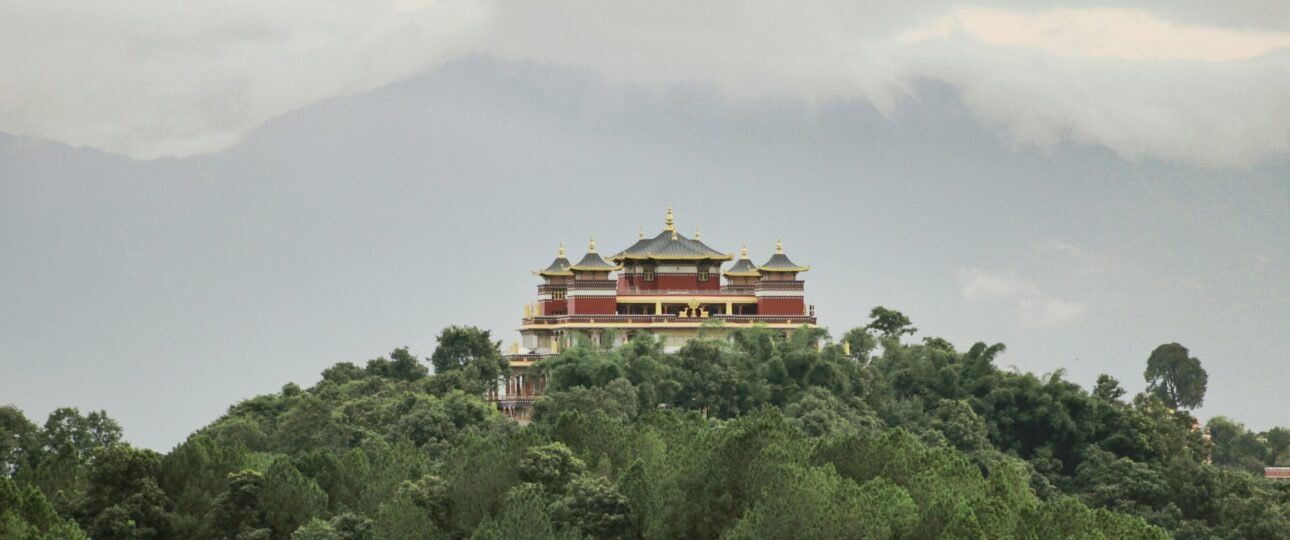
Introduction to Monastery in Nepal
Picking a monastery in Nepal sounds simple until you start reading. Some lists call Boudhanath a monastery, others call it a stupa. Kopan is famous, but visiting it is not always straightforward. Tengboche is the most visited gompa on the Everest trail, yet most trekkers walk past without knowing what to do inside. This guide sorts out what is what, region by region, so you can choose places that suit your time, your fitness and your interest, and visit them in a way that is respectful.
The short answer: if you have a few days in Kathmandu, start with Boudhanath and Swayambhunath, add Kopan or Namo Buddha if you want a quieter, more monastic setting, and consider Lumbini if the birthplace of the Buddha is on your list. If you are trekking in the Everest region, Tengboche is the one to plan around. Everything else in this article builds on those anchors.
Monasteries in Nepal at a Glance
| Place | Region | What it is known for | Best for |
|---|---|---|---|
| Boudhanath | Kathmandu | One of the largest stupas in the world, ringed by monasteries and a walking circuit | Evening walks, first-time visitors |
| Swayambhunath | Kathmandu | Hilltop stupa complex, reached by more than 365 steps, with resident monkeys | Views, history, photography |
| Kopan Monastery | North of Boudhanath | Tibetan Buddhist teaching centre on a hill above the city | Study, retreats, quiet |
| Shechen Monastery | Boudhanath area | Cultural and teaching centre for Tibetan Buddhism | Culture, architecture |
| Namo Buddha and Thrangu Tashi Yangtse | About 40 km from Kathmandu | Pilgrimage site tied to the story of the Buddha and the tigress | Day trips, hill air, calm |
| Lumbini monasteries | Western Terai | International monasteries around the Buddha’s birthplace | Pilgrims, architecture fans |
| Tengboche Monastery | Everest region | Largest gompa in the Khumbu, at 3,867 m | Trekkers on the Everest trail |
Opening times, visitor rules and fees at religious sites change, and some places set their own limits for foreign visitors. Check locally or with your guide before you go.
What Counts as a Monastery in Nepal?
The word covers more than one kind of place, and knowing the vocabulary helps when you read signs and itineraries.
- Gompa: The Tibetan word for a monastery or a place of Buddhist learning and practice. In the mountains you will mostly see this term, as in Tengboche Gompa.
- Vihara or vihar: The word more often used for Buddhist monasteries in the Kathmandu Valley, especially in Newar Buddhist communities.
- Stupa: A dome-shaped shrine, not a residential monastery. Boudhanath and Swayambhunath are stupas, though they are surrounded by monasteries and are often described as monasteries in travel writing. Both are UNESCO World Heritage Sites.
- Nunnery: A monastery for nuns. There are several along the Everest trail and in the Kathmandu Valley.
Nepal is also home to different schools of Tibetan Buddhism, including Nyingma, Kagyu, Gelug and Sakya, alongside Newar Buddhism in the Kathmandu Valley and Theravada communities in places like Lumbini. You do not need to memorise them. It is enough to know that the monasteries you visit may follow different traditions and that each has its own customs. Tengboche, for example, is a Nyingma monastery.
For a full catalogue, Wikipedia keeps a list of monasteries in Nepal, including lesser-known places such as Tharlam Monastery in Kathmandu and the Karma Raja Maha Vihar at Swayambhunath. The sections below focus on the places most visitors can realistically include in a trip.
Kathmandu Valley: The Easiest Place to Start
You can see several of the best-known sites in a single day, and the distances are short. That makes the valley the natural starting point for anyone interested in Buddhist culture.
Boudhanath and the monasteries around it
Boudhanath is the centre of Tibetan Buddhist life in Kathmandu. The huge white dome, painted eyes and ring of prayer wheels draw pilgrims from early morning until after dark. The usual way to experience it is to join the flow of people walking clockwise around the stupa, a circuit known as a kora. Around the stupa you will find small monasteries, shops selling butter lamps and prayer flags, and rooftop cafes with views over the dome.
Go early in the morning or around sunset. Both times are busy with local devotees, and the atmosphere feels like a place of worship rather than a tourist stop. In the middle of the day it can be hot, crowded and noisy. Shechen Monastery, in the Boudhanath area, is a good addition if you want to see a working monastery after the stupa; it is described as an important cultural centre for Tibetan Buddhism and for preserving its traditions.
Swayambhunath
Swayambhunath sits on a hilltop west of the city and is one of the oldest religious sites in the valley. Visitors climb more than 365 stone steps to reach the stupa, passing prayer wheels, shrines and the monkeys that give the site its nickname. At the top there are views over the valley, and a mix of Buddhist and Hindu devotion that shows how closely the two traditions sit together in Kathmandu.
The climb is short but steep, so go in the morning when the steps are cooler, and keep food and sunglasses out of reach of the monkeys. If you would rather save your legs, there is also a road approach, so ask your driver or guide which entrance suits you.
Kopan Monastery
Kopan sits on a hill north of Boudhanath and is one of the best-known Tibetan Buddhist teaching centres in Nepal. It was established in the late 1960s and early 1970s and is associated with Lama Thubten Yeshe and the Foundation for the Preservation of the Mahayana Tradition. It is known for its meditation courses and for hosting large numbers of monks and students.
Access for casual visitors has changed over the years. Some sources describe the monastery as having restricted general admission, while others list set daily visiting hours, so do not assume you can walk in whenever you like. Check the monastery’s own information or ask a local guide before making a special trip. If you want a quieter experience than Boudhanath and are prepared to follow the monastery’s rules, Kopan can be a rewarding half-day. If you plan a longer stay, see the section on retreats below.
Namo Buddha and Thrangu Tashi Yangtse
About 40 km from Kathmandu, and roughly two hours by road according to travel writers, Namo Buddha is one of the most important Buddhist pilgrimage sites in the valley’s hills. It is associated with the story of a prince who offered his body to feed a starving tigress, an episode that illustrates the Buddhist ideal of compassion. The nearby Thrangu Tashi Yangtse Monastery is a Tibetan Buddhist centre that serves as a teaching and retreat place, and its hillside setting makes it a good escape from the city’s dust and noise.
This is a good option for a day trip or an overnight stay if you want fresh air and a slower pace. It also pairs naturally with hill walks, so it works for travellers who want culture without a long trek. Our guide to the Langtang Heritage Trail covers a different cultural route for those who prefer to walk between villages and gompas.
A note on Hindu temples nearby
Many travellers combine Buddhist sites with the great Hindu temple of Pashupatinath. It is not a monastery, but it sits close to Boudhanath and gives a useful contrast in how the two religions are practised. Our guide to Pashupatinath explains the rules for visitors, which differ from those at Buddhist sites.
Lumbini: Monasteries Around the Buddha’s Birthplace
Lumbini, in the western Terai, is recognised as the birthplace of the Buddha and is a UNESCO World Heritage Site. The sacred garden at its centre contains the Maya Devi Temple, and around it is a large monastic zone where different countries and Buddhist traditions have built their own monasteries. The result is an unusual open-air tour of Buddhist architecture, with styles reflecting the countries that built them.
Lumbini is quieter and flatter than Kathmandu, and the monasteries are spread out, so many visitors hire a bicycle or rickshaw. It suits pilgrims and travellers who want a calm, contemplative stop rather than a busy city site. Because it is in the lowlands, it can be hot in summer, so spring and autumn are more comfortable. It sits a long way from Kathmandu by road, so most people reach it by a domestic flight to nearby Bhairahawa or a long drive, and it works best as its own stop rather than a day trip. Check current transport options when you plan.
Everest Region: Monasteries on the Trail
If you trek to Everest Base Camp, you will pass monasteries that are still the spiritual centres of the Sherpa villages around them. This is where a monastery in Nepal feels least like a tourist site and most like a working community.
Tengboche Monastery
Tengboche, also called Dawa Choling Gompa, sits at 3,867 metres on a ridge in the Khumbu with a view toward Ama Dablam, Everest, Lhotse and Nuptse on a clear morning. It is the largest gompa in the Khumbu region and belongs to the Nyingma school. Reference sources date its founding to 1916 by Lama Gulu, and it is best known for the Mani Rimdu festival, a masked dance festival held each year.
Most trekkers arrive after the climb from the river and reach Tengboche in the afternoon, often staying overnight. If you can, step into the main hall during a prayer session. The sound of chanting and horns in a cold, high hall is one of the most memorable parts of the trek for many people. Sit quietly at the back, keep your voice low and do not photograph the monks or the interior unless you have been clearly invited to do so. There is usually an entrance fee at the gate, and the amount can change. Our detailed Tengboche Monastery guide covers the village, the timing and what to expect on arrival.
Pangboche and Debuche
Further along the trail, Pangboche Gompa is often described by trek operators as the oldest monastery in the Khumbu. Debuche, near Tengboche, has a Buddhist nunnery that some itineraries include. These are smaller and quieter than Tengboche, and a short, respectful visit on the way past is often more personal than a crowded main hall.
Mani Rimdu and other festivals
Mani Rimdu is the best-known monastery festival in the Everest region. It involves several days of ritual, with masked dances performed in the courtyard. Dates follow the lunar calendar and change from year to year, and the festival is held at more than one monastery in the region, so confirm the dates and the location for the year you are travelling. If you are not trekking in the autumn, you can still visit the monastery, but you will not see the dances.
Other Regions Worth Knowing
Beyond the three main areas above, almost every trekking region has monasteries woven into the villages.
- Langtang: The valley has Tamang and Tibetan Buddhist communities, with gompas, mani walls and prayer flags along the trail. The heritage trail above Kathmandu is designed around Tamang culture.
- Annapurna and Mustang: Gurung and Thakali villages have gompas, and the walled town of Lo Manthang in Upper Mustang is known for its monasteries. Upper Mustang is a restricted area that requires special permits, so plan it well in advance.
- Manaslu and Tsum Valley: These border regions have strong Tibetan Buddhist traditions, with monasteries and nunneries in remote villages. They also require permits and a licensed guide.
- Solu and the Rolwaling valley: Less visited areas with their own gompas, suited to travellers who want quiet routes.
If you are still deciding where to go, our overview of the best places to go in Nepal shows how monastery visits fit around other highlights.
Monastery Etiquette: How to Visit Respectfully
Most monasteries welcome respectful visitors. A few habits make a large difference to how you are received and how the monks and local worshippers experience your visit.
- Walk clockwise. Around stupas, prayer wheels, mani walls and chortens, keep the monument on your right. This is the standard practice in Tibetan Buddhism.
- Remove your shoes before entering a prayer hall, and leave them where others have left theirs.
- Ask before photographing. Look for signs, and ask permission before taking pictures or video, especially of monks, ceremonies and inside prayer halls. Many halls do not allow photography at all.
- Keep your voice low. Speak quietly, silence your phone and do not interrupt prayers.
- Do not touch sacred objects such as statues, thangka paintings or ritual items. Do not step over offerings or prayer books.
- Avoid pointing your feet at altars, statues or people when you sit.
- Sit at the back during a ceremony, and follow the lead of locals if you are unsure.
- Offer donations discreetly, in the donation box, rather than handing cash to individuals.
- Do not feed or tease animals around the site, particularly at Swayambhunath where the monkeys can be aggressive.
The mantra you will hear and see everywhere is Om Mani Padme Hum. If you want to understand what the words mean and why they appear on walls, flags and wheels, our guide to the meaning of Om Mani Padme Hum is a good short read before you visit.

What to Wear
You do not need special clothes, but modest dress shows respect.
- Cover your shoulders and knees. Light trousers or a long skirt and a shirt with sleeves work well.
- Wear shoes that are easy to take off and put on.
- Carry a scarf or light layer that you can use to cover up quickly.
- Avoid hats and sunglasses inside prayer halls.
- In the mountains, add warm layers, because monasteries are rarely heated and stone halls can be very cold.
When to Visit
The best seasons for monastery visits are the same as the best seasons for general travel in Nepal: spring (March to May) and autumn (October and November), when skies are clear and temperatures are comfortable. Autumn brings the clearest mountain views, while spring is warmer and greener.
Festivals add atmosphere but also crowds. Losar, the Tibetan New Year, fills the Boudhanath area with ceremony and celebration. Buddha Jayanti, which marks the Buddha’s birth, brings processions and offerings to many sites. Mani Rimdu fills Tengboche in autumn. The dates move with the lunar calendar, so check the year you plan to travel. If you prefer a quieter experience, avoid festival days and visit on a weekday morning.
Weather matters at high altitude. If your plan includes trekking to a gompa, our guide to Nepal’s climate in November shows what to expect at each altitude in one of the busiest months.
Combining Monasteries With a Trek
You can build monastery visits into almost any Nepal trip. A few combinations work particularly well.
Everest Base Camp. Tengboche, Pangboche and Debuche all sit on the standard route. Allow time in the afternoon and morning at Tengboche rather than rushing through, and consider timing your stay so you can attend morning prayers.
Short Kathmandu Valley hikes. Routes around the valley rim connect small gompas and shrines, and our guide to hiking places in Kathmandu shows how to link them into a day.
Langtang. The Tamang Heritage Trail is the most culturally focused short trek near Kathmandu, with gompas, mani walls and village life along the way.
Upper Mustang or Tsum Valley. These are for travellers with more time and who are comfortable with restricted-area permits and remote conditions.
Monastery Stays, Courses and Retreats
Several monasteries and affiliated centres offer teaching programmes, courses and accommodation. Kopan is the best-known example, and it is described as a major centre for the study of Tibetan Buddhism and meditation, with a guesthouse that gives visitors a chance to experience monastic life. Namo Buddha’s Thrangu Tashi Yangtse is also described as a learning and retreat centre. Tengboche has guest rooms that some travellers use.
Retreats are different from sightseeing. They usually require advance booking, a commitment to the schedule and acceptance of the rules, which can include silence, early rising and dietary restrictions. Rules and availability change, so contact the monastery or centre directly, and read its current information before planning. Our guide to choosing a meditation retreat in Nepal explains how to compare options and what to ask.
What You Will See Inside and Around a Monastery
A first visit can feel confusing if you do not know what the objects mean. A short key helps you look rather than just glance.
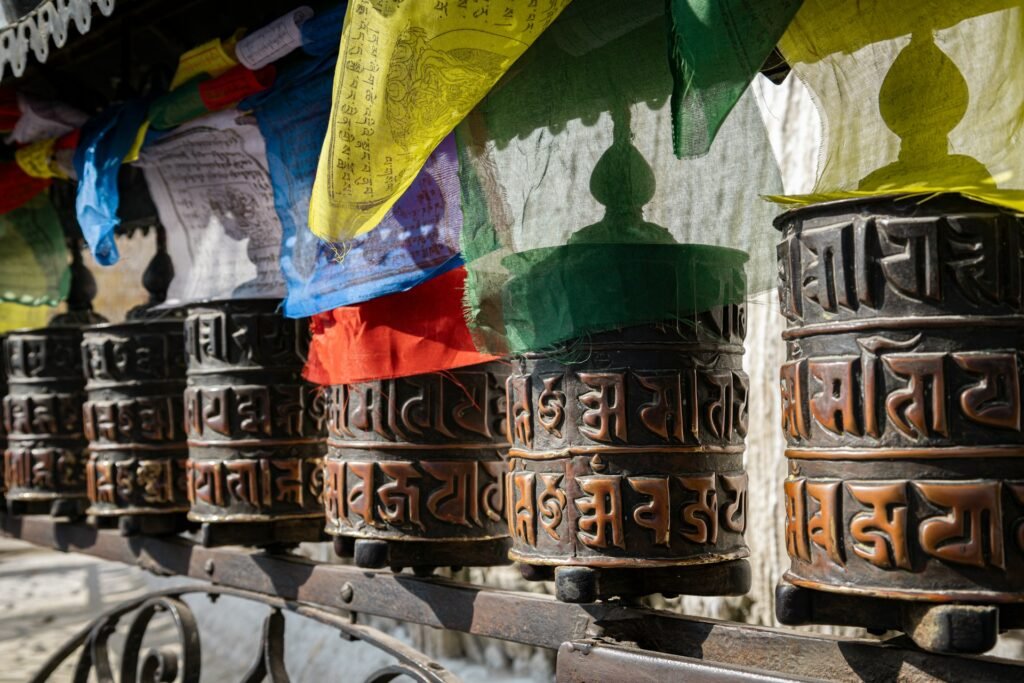
- Prayer wheels. Metal cylinders, often filled with printed mantras, that are spun clockwise as you walk past. The mantra most often inscribed is Om Mani Padme Hum. Spin them gently with your right hand and keep walking.
- Prayer flags. Strings of coloured cloth printed with prayers and mantras. They are hung outdoors so that the wind carries the blessings. Do not step on fallen flags or burn them as rubbish.
- Mani walls. Long walls of stones carved with mantras, common on mountain trails. Always pass them with the wall on your right.
- Butter lamps. Small lamps lit as offerings. Many monasteries sell a lamp or oil for a small donation, and lighting one is a common way for visitors to take part respectfully.
- Thangkas and murals. Painted or embroidered scrolls and wall paintings showing deities, teachers and teachings. They are sacred objects, so keep a respectful distance and do not touch them.
- The main hall. Usually has a central statue, rows of cushions for the monks and long horns and drums used in ceremonies. Visitors normally sit at the back or along the sides.
- The painted eyes at Boudhanath and Swayambhunath. The eyes on the stupa tower are a distinctive feature of Nepali stupas and are seen on both major Kathmandu sites.
You do not need to know the theology to appreciate any of this. Watching how locals move, spin the wheels, light lamps and bow is usually the best way to learn.
How to Choose Between Monasteries
With so many options, the easiest way to decide is to start from your interest and your time.
If you have one day. Choose Boudhanath, and add Swayambhunath if you are comfortable with stairs. Both are in the valley and need no special planning.
If you want quiet. Look at Namo Buddha, Kopan (subject to access) or the smaller monasteries around Boudhanath. A hilltop setting and a weekday morning will give you the calmest experience.
If you want mountain scenery with your monastery. Tengboche is the strongest choice. The ridge-top setting and the view toward Ama Dablam and Everest make it one of the most photogenic gompas in Nepal, even if you are not especially interested in the religious side.
If you want to learn. Kopan and Thrangu Tashi Yangtse are known as teaching and retreat centres. Contact them early and read their current information.
If you are travelling with children or older relatives. Boudhanath is easy to walk, with cafes and benches, and the road approach to Swayambhunath avoids most of the steps. Avoid long hill climbs in the heat.
If you are on a tight schedule. Pick the monastery that sits on a route you are already taking. A short stop at Tengboche on an Everest trek is more rewarding than a rushed extra trip back in Kathmandu.
Monasteries, Altitude and Cold
Monasteries in the mountains add one more factor: altitude. Tengboche sits at 3,867 metres, which is high enough that some visitors feel breathless on the final climb, and the hall can be cold even on a sunny day. Walk slowly, drink water and carry a warm layer. If you are sensitive to altitude, remember that the usual rules apply: ascend gradually, rest when you need to and descend if symptoms worsen. A beautiful gompa is not worth pushing through a headache.
Visiting Responsibly
Monasteries are active religious communities, not museums. A few extra points are worth bearing in mind.
- Respect closed areas. Private quarters, kitchens and some halls are not open to visitors.
- Do not treat monks as photo props. Ask, accept a refusal and thank them.
- Be careful with offers of “blessings” or “tours.” Genuine monastery guides do not hassle visitors, and donations should go through official channels.
- Keep the site clean. Take your rubbish with you, especially at high-altitude monasteries where waste is hard to manage.
- Support local communities. Buy from local shops and cafes, and use local guides who know the customs.
- Respect other visitors. At busy times, keep moving around the kora and avoid blocking the path for photos.
Sample Itineraries
One day in Kathmandu
Start at Swayambhunath early to beat the heat and the crowds, descend and have lunch in the city, then head to Boudhanath in the late afternoon. Walk the kora at sunset, stay for the evening butter-lamp atmosphere and have dinner at a rooftop cafe. This gives you two major sites and a sense of Tibetan Buddhist life in a single day.

Three days of culture around Kathmandu
Day one: Swayambhunath and Boudhanath. Day two: Kopan or Shechen in the morning, if access allows, and Pashupatinath in the afternoon for contrast. Day three: a day trip to Namo Buddha and Thrangu Tashi Yangtse, returning by road in the afternoon.
Culture added to an Everest trek
Plan your itinerary so that your night at Tengboche falls with enough time to attend morning or evening prayers. Add a short visit to Pangboche on the way to Dingboche. Build in a spare day for weather, because a pleasant monastery stop can turn into a rushed one if flights are delayed. Our Dingboche guide covers the next stage of the route.
A pilgrim’s route
Combine Kathmandu’s major sites with a trip to Lumbini and, if time allows, other sites associated with the Buddha’s life in the lowlands. This route suits travellers whose main interest is the history of Buddhism rather than mountain scenery.
Small Practicalities That Make the Day Easier
A few details are easy to overlook until you are standing at a gate. Carry small notes in Nepali rupees, because entrance fees and donation boxes rarely give change. Bring a bottle of water and a light snack, especially for hill sites such as Swayambhunath, Namo Buddha and Tengboche, where choices are limited. Keep your phone charged for maps and for your driver, and download an offline map before heading out of the city. If you hire a guide, ask them to explain the rituals as you go, because a good guide turns a pretty building into a living place. Finally, leave a little slack in your day. Monasteries reward people who sit for ten minutes without checking the time.
Common Mistakes
- Going at midday. The big sites are crowded and hot, and the light is flat. Early morning or late afternoon is better.
- Assuming everything is open. Some monasteries have set visiting hours or limit casual visitors. Check first.
- Walking anticlockwise. It is a small error but a visible one.
- Photographing everything. Ask first, and put the camera away in prayer halls.
- Underdressing at altitude. Stone halls are cold, and a dawn prayer session is not the time to be in a thin jacket.
- Trying to see too much. Two or three monasteries done slowly are better than six rushed.
Practical Checklist
- Choose your region based on your time and whether you plan to trek.
- Check access and hours for each monastery, particularly Kopan and any place you want to enter.
- Carry small notes for entrance fees and donations.
- Dress modestly and bring easy shoes and a scarf.
- Time your visit for morning or late afternoon.
- Learn the basics: clockwise, quiet, ask before photographing.
- Plan for weather and altitude if you are heading into the mountains.
- Book retreats well in advance and read their rules.
Final Thoughts on Visiting Nepal’s Monasteries
The best monastery visits are rarely the most famous ones. They are the quiet moments: a kora at dusk, a hall full of low chanting, a cup of tea in a monastery courtyard. Pick a few places that fit your route, go at the right time, follow the simple etiquette and leave room in your schedule to sit and watch. That is usually where the experience becomes more than a list of sights.
For background reading beyond this guide, Tricycle, the Buddhist magazine, has a useful travel feature on Buddhism in Kathmandu, and the Wikipedia entry for Tengboche Monastery gives the basic history of the Everest region’s main gompa.
Frequently Asked Questions About Monasteries in Nepal
1. Which is the most famous Buddhist monastery?
Boudhanath and Swayambhunath are the most famous Buddhist sites in Kathmandu, though both are technically stupas. Tengboche is the best-known monastery in the Everest region, and Kopan is among the best-known teaching monasteries.
2. What is the largest monastery in the Everest region?
Tengboche is widely described as the largest gompa in the Khumbu region. Other places claim to be the largest in different senses, so it is safest to say it is the largest in the Everest region.
3. Can tourists visit monasteries in Nepal?
Yes, at most of them. Rules vary by site. Some have set hours and entrance fees, and a few, such as certain teaching monasteries, restrict casual visits. Always check locally before you go.
4. Is there a dress code for monasteries?
There is no formal code, but you should cover your shoulders and knees, remove your shoes before entering prayer halls and avoid hats and sunglasses inside.
5. Can I take photos inside a monastery?
Often not. Many prayer halls forbid photography, and you should always ask before photographing monks or ceremonies. Look for signs and follow them.
6. Which direction should I walk around a stupa?
Clockwise. Keep the stupa, prayer wheels and mani walls on your right as you walk.
7. What is the best time to visit monasteries in Nepal?
Spring and autumn offer the clearest skies and most comfortable temperatures. Festivals such as Losar, Buddha Jayanti and Mani Rimdu add atmosphere but also crowds, and their dates change each year.
8. Can I stay overnight at a monastery?
Some monasteries and affiliated centres offer guest rooms or retreat programmes, including Kopan and some places near Namo Buddha. Availability and rules change, so contact them in advance.
9. Which monasteries can I see on the Everest Base Camp trek?
The main ones are Tengboche, Pangboche and the Debuche nunnery. Tengboche is the largest and most visited, and many itineraries stay overnight nearby.
10. How many monasteries should I plan to visit?
Two or three, done unhurriedly, usually make a better trip than a rushed list. Match the number to your time and energy, especially if you are also trekking or travelling at altitude.
Plan Your Monastery Visits With Wonder Hikes Nepal
Choosing the right monastery in Nepal, and the right time to visit, is easier with someone who knows the routes and the customs. Tell us your dates, your interests and whether you want to trek, and we will help you build an itinerary that fits. The quickest way to reach us is on WhatsApp.
Chat with Wonder Hikes Nepal on WhatsApp: +977 986-0221055
Ready to plan your trek?
Tell us your dates and group size. We reply on WhatsApp within a few hours.