Mount Kailash stands alone. Not as the highest peak, but as the most sacred mountain on Earth. For Hindus, it is the abode of Lord Shiva and Parvati. For Buddhists, it is the mandala of Demchok, the wrathful manifestation of Buddha. For Jains, it is Ashtapad, where the first Tirthankara attained liberation. For followers of Bon, it is Yungdrung Gu Tse, the nine-storey swastika mountain. Around it, Lake Mansarovar shimmers – born from the mind of Brahma, the highest freshwater lake on the Tibetan plateau, its waters believed to cleanse the sins of countless lifetimes.
No other place in the world holds such simultaneous, ancient sanctity across four major faiths. The Kailash Mansarovar Yatra is not a trek; it is a pilgrimage that strips away everything non-essential. You cross high passes, sleep in thin air at 5,000 metres, and, if you choose, walk the 52-kilometre kora around the mountain – the outer path that circumambulates the very axis of the cosmos, as the texts say. This journey is physically gruelling, logistically complex, and spiritually overwhelming. It is also entirely possible if you prepare correctly and travel with a team that knows the Tibetan plateau as a second home.
Our Kailash Mansarovar Yatra Tour from Nepal via Kerung is designed for pilgrims who want every permit, every acclimatisation day, every carefully chosen guesthouse, and every spiritual nuance attended to. We handle the Chinese Group Visa, the Tibet Travel Permit, the Alien’s Travel Permit, the military border permit, and the thousand tiny details that turn a bureaucratic maze into a seamless pilgrimage. Whether you come as a Hindu seeking darshan of the Shivalingam-like peak, a Buddhist completing the ultimate kora, a Jain retracing the footsteps of Rishabhadeva, or simply a seeker of silence and sanctity, this yatra will meet you where you are.
Quick Facts: Kailash Mansarovar Yatra Tour
| Detail | Specification |
|---|---|
| Duration | 14 days Kathmandu to Kathmandu (shorter/longer private versions available) |
| Countries | Nepal and Tibet (China) |
| Starting point | Kathmandu, Nepal |
| Ending point | Kathmandu, Nepal |
| Maximum altitude | 5,630 m (Dolma La Pass) |
| Lake Mansarovar altitude | 4,590 m |
| Mount Kailash base altitude (Darchen) | 4,575 m |
| Kora distance | 52 km (3 days of walking) |
| Difficulty | Challenging – high altitude, long drives, basic facilities, remote terrain |
| Transportation | Private coach/jeep in Nepal and Tibet |
| Accommodation | Hotels in Kathmandu; guesthouses/monastery lodges in Tibet |
| Meals | All meals during the yatra; vegetarian/Indian meals arranged whenever possible |
| Visa | Chinese Group Visa (processed in Kathmandu) |
| Permits | Tibet Travel Permit, Alien’s Travel Permit, Military Permit (as required) |
| Guide | Experienced English-speaking Tibetan guide throughout the Tibet portion |
| Best season | Mid-May to September |
| Group size | Small group, typically 10–20 pilgrims |
| Medical requirement | Medical fitness certificate recommended; discuss with your doctor |
Why This Package Exists – And Why It Is Different
The Kailash Mansarovar Yatra is not a journey you can organize on your own. Tibet is a restricted region. Individual tourists cannot simply obtain a Tibet Travel Permit; a registered Tibetan travel agency must sponsor you, and you must travel in a group with a licensed guide. Additionally, the Kailash region lies in a military-sensitive border area, requiring further permits. The Chinese Group Visa – a single sheet of paper listing all group members – is obtained only through authorized channels in Kathmandu after you arrive in Nepal. The paperwork, the timing, the border crossings, and the high-altitude logistics require precise coordination.
Our package removes these uncertainties. We have spent years building relationships with the Tibetan government-licensed tour operators who secure your permits, with the local drivers who know every hairpin bend on the Friendship Highway extension, and with the guesthouses around Mansarovar and Darchen that fill up the moment the pilgrimage season opens. More than that, our guides understand that this is not a sightseeing trip. They know the puja rituals at the lake, the best spots for a meditative pause on the kora, and the exact timing needed to cross Dolma La before the afternoon winds turn murderous. Our team has walked the parikrama dozens of times, evacuated pilgrims safely from Dirapuk when altitude sickness struck, and sat with teary-eyed yatris who just completed the circuit. This is what you book when you choose us – not a transaction, but a shared commitment to a successful, safe pilgrimage.
Complete Tour Overview: The Mountain, the Lake, and the Plateau
To understand this yatra, you must first picture the geography. From Kathmandu, you drive north through the green Nepalese hills to the Rasuwa Gadhi border with Tibet. The moment you cross into China, the landscape changes. The road climbs rapidly onto the Tibetan plateau – the world’s highest, averaging 4,500 metres. The air thins, the sky deepens to an almost violet blue, and the horizon widens until you feel you can see the curvature of the Earth. This is the roof of the world, a desolate, wind-scrubbed plain punctuated by nomad camps, turquoise lakes, and distant snow peaks.
After days of driving and careful acclimatisation, you reach Lake Mansarovar. The lake sits at 4,590 metres, its waters so clear that on a calm morning, Mount Kailash reflects perfectly upside down on its surface. Pilgrims from all traditions circumambulate the lake (a 102-kilometre circuit by vehicle or days on foot) or simply bathe in its icy waters, believing that a single dip washes away a lifetime of accumulated karma. Nearby is Rakshas Tal, the dark lake of demons, lying still and brooding – a geographical reminder of the duality that the sacred mountain transcends.
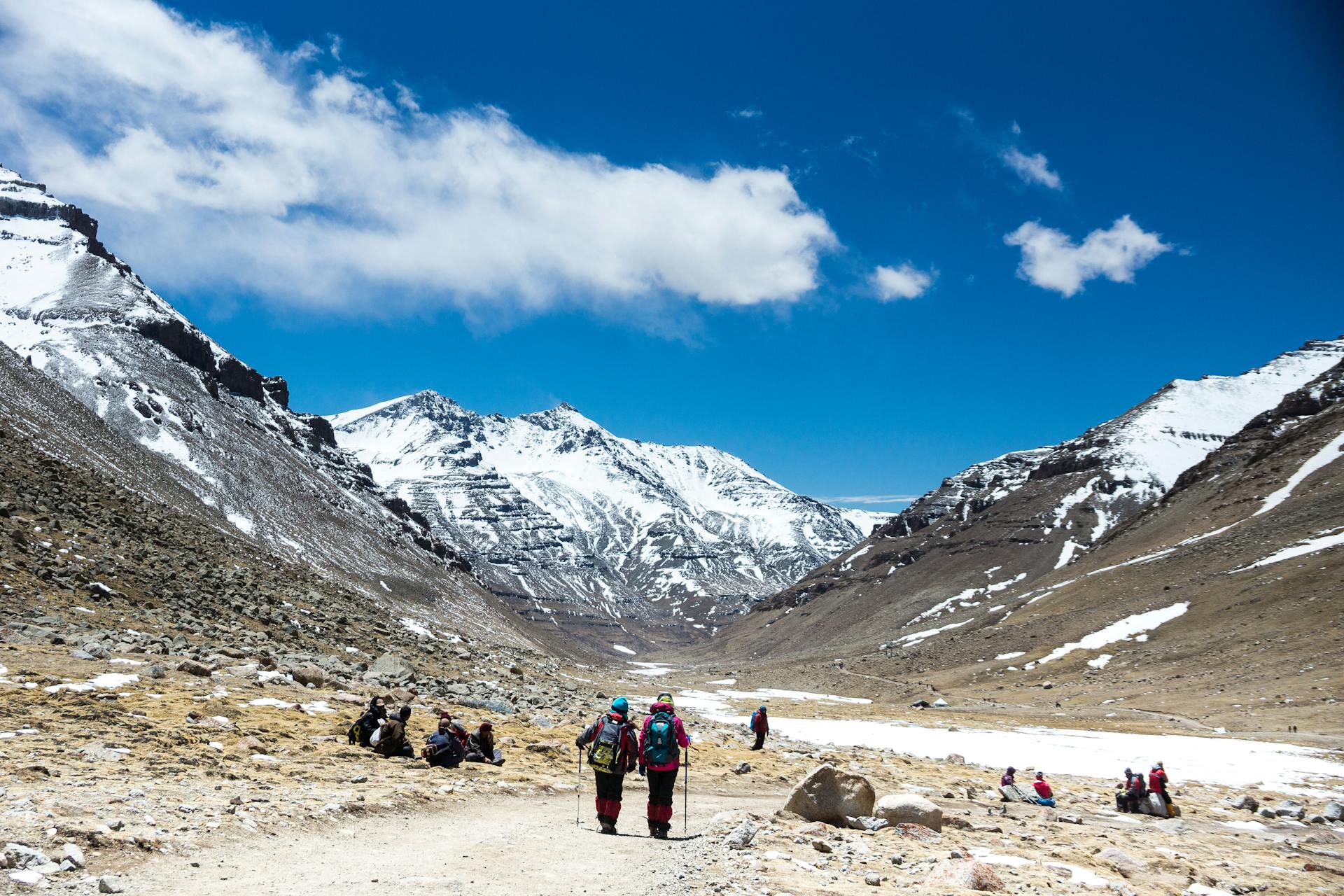
From Mansarovar, you drive to Darchen, the small town that serves as the base for the Kailash kora. The mountain itself rises 6,638 metres, not the highest in the range, but unmistakably symmetrical, with four sheer faces aligned to the cardinal directions and a permanent cap of ice. The southern face bears a deep vertical cleft crossed by a horizontal band, resembling a swastika, one of the most ancient symbols of Bon and a representation of the mountain’s spiritual axis. The kora trail circles this peak counter-clockwise for Bonpos, clockwise for Hindus, Buddhists, and Jains, climbing to Dolma La at 5,630 metres – a pass covered in prayer flags and scattered with the offerings of generations of pilgrims.
The journey is as much internal as external. You face cold, exhaustion, and the silent voice of your own mind. That is exactly the point.
Spiritual Significance: Four Faiths, One Mountain
For Hindus
Mount Kailash is Shri Kailash Parvat, the celestial residence of Lord Shiva and Goddess Parvati. According to the Puranas, Shiva sits in eternal meditation on the summit, with the Ganga descending from his matted locks. The mountain is the physical manifestation of Mount Meru, the axis of the universe, connecting earth to heaven. Lake Mansarovar was first created in the mind of Brahma and then manifested on earth; its Sanskrit name, Manas Sarovar, translates to “Lake of the Mind.” Hindus believe that a parikrama of Kailash and a dip in Mansarovar liberates the soul from the cycle of birth and death. The Shiva Purana and the Skanda Purana both describe the mountain as the site where Shiva expounded the secrets of yoga and knowledge to Parvati.
For Buddhists
Tibetan Buddhists call the mountain Kang Rinpoche, the “Precious Snow Mountain,” and regard it as the mandala palace of Demchok (Chakrasamvara), the deity of supreme bliss, united with his consort Dorje Phagmo (Vajrayogini). The great yogi Milarepa, who lived in the 11th century, is said to have engaged in a contest of miracles with a Bon priest here, ultimately meditating in a cave that still marks the trail. The kora around Kailash is one of the most meritorious actions a Buddhist can perform; 108 circuits guarantee enlightenment. The Saga Dawa festival, celebrated on the full moon of the fourth Tibetan lunar month (usually May/June), draws thousands of Tibetan pilgrims, many prostrating themselves along the entire 52-kilometre path.
For Jains
Jains know Mount Kailash as Ashtapad, the place where their first Tirthankara, Rishabhadeva (Adinath), attained moksha (liberation) after years of intense penance. Ancient Jain scriptures describe a mountain with eight steps leading to the summit, where the Tirthankara’s soul was released. The first Tirthankara’s son, Emperor Bharata, is believed to have built a magnificent temple at the site. For centuries, Jains were unable to visit, but in recent decades, the pilgrimage has resumed with deep reverence, and Jain yatris can be seen climbing the kora with the same devotion as their Hindu and Buddhist counterparts.
For Bon
Bon, the pre-Buddhist religion of Tibet, holds Kailash as Yungdrung Gu Tse, the nine-storey swastika mountain, which is the seat of all spiritual power. Their founder, Tonpa Shenrab Miwoche, is said to have descended from heaven near this mountain. Bon practitioners circumambulate counter-clockwise – a deliberate, profound distinction that has persisted for millennia despite Buddhism becoming dominant. The Bon kora is a living tradition, and their pilgrims can be seen moving against the tide of other yatris, a quiet testimony to the mountain’s embrace of all paths.
The Parikrama and the Lake
The Kailash Parikrama (kora) symbolises the soul’s journey around the cosmic axis. The act of walking, prostrating, or even riding a horse around the mountain is believed to generate immense spiritual merit. Lake Mansarovar, in Hindu mythology, is the bathing place of the gods; in Buddhist tradition, it is the lake that Queen Maya dreamt of before Buddha’s birth. Drinking its water is said to purify the subtle channels of the body, and circumambulating it completes the outer pilgrimage.
Day-by-Day Itinerary: The Overland Yatra via Kerung
This is a representative 14-day itinerary. Actual order may shift due to weather, road conditions, or permit processing. The sacred Kora days are always fixed to allow full altitude acclimatisation.
Day 1: Arrival in Kathmandu (1,350 m)
You land at Tribhuvan International Airport. Our representative escorts you to a hotel in the Thamel area. In the evening, we hold a comprehensive briefing covering every detail: the Chinese Group Visa process, passport requirements, packing check, altitude protocol, and what to expect spiritually and physically. We also collect your original passport and photos for the visa application. Dinner is at your own arrangement.
Day 2: Kathmandu – Pashupatinath Darshan and Permit Preparation
We visit the sacred Pashupatinath Temple, the most revered Shiva temple in Nepal. Here, on the banks of the Bagmati River, you can perform a preliminary puja, seeking blessings for the journey ahead. After darshan, we complete all remaining paperwork. Our liaison submits your passport to the Chinese Visa Application Centre; the Group Visa is a single document listing all yatris and is issued only when every group member’s passport is correctly lodged. The rest of the day is free for last-minute shopping or resting. Overnight in Kathmandu.
Day 3: Drive Kathmandu to Kerung Border (Rasuwa Gadhi) and into Tibet – Kerung Town (3,800 m)
We leave early in our private bus or jeep, driving northwest through rolling hills and terraced fields. The road climbs to the Langtang region. At the Rasuwa Gadhi border, Nepalese immigration is completed, and we cross the bridge into China. After Chinese immigration and a vehicle change, we board our Tibetan coach and drive a short distance to Kerung town. This is the first night on the plateau, and the altitude jump is significant. We move slowly. The guesthouse is basic but comfortable. Our Tibetan guide meets us here.
Day 4: Kerung – Full-Day Acclimatisation
We stay at Kerung for a complete rest day. This is non-negotiable. The body must start producing more red blood cells. We take a gentle walk around the town, visit a small monastery if open, and drink plenty of fluids. Our guide checks oxygen saturation levels with a pulse oximeter. You may feel mild headache or breathlessness – normal. We have supplemental oxygen available.
Day 5: Kerung to Saga/Dongba (4,450 m) – 270 km, 6–7 hrs
The drive today crosses the vast Tibetan plateau. We pass through the Thong La pass (5,100 m) and the Lalung La (5,000 m) with spectacular views of the Shishapangma range and the turquoise Peiku Tso lake. The road is mostly paved but can be rough in sections. Saga, a Tibetan settlement on the banks of the Brahmaputra (called Yarlung Tsangpo), is our halt. The guesthouse has basic attached rooms. Oxygen levels are monitored.
Day 6: Saga to Lake Mansarovar (Chiu Gompa, 4,590 m) – 450 km, 8–9 hrs
This is the longest driving day, but the destination makes up for every bump. We cross the Mayum La pass (5,200 m) and then descend towards the sacred lake. As the first glimpse of the turquoise waters of Mansarovar appears, with the snow-dome of Mount Kailash shimmering in the distance, the entire bus falls silent. We arrive at Chiu Gompa, the small monastery perched on a hill on the northwestern shore. Accommodation is in a simple guesthouse near the lake. Evening havan (ritual fire ceremony) and puja on the lakeshore can be arranged.
Day 7: Lake Mansarovar Parikrama and Drive to Darchen (4,575 m) – 35 km drive + lake circuit
In the morning, you can perform a holy dip in Mansarovar. The water temperature hovers just above freezing; the spiritual heat far exceeds the physical. A vehicle parikrama of the lake (102 km) takes about 3–4 hours with stops at the various monasteries – Chiu, Langpona, Seralung, and Trugo. Alternatively, some choose to spend more time in meditation and a shorter drive. After the lake circuit, we drive to Darchen, the base camp for the Kailash kora. Darchen is a dusty pilgrim town with rows of guesthouses. This night, we pack only essentials for the three-day kora; our main luggage stays in the vehicle.
Day 8: Darchen to Dirapuk Monastery (4,860 m) – 13 km, 6–7 hrs walking
The first day of the parikrama. We take a short drive to Yam Dwar, the “Gateway to Heaven,” where the actual kora begins. Porters or yaks carry our overnight gear. The trail climbs gradually through a rocky valley, with the west face of Kailash – the golden face – appearing through the clouds. After about 5 hours, we reach a ridge and see the north face of Kailash towering directly ahead. The Dirapuk Monastery guesthouse sits on a cliff opposite this awe-inspiring view. This is the closest any pilgrim gets to the mountain. In the evening, the setting sun paints the north face a fiery orange. Overnight in basic dormitory or rooms. It will be cold.
Day 9: Dirapuk to Zutulpuk Monastery (4,760 m) via Dolma La Pass (5,630 m) – 22 km, 10–11 hrs
The hardest day of the yatra. We start before dawn. The ascent to Dolma La is steep, gaining nearly 800 metres. On the pass, prayer flags criss-cross the rocks, and pilgrims leave a personal item – a piece of clothing, a photo – symbolically letting go of a piece of their past. Just beyond the pass, the high glacial lake Gauri Kund lies nestled in a depression; it is said to be the bathing place of Parvati. The descent is equally relentless, dropping over a thousand metres on a rocky, slippery trail. We continue to the valley floor and reach Zutulpuk Monastery, a cave monastery associated with Milarepa. The guesthouse is simple. Your legs will ache, but your spirit will soar.
Day 10: Zutulpuk to Darchen – 8 km, 3–4 hrs walk, then drive to Dongba/Saga
The final leg of the kora is a gentle walk through the eastern valley. The trail passes mani walls and the occasional kora of the Bon pilgrims moving in the opposite direction. We exit near Darchen after a short climb, complete the parikrama, and board our vehicle. The circumambulation is done. We drive back towards Saga or Dongba, retracing the route with a lighter heart. Overnight in guesthouse.
Day 11: Drive Dongba/Saga to Kerung – 270 km, 6–7 hrs
We drive back across the plateau, crossing the high passes in reverse. The oxygen feels thicker now. We reach Kerung by late afternoon, check into our guesthouse, and enjoy a farewell dinner with the Tibetan guide and crew.
Day 12: Cross Kerung Border to Nepal – Drive to Kathmandu – 8–9 hrs
After Chinese immigration formalities, we cross the bridge back into Nepal. Our Nepali vehicles meet us, and we drive to Kathmandu. The green hills, the honking of horns, the chaos – it all feels like a different world. In the evening, you are back at your hotel. A hot shower never felt more deserved.
Day 13: Contingency/Buffer Day
We keep this day as a buffer for unforeseen delays – roadblocks, permit issues, or flight rescheduling. If everything goes perfectly, this is a free day to explore Kathmandu’s Durbar Squares, Swayambhunath, or simply rest. Overnight at hotel.
Day 14: Departure
Transfer to the airport for your onward flight. You leave with a photograph of Kailash’s north face etched in your soul, not just your memory card.
The Kailash Kora Explained in Detail
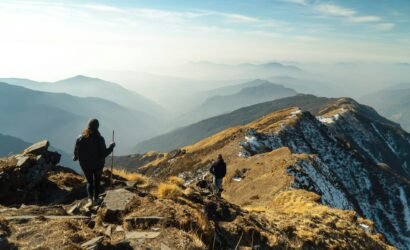
The 52-kilometre circumambulation of Mount Kailash is the core of the pilgrimage. It is not a trek in the conventional sense; it is a moving meditation that tests every fibre of your being. The path is clearly defined, trodden for millennia. We break it into three days:
- Day 1 (Darchen–Dirapuk, 13 km): Gradual ascent, good trail, incredible views. Some pilgrims ride a horse for this section (available for hire at Yam Dwar), but we recommend walking to acclimatise for Dolma La.
- Day 2 (Dirapuk–Zutulpuk, 22 km via Dolma La): The crux. The pass at 5,630 m is the highest point. Snow can fall any month. The descent is knee-jarring. It takes 10–11 hours with breaks. This day defines the yatra physically and spiritually.
- Day 3 (Zutulpuk–Darchen, 8 km): Easy, mostly flat, finishing the loop. The vehicle meets you at the endpoint.
Who should attempt the kora: Anyone with strong determination, good fitness, and proper acclimatisation. You do not need mountaineering skills. If you have knee problems, discuss with us beforehand. Horses and porters: A horse can carry you on the first and third days, but you must dismount and walk the steepest sections near Dolma La. A personal porter can carry your daypack. Yaks carry the bulk luggage between camps. We arrange all.
Skipping the kora: If you prefer not to walk, you can stay at Darchen and perform the parikrama by vehicle (as far as possible; the full circuit cannot be driven, but you can drive to the Asthapad area and perform rituals). However, the walking kora is the complete pilgrimage. Many yatris over 65 have completed it with our support.
Difficulty and Fitness Requirements
The yatra is challenging. While no technical climbing is involved, the combination of extreme altitude, long driving days, and multi-day walking at over 4,800 m places it among the hardest pilgrimage journeys in the world.
Altitude: You will sleep at or above 4,500 m for 5–6 nights. The air contains roughly 50–60% of the oxygen at sea level. Even basic tasks like tying shoelaces leave you breathless.
Walking: The kora involves 6–7 hours on Day 1, 10–11 hours on Day 2, and 3–4 hours on Day 3, on rocky, uneven terrain. You need to be comfortable walking 5–7 hours with a light daypack before the trip.
Road travel: The drive from Kerung to Mansarovar is over 1,000 kilometres round trip on high-altitude roads with potential delays. Dust, cold, and motion sickness can add to fatigue.
Who can do it: Reasonably fit individuals between 18 and 70 years who can walk slowly and steadily for many hours. Those with controlled hypertension, diabetes, or mild asthma may still go with doctor clearance. We have helped septuagenarians complete the kora with extra support (personal horse, oxygen).
Who should avoid it: Anyone with severe cardiac or respiratory conditions, uncontrolled blood pressure, or a recent surgery. Pregnant women should not undertake this due to extreme altitude and limited medical care. Honesty is crucial; if you hide a condition, you endanger yourself and the group.
Altitude, Acute Mountain Sickness, and Medical Preparation
The single greatest risk on the Kailash Yatra is altitude sickness. The sudden jump from Kathmandu (1,350 m) to Kerung (3,800 m) in a day can trigger Acute Mountain Sickness (AMS) in susceptible individuals. We build in rest days and ascend gradually thereafter.
Symptoms: Headache, nausea, dizziness, loss of appetite, disturbed sleep, and shortness of breath. If ignored, it can progress to High Altitude Pulmonary Edema (HAPE) or Cerebral Edema (HACE), which are fatal without descent.
Our protocols: Daily pulse oximeter checks. Every guide carries a medical kit and supplemental oxygen. We descend immediately if symptoms worsen. The kora trail has no road access for vehicles beyond Dirapuk; evacuation from the high camps must be by horse or helicopter (subject to Chinese permission and weather). The nearest hospital with altitude expertise is in Lhasa, far away. Prevention is our only defence.
Acclimatisation built into the itinerary: Two nights at Kerung (3,800 m) and a gradual drive with multiple high passes before Mansarovar ensure your body has time. We also recommend taking a prophylactic medication like acetazolamide (Diamox) after consulting your doctor.
Fitness training: Three months prior, start walking 5 km daily, stair climbing, and long weekend hikes. Yoga and pranayama (breathing exercises) significantly improve high-altitude performance. We will provide a detailed training plan.
Best Time for Kailash Mansarovar Yatra
The pilgrimage season is determined by weather and Chinese border policies. The region is accessible only from mid-May to September. Outside these months, heavy snow closes passes, and the Tibetan plateau becomes lethally cold.
- May–June: Ideal. The weather is generally clear, with cold mornings and tolerable days. The Saga Dawa festival occurs around the full moon in late May/June, making this the most auspicious period for Buddhists, but also the busiest. Mansarovar may still have ice on its edges, but the dip is possible.
- July–August: Warmer days but a higher chance of rain, muddy trails, and cloud cover obscuring the peak. The monsoon in Nepal does not directly hit Tibet but can cause border road disruptions. Landslides on the Nepal side can delay returns.
- September: After mid-September, cold returns rapidly, but skies are often crystalline. Fewer pilgrims, but night temperatures drop well below zero. The border may close for the season by late September; never assume.
Our group departures are scheduled in May, June, and early September, balancing favourable weather with spiritual timing. Contact us for exact dates.
Weather at Mount Kailash and Mansarovar (May–September)
| Month | Day Temp at Darchen (°C) | Night Temp (°C) | Dolma La Conditions | Remarks |
|---|---|---|---|---|
| Mid-May | 5–12 | -5 to -2 | Snow patches, very cold | Early season, frozen lake edges possible |
| June | 8–15 | -3 to 5 | Clear, cold mornings, afternoon wind | Best overall, Saga Dawa festival |
| July | 10–18 | 2–8 | Slushy pass, rain possible | Warmer but wetter, mountain often hidden |
| August | 8–16 | 0–6 | Trail can be muddy, pass winds strong | Green landscape, fewer crowds |
| September | 5–14 | -5 to 0 | Pass can receive fresh snow end of month | Excellent visibility, cold |
Wind is a constant factor. On Dolma La, gusts can reach 60 km/h; secure everything. Always pack for four seasons, even in July.
Accommodation: From Hotels to Monastery Guesthouses
In Kathmandu, you stay in a comfortable 3-star hotel with en suite bathrooms, hot water, and WiFi. The moment you cross into Tibet, facilities become basic. We do not pretend otherwise.
- Kerung, Saga, Dongba: Simple guesthouses with attached bathrooms (often squat toilets, hot water by bucket or solar geyser). Electricity is available but can be erratic. Beds have thick blankets, but bring your own sleeping bag liner.
- Mansarovar (Chiu Gompa): Basic mud-brick guesthouse with dormitory or tiny rooms. Toilets are outdoor pit style. No running water; we provide boiled water for washing. This is the purest and most rustic night.
- Darchen: Chinese-style guesthouses with attached bathrooms, the most comfortable on the Tibet side. Hot water limited.
- Dirapuk and Zutulpuk: Monastery guesthouses with dormitory beds (thin mattresses). No electricity except a few hours of generator. Toilets are outdoor, very basic. Washing is with wet wipes. This is the real pilgrimage experience.
We manage expectations: discomfort is part of the spiritual offering. If you need luxury, this is not the journey.
Meals on the Yatra
Food is simple, hygienic, and largely vegetarian. We work with the kitchen staff at each stop to provide meals that are safe and nourishing.
During the drive: At road-side restaurants, you will get Tibetan noodle soup (thukpa), fried rice, steamed bread, and Chinese-style vegetable dishes. We also arrange packed lunches for long driving days.
At guesthouses: We coordinate Indian vegetarian meals – dal, rice, roti, subzi, pickle – wherever possible. In remote camps during the kora, the menu is basic: noodle soup, porridge, boiled potatoes, eggs, and tea. The Sherpas and guides boil water for you.
Water and snacks: Boiled water is provided every morning to refill your bottles. Carry nuts, energy bars, and dry fruits from Kathmandu for the kora days.
Religious dietary needs: We cater to Jain (no onion, no garlic, no root vegetables after sunset), Hindu vegetarian, and vegan. Tell us at booking, and we will arrange.
Transportation and the Tibetan Highway
The overland journey uses a combination of private Nepali vehicles and Tibetan coach or 4WD jeeps, depending on group size.
- Kathmandu to Kerung border: 7–8 hours on winding Nepali roads in a comfortable tourist bus.
- Tibet side: A government-registered tour bus or Land Cruiser with a Tibetan driver. The roads are paved for most of the way but deteriorate near Mansarovar and Darchen. Dust can be intense inside the vehicle.
- Yaks and porters during the kora: We hire local yaks to carry the group’s overnight gear between Dirapuk and Zutulpuk. Personal porters can be arranged for an extra fee to carry your daypack. Horses for riding on the first and third days are also available (bookable in advance).
Road conditions in Tibet are subject to seasonal damage and rapid Chinese repair. Delays of a few hours are common. We build time margins into the itinerary.
Visa and Permits: The Entire Process Explained
This is the most critical section. The Kailash Mansarovar Yatra requires a unique visa category and multiple permits, all of which we process on your behalf. You cannot do this as an individual tourist.
1. Chinese Group Visa (CGV)
All foreigners travelling to Tibet in a group must obtain a Chinese Group Visa, not a standard Chinese tourist visa (the individual L visa is not valid for entering Tibet overland from Nepal). The CGV is issued in Kathmandu by the Chinese Embassy, only after all group members have arrived and submitted their passports. It is a single sheet of paper listing all yatris’ names and passport numbers; no visa sticker goes in your passport. We require your original passport at least 3–4 working days before the border crossing. Our staff physically carry the documents to the embassy. The visa is valid only for the exact dates and border crossing specified. You must stay with the group and the Tibetan guide at all times.
2. Tibet Travel Permit (TTP)
Issued by the Tibet Tourism Bureau in Lhasa, this permit allows you to enter Tibet at all. We obtain it using scanned copies of your passport and the Chinese visa (the CGV). It is checked at the border and at multiple checkpoints en route.
3. Alien’s Travel Permit (ATP)
Required specifically for travel to restricted areas within Tibet, including the Mount Kailash region and Mansarovar. Obtained by our Tibetan partner agency, usually upon arrival in Tibet with the original passport and visa.
4. Military Border Permit
Because the Kailash area lies close to the sensitive India–China border, the Chinese military also requires a separate permit. This is applied for by our local agency; we cannot guarantee its issuance – it is subject to sudden suspension without notice, especially if geopolitical tensions escalate. We monitor the situation constantly.
Documents you must provide:
- Passport valid for at least 6 months beyond the travel date.
- 4 passport-sized photographs (white background).
- A scanned copy of your passport bio page.
- Completed personal information form (we send this to you).
Important: Chinese regulations change without warning. The border at Kerung can close temporarily. Permits can be denied or delayed. If the Chinese authorities refuse the permit at the last moment, we offer alternatives (e.g., a Nepal-only pilgrimage to Muktinath and the Upper Mustang region) or a refund of the Tibet portion. We have managed hundreds of groups, but we never claim 100% certainty. This is the nature of the yatra. We ask for your understanding and flexibility.
Packing List for Kailash Mansarovar Yatra
Pack as if your life depends on it. At 5,600 metres, there are no shops.
Clothing:
- Thermal innerwear (top and bottom, 2 sets)
- Fleece jacket or woollen sweater
- Heavy down jacket (rated to -15°C)
- Windproof and waterproof outer jacket and pants
- Trekking trousers (2)
- Woollen socks (4–5 pairs)
- Woollen gloves, thermal gloves
- Woollen cap, sun hat, balaclava
- Waterproof trekking boots (worn in) and lightweight sandals for camps
Spiritual items (optional):
- Rudraksha mala, Gangajal container for Mansarovar water, small puja kit
Medical kit:
- Diamox (acetazolamide, after doctor’s advice)
- Painkillers, band-aids, blister plasters
- Anti-diarrhoea medicine (Imodium), ORS packets
- Cough and cold medicine
- Any personal prescription medicine (carry double the required dosage)
Accessories:
- Sunglasses (UV 400), sunscreen SPF 50+, lip balm
- Headlamp with extra batteries
- Trekking poles (essential)
- Power bank (20,000+ mAh) – there is no charging on the kora
- Water bottles (insulated) 1–2 litres
- Toilet paper, wet wipes, hand sanitiser
- Snacks – energy bars, dry fruits, chocolate
- Cash in Chinese Yuan (CNY) – at least 1,500–2,000 CNY for emergencies, tips, and small purchases
- Copies of passport, photos, visa documents
What we provide:
- Duffle bag for the yatra (you get it in Kathmandu)
- Sleeping bag suitable for sub-zero temperatures (or you may bring your own for hygiene)
- Oxygen cylinder for emergency use on the bus
Culture and Etiquette in Tibet
Tibetans are deeply religious. The Kailash region is not a tourist attraction; it is a living mandala.
- Walk clockwise around stupas, mani walls, and temples (counter-clockwise if you are a Bon practitioner).
- Do not touch religious statues or thangkas.
- Do not photograph inside monasteries without explicit permission. At the border and military checkpoints, photography is strictly forbidden.
- Do not point your finger at the mountain or at deities; use an open palm.
- When you meet a Tibetan, a smile and the greeting “Tashi Delek” go a long way.
- Dress modestly; shoulders and knees covered.
- During the kora, do not disturb prostrating pilgrims. Do not step over their offerings. Respect their space.
Our guide will brief you daily.
Internet, Electricity, and Communication
On the Tibetan plateau, internet access is heavily restricted and unreliable. Do not expect to make video calls or upload photos during the yatra.
- WiFi: Not available in most guesthouses. In larger towns like Saga, some lodges may have patchy WiFi that blocks many websites (including WhatsApp, Google, social media). Assume you are offline.
- SIM cards: A Chinese SIM may work along the Friendship Highway, but it will likely not function in the Kailash region. A Nepali SIM with roaming may also not work. We recommend purchasing a Chinese SIM in Kerung (if available) for basic calls only.
- Electricity: In Kerung, Saga, and Darchen, electricity is usually available for a few hours in the evening. During the kora, there is no electricity. Charge all devices fully before starting the kora and carry a power bank.
Disconnect to connect. Many pilgrims find the digital silence a profound part of the yatra.
Money and Expenses During the Yatra
Currency: The Chinese Yuan (CNY) is the only accepted currency in Tibet. There are no ATMs after Kerung town (and that one may not accept foreign cards). You must bring all the cash you need in Chinese Yuan from Kathmandu or your home country. We suggest exchanging money in Kathmandu before departure (reliable exchange counters can provide CNY).
What to budget for: Tips for the Tibetan guide and driver (we recommend around CNY 200–300 per yatri for the guide and CNY 100–150 for the driver), yak porter tips, personal expenses like extra snacks, horse rental on the kora (approx. CNY 800–1,500 for the first day, negotiated on the spot), and emergency purchases. A total of CNY 1,500–2,500 is sufficient for most.
Cost included: The package covers all accommodation, meals, permits, and transportation as listed. We discuss exact inclusions later.
Drinking Water and Hygiene
Never drink tap water. We provide boiled water at all stops; fill your bottle each morning. You can also use water purification tablets or a filter as a backup. In Darchen and the kora camps, boiled water is shared and may be limited. Hydrate constantly – 3–4 litres a day is essential to combat altitude dehydration.
Washing with soap is limited; use wet wipes and hand sanitiser. Bathing in Mansarovar is for the soul; a hot shower is a rarity in Tibet. Accept it.
Safety and Emergency Protocols
Your safety is our prime concern. The Kailash region is remote; the nearest comprehensive medical facility is in Lhasa, 3–4 days’ drive away. Therefore, we operate preventively:
- Guide-to-client ratio is kept low, and every guide is trained in wilderness first aid.
- We carry a portable altitude chamber (PAC bag) and supplementary oxygen cylinders on the bus and at the kora camps.
- In case of severe AMS, we immediately evacuate the yatri downwards by horse, jeep, or helicopter (Chinese evacuation helicopter is theoretically available but extremely expensive and slow to arrange; we rely primarily on rapid ground descent).
- We always keep the vehicle with us in Darchen. The kora trail intersects a motorable road at a few points, allowing a jeep pickup in the valley after Dolma La if needed.
- All yatris must have travel insurance that explicitly covers high-altitude trekking up to 6,000 m in Tibet, including helicopter evacuation and medical repatriation. We will check your policy.
Road accidents, while rare, can occur. We use experienced Tibetan drivers and maintain the vehicles well. Seatbelts are mandatory.
Travel Insurance – Non-Negotiable
You must purchase comprehensive travel insurance before joining the yatra. The policy must cover:
- High-altitude trekking and hiking up to 6,000 m
- Emergency medical evacuation by helicopter
- Repatriation expenses
- Trip cancellation and curtailment
- Personal liability and baggage loss
We require a digital copy of your insurance certificate. Without it, we cannot allow you to start the journey. Several providers offer specific Kailash Yatra insurance. Consult our team for recommendations.
Responsible Pilgrimage Travel
Kailash is a fragile ecosystem and a deeply sacred site. We follow these principles:
- Carry out all non-biodegradable waste. We provide garbage bags.
- Do not pollute Mansarovar with soap, shampoo, or any chemical. The holy dip is a quick immersion only.
- Do not disturb wildlife. The Tibetan antelope (chiru) and wild ass (kyang) are protected.
- Support the local economy by hiring porters and yaks, and eating at local establishments.
- Respect the spiritual atmosphere: keep voices low, avoid loud music, and follow the guide’s instructions about photography restrictions at military and sacred sites.
Photography Guide: Capturing the Divine Without Offence
Photography at Mount Kailash is allowed on the trail and around the lake, but within monasteries, permission is mandatory. Do not photograph military installations or checkpoints – this can lead to camera confiscation.
Best viewpoints:
- The north face from Dirapuk at sunrise: the mountain glows pink.
- Lake Mansarovar with Kailash reflection (morning calm before wind picks up, usually May–June).
- Gauri Kund near Dolma La – a turquoise pool surrounded by ice.
- Yam Dwar with the valley and prayer flags.
Drone restrictions: Drones are illegal throughout Tibet without special permits from the Chinese military and civil aviation authorities. Such permits are virtually impossible for foreign tourist groups. Do not bring a drone.
Etiquette: Do not take photos of people prostrating without explicit, gentle permission. Do not stand on prayer flags or mani stones for a better angle.
Cost Breakdown: Understanding the Investment
The Kailash Mansarovar Yatra is not a budget trip. The Chinese permits, the high-altitude logistics, and the limited season make it an expensive undertaking. A typical 14-day overland package from Kathmandu ranges from USD 2,500 to 3,500 per person, depending on group size and accommodation level. Here’s roughly where the money goes:
| Expense Item | Approx. Cost (USD) |
|---|---|
| Chinese Group Visa processing & handling | 150–250 |
| Tibet Travel Permit & other permits | 80–120 |
| Tibetan guide, driver, vehicle rental | 600–800 |
| Accommodation in Nepal & Tibet (all nights) | 350–450 |
| All meals during the yatra | 300–400 |
| Kathmandu sightseeing & transfers | 60–100 |
| Yak & porter logistics during kora | 100–150 |
| Agency service, pre-departure arrangements, emergency oxygen, etc. | 200–300 |
| Contingency and buffer | 100–200 |
| Total estimated package cost | ~2,500–3,200 |
We offer full transparency. The quoted price includes what is listed in the next section. There are no hidden fees.
What’s Included in the Package
- All airport transfers in Kathmandu
- 3 nights’ hotel in Kathmandu (twin-share, B&B) and 1 night in a border-side hotel if required
- Private tourist bus/jeep from Kathmandu to Kerung border and back
- All Tibetan transportation in a tourist coach or 4WD
- Chinese Group Visa fee and handling (we physically process)
- Tibet Travel Permit, Alien’s Travel Permit, and all required military permits
- English-speaking Tibetan guide throughout the Tibet portion
- Nepali tour escort (for larger groups)
- Full board meals (breakfast, lunch, dinner) from Day 3 lunch to Day 12 lunch (Tibet portion)
- All accommodation in Tibet – guesthouses, monastery lodges
- Yak and yak men for luggage transport during the kora
- Group medical kit, pulse oximeter, and emergency oxygen cylinder
- Duffel bag for the trek (returnable)
- Mansarovar parikrama by vehicle and havan arrangements (subject to Chinese permission)
- All government taxes and service charges
What’s Excluded
- International flights to/from Kathmandu
- Nepal visa fee (available on arrival)
- Travel and medical insurance (compulsory)
- Lunches and dinners in Kathmandu (except mentioned)
- Personal expenses: laundry, phone calls, internet, charging, bottled drinks, tips
- Horse/porter hire for personal daypack during the kora (can be arranged for extra)
- Extra accommodation and transport in case of early return or delays due to weather, road blockage, permit denial by Chinese authorities
- Evacuation costs – helicopter, ambulance, hospitalisation (insurance must cover)
- Any services not mentioned in the “Included” list
Why Book Your Kailash Mansarovar Yatra With Us
We do not mass-market the yatra. We run select group departures and private pilgrimages with a single-minded focus: get you to the feet of Mount Kailash and back safely, spiritually fulfilled. Our Kathmandu-based team has walked the kora themselves. They understand that the yatra is a calling, not a holiday.
We handle the Chinese Group Visa application personally at the embassy; you don’t stand in queues. Our Tibetan partner agency is one of the most reliable in Lhasa. We have a 95% permit success rate (we can never promise 100% due to Chinese policy shifts, but our track record speaks). We assign guides who can explain the Milarepa legend, the geological theories of Mansarovar’s formation, and the practicalities of high-altitude survival with equal fluency. And when you return, exhausted and elated, we celebrate with you as fellow pilgrims, not as clients.
The yatra is hard enough without worrying about paperwork. Let us carry that weight.
Frequently Asked Questions
1. How difficult is the Kailash Yatra compared to other treks?
It is not technically difficult, but the extreme altitude makes it more demanding than many Himalayan treks. The kora’s high pass at 5,630 m is higher than Everest Base Camp (5,364 m). Combined with long drives, it is a test of endurance.
2. Can beginners do it?
Yes, if you train for 3–4 months and have no major health issues. Many first-time trekkers complete the yatra successfully. But we strongly advise previous high-altitude experience or at least a fitness level that allows you to walk 10 km comfortably.
3. Can senior citizens join?
Yes, we have taken yatris up to 74 years old. They trained, took the horse when needed, and completed the kora. Age is less important than fitness and attitude. A thorough medical check-up is mandatory for those over 65.
4. Can I ride a horse for the entire kora?
No. Horses are available only on the first and third days. On the second day, the steep ascent and descent over Dolma La requires you to walk for safety reasons; the horse cannot carry a rider on the rocky, narrow sections. You must be able to walk at least the pass section.
5. Can I skip the kora entirely and just visit Mansarovar?
Yes. You can stay in Darchen while the group walks, visit the Asthapad area by vehicle, and perform rituals at the base. We accommodate non-kora yatris without issue. The cost remains the same, as the package is all-inclusive.
6. Is a dip in Mansarovar mandatory?
It is a personal choice. The water is near freezing. Some immerse fully, others just sprinkle water on the head, and some only sip it. We provide a changing tent and encourage a quick, safe dip.
7. Do I need a Chinese visa if I am an Indian citizen?
Yes. All foreigners, including Indian nationals, need a Chinese Group Visa to enter Tibet from Nepal. The process is the same. Indian citizens cannot use the separate Kailash Mansarovar Yatra organized by the Indian government unless they go through that official channel.
8. Can NRI/foreign passport holders join this yatra?
Yes, we accept all nationalities. The permit process is identical; we handle the group visa for everyone together.
9. What if the Chinese border closes unexpectedly?
We monitor the situation daily. If Kerung closes due to political or COVID-19 related reasons, we will offer an alternative pilgrimage within Nepal (e.g., Muktinath, Upper Mustang) or reschedule/delay the trip. If the trip is cancelled due to border closure, we refund the Tibet portion after deducting any non-recoverable third-party costs.
10. How many days does it take to get the Chinese Group Visa in Kathmandu?
We need a minimum of 4–5 working days (Mon–Fri) in Kathmandu before the intended border crossing date. You must plan your arrival accordingly.
11. What happens if I get severe altitude sickness during the kora?
We evacuate you down immediately by horse/porter to the nearest vehicle point, then drive to a lower altitude (Darchen or Saga). Our guide carries emergency oxygen. The situation is taken extremely seriously.
12. Can I bring my drone?
No. Drones are illegal for foreign tourists in Tibet. They will be confiscated at the border or by the military. Do not bring one.
13. Is there mobile network on the yatra?
Very limited. You might get Chinese signal near Saga and Darchen, but not at Mansarovar or on the kora. Assume you will be offline for most of the journey.
14. Can I charge my phone/camera during the kora?
Not at Dirapuk or Zutulpuk. Charge everything in Darchen before you start and bring a power bank. Spare batteries are essential.
15. What currency should I bring?
Chinese Yuan (CNY). Exchange in Kathmandu before departure. There are no ATMs along the route that accept foreign cards.
16. Is the food pure vegetarian?
We arrange Indian vegetarian meals wherever possible. In remote camps, eggs may be served; tell us if you are strictly vegan/Jain so we can coordinate.
17. How much should I tip the guide and driver?
Tipping is customary but not mandatory. We suggest about CNY 200–300 per yatri for the guide and CNY 100–150 for the driver for the entire trip. Yak men and porters on the kora can be tipped separately (around CNY 50–100 each).
18. Can I get a single room throughout the yatra?
In Kathmandu, yes (at extra cost). In Tibet, single occupancy is not guaranteed due to limited accommodation. We try to provide a single supplement in Darchen and Saga; on the kora, you will share dormitory space.
19. What documents do I need to send in advance?
Scanned copy of your passport, passport-size photo, and personal details form. We require these at least 20 days before the trip to start the permit process.
20. What is the cancellation policy if I fall sick before the yatra?
Our booking conditions are standard. The Chinese Group Visa fee and permit processing fees are non-refundable once submitted. We strongly recommend trip cancellation insurance.
21. Can I extend my trip to Lhasa after the yatra?
Yes, if you wish to continue to Lhasa and further in Tibet, you need a different itinerary and permit. We can arrange an extension, but it must be planned well in advance as the visa is group-linked.
22. Is there any age limit for the yatra?
No formal Chinese age limit, but our company advises against participants over 70 unless they are very fit and have high-altitude experience. We assess on a case-by-case basis.
23. Can a pregnant woman do the yatra?
We strongly advise against it. The extreme altitude and lack of medical facilities pose a risk to both mother and foetus.
24. How do I train for the kora?
Start brisk walking, stair climbing, and long uphill hikes at least 3 months before. Pranayama and yoga help lung capacity. Consult a doctor for a fitness plan.
25. Will I see Mount Kailash from Lake Mansarovar?
Yes, from the northern and western shores, Kailash is visible. The reflection on calm mornings is one of the most iconic sights. Cloud cover can obscure it, so we pray for clear skies.
26. What is the Saga Dawa festival, and can I join?
Saga Dawa is the most important Buddhist festival, marking Buddha’s birth, enlightenment, and passing. It falls on the full moon day of the fourth Tibetan month (May/June). Thousands of pilgrims converge at Kailash, and the atmosphere is electric. Our departures around this time allow you to witness the festival; contact us for exact lunar calendar dates.
27. Can I do a full parikrama of Lake Mansarovar on foot?
It is possible but takes 3–5 days and requires camping. Our package includes a vehicle parikrama with stops. If you wish to walk the lake circuit, inquire about a custom private pilgrimage.
28. How safe is the road journey in Tibet?
The roads are well-maintained by Chinese standards, but they cross high passes with steep drop-offs. Our drivers are local professionals. Seatbelts are mandatory. There is always an inherent risk in mountain driving, but accidents are uncommon.
29. What is the group size?
Usually 10–20 pilgrims. A small group allows better acclimatisation monitoring and personal attention. We can also arrange private groups of 2 or more.
30. How can I book?
Contact our Kathmandu office or email us with your preferred travel dates. We will send a booking form, require a deposit, and start the permit process. Early booking is essential – the limited season fills up quickly.
Note: The Kailash Mansarovar Yatra is subject to the regulations of the People’s Republic of China, which may change without notice. This page reflects our current understanding and operational experience. We urge all pilgrims to verify the latest updates with our team before booking and to maintain flexibility in their plans. The mountain calls, but the gates open only at certain times.