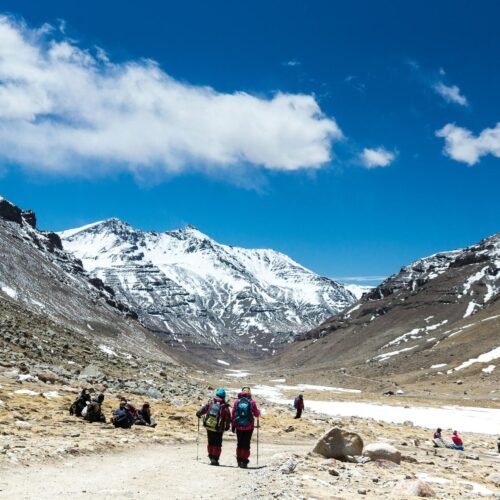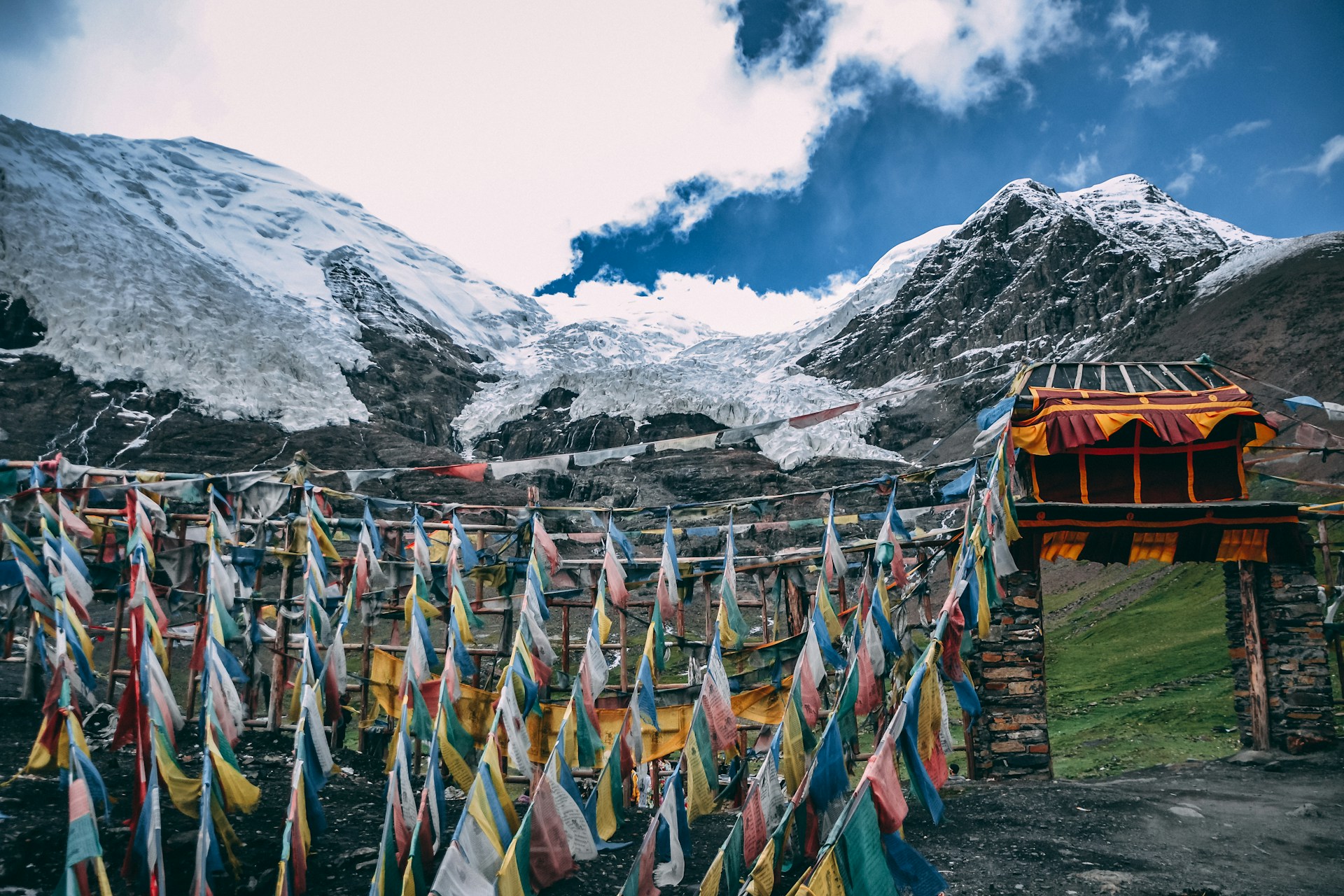
The road to Lhasa begins in the chaos of Kathmandu and ends in the silence of the Potala Palace. This is the most spectacular overland journey in the Himalaya — not a flight that skips the world’s greatest mountain range, but eight days of road travel from Nepal into Tibet, crossing the spine of the continent on the Friendship Highway. You watch the Himalayan foothills give way to the Tibetan Plateau, spend a night within sight of Everest’s north face, and arrive in Lhasa acclimatised, not airlifted. This is the Tibet Overland Tour, and it is the only way to truly understand the scale of the roof of the world.
Our 8-day route starts in Kathmandu, crosses the border at Rasuwa Gadhi (Kerung), and climbs through the arid highlands of Tibet to Everest Base Camp on the north side, then continues through Shigatse, Gyantse, and Yamdrok Lake to Lhasa. We arrange every permit, every hotel, every vehicle change at the border, and your Chinese group visa through our Kathmandu office. You show up with your passport, and we handle the bureaucracy that has stopped countless independent travellers at the first checkpoint. This is not a trip you book online and hope for the best. It’s a tour operated by a Nepali company that has been moving people across the Tibet border for years.
Below you’ll find everything you need to know — the kind of detail that will either make you book with us, or at the very least, help you plan correctly for any Tibet overland journey you take.
Quick Facts: 8-Day Tibet Overland Tour
| Detail | Specification |
|---|---|
| Duration | 8 days (Kathmandu to Lhasa, fly back to Kathmandu) |
| Countries | Nepal and China (Tibet Autonomous Region) |
| Maximum altitude | 5,200 m (Everest Base Camp North, Rongbuk area) |
| Highest road pass | Gyatso La (5,248 m) or Lalung La (5,050 m) |
| Transportation | Private Nepali vehicle to border, private Tibetan tourist coach/4WD in Tibet |
| Accommodation | 3-star hotels in Kathmandu and Lhasa; comfortable guesthouses en route; basic lodge at Rongbuk |
| Meals | Breakfast in Kathmandu; all meals in Tibet (simple, largely vegetarian) |
| Best season | April to October; winter border crossing is unpredictable |
| Visa | Chinese Group Visa processed in Kathmandu (we do it) |
| Permits | Tibet Travel Permit, Alien’s Travel Permit, Everest Nature Reserve Permit, military permits as required |
| Difficulty | Easy to moderate — long drives, high altitude but no trekking; suitable for anyone in good health |
| Border crossing | Rasuwa Gadhi (Nepal) / Kerung (Tibet) |
| Starting point | Kathmandu |
| Ending point | Lhasa (flight to Kathmandu included) |
| Tour style | Small group escorted overland tour |
| Road distance | Approx. 1,000 km from Kathmandu to Lhasa via Kerung and EBC North |
Why This Tour Exists — And Why You Should Choose It
Plenty of people fly directly into Lhasa from Kathmandu or mainland China. They spend three days gasping in thin air, then leave. The overland journey from Kathmandu to Lhasa is fundamentally different. It’s a classic Himalayan road trip that climbs gradually from the subtropical Kathmandu Valley (1,350 m) to the Tibetan Plateau (4,000 m and above) over the course of several days. Your body acclimatises naturally as the landscape transforms outside the window. You are not just visiting Tibet; you are entering it the way pilgrims and traders have for centuries — by road, through the mountains, with every kilometre an event.
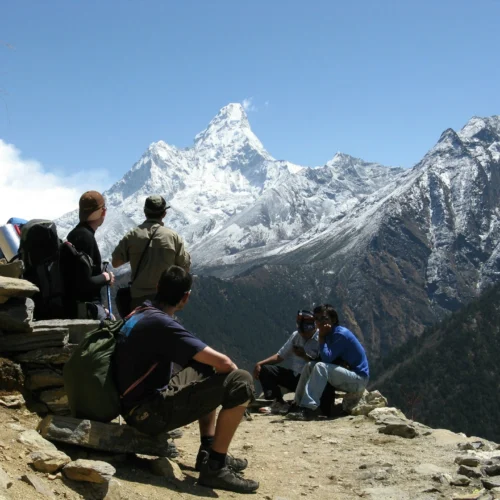
This particular itinerary includes a detour to the north side of Mount Everest. We don’t simply drive past the turnoff to Rongbuk Monastery; we take you there. You sleep at 5,000 metres, under a sky so thick with stars it hurts to look up, and at dawn you walk to the viewing point where the entire north face of Everest, Makalu, and Cho Oyu stand in a row. No flight, no trekking, no expedition. Just the view that generations of mountaineers have called the most humbling on Earth.
We book your Chinese group visa through our Kathmandu office, coordinate the border crossing at Rasuwa Gadhi/Kerung, and hand you over to our Tibetan guide on the other side. Everything is managed from Nepal — you deal with one point of contact, pay one price, and travel with a small group of fellow road-trippers who, like you, understand that some journeys are worth the bureaucratic headache.
Complete Tour Overview: Tibet by Road — What You’re Actually Signing Up For
Tibet is not just a destination; it’s a geological event. The Tibetan Plateau is the largest and highest plateau on Earth, a 2.5-million-square-kilometre expanse that formed when the Indian subcontinent slammed into Asia 50 million years ago. It remains one of the most sparsely populated regions on the planet, a landscape of alpine steppe, turquoise salt lakes, nomadic yak-herder camps, and monasteries that cling to cliffs like swallow nests.
For travellers entering from Nepal, the journey begins on the Friendship Highway — a road that starts in Kathmandu, winds through the Nepalese middle hills, crosses the border, and then climbs onto the plateau. From Kerung, the road leads past the massif of Shishapangma (the only 8,000-metre peak entirely within Tibet), across passes that top 5,000 metres, and into the realm of prayer flags and chortens that marks every high point.
The culture is Tibetan Buddhism, practiced with an intensity that survived the Cultural Revolution and now thrives under a complicated modern arrangement. Monasteries like Tashilhunpo in Shigatse and the Jokhang in Lhasa are living institutions, not museums. Pilgrims prostrate around the Barkhor circuit every single day, their wooden hand protectors clacking on the flagstones. The Potala Palace rises over Lhasa like a ship made of ochre and white, 13 storeys of history that still feels more spiritual than imperial when you stand in the dim chapels.
This overland tour ties all of that together. You don’t fly over the Himalaya; you drive through them, from subtropical valleys to the arid, thin-aired expanse of Tibet, with Everest as a midpoint, not a destination. By the time you reach Lhasa, you’re a traveller who arrived, not a tourist who landed.
Detailed Day-by-Day Itinerary
Day 1: Kathmandu to Kerung (Border Crossing) – Drive to Kerung Town (3,800 m)
Distance: ~140 km, 7–8 hours including border formalities.
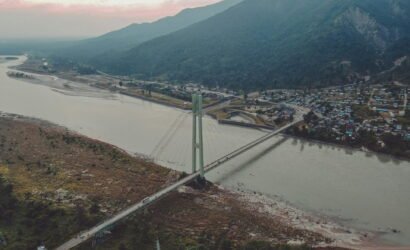
We leave Kathmandu at dawn in a private Nepali vehicle. The road to Rasuwa Gadhi climbs through the Trishuli Valley, past terraced fields and villages that still rebuild after the 2015 earthquake. The border post is a bridge across the Bhote Koshi River. Nepali immigration is straightforward; we stamp out and walk across. On the Chinese side, the immigration building is large and efficient. Our Tibetan guide meets you here after your baggage is screened. You’ve entered Tibet.
The drive from the border to Kerung town is short but steep — a series of switchbacks that take you onto the plateau proper. Kerung is a small trading town with basic hotels and a surprising number of Chinese restaurants. The altitude gain from Kathmandu (1,350 m) to Kerung (3,800 m) is significant, so we move slowly. This evening, rest. Drink water. Don’t shower too hot or too long.
Day 2: Kerung to Xegar (Shegar) – 4,300 m
Distance: ~280 km, 6–7 hours. Passes: Lalung La (5,050 m), Thong La (5,100 m).
Today is the introduction to the high plateau. The road climbs through a barren, beautiful landscape. At Lalung La, you get your first view of the Tibetan Himalaya — Shishapangma (8,027 m) and its satellite peaks, Langtang, and the border ranges. The road undulates across the plateau past the turquoise Peiku Tso lake, where we stop for photos. Nomad tents appear. We cross the Brahmaputra (Yarlung Tsangpo) and arrive in Xegar (New Tingri), a small town that is the staging post for Everest expeditions from the north. The guesthouse is basic but comfortable, with electric blankets and hot water most of the time. Altitude here is over 4,000 m; you’ll feel the thin air when you climb the stairs.
Day 3: Xegar to Rongbuk Monastery and Everest Base Camp (North) – 5,100 m
Distance: ~100 km, 3–4 hours. Pass: Pang La (5,120 m).
This is the day that sets this tour apart. We leave Xegar early and climb to Pang La pass, where a panorama of peaks — Makalu, Lhotse, Everest, Cho Oyu — unfolds across the horizon. From there, the road descends into the Rongbuk Valley, a stark, gravelly corridor that leads straight to Everest’s north face. At the end of the valley, Rongbuk Monastery sits at 5,009 metres, the highest monastery in the world. In spring and autumn, yaks graze in the meadows; the silence is total except for the wind.
We stop at the monastery guesthouse (basic dormitory or small rooms), then walk or take the eco-bus the last few kilometres to the Everest Base Camp viewing platform. You stand face-to-face with the mountain that has dominated human imagination. No crowds like the south side. Just you, the wind, and that immense pyramid of rock and ice. Sunset turns the face gold. The guesthouse is cold; bring every layer you have. Oxygen levels are low; we monitor everyone.
Day 4: Rongbuk / EBC to Shigatse (3,860 m)
Distance: ~340 km, 7–8 hours. Return via Xegar, then Friendship Highway east.
After a sunrise at EBC, we drive back to Xegar and join the main Friendship Highway. The road crosses Gyatso La (5,248 m), the highest pass on the route, marked by prayer flags and a stone cairn. The plateau opens up into wide valleys dotted with barley fields and Tibetan farmhouses. We arrive in Shigatse, Tibet’s second-largest city, by late afternoon. The hotel here is comfortable, with attached bathrooms, hot showers, and WiFi in the lobby. This is the first real city you’ve seen since Kathmandu.
Day 5: Shigatse to Lhasa (3,650 m) via Gyantse and Yamdrok Lake
Distance: ~350 km, 7–8 hours. Passes: Karo La (5,045 m), Kamba La (4,794 m).
In the morning, we visit Tashilhunpo Monastery, the traditional seat of the Panchen Lama. The giant golden statue of the Future Buddha fills the main hall. Then we drive southwest to Gyantse, a town famous for its Kumbum stupa — a multi-tiered chorten with 108 chapels — and the old dzong (fortress) on the hill. After Gyantse, the road climbs to Karo La pass, where a glacier spills down almost to the road. Then we cross Kamba La pass, and below you, the teal-blue scimitar of Yamdrok Yumtso Lake curves between barren mountains. It’s one of the most beautiful sights in Tibet. We descend to the lake shore, drive along its edge, and then climb again over the last ridge before the Lhasa Valley appears. The city spreads along the Kyichu River, and in the centre, the Potala Palace rises like a separate mountain. Overnight in a comfortable Lhasa hotel.
Day 6: Lhasa Sightseeing — Potala Palace, Jokhang Temple, Barkhor Street
Full day guided tour. Altitude: 3,650 m.
This is the day you’ve been driving towards. We visit the Potala Palace in the morning — the Red Palace, the White Palace, the private quarters of the Dalai Lamas, the stupa tombs, and the chapels that smell of yak butter and incense. The stone steps are steep; we go slow. After lunch, we walk to the Jokhang Temple, the spiritual heart of Tibet. Inside, the Jowo Rinpoche statue — believed to have been made during Buddha’s lifetime — draws pilgrims from across the plateau. Outside, the Barkhor circuit hums with prostrating pilgrims, spinning prayer wheels, and the murmur of traders selling everything from turquoise to thangka paintings. You’ll have time to walk the kora with the crowd.
Day 7: Lhasa Sightseeing — Drepung Monastery, Sera Monastery
Full day. Altitude: 3,650 m.
In the morning, we drive to Drepung Monastery on the outskirts of Lhasa. Before 1959, this was the largest monastery in the world, home to 10,000 monks. Today it’s a sprawling complex of courtyards and assembly halls on a hillside. In the afternoon, we visit Sera Monastery, where the monks hold daily debating sessions in the courtyard — a theatrical, high-energy affair of clapping hands and philosophical argument. It’s unscripted and entirely real. The rest of the day is free for shopping or rest. In the evening, we have a group farewell dinner.
Day 8: Fly Lhasa to Kathmandu
Flight time: ~1 hour 15 minutes. Departure.
Transfer to Lhasa Gonggar Airport for the scenic flight back to Kathmandu. The flight crosses the Himalaya, and if the weather is clear, you’ll see Everest, Kangchenjunga, and the entire chain from above — a fitting end to the journey. We meet you at Kathmandu airport and transfer you to your hotel (or onward flight). Tour ends.
Note: Itinerary can be reversed (fly Kathmandu–Lhasa, drive back) but overland entry is preferred for acclimatisation. We can also arrange an extension to Namtso Lake or a train journey to mainland China.
Accommodation: What to Expect on the Tibet Overland Tour
Accommodation in Tibet has improved enormously in the last decade, but outside Lhasa and Shigatse, it remains simple. We use the best available guesthouses and hotels at each stop.
- Kathmandu: 3-star hotel in Thamel with en suite bathroom, hot water, WiFi, and breakfast.
- Kerung: Basic guesthouse with attached bathroom; water heated by solar, not always reliable. Bring wet wipes.
- Xegar (Shegar): Comfortable Tibetan-run hotel with electric blankets, attached bathrooms, and a restaurant serving Chinese and Tibetan food.
- Rongbuk Monastery Guesthouse: Dormitory or basic twin rooms with thick blankets. No heating. Shared squat toilets outside. No running water in winter months; a bucket flush system. This is the most remote night — accept it as part of the experience.
- Shigatse: Good hotel (3-star equivalent) with hot showers, heating, and WiFi in public areas. Restaurants on-site.
- Lhasa: 3 to 4-star Tibetan-style hotel in the old town, close to Barkhor. En suite, heating, reliable hot water, and WiFi.
We are honest about this: if you expect luxury at Rongbuk, this tour is not for you. If you want to wake up at the foot of Everest and understand that basic facilities are the price of that location, you’ll be fine.
Transportation: The Vehicles That Carry You Across the Plateau
- Kathmandu–Border: Private car, jeep, or minibus depending on group size. The road is winding but paved. The vehicle stays with you until the Nepal side border.
- Border crossing: You walk across the bridge with your luggage. On the Chinese side, we transfer to a pre-arranged Tibetan tourist vehicle — usually a minibus or 4WD Land Cruiser for small groups. All vehicles are government-registered for foreign tourists and driven by experienced Tibetan drivers.
- Tibet road journey: The roads are paved for the vast majority of the route. The Friendship Highway is well maintained, but sections near passes can be damaged by winter frost. The road to Rongbuk is partly paved, partly gravel, but passable in a normal tourist vehicle. Driving times are long due to distance, not road quality; average speeds are around 50–60 km/h.
- Lhasa–Kathmandu flight: Air China or Sichuan Airlines, subject to schedule. We book economy class.
Safety: Tibetan drivers are generally cautious. Seatbelts are mandatory. We never drive at night in Tibet; all travel is during daylight hours.
Tibet Visa and Permits: The Paperwork You Cannot Avoid
This is the section that causes the most anxiety and the most misinformation. Here is the reality as of 2026 (subject to change — always confirm with us when booking).
Chinese Group Visa (CGV)
To enter Tibet from Nepal, you cannot use a regular Chinese tourist visa (the one you get from a Chinese embassy in your home country). Instead, you must obtain a Chinese Group Visa in Kathmandu. This is a single piece of paper listing all group members; no sticker goes in your passport. We submit your passport and application to the Chinese Embassy in Kathmandu on your behalf. The process takes 3–4 working days. You must arrive in Kathmandu at least 4 full working days before the planned border crossing. Your passport will be with the embassy during this time, so you cannot travel elsewhere in Nepal that requires your original passport.
Documents required for Group Visa:
- Original passport valid for at least 6 months.
- 2 passport-sized photos (white background).
- Completed visa application form (we provide).
- The visa fee is included in the package.
Tibet Travel Permit (TTP)
Issued by the Tibet Tourism Bureau in Lhasa. This is what allows you to enter Tibet at all. We need a clear scanned copy of your passport and your Chinese visa (once issued) to apply for the TTP. The permit is usually processed 7–10 days before departure. It lists your exact travel dates and destinations. You must travel with a licensed guide.
Alien’s Travel Permit (ATP)
Required for travel outside Lhasa, including Shigatse, Gyantse, Everest region, Yamdrok, etc. Our Tibetan partner agency handles this on arrival in Lhasa or en route, using your original passport and permits.
Everest Nature Reserve Permit and other fees
Separate permits are needed for the Qomolangma Nature Reserve (Everest) and sometimes for photographing certain sites. We include these costs.
Military Border Permit
The Kerung border area and the Everest region are sensitive. The Chinese military may issue additional permits depending on current policy. Our local agents handle this, but it can be delayed or denied without notice. We stay informed and adapt.
Important: Chinese regulations can change with no warning. The border at Rasuwa Gadhi/Kerung can close for days due to weather, political events, or administrative orders. We monitor daily and will adjust the itinerary if needed. If the Chinese government denies your permit after all processing, we refund all Tibet-related costs minus non-recoverable third-party expenses. We have a very high success rate, but we never claim 100% — that would be dishonest. Book with patience and flexibility.
Border Crossing at Rasuwa Gadhi / Kerung: Step-by-Step
- Kathmandu side: Arrive at the Nepali immigration post. Your Nepali guide helps with the departure stamp. You’ll see the Friendship Bridge ahead.
- Cross the bridge: You walk across with your daypack. Porters or vehicle carry the main luggage on the other side, or you carry it yourself depending on the day’s arrangement.
- Chinese immigration hall: Present your passport and group visa sheet. Chinese officials will check your luggage through an X-ray scanner. Bags may be inspected. Prohibited items include political materials, books on the Dalai Lama, and unapproved religious texts. Travel guides are fine.
- Guide meeting: Our Tibetan guide is waiting just outside the immigration building with the vehicle. They’ll have your Tibet Travel Permit ready.
- Vehicle change: You board the Tibetan vehicle and drive the short distance to Kerung town for the first night.
Waiting times vary from 1–3 hours depending on the number of groups crossing. Be patient. There’s a small shop selling water and snacks on the Chinese side. Toilets are squat style; bring your own paper.
Currency exchange: There is no reliable money changer at the border. We advise exchanging Chinese Yuan in Kathmandu before departure. See the money section.
Best Time for the Tibet Overland Tour
The Tibet overland season runs from April to October. Each month has distinct advantages.
- April–May: Crisp, clear skies, but nights are very cold. The plateau is brown and stark. Fewer tourists. Snow may fall on passes, but roads are usually open. Excellent for photography. Rhododendrons in the lower Nepali hills.
- June–August: Warmest months, daytime temperatures on the plateau can reach 20°C. However, the Tibetan summer brings afternoon cloud and some rain, especially in July/August. The landscape is greener. Yamdrok Lake is deep blue. The monsoon affects Nepal, so the drive to the border may have landslides, causing delays. Tibet itself is largely dry, as the Himalaya blocks the monsoon.
- September–October: Arguably the best months. Skies are crystalline after the monsoon, the air is crisp, and the autumn colours appear in the valleys. Temperatures are moderate during the day, cold at night. This is peak season, so Lhasa is busier.
- November–March: Winter. The Kerung border may close after heavy snow. High passes can be blocked. Extremely cold at Rongbuk (-20°C at night). Some hotels shut down. We do not operate the overland tour during these months.
We recommend late April to June and September to mid-October for the best balance of weather, road conditions, and crowds.
Weather by Month (Lhasa / Everest region)
| Month | Lhasa Day (°C) | Lhasa Night (°C) | Rongbuk/EBC Day (°C) | Rongbuk Night (°C) | Conditions |
|---|---|---|---|---|---|
| April | 12–16 | 0–3 | 5–10 | -10 to -5 | Clear, very cold nights |
| May | 16–20 | 4–7 | 8–13 | -8 to -2 | Sunny, warmer, occasional wind |
| June | 20–24 | 8–10 | 12–16 | -4 to 2 | Warmest, some afternoon cloud |
| July | 21–24 | 10–12 | 14–18 | 0–5 | Rain possible, cloudy |
| August | 20–23 | 9–11 | 12–16 | -1 to 4 | Similar to July |
| September | 18–21 | 6–9 | 10–14 | -5 to 0 | Clear, cold nights return |
| October | 14–18 | 1–5 | 5–10 | -10 to -5 | Sunny, very cold nights |
Wind is a constant factor at high altitudes. Dress in layers.
Altitude and Acclimatisation
The itinerary is designed for gradual altitude gain. You sleep at:
- Kathmandu: 1,350 m
- Kerung: 3,800 m
- Xegar: 4,300 m
- Rongbuk: 5,100 m (highest sleep)
- Shigatse: 3,860 m
- Lhasa: 3,650 m
The highest pass crossed is Gyatso La (5,248 m). The body generally acclimatises well with this profile, but Acute Mountain Sickness (AMS) can affect anyone.
Symptoms: headache, nausea, dizziness, fatigue. Mild symptoms are common. We monitor all group members daily with a pulse oximeter. Our guides carry oxygen and a first-aid kit.
Prevention: Drink 3–4 litres of water per day. Avoid alcohol, smoking, and sleeping pills. Walk slowly. Eat lightly but regularly. We recommend consulting your doctor about acetazolamide (Diamox) as a prophylactic.
Severe AMS: In the rare event of severe symptoms, we immediately descend to a lower altitude. At Rongbuk, descent to Xegar (4,300 m) is 2–3 hours by road. The guide is trained to act decisively.
If you have a pre-existing heart or lung condition, consult your doctor. This tour reaches altitudes where medical facilities are hours away.
Difficulty and Fitness
This is not a trek. It’s a driving tour with some short walks (monastery visits, the Barkhor circuit, walking to Everest Base Camp platform — a few hundred metres on flat ground). The physical challenge is altitude, not exertion. You need to be able to tolerate long days in a vehicle (up to 8 hours), cope with thin air, and climb stairs in hotels with no lift. There is no requirement for hiking fitness.
Who can join: Healthy individuals of any age who can manage high altitude with proper acclimatisation. We’ve had clients from 12 to 78 years old complete the overland tour successfully.
Who should avoid: People with severe respiratory or cardiac conditions, uncontrolled high blood pressure, or pregnancy. If in doubt, get medical clearance.
Age: No official age limit, but those over 70 should have a doctor’s note. The tour is suitable for families with older children who can handle altitude.
Food on the Tour
Meals in Tibet are simple, filling, and safe if you eat at the restaurants we choose.
- Breakfast: Tibetan bread, eggs, porridge, or Chinese-style steamed buns with vegetables. At guesthouses, it’s basic but adequate.
- Lunch and dinner: We stop at local restaurants en route. Dishes include thukpa (noodle soup), thenduk (hand-pulled noodles), fried rice, vegetable momos, and stir-fried vegetables with tofu or egg. Meat dishes are available but we advise caution due to refrigeration uncertainty. Yak meat is a local specialty but can be tough and strongly flavoured.
- Vegetarian and vegan: Easy to accommodate. Most Tibetan Buddhist restaurants are vegetarian-friendly. Dal bhat (Nepali style) is not common in Tibet, but rice and vegetables are widely available.
- Yak butter tea: A salty, warming drink. Try it; you may not like it, but it’s the taste of Tibet.
- Water safety: Never drink tap water. We provide boiled water for refilling bottles. Bottled water is available at most stops. Avoid ice.
All meals from Day 1 lunch to Day 8 breakfast are included.
Currency, Money, and Tipping
Currency: Chinese Yuan (CNY, ¥). The Nepali rupee is not accepted once you cross the bridge.
Exchanging money: There are no reliable ATMs or exchange counters at the Kerung border. Exchange a sufficient amount of CNY in Kathmandu before departure. We can guide you to reputable money changers who give fair rates. Alternatively, bring US dollars and exchange in Kathmandu.
How much cash to carry: For personal expenses (snacks, souvenirs, drinks, tips, optional activities) we recommend ¥1,500–2,500 per person for the 8-day trip. Larger Tibetan cities have ATMs that accept foreign cards, but they can be unreliable. Do not rely on them. Bring all the cash you think you’ll need.
Tips: Tipping is customary but not mandatory. We suggest about ¥200–300 per person for the Tibetan guide and ¥100–150 for the driver for the entire trip. In restaurants, rounding up the bill is appreciated.
Internet, SIM Cards, and Connectivity
Internet access in Tibet is heavily restricted by the Great Firewall of China.
- WiFi: Hotels in Lhasa and Shigatse have WiFi, but many websites are blocked (Google, Facebook, WhatsApp, Instagram, Gmail, etc.). Some VPNs work; many do not. Do not rely on a VPN for critical communication.
- SIM cards: A Chinese SIM card (China Mobile) can be purchased in Kerung or Lhasa, but registration requires your passport, and the process can take time. Data packages are available, but the same restrictions apply. It may be useful for calls and WeChat (which works inside China).
- Rongbuk and remote areas: No mobile signal. No WiFi. You are offline. Embrace it.
- Recommendation: Inform family that you’ll be out of contact for most of the tour. Set up WeChat before you leave home — it’s the primary communication tool in Tibet.
Culture and Etiquette in Tibet
Tibetans are deeply religious and culturally distinct. A few simple rules show respect:
- Walk clockwise around monasteries, stupas, mani walls, and prayer wheels.
- Do not touch statues or thangkas inside monasteries unless invited.
- Photography inside chapels is usually prohibited; ask your guide. Flash is never allowed.
- Dress modestly at monasteries: cover shoulders and knees.
- Do not point your finger at religious objects or people; use an open palm, gesture upwards.
- When interacting with pilgrims, be discreet. Don’t photograph someone in the middle of prostration without permission.
- The Dalai Lama is a sensitive topic; do not discuss politics with your Tibetan guide or locals in public. Your guide is a professional who must comply with regulations.
- Do not fly drones — they are completely prohibited for tourists in Tibet without a special permit, which is nearly impossible to obtain.
Major Attractions on This Tour
Potala Palace
The 13-storey winter palace of the Dalai Lamas, built in the 17th century. The interior is a labyrinth of chapels, stupa tombs, and assembly halls. Photography is forbidden inside. You climb many steps, but the view over Lhasa is worth it.
Jokhang Temple
The holiest temple in Tibet, housing the Jowo Rinpoche statue. The atmosphere in the inner kora is intense: butter lamps, chanting, the scent of juniper incense. Respect silence.
Barkhor Street
The pilgrim circuit around Jokhang. It’s a market, a meditation, and a living museum. You’ll find prayer wheels, turquoise, and thangkas. Bargain politely.
Yamdrok Yumtso Lake
A sacred turquoise lake at 4,441 m, shaped like a scorpion. The viewpoint at Kamba La pass is iconic. You can take photos with decorated yaks (for a small fee).
Gyantse Kumbum and Dzong
The Palcho Monastery’s Kumbum is a unique multi-tiered chorten with 108 chapels. The hilltop fortress overlooks the town. Few tourists stop here — it’s quiet and atmospheric.
Tashilhunpo Monastery, Shigatse
The seat of the Panchen Lama, founded in 1447. The 26-metre Maitreya Buddha statue dominates the main hall. The cobbled lanes around the monastery are alive with monks and pilgrims.
Everest Base Camp (North)
The Rongbuk Valley and EBC viewing platform offer the most accessible close-up view of Everest’s north face. Sunrises and sunsets are unforgettable. The Rongbuk Monastery is worth a visit for its history.
Wildlife You Might See
The Tibetan Plateau is home to hardy species. On the road, you may spot:
- Tibetan antelope (chiru) — endangered, seen near the border of the Changtang.
- Tibetan wild ass (kyang) — galloping across the plains.
- Himalayan marmot — sitting upright near their burrows.
- Blue sheep (bharal) — on the slopes near Rongbuk.
- Golden eagles, lammergeiers (bearded vultures), and Himalayan griffons.
- Snow leopard — almost never seen, but the Everest region is their habitat.
Keep binoculars handy.
Photography Guide: Capturing Tibet Without Offence
- Best viewpoints: Pang La pass for a panorama of Everest and Makalu. Kamba La for Yamdrok Lake. Rongbuk at sunrise. The Barkhor at dusk when the low sun warms the flagstones.
- Monasteries: No flash. Buy a photography permit if required (some monasteries charge a small fee for cameras). At Sera, the debating courtyard is a great place for discreet telephoto shots.
- Portraits: Ask. Most Tibetans are willing if you smile and show respect. Don’t pay for photos; it creates a transactional culture.
- Drones: Illegal. Don’t bring one.
- Batteries: Charge in hotels. At Rongbuk, there’s no electricity, so carry spare batteries and a power bank.
Packing List: What to Bring for 8 Days
- Passport (with at least 6 months validity), copies, photos.
- Daypack for documents, camera, water, layers.
- Duffel or suitcase (porters handle it from vehicle to hotel; soft bags preferred).
- Clothing layers: thermal base layer, fleece, down jacket (rated to -10°C), waterproof/windproof shell.
- Warm hat, sun hat, buff/neck gaiter.
- Insulated gloves.
- Hiking trousers and comfortable travel pants.
- Trekking boots or sturdy walking shoes (not necessarily heavy; for monastery steps and EBC walk).
- Sandals for hotel.
- Sunglasses (UV400), sunscreen SPF50+, lip balm.
- Personal medication (including Diamox if advised).
- Toilet paper, wet wipes, hand sanitiser.
- Water bottle (insulated) and purification tablets if you prefer.
- Power bank, universal adapter (China uses Type A/C/I, 220V).
- Small torch/headlamp (for Rongbuk dark corridors).
- Snacks (energy bars, nuts).
- Chinese Yuan cash.
We provide a detailed packing list upon booking.
Safety, Insurance, and Emergency Protocols
Your safety is our priority. The main risks are altitude, road accidents, and the remote nature of Tibet.
- Road safety: We use only licensed Tibetan tourist vehicles with seatbelts. Drivers are experienced on these roads. That said, mountain roads carry inherent risk; we mitigate by driving only in daylight and at safe speeds.
- Altitude: As described, we monitor daily. The guide carries emergency oxygen. In case of severe AMS, we descend immediately. Evacuation from Rongbuk to a lower altitude is by road; helicopter evacuation in Tibet is not routinely available for tourists due to Chinese military restrictions. We cannot promise helicopter rescue.
- Medical facilities: Basic clinics exist in Xegar and Shigatse; Lhasa has a reasonable hospital. Remote areas have no medical infrastructure. Bring a comprehensive personal medical kit.
- Political restrictions: Tibet is politically stable for tourists. Follow your guide’s instructions. Do not wander into restricted areas or photograph military installations. The consequences can be serious.
Travel insurance is compulsory. See the next section.
Travel Insurance
You must purchase comprehensive travel insurance before departure. The policy must cover:
- High-altitude travel up to 5,200 metres.
- Emergency medical evacuation and repatriation.
- Trip cancellation and curtailment (including border closure or permit denial — check the policy).
- Loss of baggage and personal belongings.
We will ask for your insurance details at the time of booking. Without proof of adequate insurance, you cannot join the tour. We recommend providers like World Nomads, Allianz, or similar that specifically cover overland tours in Tibet.
Responsible Tourism: How We Travel in Tibet
We are guests in a fragile cultural and natural environment. Our commitment:
- We work with local Tibetan guides, drivers, and hotels, supporting the Tibetan economy directly.
- We respect all religious sites and customs; our guides model appropriate behaviour.
- We minimise plastic waste — we do not provide single-use plastic water bottles. Boiled water is offered for refills.
- At Everest Base Camp, we pack out all waste. The fragile alpine zone cannot absorb litter.
- We keep group sizes small to reduce impact and ensure a better experience.
Cost Breakdown: Where Your Money Goes
Our 8-day Tibet Overland Tour from Kathmandu costs USD 1,850 per person (based on twin-sharing, small group, 2026 season). This may fluctuate with group size and seasonal surcharges. Here’s the approximate allocation:
| Component | Approx. Cost (USD) |
|---|---|
| Chinese Group Visa fee and handling | 120–160 |
| Tibet Travel Permit & all local permits | 60–80 |
| Tibetan guide, driver, vehicle (8 days) | 550–650 |
| Accommodation (7 nights) | 280–330 |
| Meals (all in Tibet, breakfast in Kathmandu) | 220–260 |
| Kathmandu transfers & border transport | 70–90 |
| Lhasa–Kathmandu flight | 250–300 |
| Everest entrance, monastery fees, sightseeing permits | 60–80 |
| Agency operations, support, emergency oxygen | 100–150 |
| Total Package Price | ~1,850 |
We are transparent about costs. The price is inclusive of everything you need for the tour. The only extras are your personal spending, tips, and insurance.
What’s Included
- Airport pick-up and drop-off in Kathmandu.
- 1 night hotel in Kathmandu before tour (twin-share, B&B).
- Private transport Kathmandu–Rasuwa Gadhi border and transfer on return.
- Chinese Group Visa processing and fee.
- Tibet Travel Permit, Alien’s Travel Permit, Everest Nature Reserve Permit, and all necessary military permits.
- Tibetan guide (English-speaking) and private tourist vehicle (coach/4WD) for the Tibet portion.
- All accommodation in Tibet as per itinerary (basic guesthouses, hotels, Rongbuk lodge).
- All meals: Day 1 lunch through Day 8 breakfast (simple, vegetarian-friendly).
- Lhasa–Kathmandu flight (economy, one way).
- Monastery and sightseeing entrance fees (Potala, Jokhang, Tashilhunpo, Gyantse Kumbum, Yamdrok Lake viewpoint, Rongbuk, EBC eco-bus if applicable).
- Oxygen cylinder in vehicle and pulse oximeter.
- All government taxes and service charges.
What’s Excluded
- International flights to/from Kathmandu.
- Nepal visa fee.
- Travel insurance (compulsory).
- Lunches and dinners in Kathmandu (except the farewell dinner on Day 7 if specified).
- Personal expenses: drinks, snacks, souvenirs, phone calls, laundry.
- Tips for guide and driver.
- Extra costs due to unforeseen events (border delays, road closures, permit re-application) — we will assist, but additional accommodation or transport is at your expense.
- Any optional tours or extensions not in the itinerary.
Why Book This Tibet Overland Tour With Us
We’re a Kathmandu-based company. Tibet is not our side business; it’s our backyard. We process Chinese group visas weekly, know the immigration officers at Rasuwa Gadhi by name, and have Tibetan guide partners we’ve worked with for over a decade. When you book with us, you don’t get handed off to a Chinese agency you’ve never heard of — you travel with a team that’s accountable to us and to you.
Small groups, meticulous permit handling, and an itinerary that prioritises acclimatisation and the Everest north face — not just a rushed drive to Lhasa. We’ve seen too many tours that cut Rongbuk because it’s “too cold” or “too far”. We keep it because it’s the reason many of you are reading this page.
If you want the overland journey that every traveller talks about for years after, this is it.
Frequently Asked Questions
1. Do I need a Chinese visa if I already have one?
If you have a Chinese tourist visa (L visa) issued in your home country, it is NOT valid for entering Tibet from Nepal. You must obtain a Chinese Group Visa in Kathmandu regardless. The previous visa will be cancelled.
2. How long does the group visa take in Kathmandu?
Typically 3–4 full working days (Monday to Friday). You must plan your arrival accordingly.
3. Can I travel independently in Tibet?
No. All foreign tourists in Tibet must be accompanied by a licensed guide and travel on a pre-arranged itinerary with all permits. Independent travel is not permitted.
4. Can Indians join this tour?
Yes. Indian citizens follow the same procedure: Chinese Group Visa in Kathmandu, overland entry. Indian nationals cannot visit Tibet on the standard Indian pilgrimage route unless they are part of the official Kailash Yatra via Uttarakhand; this overland tour is open to all nationalities.
5. Is the border crossing at Kerung always open?
Usually yes, but it can close temporarily due to weather, political decisions, or Chinese public holidays. We monitor the situation and will adjust dates if necessary. We build flexibility into the schedule.
6. What if the Tibet permit is denied at the last minute?
This is rare but possible. If it happens before you leave Kathmandu, we refund all Tibet-related payments minus the non-recoverable group visa fee (about $100). We can help you arrange an alternative trip in Nepal.
7. Can I fly back to Kathmandu instead of driving?
The package includes the flight Lhasa–Kathmandu on the last day. The return to Kathmandu from Lhasa is by air. If you prefer to drive back, we can arrange a return overland (extra days required), but we recommend the flight to save time.
8. How bad is the altitude at Rongbuk?
It’s very high. Most people feel some shortness of breath, headache, or nausea. We spend just one night. We monitor and can descend quickly if needed. It’s safe with proper precautions.
9. Can I skip the Everest Base Camp night?
You can, but it’s a highlight. If you are very concerned about altitude, we can arrange a day visit from Xegar (long day, less time at EBC). We can discuss this before booking.
10. Is the road to Rongbuk paved?
Partially. The main highway to Xegar is paved; the turnoff to Rongbuk is a mix of paved and gravel. A standard tourist minibus can handle it. The ride is bumpy but safe.
11. Do I need a sleeping bag?
We provide blankets at Rongbuk, but for hygiene and warmth, we recommend bringing a sleeping bag liner or a lightweight sleeping bag. It can get very cold.
12. What kind of toilets are there?
Hotels in Lhasa and Shigatse have Western-style flush toilets. Guesthouses in Kerung and Xegar have squat toilets with flush. Rongbuk has outdoor pit toilets (squat, very basic). Bring toilet paper and sanitiser.
13. Can I charge my phone at Rongbuk?
No. There is no electricity in the guesthouse rooms. The common area may have a solar lamp, but charging is not available. Charge fully in Xegar.
14. Is there WiFi in Tibet?
Yes, in Lhasa and Shigatse hotels, but many international sites are blocked. Don’t expect to access Instagram, WhatsApp, or Google. WeChat works.
15. Do I need a VPN?
A VPN might help, but Chinese authorities actively block many of them. Don’t rely on it. Assume you’ll be offline from most Western social media.
16. Can I use credit cards in Tibet?
International credit cards are rarely accepted outside of large Lhasa hotels. Carry enough Chinese Yuan in cash.
17. How much should I tip?
We suggest around ¥200–300 for the guide and ¥100–150 for the driver for the whole tour, per person.
18. Is the food safe?
Yes, if you eat at the restaurants we choose. Avoid raw vegetables washed in tap water and street vendor food that looks like it’s been sitting out. Stick to cooked dishes, and you’ll be fine.
19. Can I drink alcohol?
Not recommended at high altitudes. Alcohol dehydrates and exacerbates AMS. At lower altitudes in Lhasa, a beer at dinner is fine.
20. Do I need vaccinations?
No mandatory vaccinations for Tibet, but routine travel vaccines (Hep A, Typhoid, Tetanus) are recommended. Consult your travel clinic.
21. Can I bring my children?
Yes, if they are old enough to understand altitude risks and can manage long drives. We’ve had families with children as young as 10. Every child is different; consult your doctor.
22. Is Tibet politically sensitive? Should I be worried?
Tibet is under Chinese administration and is stable for tourists. Avoid political discussions, do not display any Dalai Lama imagery, and follow your guide’s advice. You will be safe.
23. Can I buy a Tibetan SIM card in Kathmandu?
It’s possible but often unreliable. It’s better to buy one in Kerung or Lhasa with the help of your Tibetan guide. It can take a couple of hours.
24. What if I get sick and need to go to hospital?
In Lhasa, there is a reasonable hospital. Outside Lhasa, clinics are very basic. In an emergency, we drive to the nearest facility. For severe illness, evacuation to Kathmandu or mainland China is necessary, which your insurance must cover.
25. Can I extend my stay in Lhasa?
If you want to stay extra days in Lhasa after the group tour ends, we can arrange for an extension of your permit and rebook your flight. You must inform us well in advance; last-minute extensions are difficult because the permit dates are fixed.
26. How big are the groups?
Typically 4–12 people. Small enough to be flexible, large enough to be sociable. Private tours for solo travellers or couples are available at a supplement.
27. Do I need to be super fit?
No. It’s a vehicle-based tour. You’ll walk short distances. The only fitness requirement is the ability to handle altitude, which is more about physiology than fitness. However, being generally healthy helps.
28. Can I fly into Tibet and drive back instead?
Yes, we can arrange a reverse itinerary (fly Kathmandu to Lhasa, drive back). The acclimatisation is worse because you fly directly to 3,650 m. We recommend the overland entry.
29. What is the cancellation policy?
Our standard terms apply. The Chinese Group Visa fee and permit processing are non-refundable once submitted. Trip cancellation insurance is strongly recommended.
30. Will I see Everest from the plane on the flight back?
On clear days, yes. Sit on the left side of the aircraft flying from Lhasa to Kathmandu. The view of the Himalayan chain is spectacular.
31. Is it possible to visit Namtso Lake on this trip?
Not in the 8-day itinerary. We can add a day to visit Namtso for a private tour, making it a 9-day trip. Ask us.
32. What if the Lhasa–Kathmandu flight is cancelled?
Flights can be delayed due to weather. We will rebook on the next available flight and arrange an extra hotel night if needed. The cost of additional accommodation due to flight delays is usually borne by the passenger or claimed on travel insurance.
33. Can I book this tour as a solo traveller?
Yes, you can join a group departure or book a private tour. Single supplement charges apply if you want a single room where available (not at Rongbuk).
34. How far in advance should I book?
At least 4–6 weeks in advance to allow for visa processing in Kathmandu and permit arrangements. For peak season (September), book 3 months ahead.
35. Is the tour suitable for senior citizens?
Yes, if they are healthy and have no major altitude-related health issues. We’ve had many 70+ clients complete the journey. A medical check-up is advised.
The drive from Kathmandu to Lhasa is one of the last great overland journeys open to travellers. It’s comfortable enough to be enjoyable, rugged enough to feel like an achievement, and profound enough to change how you see mountains. Our 8-day itinerary gives you Everest from the north, the turquoise sweep of Yamdrok Lake, the prayer wheels of Tashilhunpo, and the Potala’s silent halls — all with the paperwork handled before you leave Thamel.
Departures for 2026 are now open. Contact us to secure your place or to ask anything that’s still on your mind.