We have been operating in the Makalu-Barun region since 2010, long before the first crude tea houses appeared in the lower valleys. This is not a trek for the average tourist. It’s an expedition into a national park that holds the fifth-highest mountain on Earth, a vertical gradient of ecosystems from tropical sal forest to frozen granite, and a sense of solitude that has almost vanished from the Everest and Annapurna routes. On a typical October day between Yangle Kharka and Base Camp, you’ll see more snow leopards tracks than other trekking groups.
This page is built from 900+ successful Makalu treks. It dispenses with romantic fluff and gives you the exact operational detail that matters when you’re four days from a road. If you’re ready to walk where Ridley Scott’s Everest crew came to find the real wilderness, this is your page.
Quick Facts
| Detail | Information |
|---|---|
| Duration | 22 days (longer/shorter customizations possible) |
| Total Trek Distance | Approx. 210 km |
| Maximum Altitude | 5,000 m (Makalu Base Camp) |
| Highest Sleeping Altitude | 4,870 m (Base Camp) |
| Difficulty | Strenuous (remote, long days, high altitude) |
| Accommodation | Camping (tents) throughout, basic lodge first 3 nights |
| Meals | Full board on trek (prepared by expedition cook) |
| Transportation | Flight KTM–Tumlingtar, private jeep to Num, return |
| Permits Required | Makalu Barun National Park, TIMS (if applicable), no restricted area permit needed |
| Best Season | April–May (spring), October–November (autumn) |
| Group Size | Private 2–10 trekkers, high guide-to-client ratio |
| Guide Team | English-speaking lead guide, assistant guides, cook, porters |
| Price (per person, 2 pax) | $2,995 (all-inclusive except flights, insurance, drinks) |
Trek Overview: The Last Great Empty Corner of Nepal
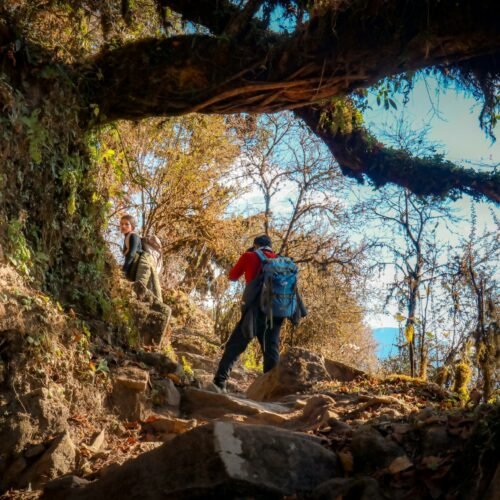
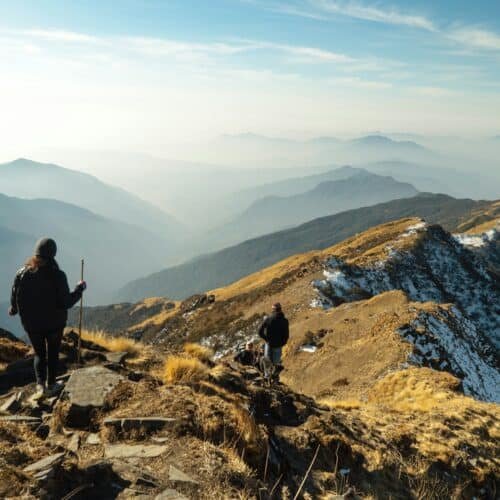
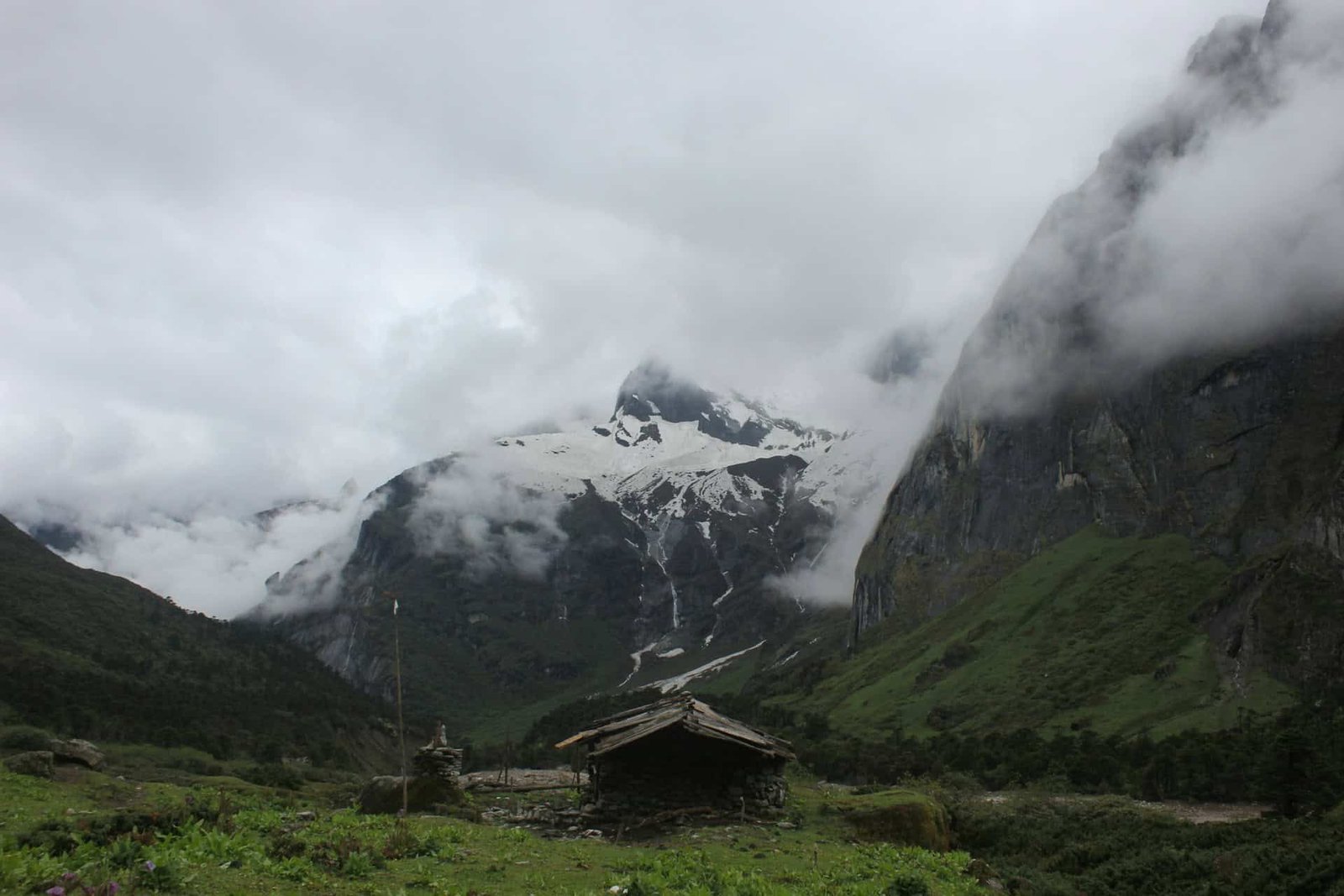
Makalu Base Camp sits at the foot of the world’s fifth-highest peak (8,463 m), a mountain so isolated that the approach trek is its own epic. Unlike the tea-house circuits of the Khumbu, the Makalu trail passes through landscapes that change as dramatically as any on the planet. Starting from the steamy Arun River valley at Num (1,500 m), you climb through terraced Rai villages, then dense rhododendron and bamboo, then into a cloud forest where moss hangs from every branch. Above Tashigaon, the trees thin and the track becomes a wilderness path traversing high yak pastures and boulder fields. The final push to Base Camp is a walk across a glacial moraine with Makalu’s immense south face suddenly filling the horizon, a wall of ice and rock that rises over 3,000 vertical meters from the Barun Glacier.
This trek exists for people who find the idea of queuing at Everest’s South Col unacceptable. For those who want to see red pandas in the wild, not just in a sanctuary. For trekkers who have already done the Annapurna Circuit or Manaslu and want to see a different Nepal—one where the forest is still thick enough to require a machete on the early parts of the trail, and where the sound of your own breathing is the loudest thing for hours.
Why choose Makalu over Everest Base Camp? EBC reaches a higher point (Kala Patthar at 5,545 m) and has the Sherpa cultural heartland, but it’s crowded, and the trail is basically a highway in peak season. Makalu has similar altitude challenges (you sleep at 4,870 m) without the crowds, plus far richer biodiversity. It’s also less physically punishing than Kanchenjunga or Dolpo because the daily distances are shorter and there are no extreme high passes over 5,500 m. That said, it is a serious, remote expedition that requires camping and complete self-sufficiency—no tea houses above Tashigaon.
The Makalu Barun National Park is a conservation area of staggering ecological importance. The park covers 1,500 km² and spans an elevation range from 400 m to over 8,000 m, protecting one of the highest biodiversity gradients on Earth. You’ll walk through subtropical forests with wild elephants (very rarely seen from the trail) and into alpine zones with snow leopards. The park was established in 1992 and is jointly managed by the Department of National Parks and local communities. Tourism is still minimal, which means your trek fees directly support conservation and sustainable development in some of Nepal’s poorest villages.
Why Book This Package with Himalayan Soul Adventures
Any agency can throw a price at you for Makalu. Few can execute the logistics consistently. Here’s what separates our operation.
1. Genuine Remote-Area Expertise. Our lead guide, Pasang Sherpa, was born in the Khumbu but has spent 15 years guiding in eastern Nepal. He’s crossed Shipton La in a snowstorm, knows which campsite has the best morning sun for drying tents, and can identify the calls of all six pheasant species in the park. When the trail washes out after monsoon, he already knows the alternate local path because he’s walked it with the villagers. This is not knowledge you can Google.
2. Self-Sufficient Camping Logistics. Above Tashigaon, there are no lodges. We carry everything: three-season tents, kitchen tent, dining tent with tables and chairs, toilet tent, and a full kitchen setup. Our cook team prepares hot meals three times a day, including fresh-baked bread and properly balanced nutrition for altitude. Porters carry all group equipment and your duffel bag (up to 12 kg per client). You walk with a daypack, and the camp is ready when you arrive.
3. Safety Infrastructure for Remote Extremes. We carry a satellite phone, a comprehensive medical kit, and a portable altitude chamber (Gamow bag) in addition to oxygen. Guides are trained in high-altitude medicine and daily monitoring of oxygen saturation and pulse is mandatory above 3,500 m. The nearest airstrip for helicopter evacuation is at Yangle Kharka (3,600 m) if a medical emergency requires, and we have a direct contract with Simrik Air for rapid response. If the weather prevents a flight, we have the resources and trained staff for a ground evacuation, which can take days—a scenario most operators won’t even discuss.
4. A Proper Acclimatization Schedule. Many itineraries rush the ascent, trying to squeeze the trek into 18 days. We build in two dedicated acclimatization days at Khongma Danda (3,500 m) and Yangle Kharka (3,600 m), plus a gradual approach that never exceeds 500 m sleeping altitude gain per day above 3,000 m. This reduces AMS incidence dramatically. We’d rather spend an extra day on the mountain than risk a client’s health.
5. Transparent Pricing with No Hidden Expedition Fees. Our price includes the KTM–Tumlingtar flight, all permits, full camping equipment (except personal sleeping bag), all meals, the entire guide and porter team, and government taxes. You’ll see competitors quoting $2,200 and then adding $400 for the flight and $200 for the permit. Our price is final. We also offer a single supplement for solo tents, and we never charge a “remote area surcharge” like some agencies do.
6. Community Benefit and Ethics. Our porters are from the Makalu region—they know the trails, they’re paid 30% above the national porter wage, and they have full accident insurance and proper gear. We also contribute $50 per trekker to the Makalu Barun Buffer Zone community fund, which supports anti-poaching patrols and school supplies. You’re not just visiting Makalu; you’re investing in its future.
Detailed Day-by-Day Itinerary (22 Days)
This is the standard itinerary, proven over a decade. Adjustments are possible for groups with more time, but we don’t compress it—Makalu requires patience.
Day 1: Arrive Kathmandu (1,350 m)
Airport pickup, hotel check-in, trek briefing, gear inspection.
Day 2: Fly Kathmandu to Tumlingtar (410 m), drive to Chichila (1,850 m)
50-minute morning flight (weather permitting) over the eastern hills to Tumlingtar airstrip. Our jeeps meet you for a 3–4 hour drive on a winding dirt road through Chichila village. The road ends at a small settlement where the trail begins. Overnight simple lodge.
Day 3: Chichila to Num (1,500 m)
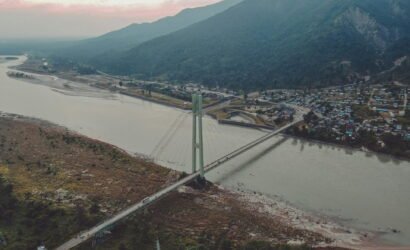
Trek: 5–6 hrs, 12 km, downhill then uphill. We descend to the Arun River, cross a suspension bridge, and climb steeply through terraced fields to Num, a Rai village perched on a ridge. The humidity is noticeable—this is the lowlands. Overnight lodge.
Day 4: Num to Seduwa (1,540 m)
Trek: 5–6 hrs, 14 km. A gradual downhill to the Barun River, cross another bridge, then a climb through forests to Seduwa, the park entrance. Our permits are checked here. Seduwa has a health post and the last reliable shop. Overnight lodge.
Day 5: Seduwa to Tashigaon (2,070 m)
Trek: 5 hrs, 10 km. Steady climb through terraced hills and small Sherpa settlements. Tashigaon is the last permanent village and the last place with rudimentary tea house. After this, we camp. Overnight lodge or tent (depending on preference).
Day 6: Tashigaon to Khongma Danda (3,500 m)
Trek: 6–7 hrs, 12 km, big altitude gain. This is the first tough day. The trail climbs relentlessly through rhododendron and oak forest, then breaks above treeline onto a grassy ridge. Khongma Danda is a summer pasture with a basic shelter. Camp overnight. We stay two nights here for acclimatization.
Day 7: Acclimatization Day at Khongma Danda
Rest, hydrate, and take a short hike up to 3,800 m for views of Chamlang and the Barun valley. The guides check everyone’s oxygen and pulse.
Day 8: Khongma Danda to Dobato (3,800 m) via Shipton La (4,220 m)
Trek: 7–8 hrs, 14 km. Cross the Shipton La pass, named after Eric Shipton’s 1952 reconnaissance expedition. The climb to the pass is steep but the trail is good. From the top, you get the first real view of Makalu’s summit pyramid. Descend to Dobato, a beautiful camp beside a small lake. Camp.
Day 9: Dobato to Yangle Kharka (3,600 m)
Trek: 6 hrs, 12 km. Descend through birch and rhododendron forest into the upper Barun valley. Yangle Kharka is a wide meadow with views of Peak 6 and Peak 7. This is where a helicopter could land in emergency. Camp two nights.
Day 10: Acclimatization and Rest at Yangle Kharka
Optional hike up the ridge for glacier views. The cook prepares a hearty lunch. Many trekkers appreciate this rest day before the final push.
Day 11: Yangle Kharka to Langmale Kharka (4,400 m)
Trek: 5 hrs, 10 km. The trail now follows the Barun Glacier’s lateral moraine. Vegetation becomes sparse; you’re in high alpine terrain. Langmale is a flat area with prayer flags and the first direct sight of Makalu’s south face. Camp.
Day 12: Langmale Kharka to Makalu Base Camp (4,870 m)
Trek: 5–6 hrs, 11 km. An early start to cross the glacier moraine before the snow softens. The path is rocky, winding through boulders. Base Camp is a cluster of tent platforms used by expeditions. The mountain fills the entire northern sky—a massive pyramid of rock and ice. Camp overnight. The altitude is significant; our guide monitors everyone closely. We stay only one night.
Day 13: Base Camp to Yangle Kharka (3,600 m)
Trek: 6–7 hrs, 15 km. Retrace steps down; the descent is much faster. Camp at familiar Yangle Kharka.
Day 14: Contingency / Extra Rest Day
Built into the schedule for weather or recovery. If all goes well, we continue.
Day 15: Yangle Kharka to Dobato (3,800 m)
Trek: 5–6 hrs, 12 km. Return up to Dobato. Camp.
Day 16: Dobato to Khongma Danda (3,500 m)
Trek: 6 hrs, 10 km. Recross Shipton La. Camp at Khongma Danda.
Day 17: Khongma Danda to Tashigaon (2,070 m)
Trek: 5–6 hrs, 14 km. Steep descent back into forest. Camp or lodge.
Day 18: Tashigaon to Seduwa (1,540 m)
Trek: 5–6 hrs, 16 km. Back through villages. Lodge.
Day 19: Seduwa to Num (1,500 m)
Trek: 5–6 hrs, 14 km. Retrace to Num. Lodge.
Day 20: Num to Tumlingtar via Chichila
Trek/Drive: 4–5 hrs drive. Jeep back to Tumlingtar. Overnight lodge.
Day 21: Fly Tumlingtar to Kathmandu
Flight to Kathmandu. Transfer to hotel. Farewell dinner.
Day 22: Depart Kathmandu or extend your stay.
Accommodation: Camping and Simple Lodges
The first few nights (Num, Seduwa, Tashigaon) have basic lodges with twin rooms, shared bathrooms, and simple dining. These are clean but rudimentary—don’t expect hot showers. From Tashigaon upward, it’s camping. We provide high-quality 3-season tents (single or twin share), foam mattresses, and sleeping bags if requested. The dining tent has a table and chairs; the toilet tent is a clean, private setup. Our camp crew handles all setup and breakdown. They boil water for a morning wash. There’s no electricity; solar lamps illuminate the dining tent.
Meals on the Trek
Our expedition cook prepares three hot meals daily. Breakfasts are porridge, eggs, pancakes, or Tibetan bread with jam. Lunch is a hot meal on the trail—dal bhat, pasta, or noodle soup, often served at a scenic stop. Dinner is three courses: soup, a main dish (rice, lentils, vegetables, or even pizza from a camp oven), and dessert (canned fruit or cake). We cater to vegetarian, vegan, and gluten-free diets with advance notice. All water is boiled or treated with chlorine dioxide. At altitude, appetite often decreases; the cook adjusts portions and flavors to encourage eating. Food safety is paramount—no raw vegetables above 3,500 m unless peeled.
Transportation and Logistics
The Kathmandu to Tumlingtar flight is on a small plane (Yeti or Buddha Air). This flight is weather-dependent; occasionally fog in Tumlingtar delays it. We build a buffer day at the start and end to absorb these delays. In case of prolonged cancellation, we arrange a long but possible road alternative (a 12-hour drive), though it’s rarely needed. From Tumlingtar, private jeeps take you to Chichila; the road is bumpy but passable. The return follows the same. We handle all airport transfers and hotel bookings in Kathmandu.
Permits and Documentation
You need:
- Makalu Barun National Park Permit: NPR 3,000 (~$25) per person. Obtained in Kathmandu.
- TIMS Card: NPR 2,000 for individual trekkers or NPR 1,000 for groups. Check current status; if suspended, we adjust accordingly.
No restricted area permit is needed for the standard route. We collect passport copies and photos beforehand and obtain all permits on your behalf. Just arrive with your passport.
Difficulty: Where Makalu Ranks Among Nepal’s Treks
Makalu is strenuous, not technical. It involves long walking days (5–8 hours), significant altitude (sleeping at 4,870 m), and remote conditions with no quick exit. It is harder than Annapurna Base Camp, Langtang, and Mardi Himal due to duration, altitude, and remoteness. It is comparable to Manaslu Circuit in difficulty, but Makalu has more up-and-down and the high camp at base camp is higher than Manaslu’s Larke Pass (5,160 m). It is less demanding than Kanchenjunga (longer, higher passes) and Dolpo (extreme remoteness and high passes). If you have completed a previous high-altitude trek above 5,000 m with camping, you are ready for Makalu. If this is your first Himalayan trek, start with something simpler.
Comparison table:
| Trek | Max Altitude | Days | Remoteness | Accommodation |
|---|---|---|---|---|
| Makalu Base Camp | 5,000 m | 22 | Very remote | Camping |
| Everest Base Camp | 5,545 m | 14 | Busy trail | Tea houses |
| Annapurna Circuit | 5,416 m | 18 | Moderate | Tea houses |
| Manaslu Circuit | 5,160 m | 16 | Remote | Tea houses/camping |
| Kanchenjunga Base Camp | 5,143 m | 24 | Extremely remote | Camping |
Fitness and Training
You need excellent cardiovascular endurance, leg strength, and mental resilience. Start training 10–12 weeks prior. Aim for 4–5 days a week of aerobic exercise: running, cycling, or uphill hiking with a weighted daypack (gradually increase to 10 kg). Do strength training for legs (lunges, squats, step-ups) and core. Practice walking on rocky, uneven terrain—stair climbing with a pack is ideal. If you can comfortably hike 7–8 hours with 1,000 m of ascent on back-to-back days, you’re ready. We also recommend a medical check-up and dental check (dental issues worsen at altitude).
Altitude and Acclimatization
This trek demands respect for altitude. AMS can strike anyone. Our schedule includes two mandatory acclimatization days (Khongma Danda and Yangle Kharka). The “climb high, sleep low” principle is followed: we ascend to Shipton La (4,220 m) on day 8 but sleep at 3,800 m. We monitor SpO₂ and heart rate daily. Mild AMS is treated with rest, hydration, and descent if necessary. We carry oxygen for emergencies and a Gamow bag as a portable hyperbaric chamber. Severe cases (HAPE/HACE) require immediate descent and evacuation. Our guides are trained to recognize symptoms early. Please be honest about how you feel; we’re here to help, not judge.
Weather and Best Time
Makalu lies on the edge of the monsoon’s eastern track. It gets more moisture than the Everest region but less than Kanchenjunga. The best windows:
- Spring (April–May): Rhododendrons bloom, days are warm (10–20°C at Base Camp), nights cold (-5 to -10°C). Occasional afternoon clouds. This is our preferred season.
- Autumn (October–November): Crisp air, stable weather, excellent visibility. Colder nights, possible early snow on passes. Just as good as spring.
- Winter (December–February): Extremely cold at high altitude; passes may be snowed in. Not recommended.
- Monsoon (June–September): Heavy rain, leeches in low areas, trails slippery, mountains hidden. Not suitable.
We run expeditions only in spring and autumn.
Packing List for a Remote Expedition
Packing for a camping trek in high altitude is more involved. Essentials:
- Clothing: Thermal base layers (top/bottom), fleece jacket, down jacket (rated to -10°C), waterproof/breathable shell jacket and pants, trekking pants (2), sun hat, wool beanie, liner gloves + insulated gloves.
- Footwear: Sturdy waterproof trekking boots (broken in), camp sandals, 4–5 pairs of wool socks.
- Sleeping: Sleeping bag rated to -15°C or colder (can rent in Kathmandu), sleeping bag liner.
- Gear: 40–50L daypack (you carry daily essentials), trekking poles, headlamp, sunglasses, sunscreen SPF 50+, lip balm.
- Hydration: 2 x 1L water bottles or bladder, water purification (tablets or filter).
- Camping-specific: Quick-dry towel, toiletries, hand sanitizer, wet wipes, personal first aid, blister kit, any medications, power bank, camera with extra batteries (cold drains them fast).
- Documents: Passport, permits, insurance.
We provide a comprehensive checklist upon booking.
Culture and Local Communities
The lower part of the trail passes through Rai and Limbu villages, indigenous groups with their own languages and traditions. They are primarily Hindu with animist influences. Higher up, you encounter Sherpa and Bhotia communities following Tibetan Buddhism. You’ll see mani stones, prayer flags, and small stupas. Always walk clockwise around religious sites. In villages, greet with “Namaste” and ask before photographing people. A small donation to a monastery is appreciated. The isolation means these communities receive few visitors; your behavior sets a precedent. Dress modestly.
Wildlife and Biodiversity
Makalu Barun National Park is a biodiversity hotspot. Possible sightings:
- Red panda (mostly in bamboo zones, rare but exciting)
- Snow leopard (tracks are common near Base Camp)
- Himalayan black bear, musk deer, tahr, langur monkeys
- Birds: Himalayan monal, impeyan pheasant, blood pheasant, lammergeier, golden eagle
- Flora: Over 3,000 plant species, including many orchids and medicinal herbs. The rhododendron forest in spring is stunning.
The park is a living laboratory. We follow strict “leave no trace” principles to protect it.
Photography Tips
- Best vantage points: Shipton La for the first view of the Makalu massif; Base Camp for the south face; Yangle Kharka for the Barun glacier and Chamlang peak.
- Gear: A DSLR or mirrorless with a wide-angle zoom (16–35mm) and a telephoto (70–200mm) for wildlife and distant peaks. A compact camera works too.
- Battery: Cold temperatures kill batteries; keep spares in an inner pocket near your body. Bring a portable solar charger.
- Drones: Permits are required and enforcement is strict in the national park. We advise against bringing one unless you have prior permission.
Connectivity and Charging
There is no mobile network above Num. Satellite phone is our only communication. In Num and Seduwa, sometimes Ncell has weak signal. Internet and electricity are absent on most of the trail. The camp uses solar panels to charge essential devices (for a fee). Bring a high-capacity power bank (20,000+ mAh) for your personal electronics. This is a true digital detox.
Money and Expenses
Carry all the cash you’ll need in Nepalese rupees, changed in Kathmandu. There are no ATMs beyond Tumlingtar. You’ll need money for:
- Tips for guide and porter team (suggested: $150–200 total per trekker for the entire crew)
- Hot showers (if available at lodges, small fee)
- Bottled drinks (coke etc. at lower villages)
- Personal purchases and donations
We recommend NPR 25,000–30,000 per person for extras. The package covers all main expenses, so this is only for personal indulgences.
Safety and Emergency Procedures
Safety is our highest priority. The guide team is equipped with satellite phone, comprehensive first aid, oxygen, and Gamow bag. We monitor health daily. Evacuation: if a helicopter evacuation is needed, the primary pickup point is Yangle Kharka (3,600 m). However, weather must be clear for helicopter flights. In case of a non-life-threatening emergency, ground evacuation is possible but slow. This trek requires mandatory travel insurance covering helicopter evacuation up to 5,000 m, medical treatment, and trip cancellation. We will verify your policy before departure. You must provide the policy number and emergency contact.
Responsible Tourism Practices
- Waste: All trash is carried out. We use biodegradable soaps and avoid single-use plastics. We provide filtered water to reduce bottle waste.
- Local economy: We hire local porters, cooks, and assistants from the Makalu region. We buy fresh produce from local villages when available.
- Cultural respect: We brief clients on local customs and encourage respectful interaction.
- Conservation: A portion of your trek fee supports the Makalu Barun conservation fund. We adhere to park regulations strictly.
Cost Breakdown – 22-Day Makalu Base Camp Trek (2 Pax Sharing)
| Item | Cost per Person (USD) |
|---|---|
| Flight KTM–Tumlingtar–KTM | $320 |
| Makalu Barun National Park Permit & TIMS | $45 |
| All ground transportation (jeep, transfers) | $180 |
| Accommodation: 3 nights basic lodge, 18 nights tented camp | $340 |
| Full board meals (21 breakfasts, 20 lunches, 20 dinners) | $560 |
| Expedition staff: guide, assistant guide, cook, porters (wages, insurance, equipment) | $950 |
| Group camping equipment (tents, kitchen, dining, toilet, mattresses) | $220 |
| Safety equipment (sat phone, oxygen, Gamow bag, first aid) | $80 |
| Government taxes, service charge, and buffer fund | $60 |
| Total Base Package (per person) | $2,995 |
Additional options:
- Single tent supplement: $250
- Sleeping bag rental (-15°C): $60
- Porter for personal daypack (5 kg): $350 (shares with other porter loads)
- Extra acclimatization day: $110
Our price is comprehensive. No hidden flight fuel surcharge, no permit processing fee. If you compare a “$2,200” offer from a competitor, add the flight and permit, plus often they charge a single supplement even for tent groups. We’re transparent.
Package Includes
- Airport pickup/drop and Kathmandu hotel (2 nights) on B&B basis
- All domestic flights (Kathmandu–Tumlingtar return)
- All private jeep transfers to/from trailhead
- All trekking permits and park fees
- Full board meals (breakfast, lunch, dinner, tea/coffee) on trek
- Camping equipment (tent, mattress, dining tent, toilet tent)
- Experienced English-speaking guide and full support team
- Porter service for your duffel (up to 12 kg) and all group gear
- Safety equipment and satellite phone
- All government taxes
Package Excludes
- International airfare and Nepal visa
- Travel insurance (mandatory)
- Personal trekking gear (sleeping bag, clothes, boots—rental available)
- Alcoholic and cold drinks, bottled water (we provide treated water)
- Hot showers, battery charging fees
- Tips for crew
- Any extra costs due to early departure, flight delays, or force majeure (though we assist)
30 Frequently Asked Questions
1. How difficult is the Makalu Base Camp trek compared to Everest Base Camp?
Makalu is harder due to greater remoteness, longer duration, and camping logistics. The altitude is similar, but EBC has better infrastructure. If you’ve done EBC comfortably, you are ready for Makalu physically.
2. Do I need a restricted area permit for Makalu?
No, the standard route uses Makalu Barun National Park entry only. No special permit from the Department of Immigration is needed.
3. Is there a risk of AMS?
Yes, because you sleep at 4,870 m. Our itinerary has acclimatization days and we monitor health. Most people who follow the schedule do fine.
4. Can I do this trek solo?
Solo trekking is not permitted in the national park without a guide. We require a minimum of two clients for the expedition, but we can pair you with another if you’re solo.
5. What is the flight from Kathmandu to Tumlingtar like?
It’s a 50-minute scenic flight. Sometimes delayed by fog. We build buffer days.
6. What is the accommodation like?
Basic lodges at lower villages; camping elsewhere. Tents are twin-share, with foam mattresses. Comfortable but not luxurious.
7. Is food safe?
Absolutely. Our cook prepares fresh meals. We avoid raw vegetables at high altitude. Water is treated.
8. How much cash do I need?
Around NPR 25,000–30,000 for tips and personal items.
9. Can I charge my phone/camera?
Solar charging is available at camp for a fee. Bring a power bank. There’s no electricity grid.
10. What if I get sick or injured?
We have first aid, oxygen, and satellite phone. Evacuation via helicopter is possible from Yangle Kharka if weather permits. Insurance must cover this.
11. What is the maximum altitude I sleep at?
4,870 m at Base Camp. You spend one night there.
12. When is the best time to go?
April–May and October–November. We do not run in winter or monsoon.
13. How long is the trek each day?
Typically 5–8 hours of walking, with some longer days on pass crossings.
14. Do I need to be a mountaineer?
No, it’s a trek on established trails, though some sections are rocky and rough.
15. What wildlife might I see?
Red panda, snow leopard (tracks), musk deer, birds.
16. Is there mobile network?
Only in Num and Seduwa, unreliable. Assume no connectivity.
17. How many porters will carry my gear?
One porter per two clients, carrying up to 24 kg total (12 kg each).
18. Can I take a hot shower?
Only at lower lodges for a fee. On the trail, we provide warm water for a sponge bath.
19. What if the flight to Tumlingtar is cancelled?
We can arrange a road transfer (long) or reschedule. We’ll manage logistics.
20. Do I need a sleeping bag?
Yes, a warm sleeping bag rated to -15°C. You can rent one from us.
21. Are there any age limits?
We’ve had fit trekkers in their late 60s. It’s about health, not age. Under 16 not recommended.
22. Is this a camping-only trek?
Yes, above Tashigaon it’s entirely camping.
23. Can I extend the trek to visit the Barun Valley further?
Yes, we can customize a longer itinerary to Shershon or higher lakes.
24. How far in advance should I book?
Permits and flights require booking at least 3–4 weeks ahead, especially in peak season.
25. What is the cancellation policy?
Deposit is refundable up to 60 days before departure, minus a fee. Details in our terms.
26. Are there any dangerous river crossings?
Bridges have been built; no fording of major rivers is required.
27. What languages do the guides speak?
English, Nepali, and some local dialects.
28. Will I see Mount Everest?
Makalu is separate; you won’t see Everest from the trail. You see Chamlang, Kanchenjunga in the distance, and Makalu.
29. Can I combine this with another trek?
It’s standalone, but you could add a jungle safari in Chitwan after.
30. Why book with you?
We’ve led 900+ Makalu expeditions, have the best safety record, and our local team is unsurpassed. You’ll be in expert hands from start to finish.