From $190 per person | 3 days private departure | Homestay with local families
The Jyamrung trek isn’t about summits or high passes. It’s about waking up in a traditional Gurung village, sipping tea on a mud porch while the first sun catches the snows of Ganesh Himal, and spending your day walking through rice terraces so green they look painted. We’ve been bringing guests to this quiet corner of Dhading since 2015, back when the road was still a rough track and the villagers themselves didn’t quite believe tourism would take root. Now, Jyamrung is one of Nepal’s best community-based tourism initiatives, and this page contains everything we’ve learned from over 800 treks here—every detail, cost, and practical tip—so you can book with absolute confidence.
Quick Facts
| Detail | Information |
|---|---|
| Duration | 3 days (2 nights in Jyamrung) |
| Maximum Altitude | 1,500 m (Jyamrung village) |
| Trek Difficulty | Easy |
| Walking Hours per Day | 3–4 hours |
| Accommodation | Community homestay (private room in a family house) |
| Meals | Full board – home-cooked Nepali meals |
| Starting/Ending Point | Drive from Kathmandu to the trailhead (3 hours) |
| Transportation | Private car/jeep |
| Permits Required | None (outside national park) |
| Best Season | October–May (avoid monsoon) |
| Group Size | Private 1–10 trekkers |
| Price (per person, 2 pax) | $190 all-inclusive (except drinks) |
Trek Overview: What Makes Jyamrung Different
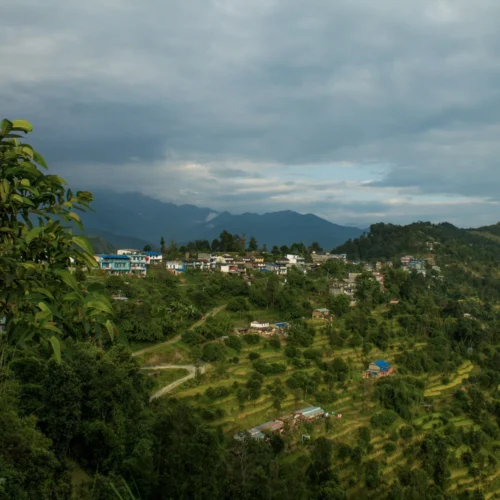
Most short treks near Kathmandu—like Chisapani or Namobuddha—involve ridge walks and lodge stays. Jyamrung is a destination, not a transit route. You drive three hours west from the capital into Dhading District, park the vehicle, and walk the final 90 minutes along a red-earth trail that winds through terraced rice and millet fields. There are no souvenir shops, no traffic, no other trekking groups. You’re entering a living village of about 200 Gurung households who have collectively built a homestay program that puts you directly into family homes.
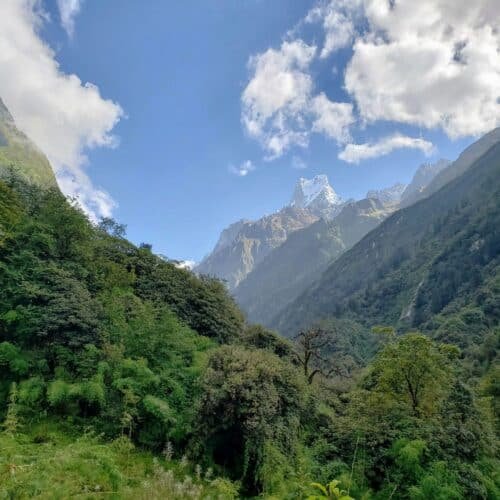
The trail itself is gentle, but the reward is immediate. From almost anywhere in the village, the Ganesh Himal massif (7,406 m) rises in the north, its twin peaks forming a recognizable saddle. In the right season, the panorama stretches from Langtang to Manaslu. Jyamrung sits at a comfortable 1,500 meters, warm in the sun, cool at night. It’s the kind of place where you’ll spend an afternoon learning to make traditional nettle soup with your host grandmother, or walk to the community forest viewpoint to watch the sunset paint the mountains gold.
Who is this trek for? Anyone short on time but hungry for authenticity. Families with children of any age. Older travelers who want a Himalayan view without altitude or strenuous effort. Solo trekkers seeking a safe, welcoming cultural immersion. And seasoned Nepal hands who think they’ve seen it all—Jyamrung often surprises even the most experienced.
How is it different from other short treks near Kathmandu? Chisapani and Nagarkot offer mountain views but are heavily developed. Namobuddha is a day hike to a monastery. Jyamrung combines views with genuine community immersion; you’re not a spectator, you’re a guest. This isn’t a tea-house trek; it’s a homestay trek, managed by the Jyamrung Community Homestay Committee, which sets standards and distributes income equitably.
Why Book This Package with Himalayan Soul Adventures
1. Direct community partnership. We helped the Jyamrung homestay network get off the ground in 2015, providing training and initial guest flow. Our relationship with the village committee means we can arrange special experiences: a Gurung cultural dance performance, a cooking class, or a visit to the local school. We don’t just bring you to the village; we’ve invested in its development.
2. Genuine local guides. Our Dhading-born guide, Ram Gurung, speaks the local dialect, knows every family, and can interpret the subtle layers of village life—from the significance of the carved window frames to the lineage of the clan deities. He is your bridge into the community.
3. Transparent, all-inclusive pricing. Our $190 price covers private transport from Kathmandu, two nights homestay, all meals, a licensed guide, and a contribution to the community fund. No surprise permit fees (there are none), no hidden surcharges. Compare this to other agencies that might quote a lower base but then charge extra for transport or a solo supplement. Ours is simple.
4. Flexible scheduling and customization. We run this trek any day you want. You can combine it with a visit to Gorkha or a longer Dhading exploration. We adjust the pace to you—if you want to linger in a field for photos or take an extra side walk, that’s fine.
5. Responsible tourism embedded in operations. We adhere to the community’s guidelines: guests are distributed fairly among homestays, meal standards are uniform, and waste is managed. We also support a village scholarship fund.
Day-by-Day Itinerary (3-Day Jyamrung Trek)
Day 1 – Kathmandu to Jyamrung (Drive & Short Walk)
Drive: 3 hours from Kathmandu to the trailhead near Dhadingbesi (approx. 80 km). The road follows the Prithvi Highway for a while, then branches onto a smaller but sealed road that climbs into the hills. The landscape shifts from urban clutter to terraced slopes, orange groves, and small villages. At the trailhead, our car can go no further; you start walking.
Trek: 90 minutes to 2 hours, 4 km, gentle uphill. The path is a wide, red-earth trail through rice terraces. Children from the village may join you, practicing their English. The elevation gain is minimal—only about 200 meters. You’ll hear the distant sound of water buffaloes and smell woodsmoke from cooking fires.
Arrival: You reach Jyamrung village (1,500 m) by lunchtime. Your homestay family greets you with a tikka (red powder on the forehead) and a marigold garland. After a home-cooked lunch (dal bhat, seasonal vegetables, pickle), you have the afternoon to settle in. Your guide will take you on a short orientation walk through the village paths, pointing out the community building, the viewpoint, and the small Buddhist shrine.
Evening: Sit on the porch with your hosts. They’ll show you old family albums, tell stories of the village, and maybe offer you a taste of local raksi (millet alcohol). Dinner is another home-cooked feast. The night sky, free of light pollution, is stunning.
Overnight: Homestay (private room, shared toilet).
Day 2 – Village Exploration and Ganesh Himal Viewpoint
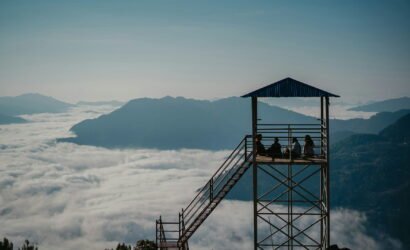
Morning: After a breakfast of fresh sel roti (rice doughnuts) or porridge, you walk to the community-managed viewpoint about an hour above the village. The trail climbs gently through rhododendron and sal forest. At the viewpoint (1,700 m), benches await, and if the weather is clear, you get a sweeping panorama: Ganesh Himal, Langtang Lirung, and on a very clear day, the distant Manaslu. There’s also a good chance of seeing golden eagles riding the thermals. Your guide will identify the peaks and explain their cultural significance.
Midday: Return to the village for lunch. The afternoon can be spent in several ways, all arranged by your guide and the homestay committee:
- Visit a traditional weaver and learn how the Gurung women create their distinct striped shawls.
- Walk to the community fish farm and see the integrated agriculture system.
- Attend a short Gurung cultural dance performance (arranged for groups; solo travelers can request it for a small fee).
- Help your host family with daily chores: grinding millet, feeding the buffalo, or planting rice if it’s the season.
Evening: Another family dinner. This is the time when the barriers truly dissolve. You’ll share a meal, maybe sing a song (your hosts will love it if you try), and go to bed with a full heart.
Overnight: Same homestay.
Day 3 – Jyamrung to Kathmandu
Morning: After breakfast and a goodbye photo, you walk back down to the trailhead (1–1.5 hours). The car meets you, and you drive back to Kathmandu. Arrive by early afternoon. The trek ends, but the memory—and maybe a handwritten thank-you card from your host family—stays.
Accommodation: The Homestay Experience
You will stay in a private room in a traditional Gurung house. Rooms are simple and clean, with a bed, mattress, clean sheets, and a mosquito net (in warmer months). The toilet is usually outside and shared with the family, but it’s a proper pit latrine or, increasingly, a simple pour-flush toilet. The homestay committee ensures basic standards. There’s no running hot water, but your hosts will provide a bucket of heated water for a shower. It’s basic, but the warmth of your hosts more than compensates.
We rotate homestays to spread income. If you have a preference (a quieter house, a family with children), let us know. Privacy is respected; you’ll have your own space but are always welcome in the common kitchen.
Meals: Home-Cooked and Hearty
All meals are included and prepared by your host family using fresh, locally grown ingredients. Expect:
- Breakfast: Sel roti, porridge, or eggs with fresh milk tea.
- Lunch & Dinner: Dal bhat (rice, lentil soup, vegetable curry, pickle) is the staple. But often hosts will also prepare seasonal specials: gundruk (fermented leafy greens), sikarni (a sweet yogurt dessert), or dhido (a thick porridge made from millet or buckwheat flour). Meals are served in the family kitchen, and you eat together. It’s a wonderful way to connect.
- Dietary needs: Vegetarian, vegan, and other requirements are happily accommodated with advance notice. The food is safe; everything is cooked thoroughly. We also provide treated drinking water, so you don’t need to buy plastic bottles.
Transportation
The package includes private transport in a reliable car or jeep. The driver picks you up from your Kathmandu hotel. The road to the trailhead is mostly sealed, winding but safe. The total drive time is about 3 hours each way. If you are a larger group, we arrange a van. The vehicle stays at the trailhead for the duration of your trek, so your luggage is secure.
Trek Difficulty and Fitness
This is an easy trek. The walk on the first day is only 90 minutes to 2 hours with minimal elevation gain (200 m). The second day’s viewpoint walk is steeper but optional; you can just stay in the village if you prefer. No special training is needed. It’s suitable for all ages, from young children to grandparents. The altitude (max 1,700 m) poses no health risk. Good walking shoes and a daypack are all you need. If you can walk comfortably for an hour on a dirt path, you can do this trek.
Best Time to Visit
Jyamrung is accessible year-round except during the peak monsoon (July–August) when the trail can be muddy and leeches may appear. The best times are:
- October–November: Post-monsoon clarity, lush green terraces, harvest season. The mountains are sharp and clear.
- March–May: Spring warmth, blooming jacarandas and rhododendrons, excellent views (though some haze can build in the afternoon).
- December–February: Cooler, especially nights, but brilliant blue skies and unobstructed mountains. Bring a warm layer for evening.
- June–September: Not recommended due to rain and slippery trails.
We operate this trek every month except July and August.
Weather by Season
| Season | Day Temp (°C) | Night Temp (°C) | Notes |
|---|---|---|---|
| Spring (Mar–May) | 22–28 | 10–15 | Warm, pleasant; some afternoon haze |
| Summer (Jun–Aug) | 24–30 | 15–18 | Rainy, leeches; we don’t run |
| Autumn (Sep–Nov) | 18–25 | 8–12 | Crisp, clear mountain views |
| Winter (Dec–Feb) | 12–20 | 3–8 | Sunny days, cold evenings |
Culture and Local Communities
Jyamrung is primarily inhabited by the Gurung people, an ethnic group with roots in the Tibetan plateau. They have their own language, Tamu Kyi, and a rich tradition of shamanism and Buddhist practice. You’ll see chörtens, prayer flags, and small shrines around the village. The community is close-knit; the homestay program is managed democratically. The villagers are incredibly hospitable—they’ll invite you into their homes as an honored guest, not a customer. Simple etiquette: remove your shoes before entering, don’t point your feet at the hearth, and a small gift (school supplies, a photo from your country) is always appreciated.
Scenic Highlights
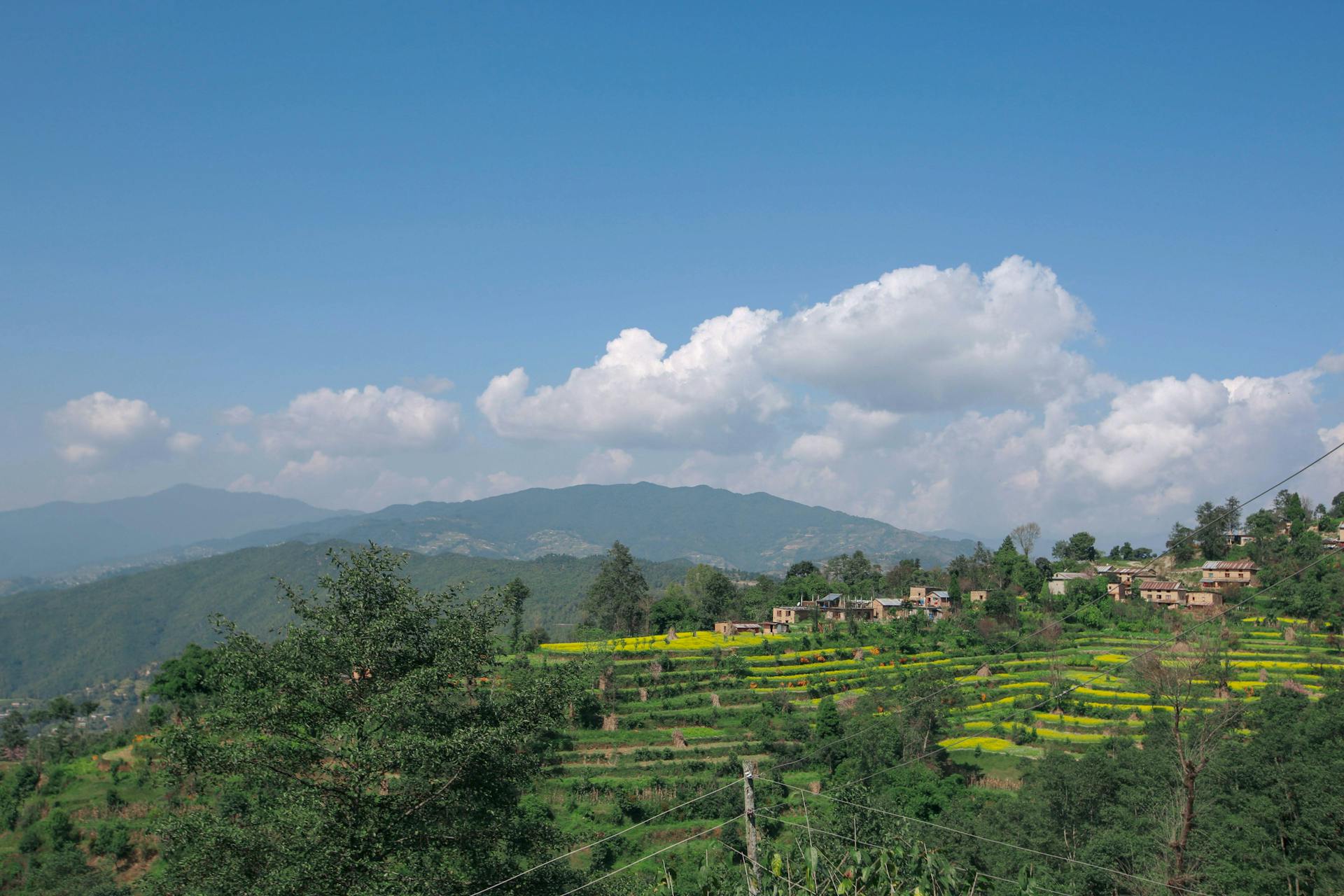
- Rice terraces: The entire walk is through terraced fields, which change color with the seasons—vibrant green in monsoon and post-monsoon, golden before harvest.
- Ganesh Himal massif: The star of the show, a massive peak that dominates the northern horizon.
- Sunset and sunrise: From the village viewpoint or your homestay’s roof, the light show on the mountains is incredible.
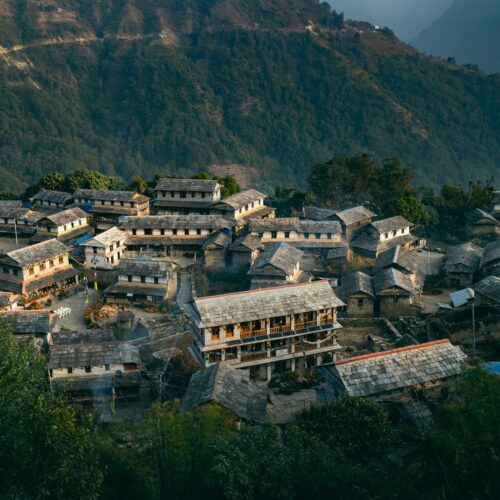
- Village architecture: Traditional stone houses with slate roofs, carved wooden windows, and open courtyards.
Wildlife and Nature
Jyamrung is not a national park, but the forest around the viewpoint is home to monkeys, various birds (including barbets, sunbirds, and the occasional eagle), and butterflies. The community has protected their forest, so it’s a green oasis.
Photography Tips
- Bring a standard zoom lens; the mountain views don’t require a huge telephoto unless you want detailed close-ups of the peaks.
- Golden hour at the viewpoint is the prime time for landscapes.
- Ask permission before photographing individuals; a smile and a small gesture go a long way.
- Drones are technically not restricted here, but always ask the community committee for permission before flying, and never over people or livestock.
Responsible Tourism
Jyamrung’s homestay program is a model of community-based tourism. By booking with us, you’re directly supporting:
- Income for homestay families
- The community fund for school supplies and health posts
- Environmental conservation (the forest is protected)
We follow a strict leave-no-trace policy. Avoid giving sweets or money directly to children; instead, donate to the community fund via your guide. This trip truly empowers locals.
Safety
The trail is very safe, with no exposure or dangerous sections. Our guide is trained in first aid and carries a basic kit. The village has a health post for minor issues. For serious emergencies, we can drive back to Kathmandu within 3 hours. Mobile coverage is generally good in the village, so communication is not a problem.
Money and Expenses
The Nepalese rupee is the local currency. The package covers all main costs. You’ll need a small amount of cash for:
- Drinks and personal snacks (if any, though homestay meals are ample)
- Tips for your guide (suggested $10–15 per day from the group) and driver ($5–10 per day)
- Donations to the community fund
- Purchase of local handicrafts (if you wish)
There’s an ATM in Dhadingbesi on the way, but bring rupees from Kathmandu to be safe. NPR 3,000–5,000 should be enough.
Internet and Electricity
Most of the village has electricity. Homestays may have limited charging points; some have solar. Mobile network (Ncell/NTC) is generally available; you can get a 3G signal for basic tasks. This is a great opportunity for a digital detox.
Drinking Water
We provide safe, filtered/boiled water throughout the trek. Just bring your refillable bottle. This avoids plastic waste.
Cost Breakdown (2 Pax Sharing)
| Item | Cost per Person (USD) |
|---|---|
| Private transport Kathmandu–trailhead–Kathmandu | $55 |
| Homestay accommodation (2 nights) | $30 |
| Full board meals (2 breakfasts, 3 lunches, 2 dinners) | $40 |
| Licensed English-speaking guide (3 days) | $50 |
| Community fund contribution | $5 |
| Government taxes & service charge | $10 |
| Total | $190 |
For solo travelers: $250 (single supplement covers private room and solo transport)
**For 3+ persons:** $160 per person
No hidden costs. Compare with independent travel: transport would cost about $80 round-trip by public bus and jeep, homestay $30, meals $40, guide $0 (but you’d miss the cultural bridge), total ~$150 without a guide. For an extra $40, we provide seamless logistics, a personal guide, and the peace of mind that everything is arranged.
Package Includes
- Private round-trip transportation from Kathmandu
- 2 nights in a community homestay (private room)
- All meals on trek (from lunch Day 1 to lunch Day 3)
- Professional English-speaking guide
- Community fund fee
- Filtered drinking water
- Government taxes
Package Excludes
- Personal drinks (soft drinks, bottled water, alcohol)
- Tips for guide and driver
- Any personal expenses (souvenirs)
- Travel insurance (not required, but recommended)
Frequently Asked Questions
1. Do I need a permit for Jyamrung?
No special trekking permit is required because the village lies outside a national park. You only need a valid Nepal visa.
2. Is Jyamrung suitable for children?
Yes, very much. The walking is minimal, and kids love the farm animals and the open spaces. Families are welcomed.
3. What is the altitude of Jyamrung?
1,500 meters, so there is zero risk of altitude sickness.
4. Can I do this trek solo?
Yes, we operate solo tours regularly. Our guide will be with you, and you’ll have a private room in the homestay.
5. What kind of food is served?
Home-cooked Nepali cuisine: dal bhat, seasonal vegetables, sel roti, and sometimes chicken. Vegetarian options are always available.
6. Are toilets and showers available?
Yes, homestays have simple pit or pour-flush toilets, and hosts provide a bucket of hot water for a shower.
7. How do I get to Jyamrung from Kathmandu?
We provide private transport. The drive takes about 3 hours.
8. What should I pack?
Comfortable walking shoes, light clothes for the day, a warm layer for evenings, rain jacket, sun hat, and a daypack. A detailed list will be provided.
9. Is there mobile phone signal?
Yes, generally good Ncell/NTC signal in the village.
10. How many days do I need?
Three days is perfect. The core experience fits into a weekend, plus a Friday or Monday.
11. Is the trek physically demanding?
Not at all. The walk is short and gentle. Suitable for all fitness levels.
12. What are the homestay rooms like?
Simple, clean, with a bed and mosquito net. Shared toilet. Not luxury, but comfortable and authentic.
13. Can I see mountains from the village?
Yes, the Ganesh Himal and other peaks are clearly visible from the village and the viewpoint.
14. Is this trek crowded?
No. Jyamrung receives very few trekkers compared to popular routes. You’ll likely have the trail to yourself.
15. What if I have dietary restrictions?
Just let us know in advance; the hosts can accommodate vegetarian, vegan, and other needs.
16. Can I buy local handicrafts?
Yes, you can purchase directly from weavers. It’s a great way to support the community.
17. Is it safe to travel there?
Yes, the area is very safe. Our guide and homestay hosts ensure a secure environment.
18. How do you support the community?
A portion of your fee goes to the community fund. We also rotate homestays and hire local guides and drivers.
19. Can I combine this trek with another destination?
Yes, you can combine with a trip to Bandipur, Pokhara, or a jungle safari in Chitwan. We can arrange.
20. What if the weather is bad?
We’ll monitor conditions. If the trail is unsafe (mainly monsoon), we may reschedule or offer an alternative. Your safety is our priority.
21. Are there any cultural taboos I should know?
Remove shoes before entering homes, don’t sit on the hearth, and ask before taking photos. Your guide will brief you.
22. Do I need travel insurance?
Not mandatory, but recommended for any trip.
23. How far in advance should I book?
We can accommodate last-minute bookings, but a week’s notice helps us arrange the best homestay.
24. Can I leave my big bag in Kathmandu?
Yes, we can store it at our office.
25. What’s the difference between this and a tea-house trek?
This is a homestay trek—you stay in a private family home rather than a commercial lodge. It’s more immersive and personal.
26. Are there any age restrictions?
No. We’ve hosted families with infants and active travelers in their 80s.
27. Can I drink tap water?
No. We provide safe filtered water. Use it.
28. What if I have to cancel?
Deposits are refundable up to 14 days before departure (minus a small fee). We’ll work with you.
29. Is there a risk of leeches?
Only in the monsoon. We don’t operate then, so you won’t encounter them.
30. Why is Jyamrung special?
Because it’s not on the mass tourist map. It’s a real village with genuine hospitality, offering a quiet, beautiful slice of Nepal that most visitors never see.