See wild one-horned rhinos, Bengal tiger country and 500+ bird species in Nepal’s first and finest wildlife reserve, guided by naturalists who grew up on the edge of this jungle.
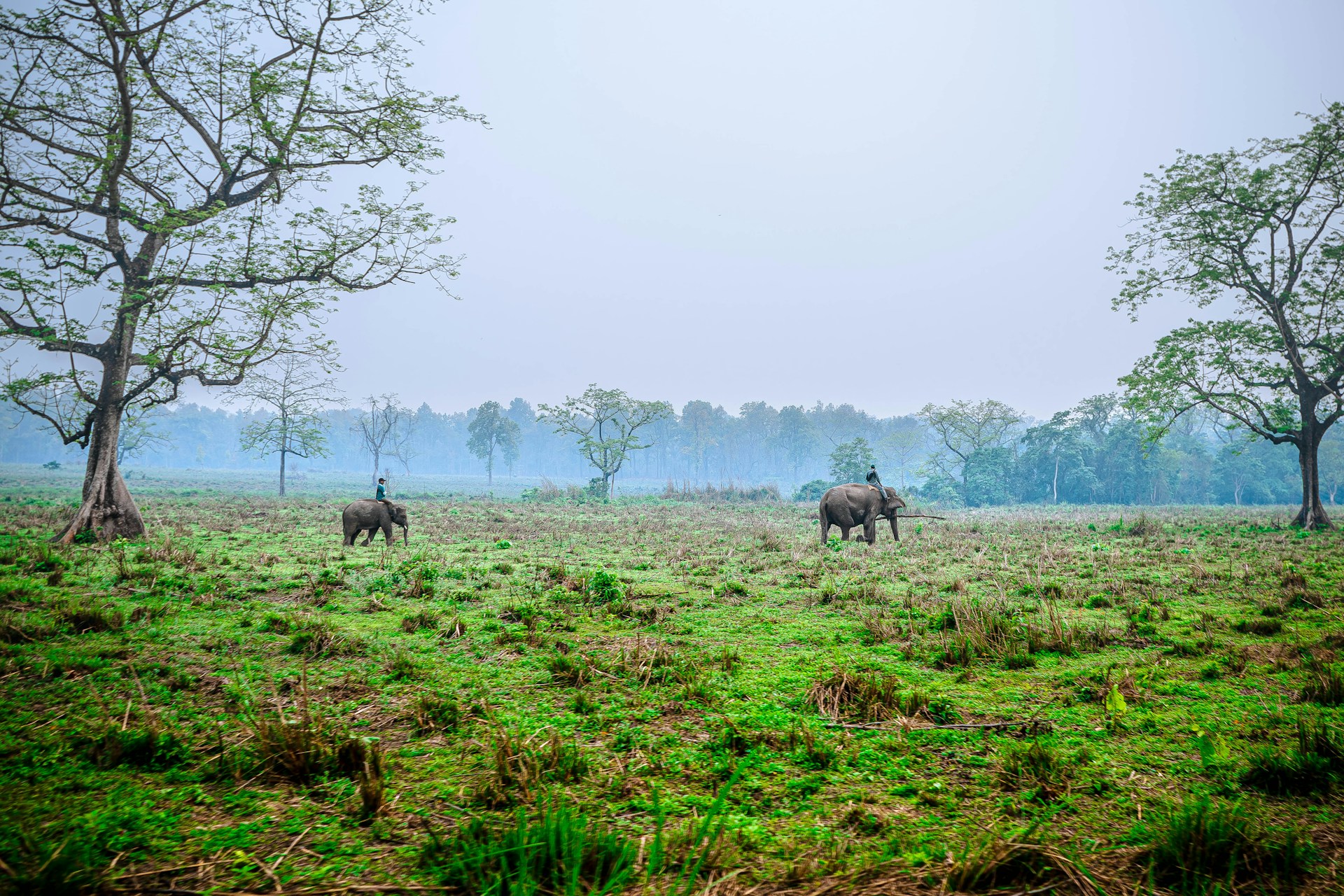
Chitwan National Park is the trip most travellers picture when they imagine a Nepal safari: dawn mist rising off the Rapti River, a rhino wading through elephant grass, dugout canoes gliding past sunning crocodiles, and Tharu villages where a culture older than the park itself still shapes daily life. This is not a zoo and not a manicured game park. It is a living UNESCO World Heritage ecosystem where sightings are earned, not guaranteed, which is exactly what makes a good sighting unforgettable.
This Chitwan National Park tour is our flagship package and the sweet spot for most visitors. It gives you enough time for a proper jeep safari, a canoe ride, a jungle walk, the Elephant Breeding Centre, a Tharu village visit and an evening cultural program, without feeling rushed or padded. It is built by people who run trips here every week, through every season, and who tell you the truth about what you will actually see.
- Licensed park naturalist guides (English-speaking, government-permitted)
- All park permits, jeep safari, canoe ride, Tharu cultural program and Elephant Breeding Centre included
- Comfortable jungle lodge or resort accommodation in Sauraha, on full board
- Honest seasonal advice tailored to your priorities
- Small groups, private options, family- and senior-friendly pacing
- No pressure to buy an elephant-back safari we do not ethically recommend
Book with confidence: flexible dates, transparent all-in pricing, and no surprise fees at the park gate. Send us your dates to check availability and request a quote.
Tour Highlights
Everything that makes this Chitwan National Park tour worth your time, at a glance:
- Wild one-horned rhinos, up close and near-certain. Chitwan holds the world’s second-largest population of greater one-horned rhinoceros. Seeing them on safari and from the riverbank is one of the surest wildlife thrills in Asia.
- A proper jeep safari into Bengal tiger country. Open 4WD deep into grassland and sal forest, in one of the healthiest tiger habitats on Earth, with a guide who can read tracks and alarm calls.
- A silent dugout-canoe drift on the Rapti River. Glide past basking gharial and mugger crocodiles and dozens of water birds, the quietest and most atmospheric hour of the trip.
- World-class bird watching. Over 544 recorded species, more than 6% of the world’s birds, in a designated Important Bird Area.
- The Elephant Breeding Centre and Gharial Breeding Centre. The ethical, educational way to meet elephants and see one of the planet’s rarest crocodiles being saved from extinction.
- Authentic Tharu culture. A village visit and the famous Tharu stick-and-fire dance, performed by, and directly supporting, the local community.
- Sunsets over the grasslands. Watch the sun drop over the Rapti with rhinos often visible across the water, a genuinely common Sauraha sight.
- Honest, expert guiding. No inflated promises. We tell you realistic odds by season and put you in the right place at the right time.
Quick Facts Table
| Package | Chitwan National Park Tour — 2 Nights 3 Days |
| Destination | Chitwan National Park, Sauraha, south-central Nepal (Terai lowlands) |
| Best time to visit | October–March (peak Nov–Feb); Feb–Apr best wildlife visibility |
| Difficulty | Easy — suitable for families, seniors and first-time travellers |
| Distance from Kathmandu | ~150–170 km (approx. 5–6 hours by road, or a 25-min flight to Bharatpur) |
| Distance from Pokhara | ~150 km (approx. 5 hours by road) |
| Park established | 1973 (Nepal’s first national park) |
| UNESCO World Heritage status | Inscribed 1984 |
| Park area | 952.63 km² core zone + 729.37 km² buffer zone |
| Key wildlife | One-horned rhinoceros, Bengal tiger, sloth bear, gharial and mugger crocodile, 544+ bird species |
| Main activities | Jeep safari, canoe ride, guided jungle walk, bird watching, Elephant Breeding Centre, Tharu cultural program |
| Altitude | 110 m – 850 m (subtropical, warm most of the year) |
| Currency | Nepalese Rupee (NPR) |
| Base town | Sauraha (main tourist hub, on the park’s north-eastern edge) |
Tour Overview
A Chitwan tour is the classic counterpoint to Nepal’s mountain trekking. After the thin air of the Himalaya, most travellers come down to the warm, green, low-lying Terai to slow down and watch wildlife. Chitwan National Park protects one of Asia’s last great stretches of tall-grass floodplain and riverine forest, the kind of habitat that once ran unbroken along the base of the Himalaya and now survives in only a handful of places.
This three-day package is deliberately the one we build our reputation on. It is long enough to cover every essential Chitwan experience properly and short enough to slot neatly between Kathmandu, Pokhara and the rest of your Nepal trip. Over three days you get a real jeep safari, a canoe ride, a jungle walk, the two conservation breeding centres, a Tharu village and cultural program, plus a peaceful final-morning nature walk, all based in and around Sauraha.
Sauraha is the small, walkable riverside town on the park’s edge where the safari industry is concentrated. From its café terraces you can watch rhinos come to drink across the Rapti River at dusk, a genuinely common sight and a fair preview of the wildness just beyond.
What sets this tour apart is not a longer list of activities, since most operators offer roughly the same menu. It is who guides you and how honestly the trip is run. A jeep safari with a guide who can read tracks, call a jungle fowl and explain why the grass was recently burned is a completely different experience from one where the driver just circles the roads hoping something walks out. That difference is the whole point of booking with a specialist rather than the cheapest listing.
Why Choose This Package
There are dozens of operators selling Chitwan. Here is exactly why travellers pick this package over the bigger, glossier names, stated plainly, because you can verify all of it.
- Local naturalist guides, not order-takers. Our lead guides are government-licensed park naturalists, most from Chitwan and Nawalpur, who have spent years reading this jungle. They know where the resident rhinos feed, which oxbow lakes the gharials favour, and how to position you for a sighting. Good guiding is the single biggest factor in whether your safari is memorable, and it is the thing cheap packages quietly cut.
- Honest expectations, especially about tigers. Anyone promising a guaranteed Bengal tiger sighting is selling you a story. Chitwan holds one of the healthiest tiger populations in the world (around 128 tigers at the last census), but they are elusive and largely nocturnal, and the tall grass hides them. We tell you your realistic odds by season and put you in the right places at the right times.
- We do not push elephant-back safaris. Riding elephants through the park was once the signature Chitwan experience. On welfare grounds, the industry and Chitwan itself have been moving away from it, and we do not sell it as a headline activity. Instead we include the Elephant Breeding Centre, where you learn about conservation and see calves, and jeep-based safaris that are just as good for wildlife viewing.
- Transparent, all-in pricing. Our quoted price includes park permits, all listed activities, guide fees, accommodation and meals as specified. No surprise conservation fee or jeep surcharge sprung on you at the gate.
- Flexible, safe logistics. Private car, tourist coach or a short flight to Bharatpur, your choice. Family rooms, dietary needs, mobility considerations and solo-traveller comfort are all handled up front.
- We know when not to send you. If your only free window is late June to August, we will be straight with you: the monsoon floods roads and closes canoe routes, and wildlife scatters into deep cover. We would rather advise you honestly than sell a disappointing trip.
Transportation
You have three sensible ways to reach Chitwan, and we will recommend the best fit for your budget, group and schedule.
| Option | Duration | Best for | Notes |
|---|---|---|---|
| Private car / SUV | ~5–6 hrs from Kathmandu; ~5 hrs from Pokhara | Families, comfort, flexible stops | Most comfortable; door-to-door; can stop for photos and food |
| Tourist coach | ~6 hrs from Kathmandu/Pokhara | Budget-conscious solo travellers and couples | Comfortable AC coaches; fixed morning departure; scenic river route |
| Flight to Bharatpur | ~25 min from Kathmandu + short transfer | Travellers short on time | Saves half a day each way; weather-dependent; higher cost |
The Kathmandu–Chitwan road follows the Trishuli and Narayani rivers through the mid-hills and can be slow in sections due to ongoing highway work and traffic, which is exactly why the itinerary keeps a relaxed arrival day. From Pokhara the route is generally quicker. Whichever you choose, all in-Chitwan transfers, from your arrival point to the lodge and to activity start points, are included.
Accommodation
Sauraha offers everything from simple guesthouses to comfortable jungle lodges and a few genuinely lovely resorts. This package is offered in three tiers so you can match comfort to budget.
| Tier | Style | What to expect |
|---|---|---|
| Standard | Clean tourist lodge | En-suite rooms, fan or AC, garden setting, reliable meals |
| Deluxe | Jungle resort | Larger rooms, AC, pool at many properties, riverside or garden views, better service |
| Premium | Boutique / riverside resort | Spacious rooms, elevated dining, prime river-view locations, higher-end amenities |
All tiers sit in or immediately around Sauraha, keeping you close to the river, the activity meeting points and the evening cultural program. If you are travelling as a family or want connecting rooms, tell us and we will arrange it. A handful of upscale properties sit inside the buffer zone with their own private nature access, so ask us if a more immersive stay appeals.
Meals
Meals are included on a full-board basis (breakfast, lunch and dinner). Sauraha lodges serve a mix of Nepali dal bhat (lentils, rice, vegetables and curry, genuinely one of the world’s great everyday meals and endlessly refillable), Tharu specialities, and familiar international options such as pasta, fried rice and continental breakfasts.
- Dietary needs. Vegetarian, vegan, Jain, halal and allergy-aware meals can all be arranged with advance notice.
- Local flavour. We encourage at least one Tharu meal. The community’s fish, wild greens and dhikri (steamed rice dumplings) are a highlight.
- Water. Stick to bottled or filtered water, which is provided. Avoid tap water and un-peeled raw items to keep your stomach happy.
Chitwan National Park Overview
Chitwan National Park sits in the inner Terai, the belt of flat, fertile, subtropical lowland between the Himalayan foothills and the Indian border. It protects 952.63 km² of core habitat, wrapped by a 729.37 km² buffer zone of community forest and farmland. Elevation ranges from about 110 m in the river valleys to 850 m in the Churia (Siwalik) Hills, and roughly 70% of the park is sal (Shorea robusta) forest, with the rest a mosaic of grassland, riverine forest, oxbow lakes and floodplain, the exact combination that supports such extraordinary wildlife density.
Three rivers, the Narayani, Rapti and Reu, braid through the park, feeding the wetlands and drawing wildlife to their banks. The Bishazari (Beeshazari, or “20,000”) Lakes system within the buffer zone is a Ramsar wetland of international importance and a superb spot for water birds and gharials.
To the east, Chitwan connects to Parsa National Park, and across the border to India’s Valmiki Tiger Reserve, forming a single large protected landscape that lets tigers, rhinos and elephants move across a much bigger range than any one park could provide. This connectivity is a big reason Chitwan’s big-species populations have recovered so strongly.
History of the national park. For much of the 19th and early 20th centuries, Chitwan was the exclusive hunting reserve of Nepal’s ruling Rana class and their guests, who came in the cool winters to shoot tigers, rhinos and other big game. Ironically, that restricted access helped keep the forest intact. After malaria was controlled in the 1950s, settlers moved into the fertile valley, forests were cleared, and wildlife, the rhino above all, collapsed under habitat loss and poaching. By the late 1960s only around 100 rhinos remained where thousands had lived. In response, the government demarcated protected areas and finally established Royal Chitwan National Park in 1973, Nepal’s very first national park, initially covering 544 km² and later expanded to its present size. The park was renamed Chitwan National Park in 2006. Its recovery, with rhinos back above 690 in the park and tigers more than tripled since 2009, is one of Asia’s genuine conservation successes, achieved through anti-poaching patrols, community buffer-zone programs, and translocation of animals to establish new populations elsewhere.
UNESCO World Heritage status. In recognition of its outstanding biodiversity and its role in protecting endangered species like the greater one-horned rhinoceros and Bengal tiger, UNESCO inscribed Chitwan National Park as a World Heritage Site in 1984, one of only a small number of natural World Heritage sites in South Asia. That status is not just a plaque. It commits Nepal to protecting the park’s outstanding universal value and shapes how the park is managed for the long term. When you visit, your park fees directly support that protection.
Wildlife
Chitwan supports 68 mammal species, 544+ recorded bird species (22 of them globally threatened), around 56 reptile and amphibian species, and roughly 126 fish species. Below are the animals people most want to see, with an honest note on how likely you are to actually see each one.
Bengal Tiger. The Bengal tiger is Chitwan’s apex predator and its most sought-after sighting. Nepal’s 2022 tiger census recorded roughly 128 tigers in Chitwan, of about 355 nationwide, a remarkable recovery that makes this one of the best tiger habitats on Earth. Honest odds: low to moderate on any single safari, higher over multiple sessions in the dry season. Tigers are largely crepuscular and nocturnal, superbly camouflaged, and the tall grass hides them for most of the year. Best chances come February to May, after the grass is cut and burned and before the monsoon, when visibility opens and cats move to water. Many visitors see pugmarks and hear alarm calls without seeing the tiger itself, and that is normal.
One-horned Rhinoceros. This is Chitwan’s signature animal and the sighting you are most likely to treasure. Chitwan holds around 694 greater one-horned rhinos (2021 census), the second-largest population of this species in the world after India’s Kaziranga. Honest odds: high. Over the safari and canoe ride, seeing rhinos is close to a sure thing, and it is common to spot them from the Sauraha riverbank at dawn and dusk. Give them respect and distance; they are generally placid but can charge if surprised, especially mothers with calves. Your guide keeps you at a safe range.
Sloth Bear. Chitwan has one of the highest sloth bear densities anywhere, with estimates around 200 to 250 animals. Shaggy, myopic and often bad-tempered, they shuffle through the forest tearing open termite mounds. Honest odds: low but real. They are solitary and unpredictable, so a sighting is a genuine bonus, most likely on quieter forest tracks.
Wild Elephant. Wild Asian elephants move through Chitwan and the connected Parsa–Valmiki landscape, sometimes in sizeable herds, though numbers within the park fluctuate as they roam. Honest odds: variable and seasonal, and best enjoyed from a safe distance, since wild bulls in particular are dangerous. The tame elephants you see at the Breeding Centre are domesticated, not wild.
Gharial Crocodile. The gharial is a critically endangered, fish-eating crocodile with a distinctive long, thin snout, one of Chitwan’s true conservation flagships. The Gharial Breeding Centre at Kasara rears young gharials for release into the Narayani and Rapti systems. Honest odds: moderate to high on a canoe ride and along the rivers, especially in cooler months when they bask on sandbanks. Seeing one in the wild is a privilege; very few places on Earth still have them.
Mugger Crocodile. The mugger, or marsh crocodile, is the broad-snouted, more robust croc you are most likely to see basking along the Rapti during your canoe ride. Honest odds: high in the dry season. Muggers are common and often visible sunning on the banks, and are ambush predators, another reason canoe rides use experienced boatmen.
Bird Species. Chitwan is a BirdLife International Important Bird Area with 544+ recorded species, more than 6% of the world’s birds in one park. Highlights include the critically endangered Bengal florican, the giant hornbill, several kingfishers, storks, fish eagles and serpent eagles, and, in the migratory windows of roughly September to November and February to April, a wave of winter visitors. Honest odds: very high for a rich variety year-round, and exceptional in migration season with a dedicated bird-watching guide.
Safari Activities
Here is every activity included in the tour, in detail, so you know exactly what you are booking and what it is actually like.
Jeep Safari. The core wildlife activity. An open 4WD carries you deep into the park along grassland and forest tracks, covering far more ground than you could on foot. The package includes a half-day jeep safari, with a full-day upgrade available for those who want to reach remote sectors and improve their chances with shy species. Mornings are best for activity. The vehicle noise can spook animals, which is why quiet, patient guiding matters.
Canoe Ride. A quiet drift down the Rapti in a traditional wooden dugout. The silence is the point. You glide past basking crocodiles, kingfishers and, often, rhinos on the bank. It is usually paired with a short jungle walk on the far side. Water levels dictate the route and season, and canoeing is limited or suspended during high monsoon flows.
Guided Jungle / Nature Walk. A guided walk with licensed guides puts you at ground level in the jungle, reading tracks and following alarm calls. The package includes a gentle nature walk suitable for most travellers; a more demanding full jungle walking safari can be arranged for fit, adventurous guests who want intensity over comfort and are comfortable with a serious safety briefing.
Bird Watching. With a specialist bird guide and a pair of binoculars, dawn bird watching along the river edge, grasslands and Bishazari Lakes is world-class. Even non-birders are usually converted. Bring or borrow binoculars; the difference is night and day.
Tharu Village Tour. A walk or ox-cart ride through a traditional Tharu village, learning how the indigenous community lives, farms and builds its distinctive mud-and-thatch homes. Done respectfully, it is a window into a culture that has coexisted with this jungle for centuries. The Tharu famously carry a natural resistance to malaria that let them settle here long before others could.
Tharu Cultural Dance. The evening cultural program in Sauraha features the Tharu stick dance, in which dancers strike sticks in fast, interlocking rhythms, plus the fire dance and traditional music. It is performed by the local community and directly supports them, and the stick dance in particular is genuinely rooted in Tharu festival tradition.
Elephant Breeding Centre. At Khorsor near Sauraha, the government Elephant Breeding Centre houses domesticated elephants and their calves, and explains the role elephants play in park management and anti-poaching patrols. It is an educational, calf-filled visit and the ethical alternative to riding elephants through the park.
Gharial Breeding Centre. Near the Kasara headquarters, this centre rears critically endangered gharial crocodiles for release, one of Chitwan’s clearest conservation-in-action stories and an easy add to the Day 2 safari.
Best Time to Visit Chitwan
There is no single best month; it depends on your priority. Here is the honest breakdown.
| Priority | Best months | Why |
|---|---|---|
| Overall (weather plus wildlife balance) | October–March | Dry, comfortable, roads and canoe routes reliable, peak season |
| Best wildlife visibility | February–April | Grass is cut and burned, opening sightlines; best tiger odds |
| Migratory bird watching | Sep–Nov and Feb–Apr | Winter migrants join resident species |
| Fewest crowds | Sep and early Oct | Shoulder season, green landscape, good deals |
| Avoid if possible | Late June–August | Monsoon: floods, road closures, canoe suspensions, wildlife in deep cover |
Weather by season. Autumn (October–November) is post-monsoon, lush and green, with clear skies and pleasant days, an excellent all-round time and prime migratory-bird arrival. Winter (December–February) is cool and dry, comfortable by day (often 20–27 °C) with chilly, sometimes foggy mornings; this is peak tourist season, and fog can delay morning starts but usually lifts. Spring (March–May) is warm to genuinely hot (it can exceed 38–40 °C by late spring) but is the best wildlife-visibility window, as grasses are low and animals concentrate at water, making it the connoisseur’s season for tigers and rhinos. Monsoon (June–September) is hot, humid and wet; the jungle is at its most beautiful and green, but rivers flood, roads can become impassable, canoeing is often suspended, and wildlife disperses into thick cover, so fewer visitors and lower prices come with managed expectations.
Difficulty
Easy. This tour involves no altitude, no strenuous trekking and no technical challenge. Activities are gentle to moderate: sitting in a jeep, drifting in a canoe, and short-to-moderate walks on flat ground. The main considerations are heat in spring and summer and the natural hazards of a genuinely wild park, both fully managed by your guides. The only physically and mentally demanding option is the optional full jungle walking safari, and it is entirely optional.
Who This Tour Is Suitable For
Family travel. Chitwan is one of Nepal’s most family-friendly destinations. Kids are captivated by rhinos, crocodiles, elephants and canoe rides, and the pace is relaxed. We arrange family rooms, flexible meal times, shorter safari options for younger children, and guides who are great with kids. The full walking safari is not suitable for young children, but the jeep safari, canoe, breeding centres and cultural program are perfect for all ages.
Solo travellers. Sauraha is safe, sociable and easy for solo travellers. Join a small-group safari to share costs and meet other travellers, or go private for flexibility. Solo female travellers report Chitwan as comfortable and welcoming, and we are happy to advise on lodges with good solo-traveller reputations.
Senior travellers. The easy pace makes Chitwan excellent for older travellers. Jeep safaris, canoe rides with assistance getting in and out, the breeding centres and the cultural program are all low-exertion. We can arrange ground-floor rooms, a private vehicle for door-to-door comfort, the short flight to Bharatpur to avoid the long drive, and a slower daily rhythm. Tell us about any mobility or medical needs and we will plan around them.
Photography Tips
- Golden hours rule. The first and last light, on the river and the grasslands, is when both the wildlife and the light are best. Prioritise the dawn safari.
- Bring reach. A 100–400 mm or longer lens makes the difference for rhinos, birds and any big cat. On a phone, do not expect frame-filling wildlife shots.
- Fast shutter, high ISO. Jungle light is dim under canopy, so be ready to push ISO to freeze movement.
- Respect the distance. Never ask your guide to approach an animal for a better shot. Cropping later beats provoking a rhino.
- Shoot the mood, not just the trophy. Mist on the Rapti, a Tharu dancer mid-spin, a gharial’s silhouette; these tell the Chitwan story better than a distant tiger dot.
- Protect your gear. Dust in the dry season, humidity in the wet, so bring a dry bag and a blower.
- Ask before photographing people. In Tharu villages, a smile and a request go a long way.
Responsible Wildlife Tourism
Chitwan’s wildlife recovered because people chose to protect it. Visiting responsibly keeps that going.
- We do not headline elephant-back safaris. Carrying tourists is hard on elephants, and welfare concerns are well documented. We centre jeep, canoe and walking safaris and the educational Elephant Breeding Centre instead.
- Keep your distance and stay quiet. Wildlife stress and habituation are real harms. Let animals be animals.
- No feeding, no baiting, no littering. What you carry in, you carry out.
- Your fees fund conservation. Park permits and buffer-zone community programs pay for anti-poaching patrols and habitat protection, one of the clearest cases anywhere of tourism directly funding the thing you came to see.
- Support the Tharu community. Buy local crafts, eat Tharu food, tip fairly. Community benefit is what makes buffer-zone conservation stick.
- Follow your guide’s rules absolutely. They exist because the danger is real, for you and for the animals.
For official information, we point guests to the Department of National Parks and Wildlife Conservation (dnpwc.gov.np) and the Chitwan National Park office (chitwannationalpark.gov.np).
Packing List
Clothing
- Neutral, muted colours (khaki, olive, grey); avoid bright colours and white on safari
- Lightweight long-sleeve shirts and trousers for sun, insects and thorns
- A warm layer or fleece for winter mornings (Dec–Feb) and a light rain jacket in shoulder seasons
- Comfortable closed walking shoes, plus sandals for the lodge
- Wide-brim hat and a swimsuit (many lodges have pools)
Gear
- Binoculars (essential for birds and distant wildlife)
- Camera with a telephoto lens, spare batteries and memory cards
- Headlamp or torch (power can be intermittent)
- Reusable water bottle
- Dry bag for the canoe ride
Health and personal
- Insect repellent (DEET-based), sunscreen, lip balm
- Personal medications and a small first-aid kit
- Hand sanitiser and wet wipes
Documents
- Passport (needed for park permits), travel insurance details, booking vouchers, and some cash in NPR
Health and Safety
- The animals are wild. Rhinos, tigers, sloth bears, elephants and crocodiles are genuinely dangerous. Your safety depends on following your guide’s instructions without exception. This is the single most important rule.
- Malaria and dengue. The Terai is a warm lowland, so mosquito-borne illness is a low but real risk, mainly in and just after monsoon. Use repellent, cover up at dusk, and consult your doctor about prophylaxis for your travel dates.
- Heat. Spring and summer get very hot. Hydrate, wear a hat, and pace yourself.
- Stomach health. Drink only bottled or filtered water, and be sensible with raw and street food.
- Fitness. No special fitness is required except for the optional walking safari.
- Emergencies. Bharatpur, 20 to 30 minutes from Sauraha, has one of Nepal’s better hospitals, which is reassuring for families and seniors.
Travel Insurance
We strongly recommend comprehensive travel insurance covering medical treatment, emergency evacuation, trip cancellation and your belongings. While Chitwan is a low-risk, low-altitude destination, insurance protects you against illness, accidents and the unexpected. If you are combining Chitwan with Himalayan trekking, ensure your policy covers high-altitude activities separately. Insurance is not included in the package and is the traveller’s responsibility.
Internet
Wi-Fi is available at most Sauraha lodges and resorts, generally fine for messaging, email and social media, though not always fast or fully reliable. Nepali SIM cards (Ncell or Nepal Telecom) with data are cheap and easy to buy in Kathmandu, Pokhara or Bharatpur and give you reliable coverage around Sauraha. Inside the deep jungle, expect little to no signal, which many travellers find is exactly the point.
Electricity
Nepal runs on 230V, 50Hz, using primarily Type C, D and M plugs, so bring a universal adapter. Power is generally stable in Sauraha but occasional outages happen, so a power bank and a headlamp are wise. Most lodges have backup power for essentials.
Money
- Currency. Nepalese Rupee (NPR). The rupee is a closed currency, so change money in Kathmandu, Pokhara or Bharatpur before or on arrival.
- Cash is king in Sauraha. ATMs exist but can be unreliable, so carry enough NPR cash for tips, drinks, crafts and incidentals.
- Cards. Some lodges and larger shops accept cards, but do not rely on it.
- Tipping. Not obligatory but genuinely appreciated. A fair approach is to tip your guide and driver at the end based on service, and round up for lodge staff. Good guiding is the heart of a great safari, so reward it.
Tour Cost
Chitwan tour cost varies with season, group size, accommodation tier and transport choice. The figures below are indicative market ranges per person in USD to help you budget. Request a quote for exact, current pricing tailored to your group.
| Accommodation tier | Indicative price (per person) |
|---|---|
| Standard | ~$130–200 |
| Deluxe | ~$200–320 |
| Premium | ~$350–550+ |
What drives the price up or down
- Group size. Per-person cost falls sharply with more travellers, since private jeeps and vehicles are shared.
- Season. Peak season (Nov–Feb) is priciest; shoulder and monsoon are cheaper.
- Transport. A flight to Bharatpur adds cost versus the coach or drive.
- Accommodation tier. The single biggest lever on total price.
- Add-ons. Upgrading the half-day jeep safari to a full day, or adding a private guide, increases the price.
An honesty note. Be sceptical of unusually cheap all-inclusive quotes. Rock-bottom prices are almost always subsidised by cutting guide quality, using shared or rushed safaris, or springing surprise fees. Ask any operator, including us, exactly which permits, activities and meals are included before you compare.
Cost Includes
- All Chitwan National Park entry permits and conservation fees for listed activities
- Licensed English-speaking naturalist guide throughout
- 2 nights’ accommodation in Sauraha (selected tier)
- Full board: 2 breakfasts, 2 lunches and 2 dinners (Day 1 lunch to Day 3 breakfast as per itinerary)
- Half-day jeep safari inside the national park
- Canoe ride on the Rapti River
- Guided jungle / nature walk
- Elephant Breeding Centre and Gharial Breeding Centre visits (as per itinerary)
- Tharu village tour and evening Tharu cultural program
- All in-Chitwan transfers, from your arrival point to the lodge and to activity start points
- Park briefing and all applicable government activity charges for the above
Cost Excludes
- Long-distance transport to and from Chitwan unless specified (add-on: private car, coach or flight)
- Travel insurance
- Personal expenses: drinks, laundry, tips, souvenirs and extra snacks
- Any activity not listed in the itinerary, for example a full-day safari upgrade, a full jungle walking safari, or an extra night
- International and domestic airfare outside the stated transfers
- Nepal visa fees
- Anything not explicitly listed under Cost Includes
Frequently Asked Questions (30)
1. What does the Chitwan National Park tour include? Park permits for the listed activities, a licensed naturalist guide, 2 nights’ Sauraha accommodation on full board, a half-day jeep safari, a canoe ride, a jungle or nature walk, the Elephant and Gharial Breeding Centre visits, a Tharu village tour and cultural program, and all in-Chitwan transfers. Long-distance transport, insurance and personal expenses are extra.
2. How many days do you need in Chitwan? Yes. It covers all the core activities comfortably and is the most popular length. If serious photography, bird watching or maximising shy-species odds matters to you, you can add a full-day safari or an extra night, and we will advise honestly whether it is worth it for your dates.
3. What is the best time to visit Chitwan National Park? October to March offers the best overall weather and reliable conditions. For maximum wildlife visibility, February to April is best, when the grass is cut and animals gather at water. For migratory birds, target September to November and February to April.
4. Will I definitely see a Bengal tiger? No honest operator can guarantee a tiger. Chitwan has around 128 tigers, a healthy population, but they are elusive and largely nocturnal. Your best odds are in the dry season (Feb–May). Many visitors see tracks and hear alarm calls without seeing the cat itself.
5. Will I see rhinos? Very likely. Chitwan holds around 694 one-horned rhinos, the world’s second-largest population, so sightings on the safari and canoe ride are close to certain. Rhinos are even commonly seen from the Sauraha riverbank at dawn and dusk.
6. How far is Chitwan from Kathmandu? About 150 to 170 km, roughly a 5 to 6 hour drive, or a 25-minute flight to Bharatpur airport followed by a short transfer.
7. How far is Chitwan from Pokhara? Around 150 km, roughly a 5-hour drive.
8. How much does the Chitwan National Park tour cost? The tour is priced at a clear, fixed US$160 per person, with all listed activities, permits, guide, accommodation and meals included. Optional upgrades (a full-day safari, private guide, higher accommodation tier or extra night) are quoted separately and confirmed before you book. Contact us for fixed group rates.
9. Is Chitwan safe for tourists? Yes. Sauraha is a safe, welcoming tourist town. The main safety consideration is the genuinely wild animals inside the park, fully managed by following your licensed guide’s instructions.
10. Is the tour suitable for families with children? Excellent for families. Kids love the rhinos, crocodiles, elephants and canoe rides, and the pace is relaxed. The optional full walking safari is not suitable for young children, but everything else is.
11. Is the tour suitable for senior travellers? Yes. The easy pace, low altitude and gentle activities suit older travellers well. We can arrange the flight to Bharatpur, private vehicles, ground-floor rooms and a slower rhythm.
12. Do you offer elephant-back safaris? We do not headline elephant riding for welfare reasons and because Chitwan itself has moved away from it. The package includes the educational Elephant Breeding Centre plus jeep, canoe and walking safaris, which give excellent wildlife experiences.
13. What is the jeep safari like in Chitwan? An open 4WD carries you along park tracks through grassland and forest in search of wildlife. The package includes a half-day safari, with a full-day upgrade available. Mornings are best, and it covers far more ground than walking.
14. What is the canoe ride like? A quiet drift down the Rapti River in a traditional dugout canoe, ideal for spotting crocodiles, water birds and often rhinos on the bank, usually paired with a short jungle walk.
15. What is the Elephant Breeding Centre? A government facility at Khorsor near Sauraha where you learn about domesticated elephants, see calves, and understand the role elephants play in park management, an ethical alternative to riding.
16. What is the Tharu cultural program? An evening performance of the Tharu stick dance, fire dance and traditional music by the local indigenous community, rooted in genuine festival tradition and supporting the community directly.
17. How many bird species are in Chitwan? Over 544 recorded species, including 22 globally threatened ones, more than 6% of the world’s birds. Chitwan is a designated Important Bird Area.
18. Can I go bird watching on this tour? Yes, and it is world-class, especially with a specialist bird guide during the migratory seasons. Bring binoculars.
19. Is Chitwan National Park a UNESCO site? Yes, inscribed as a UNESCO World Heritage Site in 1984 for its outstanding biodiversity, including the rhino and tiger.
20. When was Chitwan National Park established? In 1973, as Nepal’s first national park (originally Royal Chitwan National Park, renamed Chitwan National Park in 2006).
21. How big is Chitwan National Park? The core park covers 952.63 km², surrounded by a 729.37 km² buffer zone.
22. What wildlife can I see besides rhinos and tigers? Sloth bears, wild elephants, gharial and mugger crocodiles, several deer species, wild boar, monkeys, and an enormous variety of birds. Sloth bear, leopard and tiger are bonus sightings.
23. Should I visit Chitwan or Bardia National Park? Chitwan is more accessible, better set up for first-timers and families, and superb for rhinos. Bardia is remoter, wilder, less crowded and often cited for higher tiger-encounter odds. If it is your first Nepal safari, Chitwan is the easier, richer all-round choice.
24. Do I need a guide inside the park? Yes. Licensed guides are mandatory for park activities, for both safety and wildlife-finding.
25. What should I wear on safari? Neutral, muted colours (khaki, olive, grey), long sleeves and trousers, closed shoes, a hat, and a warm layer for winter mornings. Avoid bright colours and white.
26. Is Chitwan good during the monsoon (June to August)? It is the low season for good reason: floods, possible road closures, suspended canoeing and wildlife in deep cover. The upside is a lush landscape, fewer crowds and lower prices, but manage expectations.
27. Can dietary requirements be accommodated? Yes. Vegetarian, vegan, Jain, halal and allergy-aware meals can all be arranged with notice.
28. Is there Wi-Fi and mobile signal in Chitwan? Wi-Fi is available at most lodges (adequate, not always fast), and Nepali SIM data works well around Sauraha. Deep inside the jungle, expect little or no signal.
29. Do I need travel insurance for Chitwan? It is not included and is strongly recommended, covering medical care, evacuation, cancellation and belongings. If combining with high-altitude trekking, ensure that is covered separately.
30. How do I book, and how flexible are the dates? Contact us with your preferred dates, group size and accommodation tier for a tailored quote. Dates are flexible, and we are happy to adjust the itinerary for families, seniors, birders or photographers.