Bardiya does not announce itself. It waits, undisturbed, in Nepal’s far western lowlands, where the Karnali River braids through sal forest and the mornings carry the scent of elephant grass and wet earth. This is tiger country — and unlike Chitwan, you may drive for an entire safari without seeing another vehicle. That silence, that isolation, is exactly why Bardiya delivers some of the finest tiger encounters in Asia and why our guests consistently return with photographs and stories that even Chitwan regulars envy.
Nepal’s largest and most intact wilderness area, Bardiya National Park shelters Royal Bengal tigers, one-horned rhinoceros, wild Asian elephants, Gangetic dolphins, and over 400 bird species across 968 square kilometres of riverine forest, savannah, and tall grassland. Visitor numbers are a fraction of those in Chitwan, meaning the animals behave like animals — not habituated performers. Our 4-day Bardiya tour, operated from Kathmandu, places you in a comfortable jungle lodge on the edge of the park with expert naturalist guides who have tracked tigers here for decades. If you’re after raw, low-impact wildlife viewing in Nepal’s most authentic safari destination, this is the trip.
Quick Facts: Bardiya National Park Tour
| Detail | Specification |
|---|---|
| Duration | 4 days (Kathmandu to Kathmandu; flexible extensions available) |
| Location | Bardiya District, Lumbini Province, western Nepal |
| Park area | 968 km² (plus 327 km² buffer zone) |
| Elevation | 152 m to 1,440 m |
| Transportation | Flight Kathmandu–Nepalgunj (1 hr), private vehicle transfer to lodge (2 hrs) |
| Accommodation | Comfortable jungle lodge with en-suite rooms, hot water, electricity, and a dining hall |
| Meals | Full board (breakfast, lunch, dinner) featuring Tharu, Nepali, and continental dishes |
| Activities | Jeep safari, walking safari, bird watching, river safari (dolphin watching), Tharu village walk, cultural program, nature walk, sunset viewpoints |
| Difficulty | Easy; suitable for all ages and fitness levels |
| Best season | October to March (prime tiger and rhino viewing); April–May hot but good for photography; June–September is monsoon closure |
| Key wildlife | Royal Bengal tiger, one-horned rhinoceros, Asian elephant, Gangetic dolphin, leopard, sloth bear, gharial, mugger crocodile, five species of deer, over 400 birds |
| Nearest airport | Nepalgunj Airport (KEP) |
| Starting / ending point | Kathmandu |
| Group size | 2–12 (small-group guarantee) |
| Tour style | Guided wildlife safari with naturalist |
Why Choose This Tour
Most visitors to Nepal only hear “Chitwan” when planning a jungle safari. Bardiya remains unknown to the mainstream market, and that’s its greatest asset. You won’t queue at park gates. You won’t jostle for position when a tiger appears on the fire line. The only sounds during a jeep safari are the engine cut, the creak of the forest, and the alarm call of a spotted deer that tells you something large is moving through the undergrowth.
We’ve been operating Bardiya safaris since the park’s tourism infrastructure matured, and we work with a lodge that employs local Tharu naturalists — men and women who grew up in the buffer zone villages and can read the forest like a text. The vehicles are open 4WD with only two rows of seats, so everyone gets a window position. We don’t cram six people into a jeep and call it a “safari”; we cap at four guests per vehicle to keep noise low and visibility high.
Our package includes the domestic flight from Kathmandu to Nepalgunj, eliminating the 14-hour road trip that puts many travellers off visiting the far west. From Nepalgunj, it’s a smooth two-hour drive to the lodge. We also handle park entry fees, safari permits, and guide assignments — you show up with binoculars, sunscreen, and a camera. The lodge itself is comfortable, with attached bathrooms, 24-hour solar hot water, and a kitchen that produces genuinely good food, including Tharu specialities you won’t find in Kathmandu.
About Bardiya National Park: Nepal’s Tiger Stronghold
Bardiya was established in 1988, incorporating the former Royal Karnali Wildlife Reserve, and now forms the core of the Terai Arc Landscape — a transboundary conservation initiative that stretches across Nepal and India. The park is bounded by the Karnali River on the west and the Babai River on the east, creating a mosaic of riverine forest, sal groves, phanta (grassland), and savannah. This diversity supports one of the highest densities of ungulates in the subcontinent and, consequently, a robust predator population.
In 2017, Nepal’s Department of National Parks and Wildlife Conservation conducted a tiger survey that confirmed Bardiya as home to over 80 adult tigers — a number that has likely increased since, making it one of the most important tiger reserves in Asia. Rhinos were translocated from Chitwan beginning in 1986, and the population now exceeds 40 and is breeding naturally. Wild elephants migrate across the Karnali from India seasonally, and the river itself shelters the endangered Gangetic dolphin and gharial.
The park is also a Ramsar site for its wetlands and a critical habitat for birds like the Bengal florican, great hornbill, and white-rumped vulture. Despite these credentials, Bardiya receives fewer than 15,000 tourists annually, compared to Chitwan’s 200,000+. The visitor experience is quieter, more intimate, and more challenging — sightings require patience, but the reward is wildlife behaving naturally, without the pressure of multiple vehicles.
Complete Tour Overview
Our 4-day package is designed for travellers who want to maximise their chances of seeing tigers and rhinos without spending an entire week. The itinerary includes two full days of safari activities — a combination of jeep safaris in the core zone, walking safaris in the buffer zone, a river safari to spot dolphins, and a village walk to understand the Tharu way of life.
You’ll rise before dawn for the first safari, when predators are still active and the air is cool. After a midday rest, you’ll head out again in the late afternoon, tracking fresh pugmarks and listening for alarm calls. The guides communicate via hand signals and whispers; they know the territories of resident tigers — names like “Karnali Female” and “Babai Male” are part of their daily vocabulary.
Evenings are spent around a campfire or in the lodge’s communal dining area, with Tharu stick dances and conversations that range from tiger behaviour to local marriage customs. There’s no television, no traffic noise, and (deliberately) limited WiFi. You disconnect from the digital and reconnect with the biological.
Detailed Day-by-Day Itinerary
Day 1: Kathmandu to Nepalgunj (Flight) – Transfer to Bardiya Lodge
Flight time: 1 hr. Drive: 2 hrs. Elevation: 150 m.
Morning transfer to Kathmandu’s domestic airport for the 50-minute flight to Nepalgunj, a bustling Terai border town. Our vehicle meets you at the airport, and we drive west through mustard fields, villages, and patches of sal forest to the lodge, arriving by early afternoon. After a welcome drink and a briefing from the head naturalist, you’ll settle into your room. In the late afternoon, we take a short nature walk along the Karnali riverbank — your first introduction to the park’s birdlife and the silhouette of elephants on the far bank if luck permits. Dinner is served in the open-sided dining hall.
Day 2: Full-Day Safari – Morning Jeep Safari, Afternoon Walking Safari / Village Visit
Wake-up: 5:30 a.m. Safari hours: 6:00–10:00 a.m. and 3:00–6:30 p.m.
Coffee and biscuits at the lodge, then into the open-top 4WD. The gate opens at 6:00 a.m., and we head into the core area, following the network of dirt tracks that crisscross the grasslands. The morning is prime time for tiger movement: the guide will check known waterholes, sandy riverbeds for fresh pugmarks, and spots where langurs alarm-call from the treetops. Rhinos often graze in the open phantas, and a breeding herd of elephants may be encountered near the Karnali. We stop for a packed breakfast at a watchtower overlooking a waterhole.
Return to the lodge by late morning for lunch and a siesta. In the afternoon, we switch to a walking safari in the buffer zone forest, accompanied by two guides (one armed, per park regulation). On foot, you learn to read tracks, identify scat, and appreciate the smaller wonders — termite mounds, medicinal plants, and the calls of racket-tailed drongos. The walk ends at a Tharu village, where you can enter a traditional mud-walled house and see the communal grain storage and livestock sheds. Back at the lodge after sunset, dinner and a Tharu cultural performance.
Day 3: River Safari, Jeep Safari, and Sunset Point
Wake-up: 6:00 a.m.
After breakfast, we drive to the Karnali River put-in point. Boarding a shallow-draft wooden boat, we drift downstream, scanning the water for Gangetic dolphins surfacing to breathe — a brief grey arc in the brown current. Mugger crocodiles bask on sandbanks; gharials are rarer but present. The river safari is also exceptional for birds: ruddy shelducks, bar-headed geese in winter, ospreys, and the occasional Pallas’s fish eagle.
Return to the lodge for lunch, then head out again for an afternoon jeep safari to a different sector of the park. The guides will target a zone where tiger activity has been recently reported. As the sun drops, we drive to a designated sunset viewpoint overlooking the Babai floodplain. The light turns the grasslands gold, and spotted deer file out to graze. Back at the lodge, final dinner and a quiet evening.
Day 4: Morning Bird Walk – Transfer to Nepalgunj – Fly to Kathmandu
Drive: 2 hrs. Flight: 1 hr.
An optional pre-breakfast bird walk along the lodge’s nature trail can yield sightings of paradise flycatchers, woodpeckers, and minivets. After breakfast, we drive to Nepalgunj airport for the midday flight to Kathmandu. Upon arrival, transfer to your hotel. Tour ends.
Note: This is the classic 4-day package. We can extend with extra safari days, a full-day rafting trip on the Karnali, or combine with the Lumbini pilgrimage site (3 hrs by road).
Wildlife of Bardiya: What You Can Reasonably Expect to See
Royal Bengal Tiger
Bardiya holds one of Nepal’s healthiest tiger populations. Sightings are never guaranteed, but the park’s lower visitor density and excellent guiding give you a solid chance — roughly 40–50% of our multi-day safari guests see a tiger. Sightings often involve the vehicle stopping while a tiger crosses a track 20 metres ahead, or watching one pad along the riverbank at dawn. The guides identify individuals by stripe patterns and know their movement corridors. Early morning and late afternoon drives, especially near the Karnali floodplain, offer the best odds.
One-horned Rhinoceros
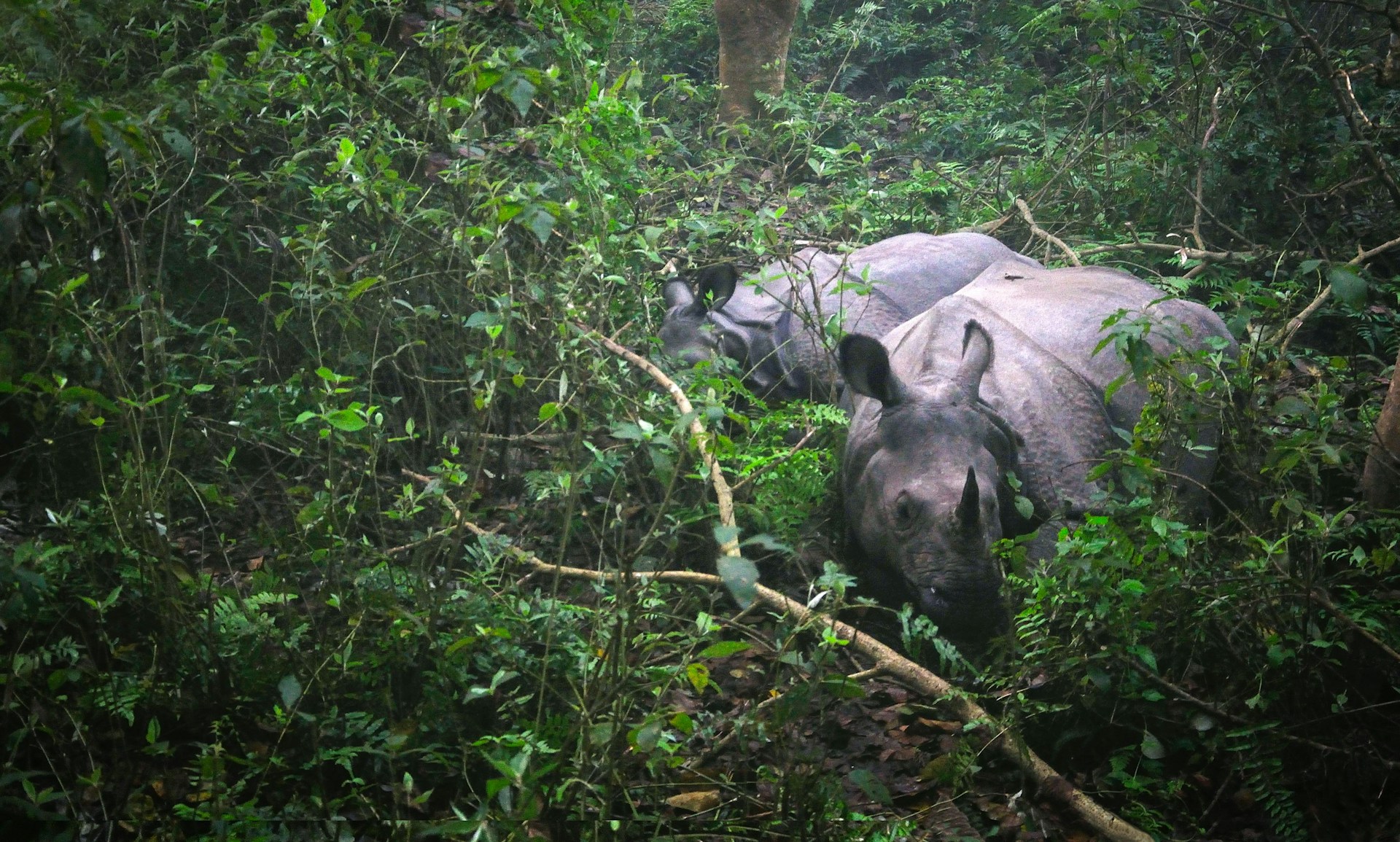
Translocated from Chitwan, Bardiya’s rhinos have multiplied in the grasslands between the Karnali and Babai rivers. They are most commonly seen grazing in the open phantas, solitary or with a calf. A jeep safari almost always yields a rhino sighting, often at close range.
Asian Elephant
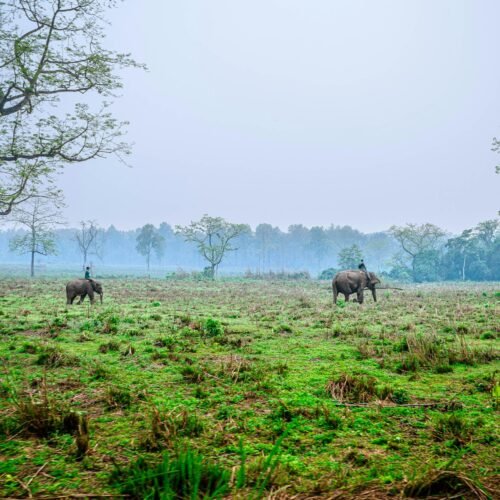
Wild elephants cross freely between Bardiya and India’s Dudhwa National Park. During the post-monsoon months (October–November), large herds — sometimes 30–40 individuals — move through the park. Encounters can be sudden and heart-pounding; drivers know when to give them space.
Gangetic Dolphin
The Karnali River is one of the last strongholds of the endangered Gangetic dolphin. The river safari provides a genuine chance of seeing them surface, though they are shy and the water is often murky. Best months: February–April when the river level drops.
Leopard
Leopards are present in Bardiya but are more elusive than tigers. They favour rocky outcrops and denser forest. Night drives are not permitted, but some guests spot them on the park’s periphery or during evening walks in the buffer zone.
Sloth Bear
Found in the sal forests, especially near termite mounds. Not commonly seen, but their diggings are everywhere. Early morning jeep safaris may catch one ambling across a fire line.
Deer and Ungulates
Spotted deer (chital) are abundant and serve as the primary prey base. Sambar, hog deer, barking deer, blue bull (nilgai), and wild boar are also present. Their alarm calls are the soundtrack of the forest — and the clue that a predator may be near.
Birds
Over 400 species, including the endangered Bengal florican, great hornbill, white-rumped vulture, Pallas’s fish eagle, Sarus crane, and numerous winter migrants. Birders consider Bardiya one of the best sites in Nepal for grassland and wetland species.
Safari Activities in Detail
Jeep Safari
The backbone of wildlife viewing. Morning and afternoon drives in 4WD vehicles with open sides. You’ll cover 30–50 km per drive, stopping frequently to observe wildlife, listen for alarm calls, and photograph birds. Guides carry binoculars, a mammal field guide, and a radio. We strictly limit vehicle numbers inside the park, so the trails feel uncrowded.
Walking Safari
Conducted in the buffer zone or community forest, accompanied by two guides (one armed). On foot, you learn tracking skills, study plants used in traditional medicine, and may encounter deer, monkeys, and occasionally rhinos. This is a quieter, more immersive way to experience the forest, though large predators are rarely approached on foot.
River Safari
A 2–3 hour drift down the Karnali River in a traditional wooden boat. Focused on dolphin sightings, water birds, and crocodiles. The experience is calm and photogenic. Best in the dry months when the river narrows.
Bird Watching
We offer dedicated early-morning bird walks along the riverine forests and grasslands. The park’s checklist includes several species that are difficult to see elsewhere in Nepal, such as the great slaty woodpecker and the Bengal florican. Our guides are competent birders and carry spotting scopes.
Tharu Village Walk and Cultural Program
The Tharu people have lived in the Bardiya region for centuries, developing a culture adapted to the malarial forests. We visit a local village, observe traditional mud-brick architecture, and see the community-run homestays. In the evening, the lodge often arranges a Tharu stick dance performance — rhythmic, percussive, and rooted in harvest festivals.
Elephant Breeding Center
Bardiya’s elephant stable near the park headquarters is not a breeding centre per se, but a facility where park elephants are kept. We can arrange a short visit to learn about elephant care and conservation, though we do not offer elephant-back safaris.
Accommodation: Jungle Lodge by the Karnali
We use a long-established eco-lodge situated on the edge of the park, overlooking a forested buffer zone. The lodge blends traditional Tharu design with modern comfort: mud-plastered cottages with thatched roofs, en-suite bathrooms (hot shower, flush toilet), and a private veranda. Rooms are twin or double, with ceiling fans and mosquito nets. Electricity is provided by solar panels with backup generator; charging is available in rooms and the dining hall.
The dining area serves meals buffet-style, with a mix of continental, Nepali, and Tharu dishes. The lodge has a small library, a viewing tower, and a campfire circle. WiFi is available in the common area, though it can be patchy — by design. The lodge employs locally and invests a percentage of revenue into community development and anti-poaching patrols.
Transportation to Bardiya
Kathmandu to Nepalgunj by Air
We include round-trip flights on Buddha Air or Yeti Airlines. The flight takes approximately 50 minutes. Bags are restricted to 15 kg checked, 5 kg carry-on, but we can arrange excess luggage if you inform us in advance. The Nepalgunj airport is small; our driver meets you at the arrival gate.
Road Journey
The overland route from Kathmandu takes 14–16 hours, following the Prithvi Highway to Butwal and then the Mahendra Highway west. We do not include this in the standard package because the flight is faster and far less tiring. However, if you prefer to drive, we can arrange a private vehicle and overnight stop in Butwal or Nepalgunj.
Internal Transfers
From Nepalgunj, it’s a 2-hour drive on a sealed road through the Terai to the lodge. The vehicle is a private 4WD or minibus with air conditioning.
Food on the Tour
All meals are included and prepared by the lodge kitchen. The menu is varied:
- Breakfast: Porridge, eggs to order, toast, pancakes, fresh fruit, tea/coffee.
- Lunch: Dal bhat, vegetable curry, fried rice, noodles, and a salad bar (washed in treated water).
- Dinner: Soup, grilled chicken or fish, Tharu-style duck (seasonal), pasta, steamed vegetables, and dessert. Vegetarian, vegan, and gluten-free options are available; please inform us in advance.
The lodge makes a point of featuring Tharu dishes: ghonghi (snails, for the adventurous), dhikri (rice flour dumplings), and chukauni (potato yoghurt salad). Food is safe; the kitchen uses filtered water and hygienic preparation. Avoid street food in Nepalgunj; the lodge provides all meals from arrival to departure.
Best Time to Visit Bardiya
Bardiya’s climate is subtropical, with three distinct seasons:
- October to March (Peak Season): Cool mornings, warm days. Vegetation thins out after the monsoon, increasing visibility. Tigers, rhinos, and elephants concentrate near water sources. This is the best window for wildlife sightings. The downside: December and January mornings can be cold (5–8°C), requiring warm layers.
- April to May (Pre-monsoon): Hot, with temperatures reaching 40°C. Animals are still visible, often around the remaining waterholes. Fewer tourists, and tigers can be more active in the late afternoon. Good for photography with dust-filtered light. Hydration and early starts are essential.
- June to September (Monsoon): The park closes its core areas from mid-June to mid-September due to flooding and breeding season. Lodges remain open, but jeep safaris are not permitted; walking and birding in the buffer zone are possible. We don’t operate standard tours during this period.
For birders, November and February–March are excellent, coinciding with winter migrants and resident breeding displays.
Monthly Weather and Safari Conditions Table
| Month | Day Temp (°C) | Night Temp (°C) | Rainfall | Safari Conditions |
|---|---|---|---|---|
| October | 28–32 | 14–18 | Low | Excellent; post-monsoon green, wildlife active |
| November | 24–28 | 10–14 | None | Crisp, clear; great tiger tracking |
| December | 20–24 | 5–10 | None | Cold mornings; good visibility, fog possible |
| January | 18–22 | 4–8 | None | Similar to December; warm clothes needed |
| February | 22–26 | 8–12 | None | Warming; birds displaying, rhino calves common |
| March | 26–30 | 12–16 | Occasional shower | Very good; grass still short, elephants moving |
| April | 32–36 | 18–22 | Pre-monsoon showers | Hot; wildlife near water; fewer tourists |
| May | 35–40 | 22–26 | Rising | Hot and humid; park closes late May/early June |
| June–Sept | Monsoon closure; safaris not permitted |
Difficulty and Accessibility
This tour is easy. No trekking, no altitude, no long walks unless you choose the walking safari (which is flat and tailored to your pace). The jeep safaris involve sitting for 3–4 hours on dirt roads with occasional bumps; not recommended for those with severe back problems, but generally comfortable.
Suitable for:
- Families with children (age 6+ recommended for full safari patience)
- Senior travellers (the lodge is ground-floor; vehicles are easy to board)
- Solo travellers
- Bird watchers and photographers
- First-time safari-goers
Not suitable for:
- Travellers seeking guaranteed tiger sightings (no safari in the world offers that)
- Those expecting luxury lodge amenities (this is a wildlife lodge, not a 5-star resort)
- People with severe insect phobia (mosquitoes and other bugs are present; nets and repellent provided)
Responsible Tourism and Conservation
Bardiya’s wildlife exists because of community engagement. The buffer zone programme shares 30–50% of park revenue with local communities, and anti-poaching patrols have radically reduced illegal hunting. We support this by:
- Employing local naturalist guides and lodge staff
- Using a lodge that sources food locally and manages waste responsibly
- Enforcing strict park rules: no loud noise, no littering, no feeding animals, no off-track driving
- Contributing a portion of each tour cost to the community-managed anti-poaching fund
- Discouraging single-use plastic; we provide filtered water in reusable bottles at the lodge
We ask our guests to be part of this: wear earth-toned clothing, do not demand “closer” for photos, and respect the quiet of the forest. The wildlife experience is better for it.
Tharu Culture: The People of the Forest
The Tharu are indigenous to the Terai and claim descent from the Shakya clan of Buddha. They were historically resistant to malaria and thus remained in the lowlands while other groups settled the hills. Today, Bardiya’s Tharu communities maintain a vibrant culture: houses built of mud, dung, and thatch with elaborate wall paintings; a cuisine rich in river fish, snails, and millet; and a tradition of communal fishing and farming.
Our village walk introduces you to a working Tharu hamlet, not a museum. You’ll see women weaving fishing nets, men constructing granaries, and children running barefoot with an energy that defies the heat. The evening stick dance is a harvest tradition; the rhythm of the sticks and drums is infectious. Bring small gifts if you wish — pencils, notebooks — but not sweets. And always ask before photographing people.
Photography Guide: Capturing Bardiya’s Wildlife
Best times for photography: Early morning (golden light, active wildlife) and late afternoon. Midday light is harsh; use it for landscapes or birds in shaded areas.
Recommended gear: A DSLR or mirrorless body with a 100–400 mm or 150–600 mm lens for wildlife; a 24–70 mm for landscapes and village scenes. A bean bag or monopod is useful inside the jeep. Bring extra batteries (charging is available but you may drain during a full day). Memory cards: at least 64 GB per day.
Settings: For moving animals, shutter speed 1/1000 sec or faster. For birds in flight, 1/2000 sec. Use auto ISO up to 3200 depending on camera. Overcast conditions in early morning require pushing ISO to maintain speed.
Tiger photography: If a tiger is near the track, stay seated, keep quiet, and avoid sudden movements. The guides know the best angles. If the tiger is in thick vegetation, be patient; it may move onto a fire line. Never bait or call.
Bird photography: The grasslands and riverbanks offer excellent opportunities for species like the Sarus crane and Bengal florican. A hide is not necessary; the vehicle works as a mobile blind.
Drones: Strictly prohibited inside national parks and buffer zones without a special filming permit from the Department of National Parks and Wildlife Conservation and the Civil Aviation Authority. Do not bring a drone.
Bird Watching: Bardiya’s Avian Wealth
Bardiya is part of the Western Terai Important Bird and Biodiversity Area (IBA). Over 400 species have been recorded, making it one of Nepal’s premier birding destinations alongside Koshi Tappu and Chitwan. Key habitats include:
- Grasslands: Bengal florican (critically endangered, best seen March–May during display flights), swamp francolin, bristled grassbird.
- Riverine forest: Great hornbill (especially around the Babai River), Oriental pied hornbill, woodpeckers, and drongos.
- Karnali River: Bar-headed goose (winter), ruddy shelduck, osprey, Pallas’s fish eagle, and kingfishers.
Our naturalist guides can tailor a safari specifically for birding. The winter months (November–February) bring the largest diversity of migrants. We recommend a spotting scope and a field guide such as “Birds of Nepal” by Richard Grimmett.
Safety in Bardiya
Bardiya is a safe destination. The lodge is located in a secure area, and all safari activities follow strict park regulations. The main risks are:
- Wildlife encounters: Our guides are trained to read animal behaviour and maintain safe distances. On walking safaris, an armed park ranger accompanies the group. Follow instructions immediately — a mock charge from a rhino or elephant is rare but possible; the guide knows how to react.
- Road safety: The drive from Nepalgunj to the lodge is on sealed roads with moderate traffic. Seatbelts are available.
- Health: The Terai is a malarial zone; we recommend prophylactic medication and insect repellent. There are no venomous snake incidents with guided groups; simply don’t walk barefoot. Medical facilities: Nepalgunj has a hospital; the lodge has a first-aid kit and satellite phone for emergencies. For serious incidents, evacuation to Kathmandu is arranged via flight.
Travel Insurance
Compulsory. Your insurance must cover medical expenses, emergency evacuation, and trip cancellation. Safari activities (jeep and walking) are considered standard travel, but confirm with your provider that they are included. We also strongly recommend coverage for domestic flight delays or cancellations, as fog in winter can disrupt Nepalgunj flights. We will check your policy details at booking.
Cost Breakdown: Where Your Money Goes
Our 4-day Bardiya National Park Tour starts at $720 per person (twin-share, small group). Here’s an approximate allocation:
| Component | Cost (USD) |
|---|---|
| Kathmandu–Nepalgunj round-trip flights | 180 |
| Airport transfers and private vehicle Nepalgunj–lodge | 60 |
| Jungle lodge accommodation (3 nights, full board) | 210 |
| All safari activities (2 full days, permits, guide) | 130 |
| Park entry and conservation fees | 40 |
| Naturalist guide and driver allowances | 50 |
| Agency operations, taxes, service | 50 |
| Total package | ~$720 |
What’s Included
- All airport pick-up/drop-off in Kathmandu
- Round-trip domestic flights (Kathmandu–Nepalgunj)
- Private vehicle transfer to/from the lodge
- 3 nights’ accommodation at a jungle lodge (twin-share, en-suite)
- All meals (breakfast, lunch, dinner) from Day 1 lunch to Day 4 breakfast
- All safari activities as described (jeep, walking, river, village, cultural show)
- National park entry fees and conservation area fees
- Experienced English-speaking naturalist guide throughout
- All government taxes and service charges
What’s Excluded
- International flights and Nepal visa
- Travel insurance (mandatory)
- Personal expenses: drinks, tips, laundry, souvenirs, extra snacks
- Tips for guide, drivers, and lodge staff (budget about $30–50 total)
- Any additional activities not in the itinerary
- Costs incurred due to flight delays or cancellations (we will assist rebooking, but extra accommodation is your expense)
Frequently Asked Questions
- Is Bardiya better than Chitwan for seeing tigers?
Bardiya has a higher tiger density per square kilometre and far fewer visitors, which improves the quality of sightings. However, Chitwan’s tigers are more habituated to vehicles, so encounters can be closer there. Many wildlife enthusiasts prefer Bardiya for a wilder experience. - Can I see tigers in 4 days?
It is possible. Our guests have about a 40–50% sighting success over two full days. Longer stays increase the odds. - How many days do I need?
We recommend at least 4 days (3 nights) for two full safari days. For dedicated photographers, 5–6 days is better to allow for weather and tiger tracking. - When is the best month for tigers?
February to April, when the grass is short, water is limited, and tigers move more to hunt. - Is Bardiya safe for families?
Yes. The lodge is family-friendly, and safaris are conducted safely. We’ve hosted children as young as six. The lodge can prepare child-friendly meals. - Do you offer elephant rides?
No. We do not promote elephant-back safaris. They are harmful to elephants and provide poorer wildlife viewing. The park has largely phased them out. - What should I pack?
Light cotton clothing in earth tones, a fleece or jacket for cool mornings (Oct–Feb), good walking shoes, hat, sunglasses, sunscreen, insect repellent, binoculars, camera with zoom lens, and a reusable water bottle. - Can I fly directly to Nepalgunj from outside Nepal?
No international flights land in Nepalgunj. You must fly into Kathmandu first. We can arrange the whole package from Kathmandu. - Is WiFi available?
The lodge has WiFi in the common area, but it may be slow. Use it as a chance to disconnect. - Can I charge camera batteries?
Yes, in your room and the dining area. Power is 220V, with Type C/D sockets. - Are there mosquitoes?
Yes, especially after the monsoon. The lodge provides mosquito nets; use repellent. - Do I need anti-malaria medication?
Consult your travel doctor. The Terai is a malarial zone; prophylactics are often recommended for the warmer months. - What is the cancellation policy?
Our standard terms apply. Deposits are non-refundable after permits are secured. Trip cancellation insurance is strongly recommended. - Can I combine Bardiya with Lumbini?
Yes, Lumbini is about 3 hours’ drive from Nepalgunj. We offer an add-on: visit the Buddha’s birthplace on Day 4 or after the safari. Contact us for a customised itinerary. - Is the tour suitable for solo travellers?
Absolutely. Single supplement applies if you want a private room. We can also pair you with another same-gender traveller to avoid the supplement. - How many people per jeep?
Maximum four guests per vehicle to ensure a window seat and minimal noise. - Can I walk alone in the park?
No. Walking safaris are only allowed with a guide and armed ranger. All activities are guided. - Are the safaris comfortable?
The jeeps have padded seats and a canopy for sun, but the roads are bumpy. It’s an adventure, not a city drive. - What if my flight to Nepalgunj is delayed?
Domestic flights in Nepal can be delayed by fog. We build in flexibility. If you lose a safari, we’ll rearrange activities on the spot. If a flight is cancelled, we can arrange a private car (extra cost) or rebook. - Do I need a visa for Nepal?
Most nationalities get an on-arrival visa at Kathmandu airport. Bring USD cash and a passport photo. See our Nepal Visa Guide. - What currency is used in Bardiya?
Nepali rupees. ATMs are available in Nepalgunj; the lodge accepts cash in rupees or major foreign currencies at a reasonable exchange rate. - Can I drink the water?
No. Drink only filtered or boiled water provided by the lodge. Bottled water is available, but we encourage using refillable bottles to reduce plastic. - Will I see a tiger on foot?
Extremely unlikely during a walking safari, which stays in the safer buffer zone. Tigers are occasionally seen from the jeep; walking safaris are for birds, deer, and learning. - Are there leeches?
In the monsoon and immediately after, yes. During the dry season (October–May), leeches are largely absent. We can advise on leech socks if needed. - Can I visit Bardiya in the monsoon?
The core park is closed, but the lodge remains open. Activities are limited to buffer zone walks and village visits. We recommend the dry season. - Do you offer private tours?
Yes, we can run this tour privately for couples, families, or small groups on any date in season. Cost will be adjusted based on group size. - How much should I tip?
For the naturalist guide, about $5–10 per day; for drivers, $3–5 per day; for lodge staff, a collective tip of $10–20 at the end. Tipping is not mandatory but appreciated. - What is the difference between core zone and buffer zone?
The core zone is strictly protected, with limited vehicle entry. The buffer zone surrounds the park and is used by communities; some activities like walking safaris take place there. Wildlife roams freely between both. - Can I buy a SIM card?
Yes, Nepal Telecom and Ncell have coverage in Nepalgunj and patchy signal near the lodge. The lodge WiFi is more reliable. We recommend buying a SIM in Kathmandu. - Is there an age limit?
No official limit, but parents should judge their children’s patience for long game drives. For seniors, the lodge is accessible and the pace is gentle. - Can I book this tour last minute?
We need at least 2–3 weeks’ notice to secure flights and lodge booking, especially in peak season. Last-minute is possible if availability permits. - Do you contribute to conservation?
Yes, our partner lodge supports local anti-poaching patrols and a community homestay programme. A portion of your tour cost goes towards these initiatives. - Can I do a multi-day trek inside the park?
No, only day walks are permitted. Multi-day camping is not allowed for tourists in the core area. - What if I have dietary restrictions?
The lodge can cater to vegetarian, vegan, gluten-free, and other diets. Inform us in advance. - Is Bardiya accessible for wheelchair users?
The lodge has some ground-floor rooms and accessible paths, but jeeps are not adapted. Contact us for a detailed assessment.