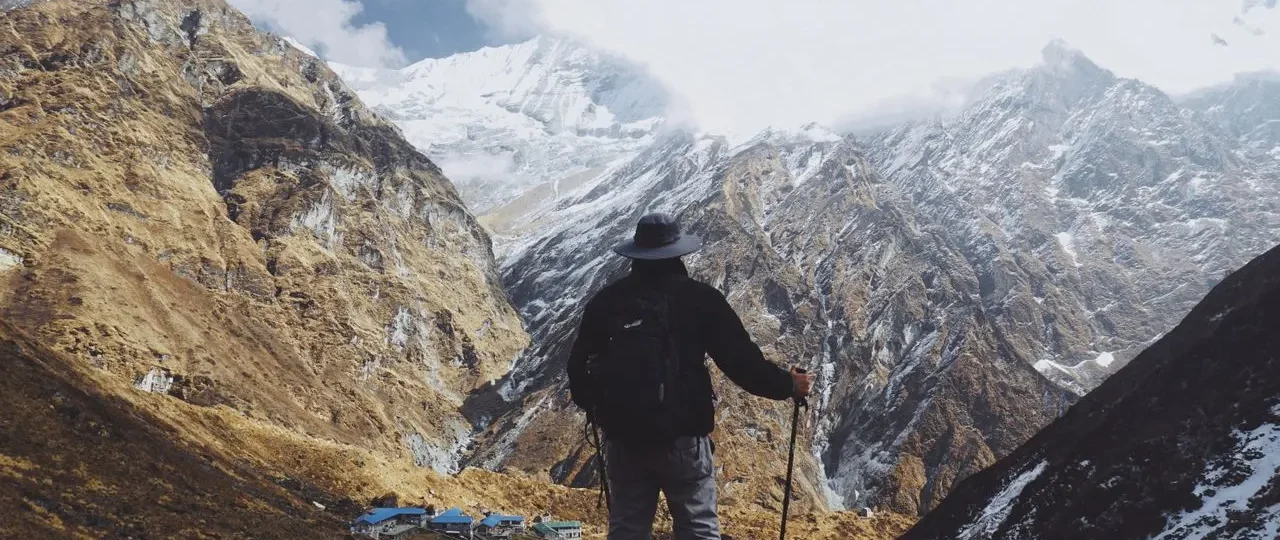
Annapurna Base Camp Trek Guide
If you are planning an Annapurna Base Camp trek in 2026 and searching for an ABC trek guide that tells you what the brochures do not, you have found it. This Annapurna Base Camp Trek Guide 2026: Everything You Need to Know covers all the essentials: Annapurna Base Camp itinerary options, ABC trek cost breakdowns, permit requirements, packing essentials, and an honest assessment of Annapurna Base Camp trek difficulty—all updated for 2026 regulations, including the guide requirement and the suspension of the TIMS card .
But here is what the brochures will not tell you: it is not the distance that makes this trek hard. It is the endless stone stairs—3,300 of them up to Ulleri alone—the thin air above 3,000 meters, and the fact that you are going to be doing this for multiple days straight.
If you are thinking about trekking to Annapurna Base Camp in 2026 with Wonder Hikes Nepal, this is the guide you actually need: accurate, honest, practical, and up-to-date.
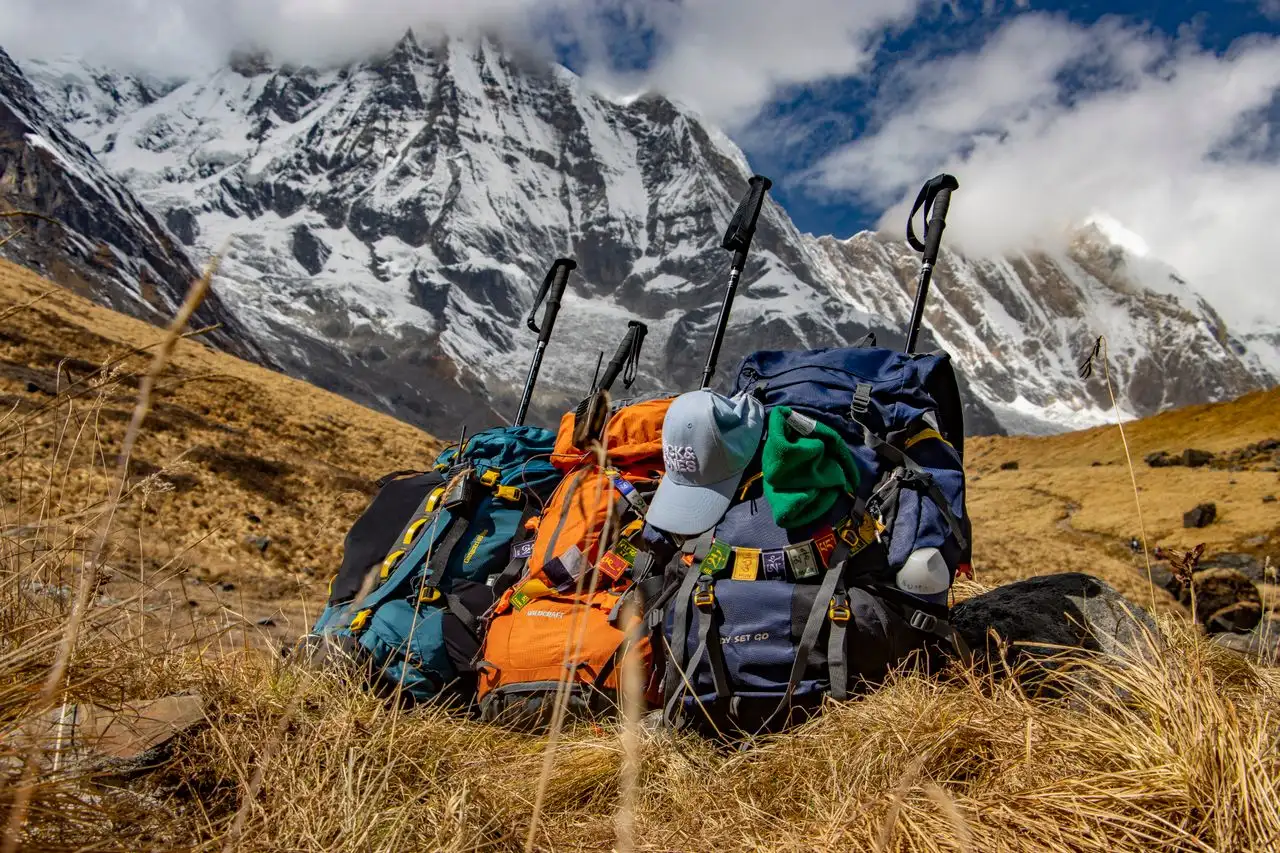
Annapurna Base Camp Trek at a Glance
| Fact | Detail |
|---|---|
| Maximum altitude | 4,130 m (13,550 ft) at Annapurna Base Camp |
| Total trekking distance | Approximately 70–92 km (45–57 miles) return, depending on route and trailhead |
| Typical duration | 7–12 days, with 10 days being most common for a comfortable pace |
| Difficulty | Moderate to challenging—demanding fitness and stamina |
| Best seasons | Autumn (September–November) and Spring (March–May) |
| Permits required | ACAP permit only (NPR 3,000). TIMS is currently suspended for 2026 |
| Guide requirement | Licensed guide required since April 2023 under Nepal regulations |
| Starting point | Usually Pokhara to Nayapul or Jhinu Danda, with jeep access available |
| Accommodation | Basic teahouses; private rooms available at lower elevations |
| Highest overnight | Annapurna Base Camp (4,130 m) or Machhapuchhre Base Camp (3,700 m) |
What Is the Annapurna Base Camp Trek?
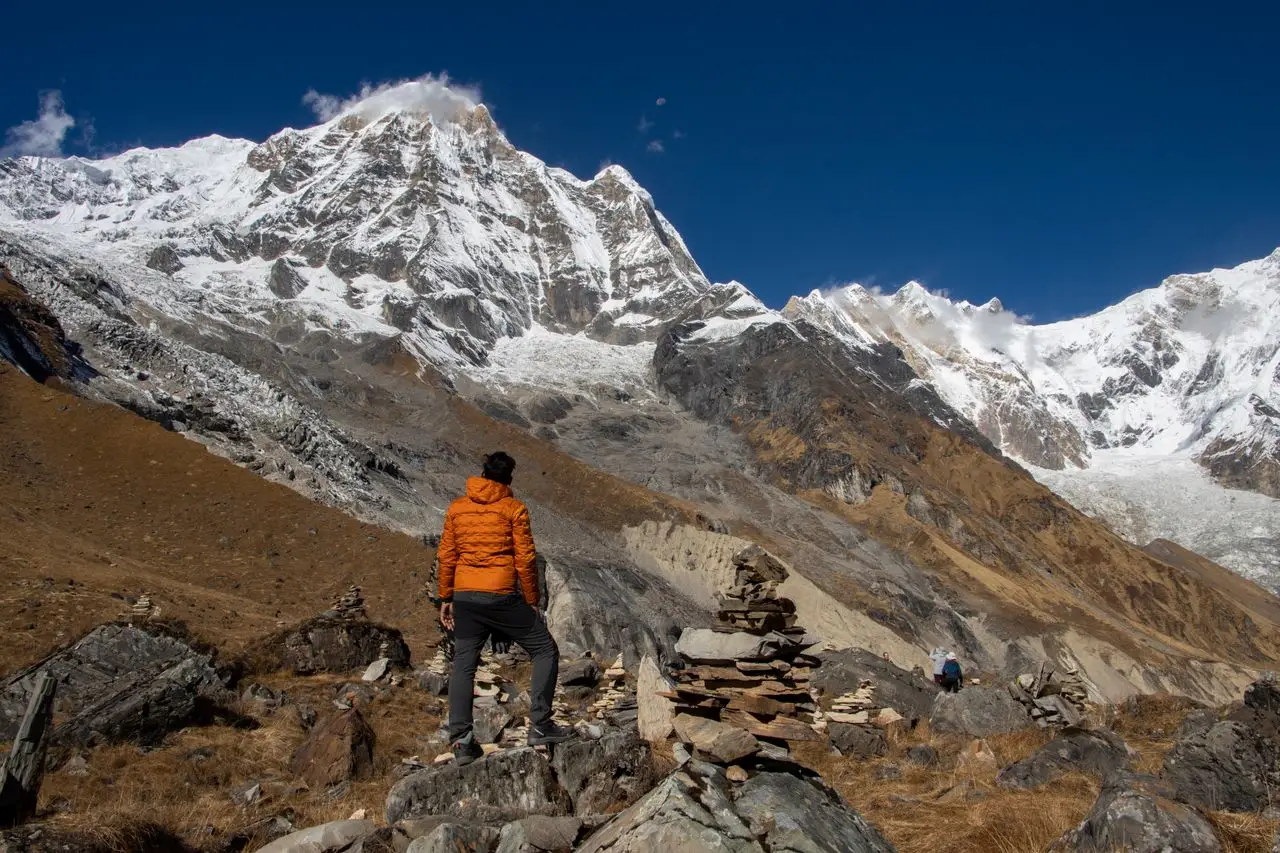
The Annapurna Base Camp trek leads you into the heart of the Annapurna Sanctuary—a natural amphitheater ringed by peaks over 7,000 meters. From the base camp itself, you stand at the base of Annapurna I (8,091 meters), the world’s 10th highest mountain, surrounded by Annapurna South, Hiunchuli, Gangapurna, and the unmistakable Machhapuchhre (Fishtail), which is sacred and unclimbed.
Unlike the Annapurna Circuit, which circles the massif, this is an “in-and-out” trek following the Modi Khola valley. You do not walk a circuit—you walk up the valley to the sanctuary and back down the same route. The Annapurna region is the most popular trekking destination in Nepal, suitable for both novice and experienced trekkers, offering unbelievable panoramic views of the Annapurna and Dhaulagiri massifs .
How Long Does the Annapurna Base Camp Trek Take?
Here is a truth most guides fudge: the number of days makes a huge difference to your experience and success. You can do ABC in 4 or 5 days. You will not enjoy it.
| Itinerary | Days | Walking Distance | Who It’s For |
|---|---|---|---|
| Express | 4–5 days | ~70 km | Very fit, experienced high-altitude trekkers; high AMS risk |
| Short | 7 days | ~70 km | Fit trekkers with some altitude experience |
| Standard | 10–11 days | ~80 km | Most trekkers; allows proper acclimatization |
| Comfort/Beginner | 12 days | ~80 km | Includes extra rest days; ideal for beginners |
| Poon Hill + ABC | 12–14 days | ~100 km | Adds Poon Hill side trip |
The Daily Walking Reality:
On a standard 10-day itinerary, you will walk 4–7 hours per day, covering 8–15 km (5–9 miles) depending on terrain and altitude. The walking days are not extreme by distance—the challenge is elevation gain, altitude, and the relentless stone steps.
Annapurna Base Camp Trek Route: Day-by-Day Breakdown
Standard 10-Day Itinerary
| Day | Route | Distance (approx.) | Walking Time | Altitude |
|---|---|---|---|---|
| 1 | Drive Pokhara → Nayapul → Ghandruk | — | 2 hrs drive + 1–2 hrs walk | 2,012 m |
| 2 | Ghandruk → Chhomrong | 10–12 km | 5–6 hrs | 2,170 m |
| 3 | Chhomrong → Sinuwa → Bamboo | 10 km | 5–6 hrs | 2,345 m |
| 4 | Bamboo → Dovan → Himalaya | 10 km | 5–6 hrs | 2,920 m |
| 5 | Himalaya → Deurali → MBC | 10 km | 5–6 hrs | 3,700 m |
| 6 | MBC → ABC | 8 km | 3–4 hrs | 4,130 m |
| 7 | ABC → Bamboo | 14 km | 6–7 hrs | 2,345 m |
| 8 | Bamboo → Jhinu Danda | 12 km | 5–6 hrs | 1,780 m |
| 9 | Jhinu Danda → Pokhara | 6 km walk + drive | 2–3 hrs walk | — |
Variations:
-
Some itineraries start with a jeep to Jhinu Danda or Ghandruk, saving a day
-
Others skip Deurali or combine days to shorten the trek
-
Adding Poon Hill usually adds 2–3 days
How Hard Is the Annapurna Base Camp Trek? (Honest Answer)
The “moderate to challenging” rating every company uses is technically true but hides the real experience. Here is what actually makes this trek hard:
1. The stairs. Endless stone steps in the lower sections—sometimes 3,000+ in a single day up to Ulleri. This is the part that catches most people out. Trekking poles are not optional—they are essential for saving your knees on the descent.
2. Consecutive walking days. You are walking 5–7 hours, day after day, at altitude. Your legs do not fully recover overnight.
3. Altitude. From around 3,000 m, the thin air makes everything harder. You will be slower, breathe heavier, and sleep less well. Fitness does not protect you from altitude—anyone can get AMS.
4. Descending. The way down is harder on your knees than going up—and the descent is roughly double the ascent on the return journey.
Who should do it:
-
People who can walk 10–15 km (6–9 miles) on hilly terrain for consecutive days
-
People who accept they will be physically uncomfortable at times
-
People who listen to their bodies and descend if altitude symptoms appear
Who should not:
-
Anyone expecting a gentle walking holiday
-
Anyone with existing knee or joint problems
-
Anyone unwilling to accept altitude risks
Beginner suitability: Yes, but with preparation. A beginner who spends 2–3 months building fitness (including hill climbing with a pack) can complete ABC. The key is choosing a longer itinerary (10–12 days) and not rushing. ABC does not require technical skills, rope work, or prior high-altitude experience.
Altitude and Acclimatization: The Serious Part
At 4,130 m, Annapurna Base Camp sits well above the altitude where Acute Mountain Sickness (AMS) becomes a real risk.
Common AMS symptoms above 3,000 m: headache, nausea, loss of appetite, fatigue beyond expected effort, dizziness, difficulty sleeping, and shortness of breath at rest.
The essential rule: Never ascend with AMS symptoms. If symptoms appear, rest at the same altitude for 24 hours. If symptoms worsen, descend immediately. No view is worth a medical emergency.
Prevention: The standard 10-day itinerary includes gradual elevation gain, with a relatively gentle 8 km day into ABC. Discuss Diamox (acetazolamide) with a doctor before departure.
Some itineraries include checkpoints where guides use oximeters to monitor pulse, heart rate, and oxygen saturation. This is a sensible precaution for first-timers.
Best Time to Trek Annapurna Base Camp
Spring (March–May) and autumn (September–November) are the classic seasons, but each has distinct characteristics.
| Factor | Spring (Mar–May) | Autumn (Sep–Nov) | Winter (Dec–Feb) | Summer/Monsoon (Jun–Aug) |
|---|---|---|---|---|
| Mountain views | Clear mornings, cloudy afternoons | Best of the year | Clear with occasional fog | Mostly blocked by clouds |
| Trail condition | Dry and safe | Dry and stable | Icy above 3,000 m | Slippery, leeches lower trail |
| Temperature at ABC (night) | -3°C to 3°C | -3°C to 3°C | -10°C to -2°C | 0°C to 5°C |
| Crowds | Busy April; quieter March/May | Busiest of the year | Nearly empty | Rarely see other trekkers |
| Nature | Rhododendrons in bloom | Lush post-monsoon | Snow-covered | Waterfalls at peak flow |
| Teahouses | Fully open | Fully open (books out) | Open, limited menu | Open, basic service |
| Best for | First-timers, photographers | View-seekers, all trekkers | Experienced trekkers | Budget, off-season trekkers |
2026 note: Most trekkers choose October–November for the most reliable weather, or April for the rhododendron bloom and warmer temperatures.
Annapurna Base Camp Trek Cost Breakdown 2026
No single number is accurate. Costs depend on your itinerary, services, and personal choices. Here is a realistic breakdown:
Permits:
-
ACAP permit: NPR 3,000 (~USD 23)
-
TIMS: Currently suspended (no fee in 2026)
Getting There:
-
Kathmandu → Pokhara bus: USD 10–15 (standard) or USD 25–35 (premium)
-
Kathmandu → Pokhara flight: USD 100–130 (25 minutes, weather-dependent)
-
Pokhara → trailhead jeep: USD 5–15 (shared) or USD 70–110 (private)
Teahouse Costs:
| Elevation | Shared Room (per night) | Private Room |
|---|---|---|
| Lower trail (below 2,200 m) | USD 3–7 | USD 10–15 |
| Mid-altitude (2,200–3,200 m) | USD 7–12 | USD 12–18 |
| High altitude (above 3,200 m) | USD 10–25 | USD 18–30 (often unavailable) |
Food per day: USD 20–35
-
Dal Bhat: USD 4–6 lower trail, USD 7–10 at ABC—the best value with free refills
Hidden Costs (these add up quickly):
-
Hot shower: USD 2–5
-
Charging electronics: USD 1–5 per hour
-
Wi-Fi: USD 1–5 per session
-
Boiled water: USD 3–6 per 2 liters
-
Snacks bought on trail: USD 3–8
Guide:
-
Licensed guide: USD 25–35 per day + tips
-
Porter (if used): USD 15–25 per day
Estimate:
-
Budget independent trekking with guide: USD 600–800 for 10 days
-
Mid-range with guide: USD 800–1,200
-
Premium private: USD 1,500+
Permits for Annapurna Base Camp 2026
Important 2026 update: The TIMS (Trekkers’ Information Management System) card has been suspended since 2023 and remains suspended in 2026. Trekking companies are not issuing them, and you cannot buy one. The Nepal Tourism Board and TAAN have not yet reinstated the requirement.
You only need:
-
ACAP permit (Annapurna Conservation Area Permit) : NPR 3,000 (approximately USD 23)
-
SAARC nationals: NPR 1,000
-
Children under 10: free
-
Valid for the duration of the trek, single entry
Where to get ACAP:
-
Nepal Tourism Board office in Kathmandu or Pokhara
-
At the Birethanti checkpoint on the trail (bring original passport)
-
Through your trekking agency (they handle it)
Checkpoints:
-
Birethanti (main ACAP entry)
-
Chhomrong checkpoint
Passport required: Carry your original passport in your daypack—checkpoints require original identification, not photocopies.
Do You Need a Guide for the Annapurna Base Camp Trek?
Since April 2023, Nepal’s regulations require all foreign trekkers to use a licensed guide on standard trekking routes, including the Annapurna Base Camp trek.
However:
-
This rule is inconsistently enforced, but the official requirement exists
-
ACAP checkpoints may check for guide documentation
-
Some sources note independent trekking is still technically possible but not recommended
Beyond the legal requirement:
-
Guides navigate side trails confidently
-
They recognize AMS symptoms before you do
-
They provide emergency assistance and evacuation support
-
They book teahouses in peak season
-
They provide cultural context and language support
Cost: Licensed guides typically cost USD 25–35 per day.
Beginner advice: Hire a guide. It is not an unnecessary expense—it is the best safety investment you can make.
Accommodation on the Annapurna Base Camp Trek
Teahouses are basic. Think wooden rooms, thin mattresses, sleeping bags needed for warmth.
Lower trail: Private rooms available, hot showers for a fee. Rooms often free with meal commitment.
Mid-altitude: Rooms are basic but functional; private rooms often available for a small fee.
MBC and ABC: Private rooms are limited and may be unavailable in peak season—expect to share dorm-style or sleep on dining hall benches.
Heating: None. You will rely on your sleeping bag (rated to -10°C or lower).
Common bathrooms are the standard at Deurali and Annapurna Base Camp, while private bathroom options are available in Ghandruk, Lower Sinuwa, and Bamboo.
Food and Water on the ABC Trek
Food options on teahouse menus:
-
Dal Bhat (lentil soup, rice, vegetables, unlimited refills): USD 4–6 lower, USD 7–10 at ABC
-
Fried rice, noodles, momos: USD 3–4 lower, USD 6–9 high altitude
-
Breakfast (porridge, eggs, Tibetan bread): USD 3–5 lower, USD 5–8 at ABC
-
Vegan, vegetarian, gluten-free meals are available with seasonal fruits
Water:
-
Bottled water: USD 1–2 per bottle (available up to the last village)
-
Boiled water: Available from lodges; costs increase with altitude
-
Water purification tablets strongly recommended
-
ACAP-run safe drinking water stations in larger villages (cheaper, less plastic)
Hydration tip: Aim to drink 3–4 liters of water daily. Dehydration mimics and worsens altitude sickness symptoms.
Getting to the Trailhead: Kathmandu to Pokhara
Kathmandu to Pokhara (approximately 200 km):
-
Tourist bus: USD 10–15, 7–10 hours
-
Premium bus: USD 25–35, AC and reclining seats
-
Private car/jeep: USD 100–180, suitable for groups
-
Domestic flight: USD 100–130, 25 minutes, weather-dependent
Pokhara to trailhead:
-
Shared jeep or local bus: USD 5–15, 1.5–4 hours
-
Private jeep to Jhinu Danda or Ghandruk: USD 70–110 (saves 1–2 days walking)
Most trekkers collect their permits in Pokhara the afternoon before their trek starts.
Packing List for Annapurna Base Camp
Essential gear:
-
Broken-in hiking boots (ankle support, waterproof)
-
Trekking poles—non-negotiable for descents
-
Sleeping bag rated to -10°C
-
Thermal base layers (2–3 sets)
-
Insulated mid-layer jacket (down or puffer jacket)
-
Waterproof outer shell jacket
-
Warm hat, gloves, neck gaiter
-
Headlamp with spare batteries
-
Reusable water bottle + purification tablets
-
Sunscreen SPF 50+ and lip balm
Important advice: Do not buy new boots for this trek. Wear your hiking boots on multiple 10+ km hikes before departure. Blisters are one of the most common reasons beginners struggle or drop out in the first three days.
Gear rental: Sleeping bags, down jackets, and trekking poles are available to borrow at no additional cost from many companies.
Poon Hill + ABC: Worth Adding?
The Poon Hill detour adds approximately 2–3 days and offers one of Nepal’s most famous sunrises. Poon Hill (3,210 m) gives panoramic views of Annapurna South, Machhapuchhre, and Dhaulagiri.
Pros: Incredible sunrise views, easier acclimatization, more varied scenery, quieter trail sections.
Cons: Adds days, adds cost, more walking.
Verdict: If you have the time (12–14 days total), add it. It is not just a sunrise—it improves the whole experience. If you are short on time, ABC alone is still world-class.
Annapurna Base Camp vs. Everest Base Camp vs. Annapurna Circuit
| Factor | ABC | EBC | Circuit |
|---|---|---|---|
| Duration | 7–12 days | 12–16 days | 12–22 days |
| Max altitude | 4,130 m | 5,364 m | 5,416 m |
| Difficulty | Moderate | Challenging | Challenging |
| Cost | Lower | Higher | Medium |
| Scenery type | Amphitheater of peaks | Everest views, Sherpa culture | Diverse, valley to valley |
| Teahouses | Basic | Good | Basic to good |
| Best for | First-time high altitude | Peak views | Cultural diversity |
Wonder Hikes Nepal: Your Partner for an Unforgettable ABC Trek
When you are planning your Annapurna Base Camp trek, choosing the right trekking company can make the difference between a good experience and an unforgettable one. Wonder Hikes Nepal brings years of expertise in the Annapurna region, having served numerous trekkers on the ABC route with personalized attention and professional service.
Wonder Hikes Nepal offers a comprehensive 10-day Annapurna Base Camp and Ghandruk Village Trek itinerary that blends high-altitude trekking with cultural immersion in traditional Gurung villages . Their packages are designed to provide the flexibility you need—whether you are a first-time trekker seeking extra acclimatization days or an experienced adventurer looking for a shorter itinerary .
Why choose Wonder Hikes Nepal for your ABC trek:
Local Expertise and Professionalism — Wonder Hikes Nepal provides licensed guides who are seasoned locals with intimate knowledge of all trails, mountains, and hidden gems in the Annapurna region . Their team focuses on safety and meaningful experience, not just completing the trail .
Safety-First Approach — With well-planned itineraries and proper acclimatization schedules, Wonder Hikes Nepal ensures your safety and comfort remain the top priority . They have strong quality relationships with teahouse operators along the ABC route, ensuring comfortable accommodation and meals .
Gear Support — Unlike many companies, Wonder Hikes Nepal provides sleeping bags, down jackets, and trekking poles at no additional cost, significantly reducing your upfront investment .
Authentic Cultural Experience — The Annapurna region is rich in cultural diversity, with Gurung, Magar, and Thakali communities. Wonder Hikes Nepal emphasizes authentic cultural immersion rather than fast sightseeing, ensuring you connect with local traditions, hospitality, and way of life .
Flexible Booking — Whether you prefer a fixed departure group trek or a customized private itinerary, Wonder Hikes Nepal offers payment options by wire transfer, credit card, or cash upon arrival in Nepal, making the booking process hassle-free .
Transparent Itineraries — Wonder Hikes Nepal’s trip itineraries clearly outline walking distances, altitude changes, daily hours, and acclimatization strategies, so you know exactly what to expect . They answer all your questions before you commit, ensuring your chosen itinerary matches your fitness and available time .
Value for Money — By offering the full ABC package at competitive prices with transparent costing, Wonder Hikes Nepal helps you avoid hidden expenses and unexpected charges .
Annapurna Base Camp Trek: Is It Right for You?
Here is an honest checklist to help you decide:
You should strongly consider ABC if:
-
You are moderately fit and can walk hilly terrain for multiple days
-
You have done a multi-day hike before (anywhere)
-
You accept that altitude is a factor and you need to listen to your body
-
You have 10+ days available
-
You can afford the cost (expect USD 800–1,500 depending on services)
You might want to reconsider if:
-
This is your first multi-day hike of any kind
-
You have knee problems
-
You expect luxury accommodation
-
You only have 5–7 days and do not have altitude experience
-
You are unwilling to accept the risks of altitude
The mental game matters as much as the physical one. The ABC trek is not a race. It is about staying present when your legs ache, when it rains for two days, or when you have not had cell signal in 48 hours.
Final Thoughts
The Annapurna Base Camp trek is one of the world’s great walks—for good reason. The sanctuary is spectacular, the peaks are world-class, and the trail is well-established. But it demands respect. The stairs are relentless, the altitude is real, and the teahouses are basic.
If you prepare properly, build fitness, choose the right itinerary for your ability, and listen to your body, this is a trek you will never forget. If you rush, skip acclimatization, or underestimate the challenge, the mountains will let you know.
Plan carefully. Go with a guide if you are a beginner. And know that the view from ABC makes every step worth it.
Ready to plan your Annapurna Base Camp trek with Wonder Hikes Nepal? Visit their website to explore itineraries, check availability, and book your 2026 adventure. Their team is ready to help you choose the right route based on your available days, walking pace, and preferred experience—not just fit you into a fixed schedule.
Annapurna Base Camp Trek
1. How high is Annapurna Base Camp?
4,130 meters (13,550 feet).
2. How many days does the ABC trek take?
Typically 7–12 days. Most trekkers choose 10 days for a comfortable pace.
3. Is Annapurna Base Camp suitable for beginners?
Yes, with preparation and a 10–12 day itinerary. Build fitness 2–3 months before departure.
4. How far is the Annapurna Base Camp trek?
Approximately 70–92 km (45–57 miles) return, depending on starting point.
5. What permits do I need for ABC in 2026?
ACAP permit only (NPR 3,000). TIMS is currently suspended.
6. Is a guide required for ABC?
Since April 2023, a licensed guide is required by regulation. It is also strongly advised for beginners.
7. How much does the ABC trek cost?
USD 800–1,500 for 10 days including guide, depending on services and choices.
8. What is the best time to trek ABC?
Autumn (October–November) for clearest views, Spring (April) for rhododendron bloom.
9. Is altitude sickness a concern on ABC?
Yes—ABC is above 4,000 m. AMS symptoms can occur. Ascend slowly and descend if symptoms worsen.
10. Do I need a porter for ABC?
Not if you pack light (8–10 kg). Beginners may find a porter helpful to conserve energy.
11. What is accommodation like on ABC?
Basic teahouses. Private rooms lower down; dorms at MBC and ABC. Sleeping bag required.
12. What food is available on the ABC trek?
Dal Bhat, fried rice, noodles, momos, eggs, porridge. Dal Bhat is the best value with free refills.
13. How do I get from Kathmandu to Pokhara?
Tourist bus (USD 10–15, 7–10 hours) or flight (USD 100–130, 25 minutes).
14. Is Poon Hill worth adding?
Yes, if you have 12–14 days. It adds brilliant sunrise views and varied scenery.
15. ABC vs Everest Base Camp: which is harder?
EBC is harder—higher altitude, more days, tougher conditions. ABC is better for first-timers.