Interesting Facts About Nepal
Nepal is a country that resists easy summary. Most people arrive knowing two things: Everest is here, and it is expensive to climb. Both are true. But they explain almost nothing about a nation that compresses tropical plains, subtropical hills, and Arctic-altitude peaks into a landmass roughly the size of England. Nepal has 142 caste and ethnic groups, 124 living languages, and 10 recognised religions according to the 2021 census. It is home to the birthplace of Buddha, a living goddess worshipped by both Hindus and Buddhists, and more than 120 ethnic communities sharing one of the most geographically diverse territories on Earth. It was never colonised. Its flag is the only national flag in the world that is not rectangular. This guide goes beyond recycled trivia to explain what makes Nepal genuinely unusual, why these facts matter, and how they shape the experience of travelling through the country.
Nepal at a Glance: Key Facts and Figures
Before diving into the details, here is a quick reference table for the facts that matter most.
| Category | Fact |
|---|---|
| Capital | Kathmandu |
| Population | Approximately 29.6 million (2026 estimate) |
| Area | 147,181 sq km |
| Official Language | Nepali |
| Ethnic Groups | 142 (2021 census) |
| Mother Tongues | 124 (2021 census) |
| Religions | 10 recognised (2021 census) |
| National Animal | Cow (constitutionally protected) |
| National Bird | Himalayan Monal (Lophophorus impejanus) |
| National Flower | Rhododendron arboreum (Lali Gurans) |
| Highest Point | Mount Everest (Sagarmatha), 8,848.86 m |
| Time Zone | UTC +5:45 |
| UNESCO World Heritage Sites | 10 (8 cultural, 2 natural) |
| Independence | Never colonised |
Geography Facts About Nepal
Nepal’s geography is defined by extremes. The country spans three distinct ecological zones: the high Himalayas in the north, the mid-hills in the centre, and the Terai plains in the south. About 83 per cent of Nepal is mountainous or hilly, while the remaining 17 per cent is flat Terai land that borders India and supports much of the country’s agriculture.
The elevation range is staggering. The Terai sits as low as 60 metres above sea level, while Everest rises to 8,848.86 metres. Within a single day’s drive from Kathmandu, you can move from subtropical forests to alpine tundra. The Kali Gandaki Gorge, which cuts between the Annapurna and Dhaulagiri massifs, drops over 5,500 metres from peak to riverbed, making it one of the deepest gorges on Earth by most measures. Geographers debate whether it ranks first, second, or third globally, but there is no dispute that it belongs in the conversation.
Eight of the world’s 14 peaks above 8,000 metres lie in Nepal or on its borders. They are Everest (8,848.86 m), Kanchenjunga (8,586 m), Lhotse (8,516 m), Makalu (8,463 m), Cho Oyu (8,201 m), Dhaulagiri (8,167 m), Manaslu (8,163 m), and Annapurna I (8,091 m). No other country has such a concentration of high peaks within its territory.
Mount Everest and Himalayan Facts
Mount Everest is the highest point on Earth, but it is not a single-country landmark. The summit sits on the border between Nepal and China’s Tibet Autonomous Region. Nepal calls it Sagarmatha, while Tibetans know it as Chomolungma. The mountain has been a magnet for climbers since Edmund Hillary and Tenzing Norgay reached the summit on 29 May 1953. Tenzing, a Sherpa from Thame village in the Khumbu region, became a national hero in Nepal.
What many travellers do not realise is that Everest is not the only reason the Himalaya matters. The range acts as a climate barrier, blocking the monsoon from moving north into Tibet and creating the dry, high-altitude conditions that define the Tibetan Plateau. The glaciers that feed Nepal’s rivers originate in the same high peaks that attract climbers. When those glaciers retreat, the consequences ripple through agriculture, hydropower, and drinking water supplies for hundreds of millions of people downstream.
The 2015 earthquake, with a magnitude of 7.8, killed nearly 9,000 people in Nepal and triggered an avalanche on Everest that killed 19 climbers at Base Camp. Recovery and reconstruction continued for years, and the event reshaped how Nepal approaches disaster preparedness and building codes in heritage areas.
Culture and People of Nepal
Nepal is one of the most ethnically diverse countries in Asia. The 2021 census recorded 142 caste and ethnic groups, up from 125 in 2011. The largest groups include Chhetris (16.45 per cent), Brahmans-Hill (11.29 per cent), Magars (6.9 per cent), Tharus (6.2 per cent), Tamangs (5.62 per cent), and Bishwakarmas (5.04 per cent). These communities speak different languages, follow different religious traditions, and live in different ecological zones.
The Sherpa people are perhaps the most internationally recognised ethnic group in Nepal, largely because of their association with Everest expeditions. Sherpa is an ethnicity, not a job title. Not all Sherpas are climbers. Not all mountain guides are Sherpa. The Sherpa people migrated from the Kham region of eastern Tibet to the Khumbu Valley several centuries ago and maintain a distinct language, Buddhist tradition, and cultural identity. Treating “Sherpa” as a synonym for “porter” is inaccurate and erases that history.
The Newar community of the Kathmandu Valley has its own distinct architectural, artistic, and festival traditions. The Tharu people of the Terai have historically lived in forested areas and maintain agricultural practices adapted to the plains. The Gurung and Magar communities of the mid-hills have strong traditions of Gurkha military service. Each of these groups contributes to a national identity that is genuinely plural rather than homogenised.
History and National Identity
Nepal has never been colonised by a foreign power. This is a point of considerable pride and a fact that distinguishes it from almost every other country in South Asia. The unification of Nepal was led by Prithvi Narayan Shah in the mid-18th century, who brought together a collection of small principalities into a single kingdom. The Shah dynasty ruled until 2008, when Nepal abolished the monarchy and became a federal democratic republic.
The Anglo-Nepalese War of 1814–1816 resulted in the Treaty of Sugauli, which ceded some territory to the British East India Company but preserved Nepal’s sovereignty. The Gurkha soldiers who fought in that war so impressed the British that they were recruited into the British Army, a tradition that continues today. Around 12,000 young men in Nepal try to become Gurkha soldiers every year, but only 200 to 400 are selected.
Nepal’s modern political history has been turbulent. A decade-long Maoist insurgency ended in 2006, and the monarchy was abolished in 2008. A new constitution was adopted in 2015, introducing a federal system with seven provinces. In March 2026, following parliamentary elections, a new government took office under Prime Minister Balendra Shah, marking another transition in Nepal’s evolving democracy.
Religion and Living Traditions
Hinduism is the majority religion in Nepal, practised by 81.19 per cent of the population according to the 2021 census. Buddhism follows at 8.21 per cent, Islam at 5.09 per cent, Kirat at 3.17 per cent, Christianity at 1.76 per cent, and Prakriti at 0.35 per cent. Nepal was the world’s only Hindu kingdom until 2006, when it became a secular state. The 2015 constitution enshrined the cow as the national animal, a decision that continues to generate debate among indigenous communities who do not consider the cow sacred.
Lumbini, in the Terai region of southern Nepal, is the birthplace of Siddhartha Gautama, who became the Buddha. UNESCO recognises Lumbini as a World Heritage Site, and in 2026 it remained off the World Heritage in Danger list for the third consecutive year, though UNESCO issued 13 recommendations for stronger protection of the site. The Maya Devi Temple marks the traditional birthplace, and the Ashoka Pillar, erected in 249 BCE, confirms the site’s ancient significance.
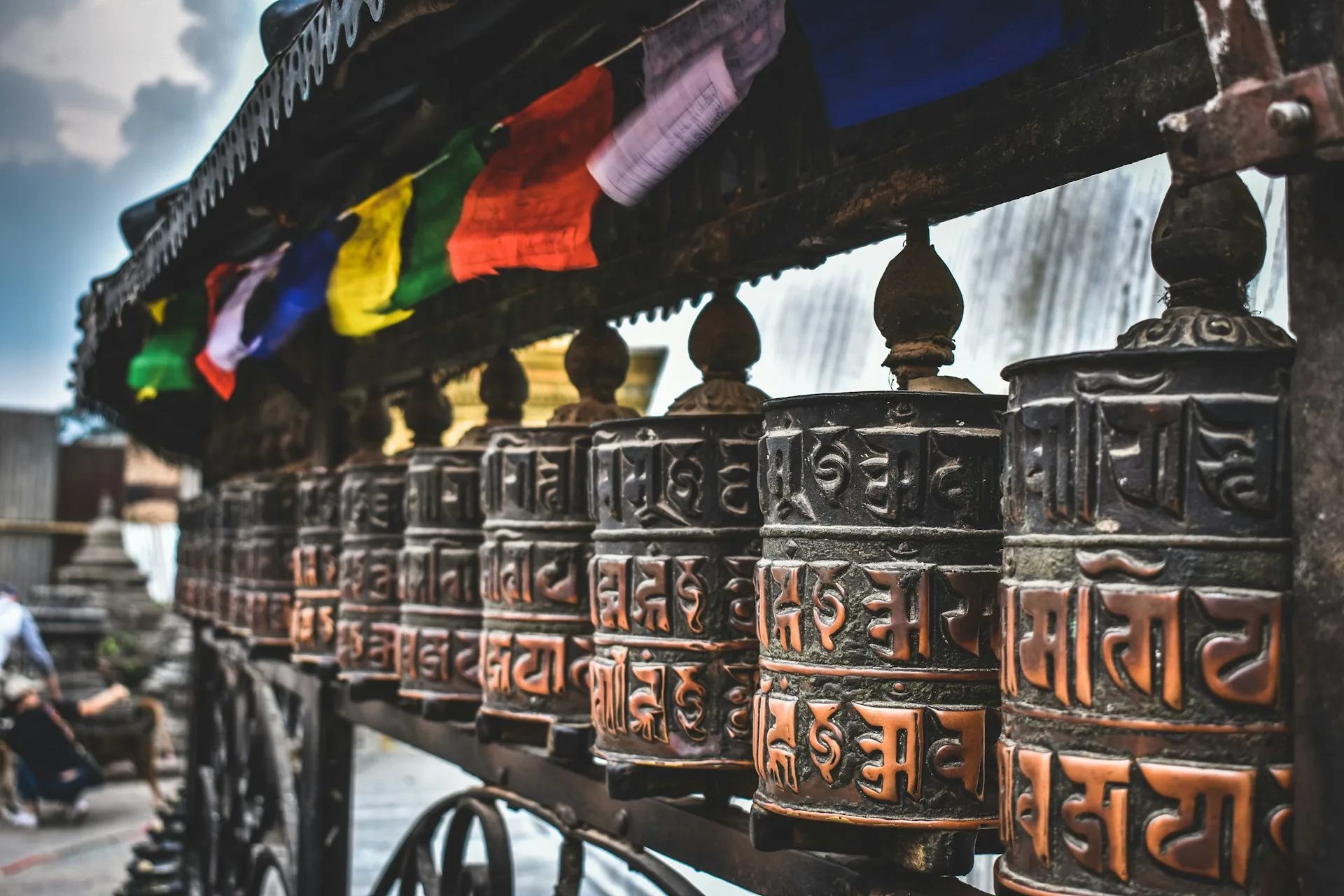
The Kumari tradition is one of Nepal’s most distinctive living religious practices. A young girl from the Shakya clan of the Newar Buddhist community is selected as the living goddess, worshipped by both Hindus and Buddhists. She is chosen between the ages of two and four and holds the role until puberty, when she is believed to become a mortal again. The current Kumari, Aryatara Shakya, was chosen in September 2025 at the age of two years and eight months. The Kumari rarely leaves her temple palace, and when she does, her feet are not supposed to touch the ground.
Wildlife and Biodiversity
Nepal’s biodiversity is remarkable for a country of its size. The Terai grasslands and forests of Chitwan and Bardiya national parks support populations of one-horned rhinoceros, Bengal tigers, Asian elephants, and swamp deer. Chitwan National Park, established in 1973, was Nepal’s first national park and became a UNESCO World Heritage Site in 1984. It is home to more than 120 ethnic groups living in and around its buffer zones.
The Himalayan monal, Nepal’s national bird, is a pheasant with iridescent plumage that shimmers in metallic greens, blues, and coppers. It lives at altitudes between 2,100 and 4,500 metres and is commonly seen on trekking routes in the Khumbu and Annapurna regions. The rhododendron arboreum, known locally as Lali Gurans, is the national flower and blooms in brilliant crimson across the mid-hills in spring. Nepal has 32 species of rhododendron, and the forests around Ghorepani and Poon Hill are particularly famous for their spring displays.
The red panda, a small mammal with reddish-brown fur and a ringed tail, lives in the temperate forests of the eastern Himalayas. Nepal is one of the few countries where red pandas can still be found in the wild, though habitat loss and poaching have reduced their numbers. The Himalayan pangolin, a scaly anteater that feeds on ants and termites, was confirmed as a distinct species in 2026 following genetic research by scientists from Nepal, China, the USA, the UK, and Spain.
Food and Everyday Life
Dal bhat is the staple meal of Nepal. It consists of steamed rice, lentil soup, and a rotating selection of vegetable curries, pickles, and sometimes meat. In trekking lodges, dal bhat is often served with unlimited refills, making it a practical and economical choice for trekkers burning calories at altitude. The dish varies by region: in the Terai, it might include fish or mustard greens; in the hills, it features local greens and radishes; in the mountains, it is simpler and more reliant on potatoes and barley.
Momo, the Nepali dumpling, is another national favourite. They are typically filled with buffalo, chicken, or vegetables and served with a spicy tomato-based dipping sauce. Momos are sold in street stalls, restaurants, and trekking lodges across the country. Thukpa, a noodle soup of Tibetan origin, is popular in the mountain regions. Sel roti, a ring-shaped rice doughnut, is a traditional festival food, especially during Tihar and Dashain.
The food culture reflects Nepal’s geography and ethnic diversity. Newar cuisine from the Kathmandu Valley includes distinctive dishes like bara (lentil pancakes), chatamari (rice crepes), and yomari (steamed rice dumplings filled with molasses). Tharu cuisine from the Terai features freshwater fish, snails, and wild greens. Sherpa cuisine in the Khumbu includes tsampa (roasted barley flour), butter tea, and yak cheese.
Unusual Facts You Probably Did Not Know
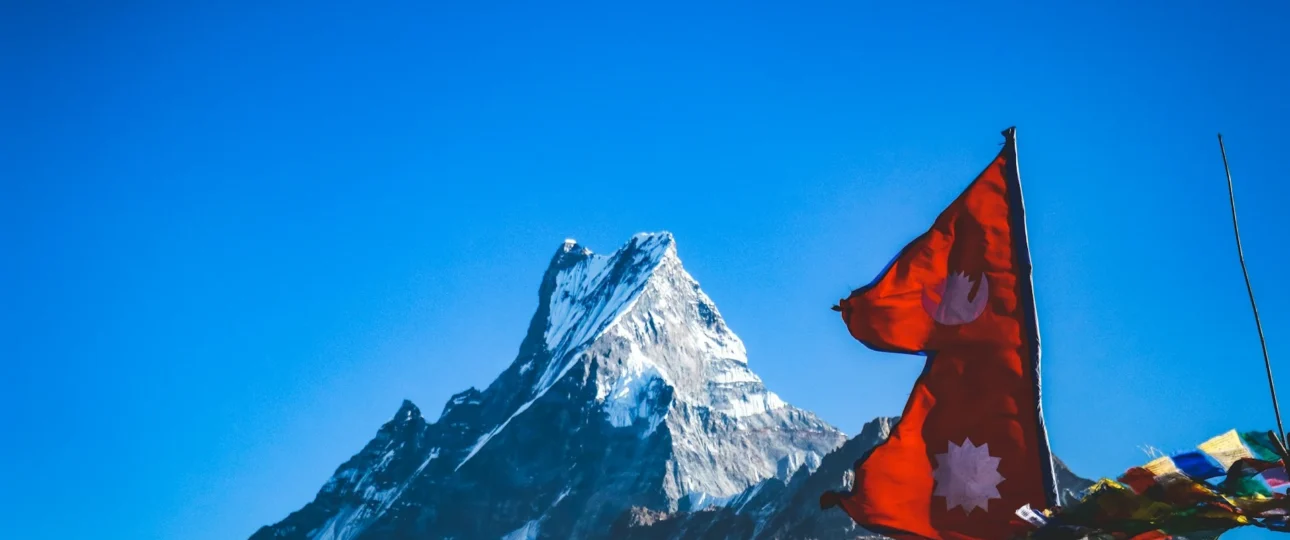
Nepal’s flag is the only national flag in the world that is not rectangular or square. It consists of two overlapping right triangles, creating a five-sided shape. The crimson red is the colour of the rhododendron, the national flower. The blue border symbolises peace. The moon and sun represent the hope that Nepal will endure as long as those celestial bodies.
Nepal Standard Time is UTC+5:45, one of only three time zones in the world with a 45-minute offset from UTC. The unusual offset was established in 1986 to make Nepal’s time distinct from India’s and to align with solar time in Kathmandu. Nepal does not observe daylight saving time.
The Yeti, or Abominable Snowman, is a legendary creature said to inhabit the Himalayas. Despite decades of expeditions and numerous reported sightings, there is no scientific evidence that the Yeti exists. Genetic analysis of hair and other samples attributed to the Yeti has shown that they come from bears, including the Tibetan brown bear. The legend persists in Sherpa folklore and popular culture, but it remains firmly in the realm of myth.
Nepal has a tradition of tongue-piercing festivals that dates back centuries. In Bode, a town near Kathmandu, a man pierces his tongue with a 10-inch needle as part of the Jibro Chedne Jatra festival, held on the second day of the Nepali New Year. In 2026, Sujan Bagh Shrestha pierced his tongue for the fourth consecutive year. According to legend, one person is recorded as having pierced his tongue 31 times.
Facts About Nepal That Are Often Misunderstood
Nepal is often described as “the land of Everest,” but the majority of Nepalis have never seen the mountain. Most live in the Terai and mid-hills, where the economy is based on agriculture rather than mountaineering. The Everest industry is concentrated in the Khumbu region and involves a small fraction of the population.
The claim that Nepal was “never colonised” is accurate in the formal sense, but it requires context. Nepal was never a colony of the British Empire, but it was heavily influenced by British India. The Rana regime, which ruled Nepal from 1846 to 1951, maintained close ties with the British and allowed Gurkha recruitment. The 1923 Treaty of Perpetual Peace and Friendship formalised Nepal’s independence, but British influence remained significant until the mid-20th century.
The idea that Sherpas are “immune” to altitude sickness is one of the most persistent myths about Nepal. Sherpas have genetic adaptations that improve oxygen efficiency at high altitude, but they are not immune. They can develop altitude sickness, and they die on Everest at rates that exceed those of foreign climbers in some years. Adaptation is not the same as immunity.
The Kumari is sometimes described as a “living goddess” in a way that exoticises the tradition. In reality, the Kumari is a deeply embedded part of Newar Buddhist and Hindu religious life in Kathmandu. The selection process, the rituals, and the role of the Kumari are governed by complex traditions that have evolved over centuries. Treating it as a tourist attraction rather than a religious practice misses the point.
Why Nepal Is More Diverse Than It Looks
Nepal’s diversity is not just a matter of statistics. It is visible in the landscape, the languages, the food, and the daily rhythms of life. A trekker walking from Lukla to Everest Base Camp passes through Sherpa villages, Buddhist monasteries, and alpine terrain. A traveller driving from Kathmandu to Chitwan moves from Newar heritage sites to Tharu villages and subtropical forests. A visitor to the far west of Nepal encounters communities and languages that have little in common with the Kathmandu Valley.
The 2021 census identified 124 mother tongues, of which 21 have more than 100,000 speakers. Nepali is spoken by 44.8 per cent of the population, Maithali by 11.05 per cent, Bhojpuri by 6.24 per cent, Tharu by 5.88 per cent, Tamang by 4.88 per cent, Bajjika by 3.89 per cent, and Avadhi by 2.96 per cent. The Language Commission of Nepal has warned that 37 languages are spoken by fewer than 1,000 people and are at risk of extinction.
This linguistic diversity reflects centuries of migration, trade, and cultural exchange. The Terai has strong cultural and linguistic links to northern India. The mid-hills are home to Tibeto-Burman and Indo-Aryan speaking communities. The high Himalayas are culturally connected to Tibet. Nepal’s position between India and China has made it a crossroads for goods, ideas, and people for millennia.
What These Facts Mean for Travellers
Understanding these facts changes how you experience Nepal. If you know that Nepal has 142 ethnic groups and 124 languages, you will not expect a single “Nepali culture.” If you know that the Sherpa relationship with Everest is complex and sometimes fraught, you will treat porters and guides with the respect they deserve. If you know that the Terai is as much a part of Nepal as the mountains, you might plan a trip that includes Chitwan or Bardiya alongside a trek.
For trekkers, practical awareness matters. Altitude affects everyone, regardless of fitness or genetics. Acclimatization is not optional. The Himalayan Rescue Association provides free altitude talks during trekking seasons, and its clinic in Pheriche has saved lives. Trekking in Nepal is not just about reaching a destination; it is about moving through a landscape that has been shaped by the people who live there.
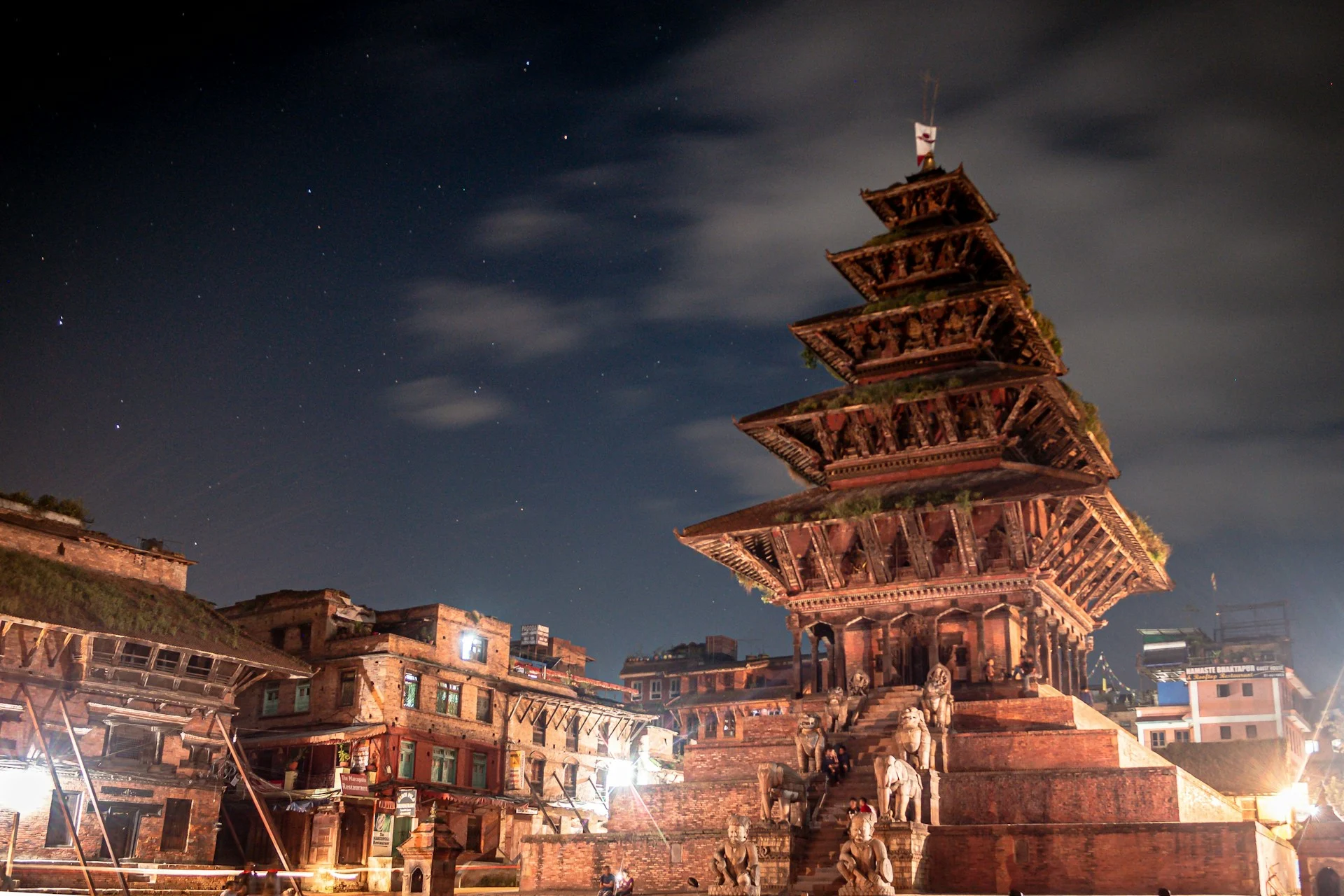
For cultural travellers, the Kathmandu Valley offers seven UNESCO World Heritage Sites, including the Durbar Squares of Kathmandu, Patan, and Bhaktapur, the Swayambhunath and Boudhanath stupas, Pashupatinath Temple, and Changu Narayan Temple. The valley is a living heritage landscape, not a museum. People worship at these sites daily. Respectful behaviour and appropriate dress are expected.
Wonder Hikes Nepal works with local guides and supports responsible trekking practices across the Everest, Annapurna, Manaslu, and Langtang regions. If you are planning a trek, cultural tour, or expedition in Nepal, we can help you build an itinerary that reflects the country’s diversity and respects its communities.
Frequently Asked Questions
1. What is Nepal famous for?
Nepal is famous for Mount Everest, the birthplace of Buddha at Lumbini, its unique non-rectangular flag, the Gurkha soldiers, and its ethnic and linguistic diversity. It is also known for trekking, mountaineering, and UNESCO World Heritage Sites in the Kathmandu Valley.
2. Is Nepal the only country with a non-rectangular flag?
Yes. Nepal is the only country in the world with a national flag that is not rectangular or square. It consists of two overlapping triangles and is known as a double-pennon.
3. Was Nepal ever colonised?
No. Nepal was never colonised by a foreign power, though it was influenced by British India during the Rana regime and maintained a complex relationship with the British Empire.
4. Was Buddha born in Nepal?
Yes. Siddhartha Gautama, who became the Buddha, was born in Lumbini, in present-day Nepal, around the 6th century BCE. Lumbini is a UNESCO World Heritage Site and a major pilgrimage destination.
5. How many languages are spoken in Nepal?
The 2021 census identified 124 mother tongues. Nepali is the most widely spoken, followed by Maithali, Bhojpuri, Tharu, and Tamang. Thirty-seven languages are spoken by fewer than 1,000 people.
6. How many ethnic groups are in Nepal?
The 2021 census recorded 142 caste and ethnic groups, up from 125 in 2011. The largest groups include Chhetris, Brahmans-Hill, Magars, Tharus, and Tamangs.
7. Why does Nepal have a 45-minute time zone?
Nepal Standard Time is UTC+5:45, one of only three time zones with a 45-minute offset. It was established in 1986 to distinguish Nepal’s time from India’s and align with solar time in Kathmandu.
8. What is Nepal’s national animal?
The cow is Nepal’s national animal, enshrined in the 2015 constitution. The cow is sacred in Hinduism, and cow slaughter is illegal. Some indigenous communities have proposed replacing the cow with the one-horned rhinoceros as a more inclusive symbol.
9. What is Nepal’s national bird?
The Himalayan monal (Lophophorus impejanus), a colourful pheasant, is Nepal’s national bird. It lives at altitudes between 2,100 and 4,500 metres and is often seen on trekking routes.
10. What is Nepal’s national flower?
Rhododendron arboreum, known locally as Lali Gurans, is Nepal’s national flower. It blooms in crimson red across the mid-hills in spring, and Nepal has 32 species of rhododendron.
11. Why is the Yeti associated with Nepal?
The Yeti, or Abominable Snowman, is a legendary creature from Himalayan folklore. Despite numerous reported sightings, there is no scientific evidence of its existence. Genetic studies of supposed Yeti samples have identified them as bear remains.
12. What is the Kumari tradition?
The Kumari is a living goddess chosen from the Shakya clan of the Newar Buddhist community. She is selected between the ages of two and four and worshipped by both Hindus and Buddhists until she reaches puberty.
13. What wildlife can you see in Nepal?
Nepal is home to one-horned rhinoceros, Bengal tigers, Asian elephants, red pandas, Himalayan monals, and the Himalayan pangolin. Chitwan and Bardiya national parks are the best places to see large mammals.
14. What food is Nepal famous for?
Dal bhat, momo, thukpa, and sel roti are among Nepal’s most famous foods. Newar cuisine from the Kathmandu Valley and Tharu cuisine from the Terai offer distinctive regional flavours.
15. How many UNESCO World Heritage Sites are in Nepal?
Nepal has 10 UNESCO World Heritage Sites: 8 cultural and 2 natural. The cultural sites include seven in the Kathmandu Valley, Lumbini, and Chitwan National Park, while Sagarmatha National Park is a natural site.
Conclusion
Nepal is not a country that can be understood through a single fact or a single mountain. Its identity is built from geography that spans tropical plains to Arctic peaks, from 142 ethnic groups and 124 languages, from a flag that defies convention and a time zone that runs on its own schedule. The facts in this guide are not trivia. They are entry points into a deeper understanding of a country that has preserved its sovereignty, its traditions, and its extraordinary diversity despite enormous pressures.
Wonder Hikes Nepal works with local guides and supports responsible trekking and cultural tourism across Nepal. If you are planning a trek in the Everest or Annapurna regions, a cultural tour of the Kathmandu Valley, or an expedition to a Himalayan peak, we can help you plan a journey that respects the country and the people who call it home.
Ready to plan your trek?
Tell us your dates and group size. We reply on WhatsApp within a few hours.