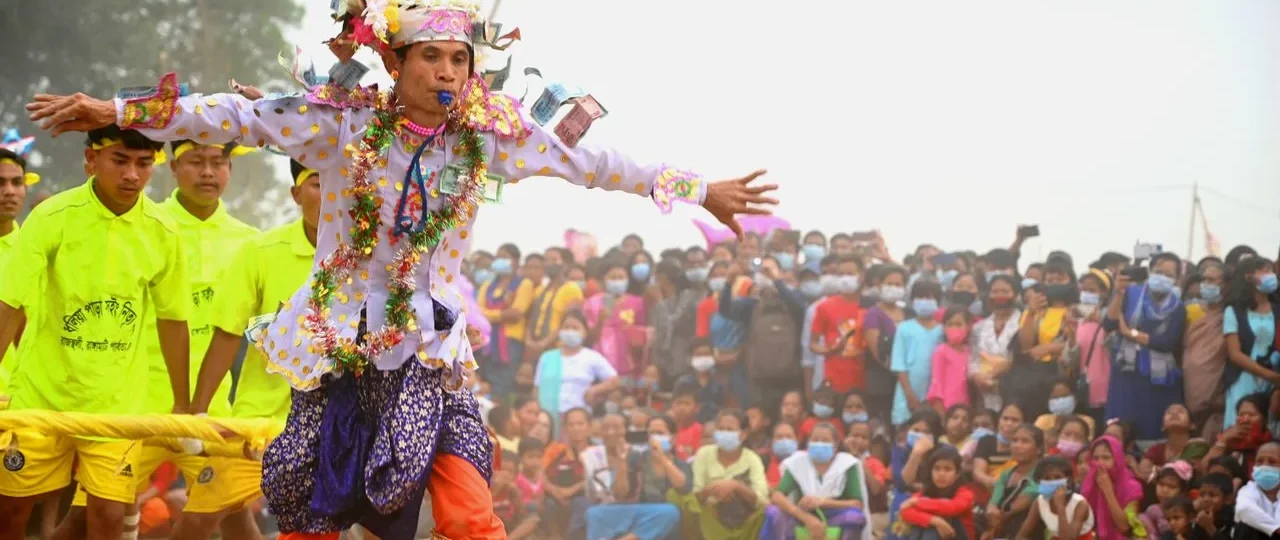
Sonam Lhosar is the New Year festival of Nepal’s Tamang community, observed on Magh Shukla Pratipada — the first day of the bright fortnight in the Nepali month of Magh. In 2026, the Tamang New Year fell on Monday, January 19, ushering in Year 2862 of the Manjushree calendar and marking the transition from the Year of the Snake to the Year of the Horse.
The name itself carries the meaning: “Lho” means year, “Sar” means new, and “Sonam” identifies the Tamang people in this context. So the festival is, quite literally, the Tamang community’s annual marker of time’s passing — and of time’s renewal.
What makes this celebration distinctive is not just the date on which it falls, but the system that determines that date. The Tamang festival operates on a lunisolar calendar that tracks both lunar phases and solar position, producing a date that shifts within the January–February window each year. Understanding that system is the key to understanding why the festival moves, why it differs from other Himalayan New Year observances, and why its 12-animal cycle is more than a list of animals.
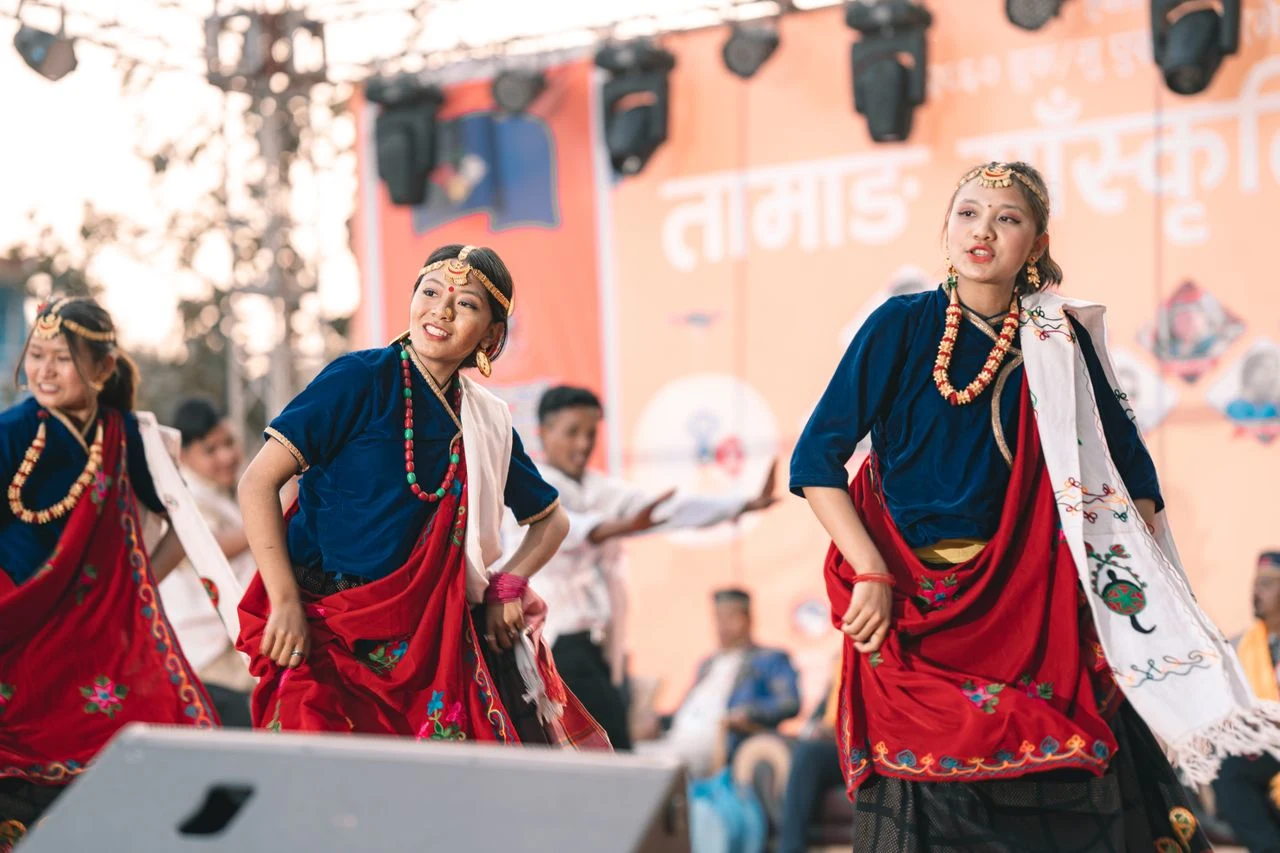
When Is Lhosar? 2026 and 2027 Dates
Lhosar 2026 was celebrated on Monday, January 19, 2026. The Government of Nepal declared a nationwide public holiday for the occasion, reflecting the festival’s national significance beyond the Tamang community itself.
The next Tamang New Year will fall on Sunday, February 7, 2027, beginning Year 2863 and entering the Year of the Goat or Sheep.
| Year | Gregorian Date | Day | Tamang Year | Animal Year |
|---|---|---|---|---|
| 2026 | January 19 | Monday | 2862 | Horse |
| 2027 | February 7 | Sunday | 2863 | Goat/Sheep |
The date changes annually because the festival is calculated on a lunisolar system, not the Gregorian calendar. The first day of the waxing moon in Magh can fall anywhere from mid-January to mid-February, depending on how the lunar months align with the solar year.
The Manjushree Calendar: How Tamang Time Works
The Manjushree calendar is the traditional timekeeping system of the Tamang people, and it is the reason Lhosar does not have a fixed Gregorian date. It is a lunisolar calendar — meaning it tracks the moon’s phases for months while periodically adjusting to remain aligned with the solar year.
The Tamang year begins on Magh Shukla Pratipada, the first day of the bright fortnight of Magh. This places the New Year in late winter, after the solstice and before spring — a timing that historically connected the festival to agricultural cycles and the natural world.
What distinguishes the Manjushree system from the Tibetan lunar calendar, with which it shares structural similarities, is its integration with the 12-animal cycle. Each Tamang year is named for an animal, and the cycle repeats every twelve years. When the Year of the Snake ended in January 2026, it completed a full rotation and began the Year of the Horse — a year traditionally associated with energy, movement, and forward momentum.
The 12-Animal Cycle: A Calendar You Can Remember
The Tamang year is structured around twelve animals, each representing one year in a repeating cycle. The order is fixed and has been passed down through generations. In 2026, the cycle entered the Year of the Horse, following the completion of the Year of the Snake.
| Position | Animal | Traditional Association |
|---|---|---|
| 1 | Rat | Beginnings, resourcefulness |
| 2 | Ox | Strength, patience |
| 3 | Tiger | Courage, power |
| 4 | Rabbit | Caution, gentleness |
| 5 | Dragon (Cloud) | Transformation, auspiciousness |
| 6 | Snake | Wisdom, renewal |
| 7 | Horse | Energy, freedom, travel |
| 8 | Sheep/Goat | Harmony, community |
| 9 | Monkey | Adaptability, intelligence |
| 10 | Bird | Communication, alertness |
| 11 | Dog | Loyalty, protection |
| 12 | Pig/Boar | Abundance, completion |
Researcher Tika Sherpa has noted that calculating years by animal and bird names reflects the Tamang community’s identity as nature worshippers — a worldview in which human time is inseparable from the natural world.
The cycle is not merely decorative. It gives each year a character and a set of associations. The Year of the Horse, which began in 2026, is traditionally considered auspicious for travel, courage, and new ventures — a fitting theme for a community whose heritage is rooted in movement across the Himalayan landscape.
Why Lhosar Matters to the Tamang Community
For Tamang people, this festival is the most significant annual event — a time when families reunite, communities gather, and cultural identity is renewed through shared practice. The celebration is not performed for outsiders. It is lived by the community.
The emotional weight of the festival comes from several sources. First, it is a homecoming. In a country where migration to Kathmandu and abroad has scattered many Tamang families, Sonam Lhosar remains a centripetal force that brings people back together. Second, it is a spiritual observance. The festival involves visits to monasteries and stupas, prayers for collective well-being, and rituals to dispel misfortune. President Ramchandra Paudel, in his 2026 greeting, described the festival as a time of “ancestral and nature worship, remembrance of the teachings of Lord Buddha, and the coming together of relatives and loved ones.”
Third, it is an act of cultural continuity. Tamang Selo songs are sung, Damphu drums are played, traditional dress is worn, and food is prepared according to recipes passed down through generations. The ichLinks intangible heritage archive describes Losar as “a living heritage, transmitted from one generation to another” — a tradition kept alive not in museums but in kitchens, courtyards, and dance circles.
How Lhosar Is Celebrated
Celebrations vary by community, locality, and family. What follows describes common practices, but not every Tamang household observes every element in the same way.
Preparation. Homes are cleaned thoroughly before the festival. This is both practical and symbolic — making space for good fortune by removing the old. Prayer flags are renewed, and family altars are adorned with offerings.
Monastery and stupa visits. Many families visit monasteries and stupas on the day of Lhosar. Prayers are offered, butter lamps are lit, and blessings are sought. Mask dances are sometimes performed to drive away evil spirits.
Family gatherings. The festival is fundamentally a family occasion. Relatives gather for festive meals, younger members seek blessings from elders, and past grievances are set aside.
Cultural processions. In Kathmandu, the Nepal Tamang Ghedung organizes a major public celebration at Tundikhel, featuring processions of Tambas (traditional priests), Bonbos, and Lamas, along with traditional songs and dances. The Boudhanath Area Development Committee also organizes programs in the Boudha area, and celebrations extend to Swayambhu.
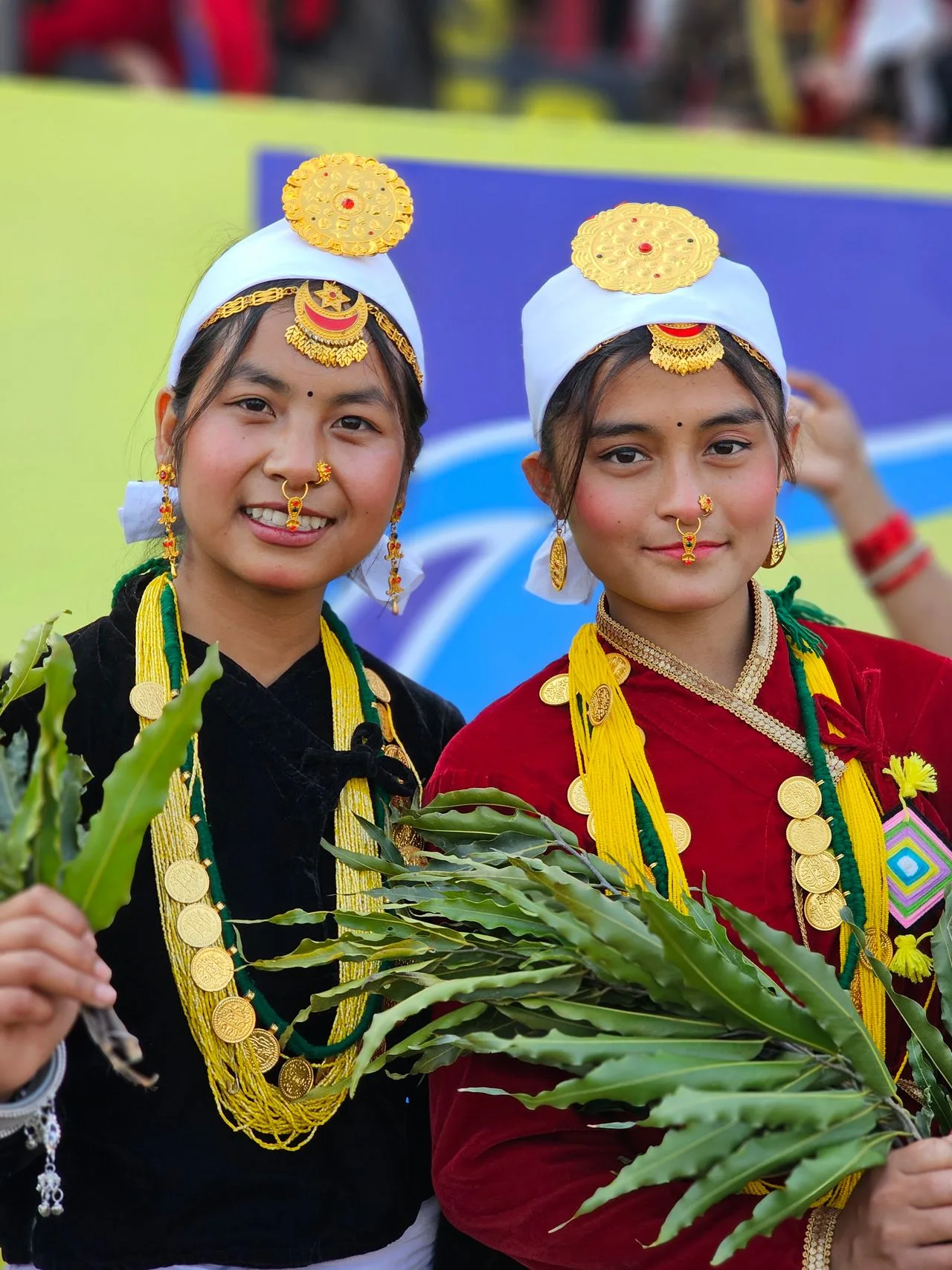
Traditional dress. Participants wear traditional Tamang clothing. Women typically wear the lungi, cholo, and patuka (waist wrap), along with jewelry including the mala necklace. Men wear the Tamang coat and topi.
Traditional Food During Lhosar
Food during the Tamang New Year reflects the community’s culinary traditions and the festival’s role as a time of abundance and sharing.
Khapsey is a traditional fried dough pastry, often made in various shapes, widely associated with Losar celebrations across Himalayan communities. Barar, a rice-based flatbread, is particularly associated with Hyolmo observances of the festival. Thongsey, a noodle dish, is another traditional preparation. Meat dishes — beef, pork, chicken, and mutton — are also prepared in many households, along with sweet desserts.
The President’s 2026 message specifically mentioned “khapse (deep-fried pastries) and meat stews” filling the celebrations with warmth and sustenance.
Food traditions vary significantly between communities. A Tamang family in Kavrepalanchok may serve a different menu than a Hyolmo family in Helambu. What they share is the practice of cooking special food, sharing it with family and neighbors, and using the meal to strengthen social bonds.
Tamang Selo and the Damphu
No account of this festival is complete without the music that animates it. Tamang Selo is the traditional song-and-dance form of the Tamang community, performed in groups with synchronized movements and call-and-response singing. The lyrics often address themes of love, nature, community, and daily life — carrying stories and values across generations.
The Damphu is a circular frame drum with a single membrane, played with the hand or a stick. It provides the rhythmic foundation for Tamang Selo performances. At Lhosar celebrations, the sound of the Damphu is the heartbeat of the festival. The President’s 2026 message noted that Tamang Selo is performed “to the beat of the damphu drum, telling stories of migration, resilience and harmony with the mountains.”
For Tamang people, the Damphu is more than an instrument. It is a summons — a call to gather, to dance, and to celebrate together.
Lhosar in Kathmandu
Kathmandu is the largest stage for Lhosar celebrations outside the Tamang heartland. While the festival is rooted in villages and hill districts, the capital’s Tamang population and the presence of major Buddhist sites make it a significant center of celebration.
Tundikhel hosts the main public program, organized by the Nepal Tamang Ghedung. The celebration typically spans three days and includes cultural processions featuring Tambas, Bonbos, and Lamas, along with performances by nationally and internationally renowned artists.
Boudhanath is another focal point. The Boudhanath Area Development Committee organizes programs in the Boudha area, where the stupa becomes a gathering place for prayer, circumambulation, and community celebration.
Swayambhu also hosts Lhosar programs, adding another major Buddhist site to the map of celebrations.
Outside Kathmandu, the festival is celebrated with particular fervor in the Tamang-majority districts of Bagmati Province. Village celebrations often have a more intimate character, centered on family, monastery, and community rather than large public events.
Sonam Lhosar vs Tamu Lhosar vs Gyalpo Lhosar
One of the most common sources of confusion for people searching for information about the Tamang New Year is the existence of multiple Lhosar festivals in Nepal. The three main ones are celebrated by different communities, on different dates, and with different cultural associations.
| Feature | Sonam Lhosar | Tamu Lhosar | Gyalpo Lhosar |
|---|---|---|---|
| Community | Tamang (and Hyolmo) | Gurung | Sherpa (and Tibetan) |
| Date | Magh Shukla Pratipada | Paush 15 | Falgun Shukla Pratipada |
| Timing | January–February | Late December–January | February–March |
The names are similar because “Lhosar” simply means “New Year” in the broader Himalayan linguistic context. The prefixes identify which community’s New Year is being celebrated. Tamu Lhosar is the Gurung festival, celebrated on Paush 15. Gyalpo Lhosar is the Sherpa festival, celebrated on Falgun Shukla Pratipada.
These are not the same festival observed by different communities. They are distinct cultural observances with their own calendars, traditions, and meanings. Treating them as interchangeable obscures the specific identities of each community.
Is Lhosar a Buddhist Festival?
The short answer is: it is a festival celebrated by a community with deep Buddhist traditions, but it is not exclusively a Buddhist religious observance.
The Tamang community practices a form of Himalayan Buddhism that incorporates indigenous Tamang traditions. Monastic visits, prayers, butter lamps, and ritual dances are central to the festival. The President’s 2026 message referenced “remembrance of the teachings of Lord Buddha” as part of the observance.
At the same time, Lhosar includes elements that predate or exist alongside formal Buddhist practice. The nature worship reflected in the animal cycle, the role of ancestral deities, and the community-centered aspects of the celebration suggest a broader cultural foundation. As the ichLinks archive notes, Losar is celebrated by Buddhists in the Himalayas but also functions as a community New Year that brings people together regardless of the depth of their religious practice.
For visitors, this nuance matters. The Tamang New Year is not simply “a Buddhist festival.” It is a Tamang New Year observed through Buddhist practice, community tradition, and cultural expression.
History and Cultural Evolution
The history of Lhosar is difficult to establish with precision. The festival is ancient, but the evidence for its origins is a combination of oral tradition, textual references, and comparative study of Himalayan calendars.
What is well-supported: Lhosar has been celebrated by the Tamang community for centuries, if not millennia. The Manjushree calendar is the traditional timekeeping system of the Tamang people. The 12-animal cycle is an ancient system shared across multiple Himalayan and Central Asian cultures.
What is traditional understanding rather than documented fact: The claim that the festival is “about 4,700 years old” appears in some sources, including Spotlight Nepal’s 2026 coverage, but is not supported by verifiable historical evidence. It may reflect traditional oral history rather than documented chronology.
What is uncertain: The precise historical relationship between the Manjushree calendar and the Tibetan calendar, and the exact process by which the 12-animal cycle was adopted and adapted by the Tamang community.
This article does not present uncertain claims as fact. Where sources disagree or evidence is lacking, it says so. This is not a weakness — it is a commitment to cultural accuracy over convenient narrative.
How Travelers Can Experience Lhosar Respectfully
Attending the Tamang New Year as an outsider requires care. This is a community festival, not a tourist attraction. Your presence is a privilege, not a right.
Before you go: Learn basic information about the Tamang community and Lhosar. Do not ask people to explain their culture to you from scratch. Check event schedules with official organizers or reliable local contacts. Dress modestly and respectfully.
At monastery ceremonies: Remove your shoes before entering monastery buildings. Do not photograph inside temple chapels unless you have explicit permission. Ask before photographing people, especially monks, elders, and anyone engaged in prayer. Do not interrupt rituals or block the view of participants.
At public celebrations: You may watch Tamang Selo performances, but do not join the dance circle unless invited. Observe first, photograph second. Respect personal space. If someone says no to a photograph, accept it immediately.
General etiquette: Do not touch religious objects without permission. Do not step over people or religious items. Learn a few words of Tamang or Nepali greeting. Follow the lead of local participants.
The most respectful approach is to come with humility. The festival belongs to the Tamang community, and your role is to observe, learn, and appreciate.
Travel Guide: Planning Around the Festival
If you are planning to travel to Nepal for the Tamang New Year, here is what you need to know.
When to visit. The festival falls in January or February. Kathmandu weather during this period is generally dry and mild — daytime temperatures around 15–20°C, cooler at night. This is a good time for cultural travel and low-altitude trekking.
Where to go. Kathmandu is the most accessible option, with celebrations at Tundikhel, Boudhanath, and Swayambhu. For a more intimate experience, consider visiting Tamang-majority villages in Bagmati Province. The Tamang Heritage Trail in the Langtang region offers a cultural trekking experience that can be combined with festival timing.
What to wear. Layered clothing is best for Kathmandu in winter. For monastery visits, modest clothing covering shoulders and knees is appropriate. Comfortable walking shoes are essential.
What to bring. A camera (used respectfully), cash for offerings and local purchases, and a willingness to learn.
Combining the festival with trekking. The Tamang Heritage Trail, which passes through Tamang villages in the Langtang region, is a natural extension of Sonam Lhosar travel. The trail offers insight into Tamang culture, architecture, and daily life. Several trekking operators offer culturally focused itineraries that can be timed with the festival. Wonder Hikes Nepal, for example, specializes in community-based trekking experiences in the Langtang and Tamang heritage regions, where travelers can engage with local traditions beyond the festival dates themselves.
Sonam Lhosar 2027: Planning Ahead
The next Tamang New Year falls on Sunday, February 7, 2027, beginning Year 2863 and the Year of the Goat or Sheep.
If you are planning to travel for the 2027 celebration, start organizing by late 2026. Accommodation in Kathmandu fills quickly around festival dates, and trekking permits for the Langtang region should be arranged in advance. Official event schedules for 2027 will be announced closer to the date. Do not assume venues or times based on previous years — always verify with official organizers.
Frequently Asked Questions
1. What is Sonam Lhosar?
Lhosar is the New Year festival of Nepal’s Tamang community, celebrated on Magh Shukla Pratipada according to the Manjushree calendar.
2. When is Sonam Lhosar in 2026?
Sonam Lhosar 2026 fell on Monday, January 19, 2026, marking the beginning of Year 2862 and the Year of the Horse.
3. When is Sonam Lhosar in 2027?
Sonam Lhosar 2027 falls on Sunday, February 7, 2027, beginning the Year of the Goat or Sheep.
4. Who celebrates Sonam Lhosar?
The Tamang community is the primary celebrant. The Hyolmo community and several other indigenous groups, including Thakali, Jirel, Dolpo, and Manange, also observe the festival.
5. What does “Lhosar” mean?
“Lhosar” means “New Year” in the Tamang and Tibetan linguistic tradition. “Lho” means year and “Sar” means new.
6. What is the Manjushree calendar?
The Manjushree calendar is the traditional lunisolar calendar followed by the Tamang community. It determines the date of Lhosar and structures the 12-animal cycle.
7. What are the 12 animals of the Lhosar cycle?
Rat, Ox, Tiger, Rabbit, Dragon (Cloud), Snake, Horse, Sheep or Goat, Monkey, Bird, Dog, and Pig or Boar.
8. What food is eaten during Lhosar?
Traditional foods include khapsey (fried dough pastry), barar (rice flatbread), thongsey (noodle dish), and various meat and sweet dishes. Food traditions vary by community.
9. What is Tamang Selo?
Tamang Selo is the traditional song-and-dance form of the Tamang community, performed in groups with synchronized movements and call-and-response singing.
10. What is a Damphu?
The Damphu is a traditional Tamang frame drum, played with the hand or a stick. It provides the rhythmic foundation for Tamang Selo performances.
11. Where can visitors experience Lhosar?
In Kathmandu, celebrations are held at Tundikhel, Boudhanath, and Swayambhu. Village celebrations in Bagmati Province offer a more intimate experience.
12. Is Lhosar a Buddhist festival?
It is celebrated by a community with deep Buddhist traditions and includes monastery visits and prayers, but it also incorporates indigenous Tamang practices and nature worship.
13. What is the difference between Lhosar and Tamu Lhosar?
Sonam Lhosar is the Tamang New Year, celebrated on Magh Shukla Pratipada. Tamu Lhosar is the Gurung New Year, celebrated on Paush 15.
14. What is the difference between Lhosar and Gyalpo Lhosar?
Sonam Lhosar is celebrated by the Tamang community. Gyalpo Lhosar is celebrated by the Sherpa community on Falgun Shukla Pratipada.
15. Can tourists attend Lhosar celebrations?
Yes, but respectfully. Learn about the festival beforehand, dress modestly, ask before photographing people, and follow the lead of local participants.
Final Thoughts
Sonam Lhosar is a reminder that time is not only measured but lived. The Tamang community’s New Year is not simply a date on a calendar — it is a rhythm carried in the beat of the Damphu, the taste of khapsey, the colors of traditional dress, and the sound of Tamang Selo rising from a circle of dancers.
For travelers, experiencing this festival is an invitation to witness cultural continuity in action — to see how a community maintains its identity across generations, even as the world around it changes. The celebration is not performed for visitors. It is lived by the Tamang people. Your role, if you attend, is to observe with respect and to carry away not photographs alone, but understanding.
Nepal’s cultural festivals are among its greatest treasures, and the Tamang New Year is one of the most significant. Whether you are planning a cultural tour, a trek through the Tamang Heritage Trail, or simply seeking to understand Nepal beyond its mountains, the festival offers a window into a community whose traditions enrich the entire country. Approach it with humility. Learn before you go. And let the Damphu remind you that some things are older than any calendar.
Ready to plan your trek?
Tell us your dates and group size. We reply on WhatsApp within a few hours.