Meditation Retreat Nepal
Meditation retreat in Nepal is not a marketing phrase. It describes a specific type of experience: structured residence at a monastery, Vipassana centre, or wellness retreat where meditation is the primary activity. This is not a trekking trip with a mindfulness workshop added on. It is not a yoga holiday with one guided session per day. A genuine retreat prioritises sitting practice, silence in many traditions, and teacher guidance above sightseeing or socialising.
The range is wider than most travellers expect. At one end sits the formal Vipassana course in the S.N. Goenka tradition: ten days of noble silence, no reading, no writing, no devices, and roughly ten hours of meditation daily. At the other end are Pokhara wellness retreats that combine yoga, singing bowl therapy, and gentle guided meditation in a social, lakeside setting.
Between these poles lie Buddhist monastery courses at Kopan, individual retreats at Panditarama Lumbini, and yoga-meditation hybrids across the Kathmandu Valley. Understanding which one you are booking — and which one suits you — is the single most important decision you will make.
Why Nepal for a Meditation Retreat?
Nepal meditation retreat options carry a historical weight that no commercial wellness destination can replicate. Lumbini, in the southern Terai plains, is the birthplace of Siddhartha Gautama. UNESCO recognises it as a World Heritage Site. For Buddhists and non-Buddhists alike, practising in Lumbini is not the same as practising in a converted hotel.
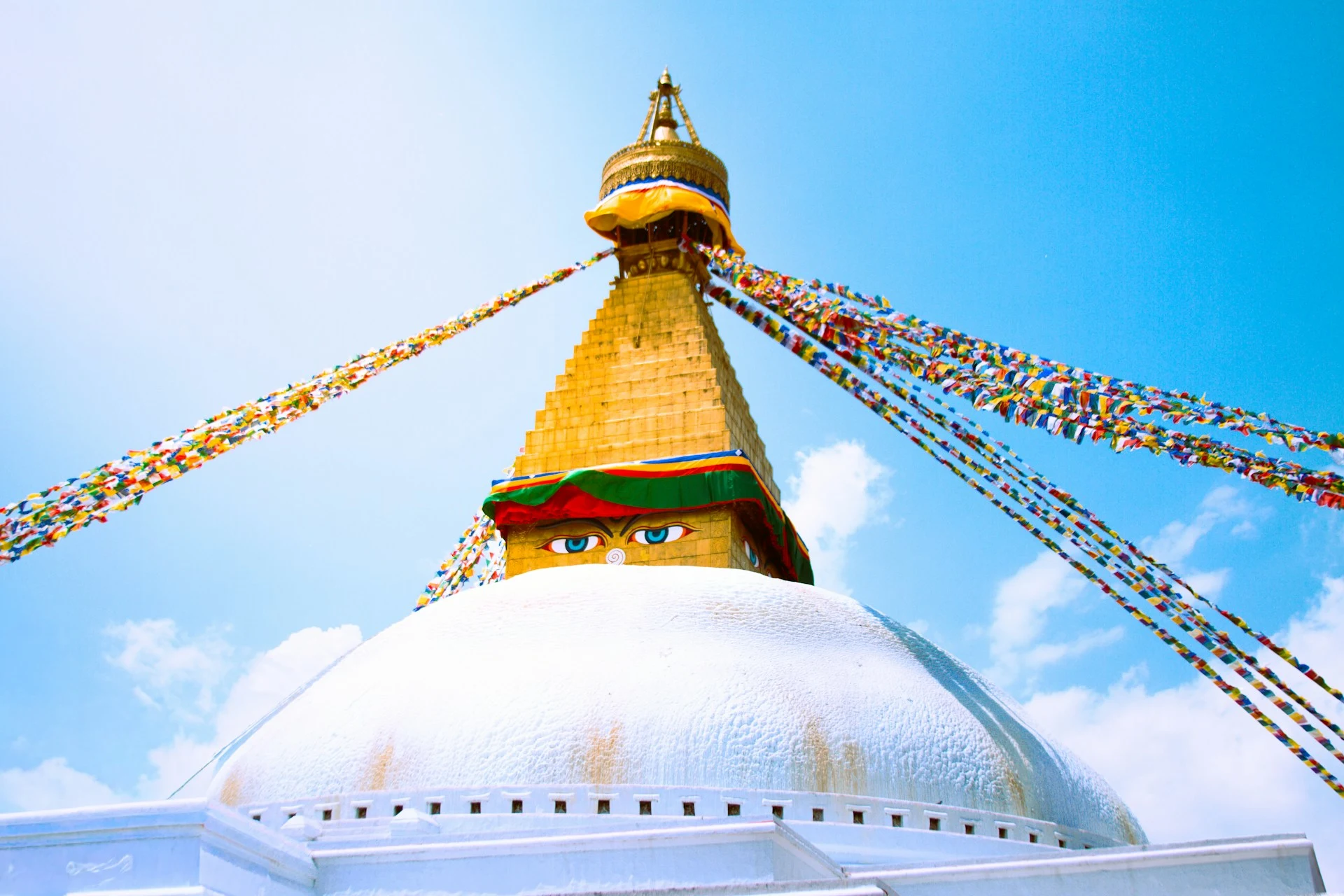
The Kathmandu Valley has been a centre of Buddhist scholarship for over a thousand years. Boudhanath Stupa remains an active pilgrimage site where monks and lay practitioners circumambulate daily. Kopan Monastery, founded in the late 1960s, has hosted meditation courses for foreign visitors for decades and now houses several hundred monks and nuns.
Pharping, about 45 minutes south of Kathmandu, contains caves where meditation masters practised for years. Asura Cave, where Guru Rinpoche is said to have attained realisation, remains an active site for Vajrayana practitioners.
Nepal also offers something less tangible: a cultural environment where meditation is not a wellness trend but a living practice embedded in daily life. For many travellers, that context — not just the instruction — is what makes a retreat in Nepal meaningful.
Types of Meditation Retreats in Nepal (And How They Differ)
Vipassana Retreats (Goenka Tradition)
Vipassana is a specific technique, not a generic term for meditation. The formal tradition taught by S.N. Goenka operates a global network of centres with a standardised ten-day course. Nepal has two centres in this network: Dhamma Shringa in Kathmandu and Dhamma Nibhā in Kakani, about 20 km from the city.
The ten-day course is rigorous. Noble silence for the full period. No reading, writing, or electronic devices. Wake at 4:00 AM, lights out at 9:30 PM. Approximately ten hours of meditation daily, alternating sitting and walking. Vegetarian meals with a light evening snack. Evening video discourses explaining the technique.
Courses operate on a donation basis (dana). There is no fixed fee. At the end of the course, students may donate whatever they wish to support future students. The Goenka organisation states that Vipassana is “offered free from commercialisation”.
The ten-day format is not suitable for everyone. It is physically demanding and psychologically intense. Beginners are welcome, but should prepare for the challenge. Dhamma Shringa also runs shorter courses (3-day) and longer ones (20-day, 30-day, 45-day) for experienced students.
Buddhist Monastery Retreats
Monastery-based retreats offer a different structure. Kopan Monastery, on a hilltop north of Boudhanath, runs courses for foreign visitors that combine guided meditation, teachings from resident monks, and participation in monastery life. Accommodation is simple — dormitory or basic rooms — and meals are vegetarian. Course costs run roughly USD 7–20 per day, or from around USD 90 for a seven-day course including food and shared accommodation.
Panditarama Lumbini International Vipassana Meditation Centre, established in 1999, offers individual retreats in the Mahāsi tradition rather than fixed group courses. Retreatants schedule their own arrival and duration, with a minimum stay of seven days. The centre sits within the Lumbini Development Zone next to the Sacred Gardens.
Mindfulness Retreats
Mindfulness retreats draw on secular techniques rooted in Buddhist practice but presented without religious framing. They are typically less strict than Vipassana, with more flexibility around silence, devices, and schedule. These suit professionals and travellers who want the benefits of practice without the intensity of a formal course.
Silent Meditation Retreats
Silent retreats require participants to maintain silence for the duration — typically three, seven, or ten days. The silence is considered part of the practice. Silent retreats can be Buddhist, secular, or hybrid. The ten-day Vipassana course is the most well-known format in Nepal, but shorter silent retreats are available at various centres.
Yoga and Meditation Retreats
Pokhara is the centre of Nepal’s yoga-meditation retreat scene. These combine daily yoga asana, pranayama, and guided meditation, often in lakeside settings with Annapurna views. They are the most accessible option for beginners. Silence is not typically required. Meals are vegetarian and included in most packages.
Published rates for 2026 vary. A three-day mountain view retreat starts around USD 185. A five-day yoga immersion with Himalaya views runs about USD 315. A seven-day holistic yoga life retreat is priced around USD 600. An eight-day budget yoga-meditation wellness retreat costs approximately USD 500.
Sound Meditation and Wellness Retreats
A newer category combines meditation with sound healing (Tibetan singing bowls, gongs), Reiki, and Ayurveda. These are less focused on traditional sitting practice and more on multi-sensory relaxation. They appeal to travellers who want a restorative experience rather than a disciplined course. Unmani Yoga Retreat in Pokhara offers a five-day Himalayan detox retreat with Vipassana-inspired meditation and sound healing for USD 450, including private accommodation.
Where to Go: Locations for Meditation Retreat Nepal
Kathmandu
Kathmandu is the primary hub for formal meditation retreats. Dhamma Shringa (Nepal Vipassana Centre) sits about 12 km north of the city, overlooking the valley. Dhamma Nibhā in Kakani is about 20 km from Kathmandu and under construction for expanded facilities, though basic facilities for ten-day courses are available now.
Kopan Monastery near Boudhanath offers Buddhist courses and retreats. Osho Tapoban in the Nagarjun Hills runs meditation and yoga programs. Kathmandu is also the most convenient base for travellers arriving by air.
Best for: Vipassana, Buddhist courses, monastery stays, short retreats.
Limitations: Air pollution, traffic noise, and urban distractions in the city itself.
Pharping
Pharping, about 45 minutes south of Kathmandu, is one of Nepal’s most important spiritual valleys. It is home to Asura Cave and several active monasteries that welcome retreatants. Retreats here tend to be more traditional and immersive than commercial wellness retreats.
Best for: Vajrayana Buddhist practice, monastery immersion.
Limitations: Limited commercial infrastructure; fewer options for non-Buddhist meditation.
Pokhara
Pokhara, Nepal’s second city, sits beside Phewa Lake with views of the Annapurna range. It is the centre of Nepal’s yoga-meditation retreat industry. Dozens of centres operate in and around the city, offering programs from three days to a month.
Best for: Beginners, yoga-meditation hybrids, relaxation, nature-based retreats.
Limitations: Fewer formal Vipassana options; retreat quality varies considerably.
Lumbini
Lumbini, the Buddha’s birthplace, is a UNESCO World Heritage Site and major pilgrimage destination. Panditarama Lumbini offers serious individual retreats in the Mahāsi tradition, with a minimum seven-day stay and practice periods running from September 1 to March 31 each year. Several monasteries in the area also offer stays and retreats. One-month monastery retreats start from approximately USD 3,456.
Best for: Deep spiritual connection, Buddhist pilgrimage, serious practice.
Limitations: Remote location; fewer structured courses than Kathmandu or Pokhara.
Nagarkot and Kathmandu Valley
Nagarkot, a hill station east of Kathmandu, offers retreats with Himalayan views. These are more relaxed and nature-oriented than city-based programs.
Best for: Short retreats, nature lovers, travellers who want mountain views.
Limitations: Fewer formal meditation courses; mostly yoga-meditation hybrids.
Kathmandu vs Pokhara vs Lumbini: Which Location Fits You?
| Factor | Kathmandu | Pokhara | Lumbini |
|---|---|---|---|
| Primary retreat type | Vipassana, Buddhist courses, monastery | Yoga-meditation, wellness | Buddhist pilgrimage, individual retreat |
| Beginner suitability | Moderate (Vipassana is intense) | High | Moderate (serious practice) |
| Silence level | High (Vipassana) to low (Osho) | Low to moderate | High |
| Accommodation | Dormitory to basic private | Comfortable lakeside | Simple monastery or retreat centre |
| Price range | Dana to USD 90+ for 7 days | USD 145–680 for 3–8 days | Dana (Panditarama) to USD 3,456+ |
| Accessibility | Easy (airport) | Easy (flight or bus) | Moderate (flight or long drive) |
| Cultural immersion | High | Moderate | Very high |
| Best for | Serious practice | Relaxation + practice | Pilgrimage + deep practice |
What a Typical Retreat Day Looks Like
Schedules vary dramatically by type. Here are two representative days.
Vipassana Ten-Day Course (Goenka Tradition)
| Time | Activity |
|---|---|
| 4:00 AM | Wake-up bell |
| 4:30–6:30 AM | Meditation in hall |
| 6:30–8:00 AM | Breakfast and rest |
| 8:00–11:00 AM | Meditation in hall |
| 11:00 AM–12:00 PM | Lunch |
| 12:00–1:00 PM | Rest and interviews with teacher |
| 1:00–5:00 PM | Meditation in hall |
| 5:00–6:00 PM | Tea and light snack |
| 6:00–7:00 PM | Meditation in hall |
| 7:00–8:30 PM | Video discourse |
| 8:30–9:00 PM | Meditation |
| 9:00–9:30 PM | Questions and rest |
| 9:30 PM | Lights out |
Yoga-Meditation Retreat (Pokhara Style)
| Time | Activity |
|---|---|
| 6:30 AM | Wake-up |
| 7:00–8:00 AM | Yoga asana |
| 8:00–9:00 AM | Pranayama and meditation |
| 9:00 AM | Breakfast |
| 10:00 AM–12:00 PM | Free time / journaling / nature walk |
| 12:00 PM | Lunch |
| 1:00–3:00 PM | Rest or personal practice |
| 3:00–4:00 PM | Guided meditation or sound healing |
| 4:00–5:30 PM | Free time |
| 5:30–6:30 PM | Evening yoga or meditation |
| 7:00 PM | Dinner |
| 8:00–9:00 PM | Optional evening session or free time |
The Vipassana schedule is fixed across all Goenka centres worldwide. The yoga-meditation schedule varies by centre and program.
Are Retreats Suitable for Beginners?
Yes — but the choice matters enormously. Vipassana’s ten-day course is open to beginners but is not easy. The combination of silence, long sitting hours, and early wake-up is challenging even for experienced meditators.
Beginners may be better served by a shorter Buddhist retreat at Kopan (5–7 days), a yoga-meditation retreat in Pokhara (3–7 days), a monastery stay with guided meditation (2–4 days), or a one-day Vipassana course before committing to the full ten days.
The key question is not “Can I do this?” but “What am I ready for?” A three-day retreat that you complete is more valuable than a ten-day retreat you leave on day four.
How Long Should You Stay?
| Duration | Suitable For | Examples |
|---|---|---|
| 1–3 days | Complete beginners; taster experiences | Yoga-meditation retreats, monastery stays, short courses |
| 5–7 days | Beginners seeking deeper experience | Kopan Monastery courses, wellness retreats |
| 10 days | Those ready for serious practice | Vipassana Goenka course |
| 2–4 weeks | Experienced meditators; deep immersion | Long Vipassana courses, extended monastery stays |
| 1 month+ | Serious practitioners | Panditarama Lumbini, month-long monastery programs |
If you are new to meditation, start with three to seven days. If you have an established practice, the ten-day Vipassana course is a common entry point into deeper work. Longer courses (20, 30, 45 days) are available for experienced students at Dhamma Shringa and other centres.
How Much Does a Meditation Retreat in Nepal Cost?
There is no universal price. Costs depend on retreat type, location, duration, accommodation standard, and what is included.
| Retreat Type | Typical Price Range | What It Includes |
|---|---|---|
| Vipassana (Goenka) | Dana (donation) | Course, accommodation, vegetarian meals |
| Kopan Monastery course | USD 7–20/day; from USD 90 for 7 days | Shared accommodation, meals, course |
| Panditarama Lumbini | Dana-based; minimum 7-day stay | Individual retreat, accommodation, meals |
| Pokhara yoga-meditation (3 days) | USD 145–500 | Accommodation, meals, daily sessions |
| Pokhara yoga-meditation (7–8 days) | USD 500–680 | Accommodation, meals, daily sessions |
| Month-long monastery (Lumbini) | From USD 3,456 | Private accommodation, meals, teachings |
Key distinctions:
-
Dana (donation) retreats have no fixed fee. You donate what you can at the end. This model applies to all Goenka Vipassana courses and Panditarama Lumbini.
-
Commercial retreats have fixed prices, often with optional upgrades.
-
Monastery stays are usually inexpensive but basic. You are a guest, not a customer.
-
Marketplace prices vary by date, group size, and add-ons. Always check what is included before booking.
Do not trust any website that quotes a single “average cost” for meditation retreats in Nepal. The range is too wide for an average to be meaningful.
What Is Usually Included?
| Component | Vipassana (Dana) | Monastery Stay | Commercial Retreat |
|---|---|---|---|
| Course instruction | Yes | Yes | Yes |
| Accommodation | Yes (shared) | Yes (basic) | Yes (varies) |
| Meals | Yes (vegetarian) | Yes (vegetarian) | Usually |
| Transport to centre | No | No | Sometimes |
| Meditation cushion | Provided | Provided | Usually |
| Reading materials | No (not allowed) | Sometimes | Sometimes |
| Private room | Rare | Rare | Often available (upgrade) |
| Insurance | No | No | Recommended |
Monastery Retreat vs Private Retreat Centre
| Factor | Monastery Retreat | Private Retreat Centre |
|---|---|---|
| Atmosphere | Religious, traditional, communal | Varied; often more comfortable |
| Schedule | Fixed; follows monastic routine | Structured but flexible |
| Silence | Often required or encouraged | Varies |
| Teacher | Monks or lamas | Professional meditation teachers |
| Accommodation | Simple, shared | Comfortable, often private |
| Meals | Vegetarian, communal | Vegetarian, often buffet |
| Cost | Low (monastery stay) | Commercial pricing |
| Best for | Cultural immersion, Buddhist practice | Convenience, comfort, flexibility |
Neither is better. They serve different needs. A monastery stay offers authenticity and immersion. A private retreat centre offers comfort and flexibility. Some travellers do both — a monastery stay for immersion, followed by a wellness retreat for integration.
Vipassana in Nepal: What Makes It Different?
Vipassana in Nepal follows the same Goenka curriculum as centres worldwide. The technique is standardised. The ten-day structure is identical. What differs is the context.
Nepal is where the Buddha was born. The land itself carries a weight that adds meaning for many practitioners. Dhamma Shringa sits in the foothills overlooking the Kathmandu Valley — a setting that supports the inward turn the practice requires.
Dhamma Shringa was founded in April 1981 and conducts ten-day courses twice a month, with periodic Satipatthāna courses three times a year and at least one 20-day, one 30-day, and one Bhikkhu course annually. Dhamma Nibhā in Kakani is newer, with ten-day courses running through late 2026 on a monthly basis.
For foreign students, the application process is the same as at any Goenka centre: apply online, wait for confirmation, confirm attendance. Courses fill quickly. Apply early.
What Should You Pack?
Pack for simplicity. Most retreats provide meditation cushions and basic bedding. Check with the centre before you pack.
Essentials:
-
Comfortable, loose-fitting clothing (layers for varying temperatures)
-
Modest clothing for monastery visits (shoulders and knees covered)
-
Warm layers for Kathmandu Valley retreats (mornings and evenings are cool)
-
Comfortable shoes for walking meditation
-
Sandals or flip-flops for indoor use
-
Personal toiletries
-
Reusable water bottle
-
Small towel
-
Earplugs (for light sleepers in shared accommodation)
-
Any prescription medication
For Vipassana specifically: Do not bring books, journals, or devices. They are not allowed. Bring warm socks and a shawl for sitting.
For monastery stays: Modest clothing is essential. A small offering (fruit, incense) is appreciated but not required.
Do not overpack. Retreat centres are not hotels.
How to Choose the Right Meditation Retreat in Nepal
Ask yourself these questions before booking:
-
What is my experience level? Complete beginner? Some practice? Experienced?
-
How much time do I have? Three days? Seven days? Ten days? A month?
-
What do I want from the experience? Rest? Discipline? Cultural immersion? Spiritual exploration?
-
Can I handle silence? For how long?
-
Can I handle a strict schedule? 4:30 AM wake-up? Ten hours of sitting?
-
What is my budget? Dana? USD 50/day? USD 200/day?
-
Do I want a religious or secular context? Buddhist teachings? Secular mindfulness?
-
Do I want solitude or community? Silent retreat? Social retreat?
-
Do I want comfort or simplicity? Private room? Dormitory?
-
Do I want to combine this with trekking?
Match your answers to the retreat types and locations described above. If you are unsure, start with a shorter, less intense option. You can always go deeper next time.
Questions to Ask Before Booking
| Question | Why It Matters |
|---|---|
| What meditation tradition is taught? | Vipassana, Buddhist, mindfulness, and yoga-meditation are different practices |
| Is the retreat silent? | Some are fully silent; others are social |
| What is the daily schedule? | Understand wake-up time and sitting hours before committing |
| Is accommodation shared or private? | Affects comfort and cost |
| Are meals included? | Some retreats require self-catering |
| Is there a teacher available for questions? | Important for beginners |
| What is the cancellation policy? | Life happens; know your options |
| Is there Wi-Fi? | Some retreats prohibit devices entirely |
| What is the physical intensity? | Sitting for hours can be challenging |
| What is the cost structure? | Fixed price? Donation? What is included? |
| Can I leave early? | Some retreats require full commitment |
| Is the centre accessible? | Consider mobility and transportation |
A transparent centre will answer these questions directly. If they are evasive, look elsewhere.
Can You Combine Meditation With Trekking?
Yes — and it is a meaningful combination for many travellers. A short meditation retreat (3–5 days) before a trek can help you arrive at the trailhead with a quieter mind. A retreat after a trek can help you integrate the experience.
The practical challenge is logistics. Retreats have fixed schedules; treks have their own demands. Combining them requires planning.
Wonder Hikes Nepal helps travellers design itineraries that include both meditation retreats and trekking. This might mean a three-day monastery stay in Pharping before an Everest View Trek, or a yoga-meditation retreat in Pokhara after an Annapurna Base Camp Trek. The goal is not to rush from one to the other, but to let each experience inform the other.
If you are considering this combination, start by deciding which comes first — the retreat or the trek. Then build the itinerary around it, allowing buffer days for travel and rest.
Frequently Asked Questions
1. What is the best meditation retreat in Nepal?
There is no single best. Vipassana at Dhamma Shringa suits serious practitioners. Kopan Monastery suits those interested in Buddhist teachings. Pokhara yoga-meditation retreats suit beginners and relaxation-focused travellers. The right choice depends on your goals and experience.
2. Is Nepal good for a meditation retreat?
Yes. Nepal offers Vipassana centres, Buddhist monasteries, yoga-meditation retreats, and monastery stays. The Buddha was born in Lumbini, and the Kathmandu Valley has a long Buddhist history.
3. Can beginners attend meditation retreats in Nepal?
Yes. Beginners are welcome at Vipassana courses (though they are challenging), Buddhist retreats, and yoga-meditation retreats. Starting with a three-to-seven-day retreat is recommended for first-timers.
4. Where can I go for meditation in Nepal?
Kathmandu (Vipassana, Buddhist), Pharping (Vajrayana, monastery), Pokhara (yoga-meditation), Lumbini (Buddhist pilgrimage and individual retreat), and Nagarkot (nature retreats).
5. How long should a meditation retreat in Nepal be?
Three to seven days for beginners; ten days for those ready for serious practice (Vipassana); two to four weeks for experienced meditators.
6. How much does a meditation retreat in Nepal cost?
Vipassana is donation-based (dana). Kopan Monastery courses cost roughly USD 7–20 per day. Pokhara retreats range from USD 145 (three days) to USD 680 (eight days). Panditarama Lumbini is dana-based with a minimum seven-day stay. Month-long monastery retreats in Lumbini start from around USD 3,456.
7. Are Vipassana courses available in Nepal?
Yes. Dhamma Shringa in Kathmandu and Dhamma Nibhā in Kakani offer ten-day Goenka Vipassana courses, along with longer courses for experienced students. Panditarama Lumbini offers individual retreats in the Mahāsi tradition.
8. Are meditation retreats in Nepal silent?
Some are. Vipassana courses require noble silence for ten days. Buddhist retreats may include silence periods. Yoga-meditation retreats are generally not silent.
9. Can foreigners attend Buddhist meditation retreats in Nepal?
Yes. Kopan Monastery, Panditarama Lumbini, and other centres welcome foreign visitors. Courses are conducted in English.
10. What happens during a meditation retreat?
Typically: wake early, meditate for several hours, eat vegetarian meals, receive instruction or teachings, rest, and sleep. Vipassana includes evening video discourses.
11. Can I use my phone during a meditation retreat?
Vipassana courses prohibit phones and devices. Some Buddhist retreats allow limited use. Yoga-meditation retreats usually permit phones but encourage digital detox.
12. What do you eat at a meditation retreat in Nepal?
Vegetarian meals are standard. Vipassana provides breakfast, lunch, and a light evening snack. Monastery stays provide three vegetarian meals. Commercial retreats typically provide three meals.
13. Is a monastery retreat the same as a meditation retreat?
No. A monastery stay is cultural immersion in monastic life. A meditation retreat is structured practice with instruction. Some monastery stays include meditation; some do not.
14. Can I combine meditation with trekking in Nepal?
Yes. A short retreat before or after a trek can enhance the experience. Plan logistics carefully; retreats have fixed schedules.
15. What should I check before booking a meditation retreat in Nepal?
Check the meditation tradition, silence requirements, daily schedule, accommodation type, meals, cost structure (dana vs. fixed), teacher availability, and cancellation policy.