The One Thing You Must Know Before Planning for 2026
Kailash Parikrama 2026 carries a weight that ordinary years do not. The Tibetan calendar has entered the Fire Horse Year—a 60-year cycle that last occurred in 1966 and will not return until 2086. In Tibetan Buddhist and Hindu tradition, a single circumambulation during this year is believed to carry the spiritual merit of twelve. That belief alone has pushed demand for permits and departures to levels operators have not seen in decades.
But 2026 also brought a hard practical reality. On 26 August 2026, catastrophic flash floods swept through Nepal’s Rasuwa district, destroying roads, bridges, and border infrastructure along the Nepal–Tibet corridor. The Rasuwagadhi–Kerung crossing—the primary overland gateway for pilgrims travelling to Mount Kailash through Nepal—was shut, with no confirmed reopening date.
If you are planning a Kailash Parikrama in 2026 or 2027, the border status is not a footnote. It is the first question you must answer before booking anything.
This guide covers what the kora actually involves, what changed in 2026, and what you need to decide before you commit.
Kailash Parikrama at a Glance
| Item | Detail |
|---|---|
| Location | Ngari Prefecture, Tibet Autonomous Region, China |
| Start/End Point | Darchen (approx. 4,670 m) |
| Total Circuit | Approximately 52 km |
| Walking Distance | About 42 km on foot (7–10 km often driven to Yam Dwar) |
| Duration | 3 walking days |
| Highest Point | Dolma La Pass (approx. 5,630 m) |
| Accommodation | Basic guesthouses at Dirapuk and Zuthulpuk |
| Permits Required | Tibet Travel Permit, Aliens’ Travel Permit, Military Permit, Group Visa |
| 2026 Season | May–September; Saga Dawa Full Moon on 31 May 2026 |
| 2026 Border Caveat | Rasuwagadhi–Kerung crossing closed since 26 August 2026 |
Distances and altitudes vary slightly by source and GPS measurement. Treat all figures as approximate.
What Kailash Parikrama Actually Is
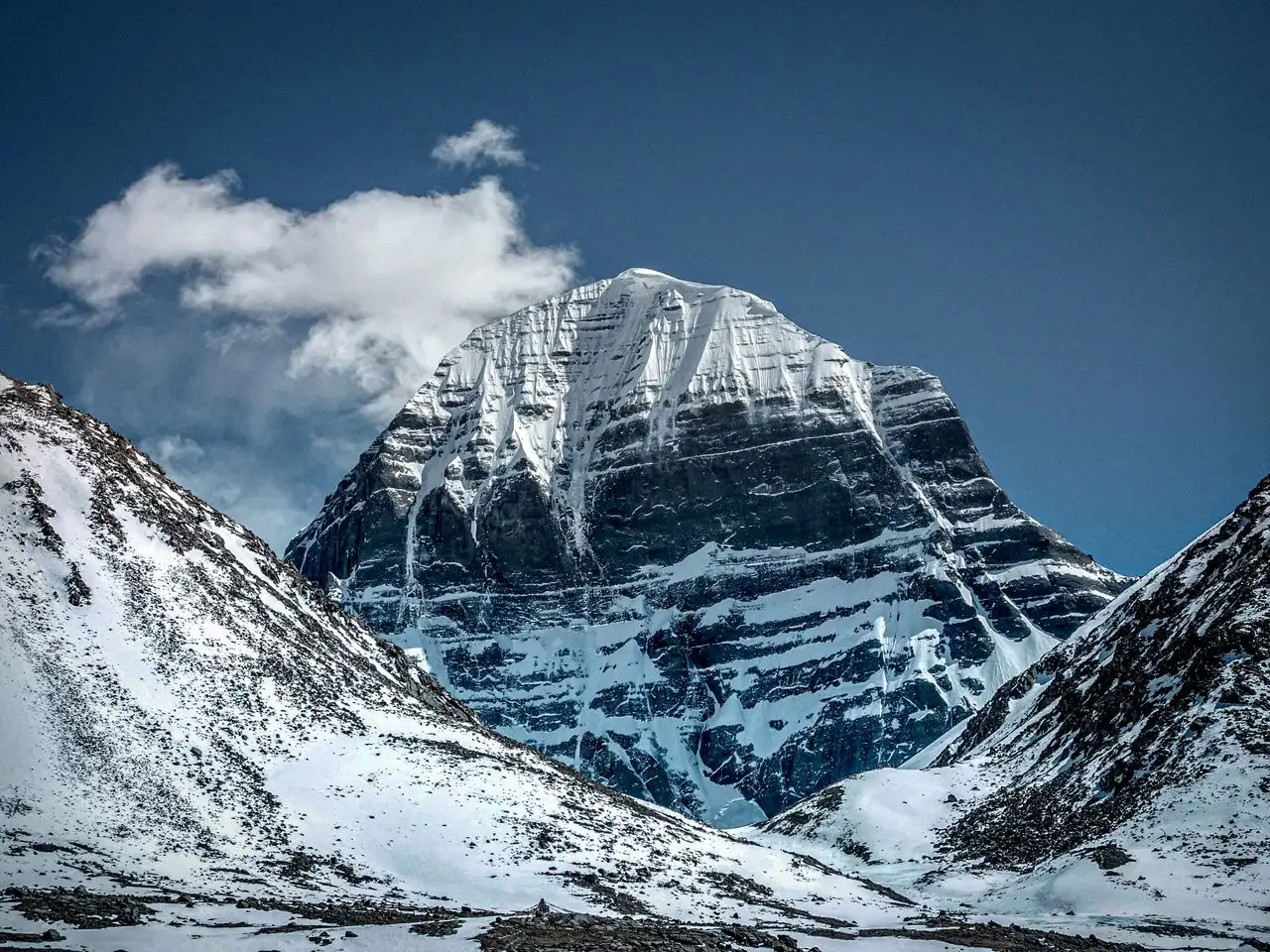
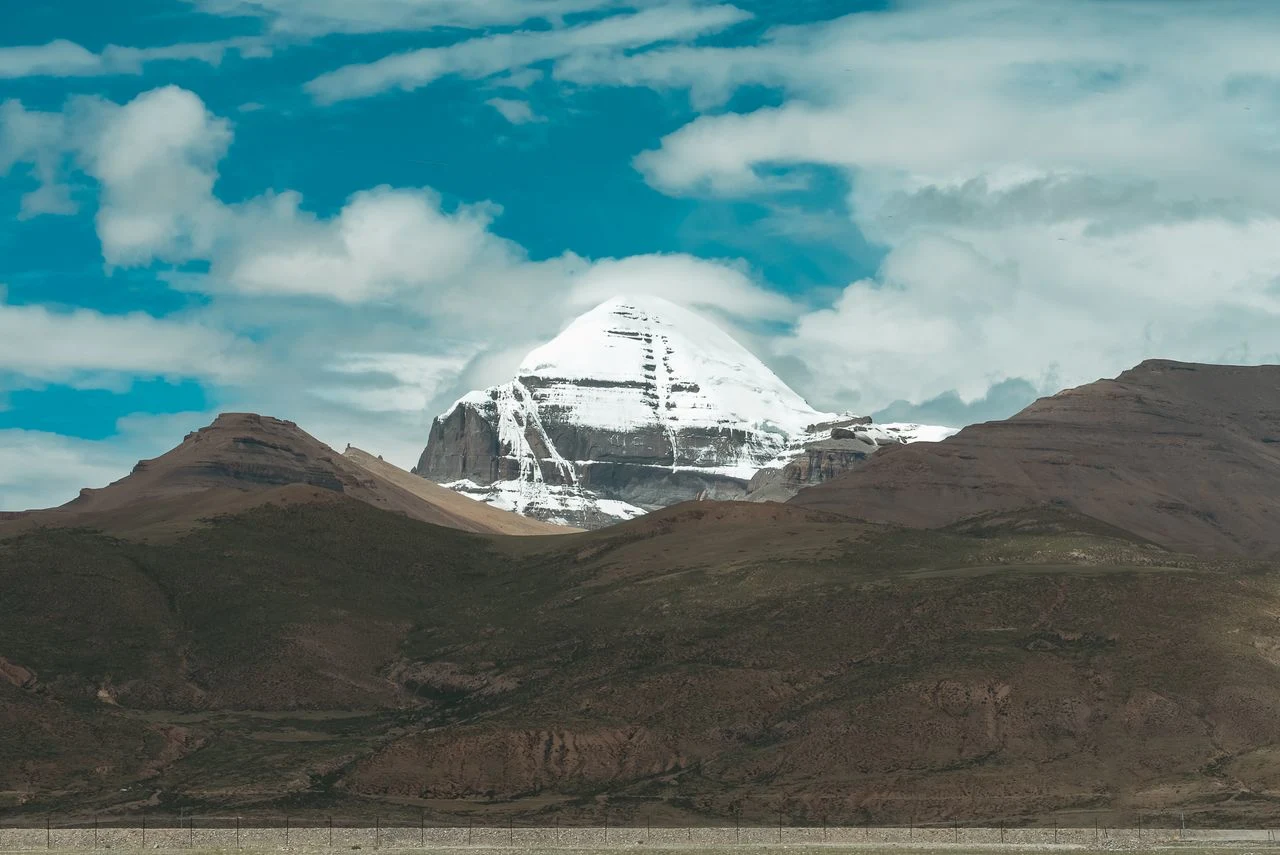
Kailash Parikrama is the circumambulation of Mount Kailash—a 6,638-metre peak in western Tibet that has never been climbed and is considered too sacred for summit expeditions. The Sanskrit term parikrama and the Tibetan term kora describe the same practice: walking clockwise around the mountain’s base.
This is not a summit attempt. It is a walking pilgrimage. The circuit follows a fixed route through high-altitude valleys, crosses one major pass, and returns to the starting point. Most pilgrims complete it in three days.
The kora is part of the broader Kailash Mansarovar Yatra, which typically includes travel to Lake Manasarovar—a sacred lake about 30 km southeast of Darchen—before or after the walking circuit. The parikrama itself is the three-day walking component.
Hindus regard Mount Kailash as the abode of Lord Shiva. Buddhists associate it with Demchok (Chakrasamvara). Bon followers consider it the spiritual axis of the universe, and Jains connect it to Rishabhadeva. These are religious beliefs, not scientific claims. They matter here because they explain why people walk—and why the route’s small sacred sites carry the meaning they do.
Where Is the Kora Located?
The Kailash region sits in the remote Ngari Prefecture of western Tibet, roughly 1,300 km west of Lhasa and about 100 km north of the Nepal border. The nearest town of any size is Darchen (approx. 4,670 m), a small settlement of low stone buildings that serves as the base for the parikrama.
From Nepal, the traditional overland approach runs from Kathmandu north through Trishuli, Dhunche, Syafrubesi, and Timure to the Rasuwagadhi border crossing, then into Tibet through Gyirong County (Kerung), and onward by road through Saga and Paryang to Darchen.
An alternative approach uses the Simikot–Hilsa helicopter corridor in Humla district, far western Nepal. This route is shorter on road travel but heavily dependent on weather conditions in the Karnali valley.
The Route: What Each Day Involves
Distances on the kora vary between operators and GPS readings. The figures below reflect the most commonly reported approximate values. Daily totals differ because some groups drive the first section from Darchen to Yam Dwar, and vehicle access on Day 3 depends on road and permit conditions.
Day 1: Darchen to Dirapuk (approx. 20 km)
Most groups drive the first 7 km from Darchen to Yam Dwar (“Gate of Death”), marked by the Tarboche prayer-flag pole. From Yam Dwar, the trail follows the Lha Chu valley northward. The walking is relatively gentle—roughly 200 metres of elevation gain—and arrives at Dirapuk Monastery (approx. 5,080 m).
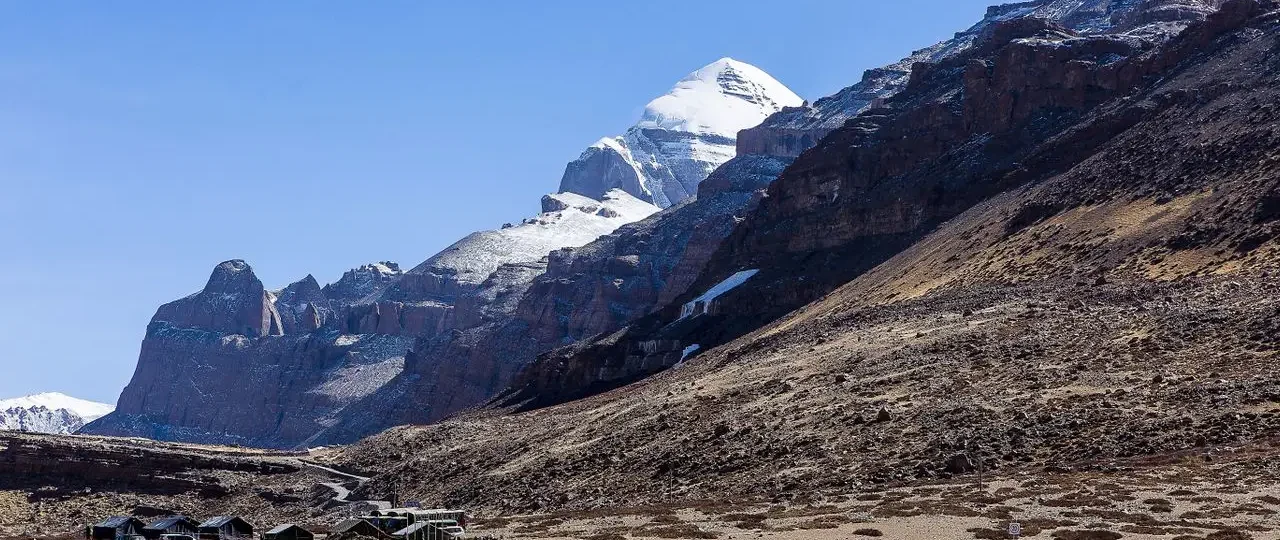
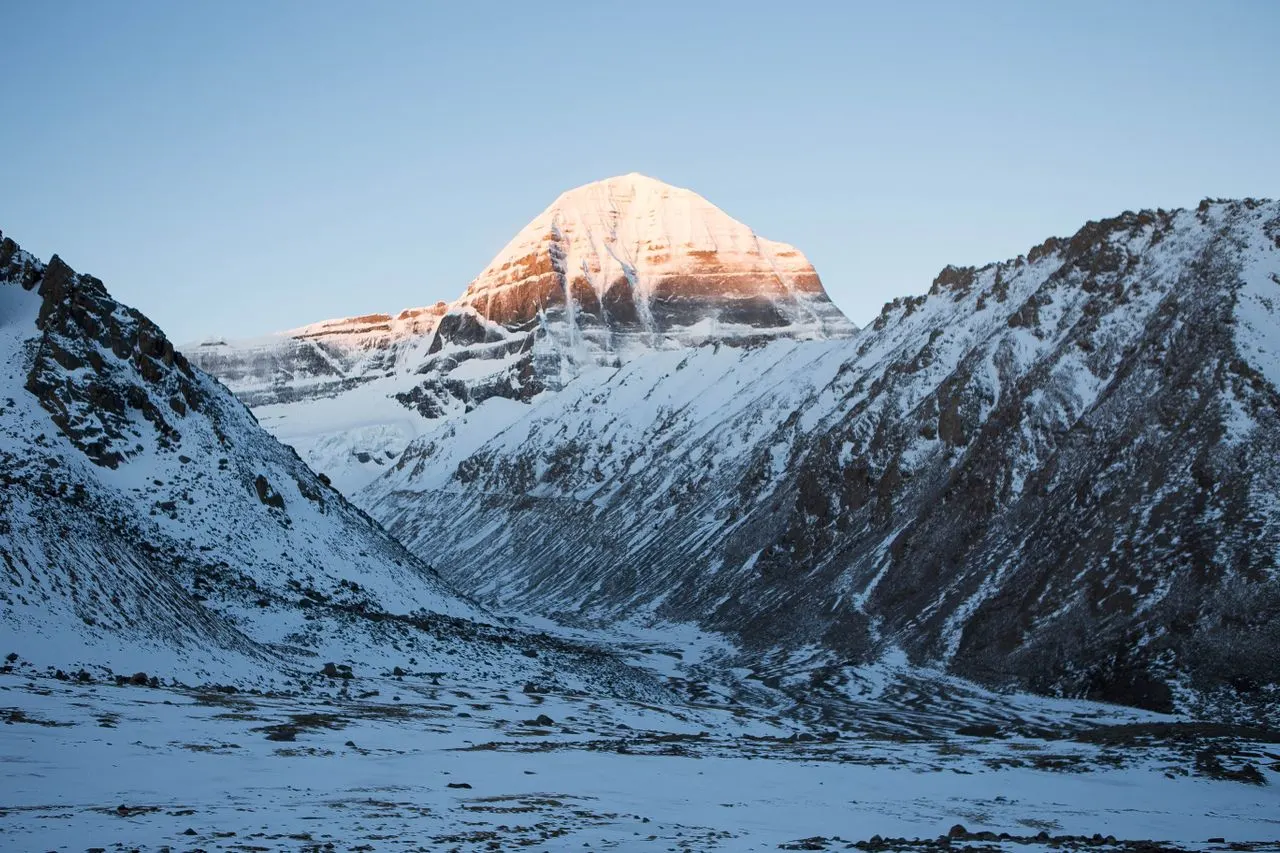
Dirapuk offers the closest and most dramatic view of Kailash’s north face on the entire circuit. The monastery sits directly opposite the mountain, and the evening light on the north face is the image most pilgrims carry home.
Some groups walk the entire distance from Darchen, adding about 7 km to the day.
Day 2: Dirapuk to Zuthulpuk via Dolma La (approx. 20–22 km)
This is the hardest day of the kora, and it deserves its own section.
The trail climbs from Dirapuk to Dolma La Pass at approximately 5,630 metres—a sustained ascent at an elevation where the partial pressure of oxygen is roughly half the sea-level value. The pass is marked by prayer flags, a large boulder associated with the goddess Dolma (Tara), and a small sacred lake, Gauri Kund, just below the pass on the descent side.
After Dolma La, the trail descends steeply to Zuthulpuk (approx. 4,835 m). The descent is rocky and, in snowy conditions, genuinely dangerous. Horses can carry riders on much of the route, but the steep sections immediately after the pass are too dangerous for riding—every pilgrim must walk those portions.
Day 3: Zuthulpuk to Darchen (approx. 8–14 km)
The final day is shorter and generally easier. The trail exits the valley and returns toward Darchen. Some groups walk the entire distance; others cover part of it by vehicle depending on road conditions and group arrangements. The circuit closes at Darchen.
Why Distances Differ Between Websites
Nearly every reliable source puts the total circuit at approximately 52 km. But daily distances reported by operators vary widely—Day 1 might be listed as 12 km, 18 km, or 20 km.
The variation comes from three factors: whether the Darchen–Yam Dwar section is walked or driven (removing about 7 km from the walking total); where vehicle access is permitted on Day 3; and whether the source uses GPS measurement or older route descriptions. The stable figure is the total circuit. Daily numbers should be treated as approximate.
Kailash Parikrama Altitude: The Real Challenge
The difficulty of this pilgrimage is not technical terrain. There is no scrambling, no ropes, no glacier travel on the Outer Kora. The difficulty is altitude.
| Location | Approximate Altitude |
|---|---|
| Darchen | 4,670 m |
| Yam Dwar | Approx. 4,700 m |
| Dirapuk | 5,080 m |
| Dolma La Pass | 5,630 m |
| Gauri Kund | Approx. 5,560 m |
| Zuthulpuk | 4,835 m |
At 5,500 metres, atmospheric and inspired oxygen pressure is about half that at sea level, even though oxygen still makes up roughly 21% of the air. The problem is not that the air contains less oxygen by percentage, but that lower atmospheric pressure reduces the amount available with each breath. This produces hypobaric hypoxia—breathlessness, fatigue, headaches, and impaired physical performance.
The Indian Embassy in Kathmandu specifically advises pilgrims travelling through Nepal to undergo a medical examination, carry altitude sickness medicines and emergency evacuation provisions, and halt at designated acclimatisation points. It also advises medically unfit pilgrims not to undertake the parikrama.
Altitude Sickness: What to Watch For
Altitude sickness is the most common reason pilgrims fail to complete the kora. It is not a fitness problem. Fit, young, strong trekkers get AMS. Unfit older pilgrims sometimes do not. The variables that matter most are rate of ascent, individual susceptibility, and acclimatisation time.
Mild symptoms include headache, nausea, dizziness, fatigue, poor sleep, and loss of appetite. Headache is the most commonly reported complaint, followed by fatigue and nausea. These are common at Darchen and Dirapuk and often improve with rest, hydration, and time.
Severe symptoms suggest High Altitude Cerebral Edema (HACE) or High Altitude Pulmonary Edema (HAPE)—both medical emergencies. Watch for breathlessness at rest, confusion, vomiting that will not stop, loss of coordination, or a bubbling sound in the chest.
Descent is the primary treatment. If severe symptoms appear at Dirapuk, the correct response is to descend, not push on to Dolma La. Every reputable operator should have a clear protocol for this, including oxygen and evacuation arrangements where feasible.
This article does not provide medical advice. Pilgrims should consult a travel medicine doctor before departure. Fitness training does not prevent AMS. Acclimatisation—spending time at intermediate altitudes before the kora—is the only proven method of reducing risk.
Is Kailash Parikrama Difficult?
The honest answer is yes, for most people—but not in the way technical climbing is difficult.
Altitude. Every step on Day 2 happens above 5,000 metres. The body cannot perform at that elevation the way it does lower down.
Day 2. The climb to Dolma La and the descent to Zuthulpuk is a long, hard day. It combines sustained ascent at altitude with a steep, rocky descent that punishes knees and quads. Many pilgrims who feel fine on Day 1 struggle badly on Day 2.
Cold. Even in summer, temperatures at Dirapuk and Dolma La can drop below freezing at night. Wind chill on the pass can be significant.
Consecutive days. Three days of walking at altitude, with basic sleep and simple food, accumulates fatigue.
People who train for months still find Day 2 hard. People who do not train often find it harder.
Can Elderly Pilgrims Complete the Kora?
There is no universal age limit, and blanket age claims are misleading. Some pilgrims in their 60s and 70s complete the kora. Others in their 40s do not.
The relevant questions are health status (cardiac, respiratory, and neurological conditions matter more than age), previous altitude experience, walking ability on consecutive days, and medical clearance from a doctor familiar with high-altitude travel.
Horse and porter support can help, but it does not eliminate the altitude problem. The steep sections after Dolma La must be walked regardless. Operators sometimes accept pilgrims up to 70, but that reflects booking policy, not medical safety.
Horses, Ponies and Porters: What Support Actually Means
Horses and yaks can carry pilgrims and luggage on much of the Outer Kora. They cannot carry riders on the steep sections immediately after Dolma La.
Availability is not guaranteed. Horses must usually be booked in advance through the operator. In busy periods or after snow, availability can be limited. A horse typically comes with a handler, and the animal carries only a small amount of personal luggage—often 3–4 kg.
Indicative rates from official Indian government sources list horse/pony at around RMB 150 per day, yak at RMB 100 per day, and porter at RMB 120 per day. These are indicative and change with season and demand. Private operators often charge considerably more.
Accommodation: What to Realistically Expect
Accommodation on the kora is basic. At Dirapuk and Zuthulpuk, pilgrims stay in shared dormitories in local guesthouses—shared dormitory-style lodging with simple beds and blankets. Bathing is usually not available because of the cold. Some guesthouses provide warm water for washing.
At Darchen, basic hotels are available before and after the kora. At Lake Manasarovar, accommodation may be in guesthouses or tented camps depending on the itinerary.
This is not a luxury trek. The standard is functional shelter, not comfort. Food is simple—Tibetan noodles, thukpa, rice, vegetables, momos, and hot tea. Small tea houses along the route sell water, snacks, and basic hot food. Water should be treated or purchased in sealed bottles.
2026 Border Update: What Changed and What It Means
This is the most important practical section of this guide.
On 26 August 2026, devastating flash floods struck Nepal’s Rasuwa district, destroying roads, bridges, and border infrastructure along the Nepal–Tibet corridor. The Rasuwagadhi–Kerung crossing—the main overland gateway used by pilgrims travelling to Mount Kailash through Nepal—was shut, with no reopening date announced. TAAN (Trekking Agencies’ Association of Nepal) confirmed that the Kailash tour via the Rasuwagadhi/Kerung border crossing is totally affected and closed, with damaged approach roads.
This directly affects anyone planning an overland Kailash Mansarovar Yatra from Nepal. The traditional route—Kathmandu to Rasuwagadhi to Kerung to Darchen—is not operational.
The Simikot–Hilsa helicopter route in far-western Nepal is an alternative approach. Pilgrims fly from Nepalgunj to Simikot, then helicopter to Hilsa on the Tibetan border, then drive to Mansarovar and Darchen. This route is shorter on road travel but highly weather-dependent—cloud in the Karnali valley can delay flights for a day or more.
Any traveller planning a 2026 or 2027 Kailash pilgrimage from Nepal must reconfirm the current border status with a licensed operator before making any irreversible bookings. Route information that was accurate in early 2026 may not reflect conditions after the August floods.
Permits and Documents: What You Need
Permit requirements depend on nationality and route.
For all foreign nationals entering Tibet:
-
Tibet Travel Permit (TTP) — arranged through a licensed Tibetan operator. Approximately USD 80–100.
-
Aliens’ Travel Permit — required for restricted areas including Mansarovar and Darchen. Approximately USD 50.
-
Military Permit — for the Ngari Prefecture where Kailash is located. Approximately USD 60.
-
Chinese Group Visa — arranged through the operator.
Permit and visa costs typically total USD 280–350 per pilgrim. Four permits are needed for the Kailash region, and they take a minimum of 45 days to process.
For Indian citizens: The official government route operates through Lipulekh Pass in Uttarakhand and Nathu La in Sikkim. The 2026 yatra offered 10 batches on each route, with journeys taking roughly 21–22 days. Indian citizens must apply online and are selected through a computerised draw of lots, with mandatory medical screening. Foreign nationals and OCI cardholders are not eligible for the official route.
Kailash Parikrama Cost: What Determines the Price
There is no single “average” price for Kailash Parikrama. Costs vary significantly by route, group size, nationality, and season.
Official Indian government route: The estimated expenditure for 2026 was approximately ₹2.09 lakh per person for the Lipulekh route and ₹3.31 lakh for Nathu La. This includes visa fees, mandatory medical examinations in Tibet, and specialised logistics for the high-altitude stay.
Private operator routes via Nepal: Advertised packages can start at roughly ₹2.3–3 lakh per person for Indian pilgrims. Some operators quote around US$2,200–3,000** for land packages, while helicopter-based journeys can run to roughly **US$3,500–4,500 or more. Flights to Kathmandu, insurance, personal expenses, porter or pony charges, and emergency evacuation may be extra.
Major cost components include: permits and group visa (USD 280–350), Tibet ground transport (USD 450–900), Nepal transport (USD 90–1,100), accommodation (USD 280–820), meals (USD 140–320), guide services (USD 280–540), and parikrama support (USD 120–220).
Travel insurance is essential and almost always excluded. It should be rated for trekking above 6,000 m, with Tibet named in the covered territory and a dedicated evacuation benefit.
What Happens If You Cannot Complete the Kora?
This should be discussed with the operator before booking. The answer depends on where you stop and why.
If altitude sickness develops at Dirapuk, the correct response is usually descent. A vehicle may be able to reach Dirapuk or a nearby point, but arrangements vary. If the group is already on Day 2 and a pilgrim cannot continue past Dolma La, the descent to Zuthulpuk is the only option—there is no easy shortcut.
The important point is that you should not assume a vehicle can pick you up anywhere on the route. The terrain is remote, roads are limited, and evacuation arrangements depend on the operator’s resources and current conditions. Ask specific questions before you book: What is the evacuation protocol? Is there oxygen on the vehicle? Who makes the decision to turn back? What happens to a pilgrim who cannot continue?
Choosing an Operator: A Practical Checklist
No operator should claim to be the “best” or “safest.” Those claims cannot be independently verified. What can be checked is whether the operator answers these questions directly and in writing:
-
Permits. Does the operator arrange the full permit stack—TTP, Aliens’ Permit, Military Permit, Group Visa—and can they explain the process clearly?
-
Route. Does the itinerary match the route you want? Is the 2026 border status confirmed in writing?
-
Acclimatisation. How many days are built in at intermediate altitudes before the kora?
-
Emergency procedures. What oxygen, medical support, and evacuation arrangements are in place? Who makes the call to turn back?
-
Guide support. How many guides for how many pilgrims? Are they trained in altitude illness recognition?
-
Inclusions and exclusions. What is not included? Horse/porter hire, insurance, personal expenses, and tips are commonly excluded.
-
Cancellation and disruption policy. What happens if the border closes, the route changes, or the trip is cancelled?
-
Current border confirmation. In 2026, this is non-negotiable. Ask for written confirmation of the current border status and the intended crossing point.
Wonder Hikes Nepal
Wonder Hikes Nepal arranges Kailash Mansarovar Yatra logistics from Kathmandu, including permit processing, transport, and itinerary planning. For 2026, given the closure of the Rasuwagadhi–Kerung crossing, travellers should contact Wonder Hikes Nepal to confirm the current status of the route they intend to use, the alternative options available, and the realistic timeline for any changes.
The company can provide information on current border and route status, permit requirements for different nationalities, itinerary options and acclimatisation arrangements, and preparation guidance. Contact Wonder Hikes Nepal directly for current information before making any booking decisions. Route conditions in 2026 are changing, and confirmation in writing is essential.
FAQ
1.How long is Kailash Parikrama?
The total circuit is approximately 52 km, with about 42 km typically walked on foot. Most groups drive the first 7 km from Darchen to Yam Dwar.
2.How many days does the kora take?
The walking kora is normally completed over three days: Darchen to Dirapuk, Dirapuk to Zuthulpuk via Dolma La, and Zuthulpuk to Darchen.
3.How difficult is Kailash Parikrama?
The terrain is not technically difficult, but altitude, cold, and the long Day 2 over Dolma La make it physically demanding. Fitness helps; acclimatisation is more important.
4.What is the highest point?
Dolma La Pass, at approximately 5,630 metres.
5.What is Dolma La Pass?
Dolma La is the pass that separates the Dirapuk valley from the Zuthulpuk valley. It is the spiritual climax of the kora and the most physically demanding section.
6.Can elderly people do it?
Some can, with medical clearance and appropriate preparation. Age alone is not the deciding factor.
7.Can I use a horse?
Yes, for much of the route, if booked in advance. Horses cannot carry riders on the steep sections after Dolma La.
8.What happens if I get altitude sickness?
Mild symptoms may improve with rest and hydration. Severe symptoms—confusion, breathlessness at rest, vomiting—require descent.
9.What is the best time?
May to September, with June, July, and August typically offering the most reliable weather. The Saga Dawa Full Moon on 31 May 2026 is the peak spiritual date.
10.Is Kailash Parikrama from Nepal possible in 2026?
The Rasuwagadhi–Kerung overland crossing has been closed since August 2026 floods. The Hilsa–Simikot helicopter route may be an alternative, but it is weather-dependent. Confirm current status with a licensed operator.
11.What permits are required?
Tibet Travel Permit, Aliens’ Travel Permit, Military Permit, and Chinese Group Visa. Requirements vary by nationality.
12.What is the difference between Kora and Parikrama?
They mean the same practice. “Kora” is the Tibetan term; “Parikrama” is the Sanskrit term.
13.What is Outer Kora vs Inner Kora?
The Outer Kora is the standard 52 km circuit. The Inner Kora is a 34 km route around the south face, much more difficult and traditionally reserved for pilgrims who have completed 13 Outer Koras.
14.How much does Kailash Parikrama cost?
Costs vary widely. The official Indian government route costs approximately ₹2.09 lakh (Lipulekh) or ₹3.31 lakh (Nathu La). Private operator routes via Nepal typically range from USD 2,200 to 4,500 depending on route and service level.
15.Where does the Parikrama start?
The traditional start is Yam Dwar, about 7 km from Darchen. Most groups drive to Yam Dwar.
Final Thoughts
Kailash Parikrama in 2026 is a journey shaped by two forces: the spiritual pull of the Fire Horse Year and the practical disruption of the Nepal border closure. The mountain itself has not changed. The 52-kilometre circuit, Dolma La at 5,630 metres, the basic guesthouses at Dirapuk and Zuthulpuk—these remain what they have always been.
What has changed is the logistics. The Rasuwagadhi crossing is closed. Alternative routes exist but carry their own risks and uncertainties. Anyone planning this pilgrimage must begin with a single question: which route is actually operational right now?
Answer that first. Everything else—the training, the packing, the acclimatisation—follows from there.