Introduction to Climbing in Nepal
Climbing in Nepal covers a wider range than most people expect. At one end are 6,000-metre trekking peaks that a fit trekker can climb with a guide and a few days of rope training. At the other is Everest, which needs a government permit that costs US$15,000 in spring before any other expense.
This guide explains the difference, compares the peaks beginners choose, and walks through permits, costs, seasons, fitness, gear and safety so you can choose the right first climb. It also covers rock climbing near Kathmandu for anyone who wants to practise before heading high.
Climbing in Nepal at a Glance
The short answer is that mountain climbing here falls into three levels. Each has a different permit system, cost and skill requirement.
| Type | Typical height | Permit from | Skill level | Example peaks |
|---|---|---|---|---|
| Trekking peaks (NMA peaks) | About 5,500 to 6,500 m | Nepal Mountaineering Association | Beginner to intermediate, with a guide | Mera Peak, Island Peak, Lobuche East |
| Expedition peaks | Above about 6,500 m | Department of Tourism | Advanced, with a liaison officer and full team | Manaslu, Everest |
| Rock and gym climbing | Near Kathmandu and Pokhara | No mountain permit for the crags | All levels, usually with a guide | Nagarjun, Hattiban |
Trekking Peaks vs Expedition Peaks
The word “trekking peak” is misleading. It does not mean a walk. It is an administrative category, and several trekking peaks involve crampons, fixed ropes and summit days of 10 to 14 hours. What the category gives you is a simpler permit process and lower fees than a full expedition.
The Nepal Mountaineering Association, or NMA, administers the trekking peaks, which sit between roughly 5,500 and 6,500 metres. Counts differ, with sources giving 27 to 33 peaks depending on how they are listed. Everything above that, and the eight-thousanders, is permitted by the Department of Tourism. Lobuche shows how the system works in practice: the NMA classifies Lobuche East as a trekking peak and Lobuche West as an expedition peak, and the Wikipedia entry for Lobuche explains the permit split.
| Feature | Trekking peaks | Expedition peaks |
|---|---|---|
| Permit office | Nepal Mountaineering Association | Department of Tourism |
| Liaison officer | Not required below 6,500 m | Required |
| Typical fee | About US$350 in spring, US$175 in other seasons | From hundreds to US$15,000 per climber |
| Applying | Through a registered agency | Through a registered agency, with a route plan and insurance for staff |
| Who it suits | First-time and intermediate climbers with a guide | Experienced mountaineers on organised expeditions |
The Best Peaks for Beginners
Three peaks dominate first-time peak climbing in Nepal: Mera Peak, Island Peak and Lobuche East. All three reach around 6,000 metres, and each can be combined with a trek to the Khumbu or Hinku valleys. Heights vary by a few dozen metres between sources, so treat them as approximate.
| Peak | Height | Region | Technical level | Typical days | Summit day |
|---|---|---|---|---|---|
| Mera Peak | About 6,470 m | Hinku valley | Low, a roped glacier walk in crampons | 17–21 | Long, often 8 to 14 hours round trip from high camp |
| Island Peak | About 6,160–6,190 m | Khumbu | Moderate, with a steep headwall on fixed ropes | 16–19 | 10 to 14 hours from base camp |
| Lobuche East | About 6,090–6,120 m | Khumbu | Moderate to higher, snow and ice on fixed ropes | 17–20 | About 10 hours |
| Yala Peak | Just under 6,000 m | Langtang | Low, mostly a walk | Shorter itineraries | 5 to 6 hours from base camp |
Alpine grades vary between operators, and you will see Island Peak rated PD or PD+ and Lobuche East rated PD+ or AD-. Use the grade as a rough guide, and judge the climb by the actual skills required.
Mera Peak: the highest trekking peak
Mera is the highest trekking peak in Nepal and technically the simplest of the three. The route is mostly a glacier walk with crampons, an ice axe and roped travel where required, and its challenge is altitude and the length of summit day rather than steep climbing. On a clear day, the summit gives a view of five 8,000-metre peaks, including Everest. It suits strong trekkers who want a first 6,000-metre summit with limited technical demands. Our Mera Peak guide covers the route in detail.
Island Peak: the classic first technical climb
Island Peak, also called Imja Tse, combines glacier travel with a steep headwall of roughly 100 metres on fixed ropes and an exposed summit ridge. It is where many climbers learn rope work and jumar use, and operators typically build a training day at base camp into the itinerary. The headwall is where under-prepared climbers most often turn back, and queues can form on the fixed ropes in peak season. See our Island Peak guide for the route and what to expect.
Lobuche East: steeper and more exposed
Lobuche East is usually the second or third peak climbers choose. It has a rock and scree section, snow and ice on fixed ropes higher up, a false summit and an exposed ridge. Many climbers find it harder than Island Peak, with a shorter but steeper summit day of about 10 hours. If you lack snow experience, operators suggest a pre-climb training session at base camp or choosing Mera first. Our Lobuche Peak climbing cost guide breaks down the budget.
Yala Peak: a gentle introduction
Yala Peak in the Langtang valley is a non-technical climb that operators often recommend for people trying Himalayan altitude for the first time. The summit hike from base camp takes about five to six hours, and crampons help depending on snow. It is lower than the three peaks above, and it makes a good choice if you want a taste of peak climbing without a long expedition.
Mera, Island or Lobuche East: How to Decide
All three are 6,000-metre peaks, but they test different things. Mera is physically harder because it is the highest and has a long summit day, yet it needs the fewest technical skills, so it suits strong trekkers with little climbing experience. Island Peak is technically harder than Mera, with its steep headwall and fixed ropes, which makes it a good place to learn. Lobuche East asks for the most, with steeper snow and ice, a false summit and an exposed ridge, though on a shorter day.
If you have never used crampons, start with Mera, or with Island Peak plus a training day. If you already handle ropes and want a more alpine feel, Lobuche East is the better next step. And if time or budget is tight, Yala keeps the commitment low.
What a Mera Peak Climb Looks Like
Most Mera itineraries follow the same shape: a flight to Lukla, a trek over the Zatra La pass through the Hinku valley, a rest and training day at Khare, then a two-stage climb to high camp and the summit. Altitudes vary slightly between operators, so the numbers below are typical rather than exact.
| Stage | Plan | Approx. altitude |
|---|---|---|
| Days 1–2 | Fly to Lukla and walk to Chutanga | About 3,000 m |
| Days 3–4 | Cross the Zatra La pass to Thuli Kharka | Pass about 4,600 m; Thuli Kharka about 4,300 to 4,400 m |
| Days 5–6 | Walk through Kothe to Thangnak | Kothe about 4,182 m; Thangnak about 4,350 m |
| Day 7 | Trek to Khare, then rest and training with crampons and ice axe | About 5,000 m |
| Day 9 | Climb via Mera La to Mera base camp and on to high camp | Base camp about 5,350 m; high camp about 5,780–5,800 m |
| Summit day | Leave high camp before dawn, summit, then descend to Khare | Summit about 6,470 m |
| Return | Walk back through Kothe and Thuli Kharka to Lukla | Back down to 2,800 m |
Good itineraries include a spare day for weather between high camp and the summit, because a clear window is not guaranteed.
What an Island Peak Climb Looks Like
Island Peak is often climbed after a trek along the Everest Base Camp route, so the itinerary builds altitude gradually. The final stages go from Chhukung (about 4,730 metres) to Island Peak base camp (reported between about 5,100 and 5,200 metres), then up to a high camp at roughly 5,500 to 5,600 metres. Summit day starts around midnight, crosses glacier and the roughly 100-metre headwall on fixed ropes, and finishes along an exposed ridge to the summit at about 6,165 to 6,189 metres. Many operators add a preparation day at base camp to practise ascenders, ropes and crampons, and to check each climber’s skills before the summit push.
Combining a Trek With a Peak
Many climbers pair a peak with a trek, because the walk in builds altitude experience. Island Peak is often added to the end of an Everest Base Camp trek, and some operators combine Mera and Island Peak in one itinerary of about 19 to 22 days, crossing the Amphu Laptsa pass between the two valleys. The trade-off is time and cost: a combined trip is longer, tougher and more expensive than a single peak, and a weather delay can use up your spare days. If this is your first peak, choose one objective and do it well.
Expedition Peaks and Eight-Thousanders
Expedition peaks need serious experience and a full support team. The Department of Tourism issues the permits, each expedition must appoint a government liaison officer, and extra fees apply, such as insurance for support staff and a garbage deposit or clean-up fee. Operators quote total expedition budgets from about US$8,000 up to well over US$90,000, depending on the mountain and the level of service.
Nepal revised its royalties from 1 September 2025. Reported rates for foreign climbers include the following.
| Peak band | Spring | Autumn | Winter / summer |
|---|---|---|---|
| Everest, normal route | US$15,000 | US$7,500 | US$3,750 |
| Other 8,000 m peaks, excluding Everest and Manaslu | US$3,000 | US$1,500 | US$750 |
| 7,001 to 7,500 m | US$800 | US$400 | US$200 |
| Below 6,500 m | US$350 | US$175 | US$175 |
The Everest increase, the first since 2015, was reported by the Kathmandu Post, which also noted that every two climbers on a mountain above 8,000 metres must hire a guide under the revised rules. Reports also say that 97 peaks in far-western Nepal were opened for climbing without a permit fee from mid-2025, but check the current status before planning one.
What it takes to climb Everest
Everest is not a beginner objective, and the permit is only one part of the picture. About 300 permits are issued each year, applications go through a registered agency, and expeditions travel with a liaison officer and a large Sherpa support team. The revised rules also require insurance cover for support staff, restrict items that are not listed in the permit documents, and require biodegradable waste bags above 8,000 metres as part of a drive against garbage on the mountain. Spring is the main window, when summit weather is most reliable. Climbers usually build a record on 6,000-metre peaks and then on higher expedition peaks before they consider Everest.
Permits and Rules for Climbing in Nepal
Permits are the least flexible part of climbing in Nepal, and the rules have changed recently, so confirm current details with a registered agency.
- Apply through an agency. Solo applications for NMA peaks are not allowed, and an agency handles the paperwork, which includes your passport details, photos and itinerary.
- Trekking peak fees. The revised schedule is reported at US$350 in spring and US$175 in autumn and the off-season for most NMA peaks. Singu Chuli and Chulu East are reported at US$500 in spring and US$250 otherwise. Some operator pages still list the older US$250, US$125 and US$70 figures, so check which schedule your agency uses.
- Trekking permits as well. You also need the regional trekking permits for the area you walk through, such as the Khumbu local entry fee. Our trekking permits guide explains those.
- Licensed guide. Operators state that a government-licensed climbing guide is mandatory for NMA trekking peaks, and solo climbing is not permitted.
- Validity. A trekking peak permit is often valid for about a month from issue, which gives some room for weather delays.
- Liaison officer. Not required for peaks under 6,500 metres, but required for expedition peaks.
How Much Peak Climbing Costs
Costs separate into permits, guided packages and personal spending.
- Permit. From US$175 to US$350 for most trekking peaks, depending on season.
- Guided package. Operator guides in 2026 quote roughly US$2,200 to US$3,500 for a guided Island Peak climb and US$2,699 to US$3,500 for a guided Mera Peak climb of about 17 days, including permits, guides, flights and equipment. Packages differ in what they include, so compare inclusions, not just prices.
- Personal costs. Insurance that covers high-altitude climbing and helicopter evacuation, tips for guides and porters, equipment you buy, and food and drinks.
For expeditions, the permit is only the start, and the total runs far higher once the liaison officer, support staff, oxygen and logistics are included.
Insurance and evacuation
Check that your policy covers the maximum altitude of your climb, not just trekking altitude, and that it includes helicopter evacuation. Many standard travel policies stop below the height of a 6,000-metre summit. Keep your policy details and emergency contact numbers with your guide, and ask your agency how it handles a rescue.
The Best Season for Peak Climbing in Nepal
Spring (March to May) and autumn (September to November) are the main windows for almost every peak. Weather is stable, skies are clear and conditions are safer. Summit-day cold in winter is severe, and the monsoon brings cloud and heavy snow, so few groups climb then.
| Season | What to expect |
|---|---|
| Spring (March to May) | Most popular for Mera and Island Peak, with warmer temperatures and the highest permit fees. May is the main window for Everest expeditions. |
| Autumn (September to November) | Stable and clear after the monsoon, with lower permit fees and colder nights. |
| Winter (December to February) | Severe cold on summit days, fewer services, but quiet and the lowest fees. |
| Summer and monsoon (June to August) | Cloud, snow and poor visibility, so few climbs. |
Fitness and Training
The biggest mistake first-time climbers make is underestimating the length of the summit day. A trekking peak summit day can run 10 to 14 hours, usually starting around midnight to 2 a.m., and you do it after days of altitude. Fitness for a Himalayan climb means endurance, not speed.
- Build aerobic base. Regular long hikes and cardio sessions for several months before the climb.
- Practise with a loaded pack. Back-to-back long days on hills or stairs.
- Train for cold and early starts. Practise waking and moving at night in cold weather.
- Do a trek first if you can. A trek such as Everest Base Camp builds altitude experience before you attempt a climb.
A simple training pattern
A sensible plan runs for four to six months. In the first stage, build a base with three or four aerobic sessions a week and one long hike. In the middle stage, lengthen the long hike to five or six hours with a weighted pack, and add stair or hill sessions. In the final month, practise back-to-back long days, wear your boots and pack, and then ease off in the last week so you arrive rested. Adjust the plan to your starting fitness, and talk to a doctor if you have heart, lung or other health concerns. Fitness does not stop altitude illness, which is covered below, so build in acclimatisation days regardless of how fit you are.
Skills and Gear
You do not need to be an expert for a trekking peak, but you need basic skills with the equipment: walking in crampons, using an ice axe, clipping into fixed ropes and using an ascender such as a jumar. Operators often include a training day at base camp, and a two-day session is recommended if you lack snow experience.
- Technical equipment. Crampons, ice axe, harness, helmet, ascender and carabiners. These are often available to rent in Kathmandu or from your agency.
- Boots. Mountaineering boots that fit crampons and keep your feet warm, which you should wear in before the trip.
- Clothing. A layering system with a down jacket, a hard shell, insulated gloves and a warm hat, plus goggles or sunglasses.
- Personal items. A headlamp with spare batteries, sun protection and a sleeping bag suited to base camp temperatures.
What Summit Day Feels Like
Summit day on a trekking peak starts in the dark, usually between midnight and 2 a.m. You eat a light breakfast, check your harness and crampons by headlamp and start walking in a roped team behind your guide. The first hours cover rock, scree or glacier in extreme cold. Fixed-rope sections and the ridge come later, often as the sun rises. The summit is a short stop, because wind and cold limit how long you can stay and because the descent is just as demanding.
Expect to be back at high camp or base camp in the afternoon after a 10 to 14 hour day, and to rest before walking down. Guides often set a turnaround time, and if you have not reached the summit by then, or if the weather turns, you go down. Respecting that rule is part of climbing safely.
Altitude Safety on a Climb
Altitude is the main safety issue, and it affects fit people as much as anyone. The CDC’s guidance on high-altitude travel recommends that, above 3,000 metres, your sleeping altitude rises by no more than about 500 metres a day, with an extra rest day for every additional 1,000 metres gained. It also notes that training and fitness do not affect your risk.
- Know the symptoms. Headache with nausea, dizziness, fatigue or loss of appetite signals acute mountain sickness.
- Watch for danger signs. Confusion, loss of balance and unusual drowsiness can signal brain swelling, and chest congestion with a worsening cough and breathlessness can signal fluid in the lungs. Both need urgent descent.
- Do not climb higher with symptoms. Rest, and descend if they get worse.
- Speak up early. Tell your guide as soon as you feel unwell.
Guides, Sherpas and Your Team
A licensed guide is both a rule and a safety net. On a trekking peak, the guide fixes ropes where needed, judges snow and weather, sets the pace and decides when to turn back. On an expedition, a larger team of climbing Sherpas, cooks and porters supports the climb, and the revised rules require insurance for support staff and a guide for every two climbers on an 8,000-metre peak.
How to choose an agency
Because permits, guides and logistics all go through the agency, the choice matters. Ask these questions before you pay.
- Is the agency registered, and will the guide hold a valid licence?
- What is the guide-to-client ratio on summit day?
- How many acclimatisation days and spare days are built into the itinerary?
- Is there a training day at base camp, and is equipment checked?
- Which permits, flights, equipment rental and meals are included, and what costs extra?
- What is the emergency and evacuation plan, and how is insurance handled?
Rock Climbing and Gyms Near Kathmandu
Climbing in Nepal is not only high-altitude. Several limestone crags near Kathmandu offer sport and top-rope climbing on short routes. Nagarjun Forest Reserve, inside Shivapuri Nagarjun National Park, is the closest, with cliffs about 20 to 30 minutes from the city. Hattiban, around an hour away, has taller faces and suits more advanced climbers. Bimal Nagar, on the road to Pokhara, is another crag guides use. Most routes are moderate, and guided day trips are the usual way to climb.
Some operators also list climbing gyms in Kathmandu, which are useful for building rope skills before a trek. A day at the crag is a good way to practise knots, belaying and movement on rock before a Himalayan climb.
Which Peak Should You Choose First?
| If you are… | Consider |
|---|---|
| A strong trekker with no climbing experience | Mera Peak, or Yala Peak for a gentler start |
| Wanting to learn rope skills on a classic route | Island Peak |
| Comfortable on snow and wanting a steeper climb | Lobuche East |
| Limited time and a modest budget | Yala Peak, or a shorter peak with a guide |
| An experienced mountaineer | A higher trekking peak, then an expedition peak such as Manaslu |
For a wider view of peaks, permits and preparation, see our guide to mountaineering in Nepal.
Common Mistakes When Planning a Climb
- Treating “trekking peak” as easy. Island Peak and Lobuche East involve fixed ropes, crampons and long summit days.
- Skipping acclimatisation. Short itineraries raise the risk of altitude illness, and a rushed schedule is the most common reason climbers fail.
- Not learning the equipment. Arriving at base camp without having used crampons or an ascender wastes the summit window.
- Comparing prices without inclusions. Check permits, flights, equipment, guide ratio and rescue cover.
- Using outdated permit information. Fees were revised in 2025, and older figures still appear online.
- Underestimating the cold. Summit mornings are very cold, so pack warm layers and spare gloves.
- Leaving no spare day. A weather window may not come on your first day at high camp.
Climbing Responsibly
Carry out what you carry in, including used batteries, tape and food wrappers. The garbage rules on Everest, such as biodegradable waste bags above 8,000 metres and limits on items not listed in the permit, show how serious waste has become, and the same standards make sense on trekking peaks. Hire local guides and porters through registered agencies, check that staff are properly equipped and insured, and respect local customs and the sacred status many mountains hold for the people who live beside them.
Frequently Asked Questions About Peak Climbing in Nepal
- What is the easiest peak to climb in Nepal? Yala Peak and Mera Peak are the most common first choices. Both are mainly non-technical, though Mera has a long, high summit day.
- Do I need climbing experience for peak climbing? Not for the easiest trekking peaks, but you need good fitness and willingness to learn basic skills such as crampons and fixed ropes. Island Peak and Lobuche East are better with some previous snow or rope experience.
- How much does a climbing permit cost in Nepal? Most trekking peaks reportedly cost US$350 per person in spring and US$175 in other seasons under the schedule that began in 2025. Everest costs US$15,000 in spring, and older figures still appear on some websites.
- Do I need a guide for peak climbing? Operators state that a licensed guide is mandatory for trekking peaks, and expedition peaks need a full team and a liaison officer. Confirm the current rule with your agency.
- What is the difference between a trekking peak and an expedition peak? Trekking peaks are administered by the Nepal Mountaineering Association, sit roughly between 5,500 and 6,500 metres and need simpler permits. Expedition peaks are above that and are permitted by the Department of Tourism with a liaison officer.
- When is the best time for climbing? Spring (March to May) and autumn (September to November) offer the most stable weather. Winter is very cold and the monsoon brings cloud and snow.
- How long does it take to climb Mera Peak or Island Peak? Guided itineraries typically run about 16 to 21 days, including the trek in and acclimatisation. The summit day itself usually takes 10 to 14 hours.
- How much does it cost to climb Island Peak or Mera Peak? Operator guides in 2026 quote roughly US$2,200 to US$3,500 for guided packages, with permits of US$175 to US$350 on top of or included in the package. Compare inclusions carefully.
- Is peak climbing in Nepal dangerous? Altitude illness, cold, avalanche and crevasse hazards are real, which is why you need acclimatisation days, a licensed guide and insurance that covers helicopter evacuation. Choosing a peak that matches your experience reduces the risk.
- Can I do rock climbing in Nepal? Yes. Limestone crags such as Nagarjun and Hattiban near Kathmandu offer guided rock climbing, and some operators list climbing gyms in the city.
Plan Your Climb With Wonder Hikes Nepal
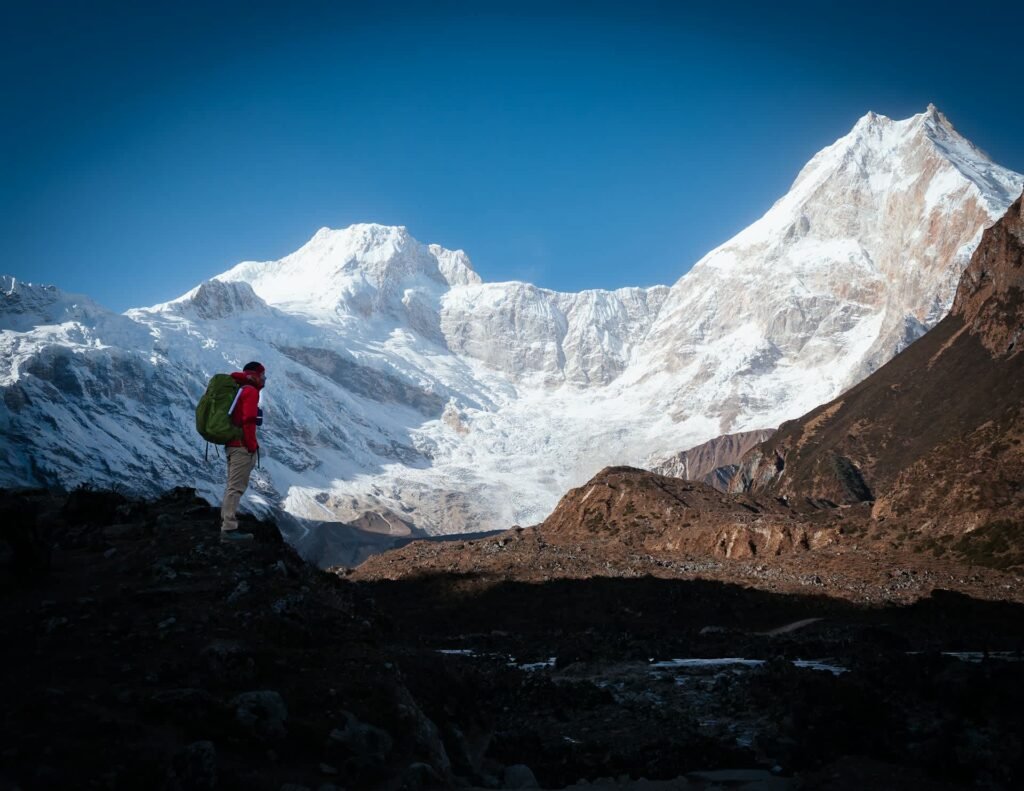
Choosing the right peak is the hardest part, and it depends on your fitness, experience, budget and dates. Climbing in Nepal rewards a realistic first goal and a team that plans for weather, altitude and permits from the start.
To get a plan that fits, visit our climbing page or contact Wonder Hikes Nepal and share:
- The peak or peaks you are considering, and your preferred season.
- Your trekking and climbing experience, and any altitude history.
- How many days and what budget you have.
- Your group size and any fitness concerns.
Send us those details, and we will help you choose a peak and an itinerary that gives you the best chance of reaching the summit safely.
Ready to plan your trek?
Tell us your dates and group size. We reply on WhatsApp within a few hours.