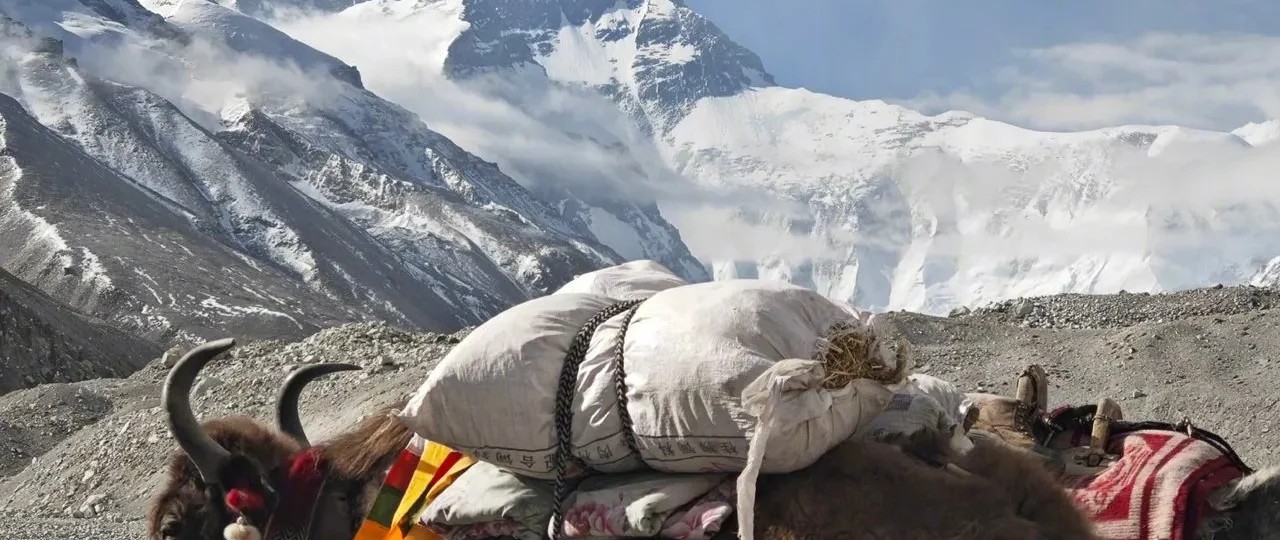
Animals That Live on Mount Everest
Animals that live on Mount Everest exist in layers you will walk straight through — if you know where to look. Most trekkers fix their eyes on the summit and miss everything happening at their feet.
Here is the first thing to unlearn: Everest is not a single habitat. It is a 6,000-metre vertical wilderness, and every altitude band supports a different community of creatures. The forests below Namche hold red pandas and black bears. The alpine slopes above Tengboche belong to Himalayan tahr and the occasional snow leopard. And the high nival zone, above 5,000 metres, is patrolled by choughs, pikas, and a single species of jumping spider that has made a permanent home higher than any other animal on Earth.
Sagarmatha National Park, the protected area that wraps around Everest’s southern flank, records more than 30 mammal species and over 200 bird species across its 1,148 square kilometres. The park receives between 50,000 and 60,000 foreign trekkers each year. Almost none of them come for the wildlife. That is your advantage.
This guide is written by the team at Wonder Hikes Nepal for trekkers who want more than a summit photo. We will show you which animals actually live here, where they live, and how to observe them without disturbing the ecosystem that makes Everest worth protecting.
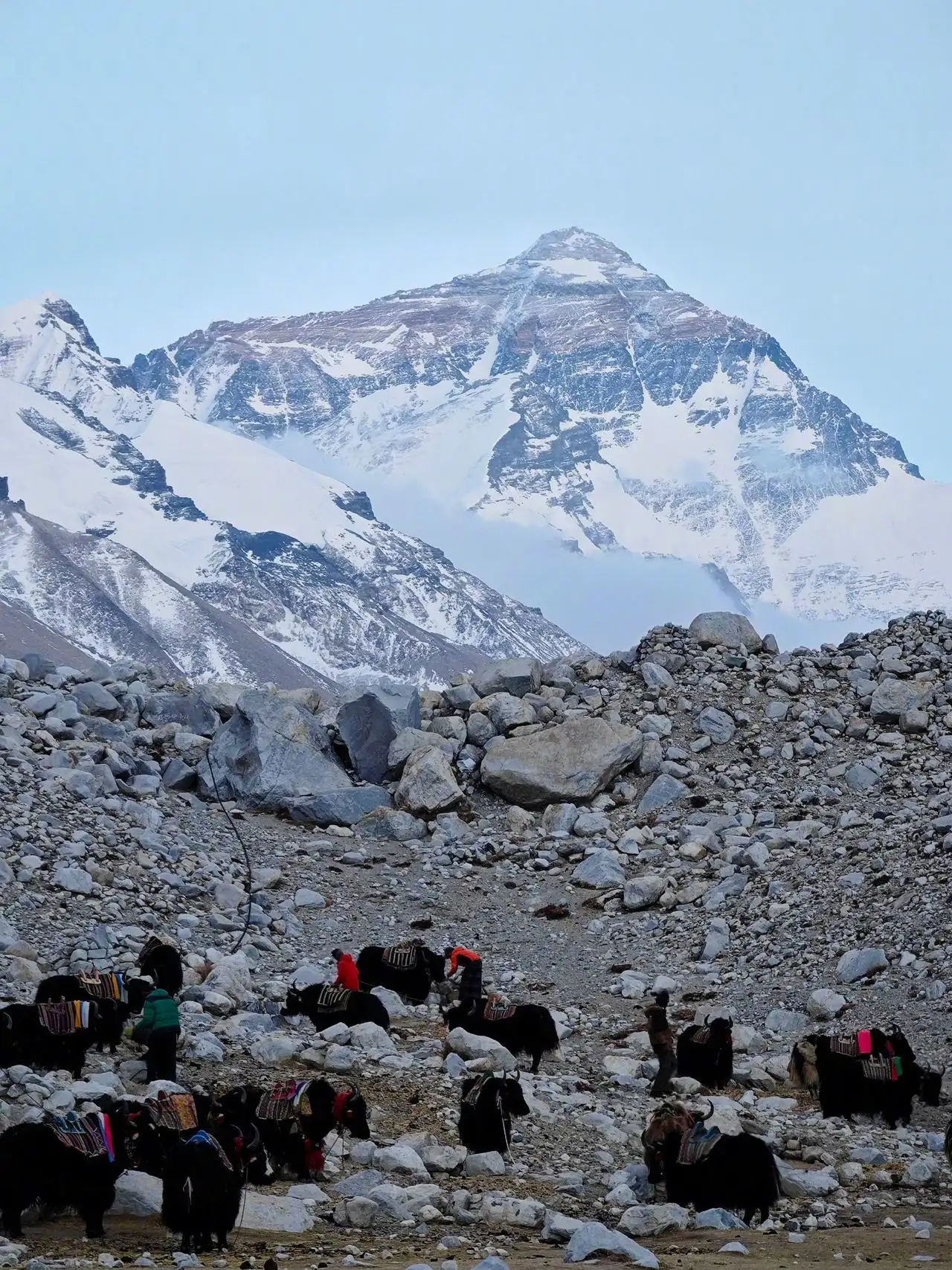
Altitude Is Everything: Mapping Everest’s Wildlife Zones
Understanding Everest’s wildlife begins with a simple rule: the higher you go, the fewer species you find — but the ones that remain are extraordinary. Ecologists divide the mountain’s southern approach into four rough bands.
The Forest Belt (2,800–4,000 m): Where the Wildlife Is Densest
The trek from Lukla to Namche cuts through the only closed-canopy forest in the park. Silver fir, Himalayan birch, and rhododendron create a habitat that shelters the greatest concentration of wildlife on the Everest trail.
This is where you have realistic chances of seeing Himalayan musk deer, a primitive, antler-less deer whose males carry elongated canine teeth and a scent gland that has made them a target for poachers for centuries. A 2018 survey in Sagarmatha recorded 52 direct musk deer observations and 1,366 pellet groups, confirming that the species persists in the park despite ongoing pressure.
The forest belt is also the only place in the Everest region where you might glimpse a red panda. These bamboo specialists are classified as Endangered, with fewer than 10,000 mature individuals globally. Nepal is thought to hold between 500 and 1,000 red pandas, concentrated mainly in Sagarmatha and the Kanchenjunga conservation area. They are nocturnal and secretive. Your odds are low — but the bamboo understory between Monjo and Namche is the right habitat.
Himalayan black bears also range through these forests, though they are shy and rarely seen. The Himalayan monal — Nepal’s national bird, the Danphe — is far more visible, its iridescent plumage flashing through rhododendron thickets at dawn.
The Alpine Scrub (4,000–5,000 m): Tahr Country — and the Ghost That Hunts Them
Above the treeline, the landscape opens into grazing land and rocky slopes. Himalayan tahr dominate this zone. These stocky, goat-like ungulates are the most frequently seen large mammal on the Everest Base Camp trail, often grazing in full view near Pangboche, Dole, and Somare. They are listed as Near Threatened globally, but their numbers in Sagarmatha are healthy enough that a sighting is almost guaranteed on a standard trek.
The tahr’s main predator is the snow leopard — and this is where Everest’s wildlife story becomes genuinely dramatic. Snow leopards disappeared from Sagarmatha National Park in the 1960s. Surveys in 2004 found 56 signs across 33 sites, confirming that the cats had returned, apparently following the recovery of tahr and musk deer populations. A 2025 research mission led by the University of Siena returned to the park after 15 years and painted a more sobering picture. Preliminary findings suggested the probable presence of a single snow leopard — likely a male — ranging between the Phortse and Namche valleys. The strongest indirect evidence came from the tahr population itself: in those valleys, researchers observed a “destructured” age structure, with very few young animals and an abnormally low ratio of juveniles to females — classic signs of sustained predation pressure.
In the Thame valley, by contrast, the tahr population was well-structured, suggesting no stable predator was present there. The snow leopard’s presence in Sagarmatha is real but fragile.
The High Nival Zone (5,000–6,500 m): The Edge of Animal Life
Above 5,000 metres, vegetation is limited to mosses and lichens, and food is scarce. The animals here are either highly mobile or very small.
Pallas’s cat — a fluffy, flat-faced wild cat roughly the size of a domestic feline — was confirmed on Everest for the first time in 2019. DNA from scat samples collected at 5,110 m and 5,190 m identified two individuals living in Sagarmatha National Park, overlapping in territory with red fox. The cats were feeding on pika and mountain weasel. This was the first-ever record of Pallas’s cat on Everest, discovered in a park visited by over 50,000 people that year. It remains one of the most significant recent additions to the mountain’s known mammal list.
The large-eared pika, a rabbit relative, has been recorded up to 6,400 metres, making it the highest-dwelling mammal in the Everest region. And the Himalayan jumping spider (Euophrys omnisuperstes) holds a Guinness World Record for the highest-living spider, found at 6,700 metres on Everest in 1924. It survives by sheltering under rocks and feeding on insects blown up from lower altitudes.
The Summit Approach (Above 6,500 m): Birds Only
No mammal lives permanently above 6,400 metres. The summit zone belongs to birds — and only briefly.
The yellow-billed (alpine) chough, a glossy black crow relative with a yellow beak, has been recorded at 7,900 metres on Everest, the highest altitude of any bird on the mountain. But the most celebrated high-altitude aviator is the bar-headed goose.
Bar-headed geese migrate twice yearly across the Himalayas, and tracking studies have recorded them flying at 7,270 metres. Conservationists in Nepal reported that three pairs of bar-headed geese arrived at Jagadishpur Bird Sanctuary after flying above Mount Everest during their migration. A senior Nepali ornithologist cited a flight height of 9,375 metres above Everest. Their physiology is remarkable: larger lungs than comparable birds, a haemoglobin variant that binds oxygen more tightly, and the ability to reduce metabolism rather than increase heart rate in thin air.
In May 2026, a climbing guide on the Khumbu Icefall made an unusual discovery: a Eurasian wigeon, a duck that normally summers in northern Europe and Asia, buried in snow at 5,500 metres. The bird was rescued and released. It had likely been blown off course during migration — a reminder that even the highest mountain on Earth is not biologically sealed off.
The Species You Are Most Likely to See (Ranked by Realistic Odds)
Not all Everest wildlife is equally visible. Here is an honest ranking for trekkers on a standard Everest Base Camp itinerary.
1. Himalayan tahr — High probability. Almost guaranteed around Namche, Tengboche, Pangboche, and Dole. They are habituated to trekkers and often graze within photographing distance.
2. Yellow-billed chough — High probability. Common around lodges, monasteries, and viewpoints. Bold, social, and easy to photograph.
3. Himalayan monal — Moderate. More often heard than seen, but the forests around Tengboche and Deboche offer real chances, especially in spring.
4. Blood pheasant — Moderate. Found in rhododendron and juniper scrub between 3,200 and 4,800 metres. Shy but locally common.
5. Himalayan musk deer — Low. Crepuscular and extremely shy. Dawn and dusk in the forests near Phortse and Thame are your best windows.
6. Red panda — Low. Nocturnal, rare, and declining. The bamboo forests below Namche are the right habitat, but sightings are uncommon even for researchers.
7. Snow leopard — Very low. Only a handful of individuals remain in the park. Dawn and dusk in the upper Gokyo and Thame valleys offer the only realistic chance.
8. Pallas’s cat — Extremely low. Confirmed by DNA, not by sightings. Two individuals were identified from scat at 5,100–5,190 metres. Seeing one is a once-in-a-lifetime event.
The Yeti Question: What the Science Actually Says
No discussion of Everest animals is complete without addressing the Yeti. The creature is woven into Sherpa culture and Himalayan folklore, and it deserves respect as a cultural tradition. But the scientific record is clear.
DNA analyses of supposed Yeti samples — hair, teeth, fur, and scat — have consistently identified ordinary Himalayan bears. A 2017 study published in Proceedings of the Royal Society B analysed 23 Asian bear samples, including purported Yeti remains, and concluded that the legend’s biological underpinnings lie in Himalayan brown and black bears. Eight of nine “Yeti” samples in one analysis came from native bear species; the ninth came from a dog.
Reinhold Messner, after decades of investigation, reached the same conclusion: the Yeti is most likely a cultural memory of the Himalayan black bear. Sir Edmund Hillary’s 1960 expedition returned with a “Yeti scalp” that was later identified as a fur hat made from the goat-like serow.
This does not diminish the legend. It reframes it. The real wildlife of Everest — a snow leopard crossing a ridge at 4,500 metres, a bar-headed goose arrowing over the summit, a jumping spider under a rock at 6,700 metres — is stranger and more remarkable than any myth.
Conservation: What Is Being Done, and What You Can Do
Sagarmatha National Park is not a museum. It is a working landscape where roughly 3,500 Sherpas and over 3,000 livestock share space with endangered wildlife. The tensions are real: snow leopards occasionally take livestock, musk deer are poached for their scent glands, and climate change is shifting habitats upward.
But there is also momentum. The Namche Action Plan 2026–2030, adopted at the Himalayan Climate Charter Summit, focuses on community-based disaster preparedness, sustainable tourism, biodiversity protection, and climate justice with Indigenous Peoples’ involvement. Nepal’s snow leopard conservation efforts have produced the country’s first national population estimate: 397 individual snow leopards, with a statistical range of 331 to 467. The Snow Leopard Conservation Plan 2024 explicitly highlights the role of local governments in integrating conservation with sustainable development.
For trekkers, the rules are straightforward and non-negotiable:
-
Keep your distance. Use binoculars or a telephoto lens. Do not approach animals for photographs.
-
Never feed wildlife. Human food creates dependency and disease.
-
Stay on established trails. Off-trail walking damages fragile alpine vegetation.
-
Keep noise low. Loud groups scare animals and stress them.
-
Report sightings to your guide. This supports the park’s monitoring efforts.
-
Do not purchase wildlife products. Musk, fur, or any animal-derived souvenir contributes to poaching.
Wonder Hikes Nepal follows these guidelines on every departure. We brief our trekkers on wildlife ethics before the trek begins, and we work with local guides who know where animals are likely to be without pressuring them.
A Trekker’s Wildlife Calendar: When to Go for What
Spring (March–May): The best all-round season for wildlife. Rhododendrons bloom, birds are territorial and vocal, and tahr are active on open slopes. Monal and blood pheasant are most visible.
Autumn (September–November): Stable weather, clear skies, and excellent trekking conditions. Wildlife is still active before winter. Snow leopards begin to move to lower elevations as prey descends.
Winter (December–February): Fewer trekkers, more animal movement at lower altitudes. Musk deer are more visible in open areas. High passes may close, but the forest belt remains accessible.
Monsoon (June–August): Not recommended for wildlife viewing. Heavy rain, leeches at lower elevations, and obscured views. Many animals retreat into dense cover.
Frequently Asked Questions
1.Is there any animal that lives at the summit of Everest?
No. The highest confirmed mammal is the large-eared pika at 6,400 metres. Birds like the yellow-billed chough have been recorded at 7,900 metres, and bar-headed geese fly over the summit during migration, but nothing lives permanently at 8,849 metres.
2.What is the most dangerous animal on Everest?
The snow leopard is the apex predator, but it poses virtually no threat to humans. The Himalayan black bear can be dangerous if surprised. The most realistic danger to trekkers comes from yaks and mules on the trail, which can be aggressive if approached carelessly.
3.Can I see a snow leopard on the Everest Base Camp trek?
Snow leopards are present in Sagarmatha National Park but extremely rare. A 2025 survey estimated the probable presence of a single individual in the Phortse–Namche valleys. Your chances of seeing one are very low. The upper Gokyo and Thame valleys offer the best — though still slim — opportunities at dawn and dusk.
4.Are there wolves on Everest?
Yes. The Himalayan wolf (Canis lupus chanco) is present in Sagarmatha National Park, though rarely seen. It was locally extinct in some areas but has been recorded in the park’s more remote valleys.
5.What should I do if I encounter a Himalayan black bear?
Stay calm, make yourself look large, and back away slowly without turning your back. Do not run. Black bears in the Everest region are generally shy and avoid humans, but they can be defensive if surprised.
Final Word: The Mountain Rewards the Curious
Animals that live on Mount Everest are not a headline you read on the way to Base Camp. They are the reason the mountain is worth walking slowly.
A tahr on a ridge above Pangboche. A chough circling a monastery at Tengboche. A musk deer slipping through the rhododendron at dusk. These are the moments that separate a trek from a transaction. They are also fragile — dependent on a protected area that depends on the people who visit it.
Wonder Hikes Nepal exists to make those moments possible without making them harmful. If you want to trek with guides who know where the wildlife is and how to observe it responsibly, we are ready to plan your departure.
Contact us to ask about our wildlife-focused spring and autumn departures — and tell us which animal you most want to see. We will tell you honestly whether it is realistic, and we will give you the best possible chance.
Ready to plan your trek?
Tell us your dates and group size. We reply on WhatsApp within a few hours.