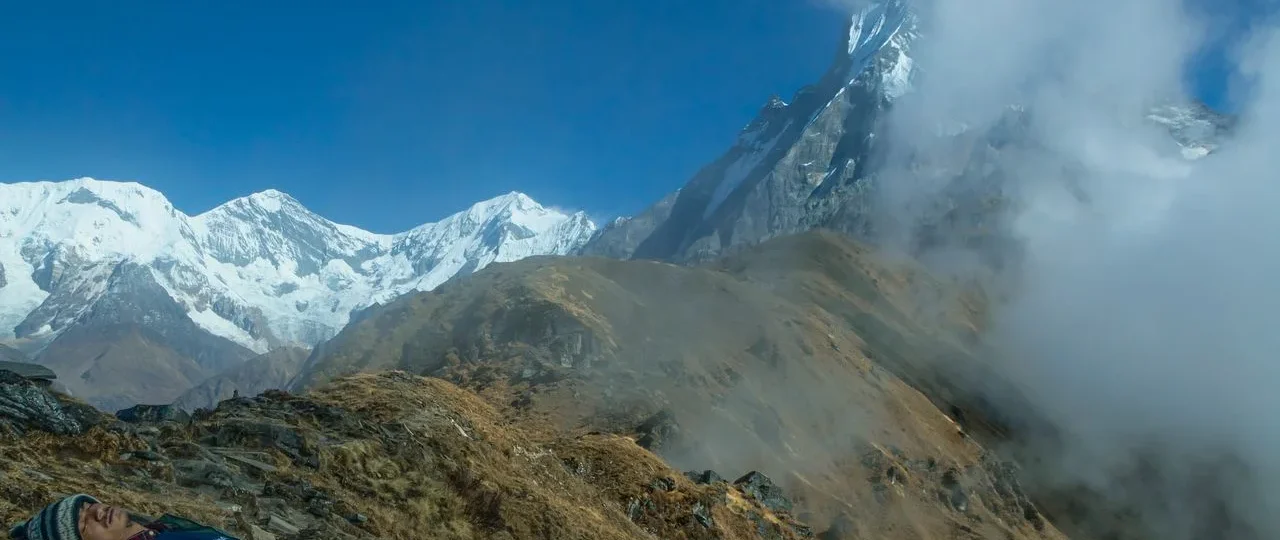
The Mardi Himal Trek Guide 2026 is for travelers who want a relatively short Himalayan trek without giving up the feeling of being deep in the mountains. Starting from the Pokhara area, the trail moves through villages and rhododendron forest before climbing above the tree line toward High Camp and the upper viewpoints beneath Mardi Himal.
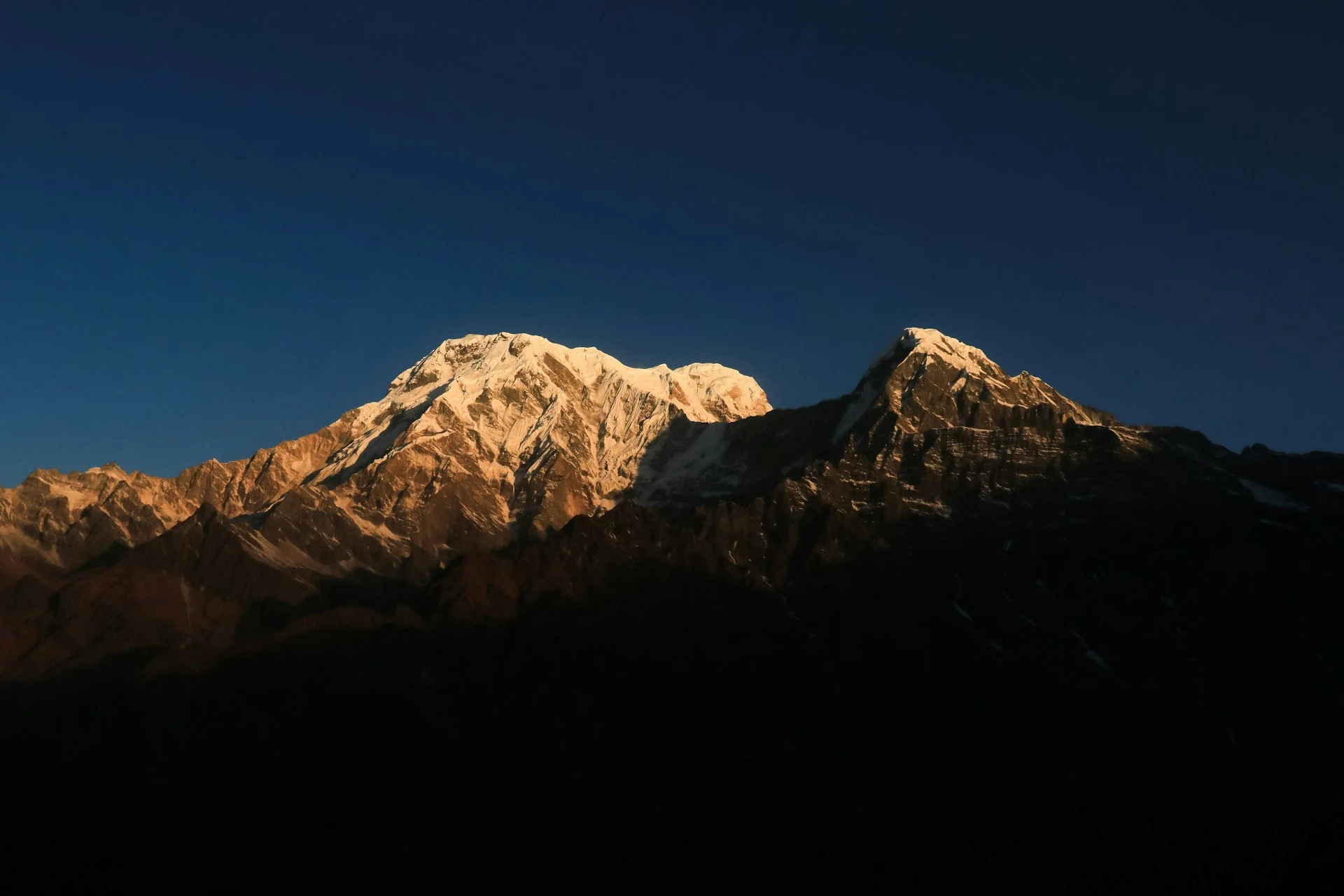
The trek is particularly known for its dramatic views of Machhapuchhre (Fishtail), Annapurna South, Hiunchuli and the surrounding Annapurna range. But the mountain scenery is only part of the experience. The changing landscape—from green foothills to forest, open ridges and high-altitude terrain—is what gives Mardi Himal its character.
For 2026, there is another important planning consideration: Nepal Tourism Board currently lists Mardi Himal Trek among the Annapurna routes requiring trekkers to be accompanied by a licensed trekking guide and to carry an agency-issued TIMS card.
This guide covers the route, itinerary, cost, difficulty, altitude, permits, best seasons, accommodation, food, transportation, packing, safety and the practical decisions that can make your trek considerably easier.
Mardi Himal Trek at a Glance
| Trek detail | Information |
|---|---|
| Region | Annapurna Region, Nepal |
| Main gateway | Pokhara |
| Trek style | Teahouse/lodge trekking |
| Typical duration | About 4–7 trekking days |
| Difficulty | Moderate |
| Highest commonly visited viewpoint | Around 4,200 m |
| Mardi Himal Base Camp area | Commonly cited around 4,500 m |
| Main mountain views | Machhapuchhre, Annapurna South, Hiunchuli and Annapurna range |
| Required conservation permit | Annapurna Conservation Area Permit |
| TIMS | Required under current 2026 provisions |
| Guide | Licensed guide required under current NTB provisions |
| Best seasons | March–May and September–November |
| Starting area | Kande/Phedi side, depending on itinerary |
| Main gateway city | Pokhara |
The exact itinerary, overnight stops and highest point can vary between trekking packages. This matters because some itineraries use “Mardi Himal Base Camp,” “Upper Viewpoint” and “Mardi Himal Viewpoint” somewhat differently. A good itinerary should clearly state which point you will actually visit rather than relying on the label alone.
What Is the Mardi Himal Trek?
The Mardi Himal Trek is a short-to-moderate trekking route in Nepal’s Annapurna Conservation Area.
Unlike the classic Annapurna Circuit, which takes travelers through a much larger geographical area, Mardi Himal concentrates the experience into a shorter route.
The trail gradually climbs from the lower hills near Pokhara through forested terrain and mountain villages before reaching the high ridge beneath Mardi Himal.
One of the trek’s defining features is the change in scenery.
At lower elevations, you see:
- Terraced hillsides
- Villages
- Forest
- Farmland
- Rhododendron vegetation
Higher up, the scenery becomes:
- More open
- Colder
- Windier
- More exposed
- More dominated by snow-covered mountains
The Annapurna region is one of Nepal’s major trekking areas, and Pokhara is a principal gateway for trekking in the region.
Why Trek Mardi Himal?
Mardi Himal appeals particularly to travelers who want a short Himalayan adventure with substantial mountain scenery.
The biggest attractions are:
1. Machhapuchhre views
Machhapuchhre, commonly called Fishtail, is one of the defining mountains of the Annapurna skyline.
As you gain elevation, the mountain becomes increasingly prominent.
2. A dramatic change in landscape
The trek does not stay in one environment.
You move through:
Village → Forest → Rhododendron → Open Ridge → High Mountain Terrain
That progression makes the trek feel longer and more adventurous than its relatively short duration might suggest.
3. Shorter than many classic Himalayan treks
Travelers who cannot dedicate two or three weeks to a Himalayan journey can fit Mardi Himal into a shorter Nepal itinerary.
4. Ridge walking
The upper section is particularly memorable because the trail opens onto a high ridge with wide mountain views.
5. A good introduction to higher-altitude trekking
For a reasonably fit beginner, Mardi Himal can provide an introduction to altitude and multi-day trekking without requiring technical mountaineering skills.
But “short” does not mean “effortless.”
Mardi Himal Trek Route
There is no single itinerary that every trekking company uses.
A common route follows approximately:
Pokhara → Kande → Australian Camp/Pothana → Pitam Deurali → Forest Camp → Low Camp → Badal Danda → High Camp → Upper Viewpoint/Base Camp area → High Camp → Low Camp → Siding → Pokhara
The actual overnight stops can change depending on:
- Trek duration
- Starting point
- Road conditions
- Group fitness
- Weather
- Accommodation availability
- Trekking company’s itinerary
This is why you should compare actual walking days rather than simply comparing package names.
Mardi Himal Trek Itinerary
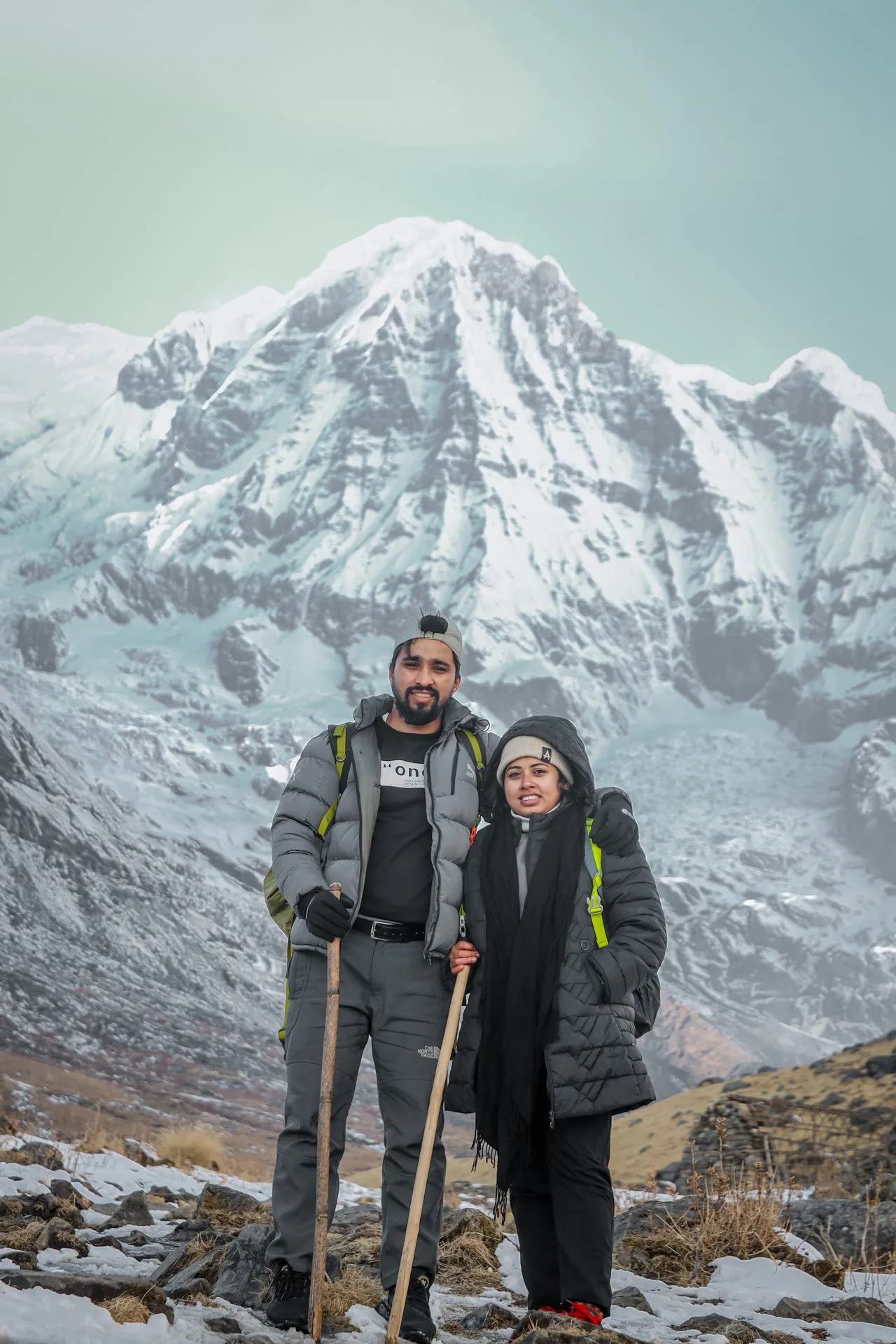
For many first-time trekkers, a 5–6 day itinerary provides a useful balance between time and physical effort.
A longer itinerary can be even more comfortable if you prefer slower walking.
Day 1: Pokhara to Kande and Trek Toward Forest Camp
Your Mardi Himal adventure normally begins with transportation from Pokhara toward the trailhead.
From Kande or another agreed starting point, the trail enters the green hill country.
The early part of the trek introduces you to the rhythm of walking in the Himalayas.
You may pass through:
- Forest
- Small settlements
- Stone trails
- Terraced farmland
- Mountain viewpoints
Depending on your itinerary, the first overnight stop may be around Pitam Deurali or Forest Camp.
The goal of Day 1
Do not treat the first day as a race.
The objective is to establish a sustainable pace.
If you start too aggressively, the accumulated fatigue can become noticeable by the time you reach higher elevations.
Day 2: Forest Camp to Low Camp
The trail continues through forest as you gain elevation.
Rhododendron trees are particularly noticeable during spring.
The atmosphere gradually becomes quieter as you move away from the lower villages.
Low Camp is an important point because the character of the trek begins changing.
Mountain views become more prominent, while the forest gradually opens.
Main challenge
The challenge is mainly steady climbing.
There is no technical mountaineering involved on the normal trekking route, but your legs will know that you are climbing.
Day 3: Low Camp to High Camp
This is one of the most important days of the Mardi Himal Trek.
As you leave the denser forest behind, the landscape becomes more exposed.
The trail climbs through the ridge toward Badal Danda and eventually High Camp.
This section provides some of the most impressive views of:
- Machhapuchhre
- Annapurna South
- Hiunchuli
- Surrounding Himalayan peaks
The environment can also become considerably colder and windier.
Why this day matters
You are now entering an environment where altitude and weather become more important than simply physical fitness.
A strong hiker can still feel the effects of altitude.
Likewise, a fit person can become uncomfortable if they underestimate cold or wind.
Day 4: High Camp to Upper Viewpoint and Back
This is usually the highlight of the trek.
Most trekkers start early.
The exact destination depends on the itinerary and conditions, but the Upper Viewpoint is commonly given at around 4,200 m, while the Mardi Himal Base Camp area is commonly cited at around 4,500 m.
These labels are not always used consistently by trekking companies, so ask exactly where your itinerary goes.
The higher you climb, the more open the landscape becomes.
On clear mornings, the mountain panorama can be spectacular.
But mountain weather is unpredictable.
A cloudy morning does not necessarily mean that the entire day will remain cloudy.
Likewise, a clear sunrise does not guarantee perfect conditions several hours later.
After the viewpoint
You normally return toward High Camp before descending farther depending on your itinerary.
Day 5: Descend Toward Siding
The descent is sometimes treated as the “easy” part.
That can be a mistake.
After several days of uphill walking, your legs are already tired.
Long downhill sections can place considerable stress on:
- Knees
- Ankles
- Feet
- Quadriceps
Trekking poles can be especially useful during this part of the journey.
The trail eventually drops toward Siding, from where transportation can take you toward Pokhara.
Day 6: Flexible Return Day
A sixth day can make your itinerary more comfortable.
It provides flexibility for:
- Slower walking
- Weather delays
- Transportation changes
- Additional rest
- A more relaxed descent
For travelers with enough time, adding flexibility is often more valuable than trying to remove an entire trekking day.
Can You Do Mardi Himal in 4 Days?
Yes, shorter itineraries exist.
But a four-day itinerary should not automatically be considered the “best” itinerary.
A shorter schedule usually means:
- Longer walking days
- Less flexibility
- Less recovery time
- Greater dependence on transportation
- Less room for weather delays
Experienced trekkers with limited time may be comfortable with a compressed itinerary.
For beginners, a slightly slower itinerary is usually more sensible.
How Difficult Is the Mardi Himal Trek?
Mardi Himal is a moderate trek.
That description is more useful than calling it “easy.”
The standard route does not require technical climbing equipment or mountaineering skills.
However, you need to be prepared for:
- Several hours of walking per day
- Sustained uphill sections
- Significant elevation gain
- Cold temperatures
- Long descents
- Changing weather
- High-altitude conditions
The hardest part is not necessarily one particular hill.
It is the cumulative effect of walking uphill for several days and then reaching the higher, colder sections.
Is Mardi Himal Trek Good for Beginners?
Yes.
A reasonably fit beginner can complete Mardi Himal with appropriate preparation.
Previous Himalayan trekking experience is helpful but not essential.
Before your trek, practice:
- Walking uphill
- Stair climbing
- Long weekend hikes
- Squats
- Lunges
- Core exercises
- Cardiovascular training
The most useful preparation is not running a marathon.
It is becoming comfortable with several hours of continuous uphill and downhill walking.
Mardi Himal Altitude
Altitude is one of the most important things to understand before booking the trek.
The Upper Viewpoint is commonly listed at approximately 4,200 m, while the Mardi Himal Base Camp area is often cited around 4,500 m.
Because different itineraries use different terminology for the upper destination, your trekking company should clearly state the highest point included in your itinerary.
The greater concern is not the number itself.
It is how quickly you gain elevation and how your body responds.
Altitude Sickness on Mardi Himal
Altitude sickness can affect people regardless of their age or fitness level.
Potential symptoms include:
- Headache
- Nausea
- Dizziness
- Unusual tiredness
- Loss of appetite
- Difficulty sleeping
Nepal Tourism Board specifically warns trekkers about acute mountain sickness above 3,000 m.
If you develop concerning symptoms, tell your guide immediately.
Do not hide symptoms because you are afraid of missing the viewpoint.
A responsible trekking decision is more important than reaching a particular altitude.
Best Time for Mardi Himal Trek 2026
The main trekking seasons are:
Spring: March to May
Spring is particularly attractive for:
- Rhododendron flowers
- Comfortable daytime temperatures
- Mountain scenery
- Increasingly green landscapes
April is often especially appealing for travelers who want to combine mountain views with spring vegetation.
Autumn: September to November
Autumn is another excellent period.
After the monsoon, mountain visibility can be very good.
October and November are especially popular.
Winter: December to February
Winter is possible, but conditions are colder.
Higher sections can experience snow and icy conditions.
You need stronger cold-weather preparation.
Monsoon: June to August
Mardi Himal remains possible during monsoon, but conditions can be much less predictable.
Expect:
- Rain
- Mud
- Slippery trails
- Leeches in lower forest sections
- Clouds
- Reduced mountain visibility
Nepal Tourism Board lists March–May and September–November as the main best seasons for the Annapurna Conservation Area.
Mardi Himal Trek Permits 2026
This is one area where using an old blog can create problems.
Mardi Himal is within the Annapurna Conservation Area, and the current NTNC online permit system explicitly lists Mardi Himal among ACAP destinations.
For foreign trekkers, the current Nepal Tourism Board TIMS information also specifically lists Mardi Himal Trek among the Annapurna routes requiring a licensed guide and agency-issued TIMS.
Current TIMS information
The current NTB page lists:
- NPR 1,000 for SAARC applicants
- NPR 2,000 for other applicants
The TIMS card is currently arranged through registered trekking agencies for routes covered by the guide/TIMS requirement.
ACAP permit
The current NTB Annapurna Conservation Area page lists an entry fee of:
- Nepali citizens: Free
- SAARC nationals: NPR 200
- Foreigners: NPR 2,000
The NTNC’s current permit system should be checked for the latest applicable fee and payment arrangements before departure because government fees and procedures can change.
Important
Your trekking company should handle the permit process clearly and provide you with the relevant documents.
Wonder Hikes Nepal can arrange the required trekking logistics and guide services for travelers booking the trek through the company.
Mardi Himal Trek Cost 2026
There is no honest single price that applies to every Mardi Himal trek.
Your cost depends on:
- Group size
- Private vs group trek
- Guide
- Porter
- Transportation
- Accommodation
- Meals
- Permits
- Trek duration
- Equipment rental
- Personal spending
Typical cost categories
| Cost | What to consider |
| Guide | Usually included in organized trekking packages |
| Porter | Depends on package |
| TIMS | Required under current provisions |
| ACAP | Required |
| Accommodation | Usually teahouse/lodge |
| Food | Depends on package |
| Transportation | Depends on itinerary |
| Equipment | Rental or personal gear |
| Insurance | Usually separate |
| Drinks/snacks | Usually personal expense |
| Tips | Usually separate |
When comparing trekking companies, do not compare only the advertised package price.
Compare what is included.
A cheap package can become expensive if it excludes transportation, permits, meals or guide services.
What Is Included in a Wonder Hikes Nepal Mardi Himal Trek?
A properly organized Wonder Hikes Nepal package can be structured around the traveler’s requirements and may include services such as:
- Trekking itinerary planning
- Licensed trekking guide
- Required permits
- TIMS arrangements
- Transportation
- Teahouse accommodation
- Meals according to the selected package
- Trekking logistics
- Basic safety coordination
The exact inclusions should always be confirmed in the quotation before booking.
That transparency is more useful than advertising one low price without explaining what the traveler actually receives.
Accommodation on Mardi Himal Trek
Mardi Himal is a teahouse-style trek.
Accommodation becomes simpler as you gain altitude.
Lower sections generally offer more choices, while higher sections have fewer facilities.
Expect:
- Basic rooms
- Beds and mattresses
- Shared bathrooms in many lodges
- Dining rooms
- Simple meals
- Limited hot showers
- Charging facilities that may cost extra
- Wi-Fi that may be limited or unreliable
Do not approach High Camp expecting hotel-level comfort.
The higher you go, the more important it becomes to value:
warmth + rest + food + safety
over luxury.
Food on Mardi Himal Trek
Teahouses generally provide a range of familiar trekking meals.
You may find:
- Dal bhat
- Rice
- Vegetable curry
- Noodles
- Pasta
- Soup
- Momos
- Eggs
- Pancakes
- Porridge
- Bread
- Tea
- Coffee
Dal bhat is particularly practical because it combines carbohydrates with protein and is filling enough for a long trekking day.
At altitude, eating enough matters.
Even when your appetite decreases, your body still needs energy.
How Much Cash Should You Carry?
Carry enough Nepalese cash for personal expenses.
Do not depend entirely on cards or ATMs once you are on the trail.
You may need money for:
- Snacks
- Drinks
- Hot showers
- Charging
- Wi-Fi
- Additional food
- Tips
- Unexpected transport
- Small purchases
Your exact amount depends on what your package includes.
A good trekking company should explain which expenses you should budget separately before departure.
What Should You Pack for Mardi Himal?
You do not need an enormous backpack.
The goal is to carry enough to handle changing temperatures without carrying unnecessary weight.
Clothing
- Base layer
- Fleece or warm mid-layer
- Insulated jacket
- Waterproof jacket
- Trekking trousers
- Warm socks
- Gloves
- Warm hat
- Sun hat
- Comfortable trekking shoes
Equipment
- Backpack
- Trekking poles
- Headlamp
- Water bottle
- Water purification method
- Sunglasses
- Sunscreen
- Lip balm
- Power bank
- Personal medication
- Basic first-aid supplies
Documents
- Passport
- Permit documents
- Travel insurance details
- Emergency contact information
What Can You Rent in Pokhara?
If you do not regularly trek in the Himalayas, renting some equipment can be practical.
Common rental items include:
- Sleeping bag
- Down jacket
- Trekking poles
However, do not rent unfamiliar hiking shoes at the last minute.
Your footwear should already be comfortable and broken in before the trek.
A blister on Day 1 can become a serious nuisance by Day 3.
What Is the Weather Like on Mardi Himal?
Weather changes with altitude and season.
A warm morning in Pokhara does not tell you what conditions will be like at High Camp.
At higher elevations, expect:
- Colder temperatures
- Stronger wind
- Rapid weather changes
- Potential snow in winter
- Reduced visibility during clouds
This is why layers are more useful than one extremely heavy jacket.
You should be able to add or remove clothing as conditions change.
How Early Should You Start for Mardi Himal Viewpoint?
An early start is generally preferred for the upper viewpoint.
Morning often offers better opportunities for clear mountain views, while starting early also gives you more daylight for the return.
Your guide should determine the precise departure time according to:
- Season
- Weather
- Trail conditions
- Group pace
- Snow
- Visibility
Do not sacrifice safety simply to reach a viewpoint at a particular time.
Is Mardi Himal Trek Safe?
Mardi Himal is a popular trekking route, but it is still a high-altitude Himalayan environment.
The major concerns are:
- Altitude
- Weather
- Slippery trails
- Cold
- Dehydration
- Exhaustion
- Poor visibility
Nepal Tourism Board advises trekkers to use designated routes, trek in groups, carry basic equipment and take altitude sickness seriously.
A licensed guide is particularly valuable because the guide is not simply there to show you the trail.
A good guide can help with:
- Pacing
- Weather decisions
- Accommodation
- Altitude monitoring
- Communication
- Route decisions
- Emergency coordination
Mardi Himal Trek for Solo Travelers
Solo travel and solo trekking are not exactly the same thing.
You can travel to Nepal alone and join an organized trek.
For foreign trekkers on Mardi Himal, the current NTB provisions require a licensed guide and agency-issued TIMS, so travelers should not assume that the old “independent trek” model described in older blogs still applies.
For solo travelers, an organized trek can also make transportation, permits and accommodation logistics easier.
Mardi Himal Trek for Families
The trek can be suitable for older children and families who are accustomed to hiking, but age alone should never determine suitability.
Consider:
- Fitness
- Previous hiking experience
- Altitude tolerance
- Walking pace
- Weather
- Ability to handle basic accommodation
A private itinerary with shorter walking days can be more appropriate for families than a compressed group itinerary.
Mardi Himal vs Annapurna Base Camp
| Mardi Himal | Annapurna Base Camp |
| Shorter trek | Longer trek |
| Ridge-focused | Sanctuary-focused |
| Excellent Machhapuchhre views | Immersive mountain amphitheater |
| Good for limited time | Better for a longer trek |
| Moderate | Moderate, with longer overall commitment |
| High ridge experience | Classic base-camp experience |
Choose Mardi Himal when your priority is a shorter trek with ridge scenery and excellent mountain views.
Choose ABC if your goal is to walk deeper into the Annapurna Sanctuary and experience the classic base-camp environment.
Mardi Himal vs Poon Hill
Poon Hill is generally more suitable if you want:
- A shorter trek
- Lower altitude
- A famous sunrise viewpoint
- Less demanding trekking
Mardi Himal is more suitable if you want:
- Higher altitude
- A longer trekking experience
- Ridge walking
- More demanding terrain
- A stronger high-mountain atmosphere
Neither is automatically better.
The right trek depends on your time, fitness and expectations.
Who Should Trek Mardi Himal?
Mardi Himal is a strong choice for:
- First-time Himalayan trekkers
- Experienced hikers
- Couples
- Small groups
- Solo travelers joining an organized trek
- Photographers
- Mountain lovers
- Travelers staying in Pokhara
- People with limited trekking time
You may want another trek if you:
- Strongly dislike uphill walking
- Want luxury accommodation
- Are uncomfortable with cold
- Have no flexibility for weather
- Want to avoid high altitude
- Expect roads and facilities throughout the trek
How to Prepare for Mardi Himal
Start preparing several weeks before departure.
Cardiovascular fitness
Walk, jog or cycle regularly.
Leg strength
Focus on:
- Squats
- Lunges
- Step-ups
Hiking practice
The most useful training is actual hill walking.
Try progressively longer hikes rather than doing one extremely difficult hike immediately before your trek.
Backpack practice
If you will carry your own bag, train with a loaded backpack.
You do not want to discover on Day 1 that your backpack is uncomfortable.
10 Practical Tips Most Mardi Himal Guides Do Not Explain
1. Do not choose an itinerary only because it is shorter.
Saving one day can mean adding significantly more walking pressure.
2. Keep your warm layer accessible.
Do not bury your down jacket underneath everything else.
3. Start early at higher elevations.
It gives you more daylight and usually better morning visibility.
4. Take trekking poles seriously.
They can be particularly useful during the descent.
5. Carry cash.
Do not assume electronic payment will always be convenient.
Cold temperatures can reduce battery performance.
7. Do not ignore early altitude symptoms.
Tell your guide.
This is one of the simplest ways to avoid unnecessary discomfort.
Mountains do not follow Google Calendar.
The forests, villages, ridge and changing landscape are part of Mardi Himal.
Is Mardi Himal Worth It in 2026?
For the right traveler, absolutely.
Mardi Himal is particularly attractive because it combines a relatively short itinerary with a genuine high-altitude trekking experience.
You get:
- Forest
- Villages
- Mountain culture
- Ridge walking
- High-altitude landscapes
- Machhapuchhre views
- Annapurna panoramas
And you can experience all of this without committing to one of Nepal’s longest classic treks.
The important thing is to approach the trek realistically.
It is not a casual walk.
It is not technical mountaineering either.
It sits somewhere in the middle: a manageable but physically demanding Himalayan trek that rewards preparation.
Book Your Mardi Himal Trek With Wonder Hikes Nepal
Planning a Himalayan trek is easier when the important logistics are handled before you reach the trail.
Wonder Hikes Nepal can help travelers organize their Mardi Himal journey with itinerary planning, licensed guide arrangements, permits, transportation, accommodation and trekking logistics.
Rather than choosing an itinerary simply because it is advertised as the “cheapest” or “fastest,” discuss your actual:
- Available days
- Fitness level
- Travel dates
- Budget
- Group size
- Accommodation expectations
A good itinerary should fit the trekker—not force the trekker to fit an unrealistic itinerary.
For the latest 2026 requirements, your trekking agency should also confirm the applicable permits, TIMS arrangements and current regulations before departure.
Frequently Asked Questions About Mardi Himal Trek
1. How many days is the Mardi Himal Trek?
Most itineraries take around 4–7 trekking days, depending on the starting point, route and walking pace.
2. What is the highest point of the Mardi Himal Trek?
The Upper Viewpoint is commonly cited at around 4,200 m, while the Mardi Himal Base Camp area is commonly cited around 4,500 m. Exact terminology varies between itineraries.
3. Is Mardi Himal Trek difficult?
It is generally considered a moderate trek. It does not require technical climbing, but the elevation gain, uphill walking and high-altitude conditions require reasonable fitness.
4. Can beginners do the Mardi Himal Trek?
Yes. Beginners who prepare properly and choose a sensible itinerary can complete the trek.
5. Do I need a guide for Mardi Himal Trek in 2026?
Yes, for foreign trekkers under the current Nepal Tourism Board provisions. Mardi Himal is specifically listed among the Annapurna routes requiring a licensed guide and agency-issued TIMS.
6. What permits are required for Mardi Himal?
The trek falls within the Annapurna Conservation Area and requires the applicable ACAP entry permit. Current NTB provisions also require TIMS for Mardi Himal trekkers.
7. What is the best month for Mardi Himal?
April and October are particularly popular choices, although March–May and September–November are generally considered the main trekking seasons.
8. Can I trek Mardi Himal in December?
Yes, but conditions are colder and higher sections may experience snow or ice.
9. Can I trek Mardi Himal during monsoon?
Yes, but rain, mud, leeches, clouds and reduced mountain visibility make the monsoon considerably less predictable.
10. Is there Wi-Fi on Mardi Himal?
Some lodges may provide Wi-Fi, but connectivity can be limited and unreliable, especially at higher elevations.
11. Can I charge my phone during the trek?
Charging may be available at lodges, but availability and cost vary. A power bank is strongly recommended.
12. Is food available throughout the Mardi Himal Trek?
Teahouses provide meals along the established route, although choices become more limited at higher elevations.
13. How much cash should I take?
The amount depends on your package and personal spending. Carry enough Nepalese cash for drinks, snacks, charging, showers, tips and unexpected expenses.
14. Is Mardi Himal better than Annapurna Base Camp?
It depends on your priorities. Mardi Himal is better suited to travelers seeking a shorter ridge-focused trek, while ABC is better for travelers wanting a longer journey into the Annapurna Sanctuary.
15. Is Mardi Himal Trek worth doing?
Yes, especially for travelers who want a relatively short Himalayan trek with dramatic mountain views, changing landscapes and a genuine high-altitude trekking experience.
Final Takeaway on Mardi Himal Trek Guide
The Mardi Himal Trek 2026 is best understood as a compact Himalayan adventure rather than simply a short hike.
The lower trail gives you villages and forest. The middle section introduces increasingly dramatic mountain views. Above the tree line, the route becomes colder, more exposed and more demanding. Finally, the upper viewpoint provides the high-altitude panorama that brings many trekkers to Mardi Himal in the first place.
For most travelers, the smartest approach is not to chase the shortest itinerary.
Choose enough days to walk comfortably, allow for weather changes, respect altitude and leave room to actually enjoy the trail.
With the right preparation and a properly organized itinerary, Mardi Himal offers an impressive Himalayan experience in a relatively manageable timeframe.
For travelers planning the trek in 2026, Wonder Hikes Nepal can assist with the practical side of the journey—from itinerary planning and licensed guide arrangements to permits, transportation and trekking logistics.