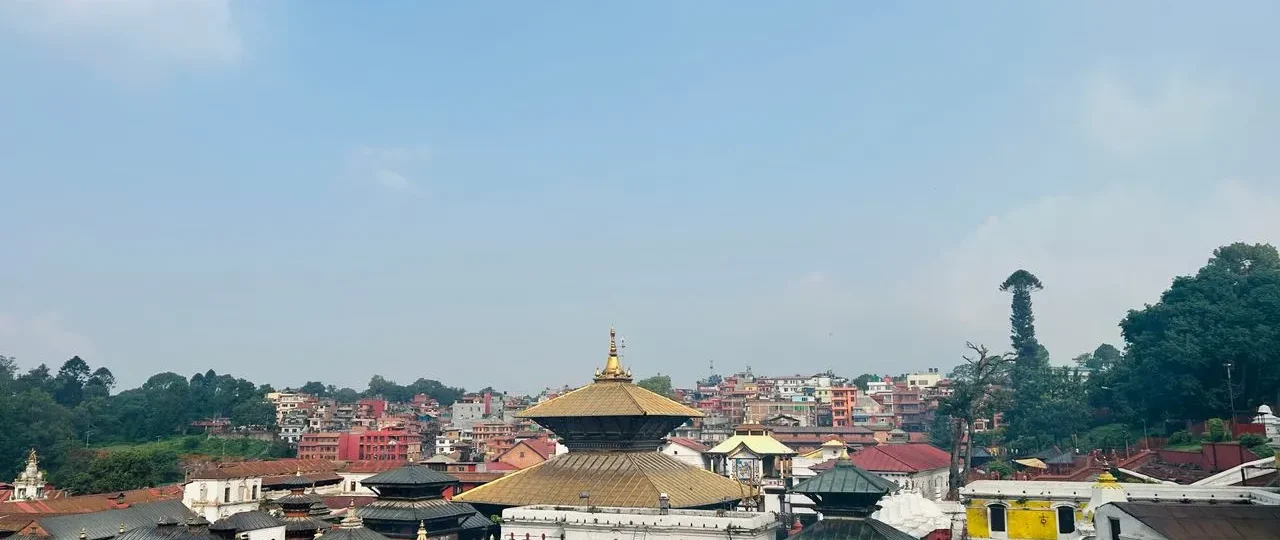
Pashupatinath in Kathmandu is Nepal’s most sacred Hindu temple complex, a UNESCO World Heritage Site, and a place where centuries-old rituals continue every single day. The main temple, dedicated to Lord Shiva as Pashupati, sits on the banks of the Bagmati River about five kilometres east of the city centre. For Hindus, it is the holiest Shiva shrine outside India. For non-Hindu travellers, it is a window into a living religious tradition that is both deeply moving and culturally complex.
This guide explains exactly what you can and cannot do, how to get there, what the evening aarti involves, and how to visit respectfully.
Pashupatinath at a Glance
| Detail | Information |
|---|---|
| Location | Eastern Kathmandu, on the Bagmati River |
| Dedicated to | Lord Shiva as Pashupati |
| UNESCO status | Inscribed 1979 |
| Complex size | ~246 hectares, 500+ temples |
| Opening hours | 4:00 AM – 9:00 PM (PADT) |
| Foreign entry fee | NPR 1,000 per day |
| Main sanctum | Hindus only |
| Best time to visit | Late afternoon for aarti |
| From Thamel | 15–20 minutes by taxi |
What Is Pashupatinath Temple?
Pashupatinath Temple is the seat of Pashupati, a form of Lord Shiva whose name means “Lord of All Living Beings.” The complex sits on both banks of the Bagmati River and is the largest Hindu temple precinct in the Kathmandu Valley. Its history reaches back to the Lichchhavi period, with the current pagoda structure built in the 17th century after termites destroyed an earlier temple.
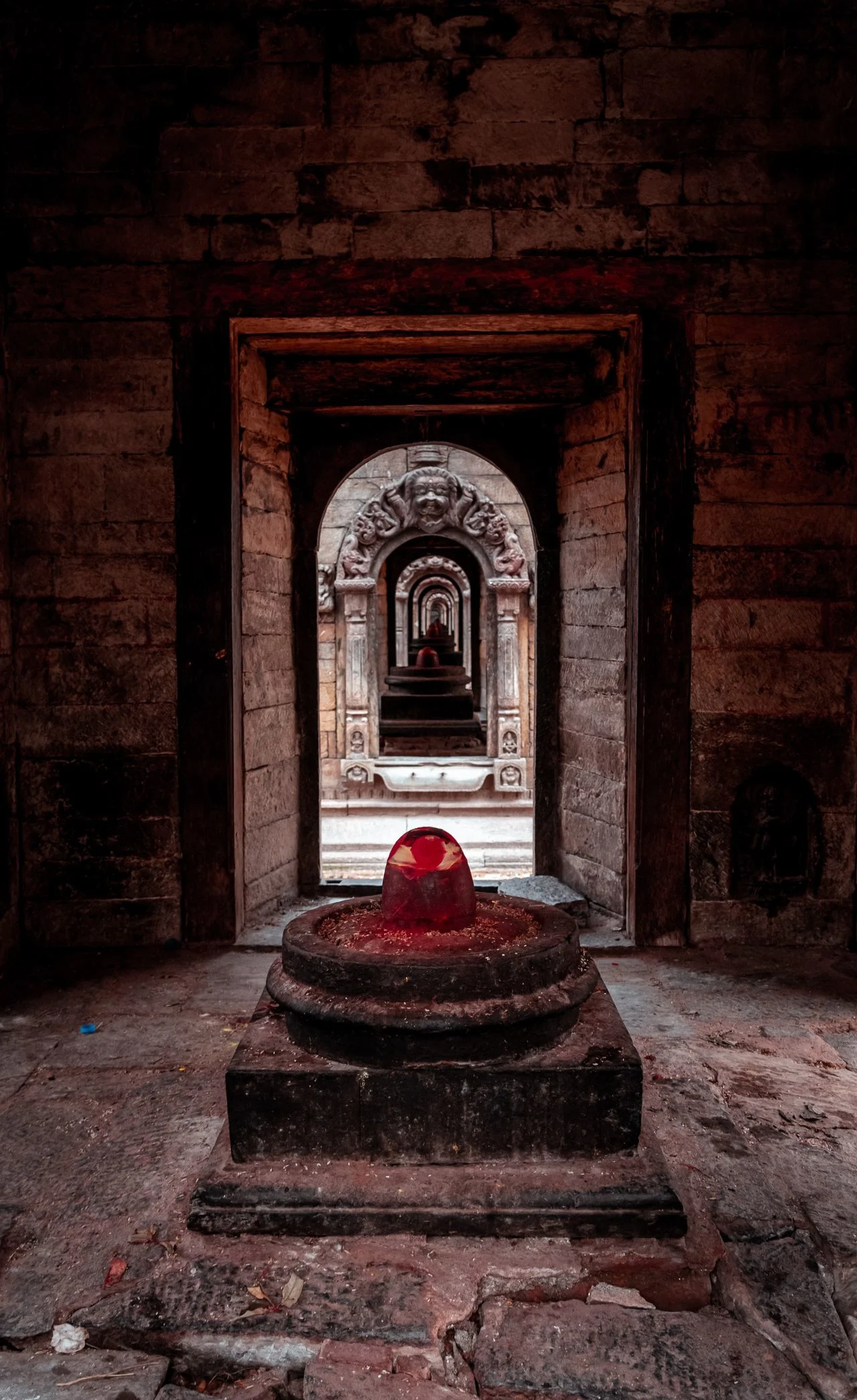
The main temple houses a four-faced Shiva lingam. Only Hindus may enter the inner sanctum. Non-Hindu visitors can explore the wider complex — the ghats, gardens, and surrounding shrines — and watch the evening aarti from across the river.
This is not a museum. Cremations take place daily. Pilgrims bathe in the Bagmati. Priests perform puja. The site is active, and your visit will be shaped by whatever is happening that day.
Can Non-Hindus Visit Pashupatinath?
Non-Hindu visitors are welcome in the Pashupatinath complex. The Pashupati Area Development Trust (PADT), which manages the site, confirms that “non-Hindu visitors are warmly welcome to the Pashupatinath complex, including the ghats, gardens, and surrounding shrines”. The main sanctum, however, is restricted to Hindus only.
This is a religious restriction, not an administrative one. Nationality, appearance, and fee category do not determine access. Hindu visitors of any nationality may enter the inner sanctum during darshan hours. Non-Hindus may not. Security staff enforce this rule strictly.
For non-Hindus, the experience remains deeply rewarding. The eastern bank of the Bagmati offers an elevated view of the main temple, the ghats, and the cremation platforms. The evening aarti is visible from this side and is open to everyone.
Opening Hours and Entry Fees
Opening hours at Pashupatinath are published in conflicting versions, and the discrepancy matters. PADT lists the complex as open daily from 4:00 AM to 9:00 PM. The inner gates close at 2:00 PM and reopen for evening aarti at 6:00 PM in winter and 7:00 PM in other seasons. A municipal page lists different hours (10:00 AM to 5:00 PM), so confirm on the day of your visit.
Foreign visitors pay NPR 1,000 per day per entry. Indian nationals and Nepali citizens enter free. The Nepal Tourism Board lists a fee of US$6.50 for foreign nationals, Chinese visitors, and non-Indian SAARC nationals. These fee categories do not change the Hindus-only rule for the main sanctum.
Payment counters are at the main entrance. Carry cash in Nepali rupees.
The Bagmati Aarti: What to Expect
The Bagmati Ganga Aarti is the most atmospheric experience at Pashupatinath. It takes place every evening on the riverbank ghats, beginning at approximately 6:00 PM and lasting roughly an hour. The timing can vary by season, so confirm on arrival.
The ceremony involves priests chanting prayers and waving large oil lamps in front of the deity. Bells, conch shells, and devotional hymns fill the air. The surrounding area glows with the light of the lamps and the ghats.
Where to watch: The aarti is viewed from the eastern bank of the Bagmati, across the river from the main temple. PADT identifies this area as the viewing zone for visitors of all backgrounds.
How to behave: This is a religious ceremony, not a performance. Arrive by 5:30 PM to secure a position. Stand where stewards direct. Keep pathways open. Silence your phone. Do not move in front of worshippers during the ritual. Do not photograph the ceremony.
The Cremation Ghats: A Place of Grief
The cremation ghats along the Bagmati are the spiritual heart of Pashupatinath. Open-air cremations have been performed here for centuries. Hindu families bring their deceased to these ghats for cremation and the release of ashes into the river.
This is the most sensitive aspect of the Pashupatinath experience. Cremations are not staged for tourists. They are real events happening to real families. The grief you witness is genuine.
Photography: Never photograph the body, the pyre, or grieving family members. Even photographing the ghats from a distance should be done with care. If in doubt, put the camera away.
Behaviour: Keep your voice low. Do not point. Do not stare. Do not ask questions of mourners. Observe quietly from a respectful distance, or move on.
Some travellers choose not to visit the cremation ghats at all. That is a valid choice. The wider complex has plenty to offer without it.
Major Festivals at Pashupatinath
Maha Shivaratri
Maha Shivaratri is the most important festival at Pashupatinath. In 2026, it was celebrated on 15 February. More than a million devotees visit the temple on this day. PADT opens all four temple gates from 2:00 AM to manage the crowd. Sadhus from across Nepal and India arrive for the festival, and the atmosphere is intense and devotional.
If you plan to visit during Maha Shivaratri, arrive before dawn and prepare for significant crowds.
Teej
Teej is a Hindu festival celebrated primarily by women, who fast and pray for the well-being of their families. At Pashupatinath, women dressed in red saris gather for puja and darshan. The festival is colourful and deeply devotional.
Mondays and Ekadashi
The temple is particularly busy on Mondays, which are considered auspicious for Shiva worship, and on Ekadashi days.
Dress Code and Visitor Etiquette
Pashupatinath is a living religious site. Dress and behaviour should reflect that.
Dress: PADT requires modest and traditional dress. Shorts, sleeveless tops, and western casual wear are not permitted on temple grounds. Cover shoulders and knees.
Shoes: Remove footwear before entering any shrine. Use designated storage areas if provided.
Leather items: The Nepal Tourism Board notes that leather items, including shoes, belts, and cameras, are forbidden within the temple complex and must be left outside.
Photography: Photography is prohibited inside the main sanctum and during religious ceremonies. The exterior, ghats, and public areas may be photographed respectfully. Drone photography requires prior written permission from PADT.
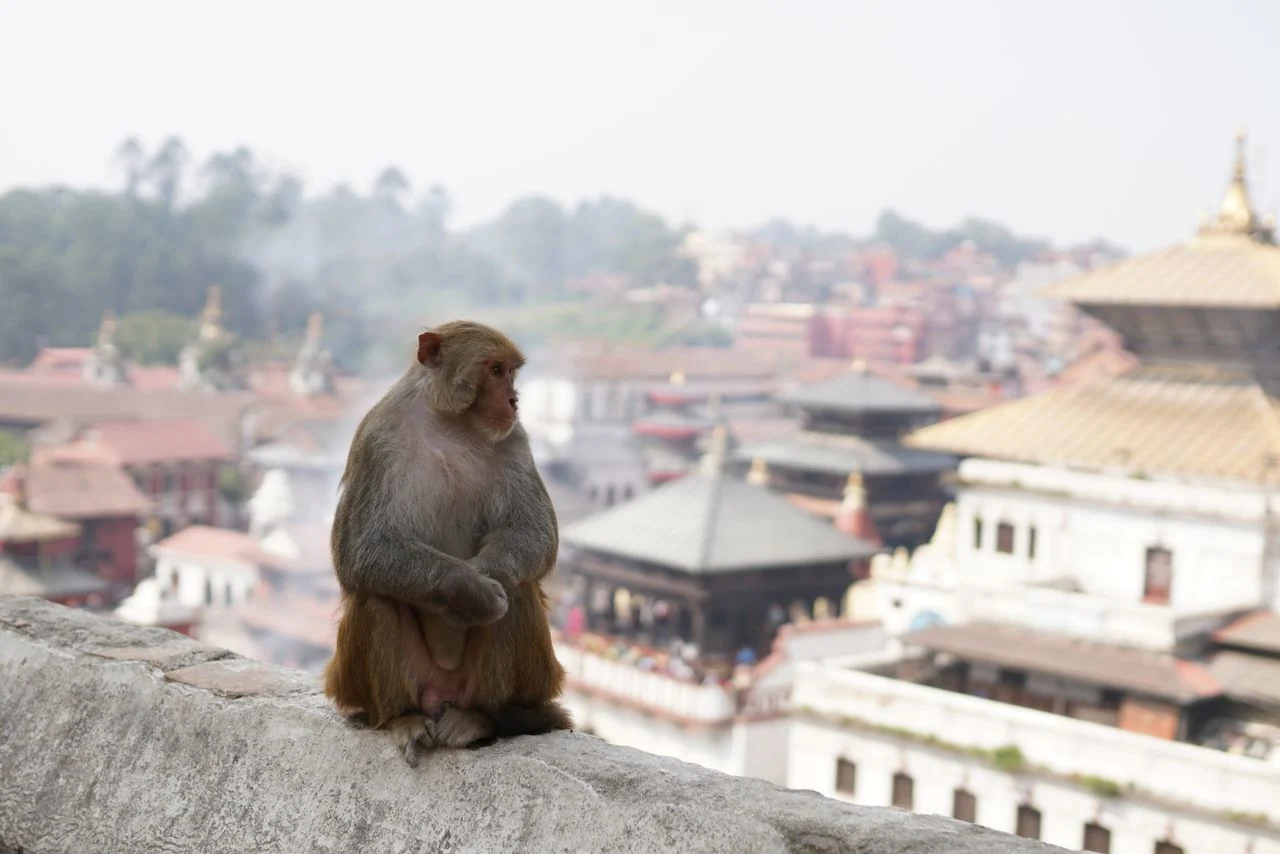
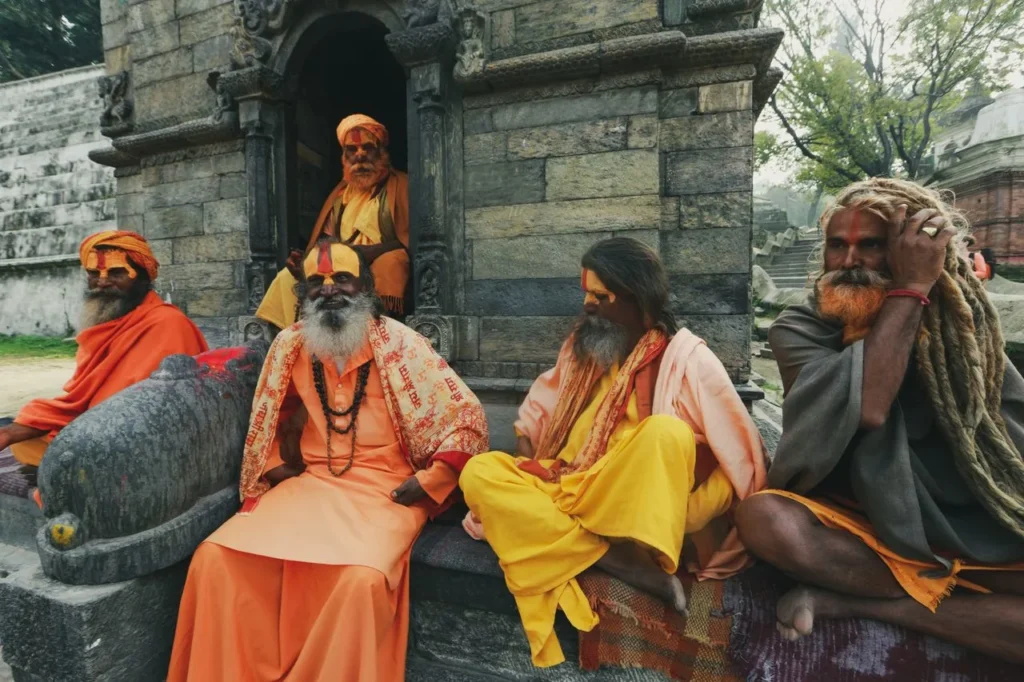
Sadhus: Sadhus are wandering Hindu holy men who live at Pashupatinath. If you want a photograph, negotiate a fee respectfully (NPR 100–200 is customary). Do not treat sadhus as props.
How to Get There
Pashupatinath is on Pashupati Nath Road in eastern Kathmandu, about five kilometres from the city centre.
By taxi: From Thamel, the journey takes approximately 15–20 minutes. Ask for “Pashupati Temple.” A taxi should cost roughly NPR 500–600.
By bus: Routes 11, 22, and 30 stop at Gaushala bus stop, about a five-minute walk from the temple.
From the airport: Tribhuvan International Airport is about three kilometres away, a 10–15 minute drive.
Nearby Attractions
Boudhanath Stupa: About two kilometres north of Pashupatinath, Boudhanath is one of the largest Buddhist stupas in the world and the centre of Tibetan Buddhism in Nepal. Combining the two sites makes an excellent half-day that spans both Hindu and Buddhist traditions.
Guhyeshwari Temple: Adjacent to Pashupatinath, this is one of the most important Shakti Peethas in Nepal, particularly significant for Tantric practitioners.
Shleshmantak Forest: The forest area within the complex is quiet, green, and less visited than the main temple.
Suggested Half-Day Itinerary
4:00 PM: Arrive at Pashupatinath. Pay the entry fee and enter the complex.
4:15–5:30 PM: Explore the ghats, gardens, and surrounding shrines. Walk along the Bagmati and observe the cremation ghats from a respectful distance.
5:30 PM: Position yourself on the eastern bank for the evening aarti.
6:00–7:00 PM: Watch the Bagmati Aarti.
7:00 PM: Exit the complex and take a taxi to Boudhanath Stupa for dinner at one of the rooftop restaurants overlooking the stupa.
Why Visit With a Local Guide
Pashupatinath is one of the most culturally and spiritually complex sites in South Asia. A guide can explain the rituals, help you navigate access restrictions, and ensure your behaviour is respectful. They can also help you understand the Hindu beliefs that give the site its meaning.
Wonder Hikes Nepal operates from Kathmandu and can arrange cultural tours of the Kathmandu Valley, including Pashupatinath, Boudhanath, and other heritage sites. For travellers planning a wider Nepal journey, they can also help with trekking itineraries and logistics.
Frequently Asked Questions
1.Where is Pashupatinath in Kathmandu?
On Pashupati Nath Road in eastern Kathmandu, about five kilometres from the city centre and roughly three kilometres from Tribhuvan International Airport.
2.Can non-Hindus enter Pashupatinath?
Non-Hindus can enter the outer complex — ghats, gardens, and shrines — but not the main sanctum, which is restricted to Hindus.
3.What are the opening hours?
PADT lists the complex as open daily from 4:00 AM to 9:00 PM. Inner gates close at 2:00 PM and reopen for evening aarti at 6:00 PM in winter and 7:00 PM in other seasons. Confirm on arrival.
4.What is the entry fee?
Foreign nationals pay NPR 1,000 per day per entry. Indian and Nepali visitors enter free.
5.What is the best time to visit?
Late afternoon is ideal. Arrive by 5:30 PM for the 6:00 PM aarti.
6.Can visitors attend the Bagmati Aarti?
Yes. The aarti is open to all visitors and is viewed from the eastern bank of the Bagmati.
7.Can you take photographs?
Photography is not allowed in the main sanctum or during religious ceremonies. Exterior and public areas may be photographed respectfully. Do not photograph cremations.
8.What should you wear?
Modest and traditional dress. Cover shoulders and knees. No shorts or sleeveless tops. Remove shoes before entering shrine areas.
9.How far is Pashupatinath from Thamel?
About five kilometres, or 15–20 minutes by taxi.
10.How long should you spend there?
Allow about two hours for the complex, longer if you stay for the aarti.
11.What is the most important festival?
Maha Shivaratri, celebrated on 15 February in 2026.
12.Is Pashupatinath worth visiting for non-Hindus?
Yes. The complex, the aarti, and the surrounding shrines offer a profound cultural experience. Approach the site with respect and understanding.
Conclusion
Pashupatinath in Kathmandu is a place where religion is not separated from daily life. It is a working temple, a working cremation ground, and a UNESCO World Heritage Site all at once. If you visit, go with an open mind and a respectful heart. Cover your shoulders, keep your voice low, put your camera away when it matters. Watch the aarti from the eastern bank as the lamps are lit and the bells begin. Let the experience be what it is.
Ready to plan your trek?
Tell us your dates and group size. We reply on WhatsApp within a few hours.