National Parks of Nepal
Nepal has 13 national parks as of 2026, and the newest one — Chhayanath National Park in Mugu district — was only declared in August 2025. That means any article still claiming there are 12 parks is working from outdated information. The addition of Chhayanath shifts the count and also changes the geography of what’s protected: it carves out 843.36 square kilometers from the western edge of Shey Phoksundo National Park, creating a new protected area in a remote corner of Karnali Province near the Tibetan border.
For travelers, the more important question isn’t the total number. It’s which park fits the trip you’re actually taking. Some parks are safari destinations with lodges and jeep routes. Others require domestic flights, restricted-area permits, and multi-day trekking just to reach the gate. This guide breaks down all 13, explains what each one does well, and helps you decide where to go based on your time, interests, and travel style.
How Many National Parks Are There in Nepal?
Nepal’s protected-area system currently includes 13 national parks, 3 wildlife reserves, 1 hunting reserve, and 6 conservation areas. Together, these cover roughly 23% of the country’s land surface. The newest addition, Chhayanath National Park, was established on August 29, 2025, when the Cabinet decided to separate 843.36 square kilometers of land from Shey Phoksundo National Park in Dolpa district and create a new park in the Mugu area. The park is named after the Chhayanath temple near Gamgadhi and is home to snow leopards, blue sheep, Tibetan wild ass, and the Himalayan tahr.
| Protected Area Category | Number in Nepal (2026) |
|---|---|
| National Parks | 13 |
| Wildlife Reserves | 3 |
| Hunting Reserve | 1 |
| Conservation Areas | 6 |
Complete List of Nepal’s National Parks
| Park | Province / Location | Established | Landscape | Best For |
|---|---|---|---|---|
| Chitwan | Chitwan, Bagmati | 1973 | Terai grassland and riverine forest | Safari, rhinos, families |
| Sagarmatha | Solukhumbu, Koshi | 1976 | High Himalayan valleys | Everest trekking |
| Langtang | Rasuwa, Bagmati | 1976 | Mid-hill forest and alpine | Short Himalayan treks |
| Rara | Mugu, Karnali | 1976 | Alpine lake and forest | Remote lake trekking |
| Shey Phoksundo | Dolpa, Karnali | 1984 | Trans-Himalayan cliffs and gorges | Remote wilderness |
| Khaptad | Sudurpashchim | 1984 | Rolling plateau and grassland | Spiritual retreat, birding |
| Bardiya | Bardiya, Lumbini | 1988 | Western Terai wilderness | Tigers, wild safari |
| Makalu Barun | Sankhuwasabha, Koshi | 1992 | Alpine to tropical gradient | Expedition trekking |
| Shivapuri Nagarjun | Kathmandu Valley | 2002 | Forested hills around valley rim | Day hikes from Kathmandu |
| Banke | Banke, Lumbini | 2010 | Sal forest and grassland | Tiger corridor safaris |
| Shuklaphanta | Kanchanpur, Sudurpashchim | 2017 | Grassland and wetland | Swamp deer, birding |
| Parsa | Parsa, Bagmati | 2017 | Sal forest and riverine | Tiger recovery area |
| Chhayanath | Mugu, Karnali | 2025 | High alpine tundra | Remote exploration |
Chitwan National Park: The Safari Standard
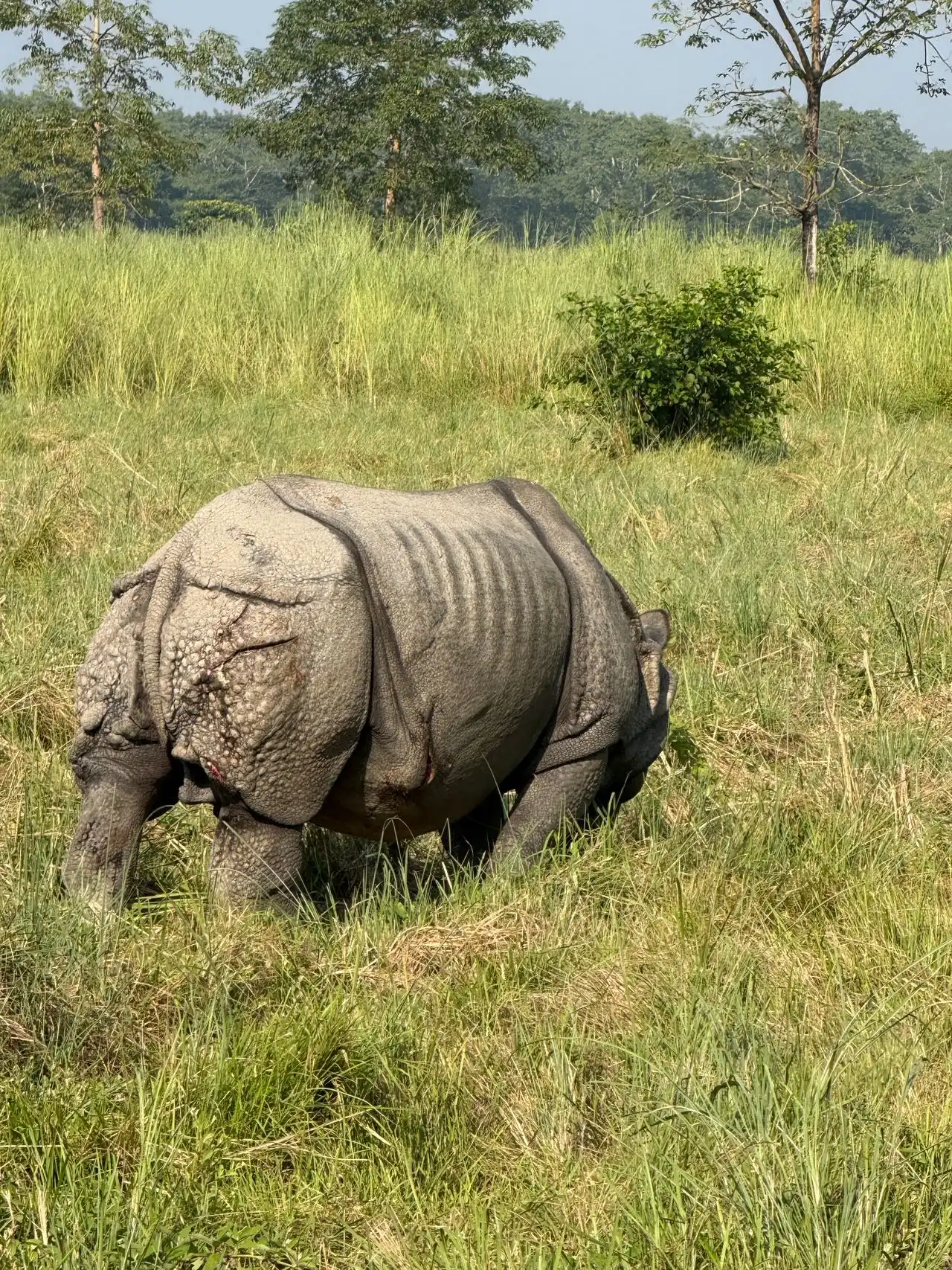
Chitwan National Park is where most travelers encounter Nepal’s wildlife. Established in 1973 as the country’s first national park, it was inscribed as a UNESCO Natural World Heritage Site in 1984. The park protects one of the last populations of the greater one-horned rhinoceros and holds the highest tiger density in Nepal — 145 tigers according to the most recent national census released in July 2026.
The park’s infrastructure is the most developed of any protected area in Nepal. Jeep safaris, canoe trips on the Rapti River, guided jungle walks, and Tharu cultural programs are all available from Sauraha and other entry points. Wildlife sightings are not guaranteed, but the odds are better here than anywhere else in the country. Rhinos are commonly seen. Tigers are more elusive but present in healthy numbers.
Entry for foreign visitors costs NPR 2,000 per person per day, plus VAT. That fee covers park access only — safari vehicles, guides, and activities are separate. The park is open year-round, but safaris inside the core area run from October to mid-May. During monsoon, operators use community forests and buffer zones instead.
Who should visit: First-time visitors to Nepal, families, travelers with limited time, and anyone who wants a reliable wildlife experience without trekking.
Sagarmatha National Park: The Everest Park
Sagarmatha National Park is the only national park in Nepal that contains Mount Everest. Established in 1976 and designated a UNESCO World Heritage Site in 1979, it covers 1,148 square kilometers of the Khumbu region in Solukhumbu district. The park protects 12 trekking peaks, glaciers, high alpine lakes, and the Sherpa cultural landscape that has shaped mountaineering history.
This is not a park for casual visitors. Reaching the park boundary requires a flight to Lukla and several days of walking. The classic Everest Base Camp trek passes through the park’s core, with permit checkpoints at Jorsale and other points along the trail. Entry for foreigners is NPR 3,000, and a TIMS card is also required.
The park’s wildlife includes Himalayan tahr, musk deer, red panda, and snow leopard — though sightings are rare. The real attraction is the landscape and the culture. Namche Bazaar, Tengboche Monastery, and the high valleys beneath Everest and Lhotse are the reasons people come.
Who should visit: Serious trekkers, mountaineers, and travelers who understand that this park is a commitment, not a stop.
Langtang National Park: The Closest Himalayan Trek
Langtang National Park sits in Rasuwa district, north of Kathmandu, bordering Tibet. Established in 1976, it was Nepal’s first Himalayan national park and remains the most accessible for travelers with limited time. The trailhead at Syabrubesi is 7–8 hours by road from Kathmandu — close enough for a 7–10 day trek that fits into a standard Nepal itinerary.
The park’s signature destination is Kyanjin Gompa (3,830 m), a village monastery with views of Langtang Lirung (7,227 m) and Dorje Lakpa (6,966 m). The optional climb to Kyanjin Ri (4,565 m) offers a panoramic view of the entire Langtang range. The park also contains Gosaikunda, a sacred alpine lake revered by Hindus and Buddhists alike.
Entry for foreigners is NPR 3,000, with a TIMS card required. The trekking season runs March–May and September–November. Winter treks are possible but colder and require proper gear.
Who should visit: Beginner and intermediate trekkers, travelers with limited time who still want a Himalayan experience, and those interested in Tamang culture.
Rara National Park: Nepal’s Largest Lake
Rara National Park protects Rara Lake, the largest lake in Nepal, at an elevation of 2,990 meters. Established in 1976, it is the smallest national park by area but contains the country’s most beautiful alpine lake. The park is in Mugu district, Karnali Province — a region that sees very few international trekkers.
Reaching Rara requires either a flight to Talcha airport followed by a 2–3 hour walk, or a multi-day trek from Jumla. The lake itself is 5.2 kilometers long and ringed by fir and spruce forest. The full circuit can be walked in a day. Murma Top, a 3–4 hour climb from the lake, offers a complete panorama.
Entry for foreigners is NPR 3,000. Facilities are basic. This is a park for travelers who prioritize solitude and scenery over convenience.
Who should visit: Trekkers comfortable with remote logistics, travelers seeking Nepal’s most beautiful lake, and anyone who wants to escape the trekking crowds.
Shey Phoksundo National Park: Nepal’s Largest Protected Area
Shey Phoksundo National Park in Dolpa district is Nepal’s largest national park, covering 355,500 hectares of Trans-Himalayan terrain. Established in 1984, it borders Tibet and protects a landscape of barren cliffs, deep gorges, and the turquoise Phoksundo Lake. The park is home to snow leopards, musk deer, and Himalayan tahr, along with rare medicinal plants.
The trek to Phoksundo Lake is the main draw. A one-week trek is possible, but the full 15-day route through the park is more rewarding. The park headquarters are at Sumduwa, and the area includes ancient monasteries and thangka painting traditions. Access requires a restricted-area permit in addition to the national park fee.
Who should visit: Experienced trekkers, expedition-level travelers, and anyone interested in Dolpo’s unique Tibetan Buddhist culture.
Khaptad National Park: The Plateau of Herbs and Silence
Khaptad National Park spans four districts in Sudurpashchim Province — Bajhang, Bajura, Achham, and Doti. Established in 1984, it protects a rolling plateau of grasslands and subtropical forest at around 3,000 meters. The park is rich in medicinal herbs and contains 12 lakes that are excellent for birdwatching. The ashram of Khaptad Swami, a renowned Hindu sage, is located here, giving the park a spiritual dimension that few other protected areas have.
Entry for foreigners is NPR 1,500. The park is quiet, uncrowded, and best suited to travelers who are already in far-western Nepal or who specifically want a soft-adventure experience.
Who should visit: Spiritual seekers, birdwatchers, and travelers interested in Nepal’s less-visited western regions.
Bardiya National Park: The Wild West
Bardiya National Park in Lumbini Province is Nepal’s wildest safari destination. Established in 1988, it covers the western Terai along the Karnali River and protects tigers, rhinos, wild elephants, sloth bears, and Gangetic dolphins. The park is open from dawn to dusk, allowing flexible safari timing that Chitwan does not offer.
Tiger numbers in Bardiya fell from 125 in 2022 to 112 in the 2026 census — the only decline recorded nationwide that year. Despite this, Bardiya remains one of the best places in Nepal to see tigers in a genuinely wild setting. The park sees far fewer visitors than Chitwan, which means fewer vehicles around sightings and a more immersive experience.
Entry for foreigners is NPR 1,500. Jeep safaris, river safaris on the Karnali, guided jungle walks, and treehouse stays are the main activities. The park is best reached by flight to Nepalgunj followed by a drive, or by a long overland journey from Kathmandu.
Who should visit: Travelers who want a less crowded safari experience, wildlife photographers, and anyone willing to trade convenience for authenticity.
Makalu Barun National Park: Expedition Territory
Makalu Barun National Park in Sankhuwasabha district borders the Everest region and Tibet. Established in 1992, it protects Makalu (8,463 m), the world’s fifth-highest mountain, and an extraordinary gradient of ecosystems from tropical forest to alpine meadows. Red pandas are found here, along with other rare Himalayan species.
The Makalu Base Camp trek is the park’s signature route — 17 full days of camping and trekking through the remote Barun Valley. This is not a lodge trek. It requires full expedition logistics, a licensed guide, and a high level of fitness. Entry for foreigners is NPR 3,000.
Who should visit: Experienced trekkers who have already done Everest or Annapurna and want something more challenging and less crowded. Naturalists and photographers.
Shivapuri Nagarjun National Park: The Kathmandu Escape
Shivapuri Nagarjun National Park lies at the northern edge of the Kathmandu Valley, covering parts of Kathmandu, Nuwakot, and Sindhupalchok districts. Established in 2002, it is the only national park within easy reach of the capital. The park protects the Shivapuri watershed, which supplies a significant portion of the valley’s drinking water, and offers forested hiking trails through oak and rhododendron.
Entry for foreigners is NPR 1,000. Day hikes from Budhanilkantha or Nagi Gompa are the main activity. The park is popular with Kathmandu residents for morning walks and birdwatching.
Who should visit: Anyone staying in Kathmandu who wants a nature break without leaving the valley. Birdwatchers. Hikers looking for a half-day activity.
Banke National Park: The Tiger Corridor
Banke National Park in Lumbini Province was established in 2010 and forms a critical corridor with Bardiya National Park. Together, the two parks cover over 1,500 square kilometers of connected tiger habitat. Tiger numbers in Banke more than doubled between 2022 and 2026 — from 25 to 51 according to the latest census.
The park is less developed for tourism than Chitwan or Bardiya. Jeep safaris and jungle walks are available, but facilities are basic. Entry for foreigners is NPR 1,500.
Who should visit: Travelers combining Bardiya and Banke for a longer western Terai safari circuit. Wildlife enthusiasts interested in tiger conservation.
Shuklaphanta National Park: The Grassland Specialist
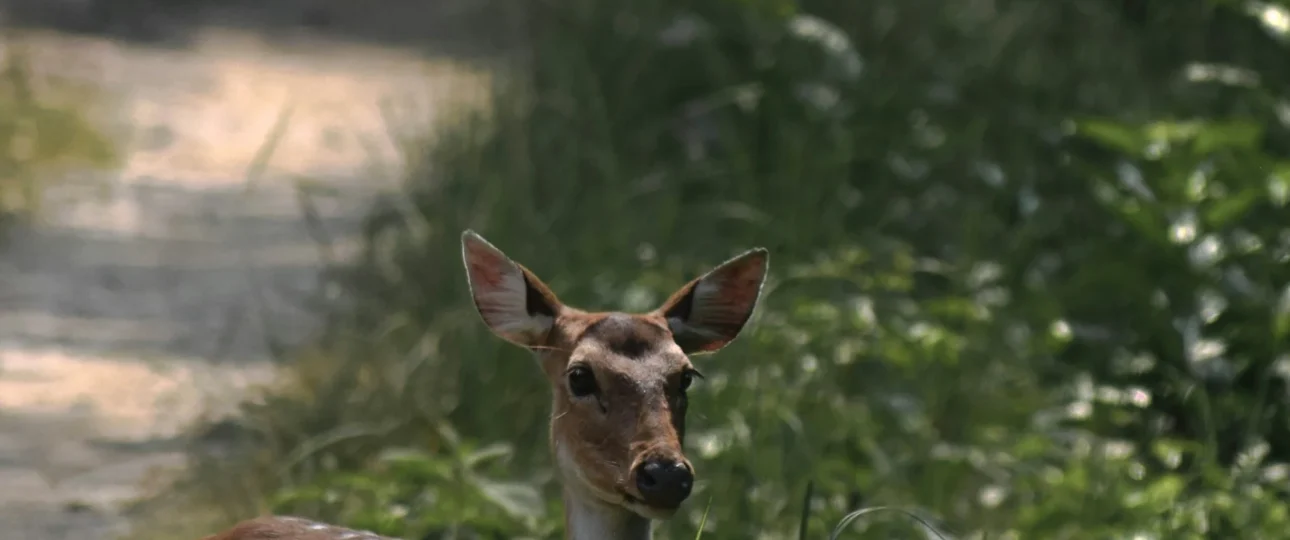
Shuklaphanta National Park in Kanchanpur district was upgraded from a wildlife reserve to a national park in 2017. It contains Nepal’s largest grassland — the 34-square-kilometer Shuklaphanta — and the world’s largest herd of swamp deer. The most recent census recorded 2,182 swamp deer in the park, and conservation officials estimate the population may have increased since then.
The park also supports 461 bird species, including the Bengal florican, and 306 blackbucks. Tiger numbers rose from 36 in 2022 to 50 in 2026. Entry for foreigners is NPR 1,500. The park is remote, in Nepal’s far west, and best reached by flight to Dhangadhi followed by a drive.
Who should visit: Wildlife enthusiasts focused on grasslands and birdlife. Travelers already in far-western Nepal.
Parsa National Park: The Recovery Story
Parsa National Park in Chitwan district was upgraded from a wildlife reserve in 2017. It forms part of the larger Chitwan–Parsa tiger landscape. The 2026 census recorded the biggest jump of any park — from 41 tigers in 2022 to 71 in 2026. The park protects sal forest and grassland habitat, with jeep safaris and jungle walks available.
Entry for foreigners is NPR 1,500. The park is less visited than Chitwan but offers a quieter safari experience in the same ecosystem.
Who should visit: Travelers who want a quieter alternative to Chitwan. Those interested in tiger conservation and recovery.
Chhayanath National Park: Nepal’s Newest Park
Chhayanath National Park in Mugu district is Nepal’s 13th national park, established on August 29, 2025. The park covers 843.36 square kilometers of high alpine tundra, with a buffer zone of 177.37 square kilometers. It was created by separating land from Shey Phoksundo National Park and is named after the Chhayanath temple near Gamgadhi.
The park protects snow leopards, blue sheep, Tibetan wild ass, and Himalayan tahr. It is also home to the Danphe, Nepal’s national bird. As of 2026, the park is in its implementation phase. Tourism infrastructure is minimal, and travelers should verify access conditions before planning a visit.
Who should visit: Explorers and remote-area trekkers. This is not a park for first-time visitors to Nepal.

National Parks vs Conservation Areas: What’s the Difference?
This distinction matters because many travelers assume they are trekking in a national park when they are not. National parks are strictly protected areas where wildlife and ecosystems have priority. Human settlement is not permitted inside the core area, and tourism is regulated with entry fees.
Conservation areas are multiple-use areas where conservation and community development coexist. People live inside them, and tourism is managed differently. Annapurna Conservation Area, Manaslu Conservation Area, and Kanchenjunga Conservation Area are conservation areas — not national parks — despite being major trekking destinations.
If you want a national park trekking experience, look to Sagarmatha, Langtang, Makalu Barun, or Shey Phoksundo. If you are trekking in Annapurna or Manaslu, you are in a conservation area, not a national park.
Which Park Is Best for Each Type of Traveler?
| Traveler Goal | Best Park | Why |
|---|---|---|
| First-time wildlife safari | Chitwan | Most accessible, highest rhino and tiger density |
| Wild safari experience | Bardiya | Fewer crowds, dawn-to-dusk access |
| Everest trekking | Sagarmatha | Only park with Everest |
| Short Himalayan trek | Langtang | Closest to Kathmandu, 7–10 day options |
| Remote lake trek | Rara | Nepal’s largest lake, very few trekkers |
| Expedition trekking | Makalu Barun | 17-day camping trek, remote Barun Valley |
| Day hike from Kathmandu | Shivapuri Nagarjun | Inside the valley, forested trails |
| Grassland and birding | Shuklaphanta | Largest grassland, 461 bird species |
| Tiger conservation interest | Parsa or Banke | Fastest-growing tiger populations |
| Remote alpine exploration | Chhayanath | Nepal’s newest park, minimal infrastructure |
Best Time to Visit Nepal’s National Parks
The best time depends on which park you are visiting and what you want to do.
Terai parks (Chitwan, Bardiya, Shuklaphanta, Banke, Parsa): October to March offers the most comfortable temperatures and the best wildlife visibility. The dry season concentrates animals near water sources and thins the vegetation. April and May are hotter but still viable for safari.
Himalayan parks (Sagarmatha, Langtang, Makalu Barun, Shey Phoksundo): March to May and September to November are the classic trekking seasons. Winter treks are possible in Langtang and lower Sagarmatha but require cold-weather preparation.
Mid-hill and plateau parks (Rara, Khaptad, Chhayanath): October to November and April to May. Monsoon brings heavy rain and leeches in the lower elevations.
Entry Fees and Permits
Fees vary by park and nationality. The table below shows current rates for foreigners from the Nepal Tourism Board.
| Park | Foreigner Fee (per entry) | SAARC Nationals |
|---|---|---|
| Chitwan | NPR 2,000 | NPR 1,000 |
| Sagarmatha | NPR 3,000 | NPR 1,500 |
| Langtang | NPR 3,000 | NPR 1,500 |
| Makalu Barun | NPR 3,000 | NPR 1,500 |
| Shey Phoksundo | NPR 3,000 | NPR 1,500 |
| Rara | NPR 3,000 | NPR 1,500 |
| Bardiya | NPR 1,500 | NPR 750 |
| Banke | NPR 1,500 | NPR 750 |
| Shuklaphanta | NPR 1,500 | NPR 750 |
| Parsa | NPR 1,500 | NPR 750 |
| Khaptad | NPR 1,500 | NPR 500 |
| Shivapuri Nagarjun | NPR 1,000 | NPR 600 |
Fees are subject to change. Verify current rates with the Department of National Parks and Wildlife Conservation or the Nepal Tourism Board before travel. Some parks, particularly Shey Phoksundo and Makalu Barun, require additional restricted-area permits that are separate from the national park entry fee.
Responsible Wildlife Viewing
Wildlife encounters are unpredictable. No operator can guarantee a tiger or rhino sighting. Respect the animals by keeping a safe distance, remaining quiet during safaris, and never feeding or chasing wildlife. Follow park rules, manage your waste, and use licensed guides and responsible operators. Wildlife products are illegal to buy or transport.
For trekking parks, follow Leave No Trace principles. Pack out what you pack in. Respect local communities and cultural sites. If you are trekking in Sagarmatha or Langtang, hire local guides and porters who are properly insured and equipped.
Planning Your Nepal National Park Trip
Choosing the right park depends on your time, interests, and travel style. If you are combining wildlife with trekking, Chitwan or Bardiya pairs well with a Langtang or Sagarmatha trek. If you want a short trek near Kathmandu, Langtang is the obvious choice. If you have three weeks and want a remote wilderness experience, Shey Phoksundo or Makalu Barun reward the effort.
Wonder Hikes Nepal operates from Kathmandu and plans treks, wildlife safaris, and custom itineraries across Nepal’s protected areas. Their team can help with park selection, permit coordination, and logistics — particularly for parks in remote regions where arrangements are more complex. For travelers uncertain about which park fits their schedule, a conversation with a local operator is often the fastest way to turn a list of options into a workable plan.
Frequently Asked Questions
1.How many national parks are there in Nepal in 2026?
Nepal has 13 national parks as of 2026. The newest is Chhayanath National Park, established in August 2025 in Mugu district.
2.What is the oldest national park in Nepal?
Chitwan National Park, established in 1973.
3.What is the newest national park in Nepal?
Chhayanath National Park, declared in August 2025.
4.Which national park has Mount Everest?
Sagarmatha National Park in Solukhumbu district.
5.Which national park is famous for rhinos?
Chitwan National Park.
6.Which national park is famous for tigers?
Chitwan and Bardiya both have significant tiger populations. The 2026 census recorded 145 tigers in Chitwan and 112 in Bardiya.
7.Which national park is closest to Kathmandu?
Shivapuri Nagarjun National Park is inside the Kathmandu Valley. Langtang is the closest Himalayan park.
8.Which national park is best for trekking?
Sagarmatha for Everest, Langtang for shorter treks, Makalu Barun for remote expeditions.
9.Which national park is best for safari?
Chitwan for first-timers; Bardiya for a wilder, less crowded experience.
10.Which national park has Rara Lake?
Rara National Park in Mugu district.
11.Which national park has Phoksundo Lake?
Shey Phoksundo National Park in Dolpa district.
12.Is Annapurna a national park?
No. Annapurna Conservation Area is a conservation area, not a national park.
13.What is the best time to visit Nepal’s national parks?
Terai parks: October–March. Himalayan parks: March–May and September–November. Mid-hill parks: October–November and April–May.
14.Do foreigners need permits to enter Nepal’s national parks?
Yes. All national parks charge entry fees for foreigners. Some parks require additional permits.
15.Which national park has the most swamp deer?
Shuklaphanta National Park, with 2,182 swamp deer recorded in the most recent census.
Ready to plan your trek?
Tell us your dates and group size. We reply on WhatsApp within a few hours.