Flying to Lukla
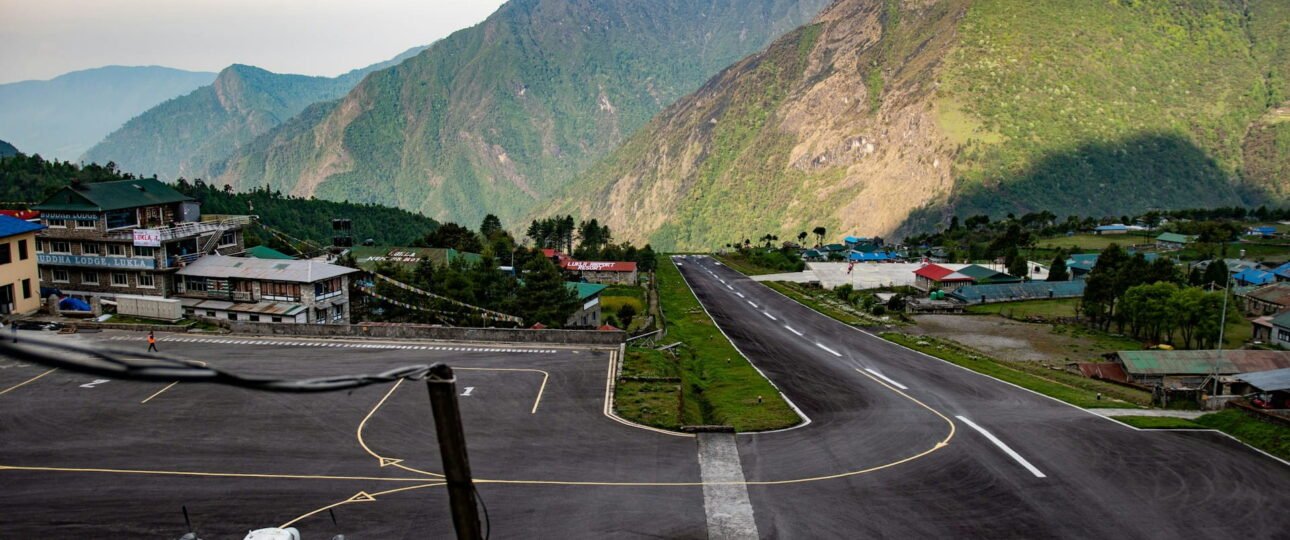
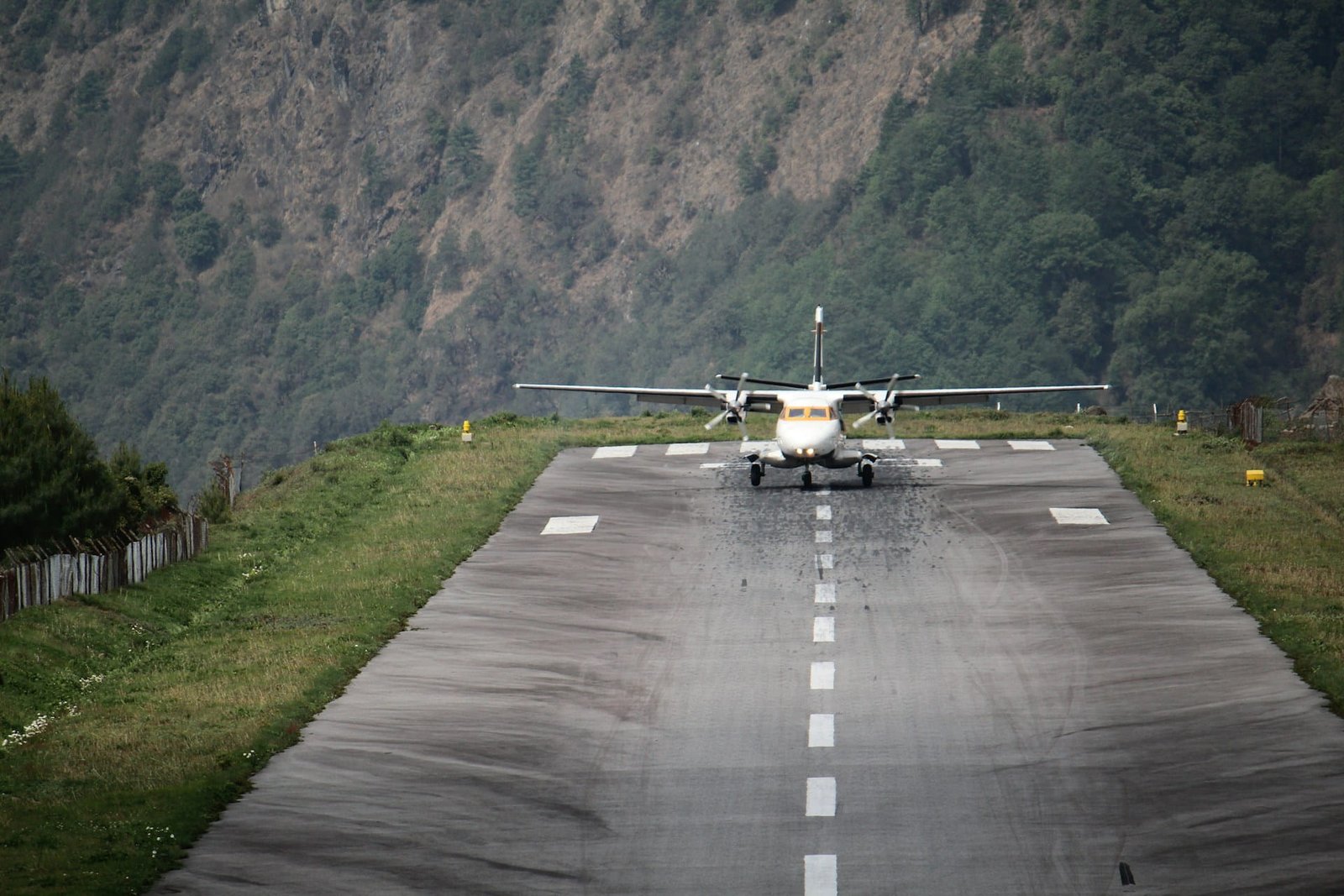
The Kathmandu to Lukla flight covers 138 km in just 25-35 minutes aboard small STOL aircraft, landing at Tenzing-Hillary Airport — one of the world’s most dramatic airstrips at 2,860 m altitude. The strip is short, one-directional, slopes upward at roughly 12 degrees, and ends at a mountain wall at the top. It accommodates no missed approaches. You land, or you go back.
For most EBC trekkers, this flight is either the most exciting or the most anxiety-inducing thing on the itinerary. For the purposes of planning, it is also the most logistically volatile — the one element most likely to shift your schedule, compress your buffer days, and occasionally strand you in Kathmandu or Ramechhap for an extra night while weather clears.
Understanding how it actually works — which airlines fly it, where flights depart from and when, how much it costs, what happens if it cancels, and when a helicopter makes sense — is the most useful pre-trip preparation most people skip.
Where Your Flight Actually Departs From
This is the first and most practically important thing to understand, and the point that catches the most trekkers off-guard.
During peak trekking seasons — Spring (March 15 to May 15, 2026) and Autumn (September 25 to November 30, 2026) — the Civil Aviation Authority of Nepal mandates that all Lukla-bound flights operate from Ramechhap’s Manthali Airport, approximately 132 km east of Kathmandu. This is not optional, and it applies to all airlines on the route.
Kathmandu’s Tribhuvan International Airport handles enormous domestic and international traffic simultaneously. During peak trekking windows, tens of thousands of trekkers attempt to reach the Khumbu in a short window, overwhelming the domestic terminal. Moving Lukla flights to Ramechhap — a dedicated, less congested airfield — reduces delays, allows more daily flight slots, and gives airlines a wider effective morning weather window. Ramechhap flights are shorter (15-20 minutes vs 30-35 minutes from Kathmandu), experience fewer delays, and allow more daily rotations within the morning weather window.
During off-peak months — roughly December to early March and June to late September — flights to Lukla can operate directly from Kathmandu’s domestic terminal. If your trek falls in these months, you depart from Kathmandu. If it falls in the two peak windows above, you are going to Ramechhap first.
The Ramechhap Transfer: How It Works in Practice
Ramechhap’s Manthali Airport is roughly 132 km from Kathmandu. The drive from Kathmandu to Ramechhap takes approximately 4-5 hours one way, depending on traffic and road conditions.
Given that flights operate in the morning time window, between 6:00 AM and 9:00 AM, most trekkers need to depart Kathmandu between 1:00 and 3:00 a.m. to arrive at Manthali Airport with sufficient time before their departure slot. Your agency or trekking operator handles this transfer — a shared vehicle is typically arranged the night before, departing in the small hours. Budget one extra night in Kathmandu before your Ramechhap flight day to account for the early departure logistics.
Adding shared ground transport from Kathmandu to Ramechhap costs approximately USD 25-30 per person. Your agency often includes this in package pricing; confirm specifically whether it’s included or separate.
The return trip follows the same logic in reverse — you land at Manthali after your trek, transfer by vehicle back to Kathmandu, arriving in the late morning or early afternoon.
What It Costs: Fares by Nationality and Departure Point
Three airlines operate this route: Tara Air, Summit Air, and Sita Air. All three are CAAN-certified for mountain operations.
- Foreign nationals: A one-way airline ticket costs USD 215-240 from Kathmandu and USD 175-190 from Ramechhap. Adding shared ground transport from Kathmandu to Ramechhap makes the total approximately USD 205-220 — competitive with or slightly below the direct Kathmandu fare.
- Indian nationals: Approximately USD 150-180 one way.
- Nepali citizens: Approximately NPR 10,500 one way.
These are one-way fares. For a standard EBC trip you’ll pay this twice — once to fly in, once to fly back. A realistic round-trip budget for foreigners is USD 430-480 for fixed-wing flights, plus the Ramechhap transfer cost if applicable in peak season.
A practical note on pricing: Fares listed above are standard published rates. Some agencies include the Lukla flight within a package price; others list it as an additional cost. If you are comparing two package prices, confirm specifically whether the Lukla round-trip flight is inside each quote — it is one of the more commonly excluded items in lower headline package prices.
The Airlines: Tara Air, Summit Air, and Sita Air
Tara Air, Summit Air (formerly Goma Air), and Sita Air operate daily scheduled flights in season. Each operates STOL (Short Take-Off and Landing) aircraft suited to Lukla’s airstrip characteristics.
- Tara Air is the largest and most established operator on this route, operating a fleet that includes Twin Otter DHC 6/300 and Dornier DO 228 aircraft. It flies to Lukla more frequently than any other carrier and is the default choice for most agency-booked packages.
- Summit Air (rebranded from Goma Air in 2017) operates LET 410 aircraft and is well-regarded for its Lukla reliability.
- Sita Air is a smaller operator with scheduled service on this route in season.
From a practical planning standpoint, the airline matters less than the booking lead time and the weather on your specific date. All three are regulated by the Civil Aviation Authority of Nepal and operate under the same weather-minimum requirements.
Baggage: What You Can Take
Baggage allowance on Lukla flights is typically 10 kg checked baggage plus 5 kg hand-carry on most Lukla flights. This is significantly less than international flight allowances and catches first-time Himalayan trekkers off guard if they’re arriving with a full check-in bag from home.
Most EBC trekkers manage this by leaving non-essential luggage at their Kathmandu hotel — nearly all hotels near the trekking district offer luggage storage at no or minimal charge. Carry what you need for the trek in a bag within the weight limit; leave your spare clothes, city shoes, and airport-bought extras at the hotel. Your porter on the trail manages a separate bag that you pack before the flight.
Excess baggage charges apply and are collected at check-in. Weigh your trekking bag before going to the airport; the airlines weigh it themselves and excess charges can add meaningfully to your costs.
Flight Timing and Why Afternoon Departures Don’t Exist
Flights usually operate early in the morning between 6:00 AM and 10:00 AM because weather conditions are most stable at that time. Afternoon flights are rare due to strong winds and changing weather in the mountains.
This isn’t an airline preference — it’s a meteorological reality. The Khumbu valley generates significant thermal activity as the day progresses, building cloud and wind that makes visual approaches to Lukla’s short strip either difficult or impossible by late morning on most days. The effective daily flight window is a 3-4 hour slot each morning. Once it closes, no flights operate until the following morning.
This means your Lukla arrival slot is determined by the airline’s morning schedule, not by your preference for a later start. If you miss your morning flight for any reason — late ground transport from Kathmandu, a check-in issue, a weather hold — you wait for the next morning’s window.
Weather Cancellations: What Actually Happens
Delays and cancellations are a genuine operational reality on this route — not a remote possibility. If you experience a delay, airlines will reschedule your flight for the next available slot. No refund is issued for weather cancellations; you are rebooked on the next available departure at no additional charge.
The practical planning implication is straightforward: keep a buffer day in your itinerary in case of weather delays. One buffer day at the Lukla departure end and one at the return end is the standard recommendation. Agencies building EBC itineraries routinely include these buffer days in well-structured packages. If a package has no buffer days and an extremely tight connection at either end, the risk of a weather cancellation derailing the broader trip is real.
The weather-cancellation pattern is seasonal. Spring can carry more day-to-day weather variation than autumn; October and early November are generally the most reliable months for uninterrupted morning flight windows. Winter (December-February) sees the fewest delays from cloud and monsoon residue, but cold temperatures and occasional fog at Kathmandu or Manthali can cause their own disruptions.
What to do if cancelled: your agency manages the rebooking. Independent trekkers without agency support navigate the airline’s desk at the airport directly. Either way, the outcome is a rebooked seat on the earliest available flight — the only real variable is how many other cancelled passengers are in the queue ahead of you.
The Helicopter Option: When It Makes Sense
A helicopter to Lukla costs significantly more than a fixed-wing flight but offers genuine practical advantages in specific circumstances.
A shared helicopter seat costs USD 500-650. A full private charter costs USD 3,000-4,000. Shared helicopter seats are bookable through most Kathmandu agencies and typically fit 4-5 passengers per aircraft.
The helicopter is worth considering in three specific situations.
- First, if your fixed-wing flight cancels and you have no buffer days and a non-negotiable schedule downstream — a connecting flight home, a pre-booked expedition departure — a helicopter is the fastest rescue from that situation.
- Second, if you are on a genuinely tight itinerary where a single lost day materially changes the trekking experience.
- Third, if you are returning from the trek with an injury or health issue where the comfort and speed of a helicopter matters more than cost.
If time is urgent after a cancellation, shared helicopter transfers are available at USD 600-650 per person.
The helicopter also operates in a slightly wider weather window than fixed-wing aircraft in some conditions, though it is still weather-dependent and cancels when visibility or wind falls below safe minimums.
Is the Flying to Lukla Actually Dangerous?
This is the question most people want answered honestly but many guides avoid.
The last passenger-aircraft accident at Lukla was in 2008. The airport’s infamous reputation — it regularly appears on “world’s most dangerous airports” lists — is based on its physical characteristics (short, sloped strip, mountain terrain, single approach direction) rather than a recent safety record that warrants extreme concern. Pilots who fly to Lukla go through special training and have much experience on this route.
If the weather doesn’t permit a safe take-off and landing, airlines will cancel the flight instead of taking the risk. This conservatism is the primary safety mechanism — the decision not to fly when conditions are marginal, rather than any particular technology on the aircraft or the strip. The same conservatism causes the delays and cancellations that frustrate trekkers. Both are products of the same operational culture.
The realistic framing: flying to Lukla carries more inherent risk than flying on a commercial jet between major airports. It also carries less risk than many activities trekkers do routinely. The pilots are experienced on this specific route, the regulatory oversight is active, and the accident record in recent years reflects a meaningfully safer operation than the mountain-airport reputation implies.
Frequently Asked Questions about Flying to Lukla
- When do flights to Lukla depart from Ramechhap rather than Kathmandu?
During peak trekking seasons: Spring (March 15 to May 15) and Autumn (September 25 to November 30). During these periods, all Lukla flights are mandated by the Civil Aviation Authority to depart from Manthali Airport in Ramechhap, roughly 4-5 hours by road from Kathmandu. - How much does a Lukla flight cost in 2026?
For foreign nationals: USD 215-240 one way from Kathmandu, USD 175-190 one way from Ramechhap. Adding the shared ground transfer to Ramechhap brings the peak-season total to approximately USD 205-220 — competitive with the direct Kathmandu fare. Round-trip budget approximately USD 430-480. - Which airlines fly to Lukla?
Tara Air, Summit Air, and Sita Air. All three are CAAN-certified mountain operators. Tara Air is the largest and most frequently scheduled. - What is the baggage allowance?
Typically 10 kg checked plus 5 kg hand-carry. Leave non-essential luggage at your Kathmandu hotel. - What time do Lukla flights depart?
Between 6:00 and 10:00 a.m. only. No afternoon flights operate due to deteriorating mountain weather as the day progresses. - What happens if my flight is cancelled?
You are rebooked on the next available morning flight at no charge. Budget at least one buffer day at either end of your itinerary to absorb weather-related delays without disrupting the rest of your plans. - Is a helicopter an option?
Yes. Shared helicopter seats cost USD 500-650 per person. Full private charters cost USD 3,000-4,000. The helicopter is most useful when a cancellation threatens a tight schedule or non-negotiable departure. - Is the Lukla flight safe?
Yes, within the realistic context of small-aircraft mountain flying. Pilots are specifically trained and experienced on this route. The last passenger aircraft accident at Lukla was in 2008. Weather cancellations are frequent precisely because airlines apply conservative go/no-go decisions — the same conservatism that makes delays frustrating makes the operation safer. - Why does Lukla have such a short runway?
Tenzing-Hillary Airport’s runway measures roughly 527 meters and sits at an 11.7% gradient, sloping uphill toward the mountainside — a design that helps slow landing aircraft and accelerate departing ones given the thin air at 2,860 m. The combination of short length, incline, and high-altitude approach through a narrow valley is why only specially trained pilots are certified to fly the route. - Can I book Lukla flights directly, or do I need an agency?
You can book directly through the airlines’ websites or offices in Kathmandu, but most trekkers book through their trekking agency, which handles rebooking automatically during weather delays and often has better relationships for prioritizing seats during disruptions. Given how common cancellations are during peak season, having an agency manage rebooking removes a significant amount of stress. - What’s the best time of day to check in for a Lukla flight?
Arrive at the domestic terminal at least 1.5-2 hours before your scheduled departure, even though actual departure times shift constantly with weather and queue backlogs. Morning flights, especially the earliest slots, have the best chance of departing on schedule before mountain cloud and wind typically build later in the morning. - How many days of buffer should I plan for flight delays?
At least one buffer day is standard advice, but two is safer during peak season or if your return international flight is inflexible. Multi-day weather systems can ground flights for several consecutive days, and travelers with zero buffer occasionally end up paying for last-minute helicopter evacuations just to make an international connection. - Is the flight from Ramechhap actually more reliable than from Kathmandu?
Not necessarily more reliable in terms of weather, since both routes are subject to the same mountain conditions near Lukla, but Ramechhap sees less air traffic congestion, which can mean shorter queues for available flight slots during peak season. The tradeoff is the extra 4-5 hour road transfer, which adds its own time and discomfort even if flight departures move slightly faster from that end. - What should I do if I miss my Lukla flight or arrive late for check-in?
Notify your agency or the airline immediately, since standby seats on later flights are possible but not guaranteed, especially during peak season when flights are already full. Arriving with a buffer day built into your itinerary makes this kind of disruption far less stressful than trying to catch a same-day connecting flight to Kathmandu for an international departure. - Are there alternative routes to Lukla if flights are fully grounded?
Yes — trekking in from Jiri or Phaplu, the classic overland approach used before Lukla’s airport existed, adds roughly 6-8 extra trekking days but bypasses the flight risk entirely. Helicopter charter remains the faster alternative when time is tight and flights are grounded for an extended stretch, though at a significantly higher cost than the scheduled fixed-wing flight.