Bhutan Best Time to Visit
Bhutan‘s best time to visit is a question of what you want from the trip, not a single date on a calendar. October delivers the clearest mountain views and the biggest festivals. May and November offer near-peak weather with half the crowds. April brings rhododendron blooms and the Paro Tshechu. And the monsoon months of June through August, usually dismissed in generic guides, are the greenest, quietest, and most culturally immersive window of the year.
The common advice — “spring and autumn are best” — is not wrong. It is just incomplete. Bhutan’s climate varies more by altitude than by latitude. Paro and Thimphu sit at roughly 2,200–2,300 meters. Punakha sits a full thousand meters lower, in a subtropical valley that stays mild even in January. A standard western Bhutan itinerary passes through two distinct climates in a single afternoon. There is no month when the whole country is “closed,” and there is no single month that suits every traveler.
What follows is a practical breakdown of every month, the trade-offs between them, and a decision framework to help you choose the right window for your specific trip.

Quick Answer: What Is the Best Month to Visit Bhutan?
October is the best all-round month. Skies are clearest, mountain views are at their sharpest, trekking conditions are excellent, and the festival calendar includes the Jakar Tshechu and the Royal Highland Festival. It is also the busiest and most expensive month.
May and November are the insider picks. Both deliver near-peak weather without the peak-season squeeze. May offers warm valleys and quiet trails. November brings black-necked cranes to Phobjikha Valley and the Crane Festival.
June through August is the green season. The monsoon brings rain, mostly in afternoon and overnight bursts. Roads can be affected by landslides. But the valleys are impossibly green, the rice paddies are at their brightest, and cultural travel is perfectly viable.
December through February is for clear skies and solitude. Days are sunny and dry. Nights are cold. Punakha remains mild enough for comfortable sightseeing. This is the best window for black-necked crane viewing.
Bhutan Weather at a Glance
| Month | Paro & Thimphu (Day / Night °C) | Rain | Crowds | What’s Happening |
|---|---|---|---|---|
| January | 9–14 / below 0 | Dry | Low | Winter light, mild Punakha |
| February | 12–15 / ~0 | Dry | Low | Punakha Drubchen & Tshechu |
| March | 17–19 / 4 | Dry | High | Paro Tshechu begins late March |
| April | 20–22 / 8 | Light | High | Rhododendron bloom, Haa Spring Festival |
| May | 22–25 / 12 | Light | Medium | Warm valleys, quiet trails |
| June | 24–27 / 15 | Building | Low | Nimalung & Kurjey Tshechus |
| July | 24–27 / 16 | Monsoon | Low | Greenest valleys, alpine flowers |
| August | 24–27 / 16 | Monsoon | Low | Rice paddies at their brightest |
| September | 23–26 / 14 | Easing | High | Thimphu Tshechu, festival season opens |
| October | 20–24 / 9 | Light | Highest | Peak treks, Jakar Tshechu, Royal Highland Festival |
| November | 17–20 / 3 | Dry | Medium | Black-necked cranes, Crane Festival (11 Nov) |
| December | 14–17 / below 0 | Dry | Low | Druk Wangyel Tshechu at Dochula |
Punakha runs roughly 6–7°C warmer than Paro and Thimphu in every month. In January, it is a warm refuge. In July, it is hot and humid.
Bhutan’s Seasons Explained
Spring (March to May)
Spring is one of Bhutan’s two peak seasons. Temperatures rise steadily from March through May. The valleys turn green. Rhododendrons — Bhutan has approximately 46 species — begin blooming at lower elevations in March and progress upward through April and into early May. At Dochula Pass (3,100m), the bloom coincides with the Rhododendron Festival at Lamperi Botanical Garden.
Trekking conditions are excellent in spring, particularly on routes below 4,000 meters. The Druk Path Trek, which passes through rhododendron forests and yak herder camps, is at its best in April and May. Higher routes like the Snowman Trek open in late April or May depending on snow conditions.
The Paro Tshechu, Bhutan’s most popular festival, falls in late March or early April. The Haa Spring Festival is another highlight. The trade-off is crowds: spring is peak season, and flights and hotels book out months in advance.
Summer / Monsoon (June to August)
The monsoon arrives in June and lasts through August, sometimes into early September. Rainfall is heaviest in July, when some southern areas record over 400 mm in a month. The valleys receive less rain than the foothills, and much of the precipitation falls in afternoon and overnight bursts. Mornings are often clear.
Roads can be affected by landslides, particularly on mountain passes. Trekking trails become muddy and leech-infested. Mountain views are unreliable.
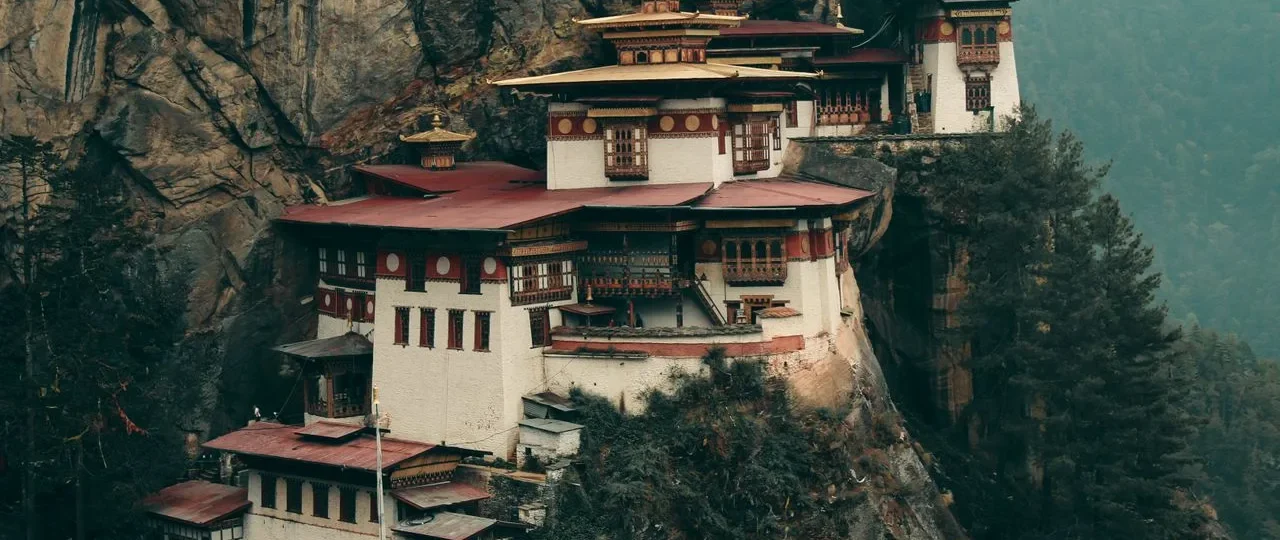
What the monsoon delivers is greenery. The rice paddies are at their brightest — a vivid emerald that photographers love. Waterfalls are at full volume. The valleys are quiet — very few tourists visit during these months — and cultural sites like Punakha Dzong, Tiger’s Nest, and the museums of Thimphu can be visited comfortably between rain showers. Some operators describe this as the “green season” rather than the “off season”.
Autumn (September to November)
Autumn is the other peak season, and October is the most popular month of the year. The monsoon clears, leaving behind clean air and sharp mountain views. This is the best window for trekking at altitude, for photography, and for the largest concentration of festivals.
The Thimphu Tshechu usually falls in September. The Jakar Tshechu and Royal Highland Festival take place in October. By November, the Black-necked Crane Festival is held in Phobjikha Valley as the cranes arrive for their winter migration.
The trade-off is cost and crowds. October is the most expensive month. Flights and hotels sell out early. If you want autumn weather without the autumn crowds, November is the better choice.
Winter (December to February)
Winter in Bhutan is dry, sunny, and cold. Daytime temperatures in Paro and Thimphu hover between 9°C and 17°C. Nights drop below freezing. Higher passes like Dochula and Chele La can see occasional snow, which may close roads for a few hours at a time.
What winter lacks in warmth, it makes up for in clarity. The skies are often completely clear, and the snow-capped Himalayan peaks are visible without the haze of warmer months. The black-necked cranes are in Phobjikha Valley from late October through mid-February.
Punakha remains mild enough for comfortable sightseeing throughout the winter. This is the quietest season for tourism — flights and hotels are easier to book — and the light is crisp and clear for photography.
Bhutan Weather Month by Month
January
January is the coldest month in the western valleys. Paro and Thimphu see daytime highs around 9–14°C and nighttime temperatures below freezing. Punakha, at 1,250 meters, remains mild — roughly 6–7°C warmer — and is the best base for winter sightseeing. The black-necked cranes are still in Phobjikha Valley. Crowds are minimal. This is the month for travelers who prioritize solitude and clear skies over warmth.
February
February brings the first signs of spring. Temperatures inch upward. The Punakha Drubchen and Punakha Tshechu fall in late February — two festivals back-to-back at one of Bhutan’s most beautiful dzongs. The weather is still dry, and the crowds are still low. This is an excellent month for cultural travel, with the benefit of festival access before the spring rush.
March
March marks the beginning of spring and the start of the peak season. The Paro Tshechu typically falls in late March. Temperatures in Paro and Thimphu reach 17–19°C during the day. Rhododendrons begin blooming at lower elevations. Trekking routes below 4,000 meters are viable. Flights and hotels begin to fill. Book well in advance.
April
April is one of the best months of the year. Rhododendrons are at peak bloom across the temperate and subalpine zones. The Rhododendron Festival is held at Lamperi Botanical Garden. Temperatures are pleasant — 20–22°C in the valleys. Trekking conditions are excellent. The Haa Spring Festival adds another cultural option. The only downside is that everyone knows April is good — it is peak season, and you will pay peak prices.
May
May is the insider’s spring pick. It offers near-peak weather — warm valleys, quiet trails, long days — with fewer crowds than April. The rhododendrons are still blooming at higher elevations. Trekking is excellent, particularly on the Druk Path and other mid-altitude routes. The monsoon has not yet arrived, though rain becomes more frequent toward the end of the month. This is one of the best months for travelers who want good conditions without the peak-season premium.
June
June is the beginning of the monsoon. Rainfall increases, particularly in the afternoons and evenings. Trekking becomes muddy and less enjoyable. But cultural travel remains entirely viable, and the landscapes are exceptionally green. The Nimalung and Kurjey Tshechus fall in June. Crowds are low. If you are visiting for culture, photography of lush landscapes, or simply to experience Bhutan without the tourist bustle, June is underrated.
July
July is the wettest month. Some southern areas record over 400 mm of rain. Mountain views are largely obscured. Trekking is best avoided on high routes. Roads can be affected by landslides. But the valleys are at their greenest, waterfalls are at full volume, and the cultural sites are quiet and atmospheric. Travel is possible; it just requires flexibility and rain gear.
August
August is still monsoon season, though rainfall begins to ease toward the end of the month. The rice paddies are at their brightest. Crowds remain low. This is a good month for cultural travel and for seeing Bhutan at its most verdant.
September
September is a transition month. The monsoon is easing, the skies are clearing, and the festival season begins. The Thimphu Tshechu — the largest festival in the country — typically falls in mid-September. Temperatures are comfortable. Trekking conditions improve as the month progresses. By late September, the autumn season is fully underway. This is one of the best months for travelers who want a balance of good weather, festivals, and manageable crowds.
October
October is the single best all-round month. The skies are at their clearest. Mountain views are sharp. Trekking conditions are excellent. The festival calendar includes the Jakar Tshechu and the Royal Highland Festival. Temperatures are comfortable — 20–24°C during the day. The only drawback is that October is also the busiest and most expensive month of the year. Flights and hotels sell out months in advance. If you want October, book early.
November
November is the insider’s autumn pick. The weather is still excellent — clear skies, good trekking conditions, comfortable temperatures — but the crowds have thinned. The black-necked cranes arrive in Phobjikha Valley, and the Crane Festival is held on 11 November 2026. Accommodation is easier to find. This is one of the best months for travelers who want autumn quality without autumn prices.
December
December brings winter. Temperatures drop, particularly at night. Punakha remains mild. The Druk Wangyel Tshechu is held at Dochula Pass. The cranes are still in Phobjikha. Crowds are minimal. This is a good month for travelers who want clear skies, quiet valleys, and crisp winter photography — provided they are prepared for the cold.

Best Time to Visit Bhutan for Different Travel Experiences
Best Time for Trekking
The best trekking seasons are spring (March to May) and autumn (September to November) . Spring offers rhododendron blooms and warming temperatures. Autumn offers the clearest skies and the most stable weather. The Snowman Trek, Bhutan’s most challenging route, runs in late spring and autumn only.
Monsoon trekking is possible on lower routes but involves mud, leeches, and unreliable views. Winter trekking is possible on lower routes like the Punakha Winter Trek but is cold and limited at altitude. The best period depends on the route and elevation — a low-altitude trek in Punakha can be done in winter, while a high pass crossing requires the shoulder seasons.
Best Time for Festivals
Bhutan’s Tshechu festivals follow the lunar calendar, so dates shift from year to year. The key 2026 dates include:
| Festival | Dates (2026) | Location |
|---|---|---|
| Punakha Drubchen | Feb 24–26 | Punakha Dzong |
| Punakha Tshechu | Feb 27 – Mar 1 | Punakha |
| Paro Tshechu | Mar 29 – Apr 2 | Paro Rinpung Dzong |
| Thimphu Tshechu | Sep 21–23 | Thimphu |
| Wangdue Tshechu | Sep 19–21 | Wangdue |
| Haa Tshechu | Oct 19–21 | Haa |
| Jomolhari Festival | Oct 14–15 | Jomolhari |
| Black-Necked Crane Festival | Nov 11 | Gangtey, Phobjikha |
| Druk Wangyel Tshechu | Dec 13 | Dochula Pass |
| Trongsa Tshechu | Dec 17–21 | Trongsa |
These dates are confirmed by Drukair Holidays, Bhutan’s national carrier. Always reconfirm before booking, as lunar calendar calculations can shift by a day or two.
Best Time for Mountain Views
The clearest mountain views are in October and November, followed by December and January. The monsoon months (June to August) offer poor visibility. Spring views are good but can be hazy. If seeing the Himalayan peaks — including Jomolhari, Masang Gang, and Gangkar Puensum — is a priority, autumn and winter are your windows.
Best Time for Photography
October and November offer the best combination of clear skies, sharp light, and vibrant autumn colors. April and May offer spring flowers and green landscapes. December and January offer crisp winter light and snow on the peaks. The monsoon months can be rewarding for moody, atmospheric shots — mist in the valleys, waterfalls in full flow — but require patience and rain protection.
Best Time for Wildlife and Nature
Black-necked cranes: Late October through mid-February in Phobjikha Valley. The best viewing window is November through January. A record 709 cranes were counted in the 2024–2025 winter census.
Rhododendrons: March through May, with peak bloom in April at Dochula and Lamperi.
Birdwatching: Spring (March–May) and autumn (September–November) for migratory species. Winter for cranes.
Green landscapes: June through August for the most vivid greenery.
Best Time for Fewer Crowds
June through August (monsoon) and December through February (winter) are the quietest months. November is also relatively quiet compared to October. If you want Bhutan without the tourist pressure, these are your windows.
Best Time for Families and Couples
Spring and autumn offer the most comfortable weather for family travel and romantic trips. October and April are the most popular for couples. Families with young children may prefer the warmer months of April, May, or October, when daytime temperatures are pleasant and outdoor activities are comfortable.
Best Time to Visit Bhutan by Region
Bhutan’s climate varies significantly by altitude. A single itinerary often passes through multiple climate zones.
| Region | Altitude | Character | Best Season |
|---|---|---|---|
| Paro & Thimphu | 2,200–2,300 m | Temperate valleys, cool winters | Mar–May, Sep–Nov |
| Punakha | 1,250 m | Subtropical, warm year-round | Oct–Apr (mild in winter) |
| Phobjikha | 2,900 m | Glacial valley, cold winters | Oct–Nov (cranes), Apr–May |
| Bumthang | 2,600–4,000 m | Cool, dry, forested | Apr–May, Sep–Oct |
| Haa Valley | 2,700 m | Remote, quiet, spring festival | Apr–May, Sep–Oct |
Punakha is the warmest of the main valleys and remains comfortable even in January. If you are traveling in winter, base yourself in Punakha for sightseeing and make day trips to higher elevations. In summer, escape the heat by heading to Phobjikha or Bumthang.
Is Bhutan Worth Visiting During Monsoon?
Yes — if you adjust your expectations. Monsoon travel is not for trekkers or mountain-view chasers. But for cultural travel, photography of green landscapes, and experiencing Bhutan without the crowds, the monsoon months have real advantages. Rainfall typically comes in afternoon and overnight bursts, leaving mornings often clear. The valleys are lush. The rice paddies are at their brightest. Cultural sites are quiet.
The practical challenges are real: road closures from landslides, muddy trails, leeches on lower treks, and unreliable mountain visibility. If you travel during monsoon, build flexibility into your itinerary, pack waterproof gear, and consider staying in the lower valleys where rain is less intense.
Is Winter a Good Time to Visit Bhutan?
Winter is an excellent time for specific travelers. The skies are clear, the mountain views are sharp, and the crowds are minimal. The black-necked cranes are in Phobjikha. Punakha remains mild. The light is crisp for photography.
The trade-offs are cold nights and limited high-altitude trekking. Paro and Thimphu see nighttime temperatures below freezing. Snow can close high passes temporarily. If you are prepared for the cold and your itinerary focuses on cultural sites, lower valleys, and wildlife, winter is a rewarding season.
Bhutan Travel Costs and Seasonal Demand
Bhutan’s tourism fee structure is fixed, not seasonal. The Sustainable Development Fee (SDF) is USD 100 per person per night for most international adult visitors, confirmed at that rate through 31 August 2027. Children under 6 are exempt. Children aged 6–11 pay USD 50 per night. The full rate applies from age 12. Indian nationals pay INR 1,200 per night (600 for children under 12), and guests from Bangladesh pay USD 15 per night with the visa fee waived.
The SDF is separate from the visa fee, which is a one-off USD 40 per person. Because the SDF is fixed, seasonal cost differences come from accommodation, flights, and guide availability — not from the government fee. October and April are the most expensive months for hotels and flights. November and May offer similar weather with lower demand. Winter and monsoon months offer the lowest accommodation rates, though the SDF remains the same year-round.
What to Pack for Bhutan by Season
| Season | Essential Clothing | Footwear | Extras |
|---|---|---|---|
| Spring | Layers, light fleece, rain jacket | Walking shoes, light hiking boots | Sunscreen, hat, insect repellent |
| Monsoon | Quick-dry layers, waterproof jacket, umbrella | Waterproof hiking boots | Dry bags, extra socks, leech socks for treks |
| Autumn | Layers, warm fleece, light down jacket | Hiking boots | Sunscreen, hat, camera |
| Winter | Thermal base layers, down jacket, gloves, hat | Insulated boots | Hand warmers, lip balm, moisturizer |
For trekking, add a sleeping bag, trekking poles, and a headlamp. For cultural sites, bring modest clothing that covers shoulders and knees. Bhutanese dress is conservative, and respectful attire is appreciated at monasteries and dzongs.
Which Month Should You Choose? A Decision Framework
-
If you want the best all-round weather and don’t mind crowds: October.
-
If you want near-peak weather with fewer people: May or November.
-
If you want rhododendrons and spring festivals: April.
-
If you want black-necked cranes: November.
-
If you want clear mountain views and cold, crisp air: December or January.
-
If you want the greenest landscapes and lowest crowds: June, July, or August.
-
If you want a festival without peak-season prices: February (Punakha Tshechu).
-
If you want to trek at high altitude: April, May, September, or October.
-
If you want a short cultural trip: Any month works. Winter and monsoon offer the best value and quietest sites.
Planning Your Bhutan Trip With Wonder Hikes Nepal
Bhutan’s travel regulations require visitors to book through a licensed tour operator. Independent travel is not permitted for most nationalities. That means your choice of operator matters — not just for logistics, but for itinerary design, festival timing, and route selection.
Wonder Hikes Nepal operates from Kathmandu and specializes in Himalayan travel across Nepal, Tibet, and Bhutan. Their team can help with Bhutan itinerary planning, festival timing, trekking arrangements, and Nepal-to-Bhutan trip combinations. For travelers who want to pair a Bhutan cultural tour with a Nepal trek — or who need help navigating the SDF, visa process, and festival calendar — working with an operator who knows the region is a practical advantage. They are not the only option, but they are a knowledgeable one.
Frequently Asked Questions
1.What is the best month to visit Bhutan?
October is the best all-round month for weather, trekking, and festivals. May and November are the best alternatives for near-peak conditions with fewer crowds.
2.What is the best season to visit Bhutan?
Spring (March–May) and autumn (September–November) are the peak seasons. Autumn offers clearer skies; spring offers rhododendrons and warmer temperatures.
3.Is October really the best month?
Yes, for most travelers. October has the clearest mountain views, the most stable weather, and the largest concentration of festivals. It is also the busiest and most expensive month.
4.Is April better than October?
April is better for rhododendrons and the Paro Tshechu. October is better for mountain views and trekking conditions. Both are peak season.
5.Can I visit Bhutan during monsoon?
Yes. Cultural travel is viable, landscapes are green, and crowds are low. Trekking and mountain views are limited. Expect afternoon rain and possible road disruptions.
6.Is winter too cold to visit Bhutan?
No, but it depends on your itinerary. Paro and Thimphu are cold at night. Punakha is mild. Winter offers clear skies, black-necked cranes, and minimal crowds.
7.When is the best time to see the Himalayas in Bhutan?
October, November, December, and January offer the clearest mountain views.
8.When is the best time to see black-necked cranes in Bhutan?
Late October through mid-February in Phobjikha Valley. November is the best month.
9.When is the best time to see rhododendrons in Bhutan?
April is peak bloom, with the Rhododendron Festival at Lamperi. March through May is the broader window.
10.When is the best time to trek in Bhutan?
April, May, September, October, and November. High-altitude routes like the Snowman Trek are restricted to spring and autumn.
11.When is Bhutan least crowded?
June through August (monsoon) and December through February (winter).
12.Is Bhutan cheaper in the off-season?
Accommodation and flights are cheaper, but the Sustainable Development Fee (USD 100 per night for most foreigners) is fixed year-round.
13.What is the Sustainable Development Fee in 2026?
USD 100 per person per night for most international adults. Children aged 6–11 pay USD 50. The rate is confirmed through 31 August 2027.
14.Do I need a visa to visit Bhutan?
Most international visitors need a visa, applied for in advance through a licensed operator. Indian nationals require a permit, not a visa.
15.What should I pack for Bhutan?
Layers, a waterproof jacket, comfortable walking shoes, sun protection, and modest clothing for religious sites. Winter requires thermal layers and a down jacket. Trekking requires proper boots and gear.
Ready to plan your trek?
Tell us your dates and group size. We reply on WhatsApp within a few hours.