

Introduction to Gorakshep Nepal Weather
Gorakshep Nepal weather is the hardest part of the Everest Base Camp trek to plan for. The last village before Base Camp sits at about 5,164 metres on the edge of a frozen lakebed, and its nights are colder than almost anywhere else on the route. Days can be bright and even mild in the sun, but after dark the temperature falls below freezing in every month of the year, and in midwinter it drops to around -20°C or lower.
This guide covers Gorak Shep weather month by month, the daily pattern of clear mornings and windy afternoons, how conditions affect your Kala Patthar and Base Camp plans, what the lodges are like at night, and what to pack. The temperature figures come from operator guides that differ by several degrees, so treat them as ranges and plan for the colder end.
Gorakshep Nepal Weather at a Glance
If you only need the short version, start with this table. Gorak Shep is the last place with lodges on the Everest Base Camp route, and almost everyone who reaches it sleeps there.
| Question | Short answer |
|---|---|
| Altitude | About 5,164 m (some sources say up to 5,180 m) |
| Typical spring and autumn nights | About -5°C to -15°C |
| Typical winter nights (December to February) | About -18°C to -25°C |
| Typical daytime in the main seasons | About -5°C to 5°C, warmer in direct sun |
| Daily pattern | Clear mornings, with cloud and wind building from midday |
| Best months for views | October, and also April and November |
| Coldest months | December to February |
| Heating at night | None in the rooms, and only a stove in the dining room |
Why Gorak Shep Is So Cold
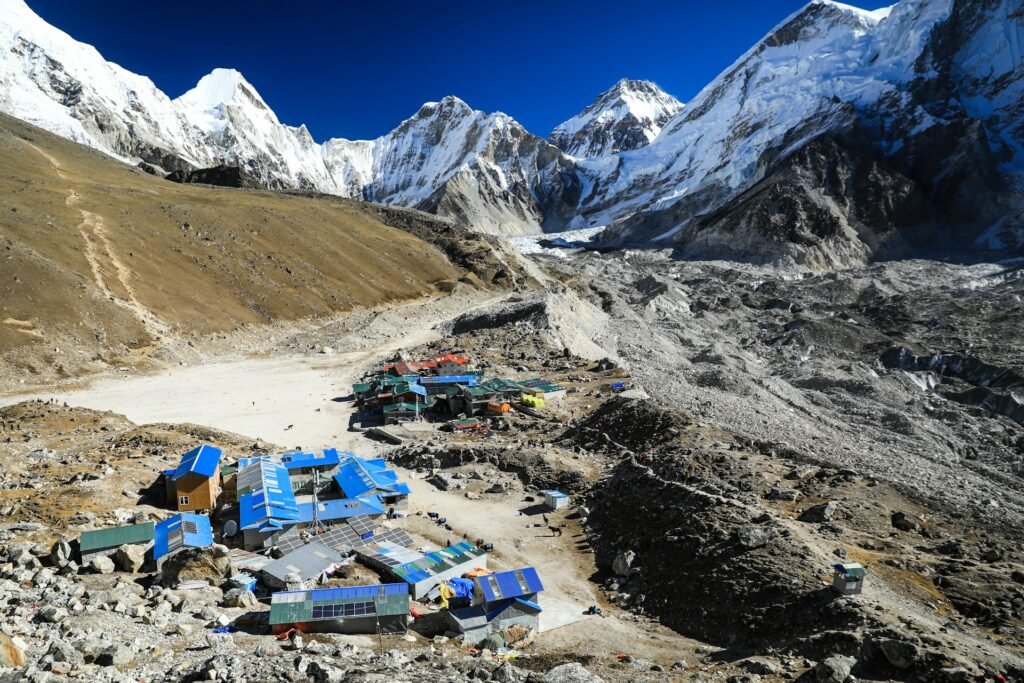
Three things stack up here. The first is altitude: the air is thin and dry, so it holds little heat, and the temperature swings between a sunny afternoon and a clear night are large. The second is the setting. Gorak Shep lies on the periphery of a frozen lakebed covered in sand, with moraine and the Khumbu Glacier beside it, and there is no vegetation to soften the wind. The name is often translated as “dead ravens” for that reason. The third is exposure: nothing shelters the village from the wind coming down the valley, and wind chill can make a cold day feel far harsher than the thermometer suggests.
Gorak Shep was once the original Everest Base Camp, and it is still the last village with accommodation on the route. Most trekkers stay overnight there because their permits do not allow camping at Base Camp itself. You can read more about the settlement on its Wikipedia entry.
Gorak Shep Weather Month by Month
No official station records are published for the village itself, so these ranges are consolidated from several operator guides that disagree by a few degrees. They are meant to show the pattern, not to promise a number on a given day. When sources differ, plan for the colder figure.
| Month | Typical day | Typical night | What it feels like |
|---|---|---|---|
| January | About -8°C to -5°C | About -20°C to -25°C | The coldest month, with dry air and strong wind chill |
| February | About -6°C to -3°C | About -18°C to -22°C | Still deeply cold, with bright days |
| March | About -3°C to 2°C | About -15°C to -18°C | Warming slowly, with a mix of clear and snowy spells |
| April | About 0°C to 5°C | About -5°C to -15°C | Popular spring window, clear mornings and afternoon cloud |
| May | About 2°C to 7°C | About -8°C to -12°C | The warmest trekking month, with pre-monsoon cloud building |
| June to August | About 0°C to 4°C | Around freezing to about -8°C | Monsoon cloud and snow, with few views |
| September | About -2°C to 2°C | About -8°C to -16°C | Clearing after the monsoon, getting colder late in the month |
| October | About -2°C to 3°C (up to 5°C) | About -5°C to -15°C | The classic month, with stable weather and clear skies |
| November | About -5°C to 3°C | About -10°C to -20°C | Clear but cold, with nights worsening through the month |
| December | About -5°C to 0°C | About -12°C to -20°C | Dry and cold, with few trekkers |
If you also want to know what happens lower on the trail, our Dingboche weather guide covers the stop two days below Gorak Shep, where nights are milder.
Winter: December to February
Winter is the coldest and stillest season. The air is dry, skies are often bright, and the trails are quiet. But nights at Gorak Shep can fall to around -20°C or lower, wind chill makes exposed ridges brutal, and snow and ice cover the upper trail. Some lodges may close or reduce services, and fog or snow can delay Lukla flights. Winter treks suit experienced, well-equipped trekkers with spare days. For the wider picture, see our guide to Nepal in the winter.
Spring: March to May
Spring is the second main trekking season. Temperatures climb through the period, and by April and May the days at Gorak Shep are close to or slightly above freezing in the sun. Mornings are usually clear and afternoons bring cloud, and late May carries a higher chance of pre-monsoon showers, usually in the late afternoon or evening. Expect the trail to be busy in April, which is when expedition teams also gather at Base Camp.
Monsoon: June to August
The monsoon brings heavy rain to the lower valleys and cloud, mist and snow to the upper trail. Gorak Shep itself is higher than the heaviest rain, but visibility is poor and views of Everest are rare. Flights to Lukla are also less reliable. If you are weighing a summer trip, read our honest guide to Mount Everest in summer.
Autumn: September to November
Autumn follows the monsoon with clear skies and dry air, which is why October is so popular. September is clearing but can still be damp, October is the most stable month, and November is dry but progressively colder, with nights by mid-month often reaching -18°C to -20°C in some operator accounts. Because it is peak season, rooms at Gorak Shep fill early in the afternoon.
How Gorak Shep Compares With Lower Stops on the Trail
The temperature drops steadily as you climb, and the jump between Dingboche and Gorak Shep is the one trekkers feel most. One operator guide lists April averages for each stop on the route.
| Stop | Altitude | April day / night |
|---|---|---|
| Lukla | 2,860 m | About 12°C / 3°C |
| Namche Bazaar | 3,440 m | About 9°C / 0°C |
| Dingboche | 4,410 m | About 5°C / -5°C |
| Gorak Shep | 5,164 m | About 1°C / -8°C |
October follows a similar pattern with colder nights. The same operator guide reports Gorak Shep at roughly 5°C by day and about -9°C at night, while Lukla is much milder at about 17°C by day and 6°C at night. Another guide puts the nights at Lobuche, the stop just below Gorak Shep at about 4,910 metres, at roughly -15°C to -8°C, against about -18°C to -10°C at Gorak Shep. The practical lesson is that a lodge that felt comfortable at Namche or Dingboche tells you little about what the night will be like at the top.
The Best Time to Visit Gorak Shep
Most guides name October as the best time to visit Gorak Shep, followed by November and April. Wikipedia’s entry gives the same advice, naming spring (March and April) and autumn (October and November) as the best windows. If you want Gorakshep Nepal weather that balances clear views with bearable nights, the trade-offs are simple.
| Month | Why choose it | What to accept |
|---|---|---|
| October | Most stable weather and clearest views | Crowded trails, and nights near -5°C to -15°C |
| November | Dry and clear, fewer people than October | Colder, with nights that can reach -20°C late in the month |
| April | Warmer days and fresh spring scenery lower down | Crowds, and afternoon cloud |
| March | Quieter and improving weather | Colder nights, and snow is still possible |
| May | Warmest days, long daylight | Pre-monsoon cloud and showers, plus heat and dust lower down |
| December to February | Solitude and cold, dry air | Nights near -20°C, closures and flight delays |
If this is your first high trek, choose October or April and book accommodation early. If you can tolerate the cold and want fewer crowds, March or late November are reasonable alternatives. Winter and monsoon visits need more experience and more flexibility.
October or April? Choosing between the two main windows
Both months deliver clear mornings, and the difference comes down to how you handle cold and crowds. October follows the monsoon, so the air is washed clean and the weather is at its most stable, but the nights are cold and the trail is full. April is warmer in daytime and greener lower down, but afternoon cloud is more common, and Base Camp fills with expedition tents. If you sleep cold or dislike early-morning chill, April is the gentler choice at night. If your priority is the best chance of an uninterrupted view, October has the stronger reputation. Whichever you pick, book lodges early and keep a spare day.
The Daily Weather Rhythm at Gorak Shep
Weather at Gorak Shep follows a pattern that is more reliable than the monthly averages. Mornings are usually the clearest part of the day. Cloud tends to build from late morning, and winds pick up in the afternoon, often with low cloud that hides Everest and the surrounding peaks. In spring that afternoon cloud is the norm, and even in October you should not count on a clear sky after lunch.
That rhythm changes how you plan the day. Use the early hours for anything that depends on a view, including Kala Patthar and Base Camp. Use the afternoon for rest, food and fluids. A clear morning can turn into a windy afternoon within a couple of hours, so decide early rather than waiting for a better moment later.
A Typical Day at Gorak Shep, Hour by Hour
The weather sets the timetable, so most groups follow a similar schedule. Treat the times below as a typical pattern, not a rule.
- 3:00 to 4:00 a.m. A wake-up call for a sunrise climb of Kala Patthar. It is the coldest part of the day, so dress fully before you leave the room.
- 5:30 to 6:30 a.m. First light on the summit, if the sky is clear. Take photographs quickly, because hands lose feeling fast.
- Mid-morning. Back at the lodge for breakfast and rest, or a walk toward Base Camp, which takes roughly 1.5 to 2.5 hours each way.
- Midday to afternoon. Cloud and wind build. This is the time for lunch, fluids and a rest in the dining room.
- 4:00 to 5:00 p.m. The dining-room stove is usually lit around now, and everyone moves inside.
- Evening. An early dinner, a hot water bottle in the bag and bed. The temperature keeps falling after dark.
Weather and Your Kala Patthar and Base Camp Plans
Gorak Shep is the launch point for two things: Everest Base Camp and Kala Patthar. The walk from Gorak Shep to Base Camp takes roughly 1.5 to 2.5 hours each way, depending on weather, acclimatisation and fitness. Kala Patthar, at about 5,545 metres, is a climb of around 400 metres from the village, and our Kala Patthar guide explains why many trekkers treat it as the real highlight of the trek.
Sunrise or afternoon?
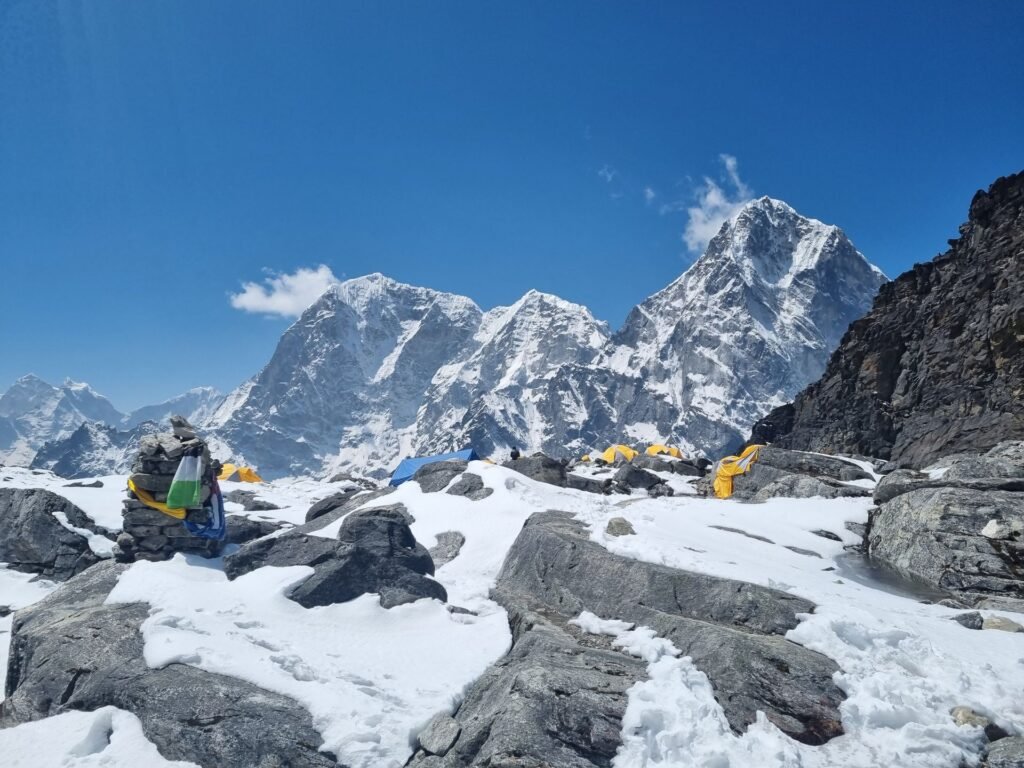
The traditional plan is to leave Gorak Shep between about 3:00 and 4:00 a.m. and reach the top around 5:30 to 6:30 a.m. for first light. Expect a dark ascent, extreme cold and a crowded summit. The ascent takes roughly two to three hours and the descent one to one and a half. The cold is the price of the clearest views, because afternoons bring wind and low cloud that can hide the peak completely.
Some itineraries do the opposite, climbing in the afternoon for sunset light and visiting Base Camp the next morning. That gives better photographic light and a less crowded trail, but it carries a higher risk of cloud. If you have two nights at Gorak Shep, you can try one plan and keep the other as a backup.
Give yourself a second morning
Weather is the one thing on this trek you cannot schedule, so the best protection is a second chance. If your itinerary and your body allow, a spare day or a second night near the top gives you another clear morning if the first one is cloudy. Ask your agency how the plan handles a bad-weather morning before you book, because a rigid itinerary turns one cloudy sunrise into a missed summit view.
When the weather turns
Wind exposure increases sharply above Gorak Shep, and a clear sky can become a whiteout in minutes during a storm. The practical rules are simple. Start early, carry a warm layer and a spare, turn around if visibility drops or the wind becomes dangerous, and tell your guide how you feel. The view is not worth frostbite, and you can usually try again the next morning if you have built in a spare day.
Gorak Shep Weather Versus Everest Base Camp Weather
Everest Base Camp sits higher, at 5,364 metres, and trekkers often wonder whether it is colder. Guides report similar night temperatures at both, and one guide gives October nights at Base Camp of around -6°C, with Gorak Shep about the same. Afternoons at Base Camp in the peak months of April and October are reported at roughly 0°C to 3°C in the shade. The difference that matters is practical. You do not sleep at Base Camp, you visit it for a few hours in daylight, while Gorak Shep is where the night cold hits you. In April, expedition tents appear at Base Camp, and the area gets busy, but the weather pattern is the same: clear mornings, afternoon cloud.
A Night at Gorak Shep: What the Weather Means Indoors
The weather at Gorak Shep follows you indoors, because the lodges are not heated like a hotel.
- Rooms. Small twin rooms with thin plywood walls and no heating. The temperature inside is close to the temperature outside.
- Dining room. This is usually the only warm space, heated by a central stove that burns dried yak dung or wood. In many lodges the stove is not lit until late afternoon, often around 4 to 5 p.m., and it burns until the last trekker goes to bed.
- Water. Water bottles and pipes can freeze overnight, so toilets may use bucket flushes. Sleep with your water bottle inside your sleeping bag.
- Hot water bottle. Fill a sturdy bottle with boiling water at bedtime and put it in your sleeping bag. It warms the bag for hours and gives you lukewarm water in the morning.
- Washing. Showers are not a realistic expectation at this altitude, and hot water for washing is a basin of boiled water you pay for.
- Prices. Everything is carried up, so food, water, charging and supplies cost more here than anywhere lower on the trail.
Sleeping at Gorak Shep is a test of your sleeping bag. Many guides recommend a bag rated to about -20°C from October through April, and some suggest that a -10°C bag can be enough in spring and autumn. Choose the warmer bag if you tend to sleep cold.
Eating, drinking and sleeping in the cold
Cold and altitude blunt your appetite, and loss of appetite is also an early sign of altitude sickness, so eat even when you are not hungry. Hot, carbohydrate-heavy meals such as dal bhat, noodles and soup are the staples, and they usually come with refills. Drink regularly, because dry air and effort dehydrate you quickly, and hot drinks help you stay warm. Before bed, change into dry base layers, put your hot water bottle in the bag and keep your headlamp within reach.
Snow, Wind and Storm Risks
Gorak Shep weather is stable in the best months, but it is not predictable. Four risks matter most.
- Early or late snow. Storms can arrive at the edges of the seasons, including in late October and in March. Snow covers the trail above Dingboche and slows progress.
- Wind and visibility. Storms cut visibility to almost nothing, and wind raises the frostbite risk.
- Icy trail. Frozen sections in shade and above 4,000 metres need care, and microspikes help when ice builds up.
- Flight disruption. Weather at Lukla affects your whole schedule. One operator guide estimates that flights are 85 to 95 percent reliable in April, October and November, and far less reliable in the monsoon. Treat that as a rough guide, and leave a buffer day before any onward flight.
Authorities and agencies sometimes advise trekkers to hold at lower villages such as Namche Bazaar or Dingboche when heavy snow is forecast above 4,000 metres. If that happens, follow the advice. Waiting a day or two costs far less than being caught high on a snow-covered trail.
Gorakshep in Winter: Extra Planning
Gorakshep Nepal weather in winter deserves its own checklist, because the margin for error is smaller. February conditions are described as cold, dry and often bright, with nights of about -15°C to -20°C and wind chill as the main enemy. If you go in December, January or February, plan around these points.
- Choose a guide who knows winter trails. Snow can hide the path, and local knowledge about open lodges matters more in winter than in any other season.
- Add buffer days. Snow and fog delay flights more often, and a tight schedule is fragile.
- Drink and eat regularly. Dry air and cold make dehydration easy to miss, and hot food and fluids help your body keep warm.
- Protect your battery and phone. Cold drains them, so keep spares inside your jacket.
- Check which lodges are open. Some may reduce services, so your guide should confirm before you commit to the upper stages.
How to Check the Weather Before and During Your Trek
You will not find a perfect forecast for Gorak Shep, but you can combine several sources.
- Mountain-Forecast. It publishes Everest forecasts for several elevations, including a 5,000-metre forecast for Mount Everest that is close to Gorak Shep in altitude, with temperature, wind and snow in three-day blocks.
- OpenSnow. It has a Gorak Shep forecast point with a ten-day outlook, which is useful for spotting a pattern, though it is a model estimate rather than a station reading.
- Nepal’s Department of Hydrology and Meteorology. The national weather agency issues forecasts for the Everest region, and local advisories often follow its warnings.
- Your guide and lodge owners. They see the sky, know the local pattern and hear from other groups on the trail.
Treat forecasts for the next three days as the most reliable, and do not make a decision based on a ten-day outlook. Free internet forecasts for mountains can also be off in timing or location, so use them as a guide, not a guarantee. To see how the route fits together by stage, check our Everest Base Camp trek map.
What to Pack for Gorak Shep Weather
Pack for the night, not the day. A three-layer system, a heavy down jacket and a properly rated sleeping bag are the core.
- Sleeping bag. Rated to about -20°C for most departures between October and April. Add a liner for extra warmth.
- Down jacket. A heavy one you can wear over everything, including at the dining table in the evening.
- Base layers. Thermal tops and bottoms, plus a spare set to sleep in.
- Mid layers. Fleece or light insulation you can add or remove.
- Shell layer. Windproof and waterproof jacket and trousers for wind and snow.
- Hands, head and neck. Insulated gloves with liners, a warm hat, a balaclava or buff and sunglasses.
- Boots and socks. Warm, waterproof boots and several pairs of wool socks.
- Traction. Microspikes for icy sections, and trekking poles for the climb up Kala Patthar.
- Headlamp. You will start the sunrise climb in the dark, and cold drains batteries, so carry spares.
- Hot water bottle. A sturdy bottle with a good seal for the bag.
- Sun protection. Sunscreen and lip balm, because UV is strong at altitude even when it is freezing.
What to wear on the Kala Patthar climb
Start with a thermal base layer and a mid layer, then add the down jacket and the shell on top. Wear insulated gloves with liners, a hat under or over your hood, and a buff or balaclava across your face. Keep a spare layer and your hot water bottle in the dining room for your return. You will heat up on the climb and cool fast at the top, so open vents on the way up and add layers the moment you stop.
Gear by season
| Season | Sleeping bag | Extra gear to consider |
|---|---|---|
| October to November | About -15°C to -20°C comfort rating | Heavy down jacket, liner gloves, balaclava |
| December to February | About -20°C or warmer-rated | Spare base layers, microspikes, insulated boots, hot water bottle |
| March to May | About -10°C to -20°C, depending on how you sleep | Sun protection, a waterproof shell for afternoon showers |
| June to August | About -10°C or warmer-rated | Waterproofs, pack cover, a way to dry layers |
Altitude and Cold: Staying Safe at 5,000 Metres
Weather and altitude combine at Gorak Shep. Cold increases the effort of every task, and thin air makes it harder to recover from that effort. The CDC’s guidance on high-altitude travel recommends that, above 3,000 metres, your sleeping altitude rises by no more than about 500 metres a day, with an extra acclimatisation day for every additional 1,000 metres gained. It also notes that fitness does not affect your risk.
Know the signs. Acute mountain sickness feels like a hangover, with headache plus dizziness, nausea, fatigue or loss of appetite. Confusion, loss of balance or breathlessness at rest are danger signs. Do not go higher to sleep while you have symptoms, and descend if they worsen. If you feel unwell when you arrive at Gorak Shep, skip Kala Patthar and tell your guide.
The cold adds its own risks. Frostbite and hypothermia are the main ones. Keep your hands, feet and face covered, keep your layers dry, eat and drink regularly, and tell your guide at once if fingers or toes lose feeling.
Insurance and Evacuation in Bad Weather
Helicopter services connect Gorak Shep with Lukla and Kathmandu and are used for evacuation, but like all flights in the mountains they depend on the weather. That makes your insurance choice part of your weather planning. Check that your policy covers the maximum altitude of your trek, including Kala Patthar, and that it includes helicopter evacuation. Also keep a buffer in your schedule, because a storm can ground helicopters and regular flights for a day or more.
Common Mistakes With Gorakshep Weather
- Planning for the daytime temperature. The number on the forecast at noon says little about the night, which is what decides your sleep.
- Climbing Kala Patthar in the afternoon. Cloud and wind build later in the day, so the view is less likely.
- Bringing a weak sleeping bag. The rooms are not heated, so the bag is your heating.
- Leaving no spare day. Snow, wind or a delayed flight can use up a buffer quickly.
- Trusting one forecast. Compare sources, and trust the next three days over the next ten.
- Ignoring symptoms. Altitude illness and cold injuries get worse quickly, so speak up early.
Frequently Asked Questions About Gorakshep Weather
- What is the weather like at Gorak Shep? Gorak Shep is cold and dry, with days of roughly -5°C to 5°C in the main seasons and nights well below freezing in every month. Mornings are usually clear, and cloud and wind build from midday.
- How cold is Gorak Shep at night? In spring and autumn, nights are commonly around -5°C to -15°C. In winter, from December to February, they can fall to about -18°C to -25°C. Figures vary between sources, so plan for the colder end.
- What is the best time to visit Gorak Shep? October is the most popular month, with stable weather and clear views. April and November are also good, with March and May as alternatives for different tastes.
- Is Gorak Shep colder than Everest Base Camp? Base Camp is higher, at 5,364 metres, but trekking guides report similar night temperatures at both. The bigger difference is that you sleep at Gorak Shep, so its nights are the ones you feel.
- Does it snow at Gorak Shep? Yes. Snow is most likely in winter and at the edges of the seasons, and the monsoon brings cloud and snow to the upper trail. A snowfall can cover the trail above Dingboche and slow your trek.
- Can you trek to Gorak Shep in winter? It is possible, but it is the coldest and most demanding time, with nights near -20°C or lower, snow, wind and possible flight delays. It suits experienced trekkers with proper gear and spare days.
- What time should I leave for Kala Patthar? For sunrise, most trekkers leave Gorak Shep between about 3:00 and 4:00 a.m. and reach the top around 5:30 to 6:30 a.m. Afternoon ascents are possible but carry a higher risk of cloud and wind.
- What sleeping bag do I need at Gorak Shep? Many guides recommend a bag rated to about -20°C from October to April, and some say a -10°C bag can be enough in spring and autumn. Choose the warmer option if you sleep cold, and use a hot water bottle.
- Are the rooms at Gorak Shep heated? No. The rooms are unheated, and the dining room is usually the only warm space, with a stove that is often lit in the late afternoon and burns until bedtime.
- How reliable are Gorak Shep weather forecasts? Forecasts for the next three days are the most useful, and long-range forecasts are much less reliable. Combine a mountain forecast, the national weather agency, your guide and lodge owners rather than trusting a single source.
Plan Your Everest Base Camp Trek With Wonder Hikes Nepal
The right timing makes the difference between a trek you remember for the view and one you remember for the cold. Gorakshep Nepal weather rewards a flexible plan, the right gear and a guide who watches the sky, and your dates, fitness and tolerance for cold all shape which month suits you.
To get a plan that fits, contact Wonder Hikes Nepal and share:
- The month or season you are considering and how many days you can spend.
- Your trekking experience and any altitude history.
- How you feel about cold nights and early starts.
- Your rough budget and group size.
Send us those details, and we will help you choose a route and timing that gives you the best chance of a clear morning at Kala Patthar.
Ready to plan your trek?
Tell us your dates and group size. We reply on WhatsApp within a few hours.