Mount Everest in Summer
Mount Everest in summer is the season most trekking agencies quietly steer you away from. The monsoon arrives, the clouds descend, and the postcard views you have seen on Instagram become a lottery. That is the standard narrative. It is also only half the story.
What the standard narrative misses is that summer on Everest is not a closed season. The trails remain open. The teahouses operate. The Sherpa communities celebrate their most important festivals. And the Khumbu Valley — the lower valleys especially — transforms into a green, mist-wrapped, waterfall-fed landscape that spring and autumn trekkers never witness.
The real question is not whether you can visit in summer. It is whether the trade-offs align with what you want from the trip. If your priority is standing at Everest Base Camp with a clear view of the summit, summer will frustrate you. If your priority is solitude, cultural immersion, and a Himalayan experience that feels genuinely wild, summer may surprise you.
This guide is written for travellers who want the honest version — not the sales pitch. Wonder Hikes Nepal operates treks in the Khumbu year-round, and we have seen what summer actually delivers. Here is what you need to know before you book.
Mount Everest in Summer at a Glance
| Factor | Summer Reality (June–August) |
|---|---|
| Season | Southwest monsoon (Bay of Bengal moisture) |
| Trekking feasibility | Possible, with waterproof gear and buffer days |
| Summit climbing | Not commercially operated |
| Visibility | Poor to moderate; morning windows only |
| Crowds | Very low — trails and teahouses quiet |
| Lukla flights | Frequently delayed or cancelled |
| EBC daytime temperature | 9–17°C (June); 10–16°C (July–August) |
| EBC nighttime temperature | −4 to 5°C (June); −1 to 8°C (July–August) |
| Rainfall at EBC | 170 mm (June), 260 mm (July), 250 mm (August) |
| Best for | Solitude, greenery, Dumji festival, budget travel |
| Worst for | Summit views, photography, flight reliability |
What Does “Summer” Actually Mean on Mount Everest?
Summer on Everest does not mean warmth. It means monsoon. Nepal’s monsoon typically arrives in eastern Nepal around mid-June — the Department of Hydrology and Meteorology recorded the 2026 onset on 19 June, six days earlier than the normal date of 13 June. It retreats around early October, though the exact timing varies year to year.
For travel planning, summer means June, July, and August. The 2026 monsoon was forecast to be weaker than normal, with below-average rainfall across most of Nepal. That does not mean dry conditions — it means the rain may be less relentless than in a typical year, but cloud cover and humidity remain persistent.
What matters most is that summer is not one uniform climate on Everest. The mountain rises from 2,860 metres at Lukla to 8,849 metres at the summit, and each elevation band experiences summer differently. Kathmandu in July is hot, humid, and rainy. Namche Bazaar is cool and misty. Everest Base Camp is cold, frequently cloud-covered, but receives far less precipitation than the valleys below. The summit remains frozen year-round.
Why Everest Has Different Weather at Different Elevations
Mount Everest is not a single weather system. It is a vertical gradient, and understanding that gradient is essential for planning a summer trek.
As you gain altitude, several things happen at once. Temperature drops at roughly 6°C per 1,000 metres of elevation gain. Air pressure falls, which means less oxygen and faster weather changes. Precipitation decreases above the tree line, partly because the Khumbu sits in a partial rain shadow of the main Himalayan crest. Wind speed increases, especially above 6,000 metres. And cloud behaviour changes — lower valleys trap cloud, while higher elevations can sit above the cloud layer on clear mornings.
This is why a trekker in Lukla can be walking through warm rain while a climber at Camp II is dealing with wind and snow. It is also why the advice to “avoid Everest in summer” needs qualification. The lower trail is wet and muddy. The upper trail is cold and cloudy. Neither is the same experience.
Summer Conditions by Elevation
| Location | Altitude | Daytime Temp | Night Temp | Rainfall | Conditions |
|---|---|---|---|---|---|
| Kathmandu | 1,400 m | 25–30°C | 18–22°C | Heavy | Humid, monsoon rain |
| Lukla | 2,860 m | 18–24°C | 10–14°C | 300–500 mm | Frequent rain, muddy trails |
| Namche Bazaar | 3,440 m | 12–20°C | 6–10°C | 200–300 mm | Rain, mist, occasional clear mornings |
| Dingboche | 4,410 m | 8–15°C | 0–5°C | 100–200 mm | Cooler, less rain, persistent cloud |
| Everest Base Camp | 5,364 m | 9–17°C (June) | −4 to 5°C (June) | 50–100 mm | Cold, drier, cloudy |
Temperature and rainfall data compiled from multiple operator sources, including The Himalayan Trips and Responsible Travel. Figures are averages and vary by year.
Mount Everest in June
June is the transition month. In early June, the tail end of the spring climbing season is still visible — expedition teams are packing up, and the Icefall doctors are dismantling the route. By mid-June, the monsoon has typically arrived.
Weather: Early June can still deliver clear mornings and stable conditions. Daytime temperatures at Base Camp are around 9–17°C, with nights dropping to −4 to 5°C. As the month progresses, cloud cover increases and rainfall becomes more frequent. The 2026 monsoon entered eastern Nepal on 19 June, slightly earlier than normal.
Trekking: The trail is open. Teahouses are operating. Crowds are almost non-existent. The lower valleys are green and lush, and the oxygen content is higher than in winter, which some trekkers find makes altitude sickness slightly less severe.
Flights: Lukla flights revert to departing directly from Kathmandu in June, since the peak-season congestion at Manthali has ended. The flight is short — about 12–15 minutes — but cloud and rain can still cause delays. In monsoon, flights usually run from Kathmandu again, but weather, not congestion, becomes the problem.
The honest verdict on June: The first half of June is a gamble with decent odds. The second half is monsoon. If you book June, book early in the month and build in buffer days for flights.
Mount Everest in July
July is peak monsoon. It is the wettest month in the Khumbu region and the least reliable for trekking.
Weather: Persistent rain below 4,000 metres. Cloud cover above. Visibility is poor on most days, with occasional morning breaks. At Base Camp, daytime temperatures hover around 10–16°C, with nights around −1 to 8°C. Rainfall at EBC averages around 260 mm — the highest of the year.
Trekking: The trail is muddy, slippery, and often dangerous in the lower sections between Lukla and Namche. Landslide risk increases. Above the treeline, conditions are cold and cloudy, with occasional snow. Teahouses remain open up to Gorak Shep, though some in the highest zones reduce staff or close temporarily. A 2026 landslide risk assessment found that although only 0.52% of trekking routes intersect active landslide scars, 28% lie within high-exposure zones.
Flights: July is the most unreliable month for Lukla flights. Cloud builds over the Khumbu by mid-morning, and the flyable window — roughly 6 to 11 a.m. — is short. During monsoon months, cancellation rates climb well past 50%. One or two days of no flights in July is normal, not a catastrophe.
The honest verdict on July: If your goal is to see Everest, July will likely disappoint. If your goal is solitude, green landscapes, and a genuine monsoon experience, July delivers — but you need flexibility and waterproof gear.
Mount Everest in August
August is still monsoon, but the end of the month often brings a change. The rain becomes less persistent, and by late August, the first signs of autumn stability begin to appear.
Weather: Similar to July for most of the month — wet, cloudy, and humid at lower elevations. But toward the end of August, occasional clearing occurs. The air begins to dry, and visibility improves. Temperatures remain comparable to July, around 10–16°C daytime at EBC.
Trekking: Conditions are similar to July, though the trail may begin to dry toward the end of the month. Crowds remain very low. This is the quietest trekking month of the year.
Flights: Still unreliable, but late August can see fewer cancellations as the monsoon weakens. The monsoon normally retreats by early October, and the process begins in earnest from late August onward.
The honest verdict on August: Late August is a window of opportunity. If you can time your trek for the final ten days of the month, you may get a mix of monsoon greenery and early autumn clarity. Early August is essentially July.
Can You See Mount Everest in Summer?
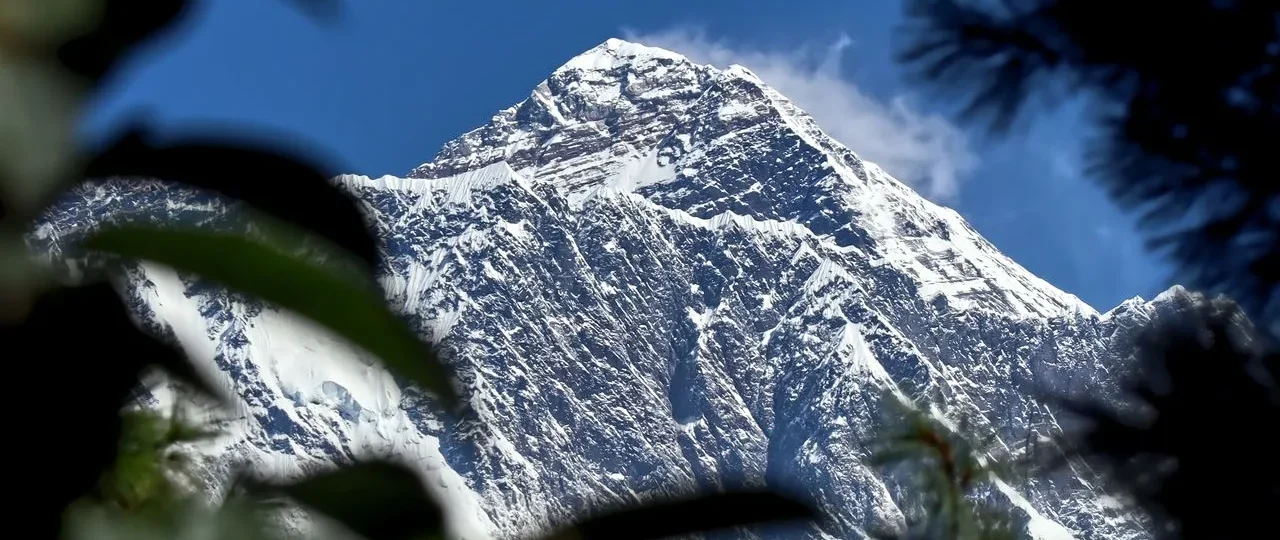
You can see Everest in summer, but you cannot count on seeing it clearly. This is the most important honest answer in this article.
During the monsoon, cloud cover frequently obscures the high peaks. The summit is visible only when the cloud lifts — typically in the early morning, and typically for short windows. The post-monsoon period from late September onward offers the clearest views of the year.
That said, summer visibility is not zero. A 2026 guide to summer trekking notes that while many assume the mountains are “closed” during this time, the Everest region — partially nestled in a rain-shadow effect compared to the lower lowlands — remains a viable, albeit wet, trekking destination. Most mornings start clear, offering a few golden hours of mountain views before clouds roll in by mid-afternoon.
What you will see more reliably in summer: Green valleys, wildflowers, waterfalls swollen by monsoon rain, mist rolling through forests, and a side of the Khumbu that most trekkers never experience. The mountain itself is a bonus, not a guarantee.
What Is Everest Base Camp Like in Summer?
Everest Base Camp in summer is not the bustling tent city it becomes in spring. The climbing expeditions have left. The Icefall route is closed. The temporary infrastructure that supports hundreds of climbers is dismantled.
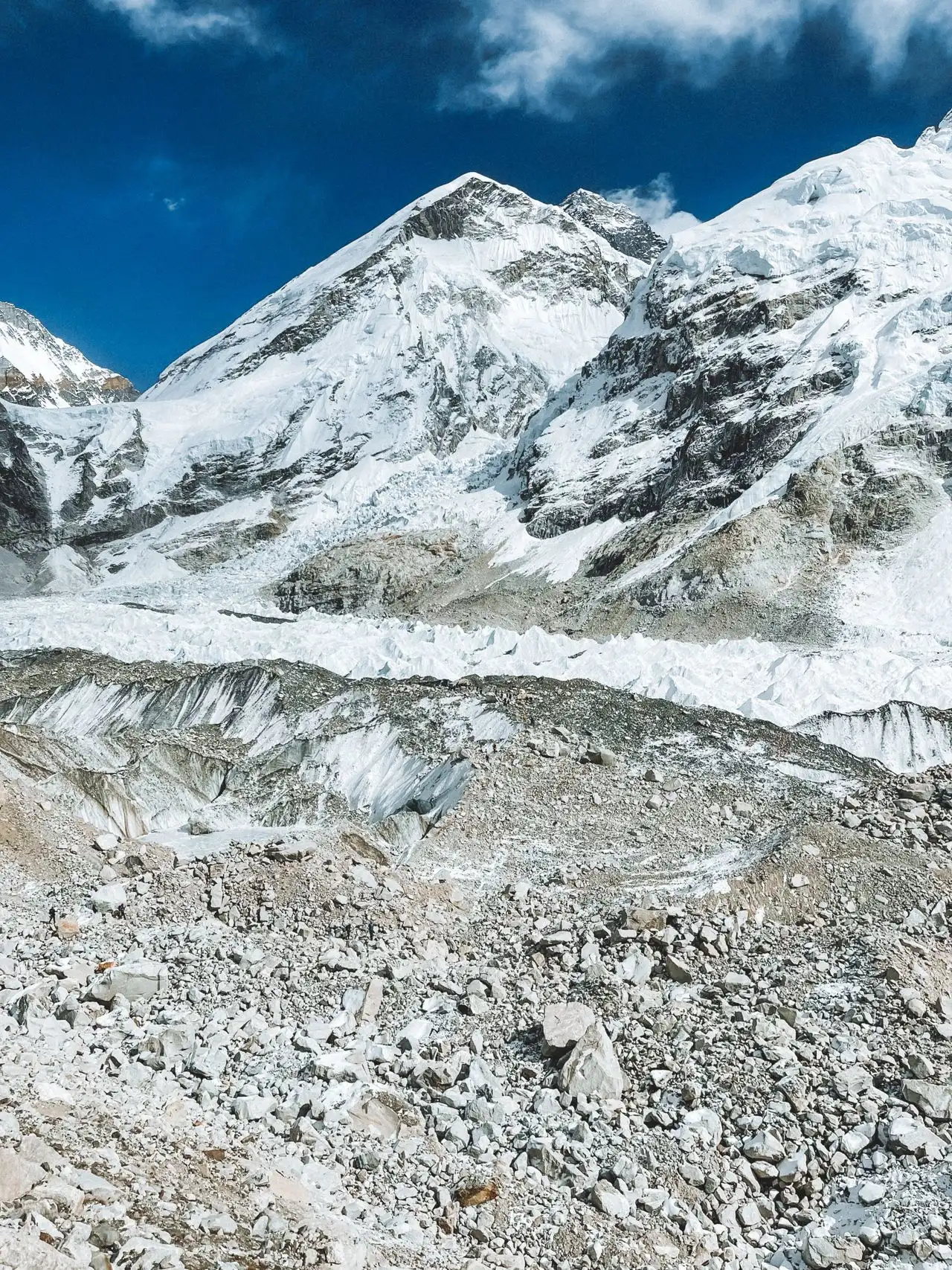
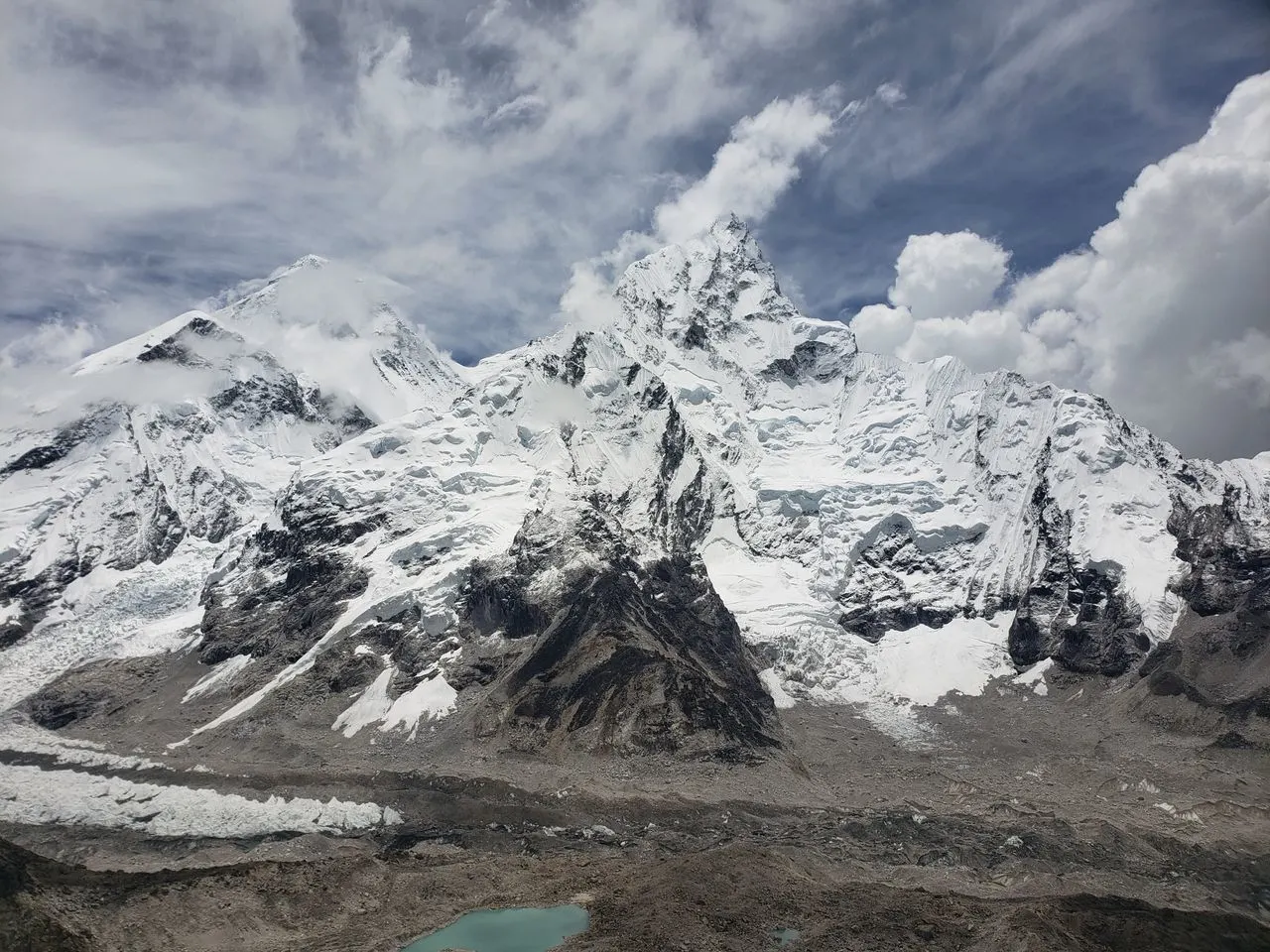
What remains is the terrain itself: the Khumbu Glacier, the ice pinnacles, the moraine, and the stone markers left by past expeditions. Trekkers who reach Base Camp in summer find a quieter, more austere place. There is no crowd, no queue for photographs, no sense of a base camp in operation.
Temperature at EBC in summer: Daytime 9–17°C in June, dropping slightly to 10–16°C in July and August. Nighttime −4 to 5°C in June, −1 to 8°C in July and August. Cold, but not extreme. The main challenge is the altitude and the cloud cover.
What to expect: A rocky, glaciated landscape. Cloud obscuring the surrounding peaks. The occasional break in the weather revealing Nuptse, Pumori, or the Khumbu Icefall. A sense of solitude that is impossible to find in spring or autumn.
Can You Trek to Everest Base Camp in Summer?
Yes. The Everest Base Camp trek is possible in summer. The trail remains open, teahouses operate, and trekkers do complete the route in June, July, and August. Multiple operators confirm that while the rainy season brings occasional showers, cloud cover, and the possibility of flight delays, it also transforms the Everest region into a quieter and greener landscape with far fewer trekkers on the trail.
Trail conditions: Muddy and slippery below Namche. Wetter and more demanding than in dry seasons. Landslide risk in sections where the trail crosses steep, rain-saturated slopes. Above the treeline, the trail is drier but colder. The lower part of the trek often receives the heaviest rainfall, with trails between Lukla, Phakding, and Namche can be wet and muddy.
Acclimatization: The same principles apply as in any season. You need to gain altitude gradually, sleep at intermediate elevations, and take rest days. The slightly higher oxygen content at lower elevations in summer may make the early days feel easier, but the high-altitude sections are just as demanding.
Teahouses: Most teahouses along the main route remain open, though some above Lobuche may close or operate with reduced service. You will not have difficulty finding accommodation. In summer, you might walk for hours without seeing another soul except for local porters and yak herders.
The honest assessment: Trekking to EBC in summer is a genuine adventure, but it is not the classic Everest experience. If your priority is standing at Base Camp, you can do it. If your priority is seeing Everest clearly, wait for autumn.
Can You Climb Mount Everest in Summer?
No. Commercial climbing expeditions do not operate on Everest in summer. The monsoon brings heavy snow, unstable conditions, and avalanche risk. The jet stream, which normally moves north of Everest in late May, can still bring extreme winds.
The standard climbing season is April and May, before the monsoon arrives. This is when the jet stream has moved north, wind speeds drop, and a window of relative calm allows climbers to reach the summit. At the height of the monsoon season, winds on Everest’s peak may top 100 mph (160 km/h) and create total whiteout conditions that would make climbing impossible.
Summer is the off-season for climbing. The mountain is left to the weather.
Why Everest Is Not Normally Climbed in Summer
The reason Everest is not climbed in summer comes down to two factors: snow and wind.
The monsoon delivers enormous quantities of snow to the upper mountain. A 2026 expedition update confirms that the summer monsoon brings heavy snow and unstable conditions to the Nepal Himalaya, and no commercial expeditions run on the standard route in July. Deep snow makes climbing physically exhausting, increases avalanche risk, and slows progress to the point where expeditions run out of time and supplies.
The jet stream adds a second problem. Even in summer, the jet stream can dip south and bring winds exceeding 140 km/h at the summit. These winds make climbing impossible and can trap teams at high camps. The combination of deep snow and extreme wind is why the climbing season is confined to the pre-monsoon window.
Nepal vs Tibet: Which Side Is Better in Summer?
This is a question most articles ignore, and it matters. Everest has two sides, and they experience summer differently.
Nepal (South Side)
The Nepal side receives the full force of the southwest monsoon. June to September brings rain, cloud, and humidity to the lower valleys. The Khumbu region is partially protected by the rain shadow of the main Himalayan crest, so Base Camp itself is drier than Lukla or Namche, but the trekking approach is wet. Lukla flights are unreliable. Trail conditions are muddy below the treeline.
The advantage of the Nepal side in summer is that the trekking infrastructure remains open. Teahouses operate. Guides are available. The trail is a genuine cultural and natural experience, even if the mountain views are obscured.
Tibet (North Side)
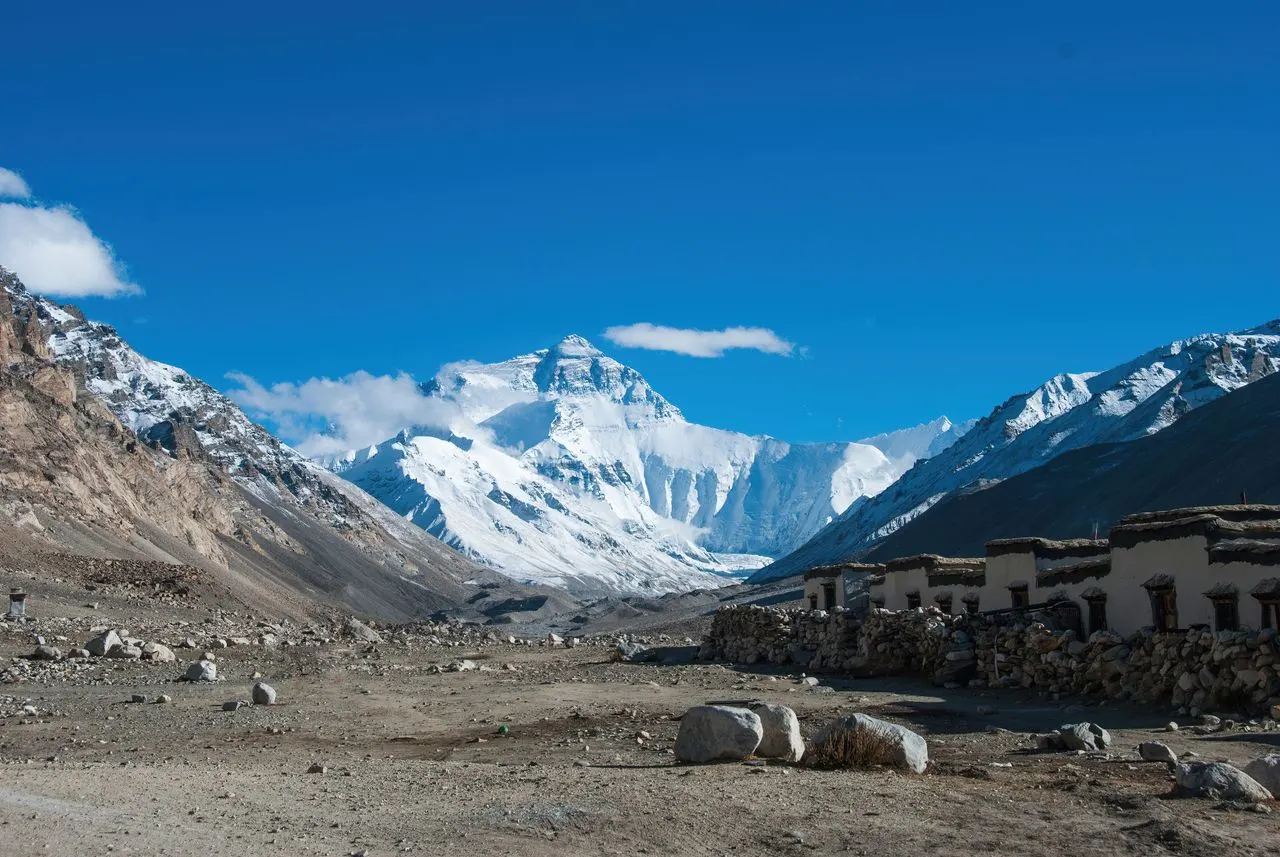
The Tibet side sits in the rain shadow of the Himalayas. Summer is drier and clearer than on the Nepal side, though it still experiences some rain and cloud. Daytime temperatures at North Base Camp are slightly higher than on the south side — around 6–12°C, due to the dry climate on the northern slope.
Access to North Base Camp is by vehicle from Shigatse, not by trekking. You do not walk to the Tibet EBC; you drive. This makes it a different kind of experience — more of a scenic drive than a trek. Permits for Tibet require a guide and are arranged through licensed operators.
The honest comparison: If you want to trek in summer, Nepal is the better choice because the trekking infrastructure is established and the experience is genuine. If you want to see Everest with less cloud, Tibet may offer clearer views — but you will be driving, not trekking, and the experience is fundamentally different.
Advantages of Visiting Everest in Summer
-
Solitude: The trails are quiet. You will share teahouses with few other trekkers. The sense of wilderness is stronger than in peak season.
-
Greenery: The lower valleys are at their most lush. The monsoon rains transform the otherwise barren, brown landscapes into a vibrant emerald world, with wildflowers and waterfalls.
-
Lower costs: Teahouse prices are lower, flights are cheaper, and operators may offer off-season discounts.
-
Cultural immersion: Summer is a time of celebration for the Sherpa people. Festivals like Dumji, celebrated in June or July, bring local communities together for masked dances and traditional rituals.
-
Wildlife: You are more likely to spot Himalayan tahr, musk deer, and rare birds as they come out to graze on the lush vegetation.
-
Different photography: Mist, cloud, and green valleys offer a moodier, more atmospheric visual experience.
Disadvantages of Visiting Everest in Summer
-
Poor visibility: Cloud cover frequently obscures the high peaks. You may not see Everest’s summit at all.
-
Rain and mud: The trail below Namche is muddy, slippery, and sometimes dangerous. Leeches are present in forest sections.
-
Flight delays: Lukla flights are frequently delayed or cancelled. During monsoon, cancellation rates climb past 50%.
-
Landslide risk: Rain-saturated slopes can give way, particularly in the lower valleys. About 28% of trekking routes lie within high-exposure landslide zones.
-
Cold at altitude: Base Camp and above are cold, cloudy, and windy.
-
Limited climbing: No commercial expeditions operate, so you will not see the climbing scene that defines spring.
Who Should Trek Everest in Summer?
Choose summer if you value:
-
Solitude and quiet trails
-
Green, lush landscapes and wildflowers
-
Lower costs and budget travel
-
Cultural immersion and Sherpa festivals
-
A different, more atmospheric Everest experience
-
Flexibility in your schedule and tolerance for weather delays
Choose spring or autumn if you value:
-
Clear mountain views
-
Reliable Lukla flights
-
Dry, stable trails
-
Classic Everest photography
-
The climbing season atmosphere (spring)
-
Predictable trekking conditions
There is no universally “best” season. There is only the season that matches your priorities. If you want the postcard Everest, go in autumn. If you want the mountain without the crowds, summer can work — as long as you accept what it is.
What to Pack for Everest in Summer
Summer packing for Everest is different from spring or autumn packing. The priority is waterproofing and layering, not extreme cold protection.
Essential items:
-
Waterproof trekking boots with good grip
-
Gaiters — essential for mud and leeches
-
Waterproof jacket and trousers — genuinely waterproof, not just water-resistant
-
Multiple base layers — quick-drying, synthetic or merino
-
Fleece or synthetic mid-layer
-
Down jacket — for Base Camp and higher elevations
-
Sleeping bag rated to −10°C
-
Trekking poles — for stability on muddy trails
-
Headlamp with spare batteries
-
Water purification — tablets or filter
-
Sun protection — sunscreen, sunglasses, lip balm
-
Buffer days — build at least two into your itinerary for flight delays
What you do not need: Heavy expedition gear, climbing equipment, or extreme cold-weather clothing. You are trekking, not climbing.
Summer Flight and Transportation Considerations
Lukla flights are the single biggest logistical risk in summer. The runway at Lukla (2,860 m) operates under visual flight rules, meaning pilots must be able to see the runway to land. In monsoon, cloud builds over the Khumbu by mid-morning, and the flyable window is short and unpredictable.
What this means for you:
-
Flights may be delayed by hours or cancelled entirely.
-
You need buffer days at both ends of your trek — at least one, ideally two.
-
Do not book an international departure for the day after your scheduled return from Lukla.
-
Helicopter transfers are an alternative, but they are also weather-dependent and more expensive.
-
In monsoon, flights depart directly from Kathmandu (not Manthali), which simplifies the journey but does not solve the weather problem.
A practical note: There is no road to Lukla. If flights are grounded, you wait. This is why buffer days are not optional in summer — they are essential.
Acclimatization and Altitude in Summer
Altitude does not care what season it is. The risks of acute mountain sickness, high-altitude cerebral edema, and high-altitude pulmonary edema are the same in summer as in spring or autumn.
Key principles:
-
Ascend gradually. The standard itinerary — Lukla to Phakding to Namche, with a rest day in Namche — exists for a reason.
-
Sleep low, climb high. Day hikes to higher elevations followed by return to lower sleeping altitudes help acclimatization.
-
Stay hydrated. The humidity of summer can mask dehydration.
-
Do not ignore symptoms. Headache, nausea, dizziness, and breathlessness at rest are warning signs.
-
Descend if symptoms worsen. The fastest cure for AMS is descent.
Summer’s slightly higher oxygen content at lower elevations may make the early days feel easier, but the high-altitude sections are just as demanding. Do not cut acclimatization days because you feel fine at Namche.
Summer Everest Trek: How to Plan More Safely
-
Book with a local operator. A company like Wonder Hikes Nepal knows the trail, the weather patterns, and the contingency options. They can adjust your itinerary if flights are delayed or trails are blocked.
-
Build in buffer days. Two days at each end is the minimum. Three is better.
-
Start early each day. The best visibility is in the morning. Aim to be walking by 6 a.m. and at your destination by early afternoon.
-
Monitor the forecast. Your guide should have access to weather updates.
-
Carry cash. ATMs above Namche are unreliable, and card payments are rare.
-
Have a contingency plan. If Lukla flights are grounded for days, what will you do? A helicopter charter is expensive but possible.
-
Travel with insurance that covers trekking to 6,000 metres and helicopter evacuation.
Is Mount Everest in Summer Worth It?
Mount Everest in summer is worth it if you know what you are getting. It is not the Everest of the postcards. It is a different mountain — greener, quieter, mistier, and more demanding of your patience. The summit may hide behind cloud for your entire trek. The trails will be muddy. The flights may be delayed.
But you will see a side of the Khumbu that few travellers experience. You will walk through forests alive with birdsong. You will share teahouses with Sherpa families rather than trekking groups. You may witness the Dumji festival, with its masked dances and community rituals. You will stand at Base Camp in solitude, with only the ice and the cloud for company.
If that sounds like an adventure, summer is for you. If it sounds like a compromise, wait for autumn.
Why Choose Wonder Hikes Nepal?
Wonder Hikes Nepal operates treks in the Everest region year-round, including the summer monsoon. We do not pretend that summer is the same as autumn, and we do not promise clear mountain views that the weather may not deliver. What we offer is honest planning, experienced local guides, and the flexibility to adapt when conditions change.
Our summer treks include:
-
Realistic itineraries with built-in buffer days for flight delays
-
Experienced guides who understand monsoon trail conditions and altitude safety
-
Acclimatization-focused planning that does not cut corners
-
Equipment advice tailored to summer conditions
-
Transport coordination — including jeep options when flights are unreliable
-
Responsible trekking practices that respect the Khumbu environment and communities
If you are considering an Everest trek in summer, contact us before you book. We will tell you honestly whether your expectations match the season — and if they do not, we will help you plan for a different time.
Frequently Asked Questions
1.Can you visit Mount Everest in summer?
Yes. You can trek to Everest Base Camp in June, July, and August. The trail is open, teahouses operate, and guides are available. You cannot, however, climb the summit, and mountain views are frequently obscured by cloud.
2.Can you trek Everest Base Camp in summer?
Yes, but with preparation. Expect muddy trails below Namche, frequent rain, cloudy skies, and unreliable Lukla flights. Buffer days are essential.
3.Can you see Everest in July?
Sometimes. July is the cloudiest month. Visibility is poor on most days, with occasional morning clearings. You may see the summit, but you cannot count on it.
4.Is Mount Everest cold in summer?
Yes. Even in summer, temperatures at Everest Base Camp range from 9–17°C during the day in June to 10–16°C in July and August, with nights dropping to −4 to 5°C in June and −1 to 8°C in July and August. The summit remains below −20°C year-round.
5.What is the temperature on Mount Everest in summer?
At Base Camp: 9–17°C daytime in June, 10–16°C in July and August. Nighttime: −4 to 5°C in June, −1 to 8°C in July and August. At the summit: −20 to −30°C. Temperatures vary significantly with elevation and time of day.
6.Does it rain on Mount Everest in summer?
Yes, at lower elevations. The monsoon brings rain to Lukla, Namche, and the lower valleys. Above 5,000 metres, precipitation falls as snow. Base Camp receives less precipitation than the valleys below.
7.Can you climb Everest in summer?
No. Commercial climbing expeditions do not operate in summer due to deep snow, avalanche risk, and extreme wind. The standard climbing season is April–May.
8.Is Everest Base Camp open in summer?
Yes. The trail and Base Camp area are accessible. The climbing infrastructure is dismantled, but trekkers can still reach the site.
9.Is July a good time to visit Everest?
July is the least recommended month. It is the wettest, cloudiest, and most unreliable for flights. It is suitable only for trekkers who prioritise solitude and greenery over mountain views.
10.Is August good for Everest Base Camp?
Late August is better than early August. The monsoon begins to weaken, and occasional clearings occur. Early August is similar to July.
11.Why is Everest not climbed in summer?
The monsoon brings heavy snow and unstable conditions. The jet stream can still produce extreme winds at the summit. The combination makes climbing unacceptably dangerous.
12.Is Everest better from Nepal or Tibet in summer?
Tibet is drier and may offer clearer views, but you drive to Base Camp rather than trekking. Nepal offers a genuine trekking experience with established infrastructure, but wetter conditions.
13.What should I pack for Everest in summer?
Waterproof boots, gaiters, rain jacket and trousers, multiple layers, a down jacket for Base Camp, a sleeping bag rated to −10°C, and trekking poles. Prioritise waterproofing over extreme cold protection.
14.How many buffer days do I need for a summer Everest trek?
At least two at each end of the trek. Lukla flights are frequently delayed or cancelled in monsoon, and you need flexibility to wait for a window.
15.Is Mount Everest in summer worth it?
It depends on your priorities. If you want solitude, greenery, and a different Everest experience, yes. If you want clear mountain views and reliable conditions, wait for autumn.
Final Verdict
Mount Everest in summer is not the Everest you see on posters. It is a quieter, mistier, more unpredictable mountain — one that rewards travellers who come with realistic expectations and punishes those who do not. The summit may remain hidden. The trails will be wet. The flights may test your patience.
But if you are willing to trade the postcard for the experience, summer offers something rare: the Khumbu without the crowds, the forest at its greenest, and Base Camp in solitude. It is not for everyone. It is not for most. But for the right traveller, it is unforgettable.
Wonder Hikes Nepal can help you decide whether summer is right for you — and if it is, we will help you plan a trek that respects the season, the mountain, and the communities who call it home.
Ready to plan your trek?
Tell us your dates and group size. We reply on WhatsApp within a few hours.