Nepal in the winter is colder than the autumn postcards suggest, but it is also quieter, clearer and often better value. Winter here runs from December to February, and the trip works well when you choose the right altitude. Stay below roughly 4,000 metres, or base yourself in Kathmandu, Pokhara and the Terai lowlands, and you get dry days, sharp mountain views and far fewer people. Go high without proper gear and the cold will define your trip. This guide explains what each region is actually like, which routes stay open and how to decide.
Should You Visit Nepal in the Winter?
For most travellers, yes, with one condition: your plan has to respect the altitude. Winter is the off-season, so trails are calmer, guesthouses have space and prices often drop. Skies are usually dry and stable, which is why mountain views can be excellent.
Winter suits you if you:
- want clear Himalayan views without the autumn and spring crowds;
- are happy to wear layers and accept cold nights;
- can stay flexible with dates in case of fog, snow or flight delays;
- prefer cultural travel in Kathmandu, Pokhara and Chitwan to long days at altitude.
It is a weaker choice if you want to cross a high pass, dislike cold bedrooms or need a rigid schedule. If you are still comparing seasons, our month-by-month guide to the best time to visit Nepal shows how winter stacks up against spring and autumn.
Nepal Winter Weather: What to Expect by Region and Altitude
Nepal does not have one winter. It has several, stacked on top of each other by elevation. A morning in the warm lowlands and a night at 5,000 metres are different worlds, so always check the weather for your actual route, not just the country.
| Area | What winter feels like (December to February) |
|---|---|
| Kathmandu Valley | Daytime highs of about 18–19°C. January nights average close to 1°C. Cold, often hazy mornings and mild afternoons. |
| Pokhara and the Terai (Chitwan) | Milder than Kathmandu, with the Terai being the warmest part of the country in winter. |
| Lukla to Namche Bazaar (about 2,800–3,450 m) | Daytime temperatures from around freezing to roughly 8°C. Nights fall below freezing, and published figures for Namche range widely depending on the week. |
| Dingboche to Gorak Shep (4,400–5,200 m) | Daytime often stays at or below freezing. January night lows of -20°C and colder are reported, and wind makes it feel harsher. |
| Thorong La (5,416 m) | Snow can block the pass and close it for days at a time. |
The Kathmandu figures follow standard climate averages for Nepal. Real weeks vary. In early January, the national weather service has measured Kathmandu minimums around 2 to 4°C, which is close to the long-term average of about 2°C for that date.
Why winter views are so good
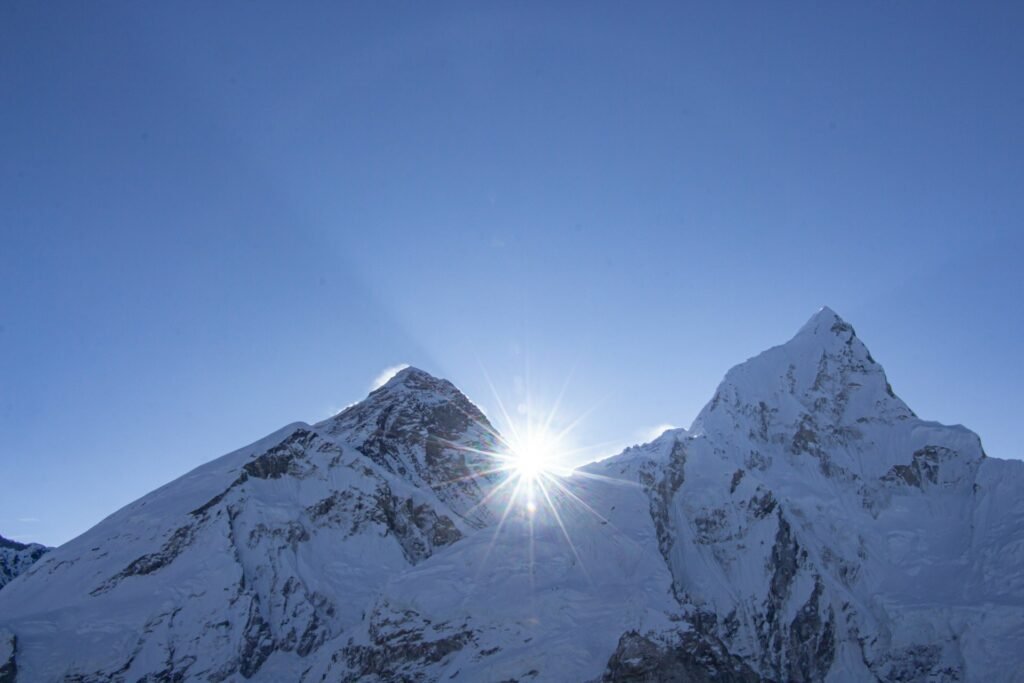
Outside the monsoon, the sky is clearer and the air is drier. Cold, still mornings often give you uninterrupted views of the peaks before clouds build in the afternoon. The trade-off is that haze can settle over the Kathmandu Valley when the gap between daytime and night-time temperatures narrows, so the best mountain views often come once you leave the city.
Daylight and sunshine
Days are shorter, so plan to start walking early and finish before the temperature drops in the late afternoon. Sun is still strong at altitude, so sunglasses, a hat and sunscreen matter even when your hands are freezing.
The Honest Pros and Cons of Nepal in the Winter
What winter does well
- Fewer trekkers. Popular routes feel calmer, and some classics such as Poon Hill are far less crowded.
- Clearer weather. Dry, stable days tend to give good visibility.
- Lower costs on the trail. Accommodation and meals on trekking routes are often discounted, and domestic flights are easier to book. Permit fees stay the same.
- Easier Lukla logistics. In winter, flights to Lukla generally leave from Kathmandu, which saves the long road transfer to Ramechhap used in peak months.
- A more personal look at culture. Kathmandu and Pokhara are less crowded, so temples, courtyards and lakesides feel more relaxed.
What winter makes harder
- Cold nights. Tea house bedrooms are not heated, so your sleeping bag and layers do the work.
- Fewer open lodges. On the main routes most lodges stay open, but some smaller ones close for the season.
- Disrupted transport. Fog and snow can delay or cancel flights, and heavy snowfall can slow trail access.
- Short days. You have less daylight, so there is less margin for slow days or bad weather.
- Icy trails. Frozen sections, especially in shade and above 4,000 metres, need care and often microspikes.
- High passes close. Routes that depend on a pass can be blocked without warning.
Best Winter Treks in Nepal
Winter trekking works best when the route stays mostly below 4,000 metres or tolerates short weather delays. These are the options that make the most sense.
Everest View and the lower Khumbu
If your goal is to see Everest in winter without committing to extreme cold, a short route around Namche Bazaar and Tengboche is the practical choice. Lodges in Lukla, Namche, Tengboche and Dingboche usually stay open. Our Everest View Trek guide explains how to see the mountain in under a week. Because flights are weather-dependent, keep a spare day at either end.
Everest Base Camp (for prepared trekkers)
Everest Base Camp is possible in winter, and visibility can be outstanding. But January is the coldest period, particularly at Lobuche and Gorak Shep, where nights can fall to -20°C or lower. Snow and ice are common between Dingboche, Lobuche and Gorak Shep, and wind around Kala Patthar can be fierce. Heavy snow can cause short disruptions, but guides and porters usually break the trail within a day or two. Choose this route only if you have good cold-weather gear, a flexible schedule and some previous trekking experience.
Langtang Valley
Langtang Valley is one of the more approachable winter options because it is closer to Kathmandu and does not require a flight. Conditions vary and trail access can change, so confirm the latest information before you go. Start with our Langtang route guide for distance, elevation and planning.
Poon Hill and the lower Annapurna region
The Poon Hill route stays popular for sunrise views and tends to be crowd-free in winter. Lower Annapurna trails are the safest bet when you want mountains without extreme conditions. If you are considering Annapurna Base Camp, read the Annapurna Base Camp weather guide first, because snow and trail conditions change quickly at higher camps.
Treks to Skip, or Approach Carefully, in Winter
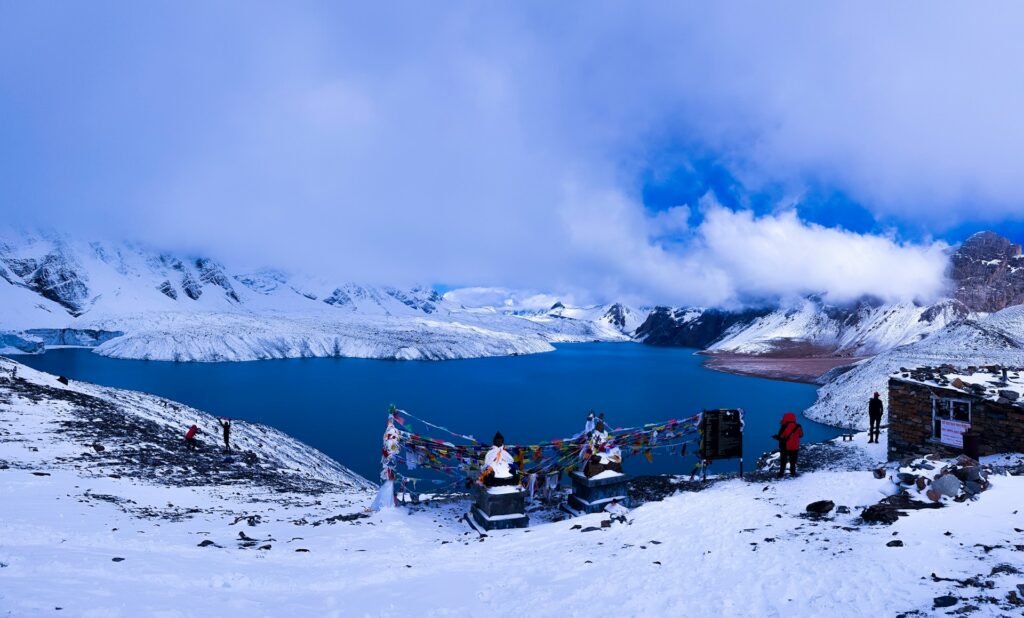
The Annapurna Circuit is the clearest example. The route runs from Besisahar through Manang and over Thorong La, the highest point on the Annapurna Circuit at 5,416 metres. The pass is often blocked with snow and may be closed for days. Operators generally advise first-timers against attempting the full crossing in winter. Lower sections below about 3,000 metres can be pleasant and quiet in December and January, so a partial trek is a sensible alternative.
Starting in December or February rather than January usually gives the best balance of clear weather and open trails. The same logic applies elsewhere: any route that depends on a high pass needs extra caution, spare days and a guide who can read the conditions.
Beyond Trekking: Winter in Kathmandu, Pokhara and Chitwan
Winter is a good time to visit cities and lowlands, and many travellers combine them with a short walk.
- Kathmandu. Temples, old squares and monasteries are easier to enjoy with smaller crowds. Dress for cold mornings and mild afternoons.
- Pokhara. Lakeside walks and mountain views are comfortable in winter, and the town works well as a base. Our Pokhara Lakeside guide covers what to see and do.
- Chitwan and the Terai. This is the warmest part of the country in winter. If wildlife is on your list, the national parks guide explains your options.
Winter Festivals in Nepal
Several festivals fall in the cold months, which adds a cultural reason to travel. Dates move because many follow the lunar calendar, so confirm them close to your trip.
- Tamu Lhosar. The Gurung new year is usually celebrated in the Nepali month of Poush, around late December.
- Maghe Sankranti. Observed on the first day of the month of Magh, around mid-January. It marks the end of the coldest part of winter and is celebrated by several communities, including Tharu, Magar and Kirant groups.
- Sonam Lhosar. The Tamang and Yolmo new year falls between January and February, depending on the lunar calendar.
You can read more about how different communities mark these days in this overview of new year celebrations across Nepal.
What to Pack for Nepal in the Winter
Pack in layers, because mornings, afternoons and nights can feel like three different seasons.
- Base layers. Moisture-wicking merino or synthetic tops and bottoms.
- Insulation. A warm mid-layer and a high-quality down jacket.
- Shell layer. Windproof and waterproof jacket and trousers for wind and snow.
- Sleeping bag. For high routes, choose one rated to about -20°C, since bedrooms are unheated.
- Footwear and traction. Warm waterproof boots, plus microspikes if you will be above 4,000 metres. Trekking poles help on icy sections.
- Hands, head and neck. Insulated gloves, a warm hat and a neck gaiter.
- Sun protection. Sunglasses, a hat and sunscreen. UV is moderate in Kathmandu in January and rises through February.
- Snacks. Cold weather burns more calories, so carry high-energy food.
If you only plan to visit Kathmandu and Pokhara, you still want a warm jacket, a hat and a couple of layers for early mornings and evenings.
Planning, Safety and Logistics
Allow buffer days
Weather can change quickly, and sudden snowstorms and temperature drops are possible. A buffer day or two at the end of your itinerary makes flight delays far less stressful. Nepal’s meteorologists say forecasts are more reliable up to about three days ahead than for a full week, so check updates frequently rather than relying on one early forecast.
Use a local guide on cold routes
A knowledgeable guide can judge snow conditions, know which lodges are open and decide whether it is safe to cross a pass. This matters most on routes with exposed sections or passes. Permit rules and fees do not change in winter, so budget for them as you would in any season.
Respect altitude in the cold
Cold does not replace acclimatisation. Ascend gradually, rest when needed and turn back when conditions or symptoms worsen.
Who should choose winter, and who should wait
| Traveller | Best winter plan |
|---|---|
| First-time visitor | Kathmandu, Pokhara and Chitwan, plus a short low-altitude walk. |
| Beginner trekker | Poon Hill route or a short Everest View trek with spare days. |
| Experienced cold-weather trekker | Langtang Valley or a carefully planned Everest Base Camp trek. |
| Anyone set on a high pass | Wait for spring or autumn, or choose an alternative that avoids the pass. |
Common Winter Mistakes to Avoid
- Booking a tight schedule. Fog and snow can delay flights, so a trip with no spare day is fragile.
- Choosing January for a high route. It is the coldest month on most routes, and starting in December or February often gives better conditions.
- Bringing a summer sleeping bag. Bedrooms on trekking routes are not heated, so a warm, properly rated bag is not optional above the lower valleys.
- Skipping the guide to save money. Snow can hide the trail, and local knowledge about open lodges and safe crossings is worth more in winter than in any other season.
- Forgetting the sun. Cold air does not stop UV, and snow makes glare worse.
- Underfeeding yourself. Cold weather burns more calories, so eat regularly and carry snacks.
Frequently Asked Questions About Nepal in the Winter
Is Nepal worth visiting in the winter?
Yes, if you match your plans to the altitude. Kathmandu, Pokhara and the Terai are comfortable and quiet in winter, and lower-altitude treks offer clear views with fewer trekkers. High-altitude routes are possible but cold, so they suit prepared and experienced trekkers.
Which months count as winter in Nepal?
Winter in Nepal runs from December to February. January is usually the coldest month, and early March starts to feel like spring at lower elevations.
How cold does Kathmandu get in winter?
Daytime highs in Kathmandu are typically around 18 to 19°C from December to February. Nights are much colder, with a January average low of about 1°C, so mornings and evenings need a warm jacket.
Can you trek to Everest Base Camp in winter?
It is possible, and most lodges on the main route stay open, but January is the coldest period and nights at Lobuche and Gorak Shep can fall to -20°C or lower. Lukla flights can be delayed by fog or snow, so build in buffer days.
Does it snow in Nepal in winter?
Snow falls mainly in the high hills and mountains, and trails above roughly 3,500 metres can be icy or snow-covered. In Kathmandu the main issue is cold mornings rather than snow.
Are tea houses open in winter?
Most tea houses on the main trekking routes stay open, especially in larger villages like Namche Bazaar and Dingboche. Some smaller lodges close because fewer trekkers pass through, so a local guide who knows what is operating is useful.
What is the best winter trek for beginners?
Low-altitude options such as the Poon Hill route, the Langtang Valley trek or a short Everest View trek are more forgiving than high-altitude routes. Check current trail and access conditions before booking.
Can you do the Annapurna Circuit in winter?
The lower sections are often walkable, but Thorong La Pass at 5,416 metres can be blocked by snow and closed for days. The full circuit is not recommended for first-timers in winter.
Do flights in Nepal run normally in winter?
Flights operate, and Lukla flights leave from Kathmandu in winter rather than Ramechhap. Fog and snow can still cause delays or cancellations, so leave one or two spare days at the end of your trip.
Is Nepal cheaper in the winter?
Often, yes. Accommodation and meals on trekking routes are commonly discounted in the off-season, and domestic flights are easier to book. Permit fees stay the same.
Ready to plan your trek?
Tell us your dates and group size. We reply on WhatsApp within a few hours.