How Hard Is It to Climb Everest?
Here’s the honest answer, before the detail: climbing Everest is extraordinarily hard — but not primarily for the reason most people assume. The mountain is not the world’s most technically difficult climb. K2, Annapurna, and several other 8,000 m peaks involve harder, more sustained technical terrain. What makes Everest uniquely demanding is altitude. At 8,849 m, the summit sits in what physiologists call the death zone — air so thin that the human body cannot acclimatize, only deteriorate, and every hour spent there is an hour of degrading judgment, coordination, and physical function, regardless of how fit you are.
This distinction matters for anyone seriously researching the question, because the preparation Everest requires — the multi-year progression through other mountains, the altitude-specific physiological conditioning, the oxygen system management — is quite different from becoming a better rock climber or even a stronger alpinist in a purely technical sense.
The mountain is hard in a particular way, and understanding that particular way is the starting point for everything else.
The Numbers: Success Rates, Deaths, and What They Actually Mean
Current success rates average 60 to 70 percent for climbers who make serious summit attempts, with commercial guided expeditions generally reporting higher rates — often 70 to 85 percent for clients who reach high camp in good condition. These figures sound more reassuring than they are, because the denominator matters. These percentages measure climbers who make a genuine summit attempt — they don’t include those who turn back before high camp due to altitude sickness, injury, or weather during the acclimatization period. A more complete picture of overall expedition success is somewhat lower.
A peer-reviewed 2026 study using Himalayan Database records found mortality above base camp fell to 0.7% in 2007-2024, down from 1.4% in 1921-2006. That improvement is real and meaningful — better weather forecasting, better supplemental oxygen systems, and the commercial guide infrastructure that now supports most Everest climbers have all contributed. The historical figure of “approximately 1 percent” that circulates in most sources is the older cumulative statistic; the modern figure for a well-supported commercial expedition is genuinely lower.
During 2023 and 2024, 23 of the 26 deaths on Everest involved climbers with budget operators charging below median prices. This is the statistic most people researching Everest difficulty miss because most guides bury it or omit it entirely. It suggests that a meaningful portion of the risk on Everest isn’t inherent to the mountain — it’s a function of who supports you on it and what they provide. The mountain’s inherent difficulty is partially separable from the operator-driven risk, which is the most practically useful thing a prospective climber can know.
What Actually Makes It Hard: The Five Real Challenges
1. The Altitude — and Why It’s Different From Everything Below It
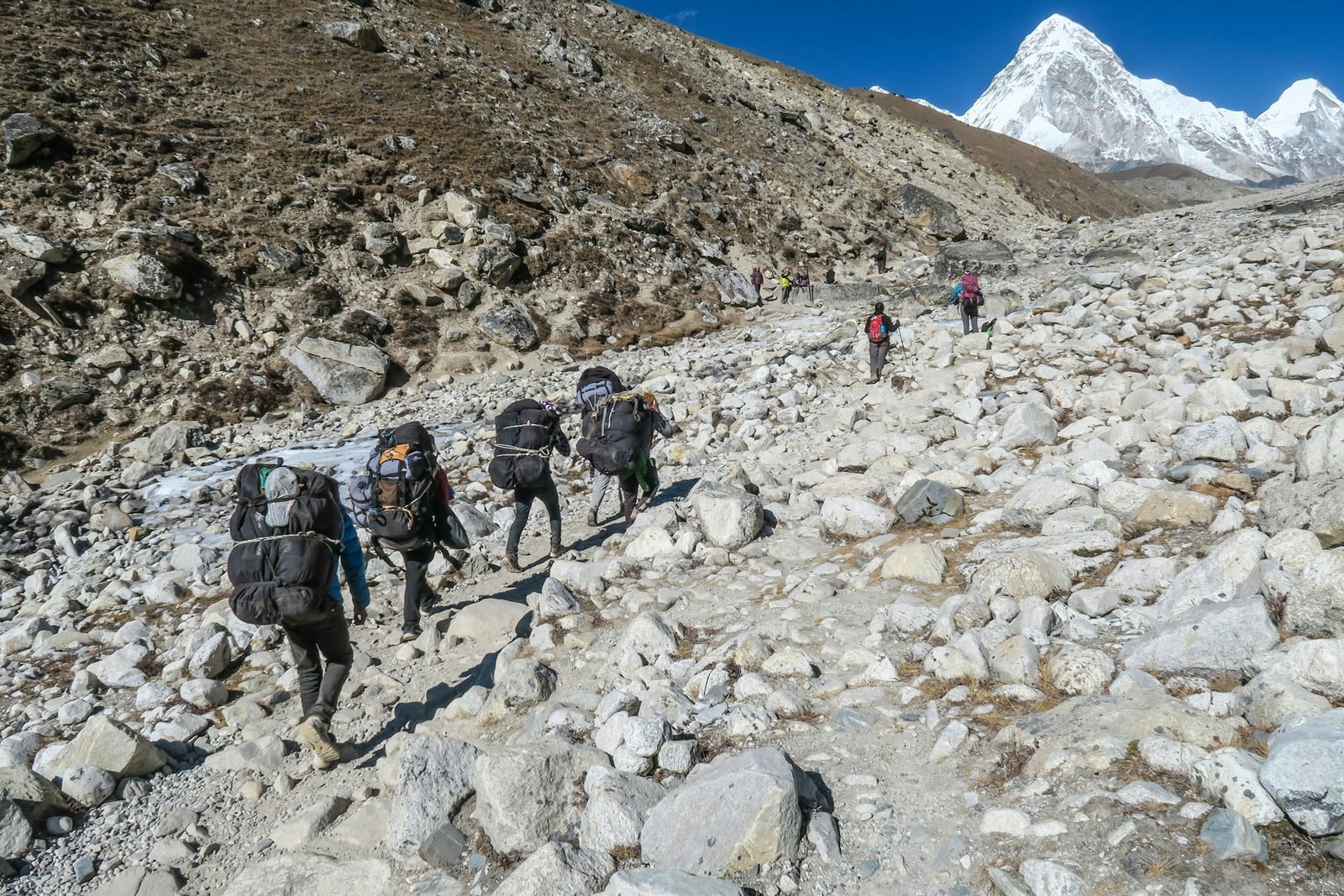
At sea level, oxygen makes up roughly 21 percent of the air. At Everest’s summit, the percentage is the same but the pressure is so low that each breath delivers approximately one-third of the oxygen it would at sea level. The human body can acclimatize to altitudes up to roughly 5,000-5,500 m over weeks or months. Above that, acclimatization slows dramatically. By the time you reach base camp, the oxygen percentage will decrease by 50% of sea level. As you reach the death zone at 8,000 meters, only one-third of the oxygen present at sea level remains.
Above 8,000 m, the body cannot adapt — it can only cope temporarily while continuing to degrade. Cognitive function declines. Decision-making slows. Coordination becomes imprecise. Climbers who have reached high camp in good condition have turned back because they simply couldn’t think clearly enough to make the summit push safely. This isn’t a failure of fitness or willpower; it’s basic physiology at an altitude the human body wasn’t built to inhabit.
Supplemental oxygen — carried in bottles and delivered through a mask above around 7,000-8,000 m — mitigates this substantially for most climbers. Most climbers use supplemental oxygen above 8,000 meters. Only elite mountaineers attempt no-oxygen climbs. Even with supplemental oxygen, the body’s function at the summit is significantly reduced from sea-level baseline. Without it, only the most elite high-altitude specialists in history have survived the summit.
2. The Khumbu Icefall — the Most Dangerous Section of the Standard Route
The Khumbu Icefall is one of the most hazardous aspects — an ever-changing glacier consisting of deep crevasses and massive blocks of ice. Ladders and fixed ropes set by Sherpa teams are used by climbers to cross.
The icefall is crossed in the early hours of the morning, typically before sunrise, because temperature rise increases the risk of serac collapse as the day progresses. The seracs — towers of glacier ice, some as large as houses — can calve without warning. Icefall doctors, a dedicated Sherpa team, reset the ladder and rope system at the start of each season and periodically adjust it as the glacier moves — the icefall moves several centimeters per day, which means the route that existed last week may be significantly different this week.
Most Everest climbers cross the Khumbu Icefall many times during the expedition’s acclimatization rotations. It is the section that experienced mountaineers often describe as the one they think about most, not because it’s technically beyond their ability, but because the objective hazard — collapsing ice — is completely outside their control regardless of how skilled they are.
3. The Technical Sections: Real but Manageable on the Standard Route
Everest via the South Col route is not a technically extreme climb in the way K2’s Bottleneck or Annapurna’s summit ridge are. The vast majority of the route involves walking on snow and ice with crampons on fixed ropes, with the skill demands comparable to what you’d develop climbing a series of serious Himalayan peaks in the 6,000-7,000 m range.
The Hillary Step is a nearly vertical rock face just below the summit, followed by the narrow summit ridge. Climbers must use fixed ropes and careful foot placement to navigate this exposed section. The Hillary Step was significantly altered by rockfall during the 2015 Nepal earthquake — what was a defined rock step is now a broader, less defined section — but the exposure and the altitude at which you encounter it (above 8,790 m) make it more demanding psychologically and physiologically than the technical grade alone would suggest.
The Lhotse Face — a 1,100 m wall of blue ice climbed on fixed ropes between Camp II and Camp III — requires sustained crampon technique at altitude. The traverse between Camp III and the South Col involves genuine exposure. But these sections are within reach of climbers who have systematically built the right experience base before arriving. The difficulty isn’t the technical grade; it’s executing that grade after weeks of altitude, sleep deprivation, and physical depletion.
4. The Weather: Windows, Wind, and the Jet Stream
A typical Everest expedition lasts 6-9 weeks from base camp to summit and back, including acclimatization, rest days, and weather delays. The primary climbing season is spring, when the jet stream that presses against the upper mountain typically lifts briefly — sometimes for only days at a time — creating a weather window that most expeditions target simultaneously.
This convergence of hundreds of climbers on a narrow summit window is the source of the notorious “traffic jam” problem on the upper mountain, most visibly photographed in 2019. Waiting in the death zone for the summit attempt creates genuine risk — every extra hour above 8,000 m costs something the body can’t fully recover. The management of this — choosing when to go, whether to wait or turn back — is among the most consequential decisions of the expedition, and it’s where the quality and experience of your guiding team becomes most visible.
Temperatures at the summit can drop below -40°C, and wind speeds regularly exceed 200 km/h during non-window periods. A weather window that looked stable can deteriorate within hours. Most deaths on descent happen in the afternoon, when deteriorating conditions, depleted oxygen supplies, and cumulative fatigue converge.
5. The Duration: Two Months That Change Everything
Climbing Everest takes 60-70 days, including acclimatization, rotations, and the summit push. This duration is itself a difficulty factor that pure athletic metrics don’t capture. Two months of sustained physical stress at altitude, disrupted sleep in a tent, caloric expenditure that outpaces intake, and the psychological weight of living in genuine proximity to danger — all of these accumulate in ways that no training program fully prepares you for.
Weight loss of 5-15 kg during an Everest expedition is common, not despite adequate nutrition but because the body at altitude absorbs and processes calories less efficiently. Sleep above 5,000 m is consistently poor — altitude affects the respiratory patterns that underpin normal sleep, causing the periodic waking called Cheyne-Stokes breathing that many climbers describe as one of the most disorienting aspects of the whole expedition. By the time summit day arrives, most climbers are doing the hardest physical thing they’ve ever attempted in a state of genuine physical depletion.
The Two Main Routes: South Col vs. Northeast Ridge
Most commercial Everest expeditions operate on the South Col route from Nepal — the route Hillary and Tenzing first climbed in 1953, and the route that today’s extensive fixed-rope and high-camp infrastructure is built around. It is the more supported, more commercially developed, and currently more accessible route.
The Northeast Ridge via Tibet was closed to foreign expeditions in 2020 and its accessibility in 2026 continues to depend on Chinese-Tibetan political arrangements that have been variable. When open, it offers a technically distinct climbing experience — the Second and Third Steps on the upper Northeast Ridge involve harder rock sections than anything on the South Col route — but it currently cannot be relied upon as a planning option for most international teams.
For practical planning purposes in 2026, the South Col route is Everest climbing for the vast majority of commercially guided expeditions.
What Everest Actually Requires: The Realistic Preparation Pathway
This is the section that other sources skip entirely, and it’s the most useful information for anyone who is genuinely considering this rather than simply curious. The typical progression from “experienced trekker” to “Everest-ready” takes a minimum of three to five years of systematic mountain progression, and most serious operators use some version of the following ladder:
- Foundation (years 1-2): Extended high-altitude trekking (Everest Base Camp, Kilimanjaro, Aconcagua base) to assess altitude tolerance. Formal mountaineering skills training — crampon technique, ice axe use, fixed rope ascenders, crevasse rescue basics.
- Intermediate peaks (years 2-3): A series of 6,000 m peaks, ideally including at least one technically committing objective. Island Peak (6,189 m) and Mera Peak (6,476 m) in Nepal are common starting points; Aconcagua (6,961 m) in Argentina is the most widely used 7,000 m-class training ground for Everest candidates.
- High-altitude progression (years 3-5): At least one 7,000 m+ peak, ideally closer to 8,000 m, to assess how your body functions at extreme altitude with supplemental oxygen. Cho Oyu (8,188 m) is the most common Everest preparatory expedition — it’s the lowest of the 8,000 m peaks, the technical demands are modest by 8,000 m standards, and the South Col-style high-camp experience closely mirrors Everest’s structure.
Operators at the serious end of the market will not accept clients without documented progression through something resembling this pathway. Commercial guided expeditions carefully screen clients before accepting them. Those that don’t — and that take deposits regardless of experience background — are a disproportionate part of the accident statistics cited above.
Is Everest Getting Easier or Harder?
This is a genuinely contested question in the climbing world, and the honest answer is: both, in different respects.
- It is more accessible than it was. Supplemental oxygen technology has improved. Weather forecasting is dramatically better. Commercial guide infrastructure on the South Col route is extensive and well-organized. The permit system (however controversial) has brought more logistical support to the mountain.
- It is more crowded than it was. The 2026 permit season saw significant numbers of expedition teams on the standard route. Congestion at the Hillary Step and the South Summit during narrow weather windows creates wait times in the death zone that are genuinely life-threatening, and that no amount of individual preparation can fully mitigate.
It is also being physically altered by climate change in ways that affect difficulty in unpredictable directions. The Khumbu Icefall’s character changes as the glacier recedes. Higher sections of the route, previously snow-covered, are increasingly rocky and loose — which can make them either easier (less ice) or harder (more technical rock) depending on conditions.
The mountain hasn’t become a walk. Only around 6,700 people have reached Mount Everest’s summit successfully across nearly 75 years of commercial climbing — a number that sounds large until you consider that Annapurna Base Camp sees more visitors in a single autumn season.
Frequently Asked Questions
- Is Everest the hardest mountain in the world to climb?
No. Everest is the highest, but not the most technically difficult. K2 has a significantly higher historical death-to-summit ratio and involves harder, more sustained technical terrain. Annapurna has the highest death rate of all 8,000 m peaks. What makes Everest exceptionally hard is altitude sustained across a very long expedition, not technical difficulty. - What is the death rate on Everest?
Modern figures for 2007-2024 put mortality above base camp at approximately 0.7%, down from 1.4% historically, driven by improvements in weather forecasting, oxygen systems, and commercial guide infrastructure. The overall cumulative death-to-summit ratio sits around 2.5%. - What is the success rate for Everest climbers?
Approximately 60-70% of climbers who make a genuine summit attempt succeed. Rates for well-supported commercial expeditions can reach 70-85% for clients who reach high camp in good condition. These figures don’t account for those who turn back during the acclimatization period before making an attempt. - How long does it take to climb Everest?
A standard expedition runs 60-70 days from base camp arrival to return, including multiple acclimatization rotations, rest periods, and the summit push. This is the duration at high altitude — total trip time from Kathmandu is slightly longer. - Do you need prior climbing experience?
Yes, significantly. Serious operators require a documented progression through 6,000 m and 7,000 m peaks at minimum, typically including at least one 8,000 m expedition such as Cho Oyu. The mountain is not appropriate as a first or second Himalayan objective regardless of overall athletic fitness. - Do you need supplemental oxygen?
Almost all commercial climbers use supplemental oxygen above approximately 7,000-8,000 m. No-oxygen ascents have been achieved but only by elite high-altitude specialists and represent a categorically different undertaking — genuinely one of the hardest things any human being has done, rather than an extreme but achievable challenge with proper preparation. - What is the best time to climb Everest?
Spring (April-May) is the primary season, when the jet stream that normally presses against the upper mountain lifts to create weather windows. Autumn is a secondary season with shorter, less reliable windows and historically lower summit rates. Winter ascents have been achieved but are extremely rare and represent the hardest version of an already demanding objective. - What does it cost to climb Everest?
The Nepal government permit alone costs $15,000 per person as of 2026, up from $11,000 previously. Total expedition costs for a commercially guided South Col route climb start around $35,000 and run well beyond $100,000 for premium private expeditions. Budget operators charging significantly below the median have been correlated with disproportionately high accident rates. - What is the “Death Zone” and why does it matter?
The Death Zone refers to altitudes above 8,000 m, where atmospheric pressure is roughly a third of sea level and the human body cannot acclimatize no matter how much time it spends there. Climbers are effectively dying by degrees at that altitude, which is why time above the South Col or North Col camp is deliberately minimized to a single summit push rather than extended stays. - Why do so many deaths happen near the summit rather than lower down?
Most fatalities occur on the descent, not the ascent, because climbers are exhausted, low on oxygen, and moving slowly through the same bottlenecks that caused delays on the way up. The 2019 traffic-jam deaths near the Hillary Step are the clearest example — climbers queuing for hours at extreme altitude burned through their oxygen supply and energy reserves before they’d even started down. - What is the Khumbu Icefall and how dangerous is it?
The Khumbu Icefall is a shifting glacier field just above base camp on the South Col route, riddled with crevasses and unstable ice towers called seracs that can collapse without warning. It’s crossed multiple times per expedition during acclimatization rotations, and it has historically been one of the deadliest single sections of the mountain — disproportionately dangerous for the Sherpa guides and porters who move through it most often. - Is climbing from the North side (Tibet) easier than the South side (Nepal)?
The two routes present different challenges rather than one being clearly easier. The North side avoids the Khumbu Icefall entirely but involves more sustained technical climbing higher up, including the Second Step, and colder, windier conditions overall. Political access through China/Tibet has also been less predictable in recent years, which factors into route choice as much as difficulty does. - What physical training is required to prepare for Everest?
Most serious candidates train for 12-18 months beforehand, combining high-volume cardio, weighted uphill hiking, and strength work, alongside progressively higher-altitude expeditions to build a personal acclimatization history. Mental preparation for prolonged discomfort, cold, and monotony during weeks at base camp is considered just as important as physical conditioning by most experienced guides. - Can a beginner with just gym training climb Everest?
No reputable operator will take a climber straight from gym fitness to Everest, regardless of how strong or determined they are. The combination of altitude physiology, technical rope and ladder work in the Icefall, and decision-making under extreme fatigue can’t be substituted with fitness alone — it requires accumulated real-altitude experience that only comes from prior expeditions. - How has climate change affected the difficulty of climbing Everest?
Warming temperatures are making the Khumbu Icefall more unstable and increasing rockfall and crevasse risk on sections that were once considered comparatively predictable. Melting ice is also exposing old fixed ropes, debris, and even historical remains, which guides now factor into route-planning in ways that weren’t necessary a couple of decades ago.
Final Conclusion on how hard is it to Climb Everest
Climbing Everest is hard in a way that resists the usual superlatives, because the difficulty is distributed across time, physiology, and decision-making rather than concentrated in a single extreme technical moment. The summit itself, for a well-prepared climber on a well-supported expedition in a good weather window, is achievable.
Getting to the point where all three of those conditions apply — the preparation, the support, the window — is the real challenge, and it typically takes years, not months, to honestly arrive there.