Mardi Himal Viewpoints
The Mardi Himal Trek sits on a long ridge that climbs from the edge of Pokhara’s hill country to the base of some of the most dramatic peaks in the Annapurna range. What makes this ridge unusual — and what most itinerary descriptions fail to convey — is that the view changes character meaningfully at every overnight camp along the way. It isn’t one panoramic experience repeated at increasing altitude. It’s five genuinely different relationships with the same mountains, each with its own best light, its own compositional strengths, and its own reason to be there at a particular time of day.
Understanding those differences changes how you plan. It determines whether a 4-day itinerary is enough for what you specifically want to see or whether the Upper Viewpoint sunrise justifies the extra day. It tells you which season rewards which part of the trail most. And it gives you a real sense of what you’re choosing between, rather than a blanket assurance that the views are spectacular — which they are, at every camp, but in ways that are worth knowing separately.
Top 5 best Mardi Himal Viewpoints for 2026
1. Australian Camp (2,060 m) — Valley, Lake, and the Full Fishtail Shape
Australian Camp is the first overnight stop on most Mardi Himal itineraries, reached from Kande in roughly 90 minutes of uphill forest walking. It’s been covered in the Australian Camp and Dhampus guides elsewhere as a standalone viewpoint — and that’s precisely the first thing worth noting here. This camp is significant enough in its own right that it functions as a destination, not just a trailhead.
What the view offers at this altitude that nothing above it does: the valley composition. Australian Camp offers views of Annapurna South, Hiunchuli, and Fishtail, but the framing is what makes it distinct. Phewa Lake and the Pokhara Valley spread southward below on clear mornings, creating a mountain-above-and-valley-below composition that disappears as you climb. More importantly, from 2,060 m you are still far enough from Machhapuchhre to see both summits simultaneously — the genuine twin-horned fishtail shape that gives the mountain its name. Above 3,000 m, Machhapuchhre increasingly dominates as sheer vertical mass rather than as a composed silhouette.
The best light here is late afternoon — the western sky behind the Annapurnas fills with warm color and the valley below catches it. Sunrise at Australian Camp points the wrong direction; the mountains are backlit before the sun clears the ridge. For the wide-angle landscape shot — mountains and inhabited valley together — this is the single best viewpoint on the entire trek.
Best for: Valley-and-mountain photography, travelers on 4-day itineraries who overnight here, the Pokhara day-hike crowd.
Cloud timing: Valley views cloud from the south most afternoons by 2-3 p.m. Mountain views stay clearer longer on most days.
2. Forest Camp to Low Camp Ridge (2,985 m–3,210 m) — The Rhododendron-Framed Views
Forest Camp and Low Camp are listed on virtually every Mardi Himal itinerary as overnight stops rather than viewpoints, which creates the persistent impression that this mid-ridge section is just transit between Australian Camp and the real views above. It isn’t.
The ridge between these two camps is where the trek’s most distinctive seasonal visual experience happens. The lower section of the trek is dominated by dense subtropical forests with rhododendrons, oak, and juniper trees — and by the time you reach Forest Camp, the canopy has thinned enough for the ridge to open on the northeast, revealing the first clear sight of the Mardi Himal peak itself. Most trekkers have been looking at its base through tree cover for a day; this is where the summit resolves as a recognizable shape for the first time.
In spring — March into April — the rhododendron bloom along this section is in full force. Red, pink, and white flowering trees frame the northern skyline where Machhapuchhre rises. This combination — blooming rhododendron in the foreground, snow peaks behind — doesn’t exist at the Upper Viewpoint because nothing grows at 4,200 m. It exists specifically here, and it’s one of the most photographically rich stretches of any short Annapurna trek during spring season.
By Low Camp, the vegetation begins thinning into open scrub, and the panorama widens toward the southeast to pick up early glimpses of Annapurna South’s southwest ridge. The views aren’t the headline act yet — they’re building. But they’re building through one of the most beautiful forest environments in the region, which is a distinct and valuable experience in its own right.
Best for: Spring rhododendron photography, understanding the trek’s visual arc, trekkers who want natural framing rather than open alpine exposure.
Cloud timing: Forest cover at this altitude means less cloud-dependent viewing — even partially cloudy mornings give good forest-and-mountain atmospherics here.
3. High Camp (3,540 m–3,580 m) — The Ridge Panorama at Golden Hour
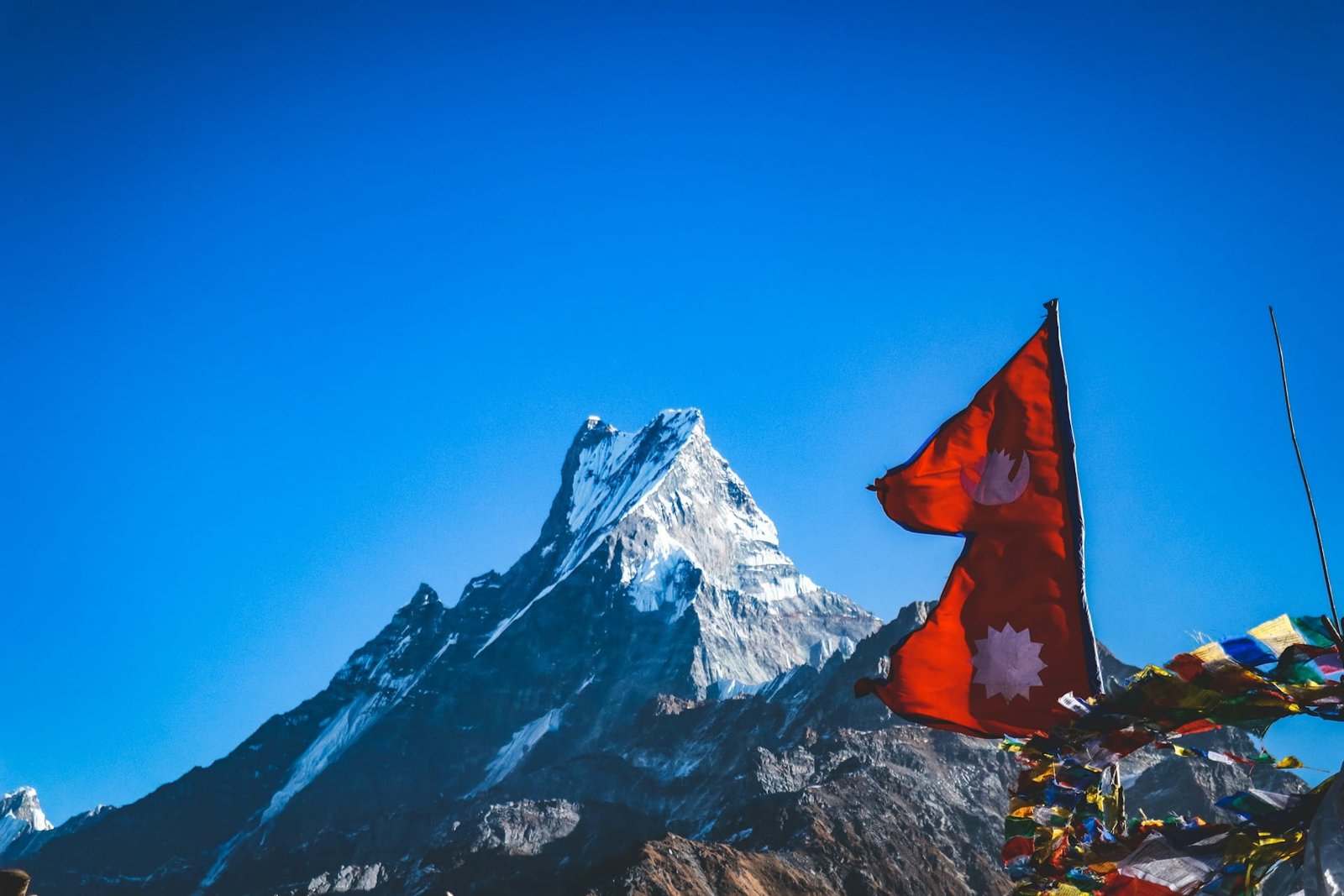
High Camp is where the trek’s character changes decisively. The forest is gone. The trail emerges onto an open ridge with broad, unobstructed sightlines in multiple directions, and the full Annapurna panorama becomes visible for the first time — not just Machhapuchhre and Annapurna South, but the wider sweep extending toward Annapurna I and, on clear days, the distant profile of Dhaulagiri to the west.
From the High Camp at 3,540 m you can witness breathtaking sunrises and sunsets over iconic Himalayan peaks. But sunset specifically is what distinguishes High Camp from the viewpoints above and below it. The camp faces west across the ridge, and the evening light on Machhapuchhre from here — the mountain catching alpenglow while the valley below falls into shadow — is one of the most repeatedly cited experiences by trekkers who’ve done this route. Many descriptions of the Mardi Himal Trek’s best views point to the Upper Viewpoint sunrise, but it’s High Camp’s sunset that trekkers who’ve done both often remember more vividly.
The exposure at 3,580 m also means this is where the altitude begins to register as a physical experience. Arriving at High Camp from Low Camp involves a sustained climb of several hours on an increasingly open, windswept ridge. The effort of that final climb, followed by watching sunset light move across the peaks, is the emotional high point of the trek for many trekkers who don’t continue above this point.
High Camp sits at around 3,550 to 3,580 meters as the highest regular overnight stop for trekkers on the 4-5 day version of the route. From here, the trail continues above to the Upper Viewpoint for the dawn push, or descends on the alternative return via Siding or Lwang.
Best for: Sunset photography, the full west-to-east Annapurna panorama, overnight stays that allow both evening and morning light on the peaks.
Cloud timing: Wind-blown cloud can arrive quickly at this exposed altitude in the afternoon — trekkers arriving from Low Camp in the early afternoon typically get the best clear window before late-day cloud builds.
4. Mardi Himal Upper Viewpoint (4,200 m) — The Defining Moment of the Trek
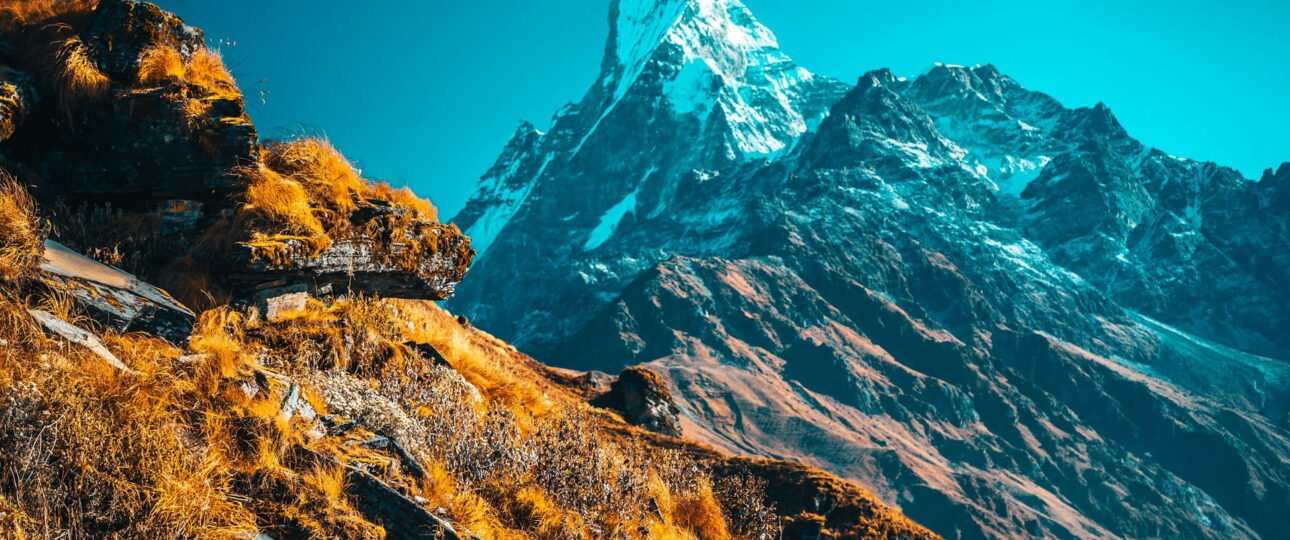
The Upper Viewpoint is, by the testimony of most trekkers who complete the standard route, where the Mardi Himal experience reaches its peak. The highest elevation point of the Mardi Himal Trek is 4,200 meters at Mardi Himal Upper Viewpoint. From here, you’ll get to relish the stunning up-close view of Machhapuchhre. The views of Mardi Himal, Hiunchuli, and Annapurna South are phenomenal.
What the altitude figure doesn’t communicate is the angle. From 4,200 m on the Mardi Himal ridge, Machhapuchhre is close — genuinely, almost uncomfortably close — in a way that stops being a view and starts being a presence. The mountain’s west face fills a disproportionate amount of the northern sky. Climbers on its ridgeline would be visible with binoculars if it weren’t for the fact that Machhapuchhre is one of the few peaks in Nepal that has never been summited — it is considered sacred and climbing permits have not been issued since 1964 — which means the mountain above you is completely, permanently unmarked by human ascent.
Most trekkers reach this viewpoint on a pre-dawn departure from High Camp, arriving before sunrise to watch the alpenglow sequence — the summit of Machhapuchhre catching the first light while the valleys below remain in complete darkness. The sequence lasts twenty to forty minutes depending on conditions, and it is, by essentially universal agreement among people who’ve seen it, one of the most affecting sunrise experiences on any short trek in Nepal.
Catch one of the best sunrises of your lifetime from the Mardi Himal Upper Viewpoint, rising over the high Himalayan peaks. That description, for once, is not marketing exaggeration.
The one honest caveat: this viewpoint is weather-dependent in the way all above-4,000 m viewpoints are. Cloud rising from the Modi Khola valley can obscure the peaks by 9-10 a.m. on many mornings, which is why the pre-dawn start from High Camp isn’t optional — it’s the difference between seeing the alpenglow and arriving to find the view already gone. Trekkers who reach this point at mid-morning in cloud after sleeping in at High Camp are the source of most disappointed accounts of the trek’s views.
Best for: Sunrise alpenglow, close-up Machhapuchhre photography, the trek’s single most powerful visual moment.
Cloud timing: Clear window is typically dawn to 9-9:30 a.m. on autumn days; sometimes shorter in spring. Leave High Camp by 5:00-5:30 a.m. for a 6:00-6:30 a.m. arrival before light hits the peaks.
5. Mardi Himal Base Camp (4,500 m) — The Summit Ridge Perspective
Mardi Himal Base Camp sits at an impressive altitude of 4,500 meters, offering one of the most breathtaking viewpoints in the Annapurna region. Just below it lies the upper viewpoint at 4,250 meters, a popular stop for trekkers en route to the base camp.
Base Camp extends the ridge walk approximately 300 m above the Upper Viewpoint and shifts the angle of the panorama in a way that’s worth understanding before you decide whether the extra hour of climbing is worth it for you specifically.
From Base Camp, the view of Machhapuchhre changes again — you’re now at a similar altitude to the mountain’s lower flanks, and the psychological experience of the peak shifts from “dramatic silhouette above you” to something closer to eye-level with its middle sections. The panorama also widens significantly at this altitude: at sunrise, Mardi Himal Base Camp unveils a stunning panorama of the Annapurna Sanctuary, with unforgettable views of Mardi Himal, Machhapuchhre, Hiunchuli, Dhaulagiri, Annapurna I, and Annapurna South.
The Annapurna I view is the most significant addition over the Upper Viewpoint — at 8,091 m, Annapurna I’s summit is the world’s tenth-highest peak, and from Base Camp you see it at an angle that’s partially obscured by the ridge profile at the Upper Viewpoint. If the wider Annapurna Sanctuary sweep rather than the close Machhapuchhre experience is your primary visual goal, Base Camp is worth the additional effort.
The honest reality that most itinerary pages skip: the vast majority of trekkers who do the Mardi Himal Trek turn around at the Upper Viewpoint, and the vast majority describe it as having seen everything they came for. Base Camp is the extension for those who want to push further, who have the acclimatization and energy margin for an additional two hours of climbing above 4,200 m, and who specifically want the wider sanctuary view rather than the close mountain perspective the Upper Viewpoint delivers.
Best for: Wider Annapurna Sanctuary panorama, Annapurna I and Dhaulagiri views, trekkers with a 6-7 day itinerary who have acclimatization buffer days.
Cloud timing: Same as Upper Viewpoint — the Base Camp push is typically combined with the same pre-dawn departure from High Camp, arriving at Upper Viewpoint for sunrise and continuing to Base Camp in the post-dawn window before cloud arrives.
How the Views Change by Season
The five viewpoints exist year-round, but what you see from them shifts significantly with the season — and this is a planning factor no competing guide properly develops.
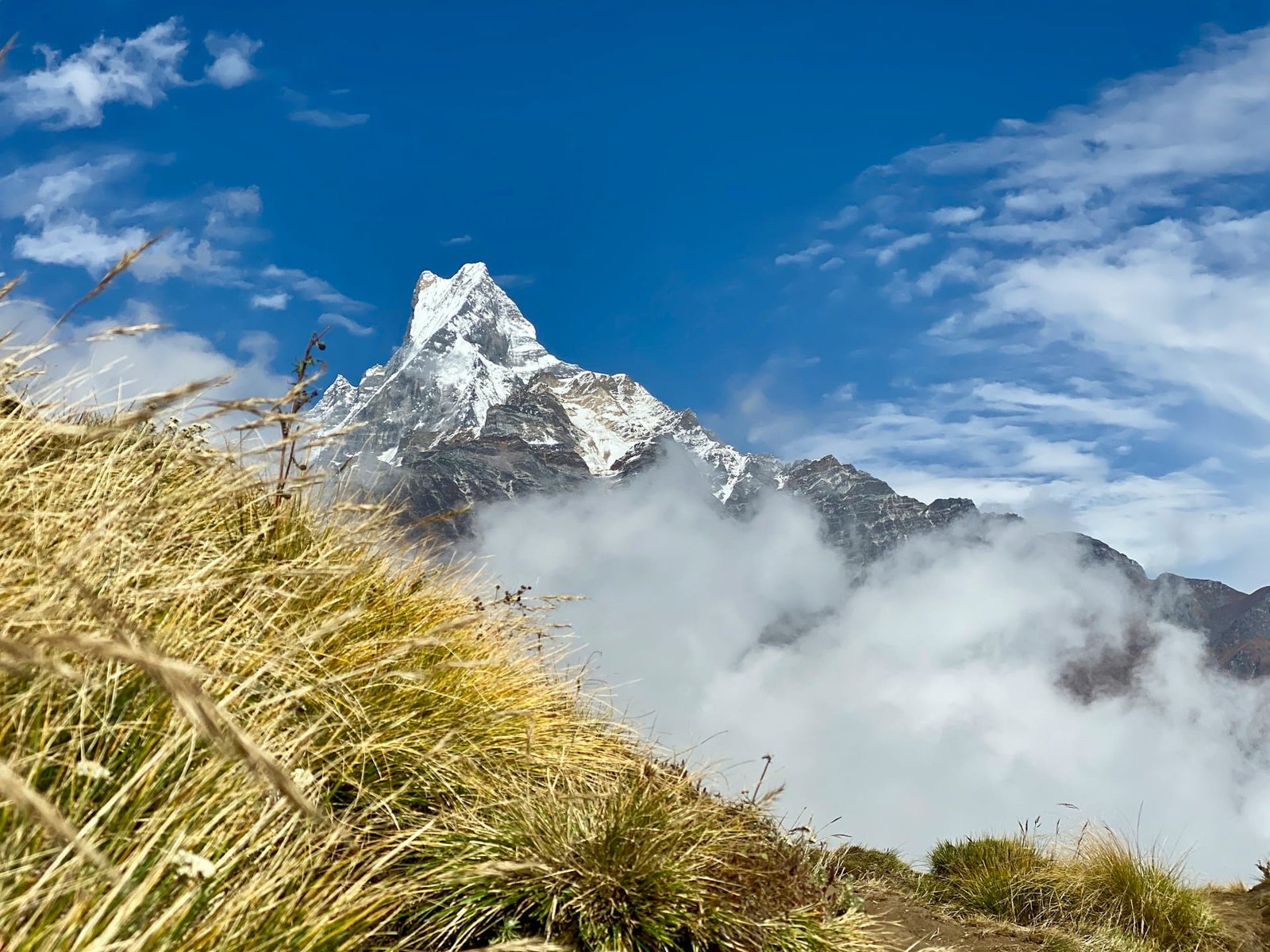
- Autumn (September-November) gives you the clearest post-monsoon air and the sharpest long-distance views — Dhaulagiri and the wider Annapurna panorama are most reliably visible in late October and early November when atmospheric haze is at its lowest. This is the peak season for the Upper Viewpoint and Base Camp specifically.
- Spring (March-May) brings the rhododendron bloom that makes the Forest Camp to Low Camp section its most vivid. Mountain views are generally good but can carry more atmospheric haze as spring progresses, particularly above 4,000 m. The mid-ridge section rewards spring trekkers most; the upper viewpoints reward autumn trekkers most.
- Winter (December-February) thins the trail traffic significantly and brings cold, crisp air that can actually deliver excellent long-distance visibility — some of the clearest Upper Viewpoint photos circulating online were taken in winter. The trade-off is genuinely cold nights at High Camp (below -10°C in January) and the possibility of snow on the trail above 3,500 m, which affects access to the Upper Viewpoint and Base Camp.
- Monsoon (June-August) is the season to avoid if the views are your reason for the trek — cloud cover at the upper viewpoints is near-constant through the summer months.
Frequently Asked Questions about Mardi Himal Views
- What is the best viewpoint on the Mardi Himal Trek?
The Upper Viewpoint at 4,200 m is where most trekkers have their defining visual experience on Mardi Himal trek — particularly the pre-dawn alpenglow on Machhapuchhre. Base Camp at 4,500 m adds a wider Annapurna Sanctuary panorama but requires additional climbing above an already excellent stopping point. High Camp at 3,580 m offers the trek’s best sunset views. - What mountains can you see from the Mardi Himal Upper Viewpoint?
Machhapuchhre (6,993 m) is the dominant, closest peak — visible at strikingly close range from this angle. Annapurna South (7,219 m), Hiunchuli (6,441 m), Mardi Himal (5,587 m), and on clear days Annapurna I (8,091 m) and Dhaulagiri (8,167 m) complete the panorama. - What time should I arrive at the Upper Viewpoint for sunrise?
Leave High Camp by 5:00-5:30 a.m. for most of the year. The clear visibility window at the Upper Viewpoint typically runs from dawn to 9:00-9:30 a.m. before valley cloud rises. Arriving mid-morning significantly reduces the likelihood of clear mountain views. - Is Base Camp better than the Upper Viewpoint?
Different rather than strictly better. The Upper Viewpoint gives you the most dramatic close-up Machhapuchhre experience. Base Camp adds the wider Annapurna I and Dhaulagiri sweep. Most trekkers who reach the Upper Viewpoint are satisfied; Base Camp is the right choice if you specifically want the broader sanctuary panorama and have the energy and acclimatization margin. - Which season gives the best views on the Mardi Himal Trek?
Autumn (October-November) for the clearest long-distance mountain views at the upper viewpoints. Spring (March-April) for the rhododendron-framed compositions at Forest Camp and Low Camp. Winter is underrated for clarity but carries cold and snow risk above 3,500 m. Avoid monsoon for mountain views. - Do I need extra days to reach the Upper Viewpoint?
A 5-day itinerary from Kande reliably reaches the Upper Viewpoint with a comfortable acclimatization profile. A 4-day itinerary is possible but pushes the pace above 3,000 m in a way that some trekkers find difficult. A 6-7 day itinerary allows both the Upper Viewpoint and Base Camp, plus a rest or exploration day at High Camp. - Can you see Machhapuchhre’s summit, or just the lower slopes?
You see the full peak from base to summit at the Upper Viewpoint, which is part of what makes the angle so striking — Machhapuchhre remains unclimbed and its sacred status to local communities means the fishtail summit itself has never had a confirmed ascent. The mountain’s proximity on this trek gives a scale and detail that’s hard to get from most other Annapurna-region viewpoints. - How crowded are the viewpoints during peak season?
The Upper Viewpoint gets genuinely busy during October-November sunrise hours, with multiple teams converging at once, though it rarely feels as congested as Poon Hill given the wider ridge space. Starting slightly earlier than the main group wave, around 4:45-5:00 a.m., is a practical way to get a clearer few minutes before the crowd builds. - What’s the view like from Low Camp and Forest Camp, lower on the trail?
These lower camps trade distant panoramas for close, framed views — Machhapuchhre and Hiunchuli glimpsed through rhododendron and oak canopy rather than open sky. In spring, the blooming rhododendron forest itself becomes as much a highlight as the mountain views, which is why some itineraries build in extra time here rather than rushing straight to High Camp. - Do clouds ruin the views most afternoons?
Valley cloud typically builds from the south starting mid-to-late morning and often obscures the peaks by early afternoon, especially outside the driest autumn weeks. This is the core reason itineraries schedule the Upper Viewpoint and Base Camp pushes at dawn rather than treating them as a flexible daytime activity. - Can you see Everest or the Khumbu range from Mardi Himal?
No — Mardi Himal sits within the Annapurna range, and the geography means only Annapurna, Machhapuchhre, Dhaulagiri, and their immediate neighbors are visible. Any itinerary or content claiming Everest visibility from this trek is describing a different viewpoint entirely, most likely Poon Hill or one of the Everest region treks. - How does the Mardi Himal view compare to Poon Hill’s?
Poon Hill gives a wider, more distant sweep across the entire Annapurna and Dhaulagiri ranges from a single easy viewpoint reached by a short pre-dawn climb. Mardi Himal trades that breadth for proximity and intimacy — Machhapuchhre feels close enough to touch, at the cost of a longer, higher, more demanding trek to get there.
Conclusion to Mardi Himal Viewpoints
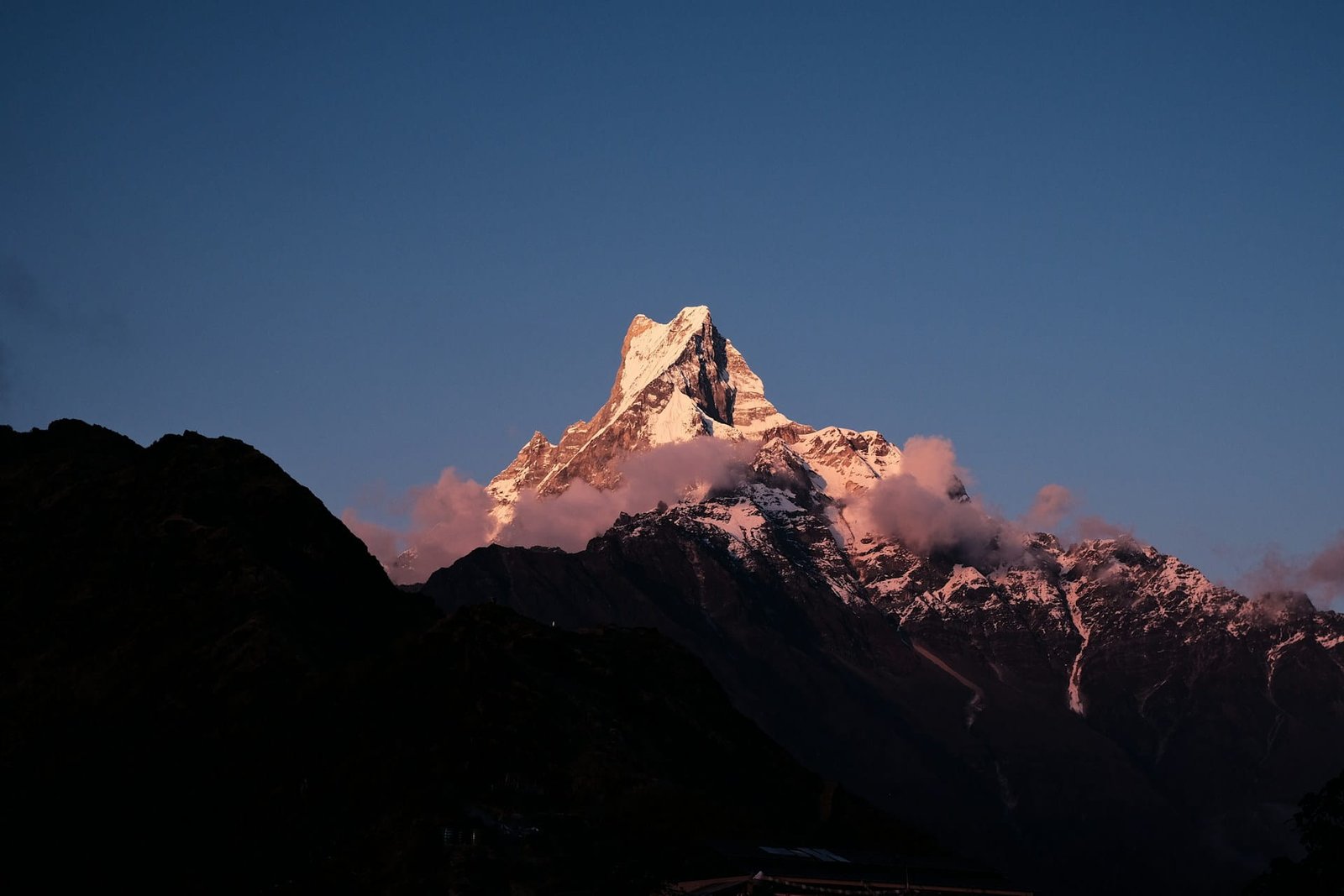
The Mardi Himal ridge is genuinely one of the most view-rich short treks in Nepal — not because every camp offers the same spectacular panorama, but because each camp offers a different and non-redundant version of it. Australian Camp gives you the mountain-and-valley composition you can’t get above. The Forest Camp ridge gives you rhododendron-framed views that don’t exist at altitude.
High Camp gives you the sunset sequence. The Upper Viewpoint gives you the closest Machhapuchhre experience accessible without mountaineering equipment. Base Camp gives you the sanctuary sweep. Done in sequence over five or six days, they add up to something that rivals treks twice the length — which is the best honest summary of why this trail has quietly earned the reputation it has.