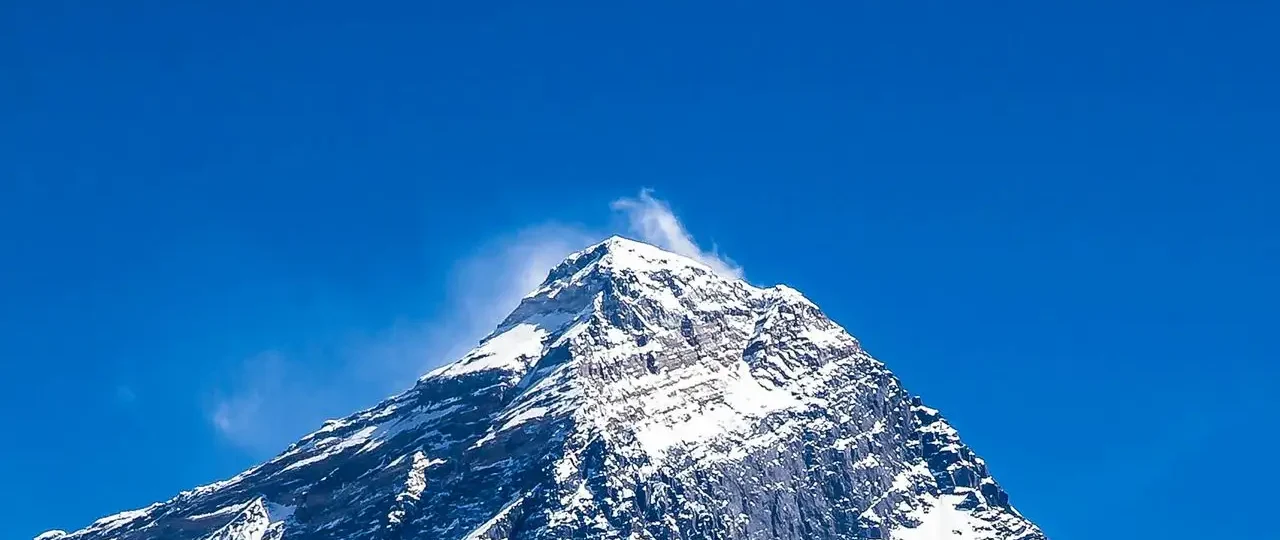
Everest North Base Camp sits on the Tibetan side of the world’s highest mountain, and it is reachable by road. That single fact makes it fundamentally different from the Nepal trek that dominates most Everest conversations. You do not walk for twelve days. You do not sleep in teahouses. You do not climb through the Khumbu Icefall. You drive across the Tibetan Plateau, watch the North Face of Everest rise above the Rongbuk Valley, and stand at over 5,000 metres without having taken a single step uphill.
That accessibility is both the north side’s greatest strength and its most misunderstood quality. Travel articles frequently blur the line between the tourist viewing area and the mountaineering expedition base camp — two very different places with very different access rules. They also recycle permit information that may no longer be current, and they rarely explain why driving to 5,200 metres carries altitude risks that walking gradually does not.
This guide is written for travellers who want the honest picture. Wonder Hikes Nepal operates treks on the Nepal side of Everest, but we regularly advise travellers who are weighing the north against the south. What follows is the clearest explanation available of what Everest North Base Camp actually is, who can visit it, what it costs in 2026, and whether it is the right choice for you.
What Everest North Base Camp Actually Is
Everest North Base Camp is a designated visitor area in the Rongbuk Valley of Tingri County, Shigatse Prefecture, Tibet Autonomous Region, China. It sits beneath the North Face of Everest and serves as the starting point for expeditions attempting the Northeast Ridge route.
The tourist viewing platform on the Tibet side sits at approximately 5,200 metres (17,060 feet) . The climbers’ working base camp is slightly lower at around 5,150 metres (16,896 feet) and is closed to ordinary visitors. The viewing area currently used by tourists sits slightly below the traditional expedition base camp — a deliberate step taken to protect the fragile environment around the mountain.
This distinction matters. When articles claim that “Everest North Base Camp is closed to tourists,” they are usually referring to the expedition camp, not the viewing area. The tourist area remains accessible, but only through an organised tour. Independent travel to the north side is forbidden for foreign visitors.
Where Is Everest North Base Camp?
Everest North Base Camp is in Tingri County, within the Shigatse Prefecture of the Tibet Autonomous Region, China. It lies in the Rongbuk Valley, directly beneath the North Face of Everest, approximately 100 kilometres south of Tingri town.
The nearest settlement of note is Rongbuk Monastery, which sits at 5,154 metres (16,910 feet) and is often described as the world’s highest monastery. The monastery is a functioning Tibetan Buddhist site and one of the primary overnight options for visitors.
The geography here is starkly different from the Nepal side. There is no forest, no rhododendron, no Sherpa villages. The Tibetan Plateau stretches in every direction — arid, wind-scoured, and vast. The Rongbuk Glacier flows down from the North Col, and the North Face of Everest rises above it in a sheer wall of rock and ice that early British explorers found both magnificent and terrifying.
Everest North Base Camp Altitude: Why the Numbers Differ
Everest North Base Camp altitude is frequently listed as 5,150 metres (16,900 feet) . That is the figure used by Wikipedia and most reference sources. But you will also see 5,200 metres cited by travel operators, and occasionally numbers as high as 5,208 metres.
The discrepancy is not an error. It reflects the fact that the “base camp” area is a zone, not a single point. The expedition camp, the tourist viewing platform, and Rongbuk Monastery all sit at slightly different elevations within the same valley system. When you see different numbers, the source is usually referring to a different specific location within the broader North Base Camp area.
What matters for planning is this: you will be sleeping and spending time above 5,000 metres, and the physiological demands of that altitude are real regardless of whether the sign says 5,150 or 5,200. The nearest pass, Gawu La, sits at 5,198 metres (17,047 feet) and is often the windiest and most demanding point of the entire tour.
Tourist Area vs Expedition Base Camp: The Distinction That Matters
This is the single most important thing to understand before planning a visit to Everest North Base Camp.
Tourist-accessible area: Located near Rongbuk Monastery. Reachable by vehicle as far as Rongbuk, then by mandatory eco-shuttle for the final stretch to the viewing platform. You can stand facing the North Face, take photographs, and watch sunrise and sunset on the mountain. The eco-shuttle runs a full schedule from April to October and reduces to on-demand pre-booked service from November to March.
Mountaineering expedition base camp: Located further up the valley, closer to the Rongbuk Glacier. Restricted to expeditions holding climbing permits from the Chinese Mountaineering Association. Tourists cannot enter. There is no walking up to say hello to the climbers.
Since 2016 — and unchanged in 2026 — private vehicles including motorcycles are stopped at the Zhaxizong village transfer center. From there, an official electric eco-shuttle covers the final 8 kilometres to the tourist viewing platform. The rule is enforced strictly.
This is why some older articles claim North Base Camp is “closed to tourists” while newer guides describe it as open. Both statements are partially true depending on which specific area they mean.
How to Reach Everest North Base Camp
Everest North Base Camp is reachable by two primary routes, and the one you choose depends on where you are coming from and how much time you have.
Route 1: From Lhasa via the Friendship Highway
This is the classic overland route. You fly or train into Lhasa (3,650 m), spend two to three days acclimatising and sightseeing, then drive west along the Friendship Highway — China’s National Highway 318 — through Shigatse, Gyantse, and Tingri before turning south toward Rongbuk.
The total drive from Lhasa to the base camp area takes three to four days, with overnight stops at progressively higher elevations. The route passes Yamdrok Lake, the Gyatso La pass (5,220 m), and the Gawu La pass (5,198 m), which offers a panoramic view of multiple Himalayan peaks including Everest, Cho Oyu, Makalu, Lhotse, and Shishapangma. A typical 8-day Lhasa-to-Everest itinerary covers approximately 700 kilometres of driving.
Route 2: From Kathmandu via the Gyirong Border
This route crosses the Nepal–Tibet border at Gyirong Port (called Rasuwagadhi on the Nepali side) and continues along the Friendship Highway to Tingri, then south to Rongbuk. The total distance from Kathmandu to the base camp area is roughly 500 kilometres, with a round trip taking seven to eight days including acclimatisation stops.
The border crossing involves Chinese immigration formalities that can take one to two hours even though the distance is short. From Gyirong, the road climbs onto the plateau through Saga (4,640 m) before reaching Tingri.
The Final Approach
From Tingri, the road to Rongbuk Monastery covers about 100 kilometres and takes two to three hours. Private vehicles are restricted beyond Rongbuk. Visitors transfer to the eco-shuttle for the final stretch to the tourist viewing area.
Permits and Access Requirements for 2026
This is where Everest North Base Camp differs most sharply from the Nepal side. You cannot travel independently. Every foreign visitor must be part of an organised tour through a licensed Tibet-based travel agency, with a registered guide and a pre-approved itinerary.
The permit requirements are layered:
| Permit | Purpose | Issued By |
|---|---|---|
| Chinese Visa | Entry into China | Chinese embassy/consulate |
| Tibet Travel Permit (TTP) | Entry into Tibet Autonomous Region | Tibet Tourism Bureau |
| Alien’s Travel Permit (ATP) | Travel to restricted areas including Everest | Public Security Bureau |
| Military/Border Permit | Access to the Everest border zone | Military authorities |
The Tibet Travel Permit is the foundational document. It is issued free by the Tibet Tourism Bureau, but agencies charge a service fee (typically $30–$100) to handle the application. The permit is only issued to organised tour groups through licensed Tibet-based agencies.
The Alien’s Travel Permit (approximately CNY 50) is required specifically for Everest and the wider Shigatse region. Routes that reach border zones — including Everest Base Camp and the Gyirong border crossing — also require a Military Permit. Mount Everest Base Camp sits within a military border zone, and the Military Permit is mandatory for access.
Important: Permit regulations change. The specific requirements, processing times, and costs in 2026 may differ from previous years. Always confirm current requirements with your tour operator before booking. Typical operational lead time from complete document submission is 10–15 working days for a fly-in tour using locally registered vehicles.
Best Time to Visit Everest North Base Camp
The north side of Everest has a different seasonal pattern from the Nepal side, largely because it sits in the rain shadow of the Himalayas. The worst of the monsoon cloud that obscures the south side in July and August does not affect the north to the same degree.
Spring (late April–early June): The clearest and most popular window. Daytime temperatures at the base camp area range from 5–10°C, with nights dropping to -10 to -20°C. This coincides with the main climbing season, so you may see expedition activity on the mountain.
Late summer to early autumn (late June–September): The China Odyssey guide describes this as another good window, with fair, sunny weather and manageable temperatures. The landscape is greener than in spring.
Autumn (September–mid-October): Clear skies and excellent visibility. Another strong option for photography.
Winter (November–March): Fewer crowds and lower prices, but harsh temperatures and unpredictable snowstorms. The road to Rongbuk can be affected by snow. The eco-shuttle service reduces to on-demand pre-booked operation.
Monsoon (June–August): Warmer but summer monsoon cloud rolling up the south face of the range often obscures Everest from the north for days at a time.
Weather and Visibility: What to Expect
Everest North Base Camp weather is cold and dry. The north side receives far less precipitation than the Nepal side because the main Himalayan crest blocks the monsoon moisture. This means that when the south side is shrouded in cloud, the north side may still offer clear views.
But “may” is the operative word. No one can guarantee that Everest will be visible. Cloud can settle over the North Face for days. Wind can whip up dust and reduce visibility. The best strategy is to allow at least two nights in the Rongbuk area so that you have multiple chances to see the mountain in different conditions.
The sunrise view from the North Base Camp area is often described as the highlight. The first light hits the summit while the valley below remains in shadow, creating a “golden summit” effect that is difficult to photograph but unforgettable to witness.
Average temperatures at Tibet’s Everest Base Camp show a clear seasonal pattern: January maximums of -10°C, rising to 13°C in May, peaking at 19°C in June and July, then dropping to 9°C in October and 2°C in December.
Cost: What a North Base Camp Tour Actually Costs
Costs vary significantly depending on the route, level of comfort, group size, and inclusions. The following table reflects approximate 2026 pricing from operator listings, but these figures can change.
| Cost Category | Approximate Range (USD) |
|---|---|
| Permits (TTP, ATP, Military) | $200–$450 |
| Transport (vehicle + driver) | Included in most packages |
| Accommodation | $50–$150/night |
| Guide (mandatory) | Included in package |
| Meals | $30–$60/day |
| Total (7–8 day tour from Lhasa) | $1,500–$3,000+ |
| Total (via Kathmandu, round trip) | $2,000–$3,500+ |
A comparison source lists the permit cost for North Base Camp at $200–$450, compared with roughly $70 for the Nepal side. Independent travel is forbidden on the north side; you must book through a licensed agency.
The wide range in total costs reflects differences in vehicle type, accommodation standard, group size, and whether flights to Lhasa are included. Cheap packages often exclude permits, meals, or oxygen — check the inclusions carefully.
Accommodation: Rongbuk and the Tent Camp
Accommodation options on the north side are limited compared to the teahouse network on the Nepal side.
Rongbuk Monastery Guesthouse: The most common overnight option. Located at approximately 5,100 metres, opposite the monastery. It has 20 standard rooms and 5 quintuple rooms without independent toilets. Rooms are fitted with electric blankets, power sockets, and hot water bottles. There are no shower facilities and no Wi-Fi.
Tent guesthouses: From late April to mid-October, large tents are set up near Rongbuk Monastery with views of Everest. Each tent has ten beds along the walls and a stove in the middle. Blankets are provided but rarely washed; bring your own sleeping bag or liner. Toilets are outside, so bring a flashlight or headlamp.
Basum Village Guesthouses: Located 40 kilometres north of Rongbuk, at almost 700 metres lower altitude. A good choice for those who want to sleep at a lower elevation. Shared bathrooms without showering facilities. Wi-Fi is usually available.
Tingri: A larger town with more hotel options, about two to three hours from Rongbuk. Some tours overnight here instead, driving up to Rongbuk early in the morning.
Do not expect luxury. The altitude and remoteness limit what is available. Hot water, electricity, and internet are unreliable or absent.
Altitude Sickness: The Real Challenge
Everest North Base Camp altitude sickness risk is significant because the ascent by vehicle is rapid. On the Nepal side, trekkers walk for days and acclimatise gradually. On the north side, you can go from Lhasa (3,650 m) to Rongbuk (5,200 m) in three days, sleeping at progressively higher elevations but without the physiological adaptation that slow trekking provides.
The common 8-day itinerary ascends too quickly for safe, textbook acclimatisation, completely bypassing the standard rules about how much altitude you can safely gain per day. This is the honest truth that most operators gloss over. The North route is easier on your muscles. It is not easier on your oxygen levels, your cardiovascular system, or your body’s ability to adapt to thin air.
Key precautions:
-
Spend at least two nights at intermediate altitudes (Shigatse at 3,800 m, Tingri at 4,300 m) before ascending to Rongbuk.
-
Do not rush the ascent. The drive may feel effortless, but your body is still climbing.
-
Carry oxygen. Most tour operators provide supplemental oxygen for emergencies.
-
Know the symptoms. Severe headache, nausea, dizziness, breathlessness at rest, and confusion are warning signs. If they worsen, descend immediately.
-
Do not assume fitness equals altitude tolerance. Fit people get altitude sickness too.
Sustained altitude is the central challenge of this trip. You spend seven of ten days above 3,650 metres and cross two passes above 5,000 metres. The itinerary is deliberately front-loaded with acclimatisation days in Lhasa. Riders and travellers in reasonable fitness who respect the acclimatisation schedule complete the tour comfortably; those who compress or skip the Lhasa days routinely turn back at Gawu La.
North Base Camp vs South Base Camp: An Honest Comparison
| Factor | North Base Camp (Tibet) | South Base Camp (Nepal) |
|---|---|---|
| Country | Tibet Autonomous Region, China | Nepal |
| Altitude | 5,150–5,200 m | 5,364 m |
| Access | Drive + short eco-shuttle ride | 12–14 day trek from Lukla |
| Duration | 7–10 days from Lhasa | 12–16 days |
| Trekking required | None | 80–100 km on foot |
| View | Full vertical North Face | Khumbu Glacier and South Face |
| Permit cost | $200–$450+ | ~$70 |
| Independent travel | Forbidden | Allowed (guide now mandatory) |
| Cultural experience | Tibetan Buddhist monasteries, plateau landscape | Sherpa villages, teahouses, Khumbu culture |
| Best for | Travellers with limited time, families, senior travellers, photography | Trekkers, active travellers, lodge culture seekers |
The choice is not about which is “better.” It is about which matches what you want. The north side delivers the mountain with minimal walking but real altitude risk. The south side delivers the full trekking experience but demands time and fitness. For most travellers, visiting the North Base Camp in Tingri County is more affordable and far less physically demanding than trekking on the Nepal side.
Who Should Choose Everest North Base Camp?
Choose the north side if:
-
You want to see Everest but cannot commit to a 12–16 day trek
-
You are comfortable with organised group travel and fixed itineraries
-
You want to combine Everest with Lhasa, Shigatse, and other Tibetan cultural sites
-
You accept that you will be driven to altitude rather than walking to it
-
You want a view of the North Face, which is the face seen in most historical Everest photographs
-
You are travelling with family members or companions who cannot trek
Choose the south side if:
-
You want the trekking experience
-
You value flexibility and the option to walk independently
-
You want the Sherpa cultural experience
-
You prefer gradual acclimatisation
-
You want to stand at the actual base camp used by climbers on the standard route
Planning Mistakes to Avoid
Mistake 1: Assuming you can visit independently. You cannot. North Base Camp requires an organised tour with a licensed Tibetan guide.
Mistake 2: Underestimating altitude. The drive to 5,200 metres is not the same as a gentle ascent. Your body needs time.
Mistake 3: Relying on outdated permit information. Regulations change. What was required in 2024 may not be the same in 2026.
Mistake 4: Booking a cheap package without checking exclusions. Permits, meals, oxygen, and accommodation may or may not be included.
Mistake 5: Expecting guaranteed views. Cloud can obscure Everest for your entire stay. Plan for at least two nights.
Mistake 6: Confusing the tourist area with the expedition base camp. They are different places with different access rules.
Mistake 7: Skipping acclimatisation days in Lhasa. The itinerary front-loads rest days for a reason. Cutting them short increases the risk of turning back at Gawu La.
Why Plan Your Nepal Trek with Wonder Hikes Nepal?
Wonder Hikes Nepal specialises in treks on the Nepal side of Everest, including the classic Everest Base Camp trek through Sagarmatha National Park. We do not operate tours in Tibet — that requires a licensed Tibetan agency — but we regularly advise travellers who are deciding between the north and south sides.
If you are weighing a Tibet visit against a Nepal trek, we can help you understand the trade-offs: the time commitment, the physical demands, the cultural experiences, and the views. And if you decide the Nepal trek is right for you, we can plan an itinerary that matches your fitness, timeline, and budget.
Contact us to talk through your options. We will give you the honest comparison, not a sales pitch.
Frequently Asked Questions
1.Where is Everest North Base Camp?
It is in Tingri County, Shigatse Prefecture, Tibet Autonomous Region, China, in the Rongbuk Valley beneath Everest’s North Face. It is approximately 100 km south of Tingri town.
2.Is Everest North Base Camp in Nepal or Tibet?
It is in Tibet, China. The South Base Camp is in Nepal. They are on opposite sides of the mountain.
3.How high is Everest North Base Camp?
The most widely cited elevation is 5,150 metres for the expedition camp, with the tourist viewing area at approximately 5,200 metres. Rongbuk Monastery sits at 5,154 metres.
4.Can tourists visit North Base Camp?
Yes, but only as part of an organised tour through a licensed Tibet-based travel agency. Independent travel is forbidden.
5.Can you drive to Everest North Base Camp?
Yes. The area is accessible by road from Lhasa via the Friendship Highway, or from Kathmandu via the Gyirong border. Private vehicles are restricted beyond Rongbuk Monastery; visitors transfer to a mandatory eco-shuttle.
6.Do you need a permit?
Yes. You need a Chinese visa, a Tibet Travel Permit, an Alien’s Travel Permit, and a Military/Border Permit for the Everest zone. These are arranged by your tour operator.
7.How much does a North Base Camp tour cost?
Permits alone cost $200–$450. A full 7–8 day tour from Lhasa typically costs $1,500–$3,000+, depending on inclusions and comfort level.
8.What is the best time to visit?
Late April to early June and mid-September to early October offer the clearest conditions.
9.Can you see Everest from North Base Camp?
You can see the North Face from the tourist area, but cloud can obscure it. Plan at least two nights for the best chance.
10.Is it difficult?
The walking is minimal, but the altitude makes it physically demanding. Acclimatisation is essential.
11.Is it safe?
With proper acclimatisation and a reputable operator, yes. The main risk is altitude sickness, which can be serious if ignored.
12.How many days are needed?
From Lhasa: 7–10 days. From Kathmandu via the border: 7–8 days round trip.
13.North Base Camp vs South Base Camp — which is better?
It depends on your priorities. North is faster and road-accessible but requires permits and organised tours. South is a trekking experience with more flexibility and gradual acclimatisation.
14.Can beginners visit North Base Camp?
Yes, if they are in reasonable health and follow acclimatisation protocols. No technical skills are required.
15.What should I pack?
Warm layers, a down jacket, sun protection, sunglasses, lip balm, a sleeping bag or liner, a flashlight, and any personal medications. Oxygen is typically provided by operators.
Final Verdict
Everest North Base Camp is not the Everest trek. It is a different way of meeting the mountain — faster, colder, more bureaucratic, but also more accessible for travellers who cannot walk for two weeks. The North Face is the face that early explorers saw, the face that Mallory and Irvine disappeared into, the face that still defines Everest in the historical imagination.
If you want the mountain without the trek, the north side delivers. If you want the full Himalayan experience — the forests, the Sherpa villages, the gradual climb through the Khumbu — the south side is waiting. Either way, understand what you are choosing. The altitude does not care which side you approach from. It demands respect on both.
Wonder Hikes Nepal is here to help you make that choice. If you are leaning toward the Nepal trek, we can plan it. If you are considering Tibet, we will point you toward the right operators. What matters is that you go informed.
Ready to plan your trek?
Tell us your dates and group size. We reply on WhatsApp within a few hours.