Introduction to Khumbu Icefall
Khumbu Icefall is the first major obstacle on the standard Everest climbing route from Nepal, and in 2026 it proved to be one of the most stubborn. A massive unstable serac blocked the route for more than two weeks, delaying the entire climbing season and forcing hundreds of climbers to wait at Base Camp. The route was eventually opened on April 28, 2026, after a joint team of eight Icefall Doctors and sixteen mountain guides found a passage below the crumbling ice tower. But the serac remains in place, and the SPCC has warned that it could collapse at any time.
If you searched for Khumbu Icefall, you likely want to understand what this place actually is, why it matters, and — critically — whether it has anything to do with the Everest Base Camp trek. This guide, prepared by the editorial team at Wonder Hikes Nepal, answers those questions with verified 2026 information. We do not sensationalize the dangers, and we do not pretend that trekkers enter this zone. They do not.
What Is the Khumbu Icefall?
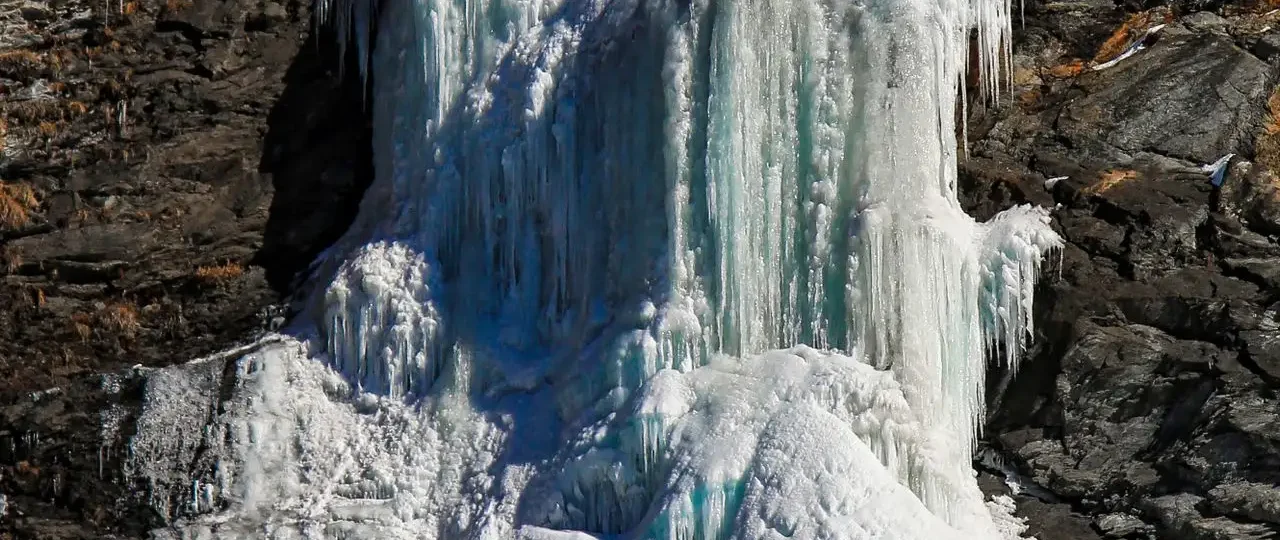
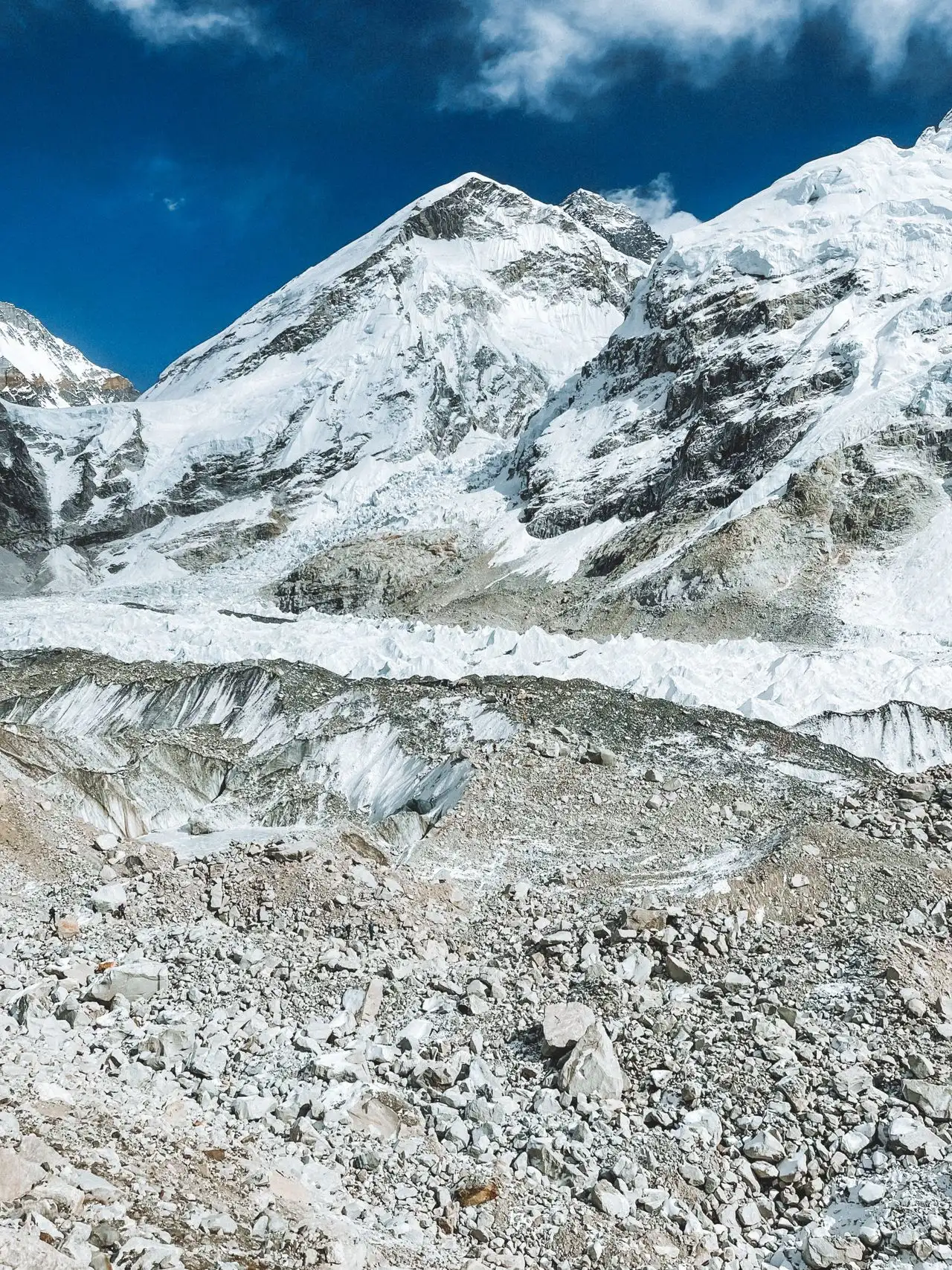
Khumbu Icefall is a section of the Khumbu Glacier that descends steeply from the Western Cwm on the Nepalese side of Mount Everest. An icefall forms when a glacier flows over a steep drop in the underlying terrain, causing the ice to fracture into a chaotic jumble of blocks, towers, and deep cracks. The Khumbu Icefall is the most famous icefall in the world because it sits directly on the most popular climbing route to Everest’s summit.
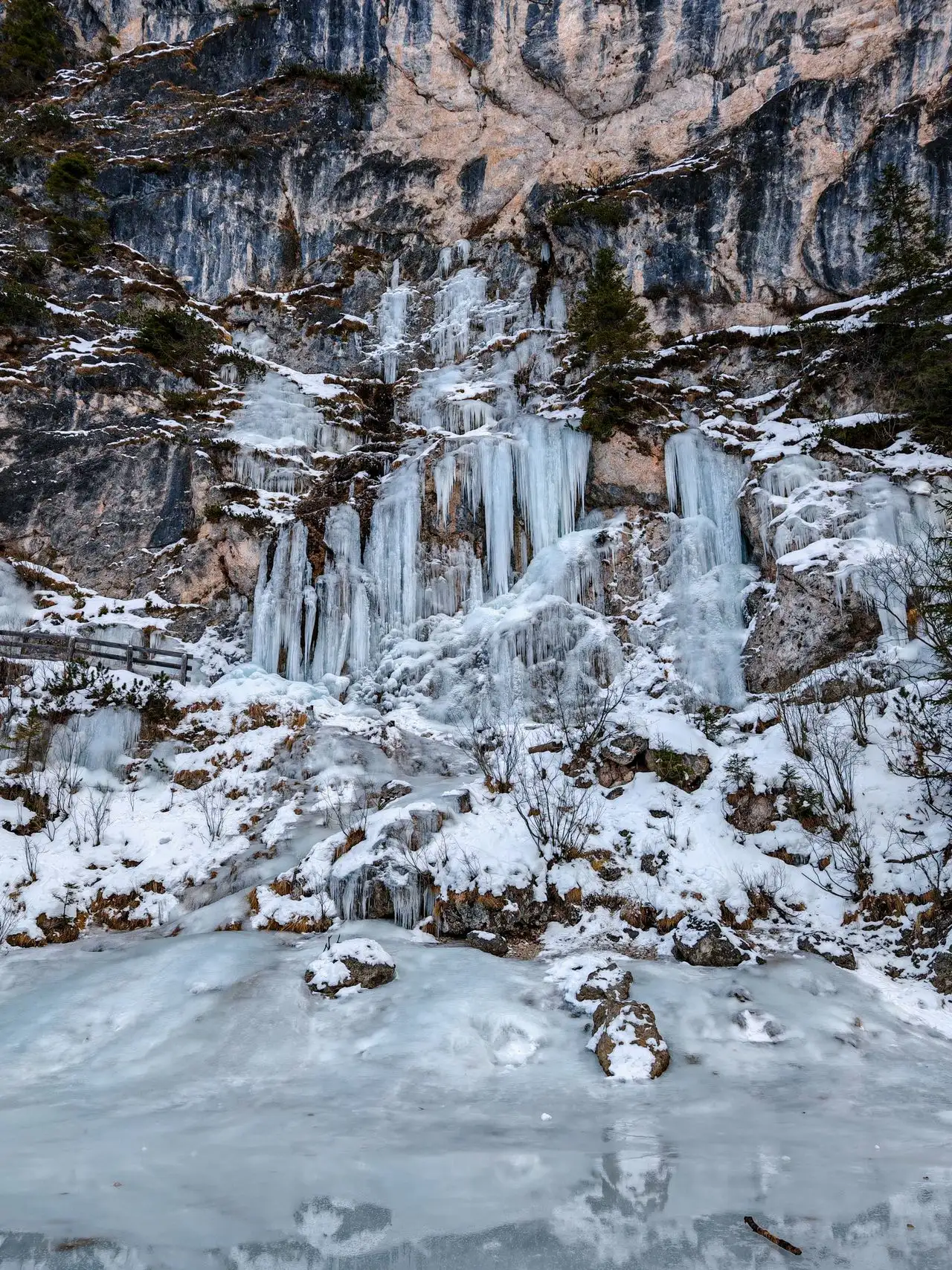
Khumbu Icefall is not a single frozen waterfall. It is a constantly moving mass of ice. The Khumbu Glacier flows downhill at approximately one meter per day in this section — fast enough that the surface changes significantly within hours. Crevasses open and close without warning. Seracs — large blocks of ice, some as tall as ten-story buildings — can collapse at any moment.
The Icefall begins just above Everest Base Camp (5,364 meters) and extends upward to the Western Cwm at approximately 6,065 meters. It spans roughly 2 kilometers in length, though the exact boundaries are not formally defined.
Where Is the Khumbu Icefall Located?
Khumbu Icefall is located in the Khumbu region of northeastern Nepal, within Sagarmatha National Park. It sits on the southern approach to Mount Everest, along the South Col route. The Icefall lies between two major landmarks: Everest Base Camp below and the Western Cwm above. Camp I, at approximately 6,065 meters, sits just above the Icefall where the glacier smooths out into the Cwm.
The position of Khumbu Icefall means it must be crossed by anyone climbing Everest from Nepal. There is no alternative route around it. This is one reason the South Col route is considered more dangerous in certain respects than the Northeast Ridge route from Tibet, which bypasses the Icefall entirely.
How Was the Khumbu Icefall Formed?
Khumbu Icefall formed through glacial processes that operate over centuries. The Khumbu Glacier originates high on the slopes of Everest and Lhotse, accumulating snow that compresses into ice over time. As the ice flows downhill from the Western Cwm, it encounters a steep drop — a change in the glacier bed’s gradient. When a glacier moves over such a steep section, the ice cannot deform fast enough to maintain a smooth surface. It fractures.
The result is a chaotic zone of seracs, crevasses, and snow bridges. Khumbu Icefall is not static. The glacier continues to move, and the ice continues to break apart. This constant motion is what makes the Icefall so dangerous. Research indicates that the Khumbu Icefall has claimed approximately 22 percent of deaths on the Nepalese side of Everest since 1953.
Why Is the Khumbu Icefall So Dangerous?
Khumbu Icefall is dangerous for several interconnected reasons. The hazards are not hypothetical. They are objective and ever-present.
| Hazard | What It Means | Why It Matters |
|---|---|---|
| Serac collapse | Ice towers can fall without warning | A collapsing serac can bury or crush climbers |
| Crevasses | Deep cracks in the ice | A fall into a crevasse can be fatal or trap climbers |
| Snow bridges | Fragile snow covering crevasses | Snow bridges can collapse under weight |
| Ice movement | The glacier shifts continuously | The route can change daily, making fixed ropes and ladders unreliable |
| Avalanche risk | Ice and snow can avalanche from surrounding slopes | Avalanches can sweep through the Icefall without warning |
| Altitude | The Icefall sits between 5,400m and 6,100m | Even at these elevations, altitude affects judgment and physical performance |
The serac hazard is particularly acute. Unlike rockfall, which often gives some warning, seracs can collapse with little to no notice. The collapse of a large serac releases enormous energy. The 2014 avalanche that killed 16 Sherpa workers in the Icefall was triggered by a falling serac high on the West Shoulder of Everest.
Crevasses are equally dangerous. Climbers cross them using aluminium ladders lashed together. A slip can result in a fall into a crevasse, where rescue is difficult and time-consuming. Snow bridges — which may appear solid — can collapse when stepped on.
The 2026 Khumbu Icefall Season: A Historic Delay
Khumbu Icefall presented an unusually serious problem in 2026. A massive serac — measuring approximately 55 meters in length, 28 meters in height, and 37 meters in breadth — became unstable and threatened the only viable route to the summit. The Icefall Doctors began route preparation on March 16 and had secured passage up to the rockfall point by April 8, but could not complete the critical section above it.
The delay lasted more than two weeks. Hundreds of climbers were stranded at Base Camp, waiting for a natural resolution. Experts conducted multiple field inspections, including aerial surveys and drone-based mapping, and concluded that there was no safe alternative path around the unstable wall of ice. One theoretical option — linking 15 to 20 aluminium ladders to scale the serac — was dismissed as too dangerous.
The breakthrough came on April 28, when a joint team of eight Icefall Doctors from the Sagarmatha Pollution Control Committee (SPCC) and sixteen mountain guides from the Expedition Operators Association of Nepal (EOAN) opened the route up to the Nuptse face. The route passes below the remaining serac, which the SPCC says “has multiple cracks and could collapse at any time”.
The delay pushed the season back by approximately two and a half weeks. More than 400 foreign climbers had permits for Everest, and with local guides and support teams, over 1,000 people were waiting to move up the fixed ropes. Teams had barely enough time for one acclimatization rotation before their summit push, and those attempting no-oxygen ascents faced a particularly difficult challenge.
Do Everest Base Camp Trekkers Cross the Khumbu Icefall?
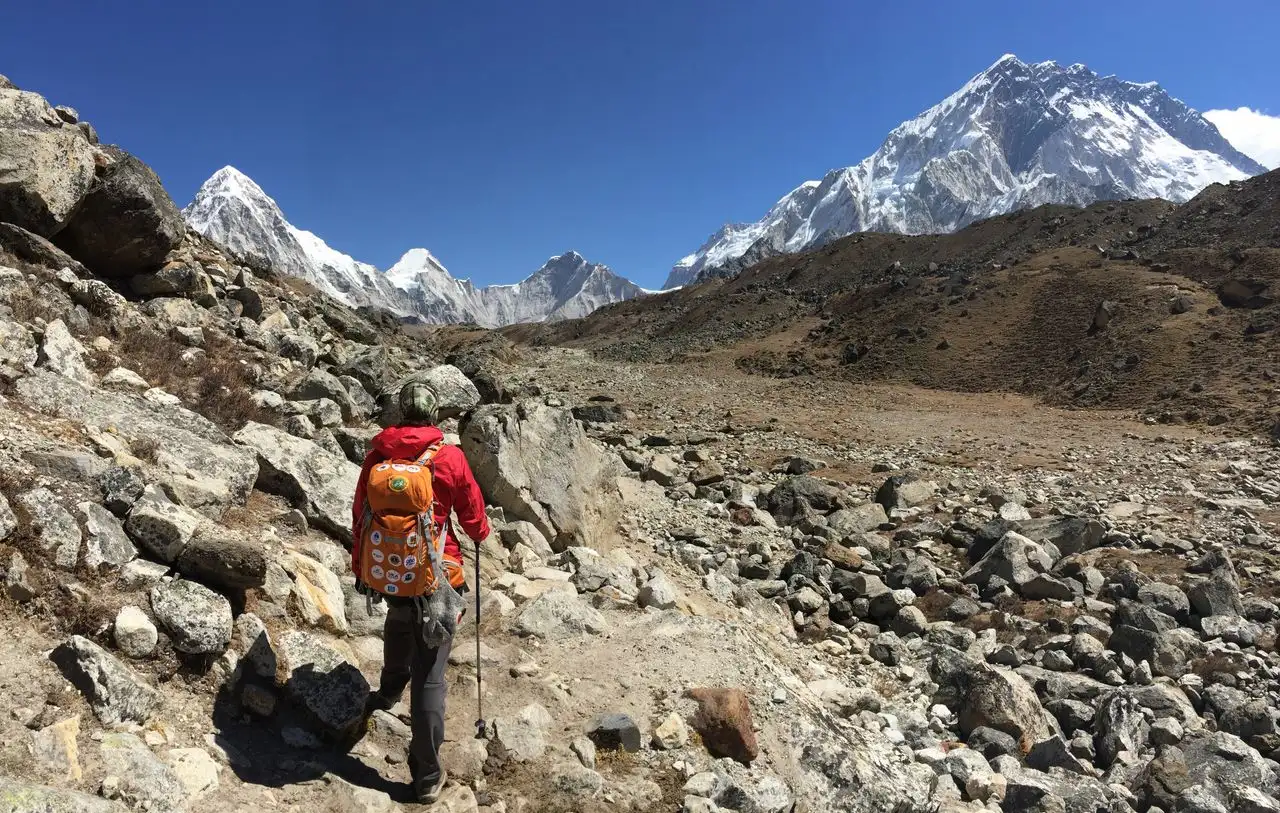
No. This is one of the most important distinctions to understand about the Khumbu Icefall. Trekkers on the Everest Base Camp Trek finish their journey at Base Camp (5,364 meters). From there, they look up at the Icefall but do not enter it. The Icefall is a technical climbing zone that requires mountaineering equipment, training, and experience.
The confusion likely arises because Base Camp is situated directly at the foot of the Icefall. Trekkers standing at Base Camp can see the ice towers and the beginning of the route. But seeing is not crossing. For EBC trekkers, the Icefall becomes visible as you approach Base Camp from Gorak Shep, and that view alone is a highlight of the trek.
| Factor | Khumbu Icefall | Everest Base Camp Trek |
|---|---|---|
| Maximum altitude | ~6,065m (Western Cwm) | 5,364m (EBC), 5,545m (Kala Patthar) |
| Who enters | Everest climbers with permits and equipment | Trekkers with basic gear |
| Technical skills required | Yes — crampons, ice axes, ladder crossings | No |
| Duration in zone | Hours to days, crossed multiple times | Minutes to hours at EBC itself |
| Risk level | Extreme (objective hazards) | Moderate (altitude-related) |
How Do Everest Climbers Cross the Khumbu Icefall?
Khumbu Icefall is crossed using a system of fixed ropes, aluminium ladders, and established camps. The route through the Icefall is not a permanent trail. It is a route that is established each season by the Icefall Doctors.
Climbers typically cross the Icefall in the pre-dawn hours, often starting from Base Camp around 2:00 or 3:00 AM. The reason is temperature: overnight, the ice is frozen solid, making seracs more stable and snow bridges stronger. As the sun rises and temperatures increase, the risk of ice collapse rises.
The crossing involves ladder sections over crevasses, fixed ropes anchored into the ice, and roped travel in certain sections. Some crevasses require three metal ladders lashed together to form a bridge, with gaps exceeding 12 feet. A fit climber carrying a pack may take 4 to 8 hours to cross the Icefall, depending on conditions. Most expeditions cross the Icefall multiple times during acclimatization rotations — going up to Camp I or Camp II, then returning to Base Camp, and repeating the process.
Who Are the Icefall Doctors?
Khumbu Icefall is maintained by a specialized team known as the Icefall Doctors. This team is organized by the Sagarmatha Pollution Control Committee (SPCC), a Nepalese non-profit responsible for environmental management in the Everest region. Since 1997, the SPCC has been contracted by Nepal’s Ministry of Culture, Tourism, and Civil Aviation to establish and maintain the climbing route through the Icefall.
The Icefall Doctors’ job is to find the safest path through the shifting ice, place aluminium ladders across crevasses, fix ropes along the route, and monitor conditions throughout the season. The team consists of eight highly skilled Sherpa climbers recruited each season. Their work is essential — without a maintained route, Everest climbing from the south would be far more dangerous or even impossible.
In 2026, the Icefall Doctors faced one of their most difficult seasons. After the route was finally opened, the SPCC urged climbers and expedition operators to exercise extreme caution beyond the rockfall point, advising quick movement, minimal load carrying, and strict safety measures while crossing ladders. Currently, eight ladders have been installed across three sections, with more likely to be added as crevasses widen. The route fee for 2026 was $600 per climber.
What Is the Western Cwm and What Comes After the Icefall?
Khumbu Icefall leads into the Western Cwm — a large, relatively flat glacial valley that sits above the Icefall at approximately 6,065 meters. The Western Cwm is sometimes called the “Valley of Silence” because of its enclosed, quiet character. Camp I is pitched on the heavily crevassed lower section of the Western Cwm, just above the Icefall, on “the first spot that seems less likely to collapse”.
From the Western Cwm, the Everest climbing route continues through Camp II at approximately 6,400 meters, then the Lhotse Face, Camp III at about 7,200 meters, the South Col at approximately 7,900 meters, and finally the summit push through the Death Zone above 8,000 meters. The Icefall is only the first major obstacle. Above it, climbers face the Lhotse Face, the South Col, and the final summit push.
Historical Context: Major Accidents in the Khumbu Icefall
Khumbu Icefall has been the site of several major accidents. These events have shaped how expeditions operate and have led to changes in route management and safety protocols.
On April 18, 2014, a large serac collapsed high on the West Shoulder of Everest, sending a massive avalanche of ice and snow through the Icefall. Sixteen Nepalese workers were killed — the deadliest accident on Everest at that time. The accident forced the cancellation of that year’s climbing season and led to a redesign of the route to reduce exposure to such hazards.
On April 25, 2015, a magnitude 7.8 earthquake struck Nepal, triggering an avalanche that swept through Everest Base Camp. At least 19 people were killed. While not directly in the Icefall, the earthquake demonstrated the seismic risks in the region.
More recently, on May 5, 2026, an Indian mountaineer and a Nepali Sherpa guide were injured when a serac collapse sent falling ice onto the main climbing route. The incident occurred around 5:45 AM, a reminder that even after the route is opened, the Icefall remains dangerous.
These accidents are not sensationalized here for dramatic effect. They are included because they explain why the Icefall is treated with such caution and why the work of the Icefall Doctors matters so much.
Is the Khumbu Icefall Becoming More Unstable?
There is ongoing scientific interest in how climate change is affecting Himalayan glaciers, including the Khumbu Glacier. Warmer temperatures can affect glacier dynamics, potentially increasing instability in icefalls. Record-holding climber Kami Rita Sherpa has warned that melting snow is heightening risks on Everest. However, the specific impacts on the Khumbu Icefall are complex and not fully understood. Glaciologists continue to study the Khumbu Glacier’s movement and mass balance.
What is clear is that the Icefall has always been dynamic and dangerous. The route changes every season, and sometimes within a season. In 2026, drones were used to guide the Icefall Doctors through the dangerous sections, and there is discussion about whether helicopter shuttles could be used as an emergency measure in future seasons.
Can Beginners Cross the Khumbu Icefall?
No. Khumbu Icefall is not beginner terrain. Crossing it requires technical climbing skills (crampons, ice axe, rope work), experience with ladder crossings over crevasses, physical fitness for high-altitude exertion, acclimatization to altitude, and membership in a permitted expedition with experienced guides.
Attempting to enter the Icefall without proper training, equipment, and support would be extremely dangerous. This is not a place for casual exploration. The 2026 season demonstrated that even experienced climbers and Sherpa teams face unpredictable conditions that can halt the entire season.
What Is the Safest Way for Trekkers to Experience the Khumbu Icefall?
For trekkers who want to see the Khumbu Icefall, the safest approach is to trek to Everest Base Camp. From Base Camp, you can see the Icefall from a safe distance. You will not enter it, but you will understand its scale and its position on the route. The EBC trek itself is a serious undertaking, but it does not require technical climbing skills.
Wonder Hikes Nepal designs Everest Base Camp treks with appropriate acclimatization schedules and experienced guides. We do not operate Everest climbing expeditions. Our focus is on helping trekkers experience the Khumbu region safely and responsibly. If you are interested in seeing the Icefall from Base Camp and understanding its place in Everest history, our Everest Base Camp Trek offers that opportunity.
Khumbu Icefall at a Glance
| Feature | Details |
|---|---|
| Location | Khumbu region, Nepal, on the South Col route |
| Part of | Khumbu Glacier |
| Elevation range | Approximately 5,400m to 6,065m |
| Length | Approximately 2 km |
| Glacier movement | ~1 meter per day |
| Main hazards | Serac collapse, crevasses, snow bridges, ice movement |
| Crossed by | Everest climbers (not EBC trekkers) |
| Route maintenance | Icefall Doctors, organized by SPCC |
| 2026 route status | Opened April 28 after 19-day delay |
| 2026 route fee | $600 per climber |
Frequently Asked Questions About the Khumbu Icefall
1. What is the Khumbu Icefall?
The Khumbu Icefall is a section of the Khumbu Glacier on Everest’s Nepalese side where the glacier descends steeply, fracturing into a chaotic zone of seracs, crevasses, and shifting ice blocks.
2. Where is the Khumbu Icefall located?
It is in the Khumbu region of northeastern Nepal, between Everest Base Camp (5,364m) and the Western Cwm (6,065m), on the South Col climbing route.
3. Do Everest Base Camp trekkers cross the Khumbu Icefall?
No. Trekkers stop at Base Camp. The Icefall is beyond Base Camp and is only crossed by Everest climbers with technical equipment and permits.
4. How high is the Khumbu Icefall?
It extends from approximately 5,400 meters at its base to about 6,065 meters at the Western Cwm, though the exact boundaries are not formally defined.
5. Why is the Khumbu Icefall dangerous?
Because seracs can collapse without warning, crevasses can open suddenly, snow bridges can fail, and the glacier shifts continuously, making the route unstable.
6. What happened in the Khumbu Icefall in 2026?
A massive unstable serac blocked the route for more than two weeks. The route was finally opened on April 28, 2026, after a joint team of Icefall Doctors and mountain guides found a passage below the serac.
7. Who are the Icefall Doctors?
They are a team of eight experienced Sherpa climbers organized by the SPCC who establish and maintain the route through the Icefall each climbing season.
8. What is the SPCC?
The Sagarmatha Pollution Control Committee is a Nepalese non-profit responsible for environmental management and route coordination in the Everest region.
9. Why do climbers cross the Icefall at night?
Overnight temperatures freeze the ice, making seracs more stable and snow bridges stronger. As the sun rises, the risk of collapse increases.
10. How many times do Everest climbers cross the Icefall?
Most climbers cross it multiple times during acclimatization rotations — typically two or three times before the final summit push.
11. What is the Western Cwm?
The Western Cwm is a flat glacial valley above the Icefall at approximately 6,065 meters. It leads to Camp I, Camp II, and the upper Everest route.
12. Has anyone died in the Khumbu Icefall?
Yes. The most deadly incident was the 2014 avalanche that killed 16 Sherpa workers. Other accidents have occurred over the decades.
13. Can tourists visit the Khumbu Icefall?
No. It is a technical climbing zone. Trekkers can see it from Base Camp but cannot enter it.
14. Is the Khumbu Icefall safe in 2026?
The route was opened but the SPCC warned that the remaining serac could collapse at any time. Climbers were advised to exercise extreme caution beyond the rockfall point.
15. How can I see the Khumbu Icefall safely?
Trek to Everest Base Camp. From Base Camp, you can see the Icefall from a safe distance without entering the climbing zone.
How Wonder Hikes Nepal Can Help
Wonder Hikes Nepal specializes in Everest Base Camp treks and other trekking routes in the Khumbu region. We do not operate Everest climbing expeditions, and we do not claim to take clients into the Khumbu Icefall.
What we offer is careful trek planning, acclimatization-focused itineraries, and experienced guides who understand the Khumbu region. If you want to see the Icefall from Base Camp and understand its role in Everest climbing, our Everest Base Camp Trek provides that experience safely.