Langtang Valley Trek Cost
The Langtang Valley Trek is Nepal’s most cost-efficient major Himalayan route, and it earns that description for one specific structural reason: no domestic flights. Every other major Himalayan trek — Everest Base Camp, Annapurna Circuit, Manaslu — involves at least one mountain flight or a significant internal transport cost that starts at around USD 150-250 per person and frequently delays or cancels due to weather. Langtang begins with a road drive from Kathmandu. That single difference accounts for a meaningful part of why a well-organized Langtang trip consistently costs several hundred dollars less than an EBC trek of equivalent quality.
Langtang is significantly more affordable than Everest Base Camp. The difference primarily comes from the costs of flights and permits. Everest requires round-trip mountain flights and higher daily food pricing at altitude. Langtang avoids internal flights entirely, which reduces overall financial pressure.
The total cost for a standard 7-10 day Langtang Valley Trek ranges from roughly USD 700 to USD 1,200 per person for a fully guided trip booked through a registered local agency, or USD 650 to USD 900 for independent trekkers self-arranging with a locally hired guide.
What drives the variation within those ranges is the same four-variable structure that governs every Nepal trekking cost: how many days you’re on the trail, how many people you’re splitting guide and transport costs across, what tier of accommodation you choose, and whether you book through a local Nepali agency or an international operator.
This guide breaks every cost category down clearly, with verified 2026 figures, so any quote you receive becomes something you can check rather than something you have to trust blindly.
Permits: What You Need and What It Costs
Two permits are required for the standard Langtang Valley Trek, and — unlike the Annapurna region where TIMS enforcement is being phased out — both are actively enforced at checkpoints in Langtang National Park.
Langtang National Park Entry Permit
- The Langtang National Park Entry Permit is mandatory for all trekking teams entering the Langtang Valley region. The permit charge is NPR 3,000 (about USD 22-27) for foreign nationals, inclusive of VAT. The charge for SAARC nationals is NPR 1,500. Nepali citizens pay NPR 100.
- The moment you issue the permit, it is valid for up to one month from the date of purchase. During this time, you can trek and stay inside the park as long as you like without paying additional fees. Children under 10 are exempt from the permit fee.
- This permit is verified at the Dhunche checkpoint, which is the entry gate to Langtang National Park, and at several subsequent checkpoints along the trail. Carry the physical permit — digital copies are not accepted at most checkpoints in the national park.
- The permit can be obtained at the Nepal Tourism Board office in Kathmandu (Bhrikutimandap, Sunday to Friday, 9 a.m. to 3 p.m.) or at the Dhunche park entry gate on the day of arrival. Getting it in Kathmandu before departure is preferable — some offices charge more at the trail entry point, and it removes one administrative step from the first day of the trek.
TIMS Card
The TIMS Card is a mandatory requirement for trekking in Langtang. This is a meaningful difference from the Annapurna and Everest regions, where TIMS is being phased out at checkpoints. In Langtang, TIMS remains required in Langtang, Manaslu, far-western Nepal including Rara Lake, and some other regions.
Cost: If you are trekking with a registered trekking agency, the TIMS costs NPR 1,000 for foreign nationals and NPR 300 for SAARC nationals. If you are trekking independently, the cost is NPR 2,000 for foreign nationals and NPR 600 for SAARC nationals.
The TIMS card is obtainable at the Nepal Tourism Board office in Kathmandu or Pokhara, or through your registered trekking agency.
Total Permit Cost Summary
- Foreign nationals trekking with a registered agency: approximately NPR 4,000 (NPR 3,000 national park + NPR 1,000 TIMS) — roughly USD 30-32.
- Foreign nationals trekking independently: approximately NPR 5,000 (NPR 3,000 national park + NPR 2,000 TIMS) — roughly USD 38-40.
- SAARC nationals with agency: NPR 1,800 (NPR 1,500 + NPR 300) — roughly USD 14.
Permit total: approximately USD 30-40 per person for foreign nationals.
The Guide Requirement: Mandatory, Enforced, and Worth Understanding
The guide is mandatory for Langtang since the regulation was enforced by the Government of Nepal. Langtang National Park is one of the regions where the 2023-2025 mandatory guide rule is actively enforced at checkpoints — unlike the Annapurna Conservation Area, where enforcement remains inconsistent. Trekkers without a licensed guide can be turned back at the Dhunche checkpoint.
- A licensed guide must be employed through a TAAN-registered trekking agency. Hiring someone informally does not meet the regulatory requirement.
- Hiring a licensed guide costs USD 25-35 per day. These rates include their salary, food, lodging, and insurance. A porter costs USD 20-25 per day on the same all-inclusive basis.
For a 7-day trekking itinerary (approximately 9 days from Kathmandu including travel), a solo trekker paying for a guide directly absorbs the full daily cost: roughly USD 175-245 for a guide and USD 140-175 for a porter. The per-person cost of both drops significantly as group size grows — a guide and porter traveling with four trekkers divides those same daily rates four ways.
Guide and porter total for a solo trekker on a 7-day trekking itinerary: roughly USD 315-420.
Transport: Kathmandu to Syabrubesi and Back
The trek starts from Syabrubesi, approximately 120 km from Kathmandu. It’s roughly 120 kilometres, but it can take most of a day depending on road conditions.
Three transport options exist, each with a meaningfully different cost and experience:
- Local bus: Local buses are the cheapest option, usually around $10 one way. They are slow but functional. The journey typically takes 6-8 hours. Buses depart from Gongabu Bus Park in Kathmandu. This is the budget option — genuinely functional, but the road to Syabrubesi is narrow and winding, and the back seats on a local bus on this specific road are an acquired taste.
- Tourist/express bus: Slightly more comfortable and cost similar to local bus fares, roughly USD 10-12 one way. Available through accommodation in Thamel.
- Private jeep: Private jeeps cost around $150-200 one way for the vehicle, but when shared among a small group, they become practical and comfortable. For 4-6 people sharing, the per-person cost drops to USD 25-50 one way — a meaningful comfort upgrade for a modest premium. Most agency packages use private jeep transport.
Most trekkers spend $30-70 round trip on transport when combining options or sharing costs.
Transport total: roughly USD 20-60 per person round trip depending on vehicle choice and group size.
Food: Daily Costs on the Trail
Meals cost USD 20-30 per day across the standard Langtang Valley route. The specific breakdown is consistent with what sources report: breakfast (eggs, porridge, toast, pancakes) runs USD 3-7, lunch (dal bhat, noodles, soup) USD 5-10, and dinner (dal bhat, pasta, Tibetan bread, thukpa) USD 6-12.
The price goes higher as you gain altitude from Lama Hotel to Kyanjin Gompa. This is a real and practical consideration — food at Kyanjin Gompa costs noticeably more than at Lama Hotel or Langtang village, simply because everything arriving at 3,870 m has been carried further. Budget USD 25-35 per day for food at Kyanjin Gompa and USD 15-25 per day at lower-altitude stops.
A key point: many package treks include meals as part of the stated price. If your quote says “all-inclusive,” confirm that meals on the trail are specifically included — this is the single phrase most likely to make the difference between a realistic budget and a surprise on the trail.
Food total for a 7-day trekking itinerary: roughly USD 140-210, self-paid.
Lodging: What Teahouses Cost Along the Route
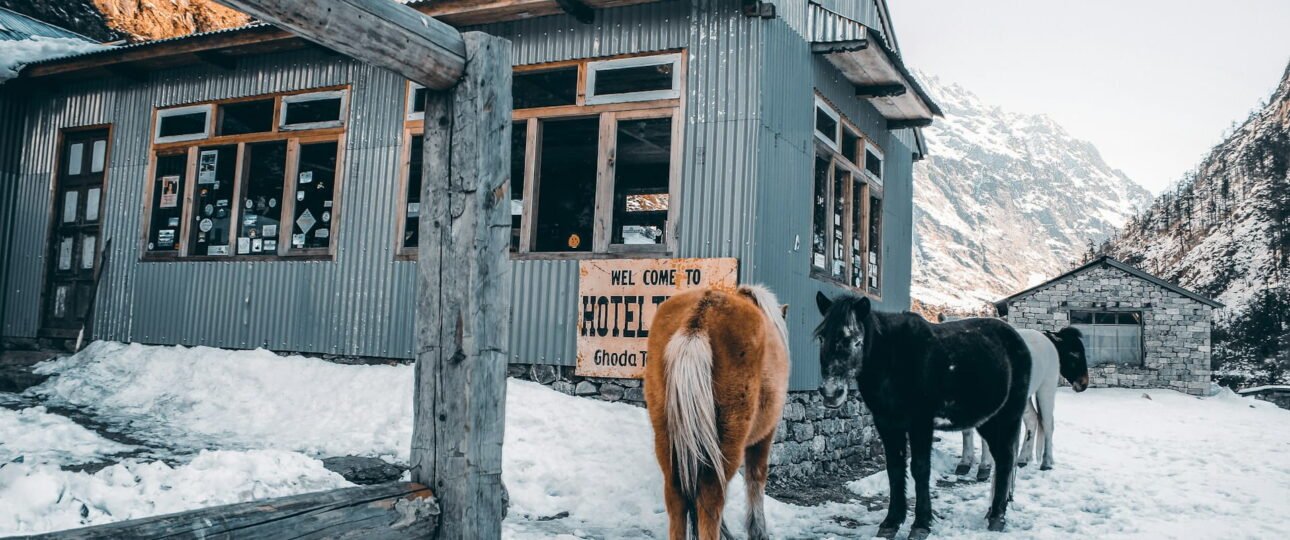
Teahouses are family-run and vary with altitude and season. At lower elevations, rooms usually cost $12-15 during peak season. Higher up, prices drop, sometimes as low as $3-5 when the trail is quiet.
This inverse relationship — cheaper rooms at higher altitude — is counterintuitive but consistent across the Langtang route. The teahouses at Lama Hotel (2,470 m) and Langtang village (3,430 m) are established, competitive, and charge accordingly. At Kyanjin Gompa, where lodge choice is more limited, room rates can be lower than at mid-route stops, particularly in off-season.
The standard arrangement across Langtang is that room rates are kept nominal (or even free in some cases) on the expectation that guests eat their meals at the same teahouse. This is an established and understood practice — not an obligation, but a norm that most trekkers follow and that keeps the accommodation cost low.
Most teahouses provide blankets, but a sleeping bag liner is worth bringing for warmth and hygiene, particularly at Kyanjin Gompa’s altitude.
Lodging total for a 7-day trekking itinerary: roughly USD 35-100, self-paid.
The Costs Most Packages Don’t Mention
These trail expenses exist regardless of whether you’re on a package or self-arranged — they’re paid daily and directly to teahouses.
- Hot shower: USD 2-5 per use, where available. Most teahouses at lower altitudes have solar-heated showers. Higher up, availability drops.
- Wifi: USD 2-5 per session at most teahouses that offer it. There are no ATMs beyond Syabrubesi — not a daily cost, but a critical planning point. Bring sufficient Nepali rupees from Kathmandu to cover the entire trek.
- Charging devices: USD 1-3 per device at most teahouses. A power bank is a worthwhile investment — electricity in higher teahouses is solar-dependent and not always available overnight.
- Tips: The standard and genuinely appreciated rate is USD 10-15 per day for your guide and porter combined, split between them, paid at the end of the trek. Across a 7-day trekking itinerary, budget USD 70-105 for tips.
- Travel insurance: Non-negotiable for any Himalayan trek above 3,500 m. Must specifically cover emergency helicopter evacuation. Basic high-altitude trekking insurance typically runs USD 50-100 for the trip duration.
- Miscellaneous trail spending: roughly USD 15-20 per day for wifi, charging, hot showers, and incidentals.
A Real, Itemized Budget: Three Scenarios
Solo trekker, self-arranged with locally hired guide, 7 trekking days, peak season:
- Langtang National Park permit: ~USD 22
- TIMS Card (independent): ~USD 15
- Guide (7 days): ~USD 210
- Porter (7 days): ~USD 155
- Food (7 days): ~USD 175
- Lodging (7 days): ~USD 70
- Transport round trip (private jeep share): ~USD 50
- Tips (guide + porter): ~USD 90
- Insurance: ~USD 75
- Trail expenses (wifi, charging, showers): ~USD 100
Total: approximately USD 962
Two trekkers, local agency package, 7 trekking days:
- Permits: ~USD 22 each
- Agency package (guide, porter, meals, accommodation, transport): ~USD 600-700 per person
- Tips: ~USD 70-90 each
- Insurance: ~USD 75 each
- Trail expenses: ~USD 80 each
Total: approximately USD 850-970 per person
Group of 4-6, local agency, 10 trekking days:
- Permits: ~USD 22 each
- Agency package (all included): ~USD 750-900 per person (longer itinerary, costs divided more ways)
- Tips and insurance: ~USD 150-200 each
- Trail expenses: ~USD 120 each
Total: approximately USD 1,040-1,240 per person
Independent trekkers typically spend USD 650-850. Mid-range guided treks range from USD 900-1,200.
Langtang vs. Everest Base Camp: The Cost Comparison
The comparison is worth making directly: Langtang wins on total cost for three specific reasons.
No domestic flights. EBC requires a round-trip Lukla flight at roughly USD 250-300, plus the risk of weather-related delays adding unplanned Kathmandu hotel nights. Langtang’s road journey costs USD 20-50 per person round trip and doesn’t cancel.
Lower permits. EBC requires the Sagarmatha National Park permit plus the Khumbu Pasang Lhamu Rural Municipality permit — a combined total of roughly USD 55-60. Langtang’s two permits total approximately USD 30-40.
Slightly lower food costs. Teahouse food prices at altitude are generally lower on the Langtang route than on the EBC trail above 4,000 m, where the logistics of supply create higher pricing at the highest-altitude stops.
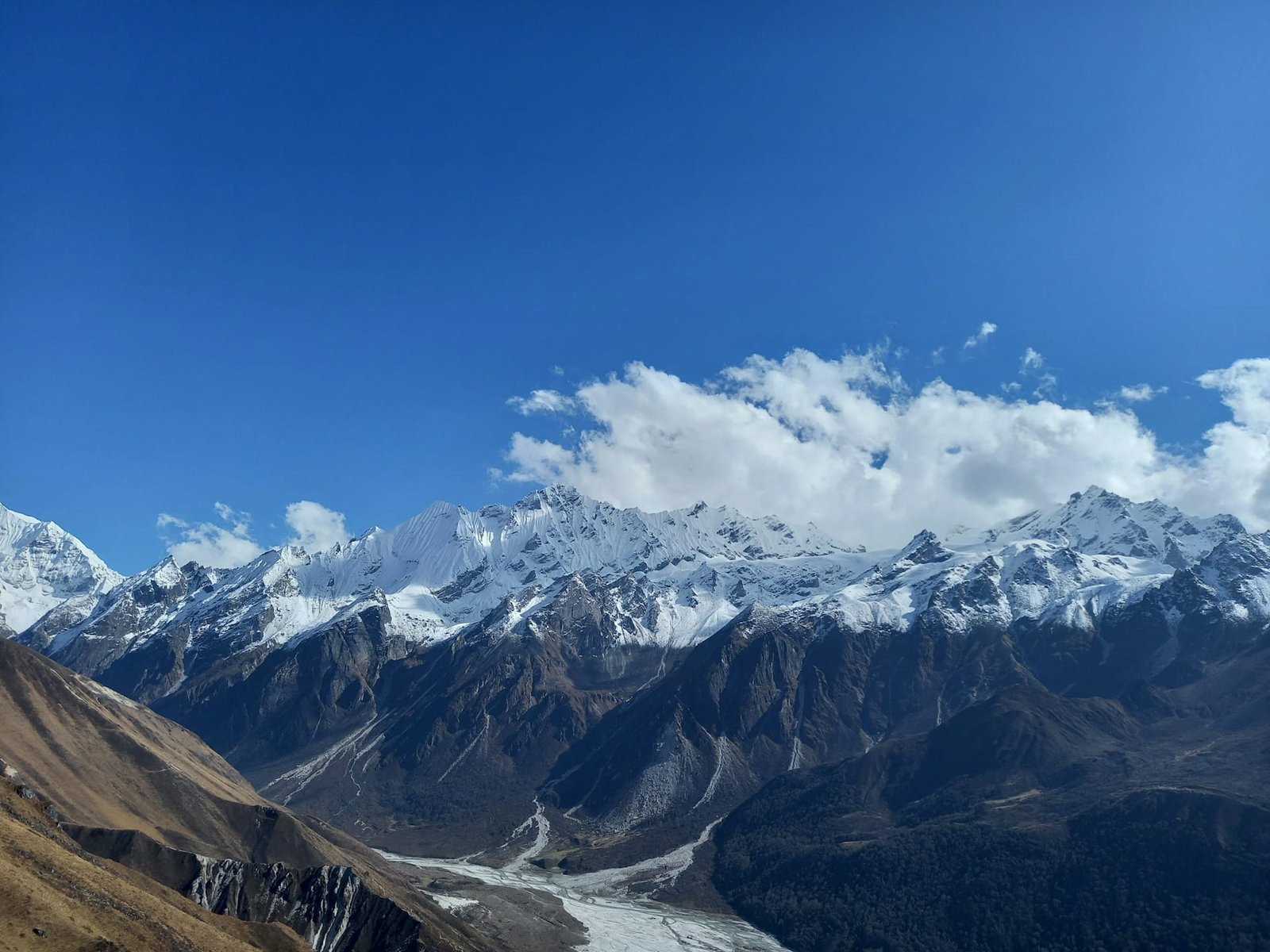
The experience itself is different rather than inferior — Langtang offers cultural immersion, dramatic glacier and Tibetan-border scenery, and the unique character of a valley that has rebuilt itself after the 2015 earthquake. It isn’t EBC at a discount. It’s a genuinely distinct Himalayan trek that happens to cost less.
Frequently Asked Questions about Langtang Valley Trek Cost
- How much does the Langtang Valley Trek cost in total?
For a fully guided Langtang trek booked through a local Nepali agency, expect USD 700-1,200 per person depending on itinerary length and group size. Self-arranged treks with a locally hired guide typically run USD 650-950. - What permits do I need and how much do they cost?
Two permits: the Langtang National Park Entry Permit (NPR 3,000, approximately USD 22-27 for foreigners) and the TIMS Card (NPR 1,000 with a registered agency, NPR 2,000 independently). Total approximately USD 30-40. - Is a guide required for the Langtang Valley Trek?
Yes. The mandatory guide rule introduced in 2023 is actively enforced at Langtang National Park checkpoints. Trekkers without a licensed guide from a registered agency can be turned back at Dhunche. - Are there any ATMs on the trail?
No. The last reliable ATMs are in Syabrubesi — and even there, availability is not guaranteed. Bring sufficient Nepali rupees from Kathmandu to cover the entire trek including tips and trail expenses. - Is Langtang cheaper than Everest Base Camp?
Yes, primarily because it requires no domestic flights and has lower permit costs. Per-day on-trail costs are broadly similar to EBC, but the absence of a USD 250-300 round-trip Lukla flight is a significant total-cost advantage. - Does the season change the cost?
Permits and food prices are flat year-round. Guide and porter rates may soften slightly in off-season (winter and monsoon) when demand is lower. Teahouse room rates can be lower in off-season at some stops, and some teahouses close entirely in deep winter months. Peak season (October and spring) brings the highest overall costs and the most trekker traffic. - What is not included in most package prices?
Travel insurance, tips for guide and porter, personal trail expenses (wifi, hot showers, charging), snacks and beverages beyond standard meals, and international flights. Always confirm exactly what a package includes and excludes before booking. - How much should I budget for tips at the end of the trek?
A common guideline is around USD 10-15 per day for a guide and USD 7-10 per day for a porter, though this varies by group size and length of trek. Tipping is customary rather than mandatory in a strict sense, but it makes up a meaningful part of guide and porter income, so most agencies expect it to be factored into the total trip budget. - How much does wifi and charging cost on the trail?
Expect to pay roughly NPR 200-500 (about USD 1.50-4) per device for wifi access at most teahouses, and a similar range for charging phones or cameras, with prices rising slightly the further up the valley you go. Kyanjin Gompa, being the furthest and highest stop, typically has the steepest rates for both. - Is it cheaper to book Langtang independently or through an agency?
A self-arranged trek with a locally hired guide can shave off some cost compared to a full package, mainly by cutting agency overhead, but the savings are moderate rather than dramatic on this particular route. Given the mandatory guide requirement either way, most of the core costs — permits, guide fees, food, and lodging — stay similar whether booked independently or through an agency. - How much extra does a porter add to the total cost?
Hiring a porter typically adds USD 20-25 per day to the trip cost, usually covering a shared porter carrying bags for two trekkers rather than one porter per person. It’s optional on Langtang given the moderate daily distances, so budget-conscious trekkers who are comfortable carrying their own gear can skip this cost entirely. - Does trekking with a larger group reduce per-person cost?
Yes, meaningfully. Guide and transport costs get split across the group, so a group of 4-6 people typically brings per-person costs down by 15-25% compared to a solo trekker booking the same itinerary. Permit fees stay fixed per person regardless of group size, so the savings come entirely from shared logistics rather than reduced fees. - How much does transport to and from Syabrubesi cost?
A local bus from Kathmandu to Syabrubesi costs roughly USD 6-10 one way, while a private jeep runs USD 80-120 for the vehicle, which can be split among a group. Most package prices already include this transport, so it’s worth confirming whether your quote covers the ride or expects you to arrange it separately. - Are there hidden costs travelers commonly forget to budget for?
Boiled or bottled drinking water, hot showers (often charged separately at higher-altitude teahouses), and extra snacks like chocolate or biscuits add up more than most first-time trekkers expect, sometimes totaling USD 5-10 per day beyond the core package price.
Altitude sickness medication and any emergency evacuation insurance costs are the other commonly overlooked line items worth budgeting for in advance for Langtang Valley Trek.