Pokhara Nepal Lakeside
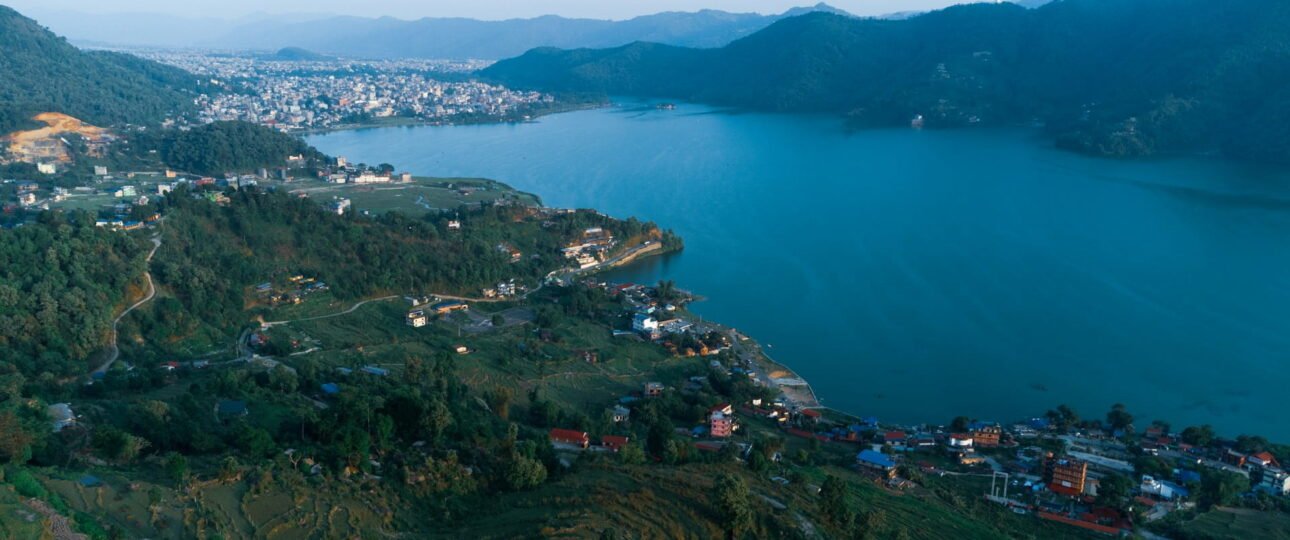
Lakeside is the part of Pokhara that most visitors mean when they say they’re going to Pokhara. It is a kilometre-long strip of road running parallel to the western shore of Phewa Lake — Nepal’s second largest lake — lined with hotels, restaurants, trekking agencies, gear shops, yoga studios, and cafes in a density that makes it one of the most practically convenient tourist districts in the country. Everything you need to arrange a trek, rest after one, eat well, or simply sit somewhere pleasant for an afternoon is within a ten-minute walk.
Phewa Lake is the centre of Pokhara’s tourism scene and one of the most photographed places in Nepal. The lake itself — a freshwater lake that holds significant cultural and ecological importance, the second largest in Nepal — is what gives Lakeside its character. On clear mornings, the Annapurna range reflects in the water so precisely that photographs taken here look like two images stacked vertically: mountains above, mountains below, a line of still water dividing them. On clear days, Machhapuchhre (Fishtail Mountain) can be seen perfectly reflected in the lake, resulting in a scene that is hard to forget even after your visit.
The main areas of Pokhara are divided into Lakeside, Damside, and old Pokhara. Within Lakeside, there are now North Lakeside and South Lakeside. Most visitors arrive at the border of Lakeside and Damside, from where it is an easy walk north into the main tourist strip. The physical geography is simple: one main road with several side streets leading toward the lake, easily navigated on foot without a map.
Phewa Lake: The Heart of Everything
Phewa Lake is the largest and most famous lake in Pokhara, known for its clear waters reflecting the surrounding mountains. It covers approximately 4.4 square kilometres at normal water level and sits at approximately 784 m above sea level — low enough that Pokhara’s climate is consistently warmer and more humid than Nepal’s mountain towns, which is part of why it functions so effectively as a pre-trek acclimatization and rest stop.
Early mornings near the lake feel peaceful, with still water reflecting the surrounding hills and Himalayan peaks in the distance. This is the version of Phewa Lake that most visitors remember — not the busier midday stretch when boats are out and the lakeside promenade is active, but the hour before breakfast when the water is completely flat and the mountains are catching the first light.
Swimming around Lakeside is not recommended. There is a lot of debris in the lake, and safety is a strong concern due to undercurrents. Not even the locals swim around Lakeside. This is worth stating plainly because the lake looks inviting on a warm day and the temptation is real. Stay in the boats.
Boating on Phewa Lake
Boating is one of the most relaxing activities in the city. Visitors can rent traditional wooden boats from the Lakeside area and spend time floating across the water while enjoying mountain scenery and fresh air.
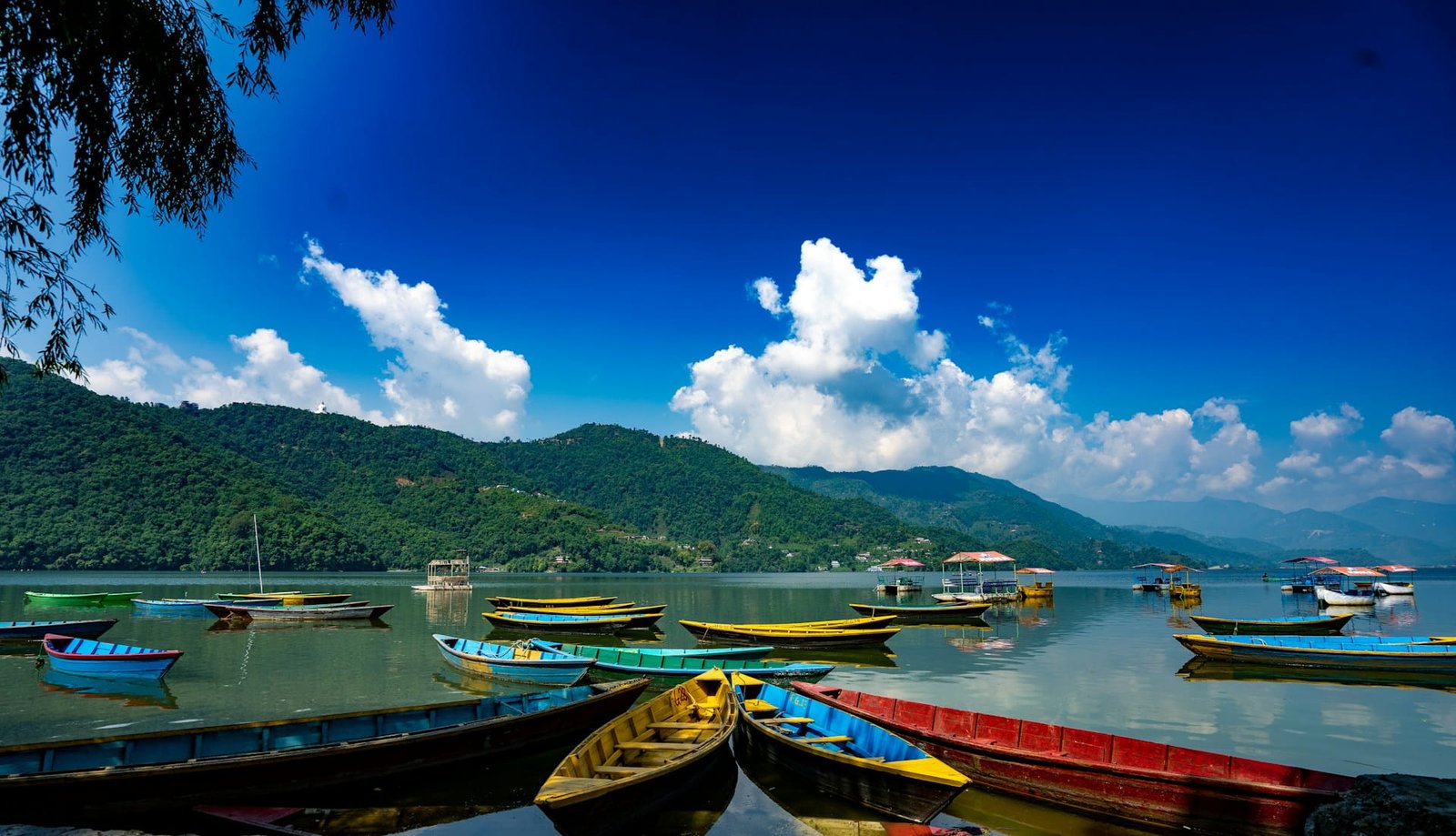
Wooden rowboats — painted in the bright blues, greens, and reds that appear in every Phewa Lake photograph — are available for rent from multiple jetty points along the lakeside promenade. You can row yourself or hire a boatman, and the rate is negotiated at the jetty. In 2026, Lakeside Pokhara sees new canoe boat rentals in addition to the traditional wooden boats, expanding the options for independent paddling.
The most common boat destination is Tal Barahi Temple, located on a small island roughly in the centre of the lake. It is a two-story pagoda dedicated to the Hindu goddess Barahi. Visitors can take a short boat ride to the temple and see local rituals while enjoying the peaceful surroundings. The temple is dedicated to Lord Vishnu and can be reached by boat — it is a pagoda-style temple unique in its structure and setting.
The second common boat destination is the far shore, from where a trail leads up the wooded hillside to the World Peace Pagoda. The boat crosses to the south shore, and the hike up through forest to the pagoda takes approximately 30-45 minutes on foot. The World Peace Pagoda sits on a ridge above the lake and offers one of the most complete views of Pokhara, Phewa Lake, and the Annapurna range — worth the effort of the combined boat-and-hike approach.
Tal Barahi Temple
Located on a small island in Phewa Lake, Tal Barahi Temple is one of Pokhara’s most important cultural landmarks. Reaching the temple requires a short boat ride, which adds to the overall experience. The peaceful atmosphere around the temple attracts both local worshippers and visitors.
The temple is an active religious site — Hindu worshippers arrive by boat throughout the day, particularly on Saturdays and festival days when the island can be quite crowded with devotees. Visiting respectfully means removing shoes before entering the temple compound, dressing modestly, and observing quietly when rituals are in progress. The island is small and the temple takes little time to walk around, but the experience of being in the middle of the lake with water on all sides and mountains above is the reason people visit rather than any particular scale or grandeur in the structure itself.
The World Peace Pagoda
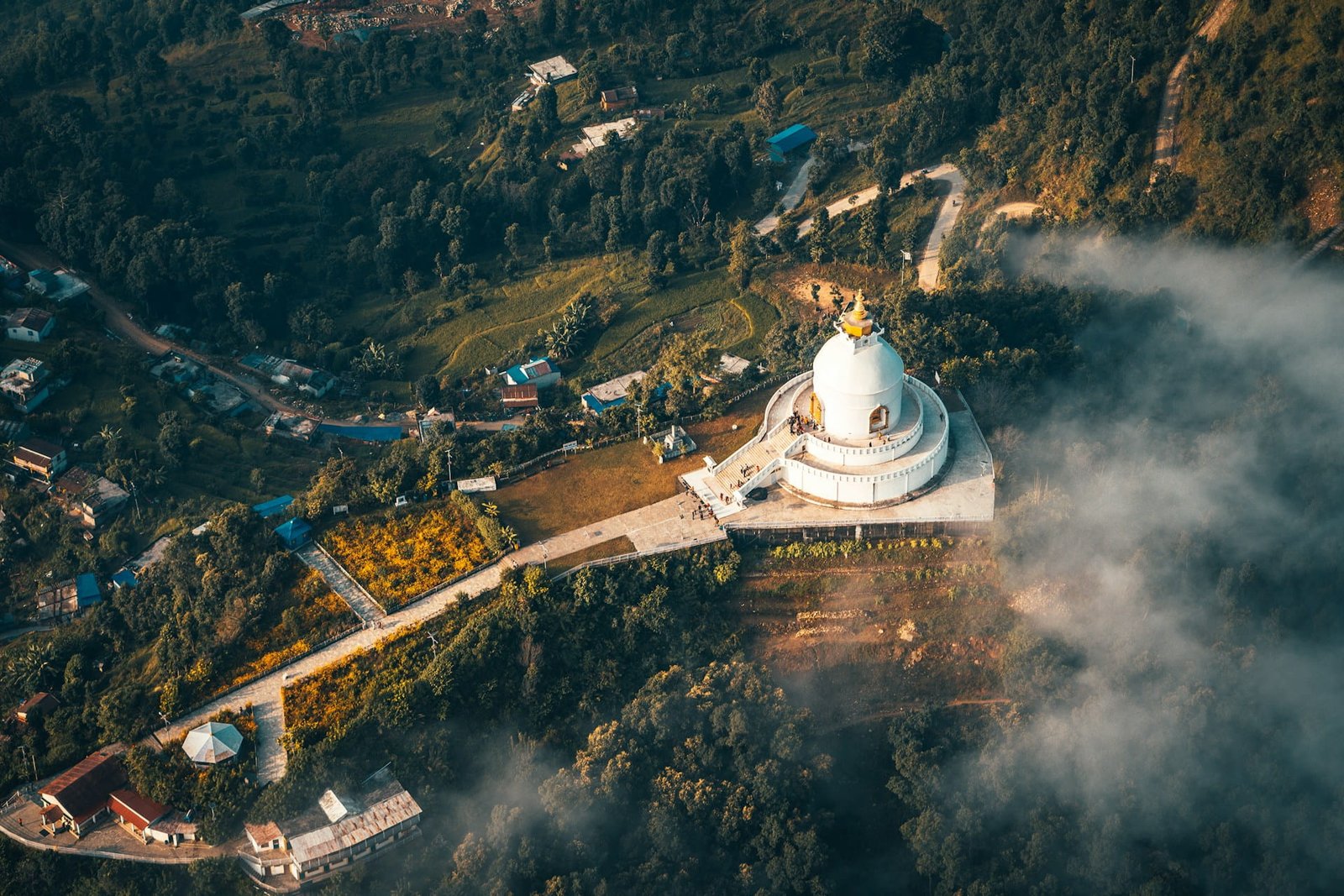
The World Peace Pagoda is on a hill above Phewa Lake and the Annapurna mountains. Hiking to the pagoda from the lakeside takes 1-2 hours via the trail starting from the south shore (accessible by boat). The pagoda can also be reached by road from the south side of the lake, with a shorter walk from the road parking area if you prefer not to hike.
The structure is a large white Buddhist stupa built by the Japanese Buddhist organization Nipponzan Myohoji — part of a series of World Peace Pagodas built at locations across Asia. The pagoda itself is impressive in its proportion and setting, but the primary reason most visitors make the effort is the view from the ridge it sits on. The Pokhara valley spreads below to the north and east, Phewa Lake gleams directly below, and the full Annapurna range including Machhapuchhre rises to the north in a panorama that is particularly dramatic at sunrise or in the late afternoon light.
Paragliding from Sarangkot
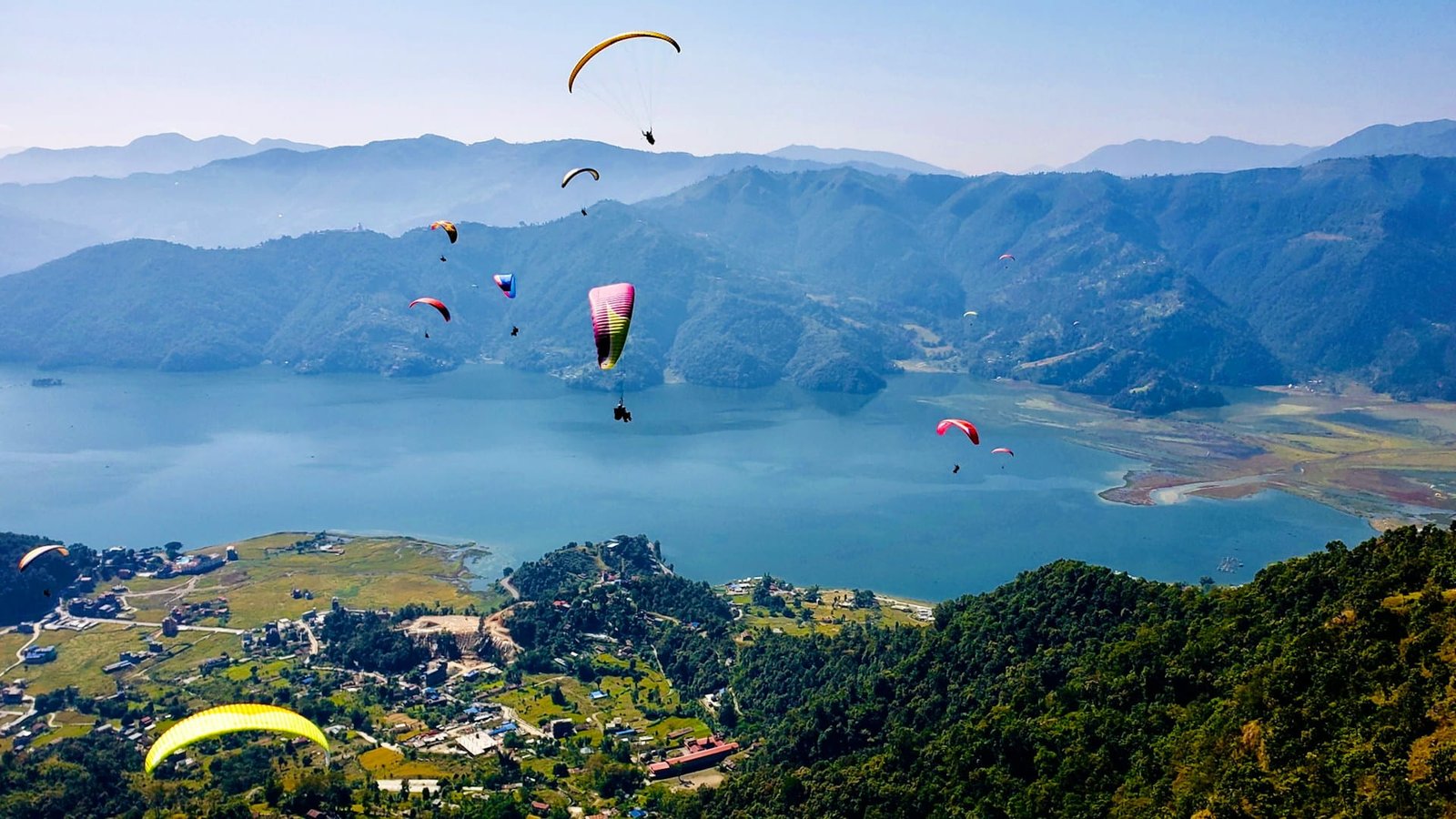
Paragliders remain in Khapaldi (north Lakeside), which is the landing zone for the Sarangkot-based paragliding operations that are one of Pokhara’s defining activities.
Paragliding here operates from the Sarangkot launch point above the city — approximately 1,600 m — and lands on the flat ground north of the Lakeside promenade near the lake shore. The flight covers roughly 8-12 km and takes 20-30 minutes for a standard commercial tandem flight, longer for thermal soaring flights in the right conditions. The route passes above Phewa Lake, giving passengers a bird’s-eye view of the lake’s full extent and the mountain panorama beyond it.
Multiple operators along Lakeside sell paragliding packages at broadly similar prices — typical 2026 rates for a standard tandem flight run in the range of USD 80-100 per person, including transport to Sarangkot and a GoPro video of the flight. The experience is weather-dependent and morning flights (before thermal activity builds) are more reliably bookable than afternoon sessions, though thermal conditions in the Pokhara valley are actually excellent for experienced pilots specifically because of the updrafts.
Sarangkot Sunrise
No guide to Lakeside is complete without the Sarangkot sunrise option, though it sits approximately 11 km from Lakeside and requires a pre-dawn taxi departure. Most visitors who want Sarangkot sunrise depart Lakeside around 4:30-5:00 a.m. by taxi, arriving at the Sarangkot viewpoint platform in time for the alpenglow sequence on Machhapuchhre and the Annapurna range.
The Sarangkot sunrise is covered in full in a separate guide — the key Lakeside-specific note is practical: taxi drivers at Lakeside are familiar with the Sarangkot sunrise run and can be arranged the evening before through your hotel or directly from the taxi stand near the main road. The round-trip fare is typically negotiated at NPR 1,500-2,500 depending on the vehicle.
The Lakeside Promenade: Eating, Shopping, and Evenings
The lakeside area is lined with numerous restaurants, cafes, and eateries offering a wide range of cuisines, from local Nepali dishes to international fare. Many offer beautiful lake views.
The main Lakeside road and its side streets concentrate a remarkable density of food options for a city of Pokhara’s size. Dal bhat, momos, and Thakali khana (a traditional Gurung/Thakali set meal with rice, lentils, vegetables, and pickles) represent the local menu. Italian, Mexican, Japanese, Korean, Israeli, and broadly “continental” menus exist across multiple restaurants serving the international trekker crowd. Coffee culture is stronger here than anywhere in Nepal outside Kathmandu, with several dedicated espresso cafes operating alongside the standard Nepali milk tea.
This area is especially enjoyable during the evening when the lakeside becomes more vibrant and social. The specific quality of Lakeside evenings — restaurants with lake-facing terraces, live music in several venues, the general slow pace of a town built around recovery and departure rather than rush — makes the Pokhara evening one of the more pleasant experiences in Nepal regardless of what else you’re doing there.
Several restaurants and bars along Lakeside feature live music, especially in the evenings. The genre is typically folk, acoustic, or classic rock — Pokhara’s live music scene has a long-standing tradition rooted in its role as a departure and return point for mountaineers and trekkers, which created a particular bar-and-storytelling culture that still shows.
Beyond the Lake: Day Trips and Nearby Attractions
- Devi’s Fall and Gupteshwor Cave: Devi’s Fall is a spectacular waterfall that disappears into an underground tunnel, with Gupteshwor Mahadev Cave nearby, featuring impressive stalactites and a sacred Shiva temple. Both are located approximately 2 km south of Lakeside, easily reached by taxi or on foot. The waterfall is most dramatic in and immediately after monsoon season, when water volume is highest.
- Begnas and Rupa Lakes: These smaller lakes are great for picnics, watching birds, and trying local fish at small lakeside restaurants. The peaceful waters and fewer tourists make them perfect for travellers who want a quiet escape from the crowded places in Pokhara. Located approximately 15-20 km east of Lakeside by road, these lakes offer a genuinely quieter version of the lake experience and are worth a half-day trip for anyone spending multiple days in Pokhara.
- International Mountain Museum: Located in the southern part of Pokhara, the museum covers the history of Himalayan mountaineering with exhibits on major expeditions, equipment, and the peaks themselves. Worth two to three hours for anyone with a serious interest in mountaineering history.
Practical Information on Pokhara Nepal Lakeside
| Category | Details |
|---|---|
| Location | Western shore of Phewa Lake, Pokhara, Kaski District, Gandaki Province |
| Altitude | Approximately 820 m above sea level |
| Getting there from Kathmandu | Tourist bus (6-8 hours, USD 10-15), express private bus (5-6 hours), or domestic flight to Pokhara Airport (30 minutes, USD 80-120) |
| Getting around Lakeside | On foot (the main strip is walkable end to end in 20 minutes), taxi for nearby attractions |
| Best time to visit | October-November and March-May for clearest mountain views; December-February for quiet and budget pricing; avoid July-August for outdoor activities |
| Swimming | Not recommended at any lakeside point due to debris and undercurrents |
| ATMs | Multiple ATMs along the main Lakeside road |
| Wifi | Available at virtually all hotels and most cafes |
| Phone signal | Strong NTC and Ncell coverage throughout Lakeside |
Frequently Asked Questions about Pokhara Nepal Lakeside
- What is Lakeside Pokhara?
Lakeside is a popular tourist destination beside Phewa Tal (lake) in Nepal’s second largest city, Pokhara. It is the main tourist district of Pokhara — a strip of road running along the western shore of Phewa Lake, lined with hotels, restaurants, trekking agencies, and shops. - Is Phewa Lake the largest lake in Nepal?
No. Phewa Lake is the second largest lake in Nepal. It is, however, the largest lake in Pokhara and the one most associated with the city internationally. - Can you swim in Phewa Lake?
Swimming around Lakeside is not recommended due to debris and undercurrents — not even locals swim there. - How do you get to Tal Barahi Temple?
By rowing boat from the Lakeside jetties. The island is located in the middle of Phewa Lake and is only accessible by boat. Multiple jetty points along the promenade offer boats for rent. - How far is Lakeside from Pokhara airport?
Pokhara International Airport is approximately 3-4 km from central Lakeside — a short taxi ride of around 10-15 minutes depending on traffic. - What is the best time of day to see the mountain reflections on the lake?
Early morning — before 8 a.m. on clear days — when the lake surface is still and the mountains are catching the first light. Wind and boat traffic disturb the surface as the day progresses. - Is paragliding safe in Pokhara?
Pokhara has a long-established paragliding industry with experienced operators and is considered one of the best paragliding locations in Asia. Book with a registered operator — your hotel or the trekking agents along Lakeside can recommend reputable companies. - What’s the best way to get around Lakeside without a guide?
Lakeside itself is entirely walkable, with the main strip stretching about 2-3 km along the lake, and most restaurants, hotels, and shops sit within easy walking distance of each other. For trips further afield — the airport, Sarangkot, or Devi’s Fall — taxis and rented scooters are both common and inexpensive, with scooter rental running roughly $8-12 per day for those comfortable riding in local traffic. - What can you see from Sarangkot at sunrise, and how do you get there?
Sarangkot, at around 1,600 m and roughly 30-40 minutes by taxi from Lakeside, offers a wide panorama of the Annapurna range including Machhapuchhre, Annapurna South, and Dhaulagiri, best seen just after sunrise before haze builds. Most hotels and agencies in Lakeside arrange an early taxi pickup timed to arrive before dawn, since the viewpoint gets genuinely crowded during peak season sunrise hours. - What food is Pokhara Lakeside known for?
Lakeside has a notably international food scene for a Nepali city, with everything from Israeli and Middle Eastern restaurants to Italian, Mexican, and Tibetan momo spots lining the main strip, reflecting decades of backpacker and trekker traffic through the area. Traditional Nepali thali and Newari cuisine are also widely available, often at restaurants slightly off the main tourist strip where prices tend to be more reasonable. - Is Lakeside a good base for day trips beyond Pokhara city itself?
Yes — Begnas Lake, the quieter and less commercialized counterpart to Phewa Lake, Davis Falls, the Gupteshwor Cave, and the International Mountain Museum are all reachable as half-day trips from Lakeside, making it a practical base even for travelers not doing a multi-day trek. Sarangkot and the Annapurna foothills also make for accessible short hikes or paragliding launches without committing to a full trekking itinerary. - When is the best season to visit Pokhara Lakeside for the clearest mountain views over the lake?
October through November offers the clearest post-monsoon skies and the best odds of unobstructed mountain reflections on Phewa Lake, closely followed by the March-April window with slightly hazier but still solid visibility. Monsoon months (June-September) bring frequent cloud cover that obscures the mountain backdrop entirely on many days, even though the lake and city remain pleasant to visit at that time of year.
Conclusion on Pokhara Nepal Lakeside
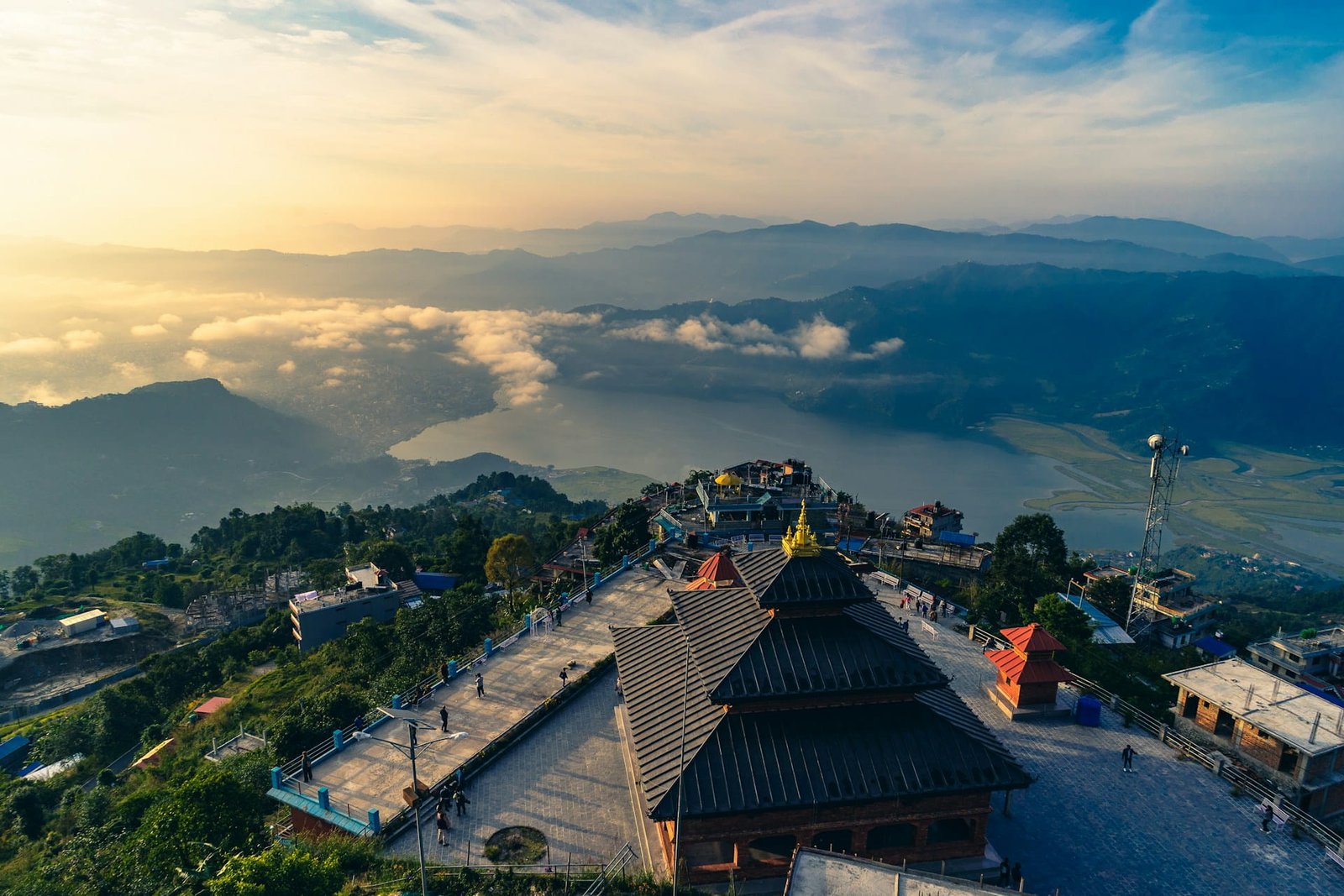
Lakeside Pokhara works because it is genuinely comfortable without being sanitized. The lake is real — second largest in Nepal, carrying a sacred island temple and the reflected profiles of the Annapurna range on clear mornings. The mountains behind it are real — Machhapuchhre’s distinctive twin-pointed summit is visible from the promenade on clear days in a way that never quite becomes ordinary, however many days you spend looking at it.
The infrastructure around it — the restaurants, the agencies, the gear shops, the yoga studios — exists because Pokhara is where most of Nepal’s major trekking routes begin and end, and Lakeside has quietly become one of the more pleasant places in South Asia to arrive, prepare, depart, and return.