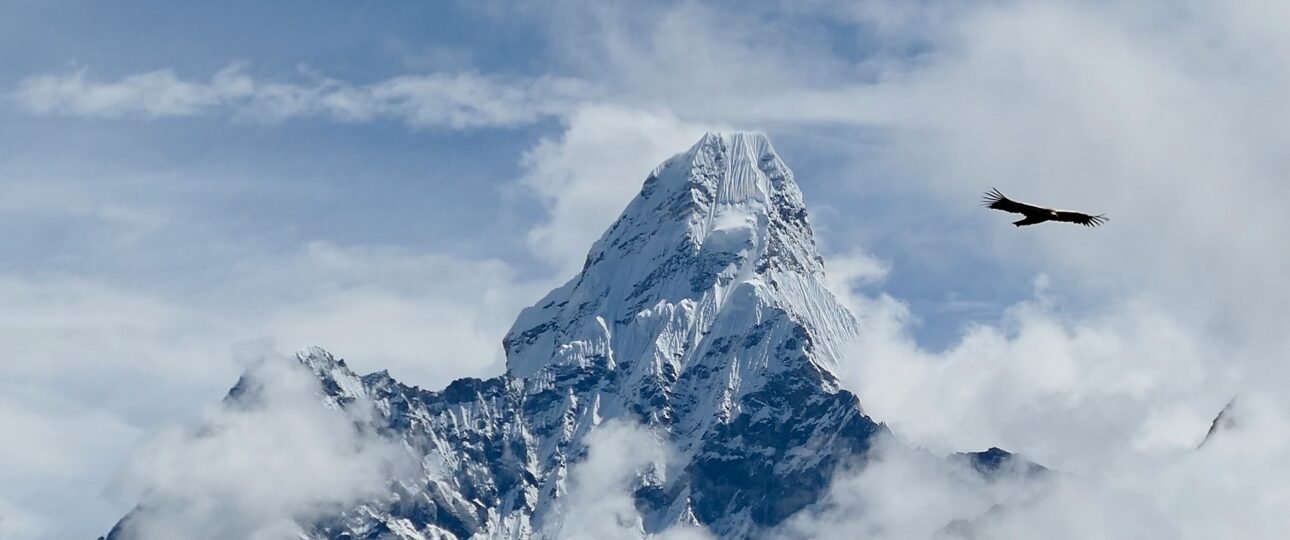
Nepal has more mountains above 6,000 meters than any other country on earth — over 1,300 of them, spread across eight of the world’s fourteen 8,000 m peaks and a near-endless catalogue of smaller summits that range from genuine walks to serious technical climbs. If you’re trying to figure out which one belongs on your itinerary, the number is both inspiring and completely useless as a starting point.
What’s more useful is understanding how Nepal’s peak classification system actually works, which directly determines what each summit requires of you, what permits it needs, and roughly what it costs. The Nepal Mountaineering Association (NMA) currently designates 33 mountains as “trekking peaks” — a somewhat misleading term, because several of them involve glacier crossings, fixed ropes, and real alpine climbing technique, nothing like a trek.
Above this category sit “expedition peaks,” which require a full mountaineering permit structure, base camp infrastructure, and a meaningfully different level of experience and investment.
This guide covers ten summits across that range — from a genuine beginner’s first Himalayan peak to one of the most iconic technical climbs in the world — with enough honest detail on difficulty, cost, and experience required that you can actually narrow down which one is yours.
Mountain Peak Nepal – Nepal’s Peak Classification
Before the list, a clarification that most guides skip over and that changes everything about how you plan and budget.
The NMA’s “trekking peak” designation doesn’t mean the peak is simply a trek. It means the peak falls under the NMA’s trekking permit structure, capped at mountains below a certain altitude threshold, and is manageable — in the NMA’s assessment — without a full mountaineering expedition’s logistics chain.
Within trekking peaks, there are two groups:
- Group A (the more committing, higher, or more technical peaks) and
- Group B (the more accessible). Permit costs differ between them, and as of September 2025, the NMA simplified the fee structure to a per-person rate rather than the previous group-size sliding scale.
“Expedition peaks” — Ama Dablam (6,812 m) being the most commercially popular example — require a separate royalty fee structure, a government liaison officer, and full base camp infrastructure. They are a genuinely different category of undertaking.
Practically, what this means for planning: the permit cost is one of the smaller variables. The larger variables are the logistics chain (are you flying to Lukla or driving toward the Annapurna circuit?), the required technical skills (can you use crampons and an ice axe, or not?), and the experience level genuinely needed to have a safe and successful summit — which is where most online lists are optimistically vague in ways that don’t serve first-time Himalayan climbers particularly well.
Mountain Peak Nepal – 10 Best Summits
1. Yala Peak (5,520 m) — The Genuine Beginner Summit
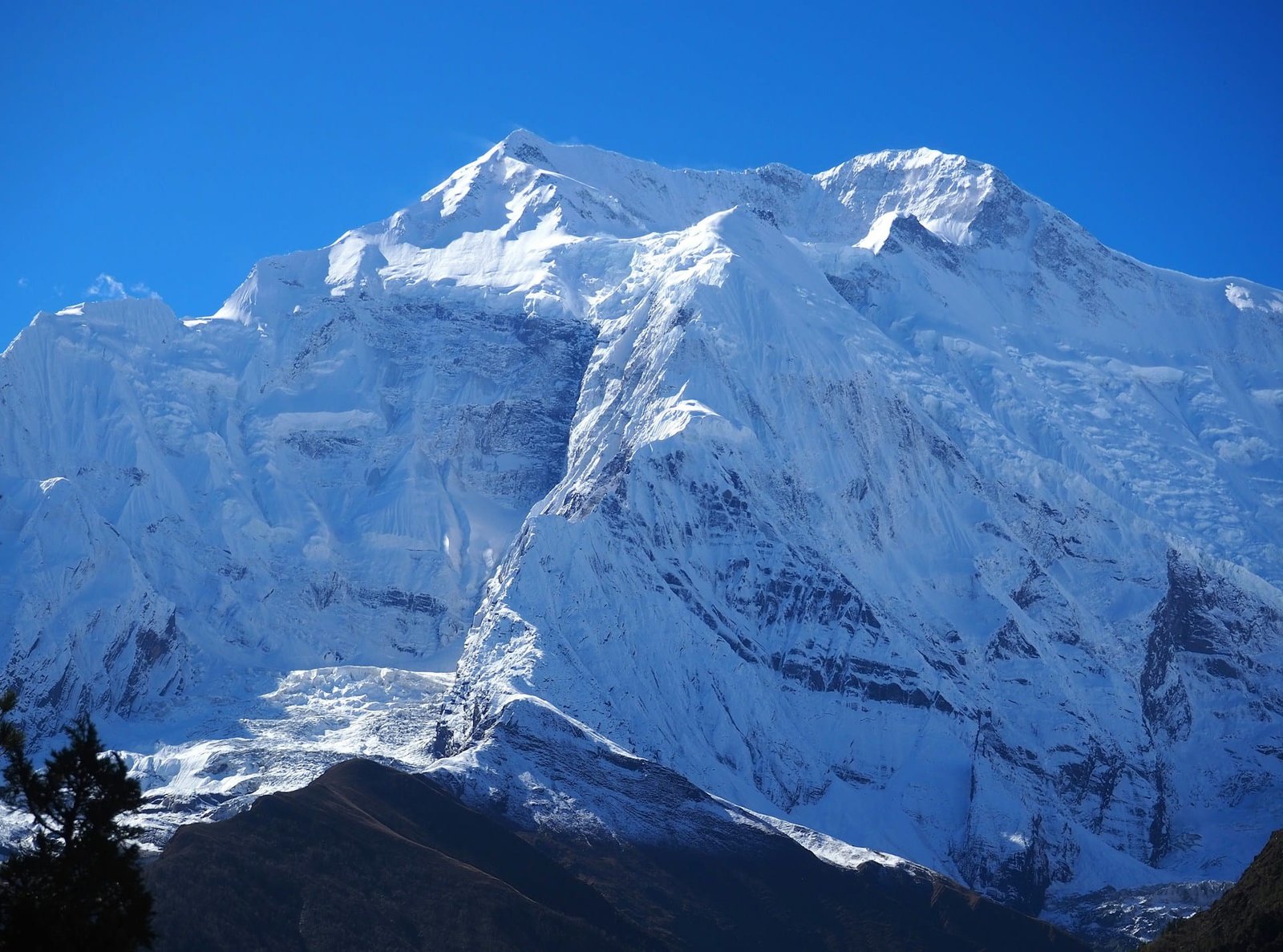
Region: Langtang | Permit: NMA Group B, roughly $250 spring | Total package range: $800–1,400
Yala Peak doesn’t crack 6,000 meters, which puts it in a different category from most peaks on this list. That altitude ceiling is the honest thing to say upfront — you won’t be on a technical ice headwall, you won’t cross a crevassed glacier, and the summit experience is more high-altitude hill walk than Himalayan climbing in the rope-and-crampon sense.
What Yala does genuinely offer is this: an accessible, well-placed introduction to moving at altitude, reading mountain weather, managing the physical rhythm of a summit push before dawn, and seeing the Langtang, Dorje Lakpa, and Ganesh Himal ranges at their best from a high vantage. It’s a good test of whether your body responds well at altitude — useful information before you commit to a more demanding objective. For trekkers who want a summit ribbon but are honest with themselves about technical skills and fitness, Yala is the right peak to start with, not a consolation prize.
Who it’s for: First-time Himalayan summit seekers, trekkers who want to assess altitude tolerance, those with limited time (the full trip typically runs 10–12 days from Kathmandu).
2. Pisang Peak (6,091 m) — The Annapurna Region’s Technical Introduction
Region: Annapurna | Permit: NMA Group B, roughly $250 spring | Total package range: $1,200–1,800
Pisang sits above the Annapurna Circuit’s classic route, which means it’s often combined with that trek in a 15–20 day itinerary. The summit view is one of the most rewarding at this altitude range — Annapurna II dominates the north, with Annapurna III, Gangapurna, and Tilicho Peak spread around it in a way that rewards the climb with a genuinely panoramic payoff.
What distinguishes Pisang from the Khumbu peaks at similar altitude is the technical character of the upper section: steep snow and ice requiring crampon proficiency and comfort with an ice axe, and some fixed rope on the steeper sections. It’s the right kind of introduction to real Himalayan climbing technique — committing enough to feel meaningful, well-managed enough that guided beginners with good physical preparation can succeed reliably.
Who it’s for: Trekkers already doing the Annapurna Circuit who want to add a summit, people with basic crampon experience looking for their first real technical Himalayan climb.
3. Tent Peak / Tharpu Chuli (5,663 m) — Annapurna Base Camp’s Summit Companion
Region:Annapurna | Permit: NMA Group B, roughly $250 spring | Total package range: $1,200–1,800
Tent Peak sits directly above Annapurna Base Camp at 4,130 m, which makes it the obvious summit extension for anyone already making that trek. The combination is a genuinely satisfying package: you do the ABC trek, spend a day at base camp looking up at the south face of Annapurna I, then continue to a high camp on Tent Peak for a summit push with a close-up view of what you’ve been looking at from below.
The technical character is similar to Pisang — crampon and ice axe required, fixed rope on the upper sections, manageable for physically fit trekkers with basic mountaineering skills. It doesn’t push much above 6,000 m, which keeps altitude risk at a lower threshold than most Khumbu peaks, but the Annapurna Base Camp approach already acclimatizes you well for the final push.
Who it’s for: ABC trekkers who want to push further, climbers looking for their first 6,000 m experience in the Annapurna region rather than the more crowded Khumbu.
4. Chulu Far East (6,059 m) — The Underrated Annapurna Objective
Region: Annapurna | Permit: NMA Group B | Total package range: $1,200–1,800
Chulu Far East is the least-known summit on this list and probably shouldn’t be. It sits on the northern rim of the Annapurna Circuit above the Manang valley, with summit views extending across Annapurna II, III, and IV, plus Gangapurna and the distant Tibetan plateau. The route involves genuine glacier travel and some technical terrain on the upper slopes, but the approach is straightforward and the acclimatization profile of the Annapurna Circuit leading up to it is genuinely good preparation.
What sets it apart is the relative quiet. While Island Peak and Mera have become institutionalized Himalayan-climbing rites of passage, Chulu Far East sees a fraction of the traffic — which means a less crowded high camp, a summit you share with far fewer other expeditions, and the specific pleasure of returning to base having climbed something most people in the Khumbu haven’t heard of.
Who it’s for: Annapurna Circuit trekkers wanting a serious summit extension, experienced trekkers looking for a Himalayan climb without Khumbu crowd density.
5. Mera Peak (6,476 m) — The Highest Trekking Peak, and the Gentlest Big Mountain
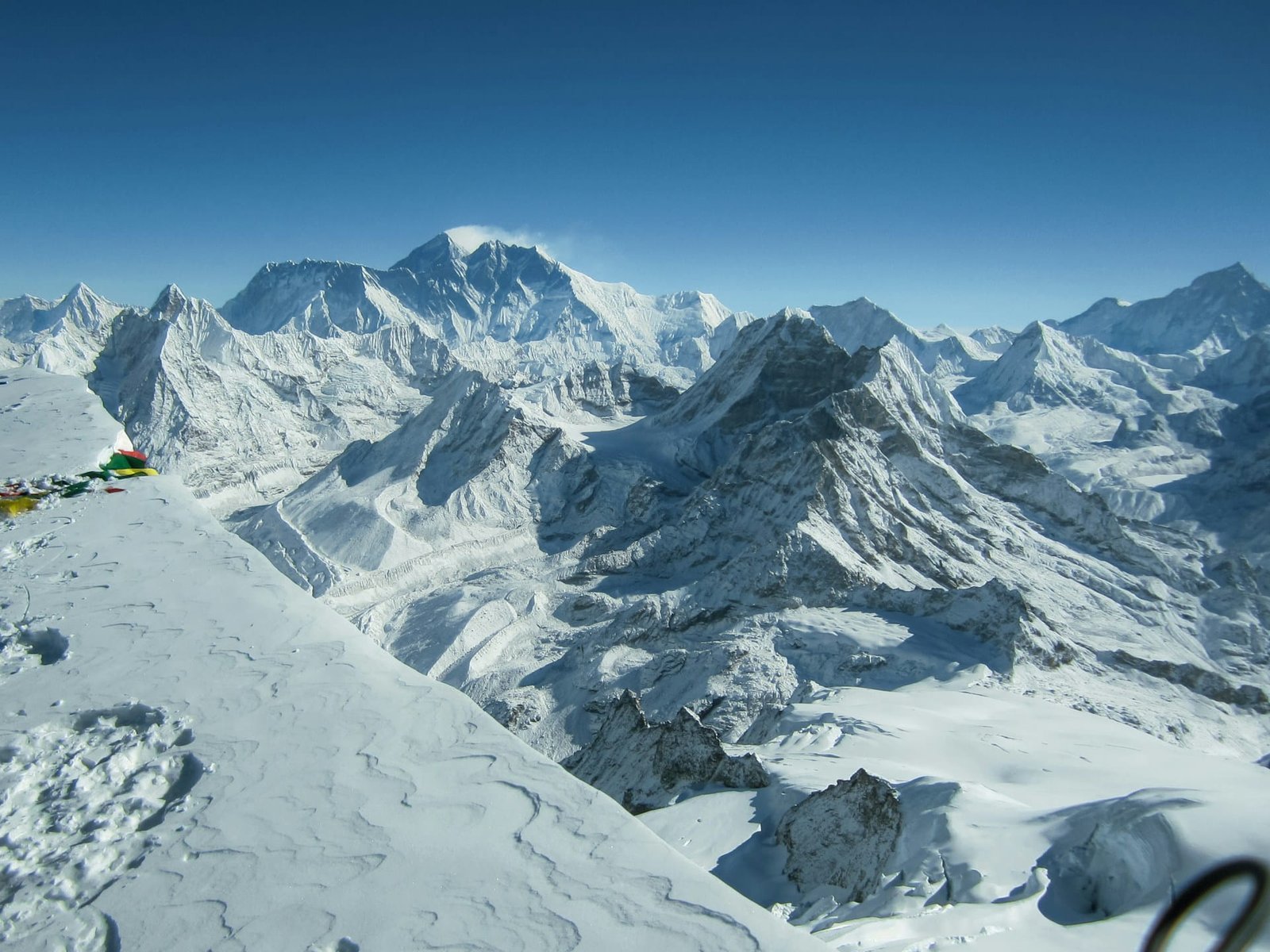
Region: Khumbu | Permit: NMA Group A, roughly $500 spring | Total package range: $1,800–2,800
Mera Peak is the highest mountain on the NMA’s trekking peaks list, and it earns that position while remaining accessible to trekkers with limited technical experience — primarily because the standard route is a non-technical glacier walk rather than a technical ice climb. You’ll need crampons and an ice axe, and the approach through the remote Hinku Valley is long and genuinely committing, but if the weather and conditions hold, the summit push is more a test of endurance and altitude management than technical skill.
The summit view at 6,476 m is extraordinary in scope: Everest, Lhotse, Makalu, Kanchenjunga, and Cho Oyu are all visible on a clear day — five of the world’s six highest peaks from a single vantage. It’s the view that defines Mera for most people who’ve done it, and it justifies the longer approach through Zatra La pass and the Satu La that makes this trek genuinely committing.
Where Mera differs from Island Peak in practical terms: it’s higher and more remote, the technical demands are lower, and the approach takes longer. If you’re choosing between the two, Mera is the right choice if what you want is a genuine high-altitude endurance experience without committing to technical ice climbing. Island is the right choice if you want to develop real climbing technique on a challenging route.
Who it’s for: Trekkers with solid high-altitude walking experience, anyone wanting a genuine 6,000+ m summit without a technical ice headwall, strong fitness required for the long approach.
6. Island Peak / Imja Tse (6,189 m) — The Classic Technical Introduction to Himalayan Climbing
Region: Khumbu | Permit: NMA Group B, roughly $350 spring | Total package range: $1,800–2,800
Island Peak is the most popular trekking peak in Nepal for a reason that has nothing to do with being easy. Its position in the Khumbu — typically combined with the Everest Base Camp trek — means it sits at the intersection of two of the most significant trekking experiences in the world. Most climbers arrive at Island Peak’s high camp having already walked to Everest Base Camp, already acclimatized to 5,364 m, and having spent days moving through the visual landscape of Ama Dablam, Nuptse, and the Khumbu icefall — which gives the Island Peak summit push a context and a weight that few climbing experiences can match.
The technical character is where the honest conversation sits: the final section of Island Peak involves a 45-degree ice headwall of roughly 200 m, climbed on fixed ropes with crampons and an ascender. This is real alpine climbing, not a steep walk. First-time climbers with no ice experience will find this section genuinely challenging, and the success rate drops sharply for underprepared parties regardless of fitness level. Preparation — ideally a crampon skills course, or prior experience on a gentler technical peak — meaningfully increases both safety and summit odds.
Who it’s for: Trekkers combining with EBC wanting to extend into climbing, anyone ready for their first real technical ice-climbing experience, those who’ve completed a lower trekking peak and want the next challenge.
7. Lobuche East (6,119 m) — The Mountaineer’s Trekking Peak
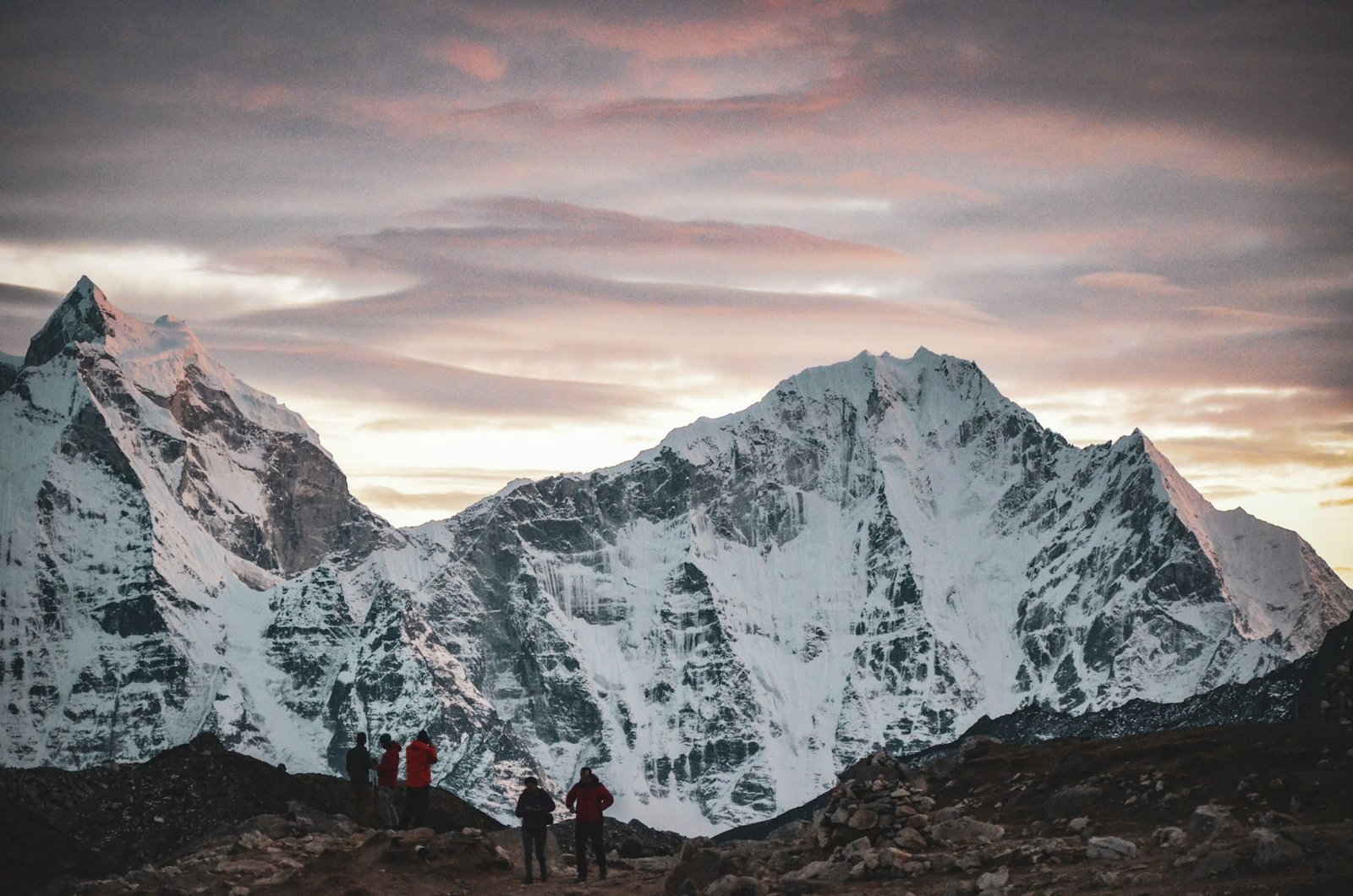
Region: Khumbu | Permit: NMA Group B, roughly $350 spring | Total package range: $2,000–3,500
Lobuche East is the most technically demanding peak that still carries the “trekking peak” NMA classification, and it’s worth being direct about that: by the standards of the other peaks in Group B, Lobuche’s mixed terrain — a combination of rock, ice, and exposed ridge on the upper section — is a genuine step up. The summit push involves a long, narrow ridge traverse with significant exposure, sections of mixed rock and ice requiring real crampon and axe technique, and a reputation among guides for the difficulty of the descent, particularly in deteriorating afternoon conditions.
What it gives you in return is the most serious mountaineering experience available on the NMA trekking peak list — a genuine technical climb at real altitude, with close views of Nuptse’s south face and a summit perspective that few climbers on the more crowded Island Peak route experience. It’s often described as better preparation for serious 7,000 m or 8,000 m objectives than Island Peak precisely because the technical terrain more closely resembles what those routes demand.
Who it’s for: Experienced trekkers with solid crampon and ice axe skills, anyone building toward more serious mountaineering objectives, not appropriate as a first technical peak.
8. Baruntse (7,129 m) — The Gateway to 7,000 Meters
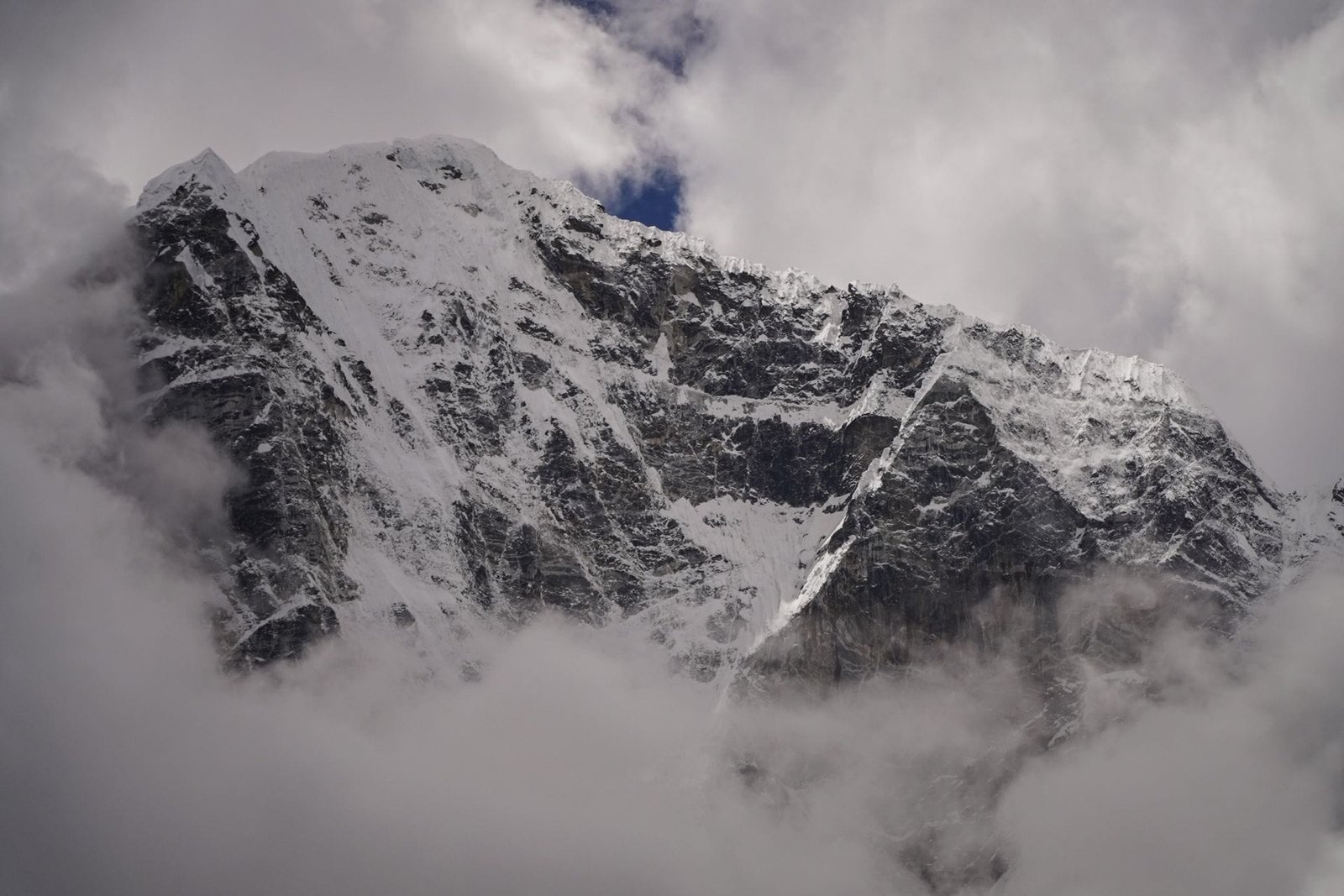
Region: Khumbu/Makalu | Permit: Expedition peak, royalty fee applies | Total package range: $4,000–6,500
Baruntse sits at the boundary between the Khumbu and Makalu regions, requiring a more complex approach than most Khumbu peaks — typically via the Mera La pass — and carrying with it the full expedition peak permit structure. At 7,129 m, it’s the highest peak on this list below Ama Dablam and Everest, and it requires a meaningful step up in both technical competence and expedition commitment.
The standard route involves glacier travel, fixed rope, and a summit push at genuine high altitude where the physiological demands are categorically different from 6,000 m peaks. Baruntse is increasingly popular as the “next step” after Mera Peak — the routes share some approach terrain, and agencies frequently package them together for climbers systematically working toward larger objectives. For someone whose medium-term goal is an 8,000 m peak, Baruntse offers genuine expedition experience at an altitude where the technical and physical demands of high-altitude mountaineering become the dominant factor.
Who it’s for: Experienced climbers who’ve summited multiple 6,000 m peaks and are building toward a serious expedition objective.
9. Ama Dablam (6,812 m) — Nepal’s Most Beautiful Technical Climb
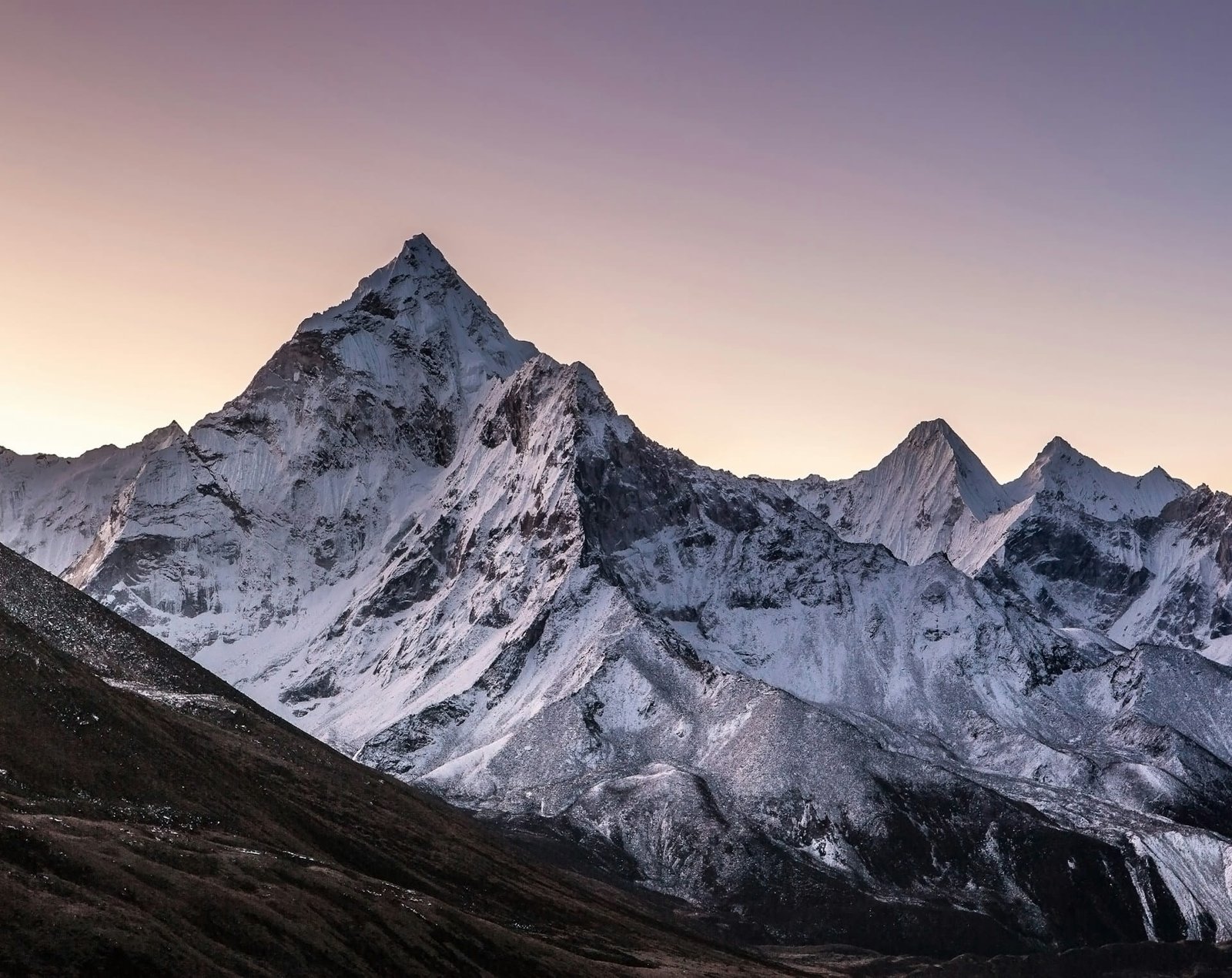
Region: Khumbu | Permit: Expedition peak, $400 spring | Total package range: $10,000–15,000**
Ama Dablam is in a different category from everything else on this list, and it belongs here not because of altitude — Baruntse is higher — but because of what it represents in the climbing world. The mountain’s pyramid shape, visible from almost everywhere in the upper Khumbu, has made it one of the most photographed and most coveted summit objectives in Nepal. For technical alpinists, Ama Dablam is frequently their primary Nepal objective, not a stepping stone to Everest.
The route involves sustained technical terrain across three high camps — mixed rock and ice at lower elevation, exposed ridge with fixed rope higher up, and a demanding summit push to 6,812 m. The permit at $400 per person is remarkably accessible for what is one of the most serious technical peaks in Nepal — a fraction of the $15,000 Everest permit — which gives it an unusual cost efficiency relative to its difficulty and prestige. Total expedition costs of $10,000–15,000 are meaningfully lower than the 8,000 m objectives, making Ama Dablam the most cost-efficient serious technical Himalayan expedition currently available for climbers at that level.
Spots on the better expeditions — small teams with dedicated Sherpa support — fill months before both spring and autumn seasons. If Ama Dablam is on your list, plan a full season ahead.
Who it’s for: Experienced technical alpinists with multiple high-altitude objectives behind them, not suitable for anyone without a genuine technical climbing background.
10. Mount Everest (8,848 m) — The Summit That Needs No Explanation
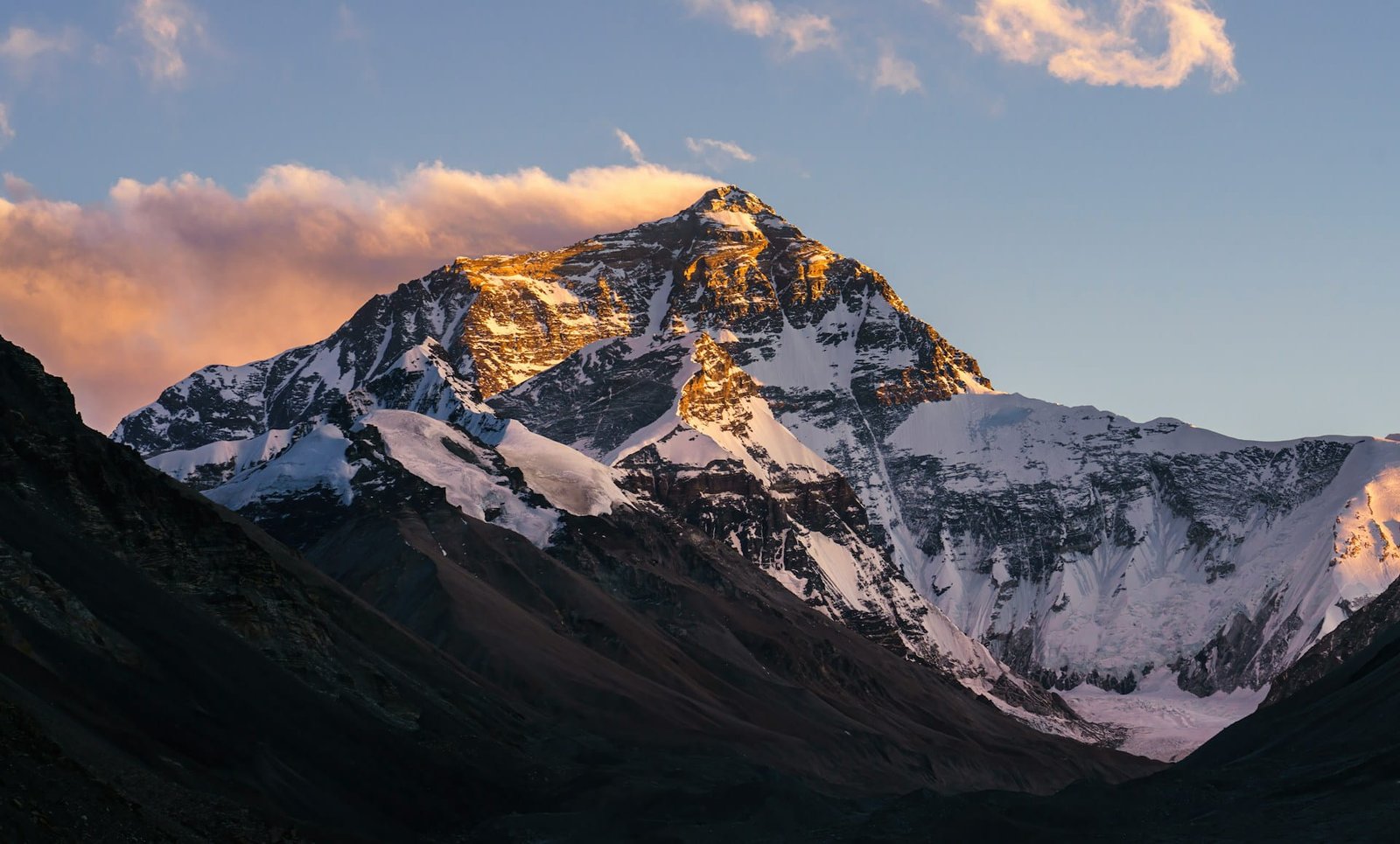
Region: Khumbu | Permit: $15,000 per person (increased in 2026) | Total expedition range: $35,000–100,000+
Everest doesn’t need an introduction, and in the context of this list it serves a different purpose — a destination point for understanding the scale of Nepal’s summit range. At $15,000 for the permit alone (increased in 2026 from $11,000), with total expedition costs starting around $35,000 for a commercially guided climb on the standard South Col route and running well beyond $100,000 for premium private expeditions, Everest is categorically separate from everything else on this list.
The permit cost is a deliberate government revenue mechanism as much as a conservation measure, and the debate around whether higher costs are reducing overcrowding on the mountain (they haven’t, substantially) continues every spring season. For context on where Nepal’s mountain market is heading: the $15,000 Everest permit against Ama Dablam’s $400 and Island Peak’s $350 shows how dramatically permit economics diverge across the three main categories of Nepal summits.
Who it’s for: Fully experienced high-altitude mountaineers with multiple 7,000–8,000 m peaks, substantial logistics budget, and typically 2+ years of structured preparation.
Mountain Peak Nepal – How to Choose the Right Peak for You
The most useful thing this guide can do is help you place yourself on this list honestly.
- If you’re a fit trekker with no technical climbing experience: Start with Yala Peak (5,520 m) or — if you want the Khumbu experience — consider Mera Peak’s non-technical glacier route. Both demand real physical preparation and altitude management, not climbing technique. Don’t start with Island Peak.
- If you have basic crampon experience or have completed a trekking skills course: Pisang Peak or Tent Peak in the Annapurna region, or Island Peak in the Khumbu, are realistic objectives with proper preparation. These are real climbs requiring real skill — not walks — but they’re designed for guided beginners who’ve done the preparation work.
- If you’ve summited 6,000 m peaks and want more: Lobuche East is the most technically demanding trekking peak, and Baruntse at 7,129 m is the clearest next step beyond the NMA trekking peak category.
- If you’re an experienced technical alpinist: Ama Dablam is the peak that belongs on your Nepal list before Everest — genuinely harder, dramatically cheaper, and in the view of many climbers, a more satisfying technical objective.
Mountain Peak Nepal – Permits and Costs
As of September 2025, the NMA simplified its permit fee structure from a group-size sliding scale to a per-person rate. Current permit costs for the most popular peaks in spring (the most expensive season):
- NMA Group A trekking peaks (Mera Peak): roughly $500 per person
- NMA Group B trekking peaks (Island Peak, Lobuche East, Pisang, Tent Peak, Yala): roughly $350 per person
- Ama Dablam expedition permit: $400 per person
- Everest climbing permit: $15,000 per person
Autumn permits carry a 50% discount on spring rates — a government initiative to spread climber traffic across both viable seasons. For climbers with seasonal flexibility, autumn is genuinely the optimal window for most trekking peaks: more stable weather, fewer crowds on the routes, and meaningfully lower permit cost.
All peaks also require the relevant national park or conservation area permit for their region: the Sagarmatha National Park Entry Permit (NPR 3,000) for Khumbu peaks, Annapurna Conservation Area Permit for Pisang, Tent Peak, and Chulu, and Langtang National Park entry for Yala Peak.
FAQs about Mountain Peak Nepal
- What is the easiest mountain to climb in Nepal?
Yala Peak at 5,520 m is the most accessible summit for trekkers with no technical climbing background — it requires no ropes or crampons on the standard route and is manageable with good general fitness. For trekkers who want a genuine 6,000 m summit, Mera Peak’s non-technical glacier route is the most accessible option at that altitude level. - Do I need climbing experience for Nepal trekking peaks?
It depends on the peak. Yala Peak and the non-technical version of Mera require no rope or ice axe experience. Island Peak, Pisang, Tent Peak, Lobuche East, and Chulu Far East all involve real crampon and ice axe technique on the upper section — “trekking peak” in the NMA classification does not mean no technical skill required. - What permits do I need to climb a peak in Nepal?
At minimum, two things: the NMA climbing permit for your specific peak, and the relevant national park or conservation area permit for the region (Sagarmatha National Park for Khumbu peaks, ACAP for Annapurna peaks, Langtang permit for Yala). The mandatory guide rule in force since 2023 also means all foreign climbers must work through a registered Nepali trekking agency. - When is the best time to climb peaks in Nepal?
Spring (March-May) and autumn (September-November) are the primary windows for almost all peaks on this list. Spring offers more stable weather in the Khumbu specifically. Autumn carries a 50% discount on NMA permit fees and is genuinely excellent for most Annapurna-region peaks. Winter is possible for lower peaks with appropriate cold-weather preparation. - Is Island Peak harder than Mera Peak?
Yes, technically. Mera’s standard route is a non-technical glacier walk; Island Peak’s upper section involves a 45-degree fixed-rope ice headwall that requires real crampon technique. Mera is higher but generally more accessible for trekkers without climbing experience. Island is the better choice for developing genuine technical climbing skills. - How much does it cost to climb a peak in Nepal?
Total package costs range from roughly $800–1,400 for Yala Peak to $1,800–2,800 for Island Peak or Mera, $10,000–15,000 for Ama Dablam, and $35,000+ for Everest, depending on operator, group size, and season. Autumn packages consistently come in lower than spring equivalents due to the 50% permit discount. - How physically fit do I need to be for a trekking peak?
Fitness matters more than climbing experience for most of these peaks. You should be comfortable trekking 5-7 hours a day at altitude for at least a week before summit day, ideally with some hill or stair training and cardio work beforehand. Peaks like Island Peak and Mera also demand a few hours of sustained effort above 5,500 m, so leg strength and lung capacity carry more weight than technical skill on the approach. - What’s the difference between a trekking peak and an expedition peak?
Trekking peaks are the roughly 33 summits the NMA classifies as accessible with a guide and basic mountaineering gear, generally under 6,500 m. Expedition peaks — Everest, Ama Dablam, Manaslu — require full siege-style logistics, rotation schedules for acclimatization, and far larger teams and budgets. The line isn’t purely about difficulty; some trekking peaks like Island Peak are technically harder than easier expedition-style climbs. - How do I acclimatize properly before a peak climb?
Most itineraries build in a gradual ascent with rest days every 2-3 days once above 3,000 m, following the standard “climb high, sleep low” principle. For Island Peak or Mera specifically, most operators route climbers through several nights at Base Camp or High Camp before a summit push, rather than pushing straight up after the trek in. - What gear do I need for a trekking peak in Nepal?
Beyond standard trekking gear, you’ll need mountaineering boots, crampons, an ice axe, a harness, a helmet, and ascender/descender devices for the technical peaks. Most agencies rent this equipment locally in Kathmandu or Namche Bazaar, which is usually cheaper and more practical than flying gear in from home. - Can beginners climb Island Peak or Mera Peak?
Yes, with the right preparation. Neither requires prior mountaineering experience, but both benefit from a day or two of pre-climb training on ropes, crampon use, and jumar technique, which reputable agencies build into the itinerary at base camp. Fitness and mental readiness for cold, altitude, and early starts matter more than a climbing résumé. - Do I need travel insurance for peak climbing in Nepal?
Yes, and it needs to specifically cover high-altitude trekking and climbing up to the elevation of your peak, including helicopter evacuation. Standard travel insurance policies often cap coverage well below 5,000 m or exclude mountaineering activities entirely, so checking the policy’s altitude limit before booking is essential. - What is the success rate for peaks like Island Peak and Mera Peak?
Success rates are generally high — often quoted in the 85-95% range — for climbers who follow a proper acclimatization schedule and go with an experienced guide. Weather and sudden altitude sickness are the main reasons climbers turn back, not technical difficulty, which is why itinerary pacing matters more than raw fitness in many cases. - Which peak is best for someone who wants to eventually climb Everest?
Island Peak is the most commonly recommended stepping stone, since its fixed-rope headwall and crampon work closely mirror sections of the Everest region routes, and it sits inside the Khumbu itself for added acclimatization value. Lobuche East is another strong choice for the same reason, offering a steeper technical test at a similar altitude. - Is there an age limit for climbing peaks in Nepal?
There’s no strict legal age limit, but most agencies set informal minimums around 16 for technical peaks like Island or Mera, and require a guardian or parent for younger climbers. On the upper end, age matters less than a doctor’s clearance and demonstrated fitness, and climbers in their 60s and 70s regularly summit peaks like Yala or Mera with proper preparation. - What happens if I can’t complete the technical section of a peak?
Guides typically assess conditions and turn back with the group if someone isn’t managing the ropes or ice safely, rather than pushing on regardless. Most itineraries also build in a buffer day specifically to allow a second summit attempt if weather or fatigue forces an early turnaround on the first try.
Conclusion to Mountain Peak Nepal
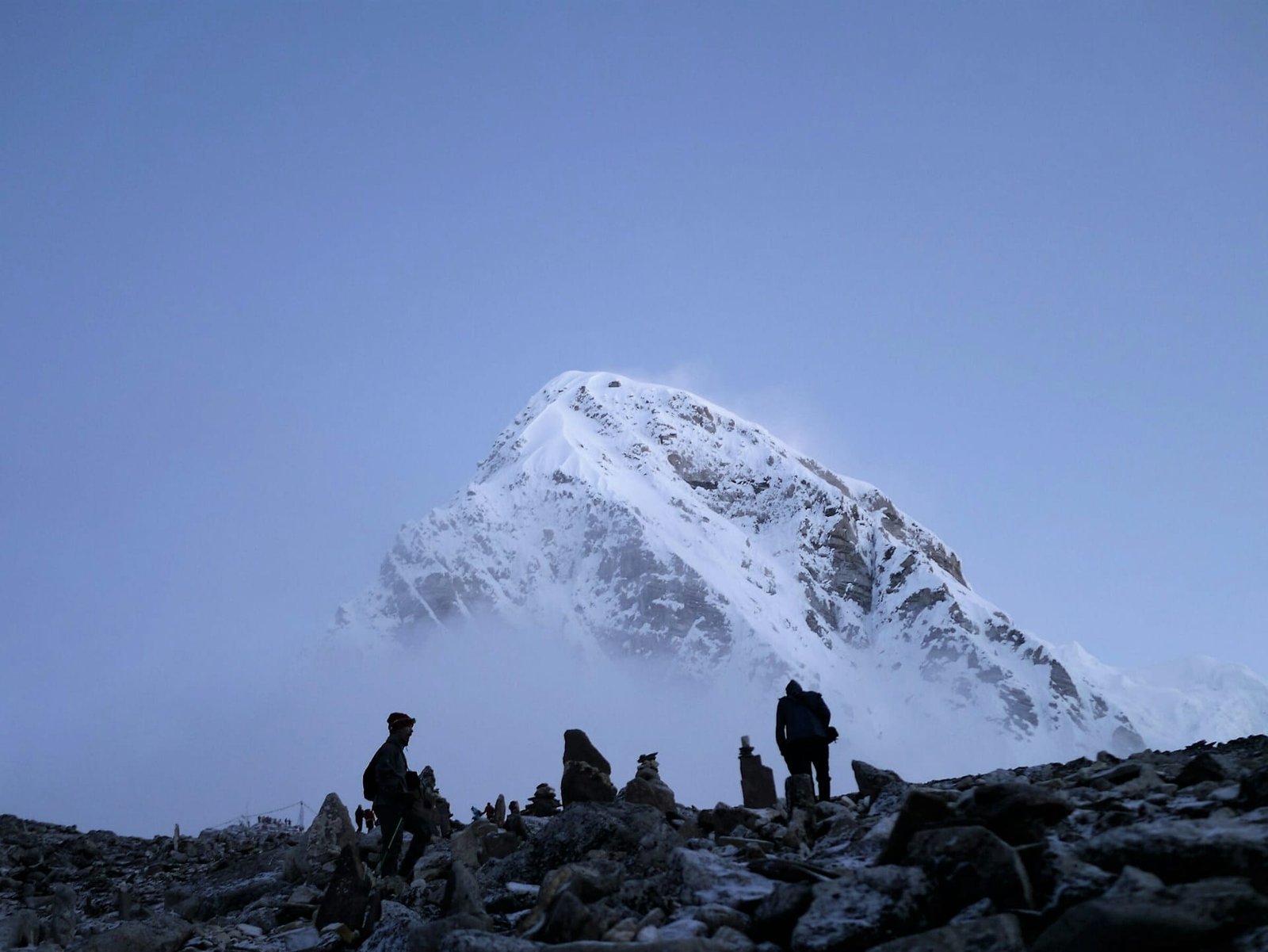
Nepal’s mountain offer runs from a first-time summit at 5,500 m to the highest point on earth, and genuinely almost every level of experience and budget has a corresponding peak. The classification system — NMA trekking peaks, expedition peaks, 8,000 m royalty permits — is the map.
Once you understand where on that map your current skills and ambitions sit, the right peak isn’t hard to find. It’s whichever one is slightly beyond where you are now — which, in Nepal more than anywhere else in the world, tends to be exactly where the best climbing happens.