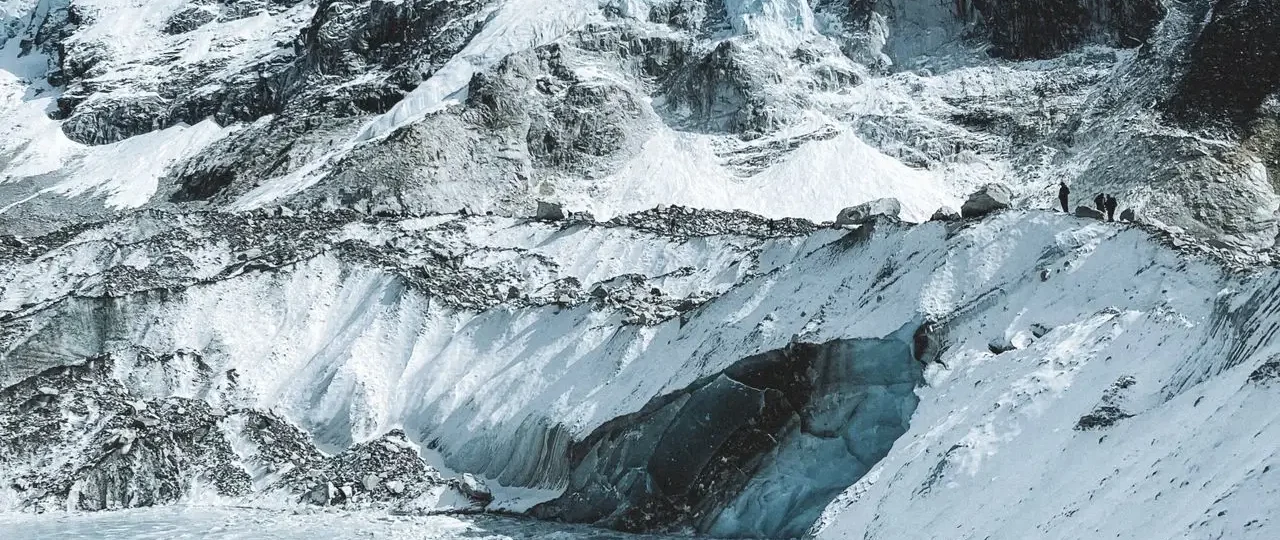
Everest Camp 2
Everest Camp 2 is the second high camp on the South Col route, positioned at approximately 6,400 to 6,500 metres in the Western Cwm on the Nepali side of Mount Everest. It is also called Advanced Base Camp, and it functions as the primary acclimatisation and logistics hub for climbers preparing to move higher. Unlike Everest Base Camp, which marks the end of the trekking route, Camp 2 sits above the Khumbu Icefall and is strictly a mountaineering camp. If you have ever stared at an Everest route map and wondered what happens between the Icefall and the Lhotse Face, this is where that answer begins.
What Is Everest Camp 2?
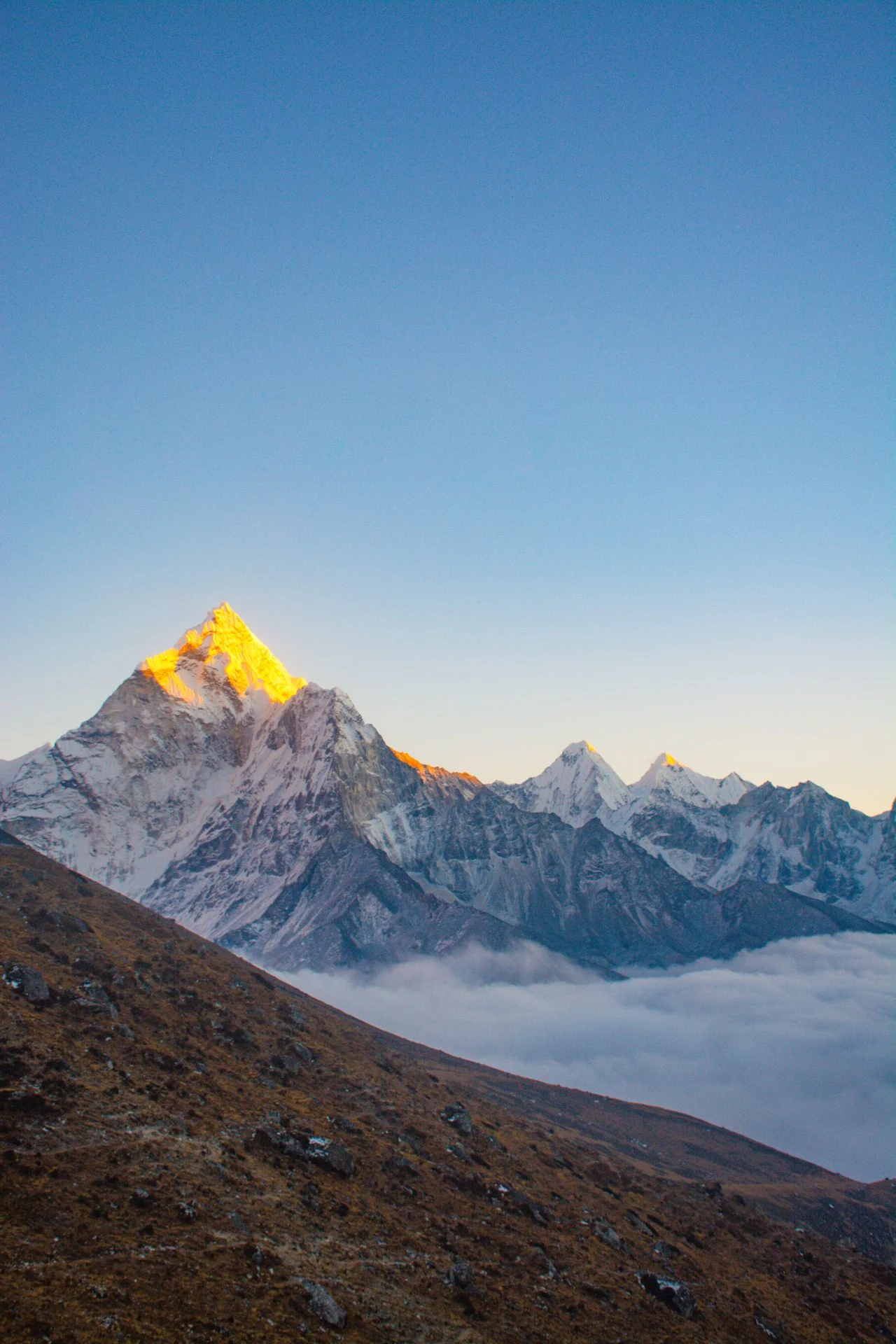
Everest Camp 2 is the second of four high camps on the standard South Col route from Nepal. It sits between Camp 1 and Camp 3, and it serves as the last major logistical staging point before climbers enter the upper mountain environment. Expedition teams establish dining tents, communications equipment, and supply caches here. Alan Arnette, a long-time Everest chronicler, described it in his 2026 season coverage as “really like a mini base camp”—with dining tents that have tables and chairs and a cooking tent for the Sherpa team.
Camp 2 is not a trekking destination. It is a high-altitude mountaineering camp, and reaching it requires crossing the Khumbu Icefall—a constantly shifting maze of seracs, crevasses, and ice blocks that is widely considered one of the most dangerous sections of the entire route.
How High Is Everest Camp 2?
Everest Camp 2 altitude is consistently reported as roughly 6,400 to 6,500 metres (21,000 to 21,325 feet) by the most reliable current sources. Nepal’s Director General of Tourism, Ram Krishna Lamichhane, confirmed that figure in a 2026 season briefing to the BBC. National Geographic’s Return to Everest expedition series recorded Camp 2 at 6,460 metres (21,200 feet) during the 2009 season. Sierra Mountaineering International measured it at 6,495 metres (21,309 feet) in 2012.
Some commercial expedition pages list Camp 2 at 6,750 metres. That figure appears to be an outlier. It may reflect an older survey, a different measurement point, or confusion with a higher location on the route. The most defensible editorial position is that Camp 2 sits at approximately 6,400–6,500 metres, with minor variation between sources and seasonal camp placements.
South Col Route Camp Altitudes
| Camp | Approximate Altitude | Location |
|---|---|---|
| Everest Base Camp | 5,364 m / 17,598 ft | Khumbu Glacier terminus |
| Camp 1 | ~6,065 m / 19,900 ft | Top of Khumbu Icefall |
| Camp 2 | ~6,400–6,500 m / 21,000–21,325 ft | Upper Western Cwm, base of Lhotse Face |
| Camp 3 | ~7,200–7,300 m / 23,600–23,950 ft | On the Lhotse Face |
| Camp 4 / South Col | ~7,900–8,000 m / 26,000–26,250 ft | South Col saddle |
| Summit | 8,848.86 m / 29,031.7 ft | Official 2020 survey |
The altitude gain from Base Camp to Camp 2 is roughly 1,100 metres over about 5.5 kilometres of horizontal distance. That compression—steep elevation gain over a short approach—partly explains why the climb to Camp 2 feels harder than the numbers suggest.
Where Is Everest Camp 2 Located?
Everest Camp 2 location is in the Western Cwm, a broad glacial valley on the Nepali side of Mount Everest within Sagarmatha National Park in the Solukhumbu District. The camp sits at the upper end of the cwm, at the base of the Lhotse Face. To reach it, climbers first cross the Khumbu Icefall to Camp 1, then ascend the Western Cwm for roughly 2.5 kilometres.
Camp 2 is positioned on a lateral moraine of the Khumbu Glacier, according to expedition dispatches. Unlike Camp 1, which sits in the middle of the icefall’s runout zone, Camp 2 occupies relatively sheltered terrain that is less exposed to icefall collapse and rockfall. That does not make it safe in absolute terms, but it does make it the most habitable of the high camps below the Lhotse Face.
What Is the Western Cwm?
Western Cwm is the glacial valley that Camp 2 occupies, and understanding it is essential to understanding why Camp 2 exists where it does. The word “cwm” is Welsh for a bowl-shaped valley or cirque, and it entered Everest terminology through early British expeditions. It is pronounced “coom.” The Western Cwm is roughly 2.5 kilometres long, bounded by Everest’s Southwest Face to the east, Nuptse to the south, and Lhotse to the north.
It is often called the Valley of Silence because it receives almost no wind. The surrounding peaks shelter it from prevailing air currents, and on a still day the silence is striking. But that same shelter creates a temperature paradox. The cwm can be brutally cold at night—temperatures reaching -30°C—and uncomfortably hot during the day, with temperatures climbing well above freezing as solar radiation reflects off the snow surface. Expedition dispatches regularly describe climbers stripping off layers in the Western Cwm while wearing gloves and down jackets at the same altitude elsewhere.
The Western Cwm is also marked by large lateral crevasses, particularly in the centre of the valley. The route through the cwm is generally well-travelled and relatively straightforward compared to the Khumbu Icefall, but it is not hazard-free. Hidden crevasses and the occasional serac fall from the surrounding faces require constant attention.
Why Is Camp 2 Called Advanced Base Camp?
Advanced Base Camp is a name commonly applied to Camp 2 on the South Col route from Nepal. The name reflects its function: it is the last camp where expeditions maintain a substantial logistical presence—dining tents, supplies, communications, and sometimes a medical station—before the route enters the more extreme environments of the Lhotse Face and the South Col. Sherpas established Camp 2 with tents and supplies in the 2026 season specifically in its role as Advanced Base Camp.
This is not the same as Advanced Base Camp on the North Side of Everest in Tibet. The North Side ABC is located at approximately 6,340 metres on the East Rongbuk Glacier, and it is a completely different camp on a different route. It is reachable by trekking from the Tibetan side and is sometimes marketed as a trekking destination. The South Side Camp 2 / ABC is not a trekking destination. Confusing the two is a common error, and it matters because the access requirements, permits, and physical demands are entirely different.
If you are reading a page that says “Everest Advanced Base Camp” without specifying which side of the mountain it refers to, you are probably looking at incomplete information.
Everest Camp 1 vs Camp 2 vs Camp 3
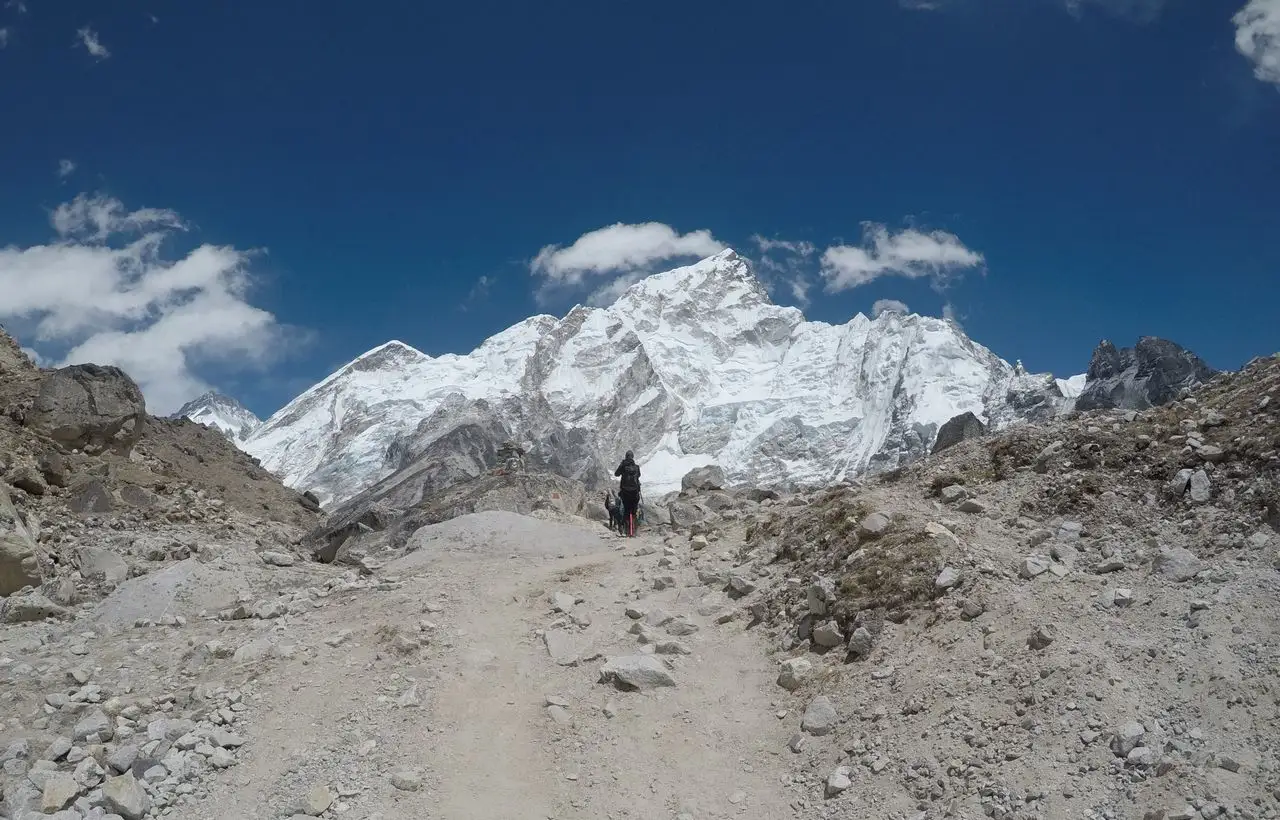
Camp 1, Camp 2, and Camp 3 form a progression on the South Col route, each with a distinct character and purpose. Understanding how they differ helps explain why Camp 2 occupies such a critical position in the expedition structure.
| Feature | Camp 1 | Camp 2 | Camp 3 |
|---|---|---|---|
| Altitude | ~6,065 m | ~6,400–6,500 m | ~7,200–7,300 m |
| Location | Top of Khumbu Icefall | Upper Western Cwm, base of Lhotse Face | On the Lhotse Face |
| Terrain | Flat snow and ice | Glacial moraine | Steep ice (40–50°) |
| Purpose | First rotation, gear cache | Main acclimatisation hub, ABC | High-altitude acclimatisation, oxygen staging |
| Facilities | Minimal; tents only | Dining tents, supplies, comms | Basic; small platforms |
| Hazard profile | Icefall runout | Crevasses, heat, altitude | Steep ice, rockfall, exposure |
Camp 1 is essentially a waypoint—a place to sleep once or twice during the first acclimatisation rotation. Camp 2 is where expeditions spend real time. Camp 3 is a brief, uncomfortable stop on the way to the South Col, and most climbers spend only one night there before moving up.
What Does Everest Camp 2 Look Like?
Everest Camp 2 looks like a tent city on a glacial moraine. At the peak of the season, it can hold hundreds of tents arranged on the rocky debris, with separate areas for different expedition teams. The tents are typically yellow or orange, designed for high-altitude use, and they are pitched on snow and rocky rubble that has fallen from Everest’s Southwest Face.
The camp has more infrastructure than Camp 1 or Camp 3. Most major expeditions establish a dining tent with tables and chairs, a communications tent, and storage areas for food, fuel, and oxygen. Some teams have a dedicated medical tent staffed by a doctor. The presence of a dining tent—with actual tables and chairs—is one of the things that distinguishes Camp 2 from the spartan conditions higher up. Alan Arnette described the camp in 2026 as having “way too much luxury” compared to what he considers appropriate for a high camp.
The views from Camp 2 are dominated by the Lhotse Face, the steep ice wall that rises directly above the camp. To the left, the Southwest Face of Everest is visible; to the right, Nuptse. The Khumbu Icefall stretches below, and on a clear day, the peaks of the Khumbu region are visible in the distance. It is a dramatic location, but it is not a comfortable one. Windstorms regularly destroy tents at Camp 2, and the 2026 season saw reports of severe weather affecting the camp throughout the season.
What Happens at Camp 2 During an Expedition?
Acclimatisation is the most important function of Camp 2. Climbers spend multiple nights here during their rotation schedule, allowing their bodies to begin adapting to the reduced oxygen levels at 6,400 metres. Most expeditions include at least two rotations to Camp 2 before a summit push. Climbers who are not using supplemental oxygen will spend more time here, as their bodies need longer to acclimatise.
Logistics and staging are the second critical function. Camp 2 is the primary staging point for the upper mountain. Food, fuel, oxygen, and equipment are ferried from Base Camp to Camp 2 and then distributed to Camp 3 and the South Col. The camp is stocked well enough that climbers can wait out bad weather for several days before making a decision about moving up.
Summit push staging is the third function. When a weather window opens, climbers move from Base Camp to Camp 2, spend a night or two, and then begin the push to Camp 3, the South Col, and the summit. For climbers using supplemental oxygen, Camp 2 is often where oxygen systems are first tested and deployed. Some climbers begin using oxygen at Camp 2; others wait until Camp 3 or the South Col.
Is Everest Camp 2 Part of the Everest Base Camp Trek?
No, Everest Camp 2 is not part of the Everest Base Camp Trek. The EBC Trek ends at Everest Base Camp, which sits at 5,364 metres. Camp 2 is above the Khumbu Icefall, and reaching it requires crossing that icefall—a section of moving glacier that is widely considered one of the most dangerous parts of the entire Everest route.
The confusion is understandable. Both Base Camp and Camp 2 have “camp” in their names, and both appear on Everest route maps. But they are separated by one of the most technically demanding and objectively hazardous sections of the mountain. The Khumbu Icefall is a constantly shifting maze of seracs, crevasses, and ice blocks that can collapse without warning. In 2014, an avalanche in the icefall killed 16 Sherpa guides. The icefall is not a trekking route. It is a mountaineering objective.
That said, there is a commercial market for “Camp 2 expeditions”—guided trips that take clients through the Khumbu Icefall to Camp 2 and back. These are not treks. They require mountaineering experience, specialised permits, and a significantly higher level of fitness and commitment than the EBC Trek. They typically cost between $10,000 and $18,000, depending on the operator and the level of support. If you are considering one of these trips, the question to ask is not “Am I fit enough for a trek?” but “Am I prepared for a mountaineering objective?”
What Are the Main Challenges at Camp 2?
Altitude is the first challenge. At 6,400 metres, the partial pressure of oxygen is roughly half what it is at sea level. The body must work harder to oxygenate blood, and the risk of altitude-related illness—acute mountain sickness, high-altitude pulmonary edema, high-altitude cerebral edema—increases significantly. Acclimatisation is not optional.
Weather is the second challenge. The Western Cwm is sheltered from wind, but that shelter can create a false sense of security. Windstorms can still reach Camp 2, and they can be severe. Snowfall, whiteouts, and rapid temperature drops are common. In 2026, storm activity at the beginning of the season caused relentless bad weather and delayed route fixing, according to Explorersweb.
Objective hazards are the third challenge. While Camp 2 is less exposed to icefall and rockfall than Camp 1, it is not hazard-free. The surrounding faces—Everest’s Southwest Face, Nuptse, and Lhotse—can produce avalanches. The crevasses in the Western Cwm require careful navigation. The route from Camp 2 to Camp 3 crosses the Lhotse Face, a steep ice wall that requires fixed ropes and crampons.
Isolation is the fourth challenge. Camp 2 is a remote location. Helicopter rescue at that altitude is possible but difficult, and weather can prevent evacuation for days. In 2026, three SummitClimb team members were stuck at Camp 2 for a week after the Khumbu Icefall closed for the season, waiting for helicopters that could not land due to cloud cover.
Everest Camp 2 in 2026
Everest Camp 2 2026 season context is essential for understanding the current state of the route. The season began with a significant obstacle: a towering 30-metre serac blocked the route through the Khumbu Icefall in April, delaying the opening of the route above Base Camp for nearly two weeks. The blockage prevented climbers from reaching Camp 2 and forced expeditions to delay their acclimatisation rotations.
Nepali “icefall doctors”—a team of Sherpa specialists responsible for fixing the route through the icefall under the coordination of the Sagarmatha Pollution Control Committee—cleared and secured the path to Camp 2 by April 28, restoring access for the season. According to Nepal’s Director General of Tourism, ropes were fixed as high as Camp 2, sitting at roughly 6,400 to 6,500 metres. Sherpas then established Camp 2 with tents and supplies and began fixing ropes toward Camp 3 and the South Col.
However, caution remained high. The SPCC warned that a major serac was still unstable and could collapse within days, advising climbers to avoid carrying heavy loads through the icefall. The season proceeded with a compressed timeline, raising concerns about bottlenecks at the high camps as teams tried to make up lost time.
By late May, as the season wound down, at least four climbers were still at Camp 2 after the Khumbu Icefall closed for the season. Three members of the SummitClimb team—two Americans and one Sherpa—remained at Camp 2 waiting for helicopter evacuation, with rations and fuel growing thin. A fourth climber, British BASE jumper Josh Bregmen, made it back to Base Camp and later to Kathmandu.
For the 2026 season, the key takeaway is that Camp 2 remains a critical and active part of Everest expedition infrastructure—and that the Khumbu Icefall remains the primary point of vulnerability for access to it.
Frequently Asked Questions
1.What is Everest Camp 2?
Everest Camp 2 is the second high camp on the South Col route, located at approximately 6,400–6,500 metres in the Western Cwm. It is also called Advanced Base Camp and serves as the primary acclimatisation and logistics hub for climbers.
2.How high is Everest Camp 2?
Approximately 6,400 to 6,500 metres (21,000 to 21,325 feet), with minor variation between sources and seasonal camp placements.
3.Where is Camp 2 on Everest?
It is in the Western Cwm on the Nepali side of Everest, at the base of the Lhotse Face, above the Khumbu Icefall.
4.Is Camp 2 the same as Everest Base Camp?
No. Base Camp is at 5,364m and is the end of the EBC Trek. Camp 2 is above the Khumbu Icefall and is a mountaineering camp, not a trekking destination.
5.What is the Western Cwm?
A broad, flat glacial valley on Everest’s South Side, often called the Valley of Silence. It is pronounced “coom” and is the location of Camp 2.
6.Why is Camp 2 called Advanced Base Camp?
On the South Col route, Camp 2 is the last major logistical hub before the upper mountain, so it functions as an advanced base. It should not be confused with North Side Advanced Base Camp in Tibet.
7.How far is Camp 2 from Everest Base Camp?
Approximately 5.5 kilometres horizontally, with an elevation gain of about 1,100 metres. The route passes through the Khumbu Icefall and Camp 1.
8.What is above Camp 2?
The Lhotse Face leads to Camp 3, then the South Col (Camp 4), and finally the summit.
9.How is Camp 2 different from Camp 1?
Camp 1 is a basic waypoint at the top of the Khumbu Icefall. Camp 2 is larger, better stocked, and the main acclimatisation hub.
10.Can trekkers visit Everest Camp 2?
Not as part of the EBC Trek. Reaching Camp 2 requires crossing the Khumbu Icefall and is a mountaineering objective, not a trek.
11.What does Camp 2 look like?
A tent city on a glacial moraine, with yellow and orange tents, dining tents, and views of the Lhotse Face and Everest’s Southwest Face.
12.Do climbers use oxygen at Camp 2?
Some do. Camp 2 is often the threshold where supplemental oxygen is first used, though many climbers wait until Camp 3 or the South Col.
13.Is Camp 2 dangerous?
Yes. It is at high altitude, exposed to severe weather, and access requires crossing the Khumbu Icefall—one of the most hazardous sections of the route.
14.What happened at Camp 2 in 2026?
The route to Camp 2 was blocked by a serac in April, delaying access. It was cleared by icefall doctors by April 28, and the season proceeded with a compressed timeline.
15.How long do climbers stay at Camp 2?
During acclimatisation rotations, typically 2–4 nights. During summit pushes, usually 1–2 nights before moving to Camp 3.
Planning a Trek in the Everest Region?
Wonder Hikes Nepal is a Nepal-based trekking and mountain adventure company. If you are planning an Everest Base Camp Trek, a trek in the Khumbu region, or researching the logistics of high-altitude mountaineering, our team can help you understand the terrain, the camps, and the preparation required. We do not guide Everest summit expeditions, but we do provide expert guidance on trekking in the Everest region and responsible mountain travel in Nepal. If you would like to talk through your plans, get in touch—we are happy to help.