Best Places to Go in Nepal
Nepal is a country that resists easy description. It’s not just “beautiful” — it’s the kind of place that stays with you long after you leave. Maybe it’s the reflection of Machhapuchhre rippling across Phewa Lake at dawn. Maybe it’s the smell of king curd drifting through Bhaktapur’s old streets. Maybe it’s a stranger handing you a cup of hot tea by a teahouse fire. Whatever draws you here, this Himalayan nation has a way of making you stay longer than planned.
This guide covers the best destinations in Nepal for different types of travelers — trekkers, culture lovers, families, and anyone who just wants to slow down. We’re not trying to list everything. We’re trying to help you find what actually fits your trip.
Kathmandu Valley: Seven World Heritage Sites in One Place
Best for: First-time visitors to Nepal.
The Kathmandu Valley is where most travelers land, and it’s the smartest place to start. Within just 20 kilometers, you’ll find seven UNESCO World Heritage Sites packed together. The pace here is chaotic, loud, and full of life — but that’s exactly what makes it unforgettable.
Kathmandu Durbar Square
The old royal palace complex, home to Hanuman Dhoka and the Kumari Ghar (the living goddess’s residence). Red-brick temples, carved wooden windows, and flocks of pigeons create Nepal’s most classic urban scene. The lanes around the square reward slow wandering — every few steps you’ll pass a small shrine or a traditional workshop.
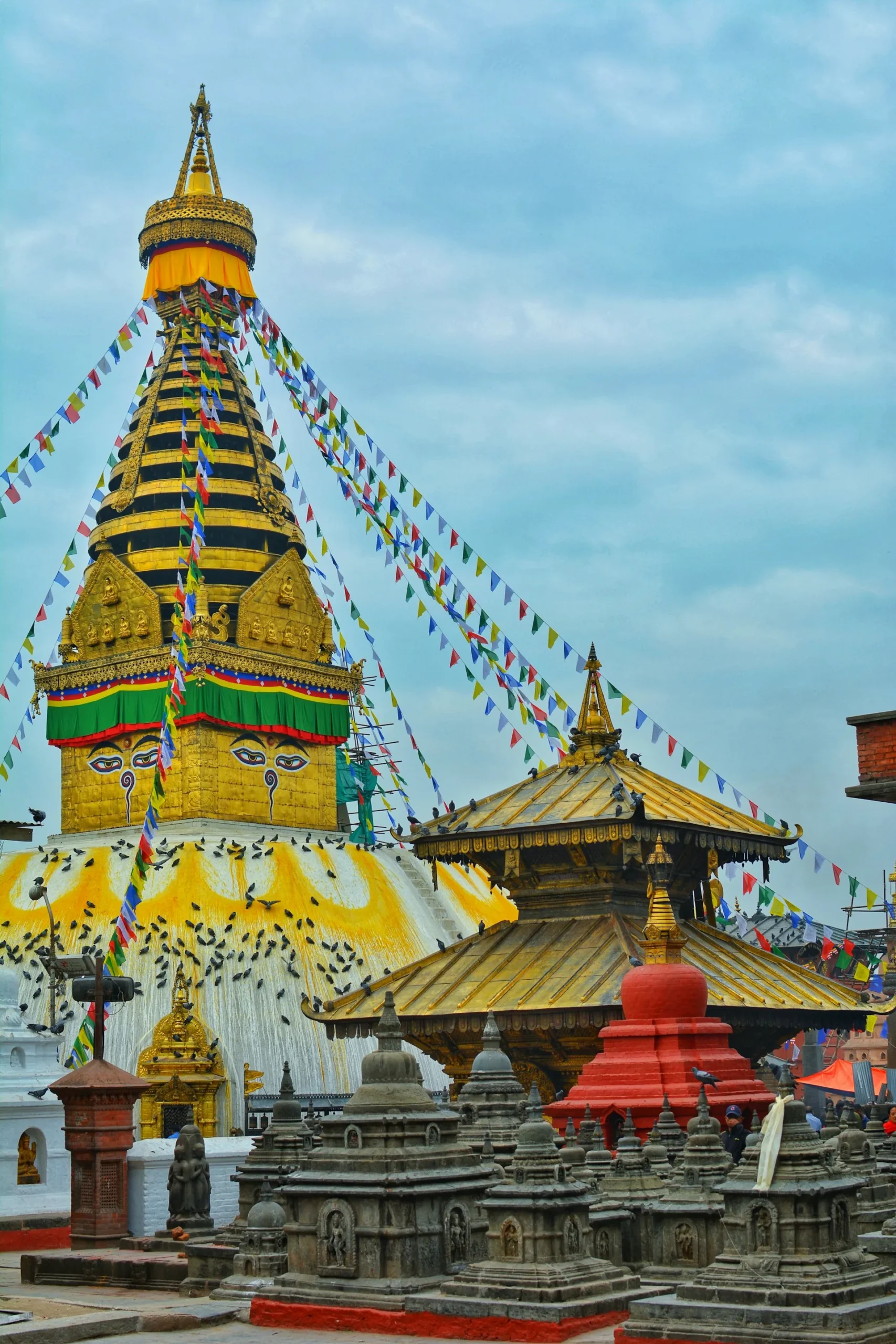
Swayambhunath (Monkey Temple)
Climb the hill for a full panorama of Kathmandu. The all-seeing “Buddha eyes” on the stupa are one of Nepal’s most recognizable symbols. One caution: the monkeys here are bold. The CDC specifically flags Swayambhunath as a hotspot for traveler animal bites. Watch your food and belongings, and don’t tease them.
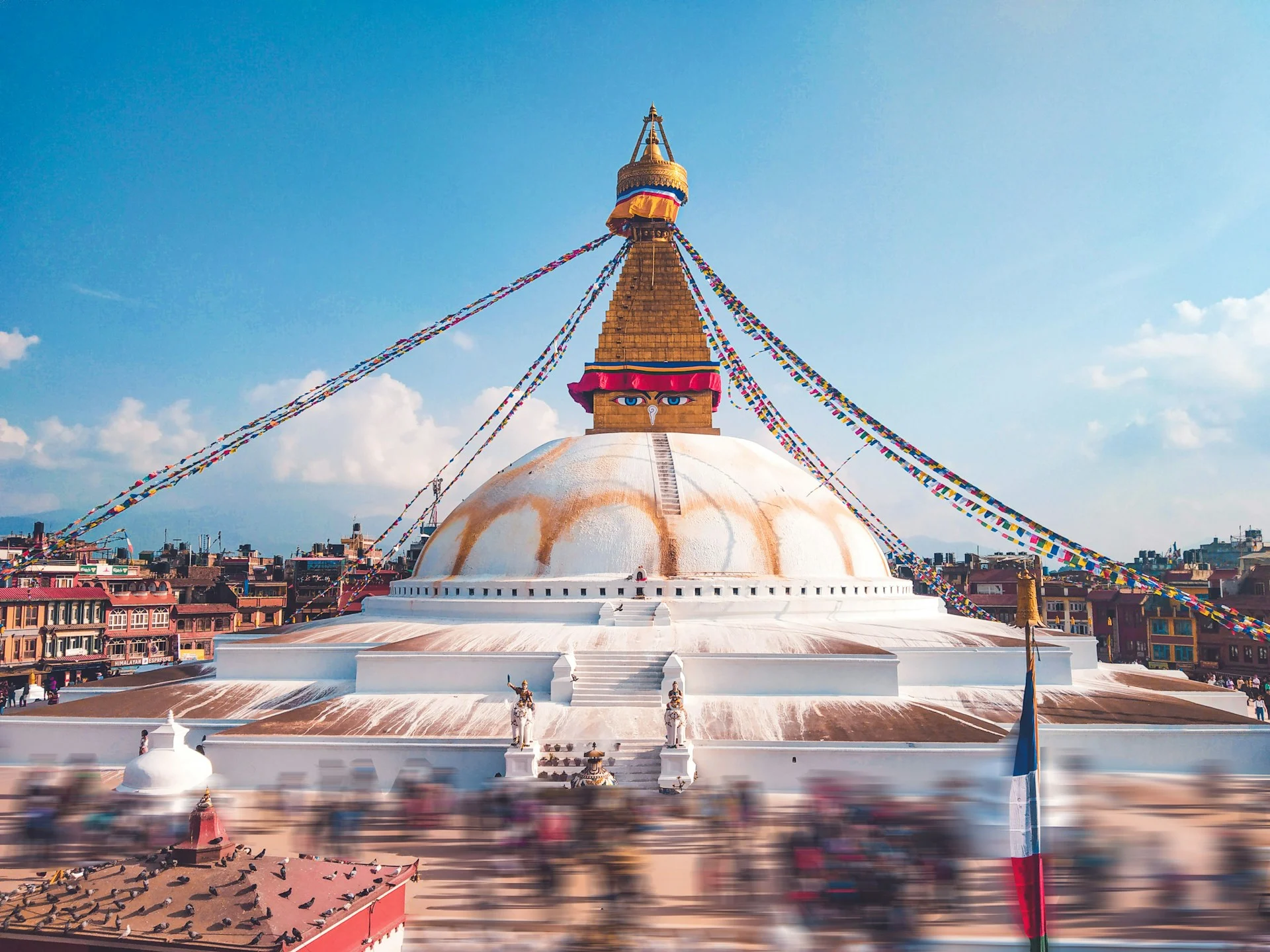
Boudhanath
One of Asia’s largest spherical stupas and a major center of Tibetan Buddhism in Nepal. In the late afternoon, walk clockwise with the pilgrims. The butter lamps and low chanting will naturally slow your pace.
Pashupatinath
Nepal’s most important Hindu temple. The evening Aarti fire ritual is powerful, but remember this is an active cremation site. Think before you photograph, and keep quiet and respectful.
Patan and Bhaktapur
Patan Durbar Square is famous for its Newari craftsmanship, and the Golden Temple and Kumari Chowk are worth a detour. Bhaktapur feels like a medieval town sealed in time — red-brick streets, intricate wood carvings, three main squares, and the local specialty juju dhau (king curd). It’s only about 30 minutes from Kathmandu airport, making it an ideal final stop before flying out.
Pokhara: Slow Living Between Mountains and Lakes
Best for: Travelers who want to relax and soak in natural scenery.
Pokhara is Nepal’s second city and the gateway to the Annapurna region. Unlike Kathmandu’s noise, it has a way of making you slow down automatically.
Phewa Lake
The soul of Pokhara. Row a boat toward the middle, look back, and you’ll see Machhapuchhre (Fishtail) and the Annapurnas mirrored on the water — one of Nepal’s classic views. The Lakeside cafés and restaurants are perfect for an afternoon of doing nothing.
If you prefer quieter water, head to Begnas Lake. Far fewer tourists, just water, green hills, and the occasional wooden boat.
Sarangkot Sunrise and Paragliding
Climb to the top of Sarangkot at dawn and watch the first light turn the Annapurnas gold. Sarangkot is also a world-class paragliding launch site — take off from about 1,600 meters with Phewa Lake and the entire Pokhara Valley below you, surrounded by Annapurna, Machhapuchhre, Dhaulagiri, and Manaslu. Flights last around 20 to 30 minutes and land by the lakeside.
World Peace Pagoda and Around
From Phewa Lake, a boat ride plus a 45-minute hike brings you to the World Peace Pagoda (Shanti Stupa). The hilltop offers sweeping views over Phewa Lake, the Pokhara Valley, and distant snow peaks. On the way down, you can stop at Devi’s Fall and Gupteshwor Cave.
Practical tip: Pokhara is the starting point for Annapurna Base Camp (ABC) and Poon Hill treks. Mornings are clearest for mountain views — if you want to see the snow peaks, wake up early.
Chitwan National Park: Nepal’s Jungle Side
Best for: Families, wildlife lovers, and anyone needing a break from trekking.
Chitwan means “heart of the jungle.” It’s Nepal’s first national park and a UNESCO World Heritage Site, covering 932 square kilometers.
In Chitwan, you can:
-
Take a canoe down the Rapti River and watch crocodiles and water birds up close
-
Go by jeep deep into the jungle looking for one-horned rhinos (Chitwan is one of their most reliable habitats)
-
Go birdwatching: over 400 species have been recorded here
-
Experience Tharu village culture, including traditional stick dancing
Chitwan moves much slower than Kathmandu or Pokhara. February and March are the golden window for wildlife spotting — by late dry season, elephant grass is cut back, visibility opens up, and tiger and rhino sightings rise significantly.
Practical tip: About 5–6 hours by road from Kathmandu, 3 hours from Pokhara. A 25-minute flight is also an option.
Trekker’s Nepal: Four Routes Worth Walking
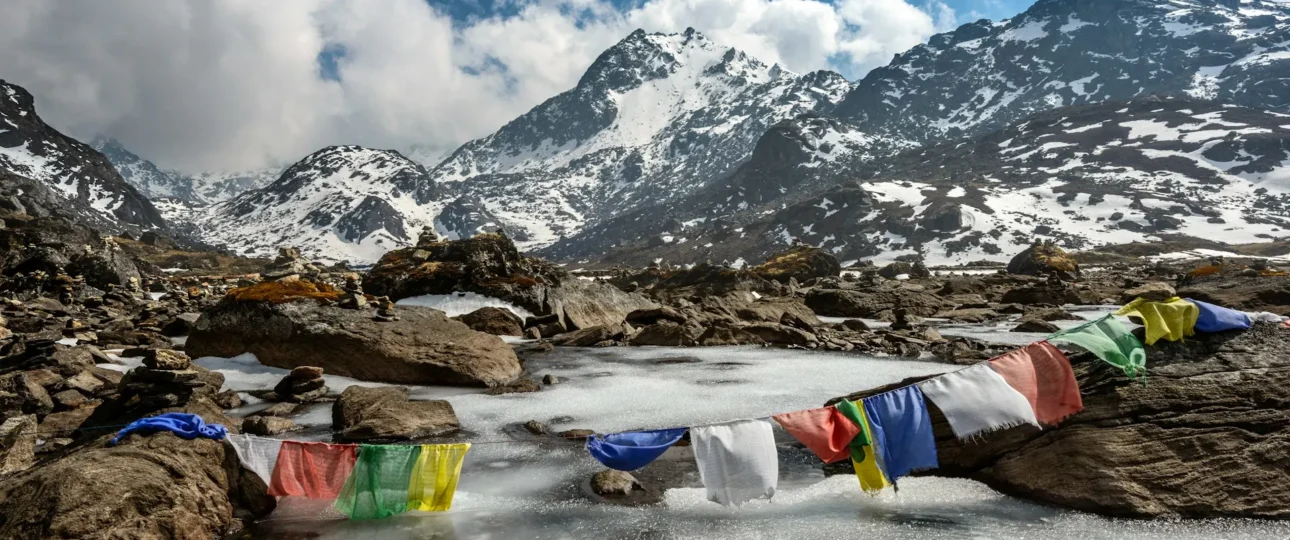
Nepal has the densest network of high-altitude trails in the world. Here are the top options, sorted by difficulty and character.
Everest Base Camp (EBC) — The Ultimate Dream
Duration: 12–14 days | Max altitude: 5,364 m (EBC), 5,545 m (Kala Patthar)
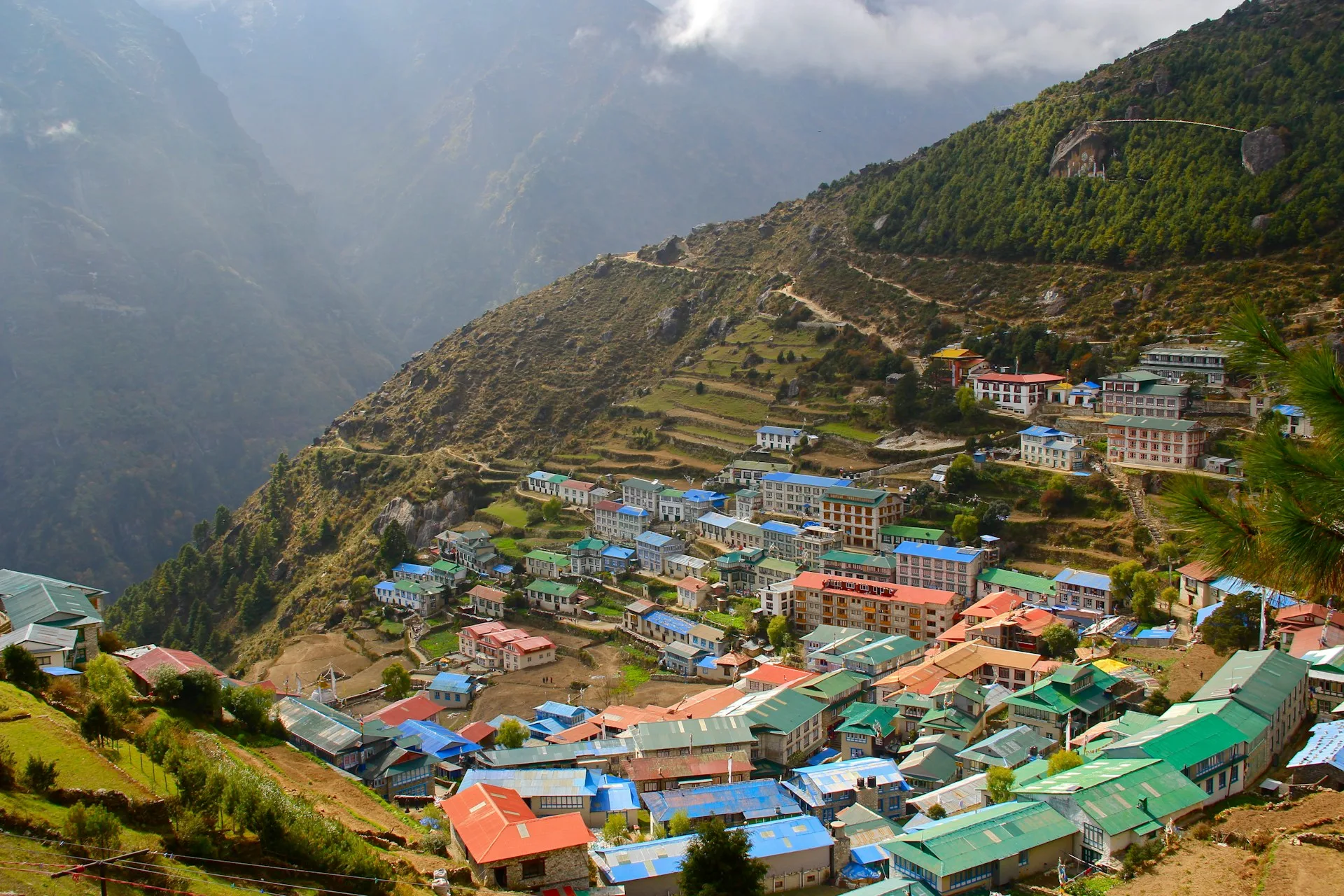
It starts with the dramatic flight into Lukla, passes through Namche Bazaar and Tengboche Monastery, and ends at Base Camp on the Khumbu Glacier. Watching sunrise on Everest from Kala Patthar is a moment people remember for life. This is Nepal’s busiest route, and teahouses can fill up in peak season. Acclimatization is critical.
Annapurna Base Camp (ABC) — Best for Beginners
Duration: 7–12 days | Max altitude: 4,130 m
Starting near Nayapul outside Pokhara, the trail passes rhododendron forests and Gurung villages before reaching the “sanctuary” ringed by the Annapurnas. No extreme pass to cross, but the mountain views rival any trek. Machhapuchhre feels within arm’s reach. Great for beginners and families.
Langtang Valley — The Best Value Trek
Duration: 7–9 days | Max altitude: ~3,870 m
Only a day’s drive from Kathmandu to the trailhead. The route passes forests and villages and ends at Kyanjin Gompa, where you can add day hikes to glacier viewpoints and lakeside meadows. Teahouses are comfortable — there are even bakeries and local yak cheese. Costs far less than EBC or the Annapurna Circuit.
Manaslu Circuit — The Best Teahouse Trek
Duration: 11–12 days | Max altitude: 5,160 m (Larke La)
Waterfall gorges, views of the world’s tenth-highest mountain, snowfields on the Larke La pass, and one of the most beautiful glacier lakes in the Himalaya. Far fewer visitors than EBC or Annapurna, but teahouse comfort is still excellent. A special permit is required.
Important 2026 Update: Nepal has banned solo trekking without a guide. All foreign trekkers in protected and restricted areas must be accompanied by a licensed guide. The good news: as of March 2026, restricted areas now allow solo travelers — you no longer need a minimum of two people to enter Upper Mustang, Nar-Phu, and similar regions. You just need a registered agency and a licensed guide. The old two-person minimum rule was scrapped in 2026.
More Places Worth Considering
Upper Mustang and Kagbeni
Mustang is one of Nepal’s most unusual destinations: arid desert landscapes, cave monasteries, and ancient Tibetan-style walled towns. Kagbeni, at the entrance to Mustang, has a “time has stopped” feel with its mud-brick buildings and wind-carved canyons. If you’re trekking the Annapurna Circuit, don’t rush through after Thorong La — Kagbeni deserves a night.
Lumbini
The birthplace of the Buddha. The Maya Devi Temple, Ashoka Pillar, and the international monastery zone are the main highlights. One of the most important pilgrimage sites for Buddhists worldwide.
Nagarkot
The closest mountain viewpoint to Kathmandu. On a clear day, you can see the Himalayan range stretching from Annapurna to Kanchenjunga. A good final stop before leaving Nepal.
Practical Information
Best Time to Visit
October to November is Nepal’s “greatest hits” season. Post-monsoon air is scrubbed clean, Himalayan visibility is at its peak, weather is stable, and trails are in prime condition. The trade-off: highest prices, busiest routes, and luxury lodges booked 8 to 12 months in advance.
December to February is the insider’s secret. Winter actually delivers the clearest mountain views of the year, crowds thin out dramatically, and prices drop 20–30%. But high altitudes are bitterly cold — EBC averages -17°C in January, and many teahouses above 4,000 m close. Lower elevations like Chitwan and Bardia hit their stride in winter, with February and March offering the year’s best tiger sightings.
March to May is the second-best window. Rhododendrons (Nepal’s national flower) explode across hillsides, making Annapurna treks especially beautiful. April and May are also Everest climbing season, and Base Camp buzzes with expedition energy.
June to September is monsoon. Most areas see heavy rain and poor trekking conditions. But rain-shadow regions like Upper Mustang remain accessible — and you’ll have them almost entirely to yourself.
Visa (2026)
Most nationalities can get a visa on arrival at Tribhuvan International Airport in Kathmandu:
-
15 days: USD 30
-
30 days: USD 50
-
90 days: USD 125
Note: Citizens of 12 countries — including Nigeria, Ghana, Afghanistan, Syria, and Iraq — must apply in advance at a Nepali embassy or consulate. They cannot get a visa on arrival. Bring crisp US dollar bills for faster processing.
Costs
Nepal is one of the best-value destinations in the world. Average daily spend is around USD 40, but you can go lower or much higher:
| City | Average Daily Cost |
|---|---|
| Kathmandu | $57 |
| Everest Region | $52 |
| Chitwan | $38 |
| Pokhara | $22 |
Hostel dorms start at USD 6, local dal bhat (lentil rice, with free refills) costs USD 2–4, and teahouse trekking runs about USD 25–40 per day including lodging, three meals, and permits.
Cultural Etiquette
-
Remove shoes before entering temples; cover shoulders and knees
-
Walk clockwise around stupas and temples
-
Ask before photographing religious ceremonies or people
-
The cremation ghats at Pashupatinath are an active funeral site — be quiet and respectful
Why Choose Wonder Hikes Nepal
Planning a Nepal trip involves a lot of moving parts: route selection, permits, acclimatization schedules, reliable guides and porters. And 2026 brings stricter trekking rules — solo trekking without a guide is banned, and restricted-area permits must go through registered agencies.
Wonder Hikes Nepal (wonderhikes.com) specializes in personalized trekking and travel experiences for international visitors. From cultural tours in the Kathmandu Valley to treks in the Annapurna, Everest, and Manaslu regions, the team tailors itineraries to your time, fitness, and interests. If you want a local team that knows the ground and responds quickly — handling everything from airport pickup to the end of your trek — visit their website to learn more.
FAQs
A final word: The magic of Nepal isn’t about how many sights you tick off. It’s about slowing down. Watching pigeons take off in Durbar Square. Staring at Phewa Lake. Chatting with strangers by a teahouse fire. Holding your breath before a mountain sunrise. Those are the moments that matter.
Ready to plan your trek?
Tell us your dates and group size. We reply on WhatsApp within a few hours.