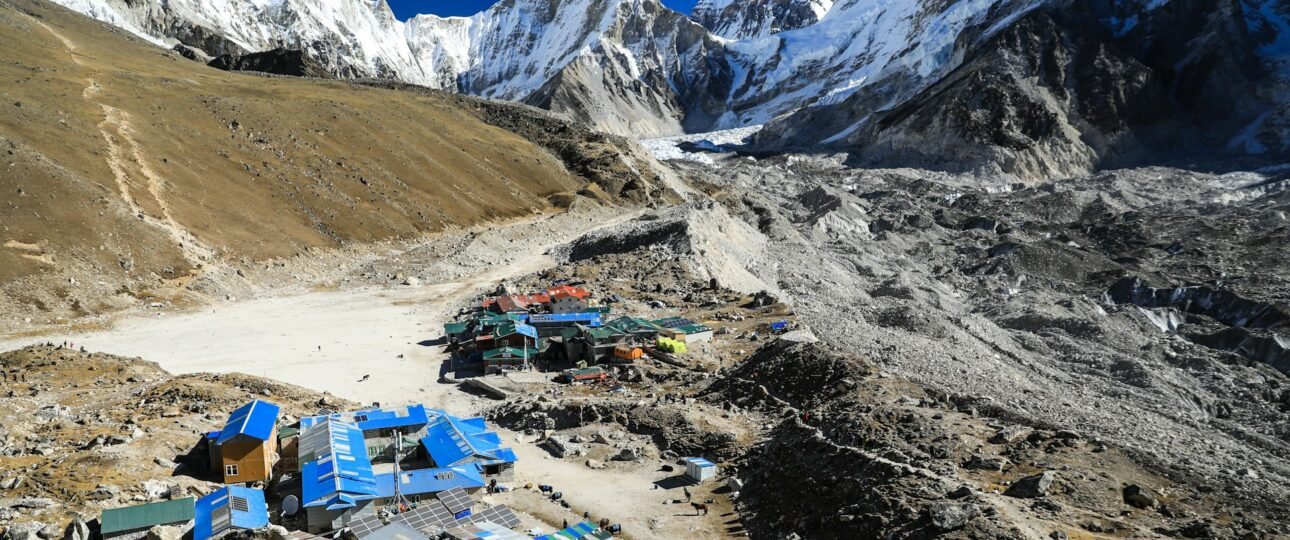
Gorakshep is the place most Everest Base Camp trekkers remember for the wrong reasons first: the cold, the thin air, the bad sleep. Then, a morning later, they remember it for the right ones. It is the last settlement with beds before Everest Base Camp, a cluster of low stone lodges on a flat, sandy plain at around 5,164 metres, with the Khumbu Glacier on one side and the black slope of Kala Patthar on the other. Nobody lives here for long, but almost everyone who walks the route spends a night.
This guide explains what Gorak Shep actually is, why you sleep there instead of at Base Camp, how to split your two big days, what the lodges are like and how to manage the altitude and the cold. Where published sources disagree on a number, I say so rather than pick one quietly.
Gorak Shep at a Glance
| Fact | Detail |
|---|---|
| Altitude | About 5,164 m (16,942 ft). Some operators quote anything from roughly 5,140 m to 5,288 m |
| Region | Khumbu, Solukhumbu District, inside Sagarmatha National Park |
| Role on the trek | Last village with lodges and the overnight stop before Everest Base Camp and Kala Patthar |
| Distance to Everest Base Camp | About 3.5 km each way, usually 1.5 to 2.5 hours depending on pace and conditions |
| Distance to Kala Patthar | Roughly similar in time, climbing steeply to about 5,545 m |
| Name | Commonly translated as “dead ravens,” reflecting the lack of vegetation |
| Season | Largely uninhabited outside the trekking seasons |
Altitude figures for Gorakshep and the surrounding area vary between guides because different surveys, GPS devices and operators are used. The 5,164 m figure is the one most widely cited, including by Wikipedia, so that is what this article uses.
What Is Gorak Shep, and Where Is It?
The village sits on a dry lakebed at the foot of Kala Patthar, a few kilometres short of Everest Base Camp. The flat, sandy ground gives the place its odd, moon-like character, and the name is generally translated as “dead ravens,” a reference to the lack of plants and the harshness of the setting. Some sources describe the second part of the name as meaning sandy land instead, which suits the landscape just as well.
It is the final stop on the common Everest Base Camp route from Lukla, which passes Namche Bazaar, Tengboche, Pangboche, Dingboche and Lobuche before reaching it. It also played a historical role: it was used as a base camp by early Everest expeditions, including the 1952 Swiss attempt, before the base camp moved further up the glacier.
One surprising fact: Gorak Shep is higher than La Rinconada in Peru, which is usually listed as the highest year-round human settlement in the world at about 5,100 metres. The difference is that Gorak Shep is seasonal. It is mostly uninhabited for much of the year and reopens when the trekking season begins.
Why Everyone Sleeps at Gorak Shep, Not at Base Camp
New trekkers often assume they will sleep at Everest Base Camp. In practice, most do not. Two reasons explain it.
Permits and facilities. Standard trekking permits do not allow camping at Base Camp, and during the climbing season the site is occupied by expedition camps. There are no trekker lodges there.
Logistics. Gorak Shep is the last place with food and beds. From there, Base Camp is an out-and-back walk of a few hours, and Kala Patthar is a separate pre-dawn climb. Staying overnight lets you split those two objectives across two mornings rather than cramming them into one very long day.
That is why Gorak Shep functions as a staging post rather than a destination. Most trekkers arrive, eat, rest, walk to Base Camp, return and sleep, then climb Kala Patthar at dawn and descend the next day.
Getting to Gorak Shep: The Last Day of the Approach
Most itineraries reach Gorak Shep from Lobuche. One operator’s route breakdown puts the Lobuche, Gorak Shep and Base Camp day at about 13 km in total and around 7 to 8 hours of walking, which is a useful planning figure but depends heavily on your pace and how long you spend at Base Camp.
The trail climbs along the lateral moraine of the Khumbu Glacier. The ground is rocky and shifting, the air is thin, and the views open up as you leave the last of the grassy valleys behind. Many trekkers find the final stretch into Gorak Shep slow and tiring even if the gradient is gentle, because the altitude strips the usual energy.
If you want to understand the stage that leads here, our guide to Dingboche covers the acclimatisation stop two days earlier, and the Everest Base Camp elevation guide shows the full altitude profile of the route.
Everest Base Camp From Gorak Shep
The walk to Base Camp starts across the sandy flat at Gorak Shep and climbs onto the moraine of the Khumbu Glacier. The distance is about 3.5 km each way, and Wikipedia gives a range of roughly 1.5 to 2.5 hours depending on weather, acclimatisation and fitness. Everest Base Camp is usually quoted at about 5,364 metres, though a few operators list slightly different numbers.
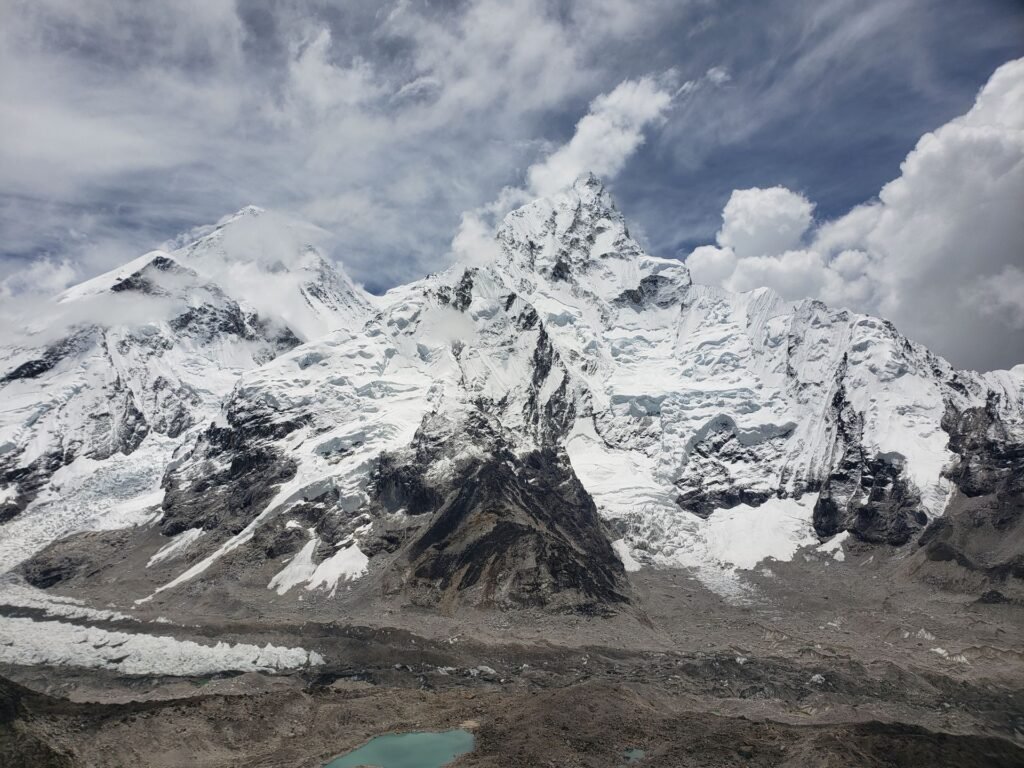
Many first-time visitors are surprised by what Base Camp is. It is a rocky area on the glacier, marked by prayer flags and rock cairns, and in climbing season it is covered in expedition tents. It is a place to stand, take a photo and absorb that you have arrived. It is not a viewpoint for the summit. Everest itself is hidden from Base Camp by the Nuptse ridge, which is the main reason trekkers climb Kala Patthar too.
There are no lodges between Gorak Shep and Base Camp, so carry water, snacks and your warm layers. Because the terrain is loose and icy in places, start early, walk steadily and keep a close eye on how you feel. Our Everest Base Camp trek map shows how the final section fits into the overall route.
Kala Patthar: The View Gorak Shep Is Really For
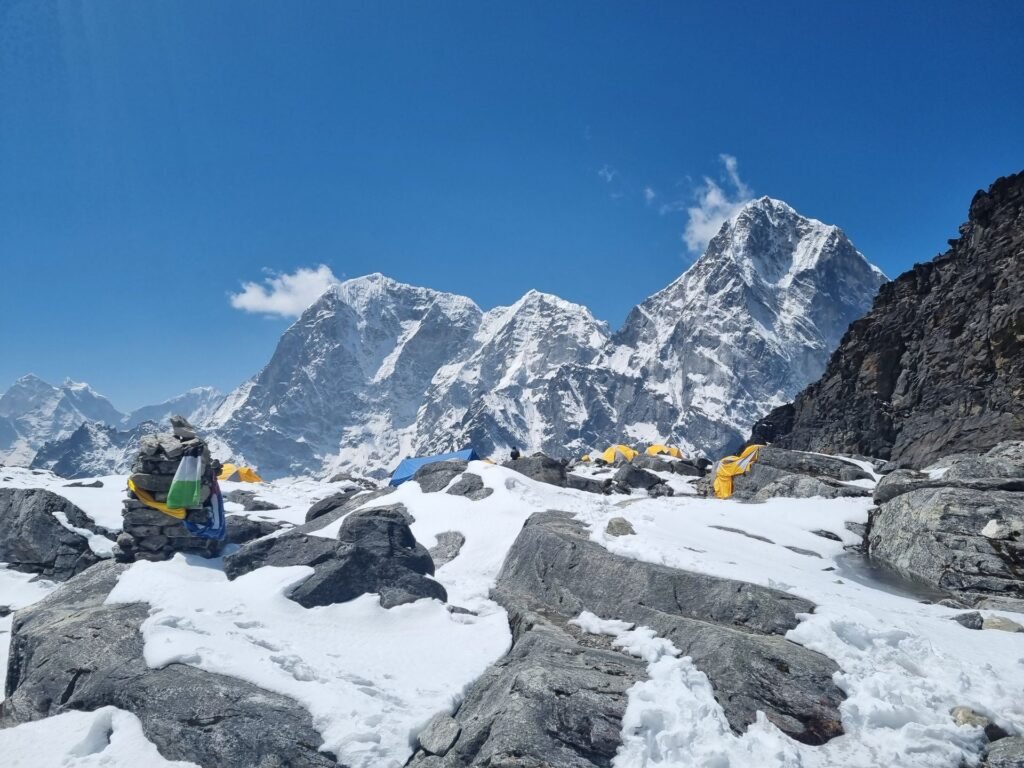
Kala Patthar, “black rock,” rises directly above Gorak Shep and reaches about 5,545 metres, making it the highest point most trekkers ever stand on during the trek. Some sources list slightly different heights, commonly 5,545 to 5,550 metres. From the top you can see Everest, Lhotse and Nuptse, with Pumori rising close by, and the view down onto the Khumbu Glacier and Base Camp.
The classic plan is to leave Gorak Shep before dawn, around 4:30 am according to several operators, so that you reach the top as the first light touches Everest. The visibility is often best early, and clouds commonly build later in the morning. It is a steep, cold climb that takes roughly two hours for most people, and it is much harder than the walk to Base Camp because it gains height continuously.
Bring a headlamp with spare batteries, warm gloves and a windproof outer layer, and take your time. Our dedicated Kalapathar Everest guide covers the viewpoint in depth, including timing and what to expect at the top.
Base Camp or Kala Patthar First?
You have two choices for the first afternoon and the following morning, and both are common.
- Base Camp on arrival day, Kala Patthar the next morning. This is the most popular plan. You reach Gorak Shep, have lunch, walk to Base Camp in the afternoon, return for the night and climb Kala Patthar at dawn. It spreads the effort and puts the sunrise view last.
- Kala Patthar first, then Base Camp. Some groups do the sunrise climb on the first morning after sleeping at Gorak Shep, return for breakfast and then walk to Base Camp before descending. This uses weather windows well but makes for a very long second day.
- Base Camp and descend. Some trekkers skip the overnight at Gorak Shep and return to Lobuche or beyond, though this makes for a long, tiring day.
There is no single right answer. If the weather is clear in the afternoon, many guides prefer to use it for Base Camp and keep the pre-dawn climb for the morning. If the forecast is poor for the next day, a guide may reverse the order. This is one of the reasons to trek with someone who watches the weather and your condition rather than following a fixed script.
Gorak Shep vs Everest Base Camp: What Is the Difference?
Search results often blur the two, so it helps to separate them clearly.
- Gorak Shep is a village with lodges, at about 5,164 metres. You can eat, sleep and rest here.
- Everest Base Camp is a climbers’ camp on the Khumbu Glacier, at about 5,364 metres. There are no trekker lodges and you cannot sleep there on a standard trekking permit.
- Kala Patthar is a rocky viewpoint above the village, at about 5,545 metres. It is where you see Everest itself.
In short, Gorak Shep is where you stay, Base Camp is where you touch the goal and Kala Patthar is where you get the view. Understanding that difference prevents the most common planning mistake, which is allowing too little time for the village and the two walks that start from it.
Lodges, Food and Facilities at Gorak Shep
Facilities at Gorak Shep are basic and expensive for good reason: everything arrives by porter or yak. A handful of teahouses offer small rooms with wooden beds and blankets, and bathrooms are typically shared. Heating is limited, and the dining room is the warm place in the building when the stove is lit. Some lodges have gained modern touches such as paid satellite internet, but you should not count on it, and you should not expect hot showers.
Food is similar to other Everest teahouses: dal bhat, noodles, soup, eggs, potatoes, rice and tea. Many people lose their appetite at this altitude, but eating and drinking regularly is important. Choose simple, familiar food and keep hot drinks coming.
Beds can run short in peak season. Some sources describe trekkers sleeping on dining-room floors on very busy nights, so it helps to travel with a team that has pre-arranged rooms. Do not expect much privacy or quiet. Walls are thin, and the sound of wind, doors and trekkers heading out at 4 am carries easily.
Water and hygiene
Do not drink untreated tap water. Use purification tablets or a filter, or buy boiled water from the lodge. Guides often recommend drinking around three to four litres a day at altitude. Hand sanitiser, wet wipes and a small towel are more useful than a full washing kit, and washing is often limited to a basin of warm water if the lodge offers it.
Electricity and charging
Charging phones and cameras is usually available for a fee, and cold drains batteries quickly. Carry a power bank, keep devices inside your jacket and bring spare camera batteries. A headlamp with fresh batteries matters more than almost any other electronics for the early starts.
Weather and Cold at Gorak Shep
Temperatures at Gorak Shep swing sharply between a sunny afternoon and a still, clear night, and the lodge bedrooms are not heated. In autumn and spring the nights are commonly quoted at well below freezing, with figures around minus 15 °C often given for the coldest part of the trekking season, and wind can make it feel much colder. Published numbers vary by source and by year, so treat them as a guide rather than a promise.
For month-by-month conditions, see our separate month-by-month weather guide for the area, which covers temperatures, snow, wind and the best months in detail. This article focuses on how to handle the cold in practice.
Practical cold-weather habits
- Layer up before you stop. Put on a down jacket as soon as you arrive. Cooling down is faster than you expect.
- Keep a dry set of clothes for the evening and sleep in dry base layers.
- Use a hot water bottle in your sleeping bag, and check the lid is tight.
- Keep your boots and water bottle inside your bag or in the room to stop them freezing solid.
- Protect your hands and face. Warm gloves, a balaclava or buff and sun cream matter more than you would think.
Altitude Sickness and Safety at 5,164 Metres
This is the part of the trek where mountain sickness is most likely to bite. By the time you reach Gorak Shep you have already ascended gradually over many days, but at more than 5,000 metres the air holds far less oxygen, and symptoms that were mild at Dingboche can intensify. Headache, nausea, loss of appetite, dizziness and poor sleep are common. Most are mild and pass with rest and fluids.
The key warning signs are different. Severe headache that does not respond to rest, vomiting, confusion, loss of balance, breathlessness at rest or a persistent wet cough are signs of serious altitude illness. The rule is simple and not negotiable: if symptoms worsen, descend. The Cleveland Clinic has a clear, plain-language explanation of the symptoms and risks in its guide to altitude sickness, and you should speak to a travel-medicine professional before the trip, especially if you have heart or lung conditions.
Practical safeguards include:
- Keep your pace slow, especially on the final climb into Gorak Shep.
- Drink regularly, and avoid alcohol and sleeping pills.
- Tell your guide about any symptoms honestly and early.
- Do not climb Kala Patthar if you feel unwell the night before.
- Remember that descending is the cure. Do not wait for morning if symptoms are serious.
For a wider look at risk on this route, read our guide on how dangerous Everest Base Camp is and how to manage the real hazards.
A Sample 24 Hours at Gorak Shep
This is not a fixed schedule, just a realistic picture of how the stay usually works.
Late morning. Leave Lobuche in layers, walk slowly along the moraine and arrive at Gorak Shep around lunchtime. Check into your lodge, drop your bag and drink something hot.
Early afternoon. Eat a light meal and rest briefly. Check how you feel. If your head is pounding or you are nauseous, tell your guide before setting out.
Afternoon. Walk to Everest Base Camp with a daypack containing water, snacks, a warm jacket and gloves. Spend a short time at the site and head back before it gets too cold.
Evening. Dinner early, a final check of gear and an early night. Many people sleep lightly and wake often because of the altitude. That is normal, though it is also tiring.
Before dawn. Wake around 3:30 to 4:00, dress warmly, eat something if you can and set out for Kala Patthar by about 4:30 with a headlamp.
Sunrise. Reach the top as first light hits Everest. Take photos quickly with gloves on, then start down before your hands and feet get too cold.
Morning. Return to Gorak Shep for breakfast, collect your things and descend. Many itineraries continue to Pheriche, a settlement at a much lower altitude, and the drop in height often makes people feel better within hours.
Where to Sleep: Dingboche, Lobuche or Gorak Shep?
The Everest trail has three high overnight stops in a row, and each one feels different. Understanding the trade-offs helps you plan your acclimatisation and your expectations.
Dingboche (about 4,410 metres) is the classic acclimatisation village. Most itineraries spend two nights here, with a rest-day hike. The air is thin but manageable, and sleep is usually better than higher up.
Lobuche (about 4,940 metres) is colder and barer, and it is where many trekkers first notice that sleep and appetite are really suffering. It is a useful stepping stone because it is lower than Gorak Shep, which makes the final push slightly easier.
Gorak Shep (about 5,164 metres) is the highest and the harshest. You stay one night in most itineraries, not two, because the body does not recover well at this height. The aim is to see Base Camp and Kala Patthar and then return to lower ground, where sleeping and eating become easier again.
This pattern, climbing high and sleeping lower, is also why the descent after Kala Patthar is so common. Many people feel noticeably better by the time they reach Pheriche.
Getting Ready: What Helps Before You Arrive
You cannot train for altitude directly, but you can make the final days easier by preparing in sensible ways long before you reach Gorak Shep.
- Build general fitness. Long walks with a loaded daypack, stair climbing and hill hiking help your legs cope with many days of effort.
- Walk in your boots. Break them in thoroughly. Blisters at this stage are miserable.
- Practise slow walking. Pace is the most useful altitude skill. The slower you move, the better you feel.
- Take acclimatisation days seriously. The rest day at Dingboche matters because it helps you at Gorak Shep a couple of days later.
- Get your health checked. Talk to a doctor who knows about altitude, especially if you have heart, lung or blood conditions or take regular medication.
- Arrange insurance that covers trekking to the altitude you plan to reach and helicopter evacuation, and read the wording.
If the Weather Turns
Weather at this altitude can change quickly. A calm, clear afternoon can be followed by a morning of cloud, snow or strong wind, and a plan that depends on a single window is fragile. A few principles help.
Build in buffer. A spare day lets you wait out a poor morning without rushing. Without a buffer, trekkers are tempted to push on in conditions they should avoid.
Be willing to swap. If clouds build in the afternoon but the morning looks clearer, a guide may suggest doing Kala Patthar first. Flexibility is a safety tool.
Accept a missed view. Sometimes the summit is in cloud at dawn. It can be disappointing, but a view is never worth a risky climb in poor visibility or heavy snow.
Watch your own condition. Cold and altitude can combine to make you slow, clumsy and less aware. If you or a companion becomes unusually quiet, confused or unsteady, turn back and warm up.
Know the evacuation plan. Before you leave, ask your operator how helicopter evacuation works, who authorises it and how it connects with your insurance. It is better to know than to discover it in a crisis.
Photography, Phones and Courtesy
The pre-dawn climb to Kala Patthar can get crowded in peak season, with a line of headlamps on the slope. A few courtesies make it better for everyone.
- Do not block the path while taking photos, and step aside to let others pass.
- Keep your voice down on the climb and at the top. Many people are feeling the altitude.
- Use a red or dimmed headlamp setting where possible so that you do not dazzle others.
- Do not leave rubbish at the top, and carry out what you carry in.
- Ask permission before photographing other trekkers, porters or guides.
Cold shortens battery life dramatically, so keep a phone in an inside pocket and take photos in short bursts. A good photo is usually the one you take in the first ten minutes after sunrise, so do not waste the light fumbling with gloves.
Responsible Trekking at Gorak Shep
Gorak Shep sits in Sagarmatha National Park, a protected area, and the settlement exists because of the people who carry supplies up the valley. A few habits keep that balance sustainable.
- Take your rubbish down. Waste is difficult to manage at 5,000 metres. Pack out batteries and plastic wrappers where you can.
- Respect porters and yaks. Step to the uphill side of the trail when yak trains pass, and give porters space on steep sections.
- Buy simply. Everything on the menu has been carried a long way. Order sensibly and do not waste food.
- Use water thoughtfully. Purification tablets and refilling from boiled water reduce plastic bottle waste.
- Tip and treat your crew fairly. Guides and porters work in harsh conditions at the same altitude you do.
What to Pack Specifically for Gorak Shep
You need the standard Everest kit, but a few items matter far more at this stage. Our full Everest Base Camp packing list covers the whole trip. For Gorak Shep, prioritise these.
- Warm down jacket and insulated trousers for evenings and the Kala Patthar start.
- Four-season sleeping bag rated well below the coldest expected night, plus a liner.
- Headlamp and spare batteries. Pre-dawn starts depend on it.
- Warm gloves and liner gloves. Hands lose heat quickly when you use a camera.
- Balaclava or buff, and warm hat.
- High-UV sunglasses and sun cream. Glare off ice and rock is strong even when it is freezing.
- Water bottles and insulated covers, and purification tablets.
- Simple snacks that you can eat when your appetite disappears.
- Power bank and spare camera batteries.
Best Time to Be at Gorak Shep
The same two windows that suit the wider Everest trek suit Gorak Shep: spring (March to May) and autumn (October and November), when skies are most stable. Autumn usually has the clearest views and the coldest nights by November, while spring is slightly warmer but can be cloudier in the afternoons. Winter is possible but severe, and some lodges close. In the monsoon, from June to September, cloud and rain often hide the mountains.
Because Gorakshep reopens each season rather than operating year-round, check with your operator which lodges are open on your dates, especially at the edges of the season. Our guide to Nepal in November shows how the busiest autumn month plays out at altitude.
Common Mistakes at Gorak Shep
- Arriving without a buffer day. A flight delay or a bad weather morning can wreck a tight schedule.
- Treating Base Camp as the view. Everest is hidden there, and the real view is from Kala Patthar.
- Pushing through symptoms. A headache that gets worse is a reason to descend, not to be brave.
- Underdressing for the pre-dawn climb. It is the coldest part of the whole trek.
- Not carrying water and snacks. There is nothing between the village and Base Camp.
- Letting batteries freeze. Keep phones, cameras and headlamp batteries warm.
- Expecting comfort. Lodges are basic, rooms are cold and sleep is poor for many people. Plan for it and it is much easier.
Gorak Shep Checklist
- Plan at least one spare day in your itinerary for weather and flight delays.
- Arrive in layers and put on warm clothes as soon as you stop.
- Check in with your guide about your symptoms before every big push.
- Decide the order of Base Camp and Kala Patthar based on weather and how you feel.
- Prepare your pre-dawn kit the night before: headlamp, gloves, jacket, water.
- Drink and eat regularly, even when you do not want to.
- Keep devices and boots warm overnight.
- Descend promptly if symptoms become serious.

Final Thoughts on Gorakshep
This is not a place you linger, and it is not meant to be comfortable. It is a stepping stone: a stark, cold, thin-aired settlement that exists to get you to two famous places. Treat it with respect, plan around the altitude and the cold, and keep your expectations realistic about the lodge and the sleep. If you do, the reward is one of the great mountain mornings in the world, with Everest lit up from Kala Patthar and the glacier spread below you.
For a broader overview of this region and how its settlements connect, Wikipedia keeps a concise entry on Gorak Shep, and operator guides such as Shikhar Adventure’s Everest Base Camp trek guide give stage-by-stage distances and altitudes for comparison.
Frequently Asked Questions About Gorak Shep
1. What is Gorak Shep?
Gorak Shep is the last settlement with lodges on the Everest Base Camp trek. It sits at about 5,164 metres in Sagarmatha National Park and is the overnight stop before Everest Base Camp and Kala Patthar.
2. How high is Gorak Shep?
The most widely cited figure is about 5,164 metres (16,942 feet). Some operators list slightly different heights, from roughly 5,140 to 5,288 metres, because of different surveys and devices.
3. Can you stay overnight at Gorak Shep?
Yes. It has a handful of basic teahouses, and most trekkers sleep there because standard permits do not allow camping at Everest Base Camp.
4. How far is Gorak Shep from Everest Base Camp?
About 3.5 kilometres each way. The walk usually takes between 1.5 and 2.5 hours depending on pace, weather and acclimatisation.
5. Can you see Everest from Gorak Shep?
You can see the surrounding peaks, but the best view of Everest itself is from Kala Patthar. Everest is hidden from Base Camp by the Nuptse ridge.
6. How long does it take to climb Kala Patthar from Gorak Shep?
Most people take around two hours to climb, starting before dawn, and a shorter time to descend. It is steep and cold, so pace yourself.
7. What are the lodges like at Gorak Shep?
Basic. Expect small rooms with wooden beds and blankets, shared bathrooms, limited heating and simple food. Beds can fill in peak season, so travel with a team that has pre-arranged rooms.
8. How cold does it get at Gorak Shep?
Very cold at night. Figures around minus 15 °C are often quoted for the coldest part of the trekking season, and wind can make it feel colder. Pack a sleeping bag rated well below that.
9. Is altitude sickness common at Gorak Shep?
Mild symptoms such as headache and poor sleep are common at this height. Serious symptoms such as severe headache, vomiting, confusion or breathlessness at rest require descent. Tell your guide early.
10. When is the best time to visit Gorak Shep?
Spring (March to May) and autumn (October and November) offer the most stable weather and clearest views. Winter is severe, and the monsoon brings cloud and rain.
Plan Your Gorak Shep Stay With Wonder Hikes Nepal
Planning a trek that reaches gorakshep means getting the schedule, the acclimatisation and the weather decisions right. Tell us your dates, group size and trekking experience, and we will help you build an Everest itinerary with buffer days and a sensible plan for Base Camp and Kala Patthar. The quickest way to reach us is on WhatsApp.
Chat with Wonder Hikes Nepal on WhatsApp: +977 986-0221055
Ready to plan your trek?
Tell us your dates and group size. We reply on WhatsApp within a few hours.