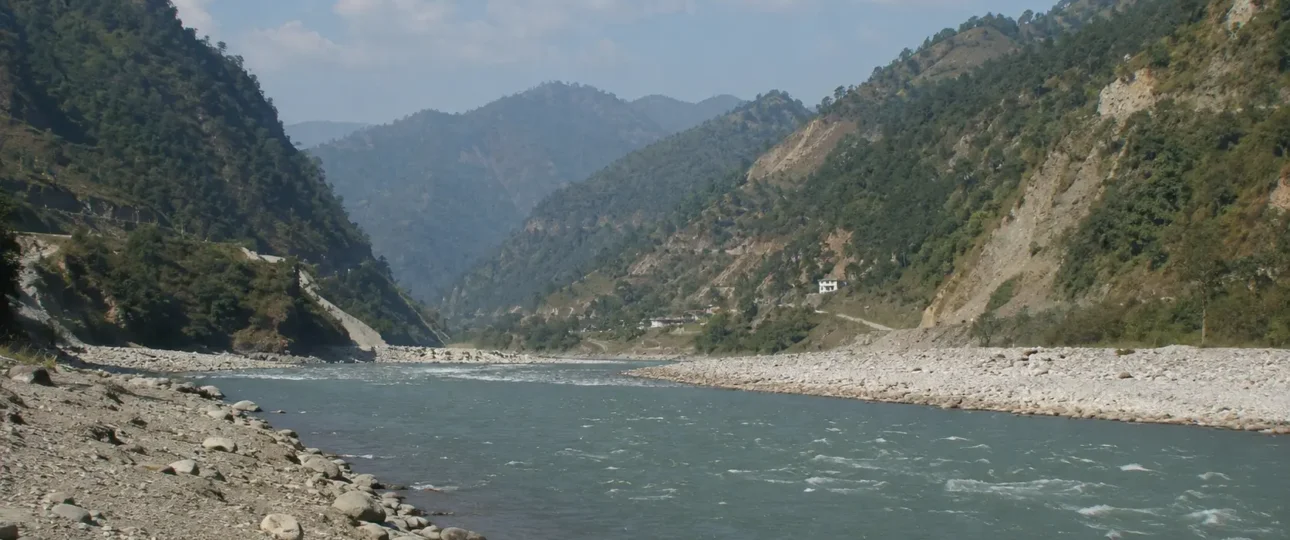
Ruby Valley is a place that sits primarily within Ruby Valley Rural Municipality in Dhading District, in north-central Nepal — though, depending on which route variation you choose, your trek may also pass briefly through Rasuwa District to the north. This single fact — that “Ruby Valley” is not one trail but a network of interconnecting routes through a particular rural municipality and its surrounding valleys — is the key to understanding everything else: why durations vary, why costs vary, and why “the same trek” is described so differently across many places.
This guide walks through where Ruby Valley actually is, the real route options and how they relate to each other, an honest cost breakdown, and a season-by-season assessment specific to this region’s particular geography.
Ruby Valley Dhading Nepal, Where Is At Exactly?
Ruby Valley takes its name from Ruby Valley Rural Municipality, an administrative area within Dhading District. Dhading sits in Bagmati Province, in the hill region directly northwest of Kathmandu Valley, bordered by Rasuwa to the north (where Langtang National Park is located), Gorkha to the west (toward the Manaslu Conservation Area), and Nuwakot to the east.
The trek named after this municipality typically begins or ends outside the municipality’s own borders, because the standard access points — Syabrubesi to the north and Dhading Besi/Borang to the south — sit in Rasuwa and the lower Dhading road network respectively, with the core Ruby Valley villages (Tipling, Sertung, Chalish Gaon, and the Somdang area near the Rasuwa border) forming the heart of the route in between.
Longer route variations genuinely do touch all four districts, while shorter variations stay almost entirely within Dhading and the immediate Rasuwa border zone around Pangsang La and Somdang.
For a searcher specifically looking for “Ruby Valley Dhading Nepal,” the practical takeaway is this: the cultural and geographic heart of the trek — the villages of Tipling, Sertung, and Chalish Gaon, the Ruby Valley Rural Municipality itself, and the southern approach via Dhading Besi — is the most distinctly “Dhading” experience of this trekking area. The northern approach via Syabrubesi technically starts in Rasuwa and shares territory with the Tamang Heritage Trail before crossing into Dhading partway through.
Ruby Valley Trek Route Variations
Below is the complete Ruby Valley map route variations — and how they actually relate to each other.
- The 4-Day Short Version
Typically a Dhading-side loop that focuses on the Ruby Valley Rural Municipality core — Borang, Tipling, Sertung, and Chalish Gaon — without crossing Pangsang La or reaching as far north as Somdang or Gatlang. This version is genuinely the most “Dhading-centric” of all the variations, staying almost entirely within the rural municipality. It suits trekkers with limited time who specifically want the Tamang village and homestay experience without the high pass. - The 6 to 8-Day Standard Version
The most commonly packaged version is of around 7 days Ruby Valley Trek package. Typically begins at Syabrubesi (Rasuwa side), passes through Gatlang, Parvati Kunda, Yuri Kharka, and Somdang, crosses Pangsang La Pass (3,850 m), and descends into the Dhading-side villages of Tipling and Sertung before exiting via Chalish Gaon toward the Dhading road network. This version crosses the full geographic range — Rasuwa entry, pass crossing at the Dhading/Rasuwa border zone, Dhading-side villages for the exit. Some 8-day packages add a Kathmandu rest/preparation day at the start, which accounts for part of the 6-vs-8 discrepancy between otherwise similar itineraries. - The 9 to 14-Day Extended Version
This range typically reflects one of two things: either the addition of acclimatization/rest days and a slower pace through the same core route (turning a 7-day trekking itinerary into 9–10 days with buffer), or a genuinely extended itinerary that includes a side trip — most commonly to Kalo Daha lake. - The Two Passes Version (10–12 days)
A more ambitious variation connecting Syabrubesi and Gatlang in the north with Somdang, Pangsang La, Chalish, Lapa, Khading, and Baseri, crossing not just Pangsang La but also a second pass — referred to as Magne Pass or the Magne Goth area — between Khading and the Baseri ridge, before descending to the lower Dhading road area. This is the route for trekkers who specifically want close views of Ganesh Himal, Langtang, and Manaslu in sequence and don’t mind extended remote walking days with homestays rather than lodges.
Kalo Daha: Side Trip of Ruby Valley Trek Nepal
Kalo Daha (“black lake” in Nepali) is a high-altitude alpine lake considered sacred in local Tamang and Hindu tradition, situated in the Ganesh Himal foothills above the Sertung area. The five-day addition reflects the genuinely remote nature of the approach — there is minimal trail infrastructure, accommodation along the way is extremely limited or nonexistent, and this leg is realistically suited only to trekkers already comfortable with the core Ruby Valley route’s homestay-and-camping conditions, traveling with an experienced local guide who has done this specific extension before.
For most trekkers researching “Ruby Valley Dhading Nepal,” Kalo Daha is worth knowing about as an option for a future, more ambitious trip rather than a first-trip addition. It is not a “tack-on” in the way a half-day side trail might be — it is its own multi-day undertaking.
Ruby Valley Routes: Dhading-Side Entry Vs. Rasuwa-Side Entry
This is the comparison no competitor page makes, and it’s the one most relevant to anyone searching specifically for the Dhading angle.
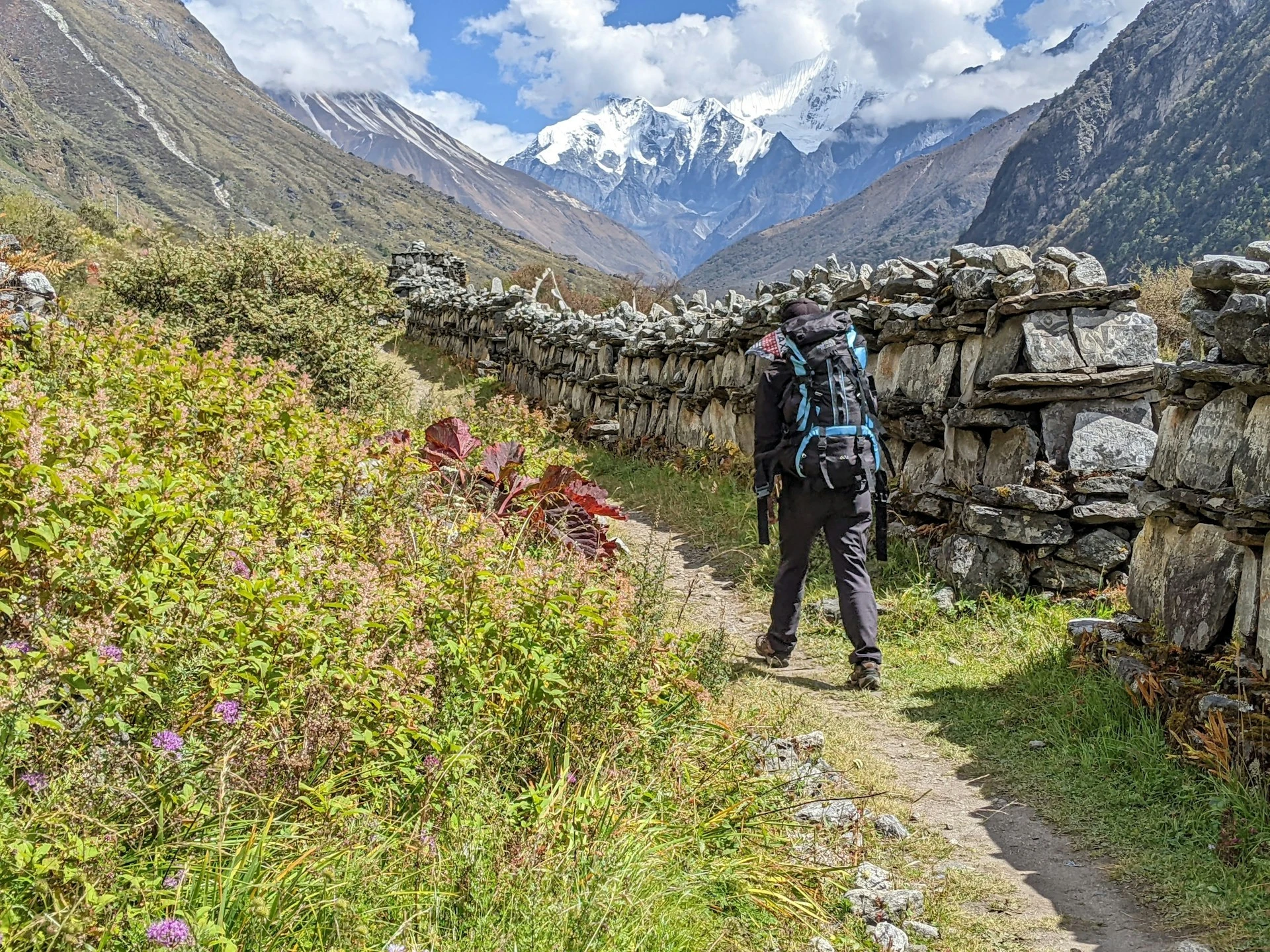
- Entering via Syabrubesi (Rasuwa side): This is the more commonly packaged approach. Syabrubesi is reached by a 6 to 9-hour drive from Kathmandu via Trisuli Bazaar and Dhunche — a route with reasonably maintained road infrastructure because it also serves the Langtang Valley trek. From Syabrubesi, the trail moves through Gatlang (a major Tamang Heritage Trail village) before continuing toward Somdang and Pangsang La. The advantage of this entry is infrastructure — Syabrubesi itself has decent accommodation, phone signal, and onward transport options, making it a comfortable place to begin and acclimatize.
- Entering via Dhading Besi / Borang (Dhading side): This approach involves a drive from Kathmandu to Dhading Besi, then onward by local jeep toward Borang, which connects directly into the Ruby Valley Rural Municipality core — Tipling, Sertung, Chalish Gaon. The road infrastructure on this side is generally rougher and less geared toward tourism than the Syabrubesi route, since it primarily serves local district traffic rather than the Langtang trekking economy. The advantage is directness: if your specific interest is the Ruby Valley Rural Municipality villages themselves — the most distinctly “Dhading” part of the experience — this entry gets you there faster, without the Pangsang La crossing or the Rasuwa-side villages.
- Which to choose: If you have 6+ days and want the complete experience — Tamang Heritage villages, the high pass, mountain panoramas of Ganesh Himal/Langtang/Manaslu, and the Dhading-side villages on the way out — enter via Syabrubesi and exit via Dhading Besi/Borang, which is what most standard 6–8 day packages do. If you have 4 days and your primary interest is the cultural and homestay experience specifically within Ruby Valley Rural Municipality, the Dhading Besi/Borang entry as a loop, without crossing into Rasuwa, is the more efficient and arguably more “on-keyword” choice.
Ruby Valley Dhading Nepal Cost for 2026
The price range across current listings spans roughly $650 to $1,895 per person for Ruby Valley Dhading Nepal. This is not pricing chaos — it reflects four variables that most listings don’t isolate clearly.
- Duration. A 4-day package and a 12-day package are not comparable on a per-trip basis. Per-day costs across most operators for this region cluster in a fairly consistent range once duration is normalized — it’s the headline total that varies dramatically.
- Group size. Per-person costs typically decrease with group size. A solo trekker on a private itinerary pays meaningfully more per day than someone joining a group of 7–10 on a fixed departure, because guide and transport costs are spread across more people. Quoted figures like “$700 for 1 person, $640 for 11–15 people” reflect this directly.
- Accommodation type. This is the most underexplained variable. Some packages are built around homestays (staying with local families — generally the most affordable and the most culturally immersive), some around basic teahouses/lodges where available, and some explicitly combine “camping nights in the wilderness” with homestays in villages like Gatlang and Sertung for sections where no lodge exists. Camping-inclusive packages carry additional equipment and staffing costs (cooks, camping crew) that homestay-only itineraries don’t.
- Inclusions. The widest-ranging figure ($1,895 for a 7-day package, against $750–1,200 for similar durations elsewhere) typically reflects either international flight inclusions, premium Kathmandu hotel nights bundled in, or a higher guide-to-client ratio for private/solo departures — rather than a fundamentally different trekking experience on the trail itself.
Realistic budget guide for 2026:
- 4-day Dhading-loop version: approximately $450–650 per person (group), higher for solo
- 6–8 day standard single-pass version: approximately $700–1,200 per person depending on group size and accommodation mix
- 9–14 day extended or two-pass version: approximately $1,000–1,895 per person depending on inclusions and whether Kalo Daha or similar extensions are included
Independent/self-arranged trekking (hiring a local guide on arrival rather than a pre-packaged international booking) can bring per-day costs down meaningfully, particularly for the homestay-based sections, though this requires more logistical planning given the limited infrastructure compared to Nepal’s major trekking corridors.
For a more comprehensive guide on highlights, itinerary, packing lists, accomodation and foods, you can also check out our Ruby Valley Trek Nepal Guide blog.
Permits Required for Ruby Valley Dhading Trek
Permit requirements for Ruby Valley Dhading Nepal depend on which route variation you take, specifically whether your route passes through Langtang National Park.
- If your itinerary starts or ends in Syabrubesi (the Rasuwa-side entry used by most standard 6–8 day packages), you will need a Langtang National Park entrance permit, since Syabrubesi sits at the edge of the park. This permit is obtainable in Kathmandu or at Dhunche.
- The TIMS Card (Trekkers’ Information Management System) remains relevant for this region — unlike the Annapurna and Everest regions, where TIMS enforcement has been phased out in recent updates, Langtang, Manaslu, and the Ruby Valley area continue to require it.
- There is no separate “Ruby Valley permit” as a distinct category — this is a common misconception generated by the trek’s name suggesting it might be a protected area in its own right, similar to Tsum Valley or Upper Mustang. It is not a restricted area, and the permit requirements are governed by whichever park or conservation boundary your specific route variation actually crosses.
If your route stays within the Dhading-side loop (the 4-day Ruby Valley Rural Municipality version that doesn’t cross into Rasuwa or touch Langtang National Park), the Langtang permit requirement does not apply — though the TIMS Card requirement generally still does, and a licensed guide remains advisable given current Nepal-wide guide regulations for foreign trekkers.
Best Seasons for Ruby Valley Dhading Nepal
Ruby Valley trekking area spans an unusually wide altitude range — from around 1,400 m at Syabrubesi or the lower Dhading road points, up to 3,850 m at Pangsang La, so:
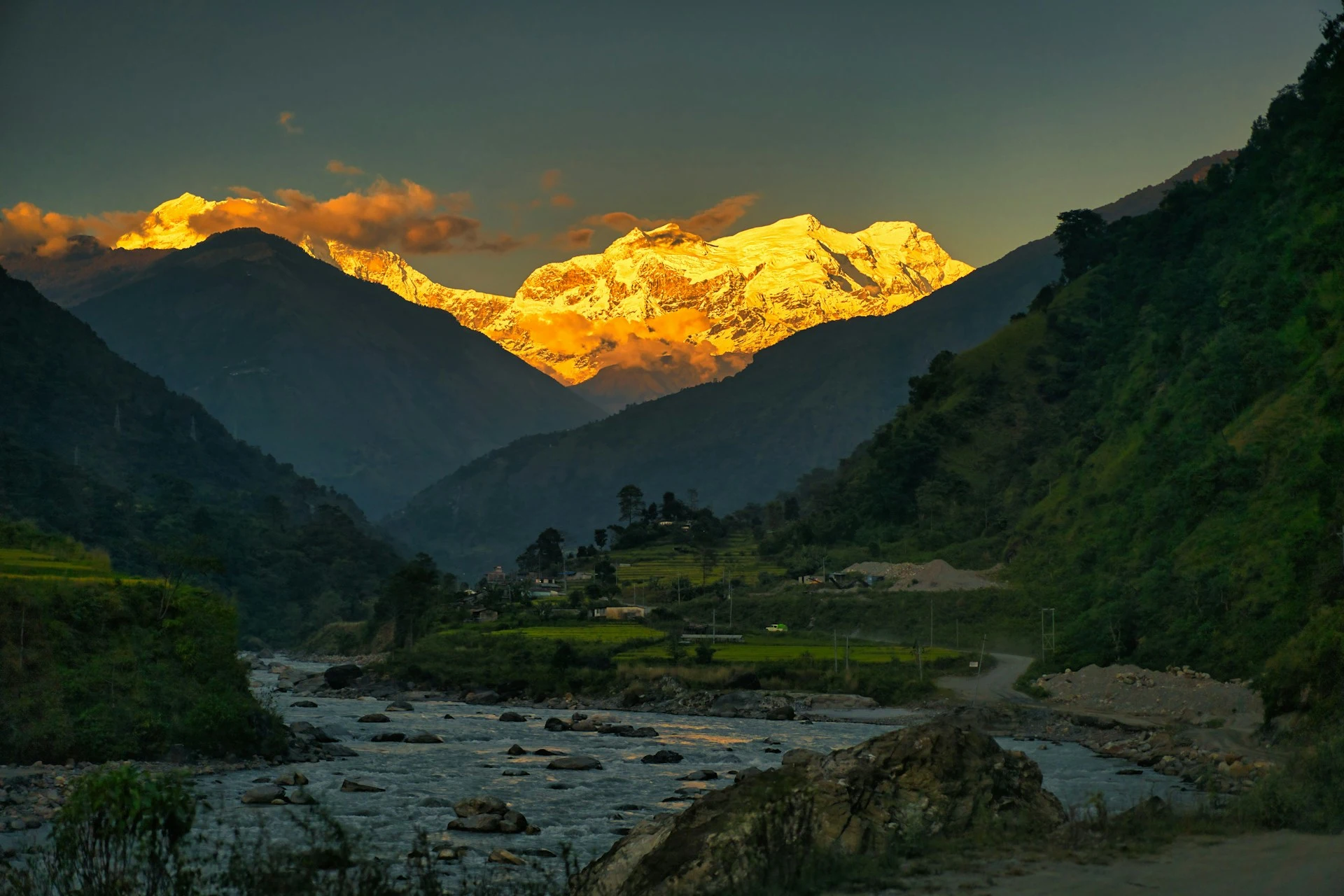
- Autumn (late September to November): The strongest overall window across the entire route, including both the high pass and the lower Dhading villages. Visibility for Ganesh Himal, Langtang, and Manaslu views from Pangsang La is at its best in October. The lower Dhading-side sections — Tipling, Sertung, Chalish Gaon — are also at their most pleasant, with harvest-season activity visible in the terraced fields.
- Spring (March to May): The rhododendron forests on the approach from Syabrubesi toward Gatlang bloom from late March into April, making this a strong choice for the northern/Rasuwa-entry sections specifically. The lower Dhading-side villages are warm and green in spring; the higher pass sections may retain some snow into early-to-mid spring depending on the previous winter’s snowfall, which can affect crossing conditions on routes that include Pangsang La or the Two Passes variation.
- Winter (December to February): The lower Dhading-side loop (the 4-day version, staying largely below 2,500 m) remains genuinely viable in winter and offers near-total solitude — this is an underused option for trekkers specifically interested in the Dhading Rural Municipality villages rather than the high pass. The Pangsang La crossing and the higher Somdang/Yuri Kharka sections become significantly more demanding in winter, with potential snow on the pass requiring appropriate gear and an experienced guide.
- Monsoon (June to August): Not recommended for any version of this route. The lower Dhading sections, while not at extreme altitude, see significant rainfall, trail conditions deteriorate, leeches become common in the forested lower sections, and visibility on the higher sections is poor. The road journey to either Syabrubesi or Dhading Besi can also be affected by landslides during heavy monsoon periods, which is a more significant practical concern on these routes than it is on major paved highway corridors elsewhere in Nepal.
The Dhading-specific takeaway: if your interest is specifically the lower-altitude Ruby Valley Rural Municipality villages (the 4-day Dhading-loop version) rather than the high pass, your viable season window is meaningfully wider than the standard “spring/autumn only” advice suggests — winter is a genuine option for this specific variation in a way it isn’t for the routes crossing Pangsang La.
Trek Difficulty
Difficulty is another area where blanket statements fail, because the variations differ substantially.
- The 4-day Dhading-loop version, staying below roughly 2,500 m and avoiding any high pass, is genuinely moderate — comparable to a multi-day hill walk rather than a high-altitude trek. Suitable for trekkers with general hiking fitness and at least some multi-day trekking experience, though not requiring prior high-altitude exposure.
- The 6–8 day standard version, crossing Pangsang La at 3,850 m, is moderate to challenging. The pass-crossing day is long (often 7–8 hours) and involves a steep, sometimes loose descent on the Tipling side. Some operators correctly flag that “hikers should be in good physical condition and have previous mountain walking experience” for versions involving high passes and extended trekking days — this caution applies specifically to the pass-crossing variations, not the lower Dhading loop.
The Two Passes version is the most demanding, involving two high-altitude crossings and multiple days through areas with minimal accommodation infrastructure, genuinely suited only to trekkers with prior Himalayan trekking experience.
Frequently Asked Questions about Ruby Valley Dhading Nepal
- Is Ruby Valley Dhading Nepal the same as the Ganesh Himal Trek?
The names are often used interchangeably, and there’s significant overlap — both refer to trekking routes through the Ganesh Himal foothills connecting Dhading, Rasuwa, and sometimes Gorkha districts. “Ganesh Himal Trek” is sometimes used as a broader or older name for the same general trekking area, while “Ruby Valley Trek” has become the more common name in recent years, particularly emphasizing the Ruby Valley Rural Municipality core. In practice, when both names appear on a trekking operator’s site, they are usually describing the same or very similar routes. - Is Ruby Valley actually in Dhading, or is it in Rasuwa?
The Ruby Valley Rural Municipality itself is in Dhading District. However, the most commonly packaged trekking routes begin in Syabrubesi (Rasuwa District) and pass through Gatlang and Somdang (near the Dhading/Rasuwa border) before reaching the Dhading-side villages of Tipling, Sertung, and Chalish Gaon. So a typical multi-day “Ruby Valley Trek” genuinely spans both districts, while the shorter Dhading-loop version stays within Dhading itself. - How many days do I actually need?
For the lower Dhading Rural Municipality villages only (Tipling, Sertung, Chalish Gaon as a loop from Borang), 4 days is realistic. For the full single-pass experience including Gatlang, Somdang, and Pangsang La, plan for 7–9 days including a Kathmandu day and reasonable acclimatization buffer. For the Two Passes extended circuit or a Kalo Daha addition, plan for 10–14 days. - Do I need previous trekking experience?
For the 4-day Dhading-loop version, general hiking fitness is sufficient. For any version crossing Pangsang La (3,850 m) or the Two Passes route, previous multi-day mountain trekking experience is genuinely useful, given the altitude, the length of the pass-crossing days, and the limited infrastructure for support if conditions become difficult. - Can this trek be done independently, without a package?
It’s possible, particularly for the lower Dhading-loop version where village-to-village walking with locally-hired guides is more straightforward. For routes crossing Pangsang La or the Two Passes variation, the combination of altitude, limited accommodation, and current Nepal-wide guide requirements for foreign trekkers makes a registered local guide strongly advisable, whether arranged independently or through a package.