Open multiple articles of Pikey Peak trek cost results and you’ll come away more confused than when you started. One page quotes $399. Another quotes $1,220. A third tells you $720 is the only honest, all-inclusive price and anything cheaper is a trap waiting to happen. A fourth says budget $650 to $950 if you arrange things yourself. None of these are typos, and none of them are necessarily lying to you — but almost none of them tell you why the numbers differ, which leaves you exactly where you started: holding a pile of prices with no way to know which one applies to you.
Here’s the short version of what’s actually going on. “Pikey Peak Trek” isn’t one fixed product with one fixed price. It’s a route — really, a small family of related routes — through Nepal’s lower Solukhumbu region, and the price you’ll be quoted depends on four variables: how many days you trek, how you get to and from the trailhead, whether permits that sometimes apply actually apply to your specific route, and how many people you’re trekking with. Change any one of those four dials and the “correct” price moves by hundreds of dollars. Every quote you’ve seen online is simply a different combination of those four settings.
This guide breaks the cost down properly — permits, guides and porters, food, and lodging, each priced on its own — then shows how those four pieces shift depending on whether you book a package or arrange things yourself, how they move with the seasons, and how they actually compare to Everest Base Camp.
By the end, you’ll be able to look at any quote, whether it’s $420 or $1,200, and know roughly what it should include and whether it’s fair.
Why Pikey Peak Trek Cost Range Is So Wide
A 3-to-4 day version of this trek, a 6 to 7 day version, an 8-day version, and an 11-day version are all marketed under the same name. They start from different points — Dhap, Phaplu, or occasionally Shivalaya/Jiri further south — and cover genuinely different amounts of ground. A 3-4 day itinerary that flies into and out of Phaplu and focuses tightly on the summit climb is a fundamentally smaller trip than an 11-day itinerary that includes a long road journey, several extra cultural days in Junbesi, and sometimes a different permit zone altogether.
So when you see $420 next to $1,220, you’re not looking at two prices for the same trip. You’re looking at the price of a long weekend next to the price of nearly two weeks. Once you frame it that way, the spread stops being alarming and starts being useful — it tells you this trek genuinely scales to however much time and immersion you want, from a quick taste of the lower Khumbu to a full two-week cultural and scenic journey.
The job of the rest of this guide is to help you figure out which version you’re actually pricing, and what fair value looks like for that specific version.
Pikey Peak Trek Cost – Permits
Pikey Peak trek permit costs depend on your exact route — the detail that gets glossed over most often elsewhere, and the place where competing guides most directly contradict each other.
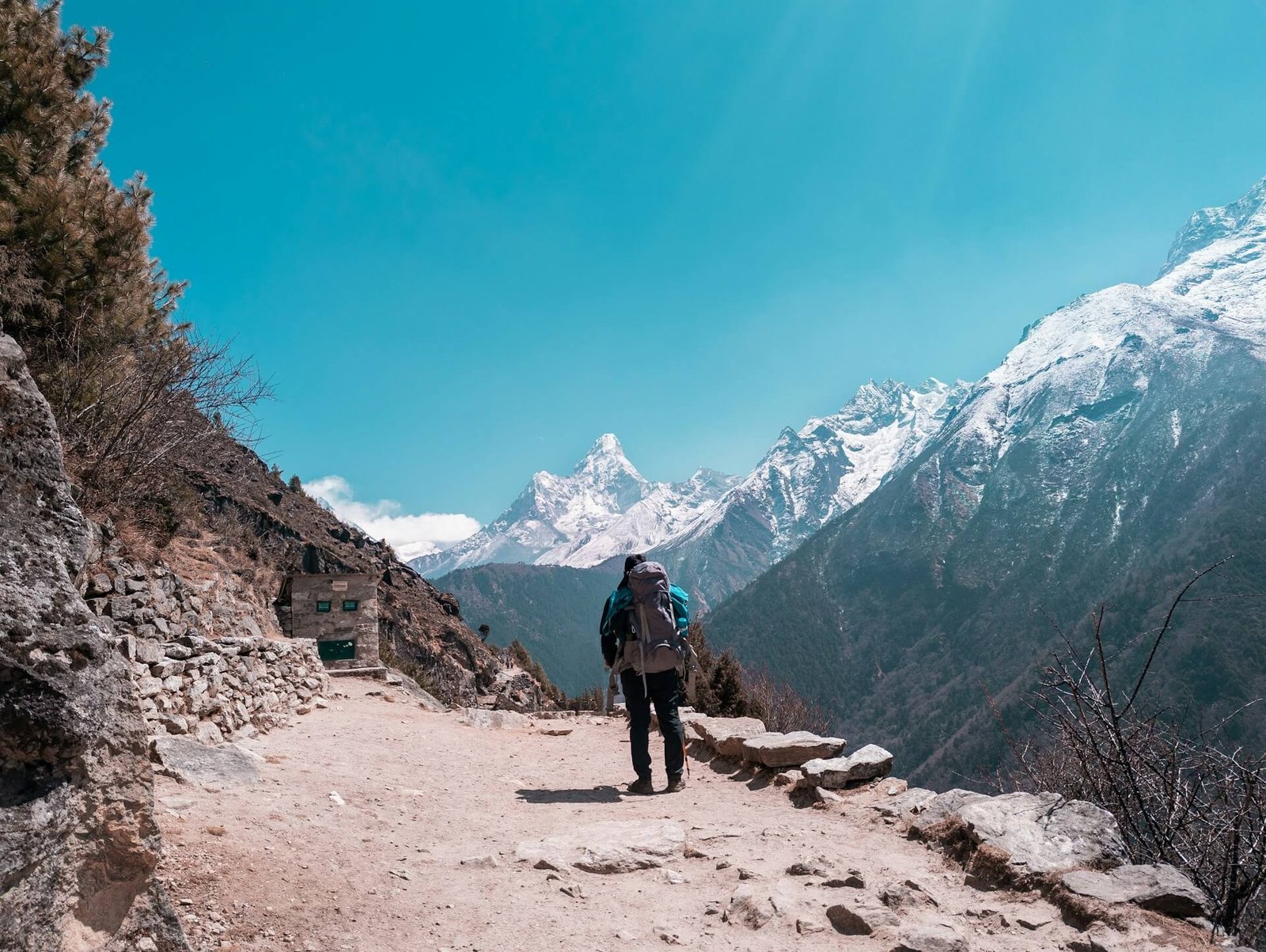
For the standard routing — starting at Dhap Bazaar and finishing at Phaplu, the most common version of this trek — you’ll need a Local Area Permit (sometimes listed as the Pikey Peak Trek Permit, around NPR 2,000, roughly $15) and a TIMS Card (also around NPR 2,000, roughly $15). Together, that’s about $30.
If your itinerary instead starts further south, from Shivalaya or Jiri, you’ll also need the Gaurishankar Conservation Area Permit (GCAP, around NPR 3,000, roughly $22-23), since that routing actually passes through the conservation area boundary — pushing your permit total closer to $50-55. The standard Dhap-Phaplu route doesn’t cross into that zone at all, so if you’re booked on the standard itinerary and see a GCAP charge on your invoice, it’s worth asking your operator directly why it’s there. This single question can be worth $20-25 of your budget.
Pikey Peak permit total: roughly $30 for most trekkers, $50-55 if your route starts from Shivalaya/Jiri.
Pikey Peak Trek Cost – Guides and Porters
This is the category most other guides skip entirely, because it’s almost always folded into a package total with no standalone figure attached. A licensed local guide typically runs $25-35 per day, and a porter — recommended unless you’re confident carrying a full pack across 6-9 days of varied terrain — typically runs $20-25 per day.
Both are priced per trip-day rather than per trekker, which is exactly why per-person cost drops sharply as group size grows: a guide and porter cost roughly the same whether you’re trekking solo or with three friends, so splitting that daily rate across more people meaningfully lowers everyone’s share.
For a 7-day Pikey Peak trek, that’s roughly $175-245 for a guide and $140-175 for a porter if trekking solo — figures that shrink fast once divided across even a small group.
A guide’s real value on this specific route isn’t primarily navigation — the trail is generally well-trodden and villages are frequent. It’s timing and access: knowing which afternoon the Pikey summit viewpoint is likely to cloud over, and having the language and relationships to get you genuine access around the monasteries in Junbesi rather than a glance from the courtyard.
Pikey Peak trek, guide + porter total: roughly $45-60/day combined, before group-size splitting.
Pikey Peak Trek Cost – Food
If you’re trekking with meals included in a package, this is moot — but if you’re arranging things yourself, or want to know what’s hiding inside a bundled price, the numbers are fairly consistent across teahouses on this route.
- Breakfast — eggs, pancakes, porridge — generally runs $3-6.
- Lunch, typically dal bhat, noodles, or a rice dish, runs $5-9.
- Dinner, often a Nepali thali, pasta, or soup, runs $6-10.
- A full day of eating comes to roughly $14-25 depending on what and where you order.
Across a 7-day trek, that’s roughly $100-175 in food alone — which is exactly why “meals included” versus “meals not included” is the single phrase most likely to change what a quoted price actually means in practice.
Pikey Peak trek food total: roughly $100-175 for a 7-day trek, self-paid.
Pikey Peak Trek Cost – Lodging
Teahouse accommodation along this route is consistently twin-sharing with communal dining, but the nightly rate and bathroom situation vary by village and by how much you’re willing to spend.
- At the budget end, a basic twin-sharing room with a shared bathroom runs roughly $5-10 a night — sometimes effectively nominal if you’re eating your meals at the same teahouse, which is common, almost expected, practice on this route.
- At the more comfortable end, available in larger stops like Junbesi and Phaplu, a private or attached-bathroom room runs closer to $15-25 a night. Smaller stops along the route — Jase Bhanjyang, Pattale, and similar — generally only offer the basic tier, regardless of how much you’re willing to spend, so comfort upgrades aren’t available at every single overnight stop.
Across a 7-day Pikey Peak trek, that’s roughly $35-70 at the budget end, or $100-175 if you’re prioritizing attached bathrooms wherever they’re actually available.
Pikey Peak trek lodging total: roughly $35-175 for a 7-day trek, depending on comfort level.
Independent vs. Packaged Pikey Peak Trekking
- Permits: Identical either way. A packaged trip simply pre-pays and handles the paperwork for the same $30 (or $50-55) fee you’d pay yourself at the checkpoint. No savings or markup in either direction.
- Guides and porters: A package typically bundles a pre-vetted guide and porter into the headline price, with the agency taking a coordination margin on top. Arranging your own guide and porter directly — through a contact in Kathmandu or a local recommendation — can land at a similar or slightly lower total, but without the agency’s vetting, advance scheduling, or backup if your original guide becomes unavailable mid-trip.
- Food: Packages usually quote an all-inclusive meal price, smoothing the day-to-day $14-25 variation into a flat daily rate baked into the total. Self-arranged trekking means paying teahouse menu prices directly as you go — generally similar in total, but with more flexibility, and admittedly more temptation to overspend on dinner when you’re hungry and tired.
- Lodging: Packages often pre-book rooms, which matters most in peak season when popular stops can fill. Self-arranged trekking pays the same nightly rates directly, with slightly more risk of finding your first-choice teahouse full during March-May or September-November.
- The honest summary: for this specific trek, the total cost difference between packaged and self-arranged is often smaller than people expect, because three of the four categories — permits, food, lodging — cost roughly the same either way. What you’re really paying an agency for is coordination and certainty, not a fundamentally cheaper or more expensive trek underneath.
Pikey Peak Trek Cost Seasonally
- Permits stay fixed year-round — Government and conservation-area fees don’t fluctuate with demand.
- Guides and porters are the most seasonally sensitive category – In spring (March-May) and autumn (September-November), simultaneous demand from EBC, Annapurna, and Pikey treks pushes guide and porter rates toward the higher end of their range, and the best local guides book up early. In winter (December-February) and during monsoon (June-August), rates soften and availability eases, simply because fewer treks are running across the board.
- Food prices are essentially flat year-round — teahouse menu prices don’t meaningfully shift with season.
- Lodging tightens in peak season less through higher nightly rates and more through availability — popular stops like Junbesi can genuinely fill on short notice in October, pushing late-arriving trekkers toward whatever room is left rather than their preferred option.
- The practical takeaway: if you’re trying to save money seasonally, the lever that actually moves is guide/porter rates and lodging certainty, not permits or food. Winter trekking offers genuine savings on the cost side, traded against colder nights near the 4,065 m summit and a real chance of reduced visibility on the panoramic view this trek is built around.
Pikey Peak Trek vs. Everest Base Camp
“Cheaper than EBC” is repeated everywhere in Pikey Peak marketing, but it’s worth checking against the same four categories rather than taking it on faith.
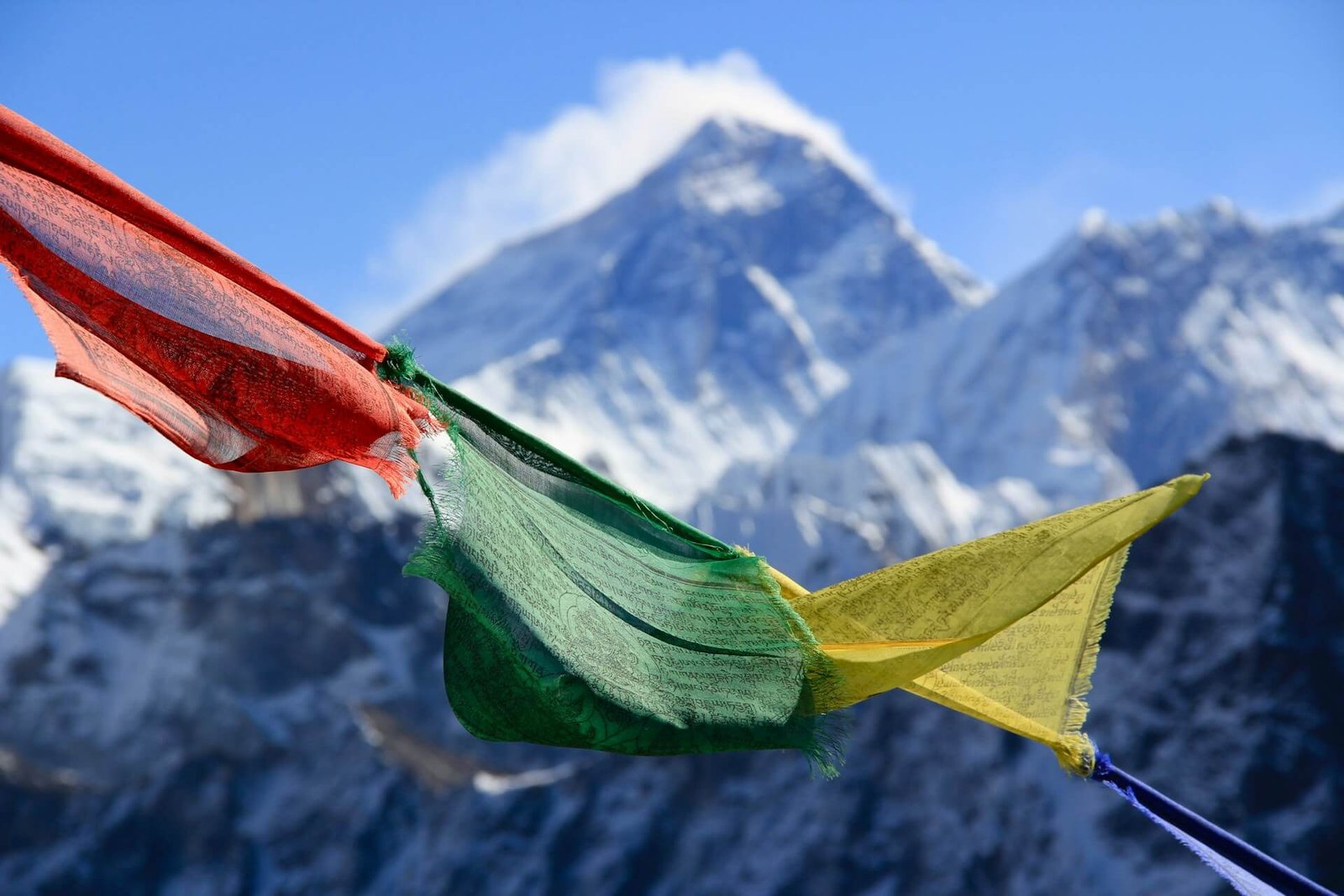
- Permits: EBC requires the Sagarmatha National Park entry permit plus a local Khumbu Pasang Lhamu fee, typically totaling more than Pikey’s standard $30. Advantage: Pikey.
- Guides and porters: Daily rates are similar on both treks — the real difference is duration. EBC typically runs 12-14 days against Pikey’s 6-9, meaning roughly double the cumulative guide and porter cost simply from trekking nearly twice as long. Advantage: Pikey, but because it’s shorter, not because the daily rate is lower.
- Food and lodging: Per-day costs are broadly comparable between the two treks at similar altitude bands, though EBC’s higher-altitude teahouses (above 4,000 m) tend to charge more for both meals and rooms than Pikey’s villages, most of which sit lower. Advantage: Pikey, modestly.
- Transport: This is where the real risk-based savings live. EBC depends on the Lukla flight — notoriously weather-affected, with delays or cancellations that can add unplanned Kathmandu hotel nights to your total cost. Pikey’s road-drive option to Dhap removes that risk entirely, and even its Phaplu flight is generally considered less weather-volatile than Lukla’s. Advantage: Pikey, significantly, in risk-adjusted terms.
- The honest verdict: Pikey Peak is cheaper than EBC mainly because it’s shorter and carries less transport risk, not because it’s a discount version of the same experience. Per-day, the two treks aren’t dramatically different — it’s the cumulative effect of fewer days and a more reliable journey in and out that produces the real savings.
Where to Spend Less, and Where It’s Worth Spending More
If you’re trying to trim the Pikey Peak trek cost, lodging and food flex the most without changing your actual trekking experience — choosing shared-bathroom rooms and sticking to dal bhat (genuinely good, filling, and the local default for a reason) rather than pasta or thali at every meal can save real money across a week.
- Guide and porter rates flex less, and probably shouldn’t — this is the part of your budget directly supporting the people whose knowledge and labor make the trek both safer and more rewarding, and the daily rates involved are modest relative to the rest of your trip.
- Permits don’t flex at all; they’re fixed fees. The only lever there is making sure you’re not paying for a permit your specific route doesn’t require — which, as covered above, is worth checking before you pay it.
The number that should actually make you pause isn’t a high quote — it’s a low number paired with a long itinerary. A genuinely 9-11 day Pikey Peak trek itinerary quoted under $500 is the combination worth scrutinizing, because the underlying math — daily guide and porter wages, that many teahouse nights, that many meals — doesn’t comfortably support that price without something being cut, most often meals or a guide/porter ratio that leaves you under-supported on a remote route.
What Pikey Peak Trek Is Actually Buying You
It’s worth pausing on what you’re spending this money to see, because it’s central to whether any of these price bands represent good value for you specifically.
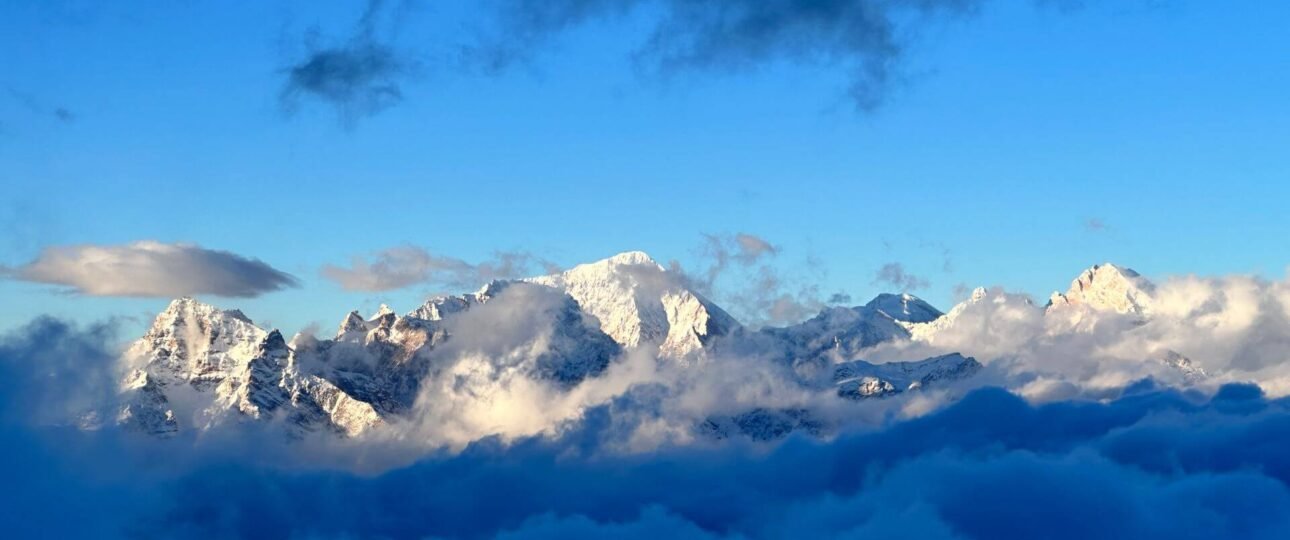
- From the Pikey summit at 4,065 meters, on a clear morning, the panorama includes Everest itself, along with Lhotse, Makalu, Kanchenjunga, and — depending on atmospheric clarity — Numbur Himal, Gaurishankar, and several other major peaks across a genuinely wide arc.
- The often-repeated detail that Edmund Hillary considered this among his favorite Everest views isn’t just a marketing line — the specific reason it holds up is angle and distance: Pikey sits far enough from Everest to take in the mountain as part of a broader range rather than as a single overwhelming wall, which is a genuinely different visual experience than the closer, more vertical views from inside the Khumbu itself.
- The trek also passes through Junbesi — a Sherpa village considered one of the cultural centers of the lower Solukhumbu, home to the Thubten Chöling Monastery — along with smaller villages including Jhapre, Taktor, Taksindu, and Ringmo, known for its apple orchards, giving the trip a cultural dimension genuinely distinct from a pure viewpoint-and-back itinerary.
What this means for your budget decision: the core experience — wide-angle Everest-range views from a spectacular, less-crowded vantage, with real Sherpa cultural contact along the way, in 6-9 days — is available across nearly the entire price range covered above, not gated behind the highest-priced packages.
The premium band buys you more days, more cultural depth, and comfort upgrades. It does not buy you a fundamentally better version of the view everyone comes for.
Pikey Peak Trek Cost FAQs
- How much does the Pikey Peak Trek cost in total?
For a standard 7-day self-arranged trek, expect roughly $480-800 solo, with per-person costs dropping in a small group. Fully packaged versions of the same trip typically run $650-950, with the difference mostly reflecting agency coordination rather than a fundamentally different trek underneath. - What permits do I actually need for Pikey Peak Trek?
A Local Area Permit and TIMS Card, combined roughly $30, for the standard Dhap-Phaplu route. The GCAP (an extra $22-23) only applies if your route starts from Shivalaya or Jiri. - How much do guides and porters cost per day?
A guide typically runs $25-35 per day and a porter $20-25 per day, priced per trip rather than per trekker — so costs drop fast as group size grows. - Is food included in the Pikey Peak Trek cost ?
Only if you book a package that explicitly includes it. Self-arranged trekkers should budget roughly $14-25 per day, or $100-175 across a 7-day trek. - Is it cheaper to trek independently or book a Pikey Peak trek package?
Often closer than people expect. Permits, food, and lodging cost roughly the same either way — the real difference is whether you’re paying for an agency’s coordination and pre-booked certainty, not a cheaper underlying trek. - Does the season change Pikey Peak trek cost?
Yes, mainly through guide and porter rates and lodging availability, both of which tighten in peak season (spring and autumn). Permits and food stay essentially flat year-round. - Is Pikey Peak actually cheaper than Everest Base Camp?
Yes, primarily because it’s shorter (7-9 days versus EBC’s 12-14) and avoids the weather-related flight risk of Lukla. Per-day costs between the two treks are broadly similar — the savings come from duration and reliability, not a discount experience. - How many days does the Pikey Peak Trek take?
This varies genuinely by itinerary, not just marketing — anywhere from 3-4 days (compressed, often flight-assisted) to 11 days (extended, with more cultural time and sometimes a different starting point). Most commonly booked itineraries fall in the 7-9 day range. - Is the Pikey Peak Trek worth the cost?
For trekkers wanting wide-angle Everest-range views with genuine Sherpa cultural immersion in a shorter, lower-risk timeframe than EBC, yes — and the core experience is accessible across nearly the entire price range, not just at the premium end.
Conclusion to Pikey Peak Trek Cost
The Pikey Peak Trek doesn’t have one true cost — it has four moving parts, and once you know what each one actually costs on its own, any total you’re quoted stops being a mystery number and starts being something you can check. Permits are fixed and modest. Guides and porters are priced daily and split well across a group, and they’re the category most worth watching seasonally.
Food and lodging move the least with the calendar but the most with your own comfort preferences. And set against Everest Base Camp, Pikey’s real savings come from being shorter and lower-risk, not from being a lesser version of the same view. Add the four pieces up for your specific plans, and you’ll walk into this trek — and the wide-angle Everest panorama waiting at the top of it — knowing exactly what you paid for and why.