If you’ve searched for “Annapurna Base Camp trek distance” and found different answers on different websites, you’re not alone—and you’re not wrong to be confused.
The total distance ranges from about 70 to 115 kilometers (43 to 71 miles) round trip, depending entirely on your starting point, chosen route, and whether you include side trips like Poon Hill .
Some sources say 50km, others say 95km, and a few even claim 115km . They’re not all wrong—they’re just answering based on different assumptions.
This guide explains exactly why the distance varies, gives you route-specific figures you can trust, and helps you choose the itinerary that matches your fitness, time, and goals. Whether you’re a first-time trekker or an experienced hiker, you’ll get a clear, honest answer about how far you’ll actually walk on the ABC trek in 2026.
The Straight Answer: Annapurna Base Camp Trek Distance Range
The total walking distance for the Annapurna Base Camp trek is approximately:
| Route Option | Total Distance (Round Trip) | Walking Days |
|---|---|---|
| Direct route from Jhinu Danda | ~50 km | 5-6 days |
| Short route from Sinuwa | ~60-70 km | 6-7 days |
| Classic route from Nayapul/Birethanti | ~75-85 km | 7-9 days |
| Full loop including Poon Hill | ~100-115 km | 10-14 days |
The most commonly quoted figure of ~80 kilometers assumes the classic route starting from Nayapul or Birethanti, walking through Ghandruk and Chhomrong, and returning the same way . This is the number most trekking companies use as their baseline.
However, with new road access allowing vehicles to reach villages like Jhinu Danda and Sinuwa, many trekkers now start much closer to the sanctuary, reducing the total walking distance significantly .
Important: All distance figures in this guide are approximate. GPS measurements vary, trail modifications occur, and your actual distance will depend on where you stop each day, side excursions, and the specific trail conditions in 2026.
Why Different Websites Show Different Annapurna Base Camp Trek Distances
When you see different distance figures for the Annapurna Base Camp trek, it’s almost always because the article is referencing different routes and starting points without clearly saying so .
Starting Point Makes a Big Difference
The Annapurna Base Camp trail has several possible starting points, and the trekking distance changes significantly depending on where you begin:
-
Nayapul or Birethanti: The traditional starting point. Adds ~10-15km to the total compared to higher trailheads.
-
Ghandruk: Starting here by jeep cuts ~6-8km. Many trekkers now begin in Ghandruk.
-
Chhomrong: An even shorter start, reducing distance by ~12-15km from the full classic route.
-
Jhinu Danda or Sinuwa: The shortest common starting point. Reduces total distance to approximately 50-70km round trip .
Some older articles still use the traditional starting point but don’t account for road extensions that now allow vehicles much closer to the sanctuary.
Road Access Has Changed the Trailhead
Road construction in the Annapurna region has steadily pushed the roadhead higher into the valley. The road that used to end at Nayapul now continues to Birethanti, and in some cases to Sinuwa and near Jhinu Danda.
This is a major change for 2026 planning.
Trekkers can now save 1-2 walking days by taking a jeep to higher trailheads. However, this also means you skip the lower valley sections, which have their own charm.
Poon Hill Adds Significant Distance
Many trekkers choose to combine the ABC trek with the Poon Hill route. While this adds spectacular sunrise views over the Annapurna and Dhaulagiri ranges, it also adds approximately 20-30km to the total walking distance .
If a guide says “Annapurna Base Camp trek distance including Poon Hill,” expect a figure closer to 100-115km rather than the standard 80km .
Some Articles Include Transfers, Others Don’t
Some sources include the distance from Pokhara to the trailhead as part of the trek distance. Others count only walking kilometers. Some include the return descent from ABC all the way to the roadhead, while others stop counting at higher villages.
Always check what is being measured before comparing numbers.
Annapurna Base Camp Trek Distance by Route: Side-by-Side Comparison
To help you choose, here’s a clear comparison of the major route options for 2026:
| Route | Starting Point | Total Walking Distance | Key Features |
|---|---|---|---|
| Direct ABC Trek | Jhinu Danda / Sinuwa | ~50-60 km | Fastest option; jeep access; skips lower villages; 5-6 days |
| Short ABC Trek | Sinuwa / Chhomrong | ~60-70 km | Skips some lower sections; 6-7 days |
| Classic ABC Trek | Nayapul / Birethanti | ~75-85 km | Traditional route; passes through Ghandruk and Chhomrong; 8-10 days |
| ABC + Poon Hill Loop | Nayapul / Birethanti | ~100-115 km | Includes Poon Hill sunrise; adds Ghorepani; 11-14 days |
Detailed Daily Distance Breakdown: Classic Nayapul Route (9-10 Days)
The standard Annapurna Base Camp itinerary is typically spread over 7-11 days, with daily walking distances ranging from 6 to 15 kilometers.
Most trekkers find a daily average of 8-12km manageable, though the terrain and elevation significantly impact how these distances feel.
Classic 9-Day Itinerary Daily Breakdown:
| Day | Route | Distance | Walking Time | Elevation Change | Key Challenge |
|---|---|---|---|---|---|
| 1 | Drive to Nayapul, trek to Ghandruk | 6-8 km | 3-4 hours | +600m | Initial acclimatization; moderate climb |
| 2 | Ghandruk to Chhomrong | 8-10 km | 4-5 hours | -300m / +500m | Descent and ascent; stone stairs |
| 3 | Chhomrong to Bamboo | 7-8 km | 4-5 hours | -500m / +400m | Steep descent then long climb |
| 4 | Bamboo to Deurali | 8-10 km | 4-5 hours | +600m | Gradual ascent through forest |
| 5 | Deurali to Annapurna Base Camp | 7-8 km | 5-6 hours | +900m | Altitude above 3,200m; thin air |
| 6 | ABC to Bamboo (return) | 13-15 km | 6-7 hours | -1,800m | Longest day; knee strain on descent |
| 7 | Bamboo to Jhinu Danda | 9-11 km | 5-6 hours | +400m / -600m | Steps and hot springs reward |
| 8 | Jhinu Danda to roadhead, drive to Pokhara | 2-4 km | 1 hour | -200m | Final walking stretch |
Note: The return from ABC to Bamboo is the longest single walking day on the trek, covering approximately 13-15 kilometers in 6-7 hours .
Detailed Segment Breakdown for Classic Route
Lower Trailhead & Village Segments :
-
Syauli/Birethanti to Ghandruk: Covers about 5-7km and usually takes 2-3 hours. The trail climbs through terraced fields and stone steps. It’s a short day in km but a genuine workout if you’ve just arrived from Kathmandu or Pokhara.
-
Ghandruk to Chhomrong: Approximately 8-10km and takes around 4-5 hours. The trail descends to the Kimrong Khola before climbing back up to Chhomrong. The combination of descent and ascent makes this section more demanding than the distance suggests .
-
Chhomrong to Bamboo: About 7-8km and generally requires 4-5 hours. After a steep descent to the river, the trail climbs through shaded forests and villages such as Lower Sinuwa and Upper Sinuwa. Many trekkers consider this section their first real introduction to the famous staircases of the ABC Trek .
Annapurna Sanctuary Sections :
-
Bamboo to Dovan to Himalaya to Deurali: Together, these sections cover roughly 8-10km and take about 4-5 hours. The track runs in and out of the forest, gradually gaining height with no brutal passes but almost no flat sections either.
-
Deurali to Machhapuchhre Base Camp to ABC: The final ascent covers around 7-8km. The walk from Deurali to MBC is gentle, while the section from MBC to ABC feels slower as the altitude increases and the surrounding peaks become closer around you .
-
ABC to Bamboo (Return Journey): The return from ABC to Bamboo is one of the longest trekking days, covering approximately 13-15km in 6-7 hours. Although the route is mostly downhill, several short uphill sections make the day more tiring than many trekkers expect .
Exit Sections :
-
Bamboo to Chhomrong to Jhinu Danda: Covers about 9-11km and usually takes 5-6 hours. You claw back the height to Chhomrong, then lose it all again on the steep descent to Jhinu’s ridge. Many choose to relax at the natural hot springs near the river after reaching Jhinu.
-
Jhinu Danda to Roadhead: The final stretch is short, covering around 2-4km depending on where your vehicle is waiting .
Short 7-Day Itinerary Daily Breakdown
| Day | Route | Distance | Walking Time |
|---|---|---|---|
| 1 | Drive to Sinuwa, trek to Bamboo | 8-10 km | 5-6 hours |
| 2 | Bamboo to Deurali | 9-10 km | 5-6 hours |
| 3 | Deurali to ABC | 8-9 km | 5-6 hours |
| 4 | ABC to Bamboo | 13-15 km | 7-8 hours |
| 5 | Bamboo to Jhinu Danda | 9-11 km | 5-6 hours |
| 6 | Jhinu Danda to roadhead, drive to Pokhara | 2-4 km | 1 hour |
This condensed itinerary covers similar ground in fewer days, meaning daily distances are longer and recovery time is reduced.
Annapurna Base Camp Trek Walking Hours Per Day
A typical walking day on the ABC trek involves 4 to 7 hours of active walking. However, hours aren’t a perfect measure of difficulty because terrain and altitude change walking pace dramatically.
| Section | Typical Walking Time | What Affects the Pace |
|---|---|---|
| Nayapul to Ghandruk | 3-4 hours | Stone steps; warm conditions |
| Ghandruk to Chhomrong | 4-5 hours | Steep descent then steep ascent |
| Chhomrong to Bamboo | 4-5 hours | Long stone staircases |
| Bamboo to Deurali | 4-5 hours | Forest trails; moderate gradient |
| Deurali to ABC | 5-6 hours | Altitude above 3,200m slows pace significantly |
| ABC to Bamboo (return) | 6-7 hours | Longest day; cumulative fatigue matters |
Most trekkers start walking around 7:00-8:00 AM and finish by 2:00-4:00 PM, allowing time for lunch, rest, and evening preparation at each teahouse.
Why Distance Doesn’t Tell the Full Story: Terrain and Elevation
A 10-kilometer day on the Annapurna Base Camp trail does not feel like a 10-kilometer walk on flat ground. The terrain, elevation, and cumulative fatigue transform the experience.
The Stair Effect: Why Steps Make ABC Feel Tougher
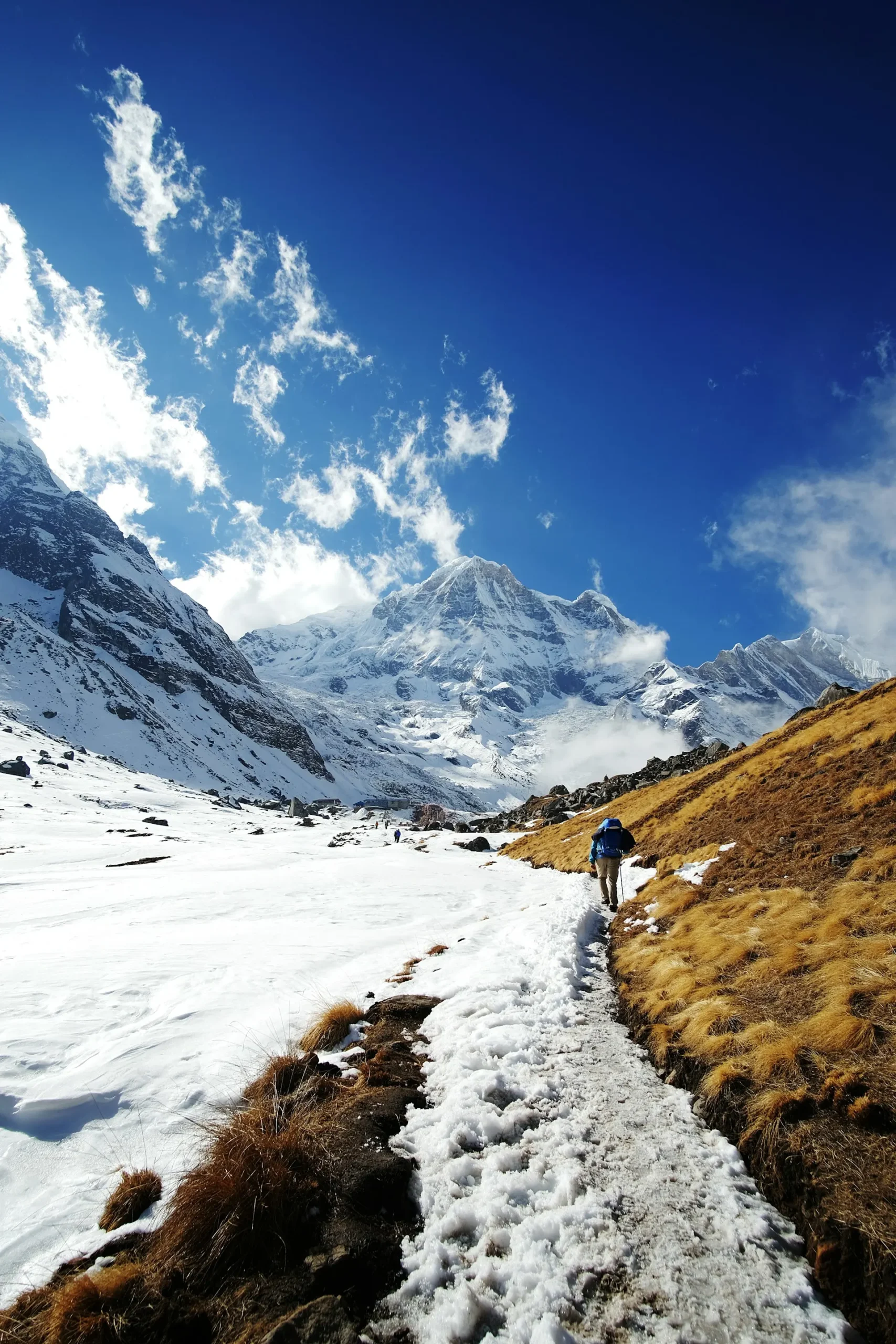
One of the biggest reasons ABC feels tough is the long stone staircases between villages—Ghandruk-Chhomrong, Chhomrong-Sinuwa-Bamboo, and the drops to Jhinu .
These sections involve constant up-and-down stone steps. Many sections involve 600 to 1,000 meters of ascent in a single day, and the same amount of descent often happens on the return.
What this means for your distance perception: A 7-8km day to Bamboo can feel significantly harder than a 12km day on more moderate terrain. The constant up and down of stone staircases places strain on your knees, quadriceps, and calves in ways that flat walking doesn’t prepare you for .
Some trekkers say a day with 1,000 meters of steps feels closer to a 20km flat hike because stairs demand far more energy than normal trails .
Altitude and Thin Air Above 3,000 Meters
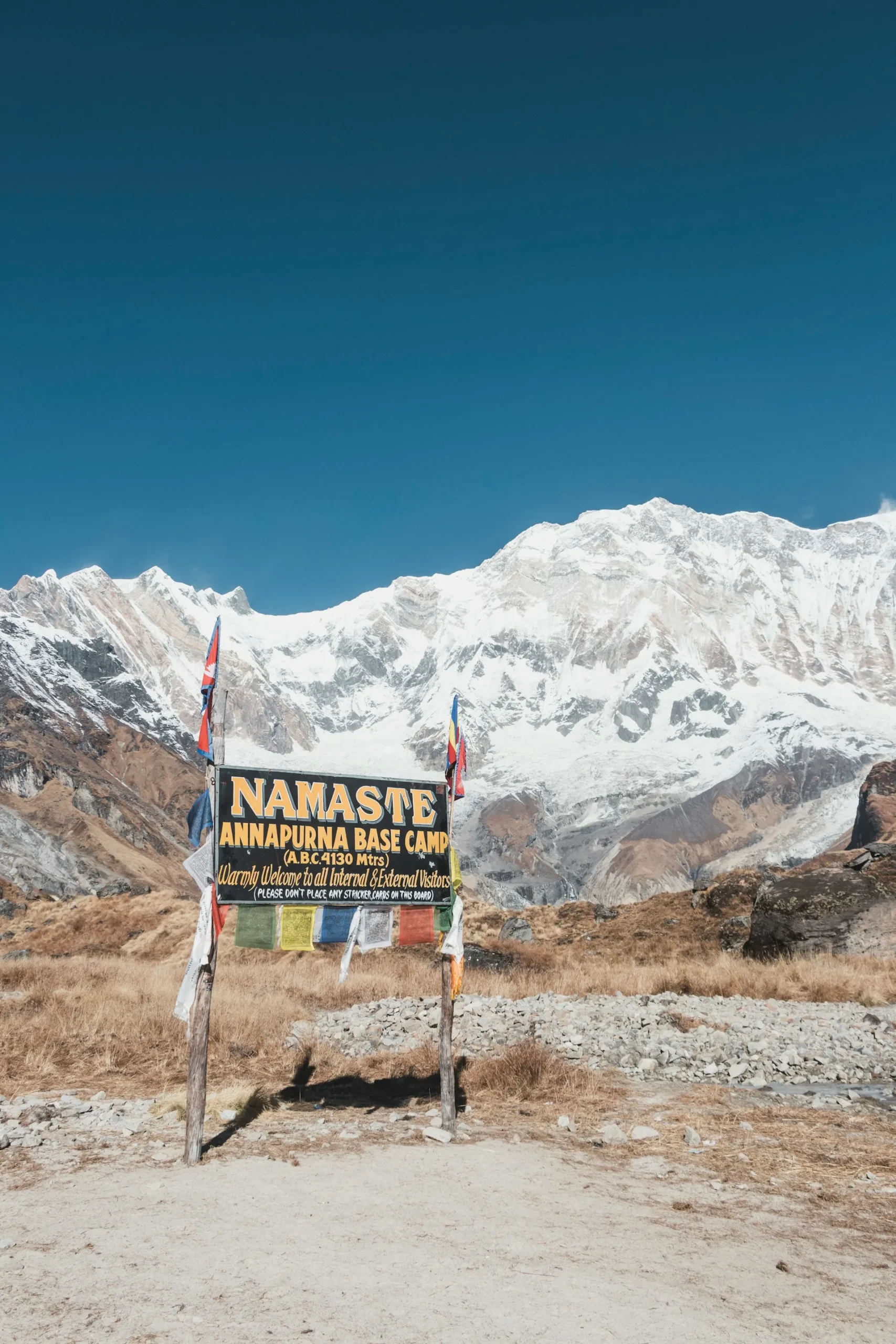
As you climb above 3,000 meters, the air gets thinner and walking becomes noticeably harder. By 4,130 meters at Annapurna Base Camp, oxygen levels are approximately 40% lower than at sea level.
Practical impact: The final push from Machhapuchhre Base Camp (3,700m) to ABC (4,130m) covers only about 3-4 kilometers. But this short stretch can take 2-3 hours—longer than some lower-altitude 5km sections .
Once you pass Deurali (3,200m), the air becomes thinner, and your pace naturally slows. Breathing becomes faster even at normal walking speed, you start to take more short breaks, and small distances take much longer than expected .
Cumulative Fatigue Is the Real Challenge
Even if each day’s walking seems moderate, the real difficulty is doing it day after day. Fatigue accumulates, muscles get sore, and by day 5 or 6, even moderate distances can feel overwhelming.
What this means in practice: Trekkers often find the descent from ABC to Bamboo (13-15km) surprisingly tough—not because the distance is extreme, but because fatigue has built over multiple days and downhill walking creates its own strain .
The sustained downhill gradient—dropping nearly 1,800 meters in a single day from ABC to Bamboo—places a characteristically demanding load on the knees and quadriceps .
Poon Hill + Annapurna Base Camp: The Longer Option
The combined Annapurna Base Camp and Poon Hill trek is one of Nepal’s most popular circuits, for good reason. Poon Hill (3,210m) offers sunrise views over the Annapurna range and Dhaulagiri that are arguably the best on any trek in Nepal.
The distance cost: Adding Poon Hill increases the total trekking distance by approximately 20-30km, pushing the total from roughly 80km to 100-115km depending on your exact route .
This extension also adds 3-5 walking days to the itinerary. If you have 12-14 days total, this is an excellent choice. If you’re limited to 7-8 days, you’ll need to choose between Poon Hill and ABC—you can’t do both well.
Quick Comparison: Classic ABC vs ABC + Poon Hill
| Factor | Classic ABC | ABC + Poon Hill |
|---|---|---|
| Total Distance | ~75-85km | ~100-115km |
| Walking Days | 8-10 days | 11-14 days |
| Highest Point | 4,130m (ABC) | 4,130m (ABC) |
| Views | ABC amphitheater of peaks | Poon Hill sunrise + ABC |
| Crowds | Moderate | High (Poon Hill is very popular) |
11-Day Poon Hill + ABC Itinerary Distance
| Day | Route | Distance |
|---|---|---|
| 1 | Drive to Nayapul, trek to Tikhedhunga | 7 km |
| 2 | Trek to Ghorepani | 12 km |
| 3 | Poon Hill sunrise, trek to Tadapani | 14 km |
| 4 | Trek to Chhomrong | 14-16 km |
| 5 | Trek to Bamboo | 7-8 km |
| 6 | Trek to Deurali | 8-10 km |
| 7 | Trek to Machhapuchhre Base Camp | 4-5 km |
| 8 | Trek to Annapurna Base Camp | 3-4 km |
| 9 | Return to Bamboo | 13-15 km |
| 10 | Return to Jhinu Danda | 9-11 km |
| 11 | Trek to roadhead, drive to Pokhara | 2-4 km |
How to Choose Your ABC Trek Route
Your choice of route should depend on:
1. Time Available
-
5-6 days: Take the direct route from Jhinu Danda or Sinuwa
-
7-9 days: Classic ABC route via Nayapul is ideal
-
10-14 days: Add Poon Hill for the complete experience
2. Fitness Level
-
Beginner with good fitness: Classic route with 9-10 days allows comfortable daily distances of 8-12km
-
Experienced hiker: Short route (6-7 days) or fast 5-day itinerary
-
Need more time: Choose an 11-12 day itinerary with shorter daily distances
3. What You Want to See
-
Mountain views only: Classic ABC delivers the amphitheater experience
-
Mountain views + sunrise spectacle: Add Poon Hill
-
Village culture + mountains: Route via Ghandruk for Gurung village immersion
4. Budget Considerations
-
Longer itineraries mean more nights in teahouses, more meals, and more guide/porter days. The Poon Hill extension adds significant cost.
Training for the ABC Trek Distance
The most important preparation for the Annapurna Base Camp trek is building walking endurance—and specifically, walking with elevation.
How to Train for Annapurna Base Camp Trek Distance
| Training Goal | How to Achieve It |
|---|---|
| Walk 8-12km comfortably | 3 months before: start walking 5km twice weekly; increase by 2km weekly |
| Handle elevation gain | Practice walking uphill—stadium stairs, hills, or stair climbers work well |
| Walk for 5-6 hours consecutively | Monthly longer hikes of 15-20km with pack weight (5-7kg) |
| Manage descent strain | Build quad strength with squats, lunges, and downhill walking practice |
Practical target: Before the trek, aim to be comfortable walking 10-12km with 500-800m elevation gain in a single session.
Beginner Advice for the ABC Trek
If this is your first multi-day trek, consider hiring a porter . Carrying a 10 to 12 kg pack up stone staircases for nine days compounds knee fatigue and reduces enjoyment significantly. With a porter handling your main bag, you carry only a small daypack and experience every kilometer differently .
Recommended packing for the distance: A daypack under 6 kg (with porter) or under 12 kg (self-carry) is the right target .
What to Expect on the Trail in 2026
Teahouse Life and Daily Routine
Rooms on the Annapurna Base Camp Trek are simple—a bed, blankets, and sometimes a small table. Bathrooms are usually shared. Hot showers are available at most stops for USD 2 to 3. Expect rooms to get colder and menus shorter as you climb higher .
Trekkers are expected to eat their meals at the teahouse where they sleep—this is how owners generate most of their income .
Permits for 2026
You need the Annapurna Conservation Area Permit (ACAP) for the ABC trek :
-
Foreign nationals: NPR 3,000 (~USD 23)
-
SAARC nationals: NPR 1,000
You can obtain the ACAP at the Nepal Tourism Board office in Kathmandu or Pokhara before the trek starts. If you are trekking with a company, they often arrange this on your behalf .
Best Seasons for 2026
For a first trek, aim for October or the last two weeks of March through April. Both offer stable weather, good visibility of the Annapurna massif, and comfortable daytime temperatures on the lower sections of the trail .
Frequently Asked Questions About Annapurna Base Camp Trek Distance
1. How many kilometers is the Annapurna Base Camp trek?
The total distance is approximately 70-115km (43-71 miles) round trip, depending on your starting point and route . The classic route from Nayapul is roughly 80km, while the direct route from Jhinu Danda is about 50km .
2. How many kilometers do you walk per day on ABC trek?
Most days involve 6-15km of walking. The shortest days can be 6km, while the longest return from ABC to Bamboo can be 15km .
3. How many hours do you walk per day?
Expect 4-7 hours of active walking daily. The final high-altitude section to ABC may take longer due to altitude effects .
4. Why do different websites show different ABC trek distances?
They use different starting points and routes. Some include the traditional start at Nayapul, while others start at higher roadheads like Jhinu Danda. Some also include side trips like Poon Hill .
5. What is the shortest Annapurna Base Camp trek route?
The shortest common route starts from Jhinu Danda or Sinuwa, totaling approximately 50-60km round trip. This can be done in 5-6 walking days .
6. What is the Annapurna Base Camp trek distance from Pokhara?
The walking distance from the roadhead to ABC is approximately 50-85km depending on your start point . The driving distance from Pokhara to the trailhead is typically 1.5-3 hours.
7. What is the ABC trek distance from Ghandruk?
Starting from Ghandruk reduces the total by approximately 6-8km compared to starting from Nayapul. The round trip from Ghandruk to ABC and back is roughly 70-75km.
8. What is the Annapurna Base Camp trek distance from Jhinu Danda?
Starting at Jhinu Danda, the round trip distance to ABC is approximately 50-60km, making it the shortest common route .
9. How far is Annapurna Base Camp from Machhapuchhre Base Camp?
MBC to ABC is approximately 3-4 kilometers . However, due to altitude above 3,700m, this short section takes 2-3 hours to walk.
10. What is the total distance of ABC trek with Poon Hill?
Including Poon Hill adds roughly 20-30km, bringing the total to approximately 100-115km round trip .
11. Is the Annapurna Base Camp trek difficult?
It’s considered moderate overall, but challenging factors include steep stone steps, altitude above 3,000m (particularly the final ascent), and cumulative fatigue over multiple days .
12. Is ABC trek suitable for beginners?
Yes, with proper fitness preparation and 7+ days to complete. The trek doesn’t require technical skills, but you need good physical endurance and ideally some training .
13. How should I train for the ABC trek distance?
Build up to walking 8-12km with 500-800m elevation gain, practice walking with a 5-7kg pack, and do specific quad-strengthening exercises for the descent.
14. What permits do I need for the Annapurna Base Camp trek?
You need the ACAP (Annapurna Conservation Area Permit, NPR 3,000) . This can be obtained in Kathmandu or Pokhara.
15. How can I book the Annapurna Base Camp trek?
Wonder Hikes Nepal offers personalized ABC trek itineraries with expert local guides. They can help you choose the right route and prepare properly for the trekking distance.
Ready to Plan Your Annapurna Base Camp Trek?
The Annapurna Base Camp trek is achievable for most travelers with reasonable fitness. The key is choosing the right route and itinerary for your fitness level, time, and goals.
Wonder Hikes Nepal is a local, Nepal-based trekking company that can help you plan your 2026 ABC trek. Their experienced guides can:
-
Help you choose the right route for your fitness level
-
Customize your itinerary (short, classic, or Poon Hill extension)
-
Manage permits, transportation, and teahouse bookings
-
Provide local knowledge to enhance your experience
With a licensed guide, you’ll have someone monitoring you for altitude sickness symptoms, setting and enforcing a pace that protects your acclimatization, communicating with teahouse owners in Nepali, and making fast, informed decisions if weather changes or a health issue arises .
Ready to start planning? Contact Wonder Hikes Nepal to discuss your ideal Annapurna Base Camp trek itinerary. Whether you’re looking for a short 6-day trek or a longer 12-day adventure including Poon Hill, they’ll help you find the perfect fit.