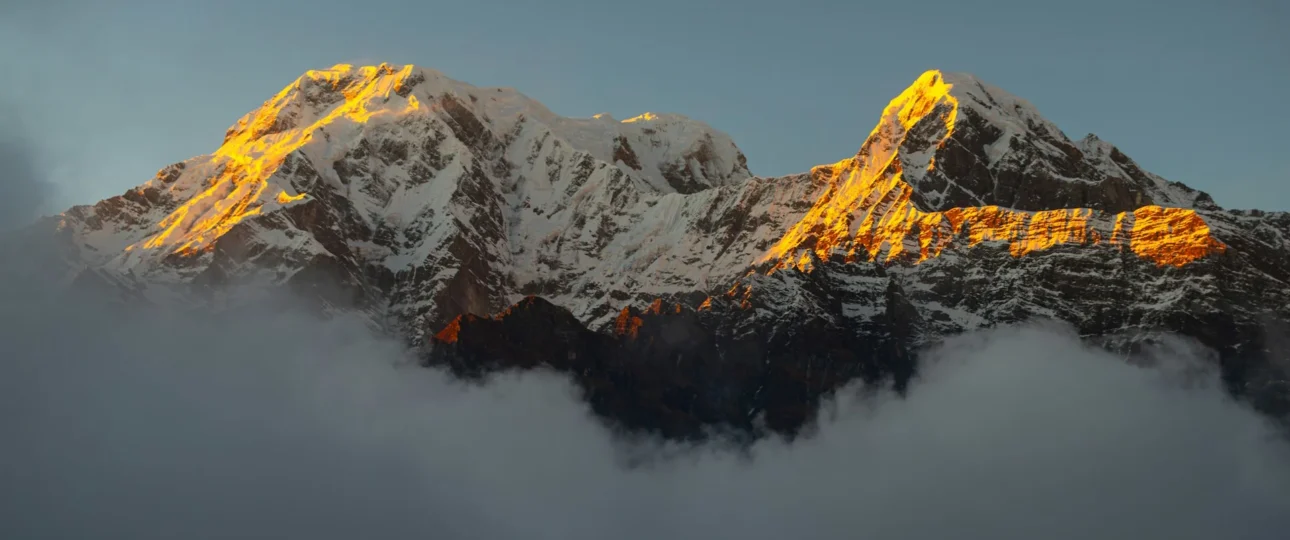
The best time to trek Mardi Himal in 2026 is during October for the most reliable weather and clearest mountain views, or April if you want to see the rhododendron forests in full bloom. Both months offer stable conditions, but your choice depends on whether peak clarity or vibrant forest scenery matters more to you. The Mardi Himal trek offers a quieter, more intimate experience than the busy Annapurna Base Camp trail, and choosing the right season can make the difference between a spectacular adventure and a challenging struggle with weather and trail conditions.
This guide breaks down every month of the year so you can choose the perfect time for your Mardi Himal Base Camp adventure based on your priorities—whether that’s clear mountain views, photography, fewer crowds, budget, or a specific experience like seeing snow or rhododendrons.
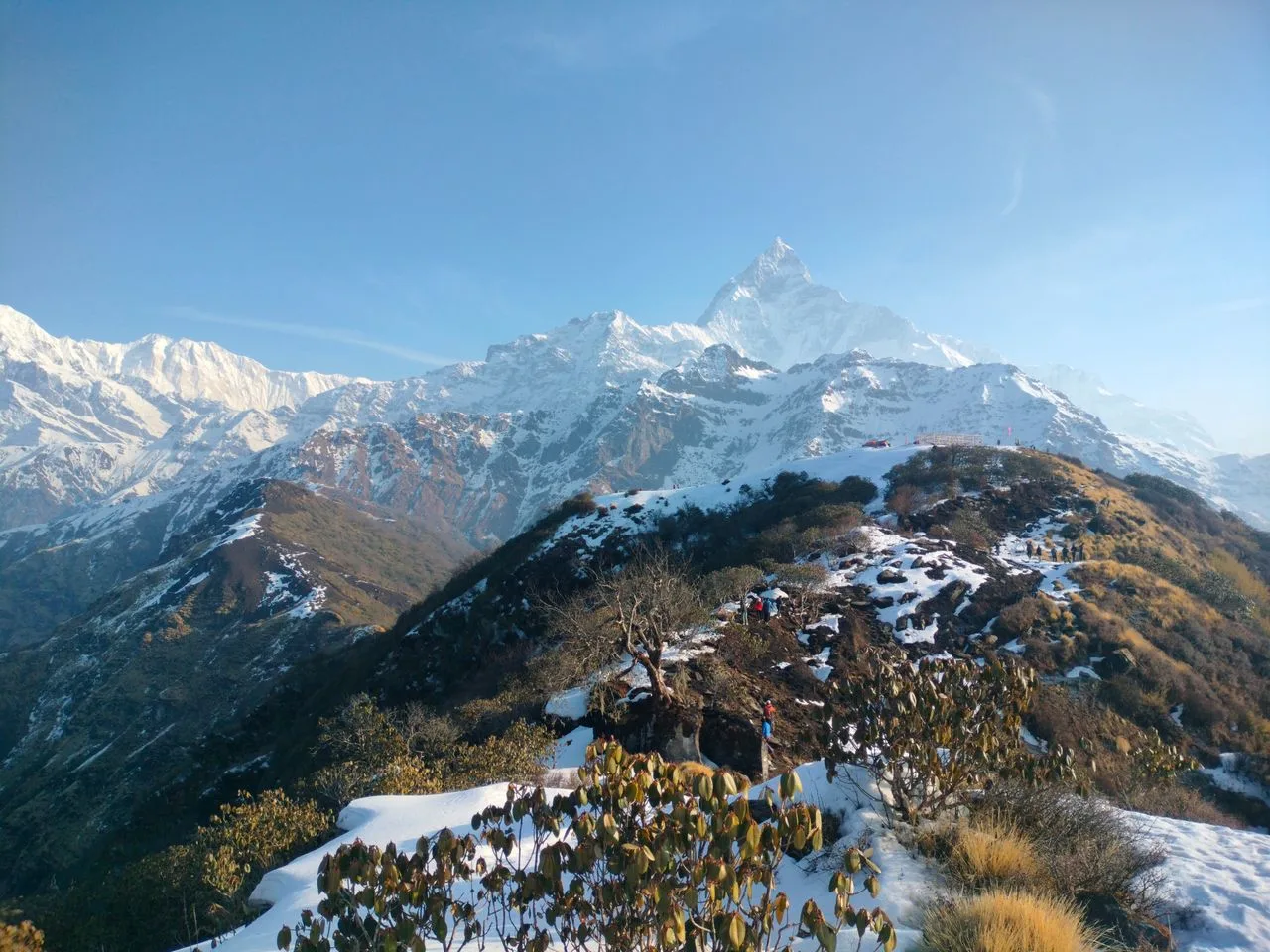
Quick Answer: When Should You Trek Mardi Himal?
| If You Want… | Choose… |
|---|---|
| Clearest mountain views + most reliable weather | October |
| Rhododendron blooms + warmer temperatures | April |
| Fewer crowds + clear skies | November |
| Lush green landscapes + quieter trails | Late September |
| Snow experience + solitude | December–February |
| Budget travel + don’t mind rain | June–August (monsoon) |
October is widely considered the single best month for the Mardi Himal Trek . The post-monsoon air is washed clean, visibility is exceptional, and daytime temperatures at High Camp are manageable with standard trekking kit. November offers similarly clear views with thinner crowds but significantly colder nights.
Quick Month-by-Month Overview
| Month | Season | Day Temp (High Camp) | Night Temp (High Camp) | Rain | Crowds | Mountain Views | Key Feature |
|---|---|---|---|---|---|---|---|
| January | Winter | 2–5°C | -10 to -15°C | Very low | Very low | Excellent | Coldest, snow possible |
| February | Winter | 5–8°C | -8 to -12°C | Low | Very low | Very good | Warmer, snow melting |
| March | Spring | 4–8°C | -5 to 2°C | Low-Medium | Low-Medium | Very good | Rhododendrons begin |
| April | Spring | 10–15°C | -2 to 3°C | Low | High | Excellent | Peak blooms, warm |
| May | Spring | 12–15°C | 2–6°C | Medium | Moderate | Good | Warmer, pre-monsoon haze |
| June | Monsoon | 12–16°C | 5–10°C | High | Very low | Poor | Rain, leeches, mud |
| July | Monsoon | 14–16°C | 6–12°C | Very high | Very low | Very poor | Peak rain, landslides risk |
| August | Monsoon | 14–16°C | 6–12°C | High | Very low | Poor | Still wet, easing late month |
| September | Autumn | 10–14°C | 4–8°C | Decreasing | Low-Medium | Good-Excellent | Transition month |
| October | Autumn | 8–12°C | 0–5°C | Very low | High | Best of year | The safest choice |
| November | Autumn | 5–10°C | -5 to 2°C | Very low | Low-Medium | Excellent | Quieter, colder |
| December | Winter | 2–6°C | -8 to -12°C | Very low | Low | Very good | Cold, clear, icy trails |
The Four Seasons of Mardi Himal
Spring on Mardi Himal (March–May)
Spring transforms the lower sections of the Mardi Himal route into a botanical spectacle. The rhododendron forests between Kande and Low Camp burst into red, pink, and white blooms, creating a landscape that photographers and nature lovers seek out .
March: The Transition Month
March is where winter transitions into spring. The weather is still crisp, and the higher ridges may still carry snow from the winter months. Daytime temperatures at High Camp hover between 4°C and 8°C, dropping to -5°C to 2°C at night . The skies are generally clear, offering sharp views of Machhapuchhre. The rhododendrons begin to flower in the lower forests, and the trail is not yet busy. March is a good month for trekkers who want spring conditions without the April crowds. Moderate crowds and medium trail usage.
April: The Peak Spring Month
April is the highlight of the spring season and one of the two best months overall. The rhododendron forests are in full bloom, carpeting the hillsides with colour from Kande to Low Camp . The weather is stable. Daytime temperatures reach 10-15°C at High Camp, with nighttime lows of -2°C to 3°C . Mornings are clear, and mountain views of Machhapuchhre, Annapurna South, and Mardi Himal are excellent. Trail conditions are dry and firm. Crowds are at their peak for spring, and teahouses at High Camp fill up . April is best for trekkers who want to see the rhododendrons and enjoy reliable weather.
May: The Warmer Month
May is warmer and the days are longer. Early May is still very good. The trail is open, temperatures are warmer at elevation, and the views are clear on most mornings. From mid-May, pre-monsoon weather builds. Cloud cover arrives earlier in the afternoon. Rain hits the lower forest sections more regularly . Visibility remains good in the mornings but hazy in the afternoons. If May is your only option, aim for the first two weeks. Build some flexibility into your Pokhara return plans, as the weather at this point in the year does not follow a fixed schedule . May is best for trekkers who prefer warmer conditions and cannot travel earlier in the spring.
Is Spring Too Crowded?
Mardi Himal is far quieter than Everest Base Camp or the Annapurna Base Camp Trek, even in peak April . You will share the trail with other trekkers, and the teahouses at High Camp fill up in mid-April. But the forest sections are wide, the trail thins out above Low Camp, and the ridge above High Camp at five in the morning belongs to whoever makes the effort to get there. If crowds matter to you, late March and November are better choices. But a busy trail in April is nothing like the crowds on the main Annapurna circuit .
Monsoon Season on Mardi Himal (June–August)
The monsoon season brings heavy rainfall, high humidity, and challenging trail conditions. Trekking is possible, but it’s not recommended for most trekkers .
June: The Monsoon Arrives
June marks the start of the monsoon. Conditions are overcast with regular rain showers, heavy mist, and slippery mud layers. The forests become humid, and leeches are present below 3,000m . Mountain views are rarely visible. Trail conditions are muddy and slippery. June is suitable only for experienced trekkers with proper waterproof gear and low expectations for views.
July: The Deepest Monsoon
July is the peak of the monsoon. Rainfall is at its heaviest, and the landslide risk on mountain trails increases significantly . Cloud cover is almost constant at altitude, meaning you might not see Mardi Himal or any of the Annapurna peaks even once during a 5-day trek . Trails are wet and slippery with leeches everywhere below 3,000m. Some lower sections can flood. July is genuinely not recommended for most trekkers. Only the most determined, experienced trekkers should consider it, with an experienced guide .
August: The Monsoon Eases
August is similar to July but with a glimmer of hope. By the last week of August, the rainfall starts to ease . On some mornings, brief windows of clear sky offer mountain views. The forests are intensely green and alive with waterfalls and wildflowers. The landscapes are beautiful, but the trails remain wet and muddy. Late August offers a monsoon experience with slightly better odds of views than July .
Autumn on Mardi Himal (September–November)
Autumn is the peak trekking season in Nepal. The monsoon clears, the air is fresh, and the mountain views are the best of the year .
September: The Underrated Transition
September is the transition from the monsoon to autumn, and it’s surprisingly good. The monsoon typically clears the Annapurna region by the third week of September . After that, the trail dries quickly. The forest is intensely green. The peaks carry fresh snow. And the number of trekkers on the trail is a fraction of what October sees . Early September still brings rain, so the first two weeks can be wet. Late September offers clear mornings, good visibility, and noticeably fewer trekkers than October. The landscape is deep green, full streams, fresh snow on the peaks, and lodge availability is fully open and not yet October-busy .
October: The Absolute Best Month
October is considered the best month for the Mardi Himal Trek, and for good reason . The monsoon has cleared completely, the air is washed clean, and mountain views are razor-sharp. You can stand at High Camp and see Machhapuchhre, Annapurna South, Hiunchuli, and Mardi Himal in stunning detail. Daytime temperatures at High Camp range from 8°C to 12°C, with nighttime lows of 0°C to 5°C . Trails are dry and firm, teahouses are fully staffed and stocked, and the entire trail feels alive with trekkers. Crowds are the highest of the year, and teahouses at High Camp fill up quickly—book early.
October is ideal for everyone: beginners, experienced trekkers, photographers, and families. For first-timers, groups, and anyone who wants good conditions without surprises, October is the safe, sensible choice .
November: Clear, Quiet, and Cold
November is October’s quieter, colder sibling. The skies remain beautifully clear, and the mountain views stay excellent . The October crowds have cleared, leaving more peaceful trails and quieter teahouse evenings. Temperatures drop significantly. Nights at High Camp dip to -5°C to 2°C, dropping to -15°C by mid-month . By late November, some teahouses above 3,500m reduce their hours or close. Good gear is essential. November is best for experienced trekkers with proper equipment who want clear skies without the crowds .
Winter on Mardi Himal (December–February)
Winter brings cold temperatures, possible snow, and solitude to the Mardi Himal trail . It’s a viable option for well-prepared trekkers.
December: Cold, Clear, and Quiet
December continues the clear skies of autumn into the winter. The trail is quiet, and teahouses are open but with reduced hours. Temperatures drop further. Daytime High Camp temperatures range from 2°C to 6°C, with nighttime lows of -8°C to -12°C . The higher sections can be icy, and snow is possible above 3,000m. Proper winter gear—including a down jacket and a sleeping bag rated for sub-zero temperatures—is essential. December is best for experienced trekkers seeking solitude and clear views, prepared for cold conditions .
January–February: The Deepest Winter
January and February are the coldest months . Temperatures are at their lowest, and the higher ridges may be covered in snow. The air is exceptionally dry and clear, creating some of the sharpest mountain profiles of the year. Alpenglow is intense. Trail conditions can be challenging due to ice and snow above High Camp . Teahouses are open but limited. Crampons may be necessary in some sections. These months are only for experienced trekkers with proper winter equipment who are comfortable with freezing temperatures and snowy trails.
Best Month for Your Priority
| Your Priority | Best Month | Why |
|---|---|---|
| Clearest mountain views | October | Post-monsoon air, stable weather, minimal clouds |
| Rhododendron flowers | April | Full bloom in the forests below 3,000m |
| Snow experience | December–February | Snow possible above 3,000m, cold conditions |
| Photography | October + early November | Sharp light, blue skies, clean air |
| Fewer crowds | November, late September | Beautiful views, noticeably quieter |
| Beginners | October | Most reliable conditions, comfortable temperatures |
| Budget travel | Late September, November | Good conditions with fewer crowds |
| Warm conditions | April–May | Warmer at elevation, though haze increases |
| Green landscapes | September | Lush from monsoon rain, fresh snow on peaks |
| Quiet + clear views | November | Cold but very quiet, excellent visibility |
Spring vs Autumn: Which Is Actually Better?
| Factor | Spring (March–May) | Autumn (September–November) |
|---|---|---|
| Weather | Stable, warming, pre-monsoon haze in May | Very stable, dry, clear air |
| Visibility | Good, occasional haze | Best of the year |
| Forest | Rhododendrons in bloom | Green from monsoon, fresh snow on peaks |
| Crowds | Moderate, busiest in April | Moderate-high, busiest in October |
| Temperature | Warmer at elevation | Cooler but manageable |
| Best For | Flower photography, warmth | Mountain photography, reliability |
Weather stability and view quality in October and April are roughly equal. The difference is what you see around the mountains, not the mountains themselves .
Choose Autumn (October) if: You want the clearest mountain views of the year, especially for photography. This is your first trek, and you want reliable, uncomplicated conditions .
Choose Spring (April) if: You want the rhododendron forests in full bloom. You want warmer daytime temperatures at elevation. Colour and forest atmosphere matter as much to you as mountain clarity .
If you can only go once: late September into October gives you clean air, green landscape, and sharp peaks all at once .
Photography and Lighting Conditions
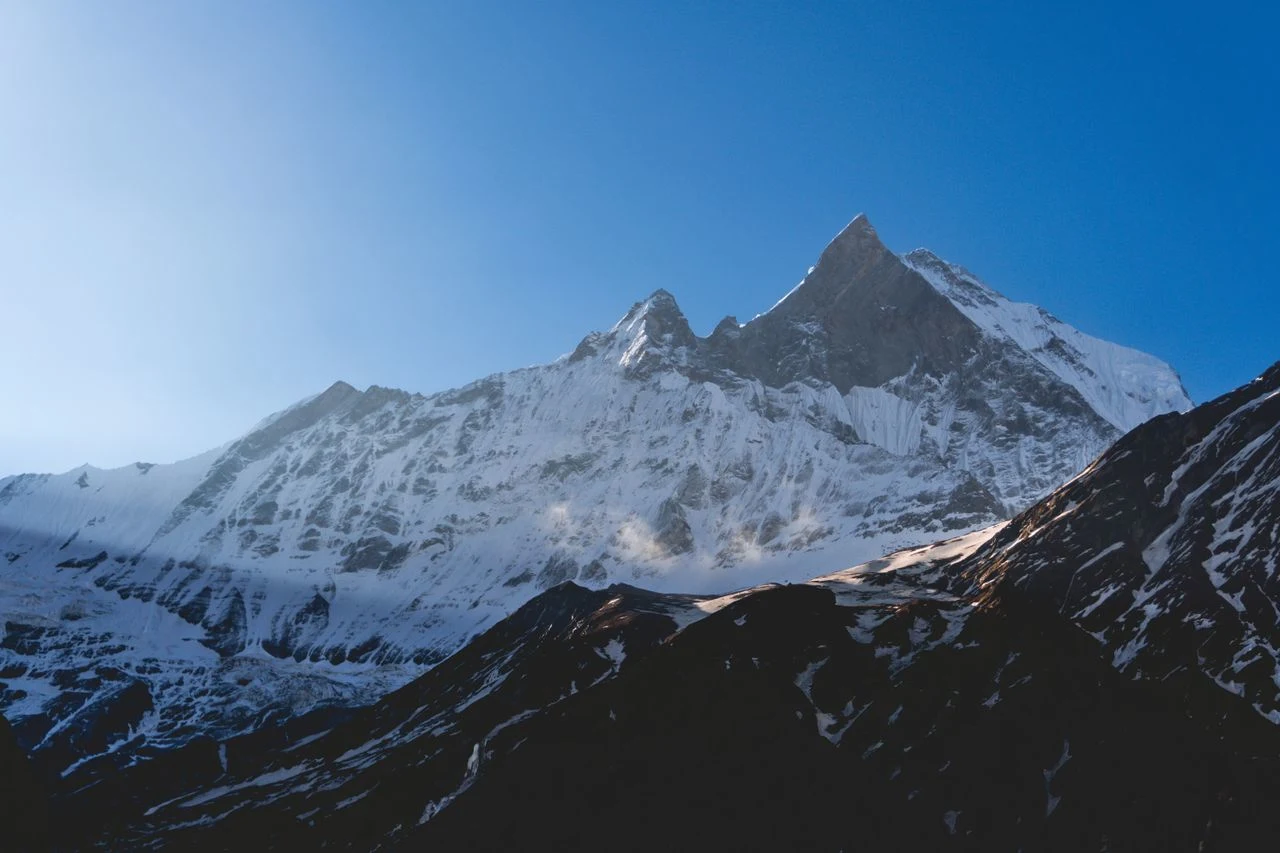
Mardi Himal is a significantly better photography location than its relative obscurity suggests . The ridge alignment provides direct views of Machhapuchhre (Fishtail) from the east, creating compositions unavailable from the Annapurna sanctuary itself where Machhapuchhre’s symmetry is disrupted .
Golden Hour and Blue Hour
-
Upper Viewpoint (4,500m): The summit faces west-northwest, making it an exceptional location for both sunrise and the hour after. At sunrise, alpenglow lights Annapurna South and Annapurna I in deep orange and red before transitioning to gold—typically a 20-30 minute window .
-
High Camp (3,580m): More accessible for overnight stays, High Camp’s eastward-facing position captures Machhapuchhre in full profile at sunrise. Dawn is the primary photography window—clouds typically begin building by 10:00 AM even in stable weather .
-
Forest sections (below 3,000m): The rhododendron forest between Kande and Low Camp is at its photographic best in soft morning or afternoon light, not midday. April’s bloom under diffuse morning cloud creates the best flower photography conditions .
October and November: The most photographic season. High-pressure systems create low-humidity air with deep blue skies and sharp mountain definition. Morning clarity is guaranteed for 4-5 day stretches .
April: Morning clarity is excellent, but cumulus builds from the valleys by 11:00 AM and can create dramatic cloud-mountain compositions in the afternoon. April light is warmer and slightly more golden than October’s cooler blue light .
Winter (December-January): The lowest humidity air of the year creates extraordinary atmospheric clarity. Alpenglow is intense. The trade-off is the wind, which limits time on the exposed upper ridge .
Teahouse Availability by Season
Unlike more developed routes like ABC or the Annapurna Circuit, Mardi Himal’s teahouse network is small and season-dependent . Understanding which camps are reliably staffed matters for planning.
| Camp | Peak Season (Oct-Nov, Apr) | Shoulder Season (Sept, Dec, Mar) | Winter (Jan-Feb) | Monsoon (Jun-Aug) |
|---|---|---|---|---|
| Kande (start) | Open (transit only) | Open | Open | Open |
| Low Camp | 3-4 teahouses, full service | 2-3 open | 1-2 open | 1 open (minimal) |
| Forest Camp | 2-3 teahouses, full service | 1-2 open | 1 open | 1 open (minimal) |
| High Camp | 4-5 teahouses, full service | 2-3 open | 1-2 open | 1 open (minimal) |
Source: Cross-referenced from multiple trekking operators
Mardi Himal Weather by Elevation
The Mardi Himal route climbs from 1,770m at Kande to 4,500m at the Upper Viewpoint. Temperatures drop as you gain altitude .
| Elevation | Daytime (Average) | Nighttime (Average) |
|---|---|---|
| Kande (1,770m) | 15-25°C | 5-15°C |
| Low Camp (2,985m) | 10-18°C | 0-8°C |
| High Camp (3,550m) | 5-15°C | -5 to 3°C |
| Upper Viewpoint (4,500m) | 0-10°C | -10 to 0°C |
Note: Temperatures at High Camp can drop to -15°C at night in winter . Even in the best trekking months, High Camp nights can drop to 0°C to -5°C in October and November .
Morning vs Afternoon Conditions
A consistent pattern across all seasons: mornings are clearer than afternoons. Trekkers should aim to start early—by 5:30-6:00 AM—to catch the best views. Clouds often build by 11:00 AM, even in stable weather . This is particularly important on the final ascent from High Camp to the Upper Viewpoint, where the early morning light creates the best photographic conditions.
The optimal photography moment at Upper Viewpoint is 30-45 minutes before and after sunrise . For the classic shot of Machhapuchhre from High Camp at sunrise, the peak’s triangular profile rises directly above the camp in near-perfect symmetry .
Permits and Registration for 2026
As of 2026, all foreign trekkers on the Mardi Himal route need two main permits :
-
Annapurna Conservation Area Permit (ACAP): NPR 3,000
-
e-TIMS (Trekkers’ Information Management System) Card: NPR 2,000
-
Green Fee: NPR 1,000
The 2026 Digital Process :
-
Since a guide is mandatory in conservation areas, your trekking agency handles e-TIMS registration via the official Nepal Trek Mobile App.
-
You must carry a printed copy of your ACAP permit and have your digital QR code ready on your phone for scanning at trail checkpoints.
-
Insurance is now verified—authorities check that your policy covers high-altitude rescue before activating your e-TIMS at the trailhead.
Important: Make sure your guide checks you in at the Pothana station so your insurance and rescue coverage are active while you’re on the trail .
Seasonal Packing Guide
| Season | Packing Priorities |
|---|---|
| Spring | Light layers + warm jacket for cold mornings and evenings; rain jacket for possible showers |
| Autumn | Warm layers, down jacket, windproof outer; sleeping bag rated to -5°C |
| Winter | Heavy down jacket, thermal base layers, waterproof boots, sleeping bag rated to -15°C; consider crampons |
| Monsoon | Full waterproof gear, leech socks, quick-dry clothing; expect mud |
Essential year-round: Quality sleeping bag (teahouse blankets are thin at high altitudes), trekking poles, headlamp (early morning starts), sunscreen (snow glare is intense), water purification, and a portable power bank (charging is limited above Low Camp).
Plan Your Mardi Himal Trek with Wonder Hikes Nepal
Choosing the right month for the Mardi Himal Base Camp trek is the first step to an unforgettable Himalayan experience. Wonder Hikes Nepal helps you plan your 2026 trek with transparent advice, custom itineraries, and experienced local guides who know the trail in every season.
Wonder Hikes Nepal provides:
-
Expert guidance on choosing the best dates for your priorities
-
Licensed, experienced guides with deep knowledge of the Mardi Himal route and the 2026 digital permit system
-
Transparent pricing with clear inclusions
-
Custom itineraries from 4 to 7 days, matched to your fitness and experience level
-
Safety-first approach with oximeters, emergency first aid kits, and satellite communication
-
Quality teahouse bookings at the best locations, including High Camp
Why choose Wonder Hikes Nepal:
-
Every package includes an experienced English-speaking guide licensed by the Government of Nepal
-
Guides carry emergency first aid kits and oximeters to monitor your health
-
All permits are arranged in advance—no paperwork stress at the last minute
-
Transport from Pokhara to the trailhead and back is included
-
Porter service is available to reduce your physical burden (one porter per two trekkers, 15kg baggage limit)
Contact Wonder Hikes Nepal for a no-obligation quote matched to your preferred month, group size, and travel dates. Whether you’re a solo trekker, a couple, or part of a larger group, Wonder Hikes Nepal can tailor a package that fits your needs.
15 Frequently Asked Questions
1. What is the best time to trek Mardi Himal?
The best time to trek Mardi Himal is October for the clearest views or April for rhododendron blooms. Both months offer stable weather and excellent conditions .
2. Is October the best month for Mardi Himal?
Yes, October is widely considered the single best month. The monsoon has cleared, views are razor-sharp, and temperatures are comfortable .
3. Is April better than October for Mardi Himal?
It depends on your priorities. April has rhododendron blooms and warmer temperatures. October has clearer mountain views. Weather stability and view quality are roughly equal—the difference is what you see around the mountains .
4. Can I trek Mardi Himal in winter (December–February)?
Yes, but it’s cold and snow is possible above 3,000m. You need proper winter gear—a sleeping bag rated to -15°C, thermal layers, and possibly crampons. The views are excellent, and crowds are very low .
5. Can I trek Mardi Himal during the monsoon (June–August)?
Yes, but it’s not recommended for most. Trails are muddy, views are often obscured, and leeches are active below 3,000m .
6. When can I see rhododendrons on Mardi Himal?
The rhododendrons bloom from late March to early May, with April being the peak month .
7. When is there snow on Mardi Himal?
Snow is possible above 3,000m from December to March. The upper sections can be icy during winter months .
8. Which month has the clearest mountain views?
October offers the clearest views of the year, followed by November .
9. What is the weather like at High Camp in October?
Daytime temperatures are around 8–12°C, dropping to 0–5°C at night. The skies are clear and dry .
10. Is September a good time for Mardi Himal?
Yes, especially late September. The monsoon is ending, the forest is green, and crowds are lower than October .
11. Is November too cold for Mardi Himal?
November is cold but manageable with good gear. Nights at High Camp dip to -5°C to 2°C, dropping to -15°C by mid-month. Some teahouses above 3,500m reduce hours by late November .
12. Which month is best for photography on Mardi Himal?
October and early November offer the best light and clearest air for mountain photography. April offers warmer golden light with rhododendron blooms .
13. Which month has the fewest crowds on Mardi Himal?
Winter (December–February) and monsoon (June–August) have the fewest crowds. For clear views with fewer crowds, November is ideal .
14. Is Mardi Himal suitable for beginners in April?
Yes, April is an excellent choice for beginners. The weather is stable, trails are dry, and temperatures are comfortable. October is also suitable for beginners .
15. Which month offers the best value for Mardi Himal?
Late September and November offer excellent conditions with fewer crowds, often at lower prices than October. Teahouse availability is still good in September, and the forest is at its greenest .