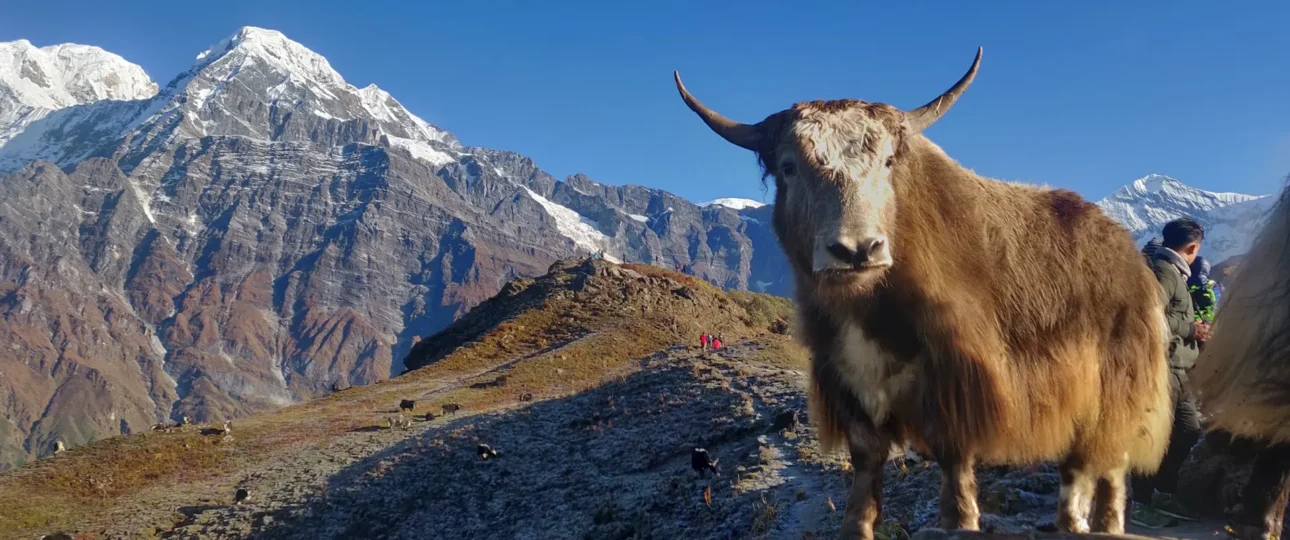
Mardi Himal is a 5,587-metre peak in Nepal’s Annapurna region, offering one of the most accessible and rewarding trekking experiences in the Himalayas. The Mardi Himal trek was officially opened to independent trekkers in 2012 and has since become a favourite for those seeking spectacular mountain views without the crowds of the more famous Annapurna Base Camp or Everest Base Camp routes .
What makes Mardi Himal different is the ridge itself. Unlike most Nepali treks that follow valley floors, the Mardi Himal route climbs along an open ridgeline. From Badal Danda upwards, you walk with Machhapuchhre (Fishtail) filling half the sky beside you, Annapurna South and Hiunchuli on the other side, and clouds often sitting below you like a sea of white . With only around 3,000 annual trekkers compared to 70,000 on Annapurna Base Camp, you will often have the trail and ridgeline entirely to yourself .
The Mardi Himal trek is ideal for travellers short on time, as the complete trek takes just 4 to 7 days and can be easily accessed from Pokhara, Nepal’s second-largest city and the adventure hub of the Annapurna region. The route passes through dense rhododendron and oak forests, traditional Gurung villages, and alpine meadows before reaching the Mardi Himal Base Camp at approximately 4,500 metres .
This guide covers everything you need to know about Mardi Himal and the Mardi Himal trek for 2026: the route, difficulty, seasons, costs, permits, accommodation, and practical advice to help you decide if this is the right adventure for you with Wonder Hikes Nepal.
Quick Facts at a Glance
| Fact | Detail |
|---|---|
| Mountain Height | 5,587 metres (18,330 ft) |
| Base Camp Elevation | ~4,500 metres |
| Upper Viewpoint | ~4,200–4,300 metres |
| High Camp | ~3,550–3,700 metres |
| Trek Duration | 4–7 days trekking |
| Trek Distance | ~40–60 kilometres |
| Starting Point | Kande (1,770m) or Phedi, near Pokhara |
| End Point | Siding or Lumre, then drive to Pokhara |
| Difficulty | Moderate |
| Best Seasons | Spring (March–May) and Autumn (September–November) |
| Permits Required | ACAP + TIMS |
| Guide Requirement | Recommended; mandatory under 2023 regulation |
Mardi Himal: The Mountain
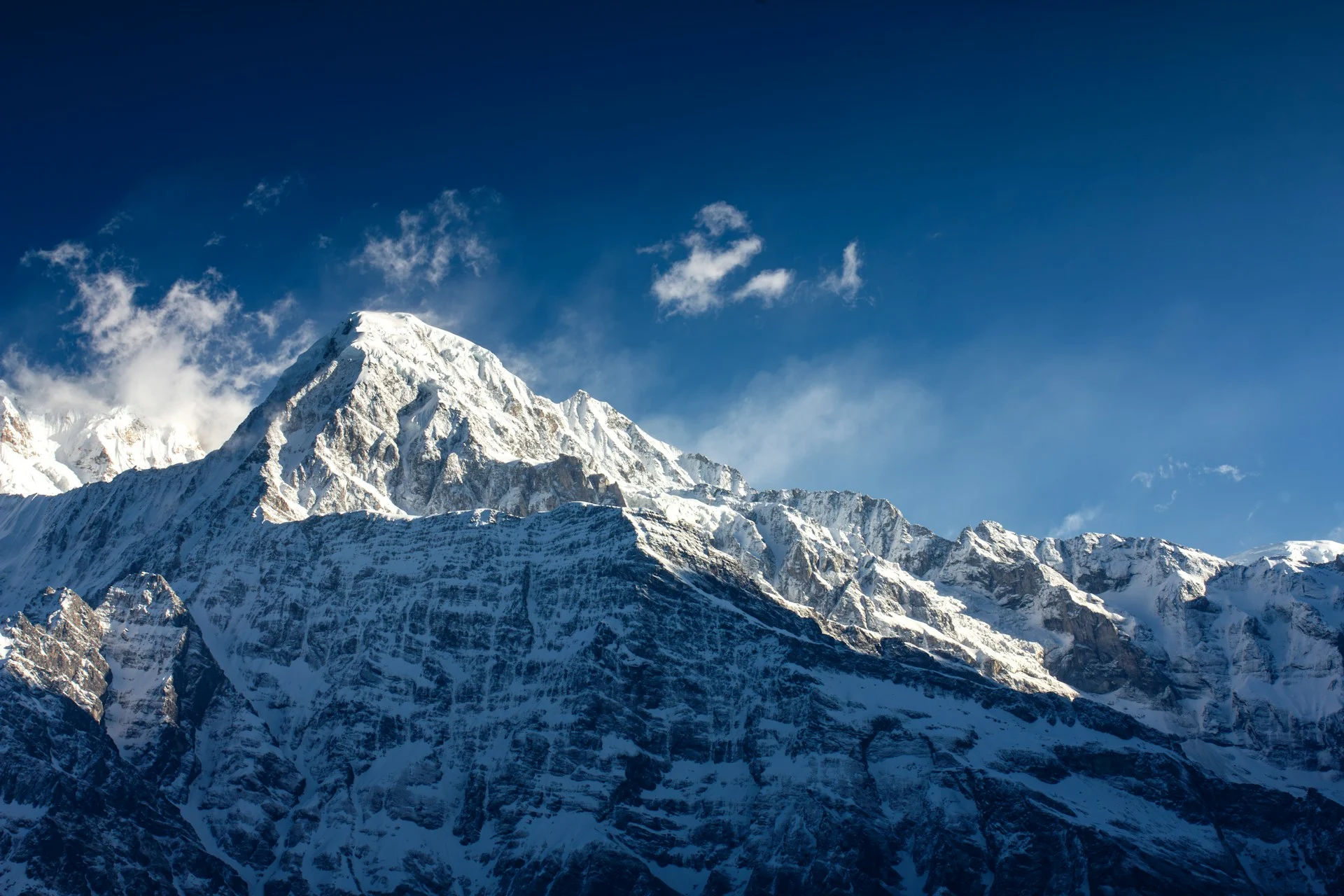
Mardi Himal (Nepali: मर्दी हिमाल) is a 5,587-metre (18,330 ft) peak beneath the much more prominent Machhapuchhre (Fishtail) in the Annapurna region of Nepal, from which it is separated by a 5,200-metre (17,060 ft) col . It was first summited in 1961 by Basil Goodfellow .
The peak is classified by the Nepalese government as a Group B “trekking peak” by the Nepal Mountaineering Association and is offered by many expedition companies for those seeking a more challenging mountaineering experience . The full climb requires mountaineering skills and a separate NMA peak permit costing $350-$500 depending on the season .
Mardi Himal sits within the Annapurna Conservation Area, approximately 28 kilometres northeast of Pokhara in Gandaki Province. The parent range is the Annapurna Himal, part of the greater Himalayas .
Mardi Himal Trek History
The Mardi Himal trek was first established in 2010 and officially opened to independent trekkers in 2012 . Prior to 2012, the route was a camping trek, but now there are numerous teahouses and lodges at every camp, making it accessible to a wider range of trekkers.
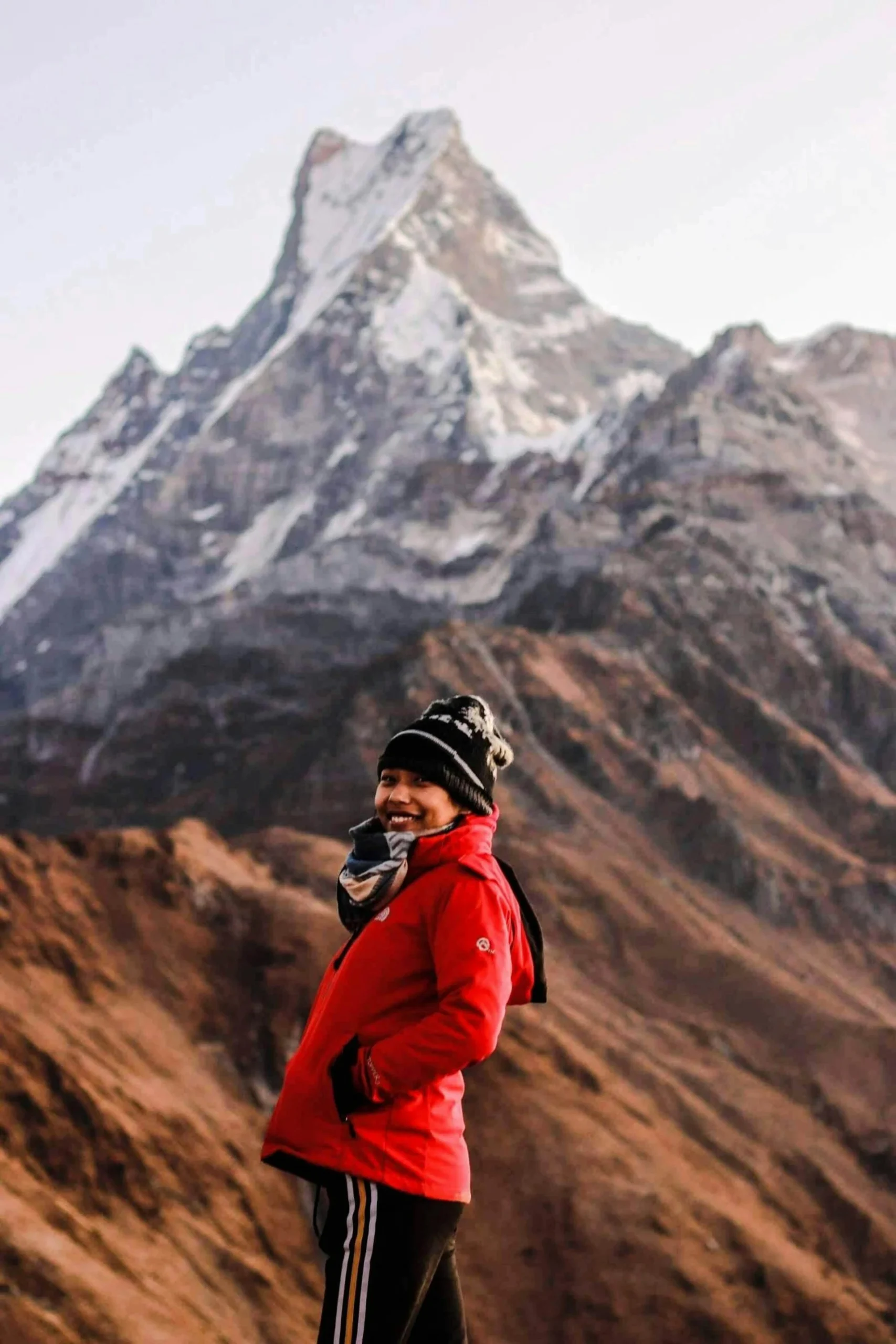
The trek was pioneered in the shadow of Machhapuchhre, a mountain that holds deep spiritual significance in Nepal. Machhapuchhre remains unclimbed because the Nepal government granted a request to have the peak restricted after a 1957 expedition led by Lieutenant Colonel Jimmy Roberts. Today, the Mardi Himal trek offers the closest anyone can get to Machhapuchhre, standing at the Sanctuary looking up at its south face, while the sacred peak itself remains untouched .
Mardi Himal Trek Route
The standard Mardi Himal trekking route follows a south-to-north approach from Pokhara, climbing through distinct landscape zones:
Kande (1,770m) → Australian Camp → Deurali (2,125m) → Forest Camp (2,600m) → Low Camp (2,985m) → Badal Danda (3,210m) → High Camp (3,550m) → Upper Viewpoint (4,200m) → Mardi Himal Base Camp (4,500m)
The descent is typically via the same route or via Siding Village (1,700m) and Lumre, providing a loop that showcases different aspects of the landscape and local culture .
Route Highlights by Section
Lower Section (Kande to Low Camp): The trek begins with a one-hour drive from Pokhara to Kande. The first day takes you through rhododendron and oak forests with occasional views of the Annapurna range. At Australian Camp, you can see Machhapuchhre for the first time .
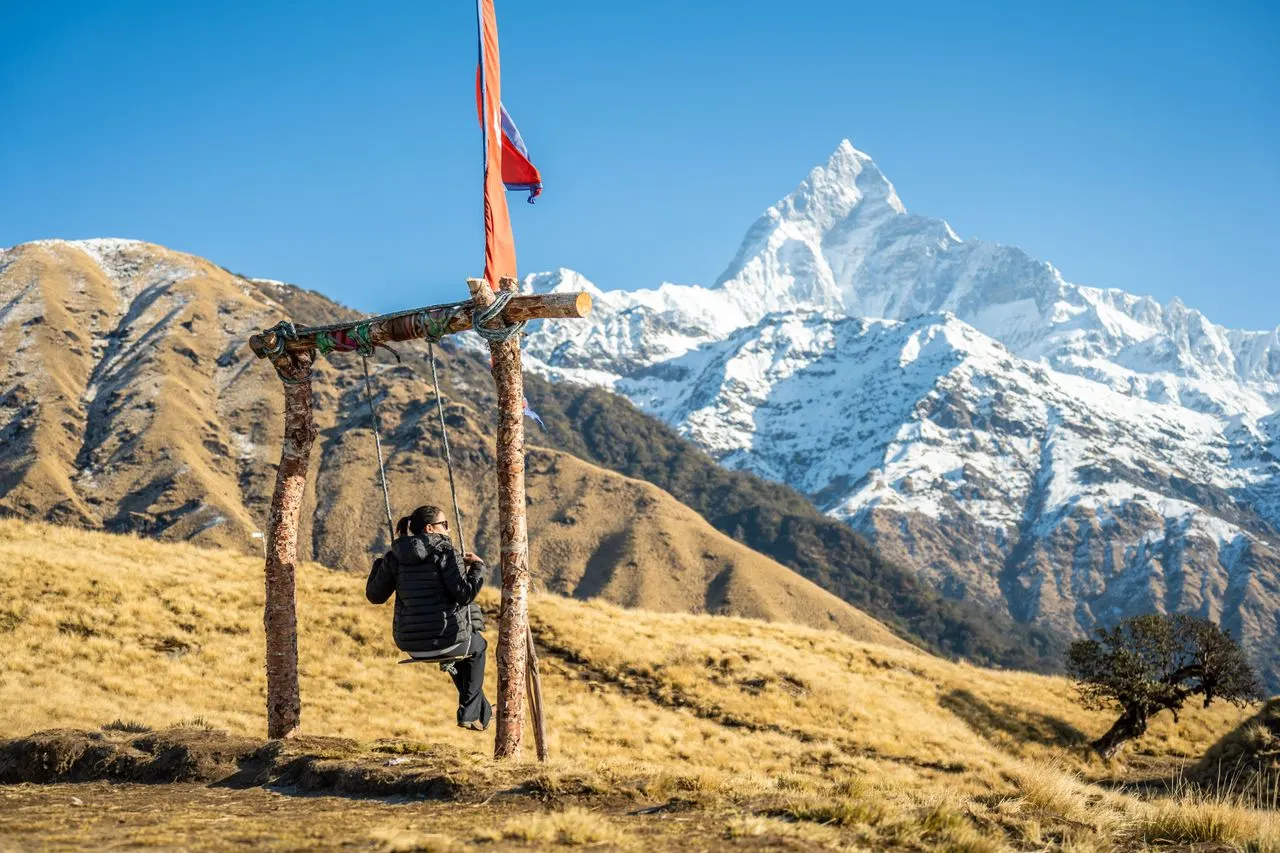
Mid Section (Low Camp to High Camp): As you climb through Low Camp and Badal Danda (meaning “cloud hill”), the trees thin out and the ridge opens up. You step onto a long grassy spine with a drop on either side. This is where Machhapuchhre stops being a rumour and starts filling half the sky. Badal Danda often has a sea of cloud sitting below you in the morning, making it feel like you’re walking above the weather. The walk from Low Camp to High Camp is the most challenging stretch, with steady elevation gain .
Upper Section (High Camp to Base Camp): The final morning climb to Mardi Himal Base Camp or the Upper Viewpoint starts early—around 4:00–5:00 AM—to catch sunrise over the mountains. The trail above High Camp is rocky and exposed, with a narrow ridge leading to the viewpoint. Snow and ice can make this section challenging in winter .
Teahouse Availability by Camp
| Camp | Elevation | Teahouses | Facilities |
|---|---|---|---|
| Forest Camp | 2,600m | 7-8 teahouses | Hot food, basic rooms |
| Low Camp | 2,985m | Several | Hot showers, WiFi, charging |
| Badal Danda | 3,210m | Several | Hot food, basic rooms |
| High Camp | 3,550m | Larger number of guest houses | Hot food, blankets, limited WiFi |
How Long Does the Mardi Himal Trek Take?
The Mardi Himal trek takes 4 to 7 days depending on your itinerary and pace .
| Itinerary | Days Trekking | Daily Walking Time |
|---|---|---|
| 4-Day Trek | 4 days | 5–9 hours per day |
| 5-Day Trek (Most Common) | 5 days | 3–9 hours per day |
| 7-Day Trek | 7 days | 3–6 hours per day |
4-Day Itinerary Example :
-
Day 1: Pokhara drive to Kande and trek via Australian Camp to Forest Camp
-
Day 2: Forest Camp trek via Low Camp and Badal Danda to High Camp
-
Day 3: Early morning hike to Mardi Himal Base Camp, then trek down to Badal Danda
-
Day 4: Badal Danda trek to Siding Village and drive back to Pokhara
5-Day Itinerary Example (Most Popular) :
-
Day 1: Pokhara → Kande → Forest Camp (5–7 hours)
-
Day 2: Forest Camp → Badal Danda (5–6 hours)
-
Day 3: Badal Danda → High Camp (3–4 hours)
-
Day 4: High Camp → Viewpoint/Base Camp → Low Camp (7–9 hours)
-
Day 5: Low Camp → Siding → Pokhara (5–6 hours)
7-Day Itinerary Example :
-
Day 1: Drive Pokhara to Kande, trek to Low Camp (8km, 4-5 hours)
-
Day 2: Low Camp to High Camp (595m gain)
-
Day 3: High Camp → Upper Viewpoint → High Camp (920m gain, return)
-
Day 4: High Camp to Forest Camp (980m descent)
-
Day 5: Forest Camp to Siding to Pokhara
-
Day 6: Free day in Pokhara
-
Day 7: Pokhara → Kathmandu
Mardi Himal Trek Difficulty
The Mardi Himal trek is generally classified as moderate in difficulty .
What Makes It Moderate
No Technical Climbing: The trek involves no ropes, ice axes, or climbing equipment. The trail is well-marked and accessible to those with a reasonable level of fitness.
Steep Sections: The main physical challenge is the steepness—particularly the climb from Low Camp to High Camp and the final push to the viewpoint at 4,200 metres .
Altitude: At 4,500 metres, the Base Camp is high enough to cause mild altitude sickness in some trekkers. The key is to not rush, drink plenty of water, and be prepared to descend if symptoms persist .
Distance Per Day: Walking times range from 3 to 9 hours, with the longest day being the return descent from the viewpoint to Low Camp.
Who Is This Trek For?
Suitable for:
-
First-time Himalayan trekkers with reasonable fitness
-
Families and older trekkers (trek has been completed by people in their 60s)
-
Those wanting a short, rewarding Himalayan experience
-
Trekkers seeking a quieter alternative to ABC
Not suitable for:
-
Those with untreated health conditions (especially respiratory or cardiac issues)
-
People who cannot walk uphill for 5–6 hours
-
Anyone who refuses to respect altitude
Best Time to Trek Mardi Himal
The Mardi Himal trek is possible year-round, but the best times are spring (March–May) and autumn (September–November) .
Autumn (September–November)
Why go: Peak season for a reason. The monsoon has washed the dust from the sky, giving the clearest mountain views of the year. October offers the most reliable weather, while November has fewer crowds and colder nights .
Pros: Best visibility, stable weather, sharp mountain views, comfortable daytime temperatures
Cons: Busiest time, teahouses fill up, higher prices
October is widely considered the single best month. The post-monsoon air is clear, views are razor-sharp, and the weather is predictable .
Spring (March–May)
Why go: The rhododendron forests are in full bloom—a spectacular sight you don’t get in autumn. Skies are clear in early spring, becoming hazier towards May .
Pros: Rhododendron blooms, warmer temperatures, good visibility in March–April, less crowded than October
Cons: Pre-monsoon haze builds from mid-May, occasional afternoon showers
April is the peak spring month. The forest sections between Kande and Low Camp are carpeted with red, pink, and white rhododendron flowers .
Winter (December–February)
Why go: Empty trails, crystalline air, sharp mountain profiles, snow on the upper sections.
Pros: Solitude, clear skies, lower costs, good for experienced trekkers with proper gear
Cons: Nights can drop to -10°C at High Camp, snow above 3,000m, some teahouses close
Monsoon (June–August)
Why go: Lush green landscapes, empty trails, lower costs.
Pros: Solitude, vibrant greenery, waterfalls
Cons: Rain, mud, leeches below 3,000m, limited mountain views, landslide risk
Mardi Himal Trek Cost in 2026
The Mardi Himal trek cost for 2026 varies significantly based on group size, itinerary length, and service level .
Package Costs (5-Day Trek)
| Group Size | Estimated Cost Per Person (USD) |
|---|---|
| 1 person (solo) | $550–$650 |
| 2 people | $450–$550 |
| 3–4 people | $380–$450 |
| 6–9 people | $350–$380 |
| 10–13 people | $295–$330 |
Budget independent trekkers can complete the trek for $300–$500, but this may not be permitted under mandatory guide regulations .
What’s Included in a Package
Most packages include:
-
ACAP permit + TIMS card
-
Licensed English-speaking guide
-
Porter (one per two trekkers, 15kg limit)
-
Teahouse accommodation (twin-sharing)
-
All meals during the trek
-
Pokhara ↔ trailhead transport
What’s Not Included
-
Travel insurance (mandatory; must cover 4,500m+ and helicopter evacuation)
-
Kathmandu ↔ Pokhara transport
-
Hot showers ($2–$5), WiFi ($2–$4), device charging ($2–$4)
-
Tips for guide and porter ($10–$15 per day per group)
-
Personal equipment rental (sleeping bag, down jacket, poles)
Permits and Guide Requirements for 2026
Required Permits
All trekkers on the Mardi Himal route need the following permits:
| Permit | Cost (Foreign) | Notes |
|---|---|---|
| ACAP (Annapurna Conservation Area) | NPR 3,000 (~$22–23 USD) | Mandatory for all trekkers |
| TIMS (Trekkers’ Information Management System) | USD 10 (agency) / USD 20 (solo) | Mandatory; enforcement has eased |
Note: The TIMS card requirement has seen variable enforcement on Annapurna routes in recent years, but it’s best to arrange it as a backup . Under the revised NTB provision effective March 31, 2023, Mardi Himal Trek is listed among routes requiring a licensed guide and an agency-issued TIMS card .
Guide Requirement
Since April 2023, Nepal has required foreign trekkers in the Annapurna region to be accompanied by a licensed guide .
Practical advice: The safest approach is to book through a registered agency with a licensed guide. Guides handle permits, teahouse bookings, safety, and logistics, and provide cultural context along the way .
Full peak climb (5,587m): Requires a Nepal Mountaineering Association climbing guide with mountaineering qualifications, plus a separate NMA peak permit ($350–$500) .
Accommodation and Food
The Mardi Himal trek route has a network of teahouses (guesthouses) offering basic but comfortable accommodation. Rooms are simple: twin-sharing, with a mattress, pillow, and blanket .
Food Options
Teahouses serve a limited but adequate menu:
-
Dal Bhat (lentils, rice, vegetables)—the trekker staple, filling and affordable
-
Noodles, pasta, fried rice
-
Potato dishes
-
Pancakes, eggs, toast for breakfast
-
Tea, coffee, hot chocolate
Practical Tips
-
Bring cash—there are no ATMs on the trail, and teahouses only accept Nepalese rupees
-
Hot showers cost $2–$5 at most teahouses
-
Device charging costs $2–$4 per charge
-
WiFi is available at most teahouses below High Camp for $2–$4
Frequently Asked Questions about Mardi Himal
1. How high is Mardi Himal?
Mardi Himal is 5,587 metres (18,330 ft) above sea level . Mardi Himal Base Camp is approximately 4,500 metres .
2. When was Mardi Himal first summited?
Mardi Himal was first summited in 1961 by Basil Goodfellow .
3. How long does the Mardi Himal trek take?
The trek takes 4 to 7 days depending on the itinerary, with 5 days being the most common option .
4. What is the best time to trek Mardi Himal?
The best times are autumn (October–November) for the clearest views and spring (March–May) for rhododendron blooms and warmer weather .
5. How difficult is the Mardi Himal trek?
The Mardi Himal trek is classified as moderate. There is no technical climbing, but the trail has steep sections and altitude must be respected .
6. Do I need a guide for the Mardi Himal trek?
A guide is required under Nepal’s 2023 regulation for foreign trekkers in the Annapurna region . Most trekkers book through an agency with a licensed guide.
7. What permits are required for Mardi Himal?
You need an ACAP permit (NPR 3,000) and a TIMS card (USD 10 via agency, USD 20 solo) .
8. Where does the Mardi Himal trek start?
The trek starts from Kande (1,770m), about a one-hour drive from Pokhara .
9. Where do you stay on the Mardi Himal trek?
Trekkers stay in teahouses (guesthouses) at Forest Camp, Low Camp, High Camp, and sometimes the viewpoint area .
10. Can beginners trek Mardi Himal?
Yes, with proper preparation. The trek has no technical climbing and is well-marked. Beginners should choose a 5–7 day itinerary for better acclimatisation .
11. Is Mardi Himal harder than Annapurna Base Camp?
Mardi Himal is shorter but steeper than ABC. It reaches a higher altitude (4,500m vs 4,130m) in fewer days, making altitude gain faster .
12. Is there snow on Mardi Himal?
Snow is possible above 3,000m from December to March. The upper sections can be icy, and crampons may be needed in winter .
13. Can I trek Mardi Himal during the monsoon?
Yes, but it is not recommended for most. Trails are muddy, views are limited, and leeches are active below 3,000m .
14. Is Mardi Himal suitable for families?
Yes, the Mardi Himal trek can be done with children. It offers a safe, family-friendly introduction to Himalayan trekking .
15. How much does the Mardi Himal trek cost in 2026?
A 5-day guided package costs $300–$650 per person depending on group size. Solo trekkers pay $550–$650, while groups of 8–10 pay $295–$330 per person .
Plan Your Mardi Himal Trek with Wonder Hikes Nepal
When you’re ready to experience the Mardi Himal Base Camp trek, Wonder Hikes Nepal offers transparent, traveller-focused packages built around safety, clarity, and responsible planning.
What Wonder Hikes Nepal provides:
-
Licensed, experienced guides with deep local knowledge of the Mardi Himal route and the 2026 digital permit system
-
Complete permit handling (ACAP and TIMS)
-
Quality teahouse bookings at the best locations
-
Customizable itineraries from 4 to 7 days
-
Safety-first approach with oximeters, first aid kits, and emergency communication
-
Transparent pricing with clear inclusions
Why choose Wonder Hikes Nepal:
-
Guides carry emergency first aid kits and oximeters to monitor your health
-
All permits arranged in advance—no paperwork stress at the last minute
-
Transport from Pokhara to the trailhead and back included
-
Porter service available (one porter per two trekkers, 15kg baggage limit)
-
Itineraries matched to your fitness and experience level
Contact Wonder Hikes Nepal for a no-obligation quote matched to your group size, preferred itinerary, and travel dates.