How Does the Nar Phu Valley Trek Cost
The Nar Phu Valley Trek cost realistically ranges from USD $1,200 to $2,800 per person, with group size and travel tier being the primary variables. That range — spanning more than 2x from bottom to top — is what most searchers find first, and it’s accurate, but it doesn’t explain anything. A range without a framework is just a number you can’t use.
What actually drives that spread is four things: how long you’re in the restricted zone (which determines the biggest single permit cost directly), how many people are in your group (which determines how guide and porter costs divide per person), whether you’re doing the standalone Nar Phu loop or extending it into the Annapurna Circuit, and what tier of package you’re booking through. Change any one of those and the price shifts substantially. Understand all four and you can take any quote you receive and check whether it’s fair.
This guide breaks each cost category down honestly — permits first, because they’re the most misreported and most consequential piece, then guides and porters, food and lodging, transport, and the add-ons that most packages don’t mention until you’re already booked.
What Makes Nar Phu Cost More Than Most Nepal Treks
Before the numbers, a brief explanation of why this trek sits at a higher price point than the Annapurna Circuit or Langtang — because understanding the reason makes the cost feel legitimate rather than arbitrary.
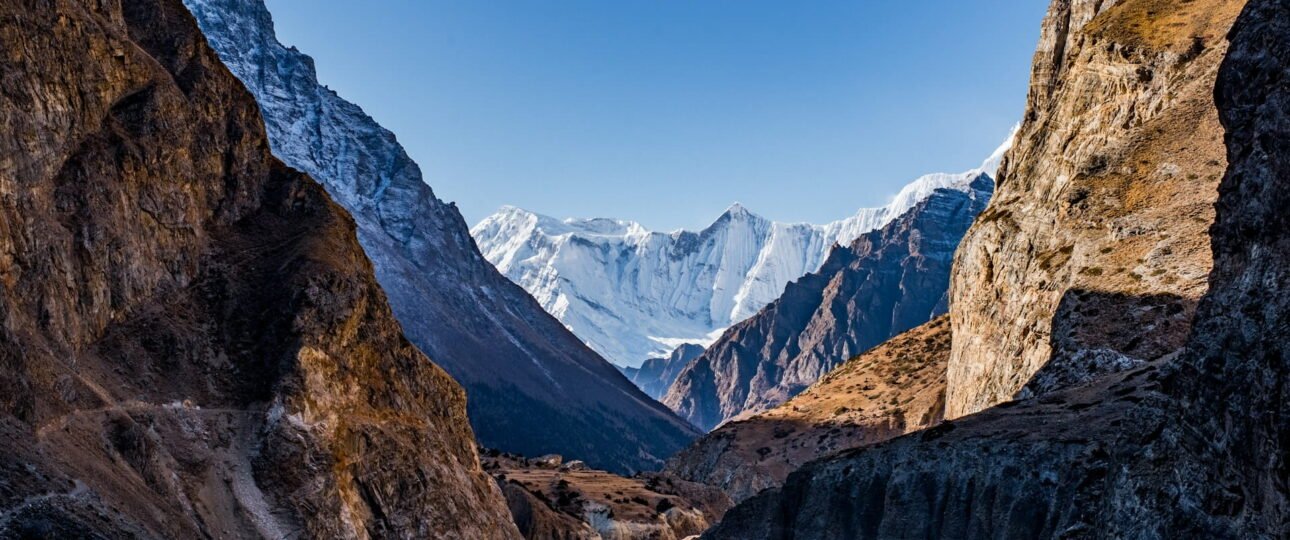
Nar Phu is a designated restricted area. The Nar and Phu valleys lie deep in the Manang district, close to the Tibetan border, and the Nepal government limits access through a permit system that is both more expensive and more strictly enforced than conservation area permits on standard routes.
Nar Phu Valley is one of the few places in Nepal where you can walk for days without encountering another trekking group. The villages of Phu and Nar preserve a way of life with deep Tibetan roots, unchanged by mass tourism.
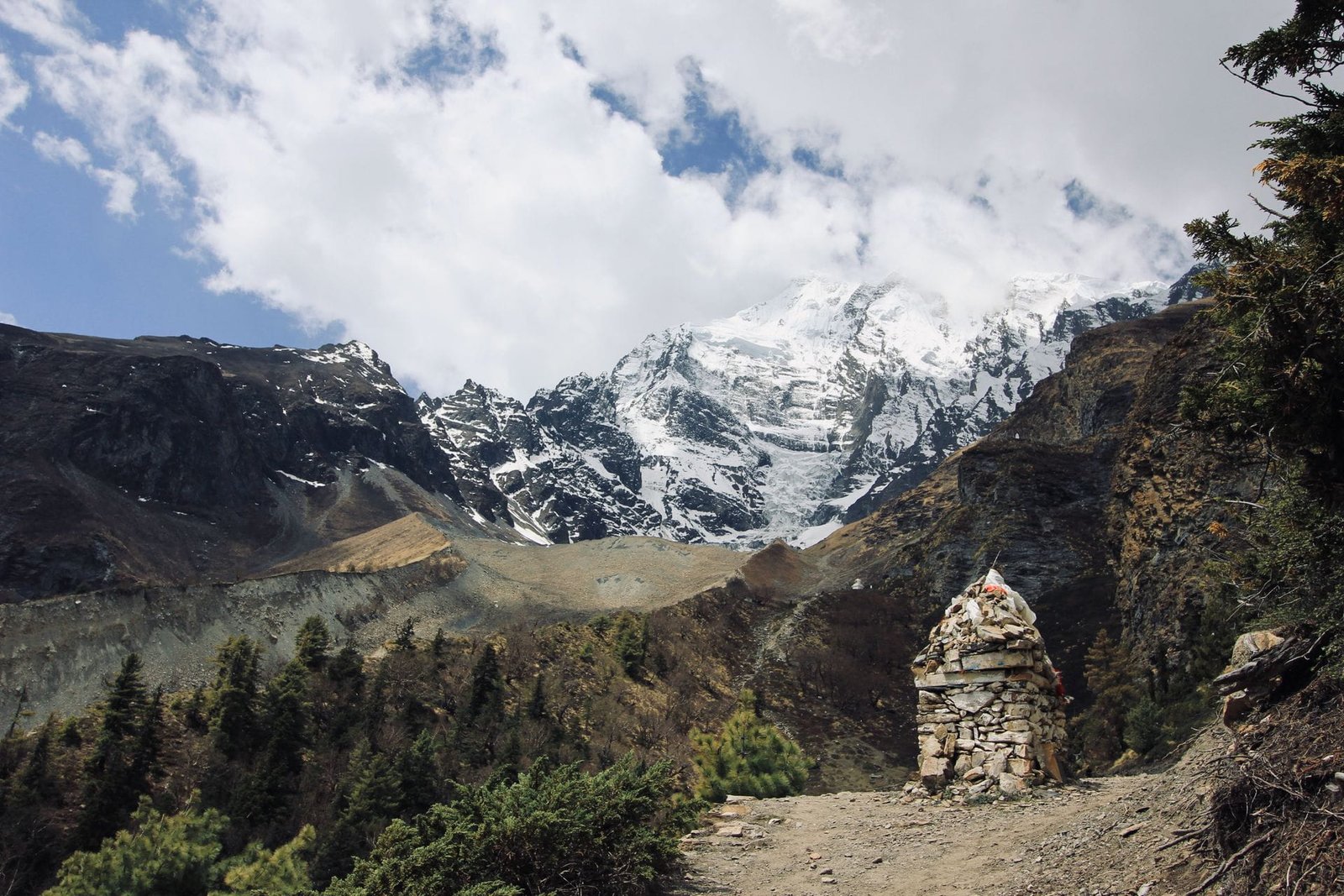
That limited access is the product of deliberate policy, and it is precisely what makes the trek what it is — the combination of Tibetan-influenced architecture in Phu village, high-altitude landscapes around Kang La Pass (5,322 m), and genuine isolation from the trekking crowds that fill the Annapurna Circuit below. The culture of Nar Phu is very unique; its heritage and architecture make an unforgettable experience in the Tibetan Plateau region. The premium cost is what funds and preserves that experience.
Nar Phu Valley Trek runs 40-50% higher than the Annapurna Circuit due to restricted area permits and mandatory guides. Annapurna Circuit costs $500-1,500 allowing independent trekking, while Nar Phu’s exclusivity and cultural authenticity justify the premium pricing. The honest comparison: Manaslu Circuit presents similar pricing to Nar Phu at $1,000-2,000, both being restricted areas requiring special permits and guides. If you’ve already researched Manaslu, you’ll find the cost structure of Nar Phu familiar — and roughly comparable.
Permits: The Most Misreported Cost on This Trek
There are two separate permits required, and none of them are optional. Here’s what they actually cost and what several competing guides get wrong.
Nar Phu Restricted Area Permit (RAP)
This is the dominant permit cost and the one most likely to produce budget surprises. The RAP costs $100 per person per week during peak season (September to November) and $75 per person per week from December to August, with an additional $15 per person per day after the first week.
The per-day additional rate is where confusion creeps in — some sources quote $10/day as the additional rate for all seasons, others quote $15/day. The correct structure is seasonal: $15 per additional day beyond 7 in autumn (September-November), and $10 per additional day in the December-August window.
For a standard itinerary spending around 7-10 days inside the restricted zone:
In autumn, 7 days costs $100 flat; 10 days costs $100 + $45 (3 days × $15) = $145.
In off-season, 7 days costs $75 flat; 10 days costs $75 + $30 (3 days × $10) = $105.
For a standard 14-18 day itinerary that spends 7-10 days inside the restricted zone, the RAP cost per person typically falls between $100-$145.
The RAP can only be obtained through a registered Nepali trekking agency like Travel Wonder Hikes Nepal— individual applications are not accepted at the Department of Immigration. Your agency submits passport details, your itinerary, and guide and porter documentation on your behalf.
Annapurna Conservation Area Permit (ACAP)
The Annapurna Conservation Area Permit costs around NPR 3,000 per person, approximately $25-30. This covers the broader Annapurna region through which the approach and exit routes pass.
TIMS Card — Not Required
At least two currently ranking pages list the TIMS Card as a required permit for this trek and price it at $10-20. It is not required. The Restricted Area Permit replaces TIMS on restricted zone treks, just as on the Manaslu Circuit. If a quote includes a mandatory TIMS charge for Nar Phu, that’s worth questioning.
Total permit cost: roughly $130-175 per person depending on season and exact days inside the restricted zone.
Guides and Porters: Fixed Costs That Scale With Your Group
- A licensed guide from a TAAN-registered agency is mandatory on all restricted area treks in Nepal — this is not optional and cannot be worked around. The guide requirement is strictly enforced at checkpoints inside the valley.
- Guide daily rates typically run $25-35 per day, and a porter runs $20-25 per day. As with all Nepal restricted-area treks, these are per-day-of-service costs rather than per-person costs — which is the primary mechanism through which group size changes your per-person total dramatically.
- For a 13-day trek, a solo trekker absorbs the full guide and porter cost: roughly $325-455 for a guide and $260-325 for a porter, totaling approximately $585-780 before any group cost-sharing.
A group of four splits the same guide cost four ways, reducing it to $81-114 per person for the guide, with porters typically shared at roughly one porter per two trekkers. This group-size effect is the single largest lever available to reduce per-person cost on this trek — solo trekkers enjoy complete itinerary control, personalized pace, and intimate cultural experiences impossible in groups, but they pay meaningfully more per person for the privilege.
One important rule update: Several pages still cite a two-person minimum requirement for the Nar Phu RAP. This requirement was removed as part of Nepal’s broader guide-mandate reform in 2023-2026. Solo trekkers can now book this trek through a registered agency with a single licensed guide without needing a second person on the permit.
Guide and porter total for a solo trekker on a 13-day itinerary: roughly $585-780.
The Annapurna Circuit Extension: How It Changes the Cost
A popular and logistically natural option is combining Nar Phu with the Annapurna Circuit — entering the valley via the standard approach at Dharapani, completing the Nar Phu loop, then continuing on the Circuit over Thorong La Pass (5,416 m) to Muktinath and the Mustang side. This extension adds 5-7 trekking days to the itinerary and requires an additional ACAP checkpoint coverage, but no new restricted-area permit — the Nar Phu RAP covers the restricted zone, and the rest of the combined route falls under standard ACAP.
What the extension does add to your cost: additional guide and porter days ($225-300 extra for a 6-day extension), more teahouse nights and meals ($150-240 extra), and the TIMS Card that is actually required for the Annapurna Circuit portion — not for Nar Phu itself, but for the circuit’s standard trail network.
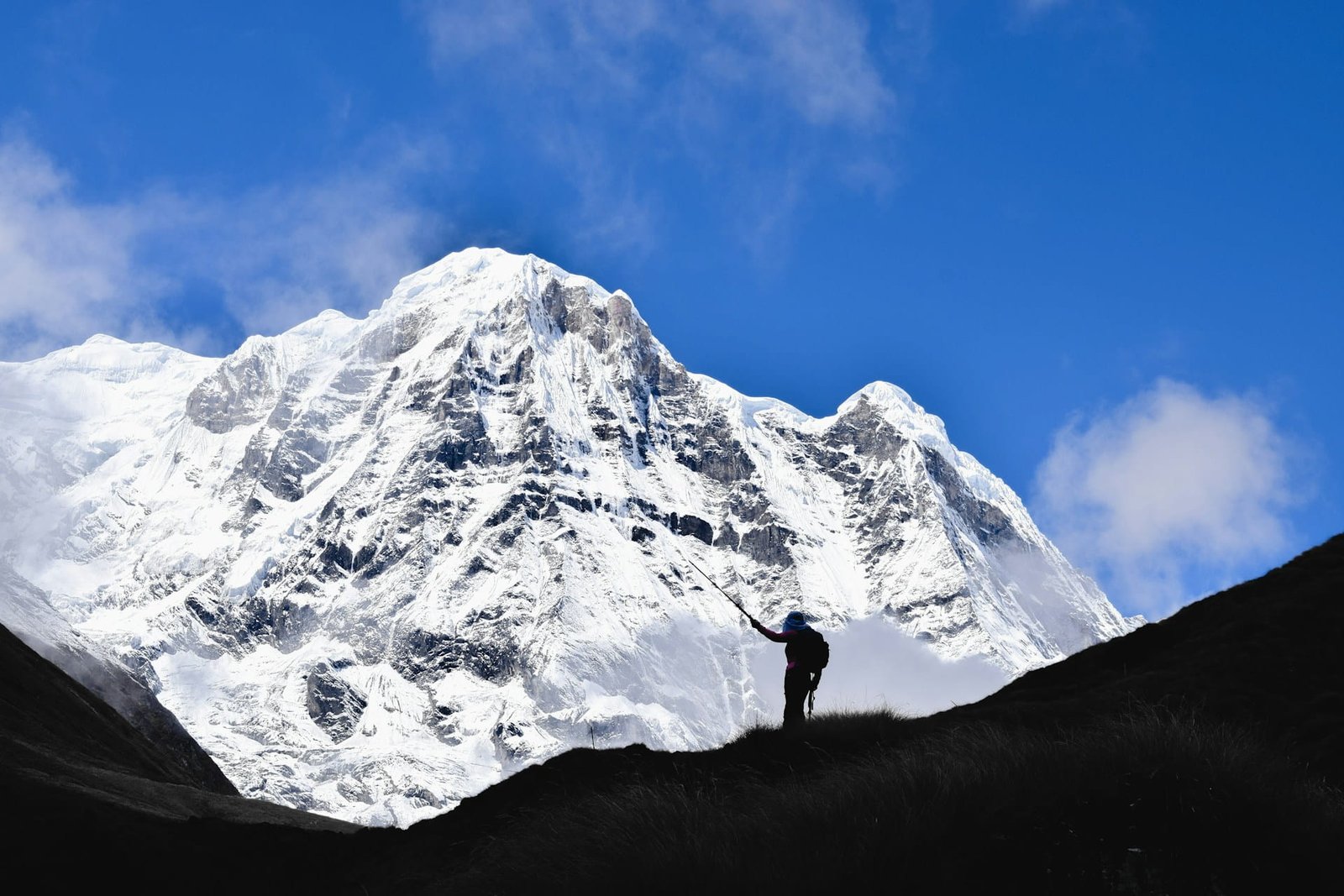
For a combined Nar Phu plus Annapurna Circuit itinerary of approximately 18-21 days, total costs scale to roughly $1,800-3,200 per person depending on group size and whether you’re flying back from Jomsom or driving.
Food and Lodging: Teahouse Costs in a Remote Valley
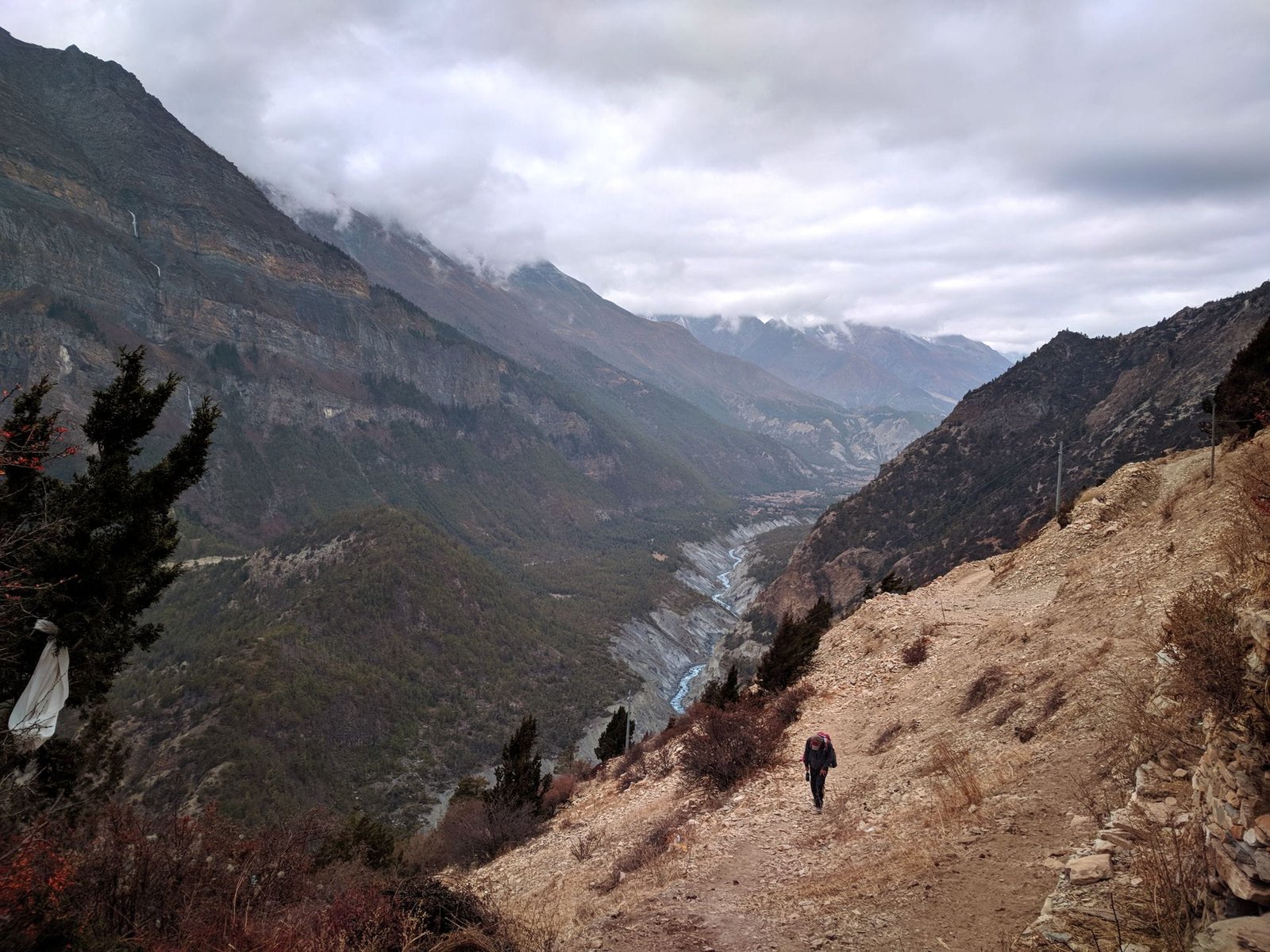
Accommodation in Nar and Phu is basic by comparison with more developed trail corridors. The valley doesn’t have the lodge infrastructure of the Annapurna Circuit — teahouses are simpler, fewer, and less competitive in pricing. Teahouse accommodation and food total USD $350-$550 for a standard itinerary.
At a daily granularity, expect to budget roughly $25-40 per day for accommodation and meals combined — closer to $25 at the more basic stops, closer to $40 in the limited available options near Phu and Nar villages where supply constraints push prices up slightly.
There is no option to “upgrade” accommodation meaningfully within the valley itself — the teahouse standard is what it is. The valley’s remoteness means that food is simpler and less varied than on more-developed routes: dal bhat is the staple and the reliable choice, with basic noodle and rice alternatives available. Don’t arrive expecting the expanded menus found at Namche Bazaar or Tatopani.
Food and lodging total: roughly $350-550 across a 13-14 day itinerary.
Transport: Getting to and From the Trailhead
The standard approach begins in Besisahar, reached by a roughly 6-7 hour road journey from Kathmandu. From Besisahar, a local jeep continues toward Dharapani, where the Nar Phu trail diverges from the main Annapurna Circuit route.
Kathmandu to Besisahar by private vehicle costs roughly $80-120 depending on vehicle type and whether it’s a shared or private arrangement. A public bus is significantly cheaper at around $8-10, but the journey is longer and less comfortable on this particular road. Most agencies include private ground transport in their package pricing.
The return from the circuit typically ends near Chame or back at Besisahar, with a return drive to Kathmandu at similar cost. Some itineraries continue directly into the Annapurna Circuit, exiting via Thorong La to Mustang-side or looping back to Besisahar — the exit point changes the transport logistics and cost slightly.
Transport total: roughly $180-250 for ground transport both ways.
A Real, Itemized Budget: Three Scenarios
Here’s how the costs stack up across three realistic scenarios for a standard 13-day standalone Nar Phu trek:
Solo trekker, self-arranged with local agency, Autumn season:
- RAP (10 days in zone): ~$145
- ACAP: ~$30
- Guide (13 days): ~$390
- Porter (13 days): ~$285
- Food and lodging: ~$450
- Transport: ~$220
- Tips (guide + porter): ~$175
- Insurance: ~$120
- Total: roughly $1,815
Two trekkers, local agency package, Autumn season:
- RAP per person: ~$145
- ACAP per person: ~$30
- Guide (shared, 13 days): ~$195 per person
- Porter (shared, 13 days): ~$143 per person
- Food and lodging: ~$450 per person
- Transport: ~$110 per person
- Tips and insurance: ~$200 per person
- Total: roughly $1,273 per person
Group of 4-6, agency package, off-season:
- RAP per person: ~$105
- ACAP: ~$30
- Guide and porter (shared): ~$130-150 per person
- Food and lodging: ~$380
- Transport: ~$80-100 per person
- Tips and insurance: ~$180
- Total: roughly $900-1,000 per person
These figures align with the realistic price bands across the current SERP — the $985-$1,200 range for a 10-day group package, the $1,350 starting price for standard 13-day offerings, and the $1,815+ range for solo autumn trekking — which were previously presented as contradictions rather than reflections of different configurations of the same four cost variables.
FAQs about How Does the Nar Phu Valley Trek Cost
- How much does the Nar Phu Valley Trek cost in total?
Realistically between $1,200 and $2,800 per person, depending primarily on group size and season. Solo autumn trekkers land at the higher end; groups of four or more in off-season can approach the lower end with a local agency package. - What permits do I need and how much do they cost?
Two: the Nar Phu Restricted Area Permit ($100/week in autumn, $75/week off-season, plus per-day rates for additional days) and the ACAP ($25-30). Total permit cost runs $130-175 per person for most standard itineraries. TIMS is not required. - Do I need to trek with another person?
No — the two-person minimum for the RAP was removed as part of Nepal’s trekking regulation reforms. Solo trekkers can book through a registered agency with a single licensed guide. - Is Nar Phu worth the extra cost over the Annapurna Circuit?
They’re different experiences rather than competing ones. The Annapurna Circuit is more accessible, more developed, and offers broader landscape diversity. Nar Phu offers what the circuit doesn’t — genuine isolation, Tibetan-influenced villages largely untouched by mass tourism, and the specific cultural and visual character of a restricted valley. Whether the premium is worth it depends on whether that distinction matters to you. - Can I extend into the Annapurna Circuit?
Yes, and this is a popular combination. The Nar Phu RAP covers the restricted section; the rest of the circuit falls under ACAP. The extension adds roughly 5-7 days, additional guide and porter costs, and transport from the circuit’s western exit — plan an additional $400-600 per person for a full Thorong La extension. - When is the cheapest time to do this trek?
Shoulder season — April to early May or late October — can reduce total trip cost by 15-25% through lower teahouse rates and transport costs, while your permit fee stays fixed. Off-season (December to August) brings the RAP fee down from $100/week to $75/week and is also the prime window for Upper Mustang and rain-shadow trekking if you’re combining trips. - What is the best time of year to trek Nar Phu specifically?
Autumn (September to November) is the strongest window for stable weather and clear views of Kang Guru and the surrounding peaks. Spring is workable but slightly less reliable, and Nar Phu’s rain-shadow position means it’s also one of the few valleys where limited monsoon trekking is genuinely feasible, unlike most other Annapurna-region routes. - How difficult is the Nar Phu Valley Trek compared to the standard Annapurna Circuit?
Nar Phu trek is generally considered more physically demanding on a day-to-day basis, with rougher trail conditions, fewer teahouse comforts, and more exposed sections through narrow gorges. It doesn’t cross a pass as high as Thorong La on its own, but the terrain underfoot and remoteness make it a step up in difficulty from the standard circuit even without that crossing. - What kind of accommodation is available in Nar Phu villages?
Basic teahouses exist in Meta, Chyakhu, Kyang, Phu, and Nar, but they’re considerably simpler than what’s found on the main Annapurna Circuit or Everest routes — expect fewer menu options, more limited hot water access, and rooms shared with fewer amenities. Some trekkers combine teahouse stays with camping gear carried by porters, especially for the sections between Chyakhu and Phu where options are sparsest. - Do I need a guide even if I’ve trekked in Nepal before?
Yes — the guide requirement for the Restricted Area Permit applies regardless of prior Nepal trekking experience. This isn’t a discretionary safety recommendation but a permit condition tied to the RAP itself, so even experienced independent trekkers can’t self-issue around it. - What makes Nar Phu culturally distinct from other Annapurna region treks?
The Nar and Phu villages retain a strongly Tibetan Buddhist character, shaped historically by their isolation and limited outside contact until the valley opened to trekkers in 2003. Chortens, mani walls, and monasteries appear throughout both villages in a form that feels closer to Upper Mustang or parts of the Tibetan plateau than to the more Hindu-influenced lower Annapurna villages most trekkers pass through earlier in a circuit itinerary.