Which Mardi Himal Itinerary Is Right for You?
Most trekkers choose a 5-day Mardi Himal itinerary from Pokhara. It gives you enough time to acclimatize, enjoy the views, and complete the trek without feeling rushed.
Here’s how to decide:
| If this is you… | Choose… | Why |
|---|---|---|
| Average fitness, want the full experience | 5 days | Balanced walking days, good acclimatization, complete route via Siding |
| Fit, short on time, comfortable with long days | 4 days | Fastest option but includes 8+ hour days; recommended for experienced hikers only |
| Beginner or want a more relaxed pace | 6 days | More rest, easier days, better acclimatization |
| Want extra rest days or side trips | 7 days | Maximum flexibility, extra time in Pokhara |
For most people, 5 days is the sweet spot. It’s enough time to reach High Camp, do the viewpoint hike, and return via Siding — all without 8-hour walking days.
The hardest day is the summit day (Day 4 in most itineraries) — you’ll walk for 7 to 9 hours and reach 4,500m before heading back down . This is the day that separates the 4-day and 5-day options.
Mardi Himal Trek Quick Facts
| Fact | Detail |
|---|---|
| Route opened | 2012 |
| Highest trekking point | ~4,500m (Upper Viewpoint / Base Camp) |
| Mountain elevation | 5,587m (not climbed on this trek) |
| Starting point | Kande (1,770m) |
| Ending point | Siding (1,750-1,800m) |
| Recommended duration | 5 days |
| Total distance | ~60km |
| Difficulty | Moderate to challenging |
| Best seasons | October-November, March-May |
| Permits | ACAP (NPR 3,000) + TIMS |
The Mardi Himal Trek Route Explained
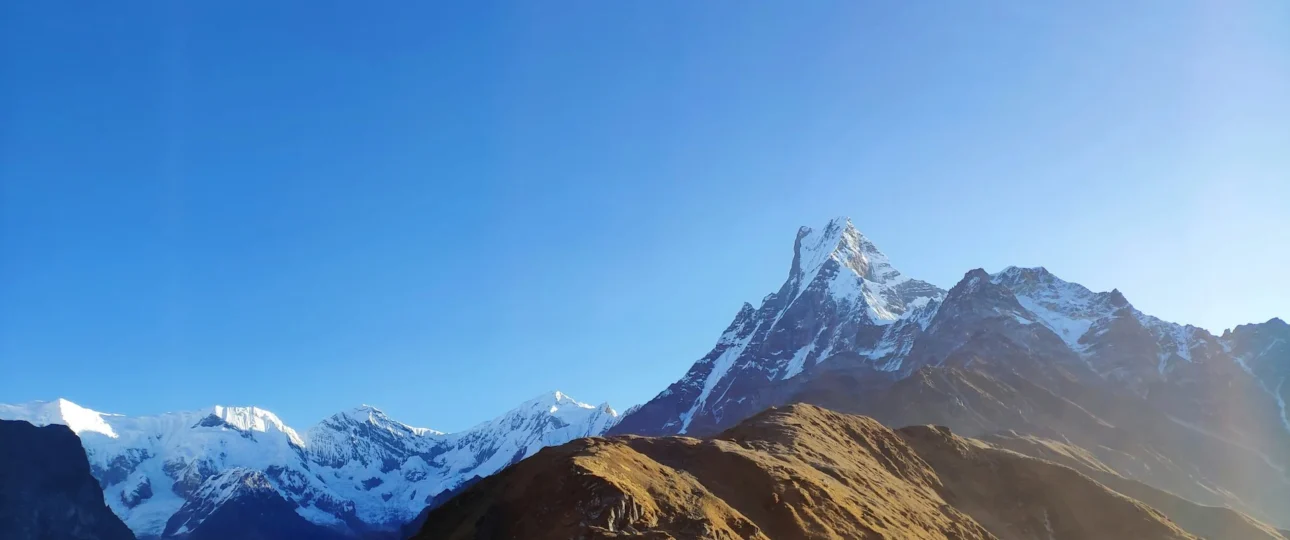
The Mardi Himal Trek climbs a ridge east of Mardi Himal peak, with Machhapuchhre (Fishtail) dominating the view. It was opened to independent trekkers in 2012.
The route typically begins in Kande, 1 hour from Pokhara, and follows a well-marked trail through oak and rhododendron forest. You’ll pass through Australian Camp, Pothana, and Deurali before entering the forest section toward Forest Camp and Low Camp.
From Low Camp, the trail climbs through forest to Badal Danda, then to High Camp — the last teahouse before the viewpoint. The final morning hike goes to Upper Viewpoint (often called Mardi Himal Base Camp at ~4,500m) for sunrise views before descending via Siding village and returning to Pokhara.
Most itineraries follow this route:
Pokhara → Kande → Forest Camp → Low Camp → High Camp → Upper Viewpoint → Siding → Pokhara
Day-by-Day Mardi Himal Itinerary
Option 1: 5-Day Mardi Himal Itinerary (Recommended)
This is the most popular itinerary, balancing walking hours, acclimatization, and the complete route via Siding .
Day 1: Pokhara → Drive to Kande (1,770m) → Trek to Forest Camp (2,600m)
-
Drive: 1 hour
-
Walking: 4-5 hours, ~8km
-
Elevation gain: 830m
-
Trail character: Steady climb through oak and rhododendron forest
You’ll leave Pokhara early morning by jeep to Kande. The trail starts with a steep climb through forest to Australian Camp, with the Annapurna range coming into view. Continue to Pothana and Deurali before reaching Forest Camp, a small clearing with teahouses .
Accommodation: Teahouse at Forest Camp (basic rooms)
Meals: Lunch and dinner at teahouse
Day 2: Forest Camp (2,600m) → Low Camp (2,990m)
-
Walking: 5-6 hours
-
Elevation gain: 390m
-
Trail character: Forest trail, some steep sections, first clear mountain views
The trail climbs through increasingly dense rhododendron forest. Low Camp is a cluster of teahouses where mountain views begin to open up . This day offers some of the best early views of the Annapurna range as you gain altitude .
Accommodation: Teahouse at Low Camp
Key sight: First clear view of Machhapuchhre above the forest canopy
Day 3: Low Camp (2,990m) → High Camp (3,550-3,700m)
-
Walking: 5-6 hours
-
Elevation gain: 560-710m
-
Trail character: Alpine terrain, ridge walking
Above Low Camp the forest ends and the Mardi Himal ridge takes over entirely . The trail narrows and the drops on both sides become real. High Camp sits at 3,550-3,700m in an extraordinary position beneath the mountain walls .
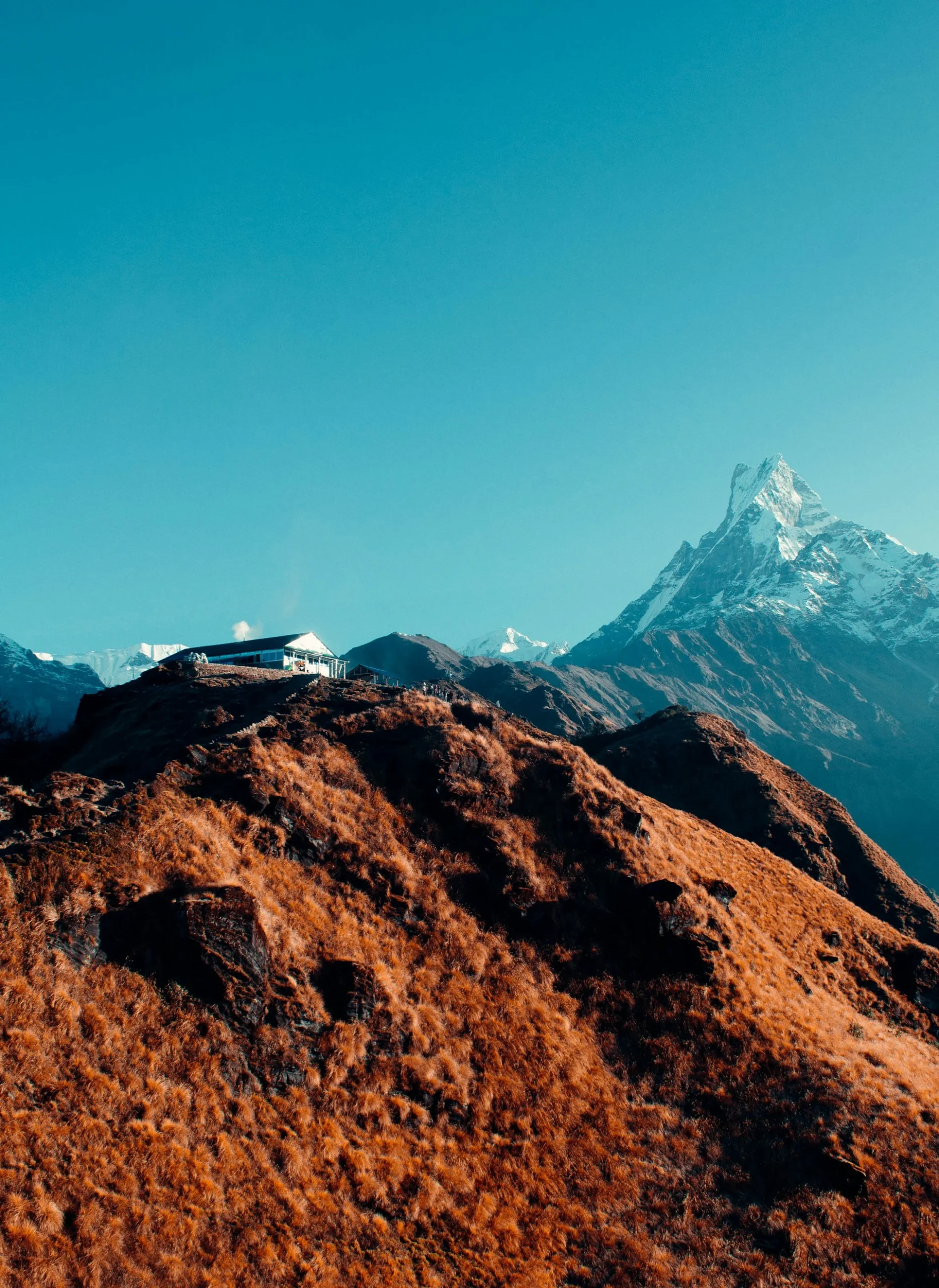
High Camp is the highest teahouse on the route at about 3,550-3,700m . Teahouses here are basic — no hot showers, simple rooms.
Accommodation: Teahouse at High Camp (basic; bring sleeping bag – overnight lows can drop to -10°C)
Pro tip: The sun sets behind the mountains early from High Camp — get your photos in before 4pm. The air is cold — go to bed early. The alarm goes off before dawn tomorrow .
Day 4: High Camp (3,550m) → Upper Viewpoint / Base Camp (4,500m) → Siding (1,750m)
-
Walking: 7-9 hours
-
Elevation gain: 950m to viewpoint, then 2,750m descent
-
Trail character: Rocky, steep, exposed sections
This is the hardest and most rewarding day.
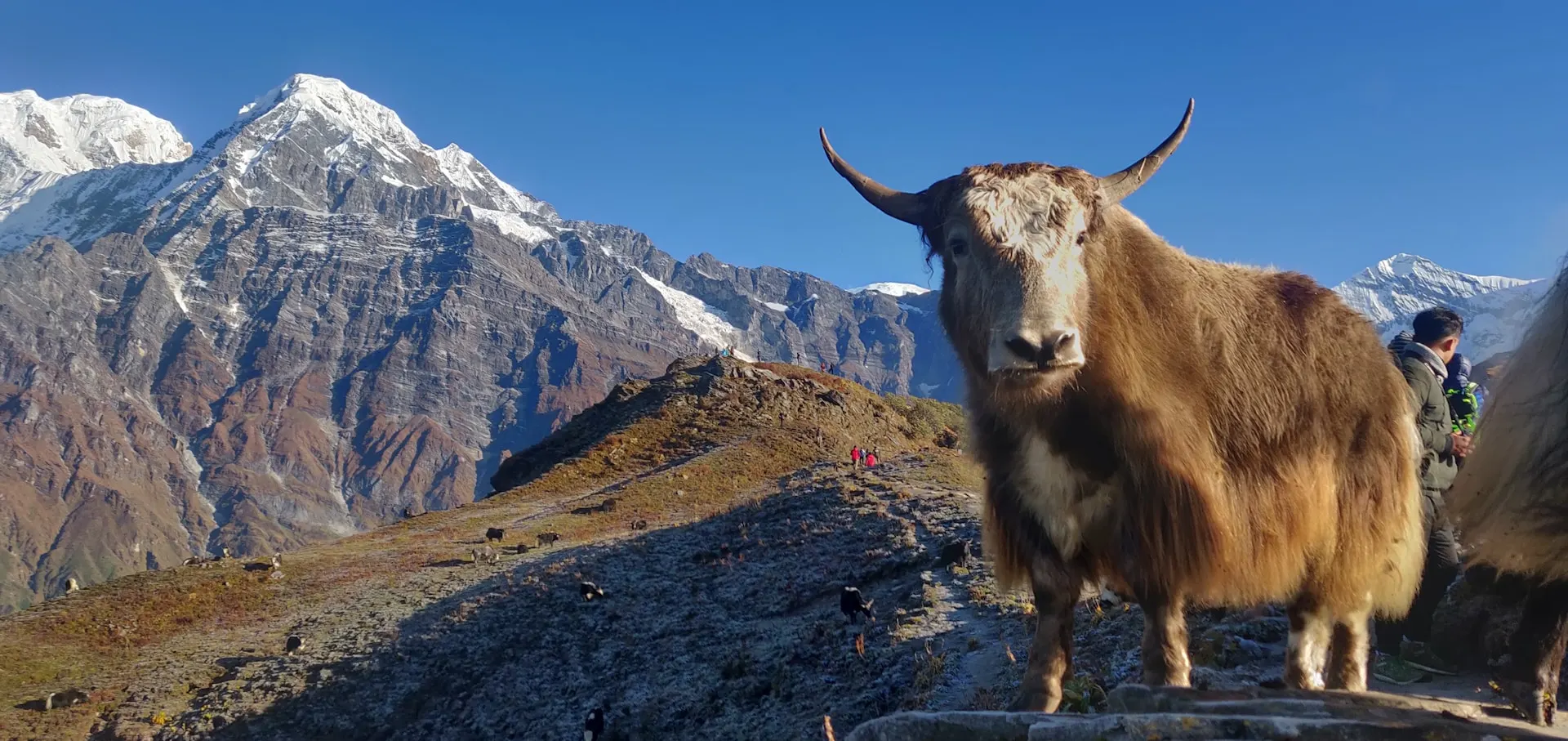
You’ll start before dawn (4:30-5am) to reach the viewpoint for sunrise . The trail from High Camp is steep and rocky, gaining 950m over about 2-3 hours. The terrain is fully alpine — open, rocky, exposed. Machapuchare rises immediately to the left. The Modi Khola valley drops thousands of metres on the right .
At the top, you’re at around 4,500m with views of Machhapuchhre, Annapurna South, Hiunchuli, and Mardi Himal itself .
After photos, you’ll start the long descent to Siding, dropping from 4,500m to 1,750m. The descent goes through forest trails, and the last hour to Siding is steep. Trekking poles are non-negotiable on the descent .
Accommodation: Teahouse at Siding
Pro tip: Bring snacks from High Camp — there’s no food stop before Siding. Tip your guide and porter at Siding tonight — they earned it on that ridge .
Day 5: Siding (1,750m) → Drive to Pokhara
-
Drive: 2-3 hours from Lumre (short walk from Siding)
-
Walking: 30 minutes to jeep pickup
After breakfast, walk down to Lumre where your jeep will pick you up. Drive back to Pokhara, arriving by late morning.
Meals: Breakfast only
Option 2: 4-Day Mardi Himal Itinerary
For fit, experienced trekkers short on time, 4 days is possible but ambitious .
| Day | Route | Walking Time |
|---|---|---|
| Day 1 | Pokhara → Kande → Forest Camp → Low Camp | 6-7 hours |
| Day 2 | Low Camp → High Camp | 5-6 hours |
| Day 3 | High Camp → Viewpoint → Low Camp | 8-9 hours |
| Day 4 | Low Camp → Siding → Pokhara | 4-5 hours |
Who it suits: Fit, experienced trekkers with limited time
Advantages: Cheaper, faster
Disadvantages: Less acclimatization, very long days
Rushed? Yes — especially Day 3, which combines summit and descent to Low Camp
Warning: “The short and rapid 4-day Mardi Himal Trek itinerary is suggested only for experienced hikers. Beginners are suggested to extend the trek by 1 or 2 days for proper acclimatization” .
Option 3: 6-Day Mardi Himal Itinerary
A slower pace for beginners or those who want more time at altitude .
| Day | Route | Walking Time |
|---|---|---|
| Day 1 | Pokhara → Kande → Forest Camp | 4-5 hours |
| Day 2 | Forest Camp → Low Camp | 4-5 hours |
| Day 3 | Low Camp → High Camp | 5-6 hours |
| Day 4 | High Camp → Viewpoint → High Camp | 4-5 hours (return to High Camp) |
| Day 5 | High Camp → Siding | 5-6 hours |
| Day 6 | Siding → Pokhara | 2-3 hours drive |
Who it suits: Beginners, those wanting more acclimatization
Advantages: Easier days, better acclimatization
Disadvantages: More expensive, requires more time
Option 4: 9-Day Poon Hill + Mardi Himal Itinerary
For those wanting more variety, some operators offer a combined Poon Hill and Mardi Himal trek . This adds the Ghorepani and Poon Hill approach before joining the standard route at Deurali .
Who it suits: Trekkers wanting more variety and views
Advantages: Two viewpoints, more time in the mountains
Disadvantages: Longer, more expensive
Mardi Himal Trek Difficulty: What You’ll Actually Face
Saying “Mardi Himal is moderate” doesn’t tell you much. Here’s what the difficulty actually means:
What makes it harder than you might think:
-
Rapid ascent: From 1,770m (Kande) to 4,500m (viewpoint) in 3-4 days. This is fast by trekking standards.
-
Stone steps: The first day involves many stone steps — steep, uneven, tiring on the knees.
-
Summit day: Walking from 3,550m to 4,500m and back down to 1,750m in one day is a big day . Around 7-9 hours of walking with over 2,700m of descent .
-
Altitude: Reaching 4,500m means altitude affects most people. Headaches, fatigue, and shortness of breath are common.
-
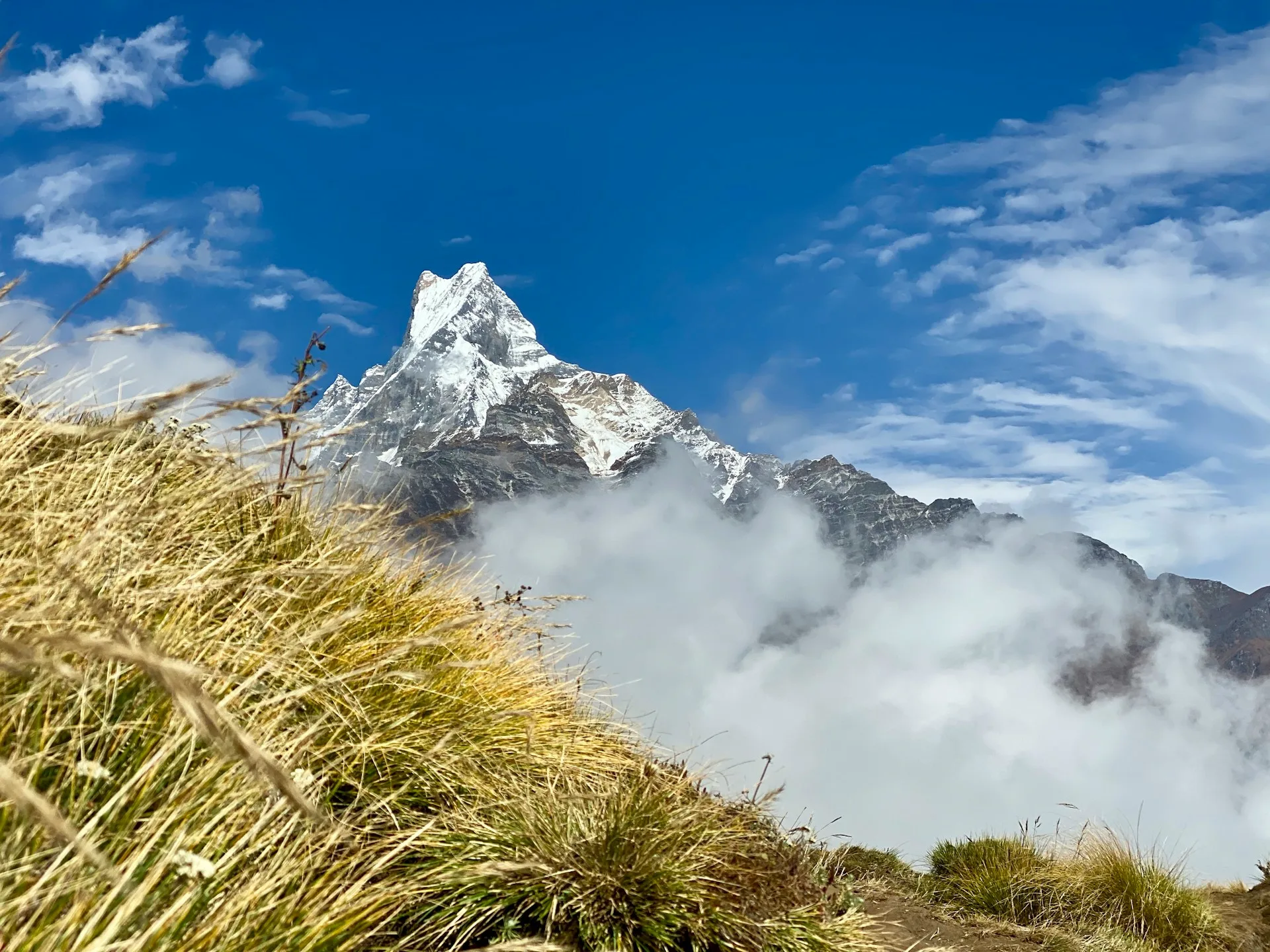
Exposure: Above High Camp, the ridge is exposed. Wind, cold, and sun can all be challenging.
What makes it manageable:
-
Short days: Most days are 4-5 hours of walking except summit day .
-
Teahouses: Regular stops for rest, food, and shelter.
-
Support: Guides and porters are available if you want to carry less .
For a first-time trekker: The 5-day itinerary is best. The 4-day option is too rushed for most beginners .
Altitude on Mardi Himal Trek: What’s the Real Height?
This is the most common source of confusion.
-
Mardi Himal (the mountain): 5,587m
-
Upper Viewpoint / Mardi Himal Base Camp: ~4,500m (the highest point on the trek)
-
High Camp: 3,550-3,700m
-
Low Camp: 2,990-3,150m
You do not summit Mardi Himal on this trek. The highest point is the viewpoint at around 4,500m, often called “Mardi Himal Base Camp” . The actual peak (5,587m) requires technical climbing and separate permits.
This is why some sources say “Base Camp” and others say “Viewpoint” — they’re often used interchangeably for the same spot at ~4,500m. The real base camp for climbers is lower.
Overnight lows at High Camp can drop to around -10°C .
Best Season for Mardi Himal Trek
| Season | Months | Weather | Visibility | Crowds | Pros | Cons |
|---|---|---|---|---|---|---|
| Spring | Mar-May | Warm, clear mornings | Excellent | High | Rhododendrons blooming, stable weather | More trekkers |
| Autumn | Oct-Nov | Cool, clear, stable | Excellent | High | Best visibility, ideal temperatures | Most crowded, book in advance |
| Monsoon | Jun-Sep | Rain, muddy trails | Poor | Low | Fewer trekkers, green landscapes | Slippery trails, leeches, limited views |
| Winter | Dec-Feb | Cold, snow at altitude | Good on clear days | Low | Fewer trekkers | Freezing at High Camp, snow risk, limited teahouse availability |
Recommended: Spring (March-May) or Autumn (October-November) . Spring has blooming rhododendrons; autumn has the clearest skies. Both are busy — book teahouses and guides in advance.
Monsoon warning: Trail conditions can be muddy, and landslides can block roads. Some teahouses close.
Winter warning: Temperatures at High Camp can drop below freezing. Snow can make the trail icy and dangerous. Some teahouses close .
Where You Sleep: Mardi Himal Teahouse Guide
Teahouses along the route are family-run lodges. Quality varies with altitude .
| Location | Altitude | Rooms | Hot Showers | Charging | Wi-Fi |
|---|---|---|---|---|---|
| Kande/Australian Camp | 2,060m | Private rooms | Yes (fee) | Limited | Limited |
| Forest Camp | 2,600m | Private/basic | Yes (fee) | Yes (fee) | Limited |
| Low Camp | 2,990m | Private/basic | Sometimes | Yes (fee) | Limited |
| Badal Danda | 3,210m | Private/basic | Sometimes | Yes (fee) | Rare |
| High Camp | 3,550m | Basic dorm | Cold water only | Yes (fee) | Rare |
| Siding | 1,750m | Private rooms | Yes | Yes | Yes |
What to expect:
-
Low elevations: Private rooms with beds and blankets
-
High Camp: Dormitory-style rooms, bring your own sleeping bag (rated -10°C)
-
Hot showers: Available at lower lodges for NPR 200-400; at High Camp, only cold water
-
Teahouse features: Rooms with basic features in wooden houses; two twin beds serve as minimum furniture standard; foam mattresses with pillows and quilts available
Food and Water on the Trail
Menu: Almost identical at every teahouse — dal bhat is the staple.
Dal bhat (rice, lentil soup, vegetable curry) is the meal most trekkers eat for dinner. It’s filling, high-energy, and often comes with unlimited refills.
Other options:
-
Noodle soups, fried rice, fried noodles
-
Pasta, porridge, pancakes
-
Eggs (fried, omelet)
-
Tibetan bread (fried bread with jam or honey)
-
Momo (dumplings)
At high altitude: Your appetite decreases above 3,500m. Force yourself to eat — warm soup and carbohydrates matter.
Drinking water:
-
Available at every teahouse (boiled or bottled)
-
Bring water purification tablets as backup
-
Mineral water costs around $1 USD at lower elevations but can cost up to $4 at higher elevations
Getting to the Trailhead
From Pokhara to Kande:
-
Private jeep: $8-12, 1 hour
-
Shared bus/jeep: cheaper, less reliable schedule
-
Most trekking packages include transfer
From Kathmandu to Pokhara:
-
Tourist bus: 6-8 hours, $7-15
-
Flight: 25 minutes, $80-125 one-way
-
Private vehicle: $80-150, 6-8 hours
Mardi Himal Permits 2026
| Permit | Cost | Notes |
|---|---|---|
| ACAP (Annapurna Conservation Area Permit) | NPR 3,000 for foreign nationals | Mandatory for all Annapurna region treks |
| TIMS Card | NPR 1,000-2,000 | Historically required; enforcement has eased |
Important 2026 Updates:
-
ACAP is mandatory: The Mardi Himal trek is inside the Annapurna Conservation Area, so every trekker needs a valid permit .
-
Licensed guide required: Nepal’s 2023 regulation requiring a registered guide for foreign trekkers in conservation areas also applies here. Solo, unguided trekking is no longer permitted on this route .
-
TIMS card: Historically required alongside ACAP, but enforcement on Annapurna routes has eased in recent years. Some agencies still arrange it as a backup . Some sources suggest TIMS has been phased out in favor of digital tracking systems .
-
Where to get permits: Nepal Tourism Board offices in Kathmandu or Pokhara, or through your trekking agency, which is usually faster .
-
What to bring: A copy of your passport, two passport-size photos, and your passport for ID verification at the office .
Total minimum permit cost: NPR 4,000-5,000 (~$30-38 USD) for foreign nationals .
How Much Does Mardi Himal Trek Really Cost?
Costs vary significantly based on itinerary length, inclusions, and service level.
| Item | Cost (USD) | Notes |
|---|---|---|
| ACAP Permit | ~$23 (NPR 3,000) | Mandatory |
| TIMS Card | ~$8-15 | May be required |
| Guide (per day) | $20-30 | Mandatory for 2026 |
| Porter (per day) | $15-25 | 1 porter for 2 trekkers |
| Teahouse (per night) | $5-15 | Basic to private rooms |
| Meals (per day) | $15-25 | Three meals |
| Transport Pokhara-Kande | $8-12 | One-way |
| Transport Siding-Pokhara | $10-15 | One-way |
What affects cost:
-
Duration (4, 5, 6, or 7 days)
-
Guide and porter services
-
Accommodation type
-
Meals included
-
Permits
-
Transportation
-
Season
-
Private/group trek
-
Equipment rental
What a typical 5-day package includes:
-
ACAP permit and TIMS card
-
Pokhara to Kande transport
-
Siding to Pokhara transport
-
Teahouse accommodation
-
Three meals per day
-
Licensed guide
-
Porter service (for 2 trekkers)
-
Emergency first aid kit
What’s typically not included:
-
Travel insurance (mandatory)
-
Personal expenses (hot showers, Wi-Fi, charging, laundry)
-
Tips for guide and porter
-
Additional expenses due to weather, landslides, illness
Mardi Himal Packing List 2026
Mandatory items for safety :
Footwear:
-
Walking boots: Water-repellent, ankle support
-
Trail shoes: For around the lodge
-
Walking socks
-
Gaiters: Knee-high for snow/wet ground
Clothing:
-
Waterproof/windproof jacket and trousers (Goretex or similar)
-
Trekking trousers
-
Long-sleeved tops (not cotton)
-
Micro fleece
-
Mid-to-heavyweight fleece or synthetic top
-
Gilet/body warmer (keeps core warm without bulking)
-
Thermals/base layer top & bottom (merino wool or synthetic)
Head and Gloves:
-
Fleece gloves
-
Wool or fleece hat
-
Sun hat
-
Bandana or Buff
-
Head torch with extra batteries
-
Sunglasses: Category 4 rated, with side protection
Personal Equipment:
-
Sleeping bag: Rated to -10°C
-
Fleece or silk liner for sleeping bag
-
Day pack: ~30 litres
-
Trekking poles: Two poles are mandatory for your safety
-
Stuff sacks or dry bags for gear
-
Two water bottles (Nalgene recommended; hydration pack tube may freeze)
-
Pee bottle (recommended)
-
Sunscreen and lip salve (high SPF)
Documents:
-
Passport with 6+ months validity
-
Passport-size photos (for permits)
-
Travel insurance covering high-altitude trekking and emergency evacuation
-
Printed copies of permits
Cash: NPR for permits and personal expenses
Safety on Mardi Himal Trek
Altitude considerations:
-
Reaching 4,500m means altitude affects most people
-
Common symptoms: headaches, fatigue, shortness of breath
-
The 5-day itinerary provides better acclimatization than 4 days
Weather:
-
Temperatures vary from 25°C at lower elevations to -10°C at High Camp
-
Be prepared for both warm and cold conditions
-
Weather can change rapidly above the treeline
Travel insurance:
-
Travel insurance is mandatory
-
Must explicitly state coverage for high-altitude emergency medical and helicopter evacuation
Guide requirement:
-
Since 2023, all foreign trekkers must trek with a licensed guide in conservation areas
Emergency:
-
Guides carry emergency first aid kits
-
Satellite phones available with some operators
Mardi Himal vs Annapurna Base Camp vs Poon Hill
| Trek | Duration | Max Altitude | Difficulty | Crowds | Best For |
|---|---|---|---|---|---|
| Mardi Himal | 4-7 days | 4,500m | Moderate | Less crowded | Ridge walking, close Fishtail views |
| Annapurna Base Camp | 7-12 days | 4,130m | Moderate | Very crowded | Classic Himalayan amphitheater |
| Poon Hill | 3-5 days | 3,210m | Easy | Very crowded | Sunrise views, beginners |
Why choose Mardi Himal:
-
Less crowded than ABC or Poon Hill
-
Closest views of Machhapuchhre
-
Shorter, fits into a week or less
-
Unique ridge walking experience
Why choose ABC:
-
Classic Nepal trekking experience
-
More developed infrastructure
-
Higher altitude but more gradual ascent
Why choose Poon Hill:
-
Shorter, easier
-
Best for beginners
-
Famous sunrise viewpoint
Responsible Trekking in the Annapurna Region
Leave No Trace:
-
Carry out all rubbish; littering is not permitted
-
Use water purification instead of buying bottled water
-
Respect local customs and traditions
Support local communities:
-
Stay in locally-owned teahouses
-
Hire local guides and porters
-
Eat local food
Annapurna Conservation Area:
-
ACAP fees directly support conservation programs
-
One of the most successful conservation programs in the developing world
Why Wonder Hikes Nepal for Your Mardi Himal Trek
Wonder Hikes Nepal is a Nepal-based trekking company with deep local knowledge of the Annapurna region. We handle all logistics so you can focus on the trek:
-
All necessary permits arranged in advance
-
Government-licensed guides
-
Teahouse accommodation and meal packages
-
Transport from Pokhara to trailhead and return
-
Emergency first aid kits and safety protocols
-
Responsible tourism practices
Our itineraries are designed with realistic walking times, proper acclimatization, and flexibility for changing weather conditions.
Book with Wonder Hikes Nepal for a safe, well-organized Mardi Himal Trek in 2026.
Frequently Asked Questions about Mardi Himal Itinerary
1. How many days do I need for Mardi Himal Trek?
Most trekkers choose 5 days. Fit, experienced trekkers can do 4 days. Beginners should consider 6 days .
2. What is the highest point on the Mardi Himal Trek?
The highest point is the Upper Viewpoint (often called Base Camp) at approximately 4,500m .
3. What is the difference between Mardi Himal Base Camp and Upper Viewpoint?
They’re often used interchangeably for the same spot at ~4,500m. The actual mountain summit is 5,587m and requires technical climbing .
4. Is Mardi Himal Trek difficult?
It’s moderate but challenging. The summit day involves 7-9 hours of walking with 950m ascent and 2,750m descent .
5. Can beginners do Mardi Himal Trek?
Yes, with the 5 or 6-day itinerary. The 4-day option is for experienced trekkers only .
6. Do I need a guide for Mardi Himal in 2026?
Yes. Since 2023, foreign trekkers must trek with a licensed guide in conservation areas .
7. What permits do I need for Mardi Himal Trek?
ACAP (NPR 3,000) is mandatory. TIMS may also be required .
8. What is the best season for Mardi Himal Trek?
Spring (March-May) and Autumn (October-November) offer the best weather and visibility .
9. How much does Mardi Himal Trek cost?
Packages typically range from $400-800 for 5 days including guide, permits, accommodation, and meals.
10. What accommodation is available on Mardi Himal Trek?
Teahouses — basic lodges with shared facilities. High Camp has dormitory-style rooms with cold water only .
11. What should I pack for Mardi Himal Trek?
Warm clothing, waterproofs, sleeping bag (-10°C rating), trekking poles, head torch, and sun protection .
12. Is Mardi Himal Trek crowded?
Less crowded than Annapurna Base Camp and Poon Hill, but still busy in peak seasons .
13. Can I do Mardi Himal Trek solo?
No. Since 2023, solo unguided trekking is not permitted in conservation areas .
14. What food is available on the trek?
Dal bhat, noodle soups, fried rice, pasta, porridge, pancakes, and eggs. Vegetarian options available .
15. How cold does it get at Mardi Himal High Camp?
Overnight lows can drop to around -10°C. Bring a sleeping bag rated to -10°C .
Ready to Plan Your Mardi Himal Trek?
The Mardi Himal Trek offers one of the most rewarding short treks in Nepal — spectacular ridge walking, close-up Fishtail views, and a genuine mountain experience in just 5 days.
Book your 2026 Mardi Himal Trek with Wonder Hikes Nepal and experience the Annapurna region with local expertise, safety, and responsible tourism.