Trekking in the Himalayas
Trekking in the Himalayas is a category, not a single experience. The term covers everything from a three-day ridge walk above Pokhara to a three-week crossing of a 5,416-metre pass in a restricted area that requires a government permit. Both are Himalayan trekking. Both are worthwhile. Neither is interchangeable. The question that matters is not whether to trek in the Himalayas—it is which Himalayan trek fits the traveler you actually are. This guide is built around that question. It compares Nepal’s major trekking regions, explains how altitude changes the experience, lays out the 2026 permit and guide rules, and gives you a framework for choosing a route based on your time, fitness, budget, and what you want to see.
What Makes Himalayan Trekking Different From Other Mountain Travel
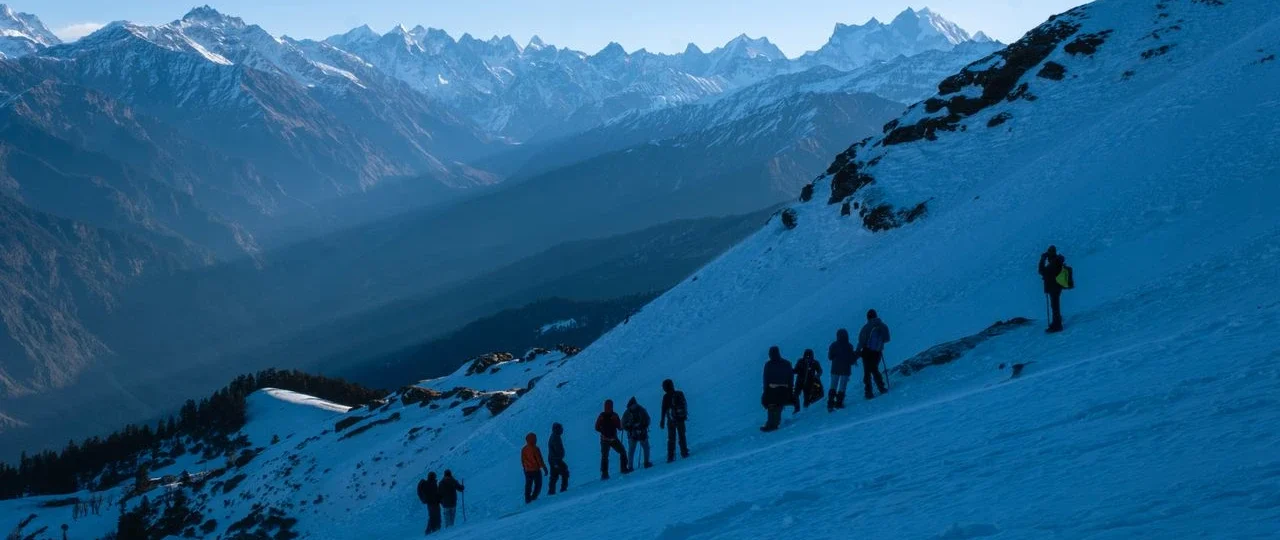
Trekking in the Himalayas is defined by three things that are difficult to replicate anywhere else: altitude, infrastructure, and cultural depth.
Altitude is the most obvious. Nepal’s trekking routes range from 2,000 metres to 5,545 metres at Kala Patthar above Everest Base Camp. Above 2,500 metres, acute mountain sickness (AMS) becomes a genuine risk. Above 4,000 metres, sleep becomes difficult, appetite decreases, and walking speeds drop by 30 to 50 percent compared to sea level. The Nepal Tourism Board advises that sleeping altitude should not increase by more than 300 to 500 metres per day above 2,500 metres, with a rest day after every 1,000 metres of gain. This is not optional advice. It is the single most important rule of Himalayan trekking.
Infrastructure is the second differentiator. Nepal’s teahouse system—a network of family-run lodges along most major trails—makes multi-day trekking accessible without camping equipment or cooking supplies. On the Everest Base Camp and Annapurna Circuit routes, you will find lodges with private rooms, hot showers (for a fee), charging points, and menus that range from dal bhat to pizza. On more remote routes like Manaslu and Kanchenjunga, facilities are simpler. In Dolpo, camping treks are the norm. But the teahouse system is why you can walk for two weeks in Nepal with only a day pack.
Cultural depth is the third. Himalayan trekking in Nepal passes through Sherpa villages in the Khumbu, Tibetan-influenced Buddhist valleys in Manaslu and Mustang, Hindu pilgrimage sites in the Annapurna region, and Tamang settlements in Langtang. The trails are not just routes to a viewpoint. They are corridors through living cultures.
Why Nepal Remains the World’s Premier Himalayan Trekking Destination
Trekking in the Himalayas is possible in India, Bhutan, and Tibet, but Nepal dominates the category for reasons that go beyond geography.
Nepal is home to eight of the world’s fourteen 8,000-metre peaks, including Everest, Annapurna, Manaslu, and Kanchenjunga. Within a country roughly the size of England, Nepal packs tropical jungle, alpine desert, Tibetan-influenced valleys, Hindu pilgrimage sites, and some of the deepest gorges on Earth. The Annapurna region alone spans 800 to 5,400 metres, moving through terraced farmland, rhododendron forest, and high alpine terrain.
The country’s trekking infrastructure is unmatched. The Khumbu region has an established network of trails, teahouses, and medical facilities. Kathmandu is a global hub for trekking logistics. The Sherpa community has generations of high-altitude experience, and the Trekking Agencies’ Association of Nepal (TAAN) coordinates safety and route information across the country.
The 2026 season also demonstrated Nepal’s resilience. Despite significant flood damage to road corridors in August 2026, TAAN confirmed that most high-altitude trekking areas in Everest, Annapurna, Manaslu, Langtang, and Mustang remained safe and operational, with lodges and communications functioning normally. The main challenge for trekkers is reaching certain trailheads, not the trails themselves. Domestic flights and alternative routes are available.
The Main Himalayan Trekking Regions in Nepal
Trekking in the Himalayas is organised by region, and each region has a distinct character, altitude profile, and audience. Understanding these differences is the first step toward choosing the right trek.
| Region | Best For | Character | Altitude Range | Crowds |
|---|---|---|---|---|
| Annapurna | First-timers, culture seekers, variety | Classic Himalayan beauty, warm villages, diverse scenery | 800–5,416m | Moderate |
| Everest (Khumbu) | Icon seekers, photographers, return trekkers | Big mountain drama, Sherpa culture, iconic views | 2,800–5,545m | High (main trails) |
| Manaslu | Return trekkers, cultural immersion | Remote valleys, Tibetan culture, restricted area | 900–5,106m | Low |
| Langtang | Trekkers short on time, nature lovers | Closest high-mountain region to Kathmandu, lush forests | 1,200–4,984m | Low to moderate |
| Mustang | Culture buffs, dry-season trekkers | Desert landscapes, cave monasteries, ancient kingdom | 2,800–4,300m | Low |
| Kanchenjunga | Explorers, off-the-map trekkers | Wild, untouched terrain, true isolation | 1,200–5,140m | Very low |
| Dolpo | Experienced trekkers, solitude seekers | Spiritual wilderness, epic remoteness | 2,500–5,300m | Very low |
Source: World Expeditions regional comparison, supplemented by current route data.
The Annapurna region is the most accessible entry point. Treks in the Annapurnas begin at lower elevations than those in the Khumbu, and the region balances accessibility with dramatic mountain scenery. The Everest region is the most famous, but it is also the most crowded on the main trails. Manaslu and Kanchenjunga offer quieter alternatives for trekkers who have already done one or two Himalayan routes. Mustang is the exception that proves the rule: it sits in the rain shadow of the Annapurnas and can be trekked during the monsoon months when most other regions are clouded in.
Which Himalayan Trek Is Right for You?
Trekking in the Himalayas becomes much simpler once you stop asking “which trek is best” and start asking “which trek fits my constraints.” Here is a decision framework based on the variables that actually matter.
| Your Priority | Suitable Region/Trek | Why |
|---|---|---|
| Short on time (5–8 days) | Langtang Valley, Mardi Himal, Ghorepani Poon Hill | Accessible trailheads, shorter itineraries |
| First Himalayan trek | Annapurna region, Everest Base Camp | Lower starting altitudes, established infrastructure |
| Iconic views of Everest | Everest Base Camp, Gokyo Lakes | Direct views of Everest, Lhotse, and Ama Dablam |
| Fewer crowds | Manaslu, Kanchenjunga, Dolpo | Restricted-area permits limit numbers |
| Cultural immersion | Mustang, Manaslu, Tsum Valley | Tibetan-influenced villages, monasteries, ancient traditions |
| Monsoon trekking | Upper Mustang, Dolpo, Nar-Phu | Rain-shadow regions stay dry June–August |
| High-pass challenge | Annapurna Circuit (Thorong La, 5,416m) | One of the world’s classic high passes |
| Maximum altitude | Everest Base Camp (5,364m), Kala Patthar (5,545m) | Highest trekking destination in Nepal |
The Annapurna region is the strongest recommendation for first-time Himalayan trekkers. It offers the widest range of itinerary lengths, the most comfortable teahouse infrastructure, and a gradient of difficulty that lets you start easy and build up. The Everest Base Camp trek is the most famous objective, but it is also the most physically demanding of the mainstream routes, requiring 12 to 14 days and reaching 5,364 metres.
How Difficult Is Trekking in the Himalayas?
Trekking in the Himalayas difficulty is not a single number. It is a function of altitude, daily walking hours, terrain, and the total duration of the trek.
Nepali trekking agencies generally grade treks into five categories:
| Grade | Altitude Range | Daily Walking | Terrain |
|---|---|---|---|
| Easy | Up to 3,000m | 3–4 hours | Gentle trails, low altitude |
| Moderate | 3,000–5,000m | 5–6 hours | Rolling terrain, some steep sections |
| Moderate–Strenuous | 4,000–5,500m | 5–7 hours | Steep sections, high passes |
| Strenuous | 4,000–6,000m | 6–8 hours | Steep terrain, 500–1,000m daily gain/loss |
| Very Strenuous | 4,000–6,000m+ | 6–8+ hours | High passes, remote terrain, expedition-style |
Source: Multiple Nepali trekking agencies, including Rugged Trails Nepal and Himalayan Glacier.
The most important variable is not the daily walking distance. It is the altitude at which you are walking. A 10-kilometre day at 2,600 metres feels manageable. The same 10 kilometres at 4,900 metres, with less than half the oxygen available at sea level, takes significantly longer and leaves you breathless. This is why Everest Base Camp, despite being a “trek” rather than a climb, is graded as moderate–strenuous: the altitude alone makes it harder than the distance suggests.
Fitness matters, but it cannot override physiology. A fit trekker who ascends too quickly will still get sick. An average trekker who follows a well-paced itinerary with proper acclimatisation days will usually reach their destination comfortably. The difference between a successful trek and a difficult one is almost always the pace of ascent, not the baseline fitness.
How High Do Himalayan Treks Go?
Trekking in the Himalayas altitude ranges from low-elevation foothill walks to the base of the world’s highest mountain. The table below shows the highest point reached on Nepal’s major trekking routes
| Trek | Maximum Altitude | Key High Point |
|---|---|---|
| Ghorepani Poon Hill | 3,210m | Poon Hill viewpoint |
| Mardi Himal Base Camp | 4,500m | Mardi Himal Base Camp |
| Langtang Valley (Kyanjin Ri) | 4,984m | Tsergo Ri or Kyanjin Ri |
| Annapurna Base Camp | 4,130m | Annapurna Sanctuary |
| Annapurna Circuit | 5,416m | Thorong La Pass |
| Manaslu Circuit | 5,106m | Larkya La Pass |
| Everest Base Camp | 5,364m | Everest Base Camp |
| Everest Base Camp + Kala Patthar | 5,545m | Kala Patthar |
| Gokyo Lakes (Gokyo Ri) | 5,357m | Gokyo Ri |
The altitude at which you sleep matters more than the altitude you reach during the day. The Nepal Tourism Board’s guidance is clear: sleeping altitude should not increase by more than 300 to 500 metres per day above 2,500 metres, with a rest day after every 1,000 metres of altitude gain. Treks that follow this rule, such as the standard 14-day Everest Base Camp itinerary with acclimatisation stops at Namche Bazaar (3,440m) and Dingboche (4,410m), have high success rates. Treks that compress the schedule do not.
How Long Does Himalayan Trekking Take?
Trekking in the Himalayas duration varies from three days to three weeks, depending on the route and how much of it you choose to walk.
| Trek | Typical Duration | Notes |
|---|---|---|
| Ghorepani Poon Hill | 3–5 days | Shortest classic Himalayan trek |
| Mardi Himal | 5–7 days | Moderate, teahouse-based |
| Langtang Valley | 7–10 days | Accessible, moderate |
| Annapurna Base Camp | 7–12 days | Moderate |
| Everest Base Camp | 12–16 days | Includes acclimatisation days |
| Annapurna Circuit | 14–21 days | Full circuit, Thorong La |
| Manaslu Circuit | 13–16 days | Restricted area, requires guide |
| Kanchenjunga | 18–24 days | Remote, very low traffic |
The Annapurna Circuit is one of the most legendary long-distance treks in the world, circling the Annapurna massif and crossing the Thorong La Pass at 5,416 metres. The Everest Base Camp trek typically runs 12 to 16 days, including Lukla flights and acclimatisation stops. The Manaslu Circuit is a 13- to 16-day route through remote valleys and Tibetan-influenced villages, crossing the Larkya La Pass at 5,106 metres.
Duration is not just about walking days. It includes travel to and from the trailhead, acclimatisation days, and buffer time for weather delays. The Lukla flight to the Everest region is notoriously susceptible to weather delays, which is why most experienced operators build buffer days into their itineraries.
When Is the Best Time to Trek in the Himalayas?
Trekking in the Himalayas season determines what you see, how comfortable you are, and which routes are even open. Nepal has four distinct trekking seasons.
Autumn (late September to November) is the gold standard. Post-monsoon weather brings stable conditions and consistently clear skies, and November is widely considered the best trekking month of the year. This is peak season, which means trails are busier and teahouses fill up earlier.
Spring (March to May) is the second major season. Rhododendron forests bloom, days are longer, and temperatures warm up. Late snow is possible at high passes in March, and trails get busier by May.
Monsoon (June to August) is not the time for most Himalayan trekking. Cloud cover obscures the peaks, trails are muddy, and leeches are a nuisance. The exception is the rain-shadow regions: Upper Mustang, Dolpo, and Nar-Phu remain dry and trekable during the monsoon.
Winter (December to February) is cold and quiet. High passes like Thorong La and Renjo La are often closed, and temperatures above 3,500 metres are severe. Lower-altitude treks like Poon Hill and Helambu remain feasible and offer crisp skies and quiet trails.
The best season depends on your destination. For Everest, Annapurna, and Manaslu, autumn and spring are the clear choices. For Mustang and Dolpo, monsoon is viable. For short, low-altitude treks, winter can be excellent.
What Are Teahouses and Accommodation Like?
Trekking in the Himalayas accommodation is one of the things that distinguishes Nepal from other mountain regions. The teahouse system—a network of family-run lodges along most major trails—makes multi-day trekking accessible without camping equipment or cooking supplies.
Teahouses vary from basic to surprisingly comfortable. On the Everest Base Camp and Annapurna Circuit routes, you will find lodges with private rooms, hot showers (for a fee), charging points, and menus that range from dal bhat to pizza. On more remote routes like Manaslu and Kanchenjunga, facilities are simpler: shared bathrooms, limited electricity, and a narrower food menu. In the most remote regions like Dolpo, camping treks are the norm.
The teahouse system is one of the reasons Nepal is the world’s premier trekking destination. You can walk for two weeks without carrying more than a day pack, sleeping in a bed, and eating hot meals prepared by local families. It is a style of travel that is difficult to replicate anywhere else in the high mountains.
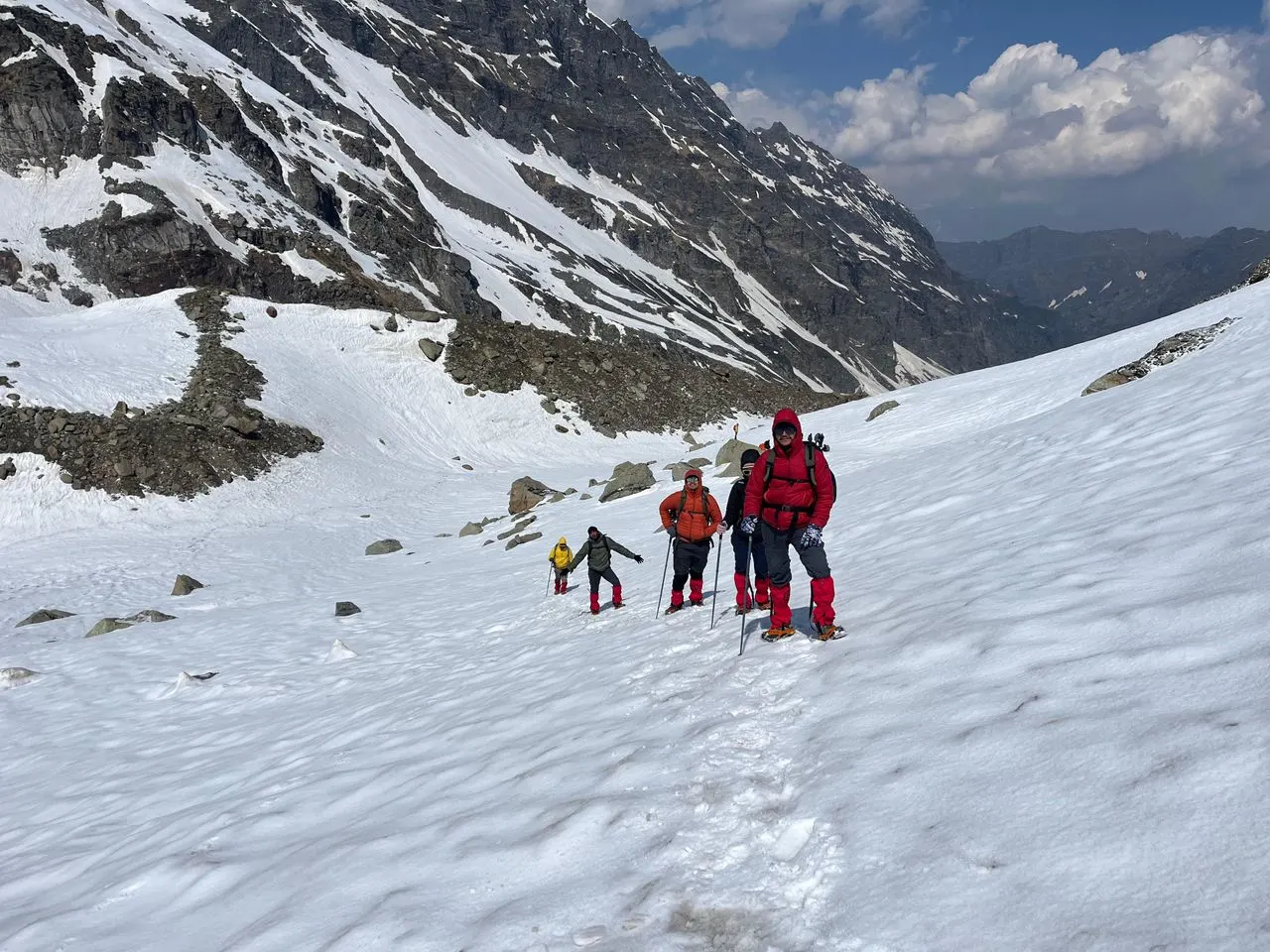
Permits, TIMS and Trekking Requirements in Nepal
Trekking in the Himalayas regulations changed meaningfully between 2023 and 2026, and anyone planning a trek needs to understand the current system.
The mandatory guide rule. Since April 2023, the Nepal Tourism Board has required a licensed guide, booked through a TAAN-registered agency, for any trek through a National Park, Conservation Area, or Restricted Area. This rule is fully enforced in 2026. You cannot legally trek the Everest Base Camp, Annapurna Circuit, Langtang Valley, or Manaslu routes without a licensed guide.
The solo trekking update. As of March 2026, the Department of Immigration abolished the two-person requirement for restricted areas. Solo trekkers can now obtain permits, but they must still hire a licensed guide and process the permit through a registered agency. The rule is 1:7—one licensed guide can lead up to seven trekkers.
TIMS card. The Trekkers’ Information Management System (TIMS) card is still required for most major trekking routes in 2026. Costs are NPR 2,000 (approximately USD 15) for individual trekkers and NPR 1,000 for group trekkers. The Khumbu region (Everest) does not require TIMS; instead, you need the Sagarmatha National Park permit and the Khumbu Pasang Lhamu Rural Municipality permit.
National park and conservation area fees. These vary by region: Sagarmatha National Park (NPR 3,000), Annapurna Conservation Area (NPR 3,000), Langtang National Park (NPR 3,000), and Manaslu Conservation Area (NPR 3,000). Restricted-area permits for Manaslu, Upper Mustang, and Kanchenjunga are substantially higher, starting at USD 100 per week for Manaslu during peak season.
Permit costs at a glance:
| Permit | Cost | Required For |
|---|---|---|
| TIMS Card (individual) | NPR 2,000 (~USD 15) | Most trekking regions |
| Sagarmatha National Park | NPR 3,000 (~USD 22) | Everest region |
| Khumbu Pasang Lhamu Permit | NPR 2,000 (~USD 15) | Everest region |
| Annapurna Conservation Area | NPR 3,000 (~USD 22) | Annapurna region |
| Langtang National Park | NPR 3,000 (~USD 22) | Langtang region |
| Manaslu Restricted Area | USD 100/week (Sept–Nov) | Manaslu Circuit |
Trekking vs Mountaineering: A Clear Distinction
Trekking in the Himalayas is not mountaineering. The two are different sports with different risks, skills, and equipment requirements. As one source puts it bluntly: “Trekking is not an extreme sport. You won’t need ropes, ice axes, or a daredevil attitude. Mountaineering is a different sport altogether with very different risks and requirements”.
| Factor | Trekking | Mountaineering |
|---|---|---|
| Objective | Reach a destination (base camp, pass, viewpoint) | Reach a summit |
| Technical skills | None required | Ropes, crampons, ice axes |
| Equipment | Boots, pack, layers | Technical climbing gear |
| Altitude range | 2,000–5,545m | 5,800–8,848m |
| Risk level | Low to moderate | High to extreme |
| Permit type | Trekking permit, TIMS | Climbing permit, royalty |
| Example | Everest Base Camp Trek | Island Peak, Everest |
The confusion arises because some “trekking peaks” in Nepal require basic climbing skills. But the standard trekking routes—Everest Base Camp, Annapurna Circuit, Langtang Valley—do not. They require fitness, altitude awareness, and good footwear, not technical climbing ability.
How to Prepare for a Himalayan Trek
Trekking in the Himalayas preparation should begin at least three months before departure. The two most important areas are cardiovascular fitness and altitude awareness.
Fitness. The best preparation is walking. Long day hikes with a pack, stair climbing, and sustained cardiovascular exercise build the endurance you need for consecutive days of 5 to 7 hours of walking. If you can comfortably walk 15 to 20 kilometres on consecutive days at home, you will manage most Himalayan treks.
Altitude awareness. Learn the symptoms of AMS before you go: headache, loss of appetite, nausea, dizziness, and fatigue. The Nepal Tourism Board’s guidance is clear: if you feel unwell above 2,500 metres, treat it as AMS until proven otherwise. Do not ascend further. Rest, drink fluids, and descend if symptoms worsen. Consider carrying acetazolamide (Diamox) as a precaution, and discuss it with your doctor before you travel.
Gear. You do not need technical equipment for trekking. You need broken-in hiking boots, a layered clothing system, a warm sleeping bag for higher altitudes, a headlamp, water purification, and a good pack. Teahouses provide bedding, but it is basic at higher elevations.
Mental preparation. Himalayan trekking is not a race. The pace is slow, the days are long, and the altitude makes everything harder. The trekkers who enjoy it most are the ones who accept the pace, embrace the teahouse routine, and treat acclimatisation days as part of the experience rather than an inconvenience.
How to Choose a Reliable Trekking Company in Nepal
Trekking in the Himalayas with a licensed guide is now a legal requirement on most routes. But choosing the right company is about more than compliance. It is about safety, communication, and whether the company actually knows the trails it is selling.
Here are the criteria that matter:
Licensing and registration. The company must be registered with the Nepal Tourism Board and be a member of the Trekking Agencies’ Association of Nepal (TAAN). Ask for the license number.
Guide credentials. The guide assigned to your trek should have a government-issued trekking guide license. For higher-altitude routes, ask about their experience on that specific trail.
Transparency. A reliable company will tell you exactly what is included and what is not: permits, meals, accommodation, porter services, emergency evacuation coverage. Vague pricing is a red flag.
Communication. The company should respond to your questions clearly and promptly before you book. If they are hard to reach before the sale, they will be harder to reach during the trek.
Group size and guide ratio. The legal maximum is 1 guide per 7 trekkers. Smaller groups often mean better service and more flexibility.
Reviews and references. Ask for references from previous clients, especially for the specific trek you are considering. Read reviews on independent platforms, not just the company’s own website.
Wonder Hikes Nepal is a Nepal-based trekking and mountain adventure company. If you are comparing Himalayan trekking options, we can help you work through the region comparison, the permit requirements, the acclimatisation schedules, and the realistic expectations before you commit. We do not guide expedition-style mountaineering, but we do provide expert guidance on trekking in the Everest, Annapurna, Langtang, and Manaslu regions. If you would like to talk through your plans, get in touch—we are happy to help.
Frequently Asked Questions
What is trekking in the Himalayas?
Trekking in the Himalayas is multi-day walking through mountain terrain, typically staying in teahouses or lodges, without technical climbing. It is distinct from mountaineering, which requires ropes, ice axes, and summit objectives.
Where is the best place for Himalayan trekking?
Nepal is the premier destination, with eight of the world’s fourteen 8,000m peaks and the widest range of trekking regions: Everest, Annapurna, Langtang, Manaslu, Mustang, Kanchenjunga, and Dolpo. India, Bhutan, and Tibet also offer Himalayan trekking, but Nepal has the most developed infrastructure.
Which Himalayan trek is best for beginners?
The Annapurna region is the best starting point, with lower-elevation trails, comfortable teahouses, and a range of itinerary lengths. Ghorepani Poon Hill (3,210m) is the shortest and easiest classic trek.
How difficult is trekking in the Himalayas?
Difficulty varies by route. Low-altitude treks like Poon Hill are easy. Everest Base Camp and Annapurna Circuit are moderate to strenuous because of altitude. The main challenge is altitude, not technical terrain.
How long does a Himalayan trek take?
Routes range from 3 days (Poon Hill) to 21+ days (Annapurna Circuit, Kanchenjunga). Everest Base Camp typically takes 12–16 days.
What is the best season for Himalayan trekking?
Autumn (late September to November) and spring (March to May) are the prime seasons. Mustang and Dolpo can be trekked during the monsoon. Winter is best for lower-altitude treks only.
How high do Himalayan trekking routes go?
Everest Base Camp is 5,364m. Kala Patthar is 5,545m. Thorong La on the Annapurna Circuit is 5,416m. The highest point on most treks is a pass or viewpoint above 5,000m.
Do I need a guide for trekking in Nepal?
Yes. Since April 2023, a licensed guide booked through a TAAN-registered agency is mandatory on most major trekking routes.
What permits are required for Himalayan trekking?
You need a TIMS card (most regions), plus national park or conservation area permits. Restricted areas like Manaslu and Upper Mustang require additional permits starting at USD 100 per week.
What is the difference between trekking and mountaineering?
Trekking is multi-day walking without technical climbing. Mountaineering involves ropes, crampons, ice axes, and a summit objective. Trekking routes in Nepal do not require technical climbing skills.
How much does Himalayan trekking cost?
A guided trek in Nepal runs $700 to $2,300 in 2026, depending on route, duration, and service level. Everest Base Camp costs more because of the Lukla flight and higher permit fees.
How do I choose a trekking company in Nepal?
Check licensing (Nepal Tourism Board, TAAN), guide credentials, transparency in pricing, group size, and reviews. Ask for references from previous clients.
Can I trek solo in Nepal?
You can obtain a permit as a solo traveler for restricted areas as of March 2026, but you must still hire a licensed guide and process the permit through a registered agency.
What is the highest altitude I can trek to in Nepal?
Everest Base Camp (5,364m) and Kala Patthar (5,545m) are the highest standard trekking destinations. Some trekking peaks reach 6,000m+ but require climbing skills.
How do I avoid altitude sickness while trekking?
Follow the 300–500 metre per day sleeping altitude rule, take rest days after every 1,000 metres of gain, stay hydrated, and descend immediately if symptoms worsen.