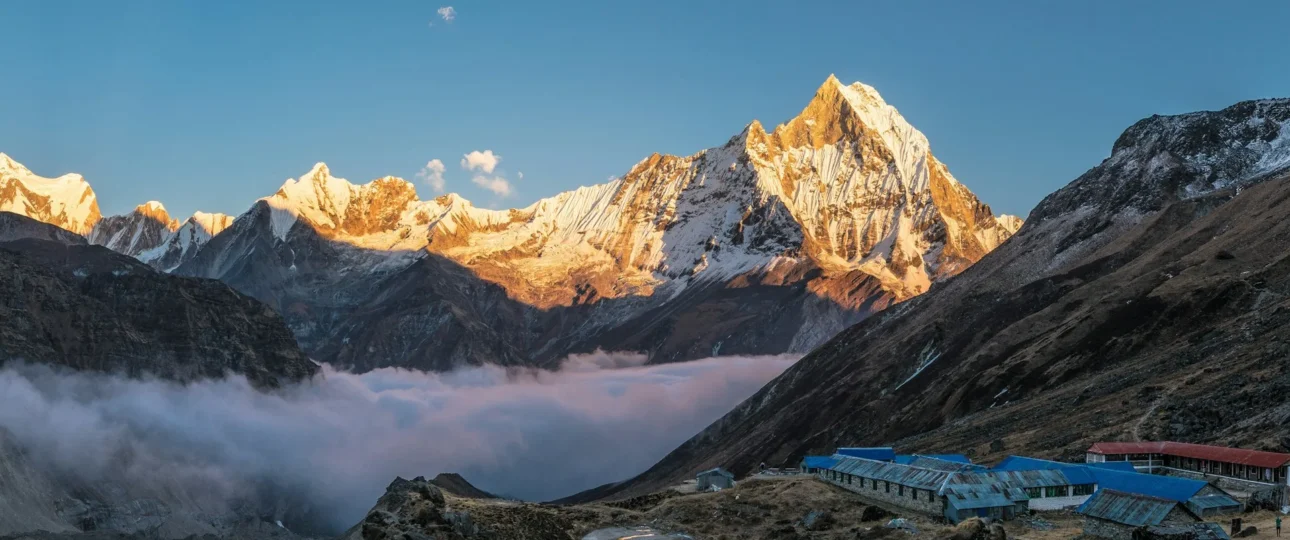
Annapurna Hiking
“Annapurna hiking” isn’t one trail — it’s a region, and picking the right route inside it is the decision that actually shapes your trip. The Annapurna Conservation Area covers 7,629 square kilometres of Nepal’s central Himalaya, and the hikes inside it range from a four-day sunrise walk a beginner can manage to a three-week high-pass circuit. Almost all of them start from Pokhara, and in 2026 all of them require a licensed guide.
So the useful version of this guide isn’t a list of superlatives. It’s a way to match a route to your time, fitness, and reason for coming. Below you’ll find the main Annapurna hikes compared honestly — how high they go, how hard they are, how long they take — followed by the planning details that competitors tend to gloss over: the current permit rules, real costs, the best months, and the mistakes that quietly derail trips.
The quick answer: which Annapurna hike suits you
If you only read one section, read this table. It covers the four routes the vast majority of Annapurna hikers choose between, plus the two most worthwhile alternatives.
| Route | Highest point | Typical days | Difficulty | Best for |
|---|---|---|---|---|
| Ghorepani Poon Hill | 3,210 m | 4–5 | Easy | First-timers, families, short trips, sunrise views |
| Mardi Himal | ~4,500 m | 5–7 | Moderate | Quieter trails, ridge scenery, some altitude |
| Annapurna Base Camp (ABC) | 4,130 m | 7–12 | Moderate | The classic sanctuary experience, accessible high altitude |
| Annapurna Circuit | 5,416 m (Thorong La) | 12–18 | Challenging | Big-mountain crossing, changing landscapes, more time |
| Khopra Ridge / Danda | ~3,660 m | 5–7 | Moderate | Off-the-crowd views, community lodges |
| Mardi + Poon Hill combo | ~4,500 m | 9–12 | Moderate | Two contrasting experiences in one trip |
Distances and day counts shift with your exact itinerary and where the road drops you, so treat these as planning ranges rather than fixed numbers. The rest of this guide explains what’s behind them.
What “Annapurna hiking” actually covers
The Annapurna massif sits north of Pokhara, crowned by Annapurna I at 8,091 metres — the world’s tenth-highest peak and the first 8,000er ever climbed. Around it stand Dhaulagiri (8,167 m) across the Kali Gandaki gorge, the fishtail summit of Machhapuchhre (6,993 m), Annapurna South (7,219 m), and Hiunchuli (6,441 m). The trails weave between these giants through Gurung and Magar villages, rhododendron forest, terraced farmland, and — on the Circuit — into the arid, Tibetan-influenced landscape of the rain shadow.
Two things unify almost every Annapurna hike. The first is Pokhara, the lakeside city that serves as the staging point: you’ll spend a night there before and after most treks, and trailheads sit anywhere from 45 minutes to a couple of hours away by road. The second is the Annapurna Conservation Area Permit (ACAP), which every trekker needs regardless of route or duration.
Beyond that, the routes diverge sharply — which is exactly why choosing well matters more here than in most trekking regions.
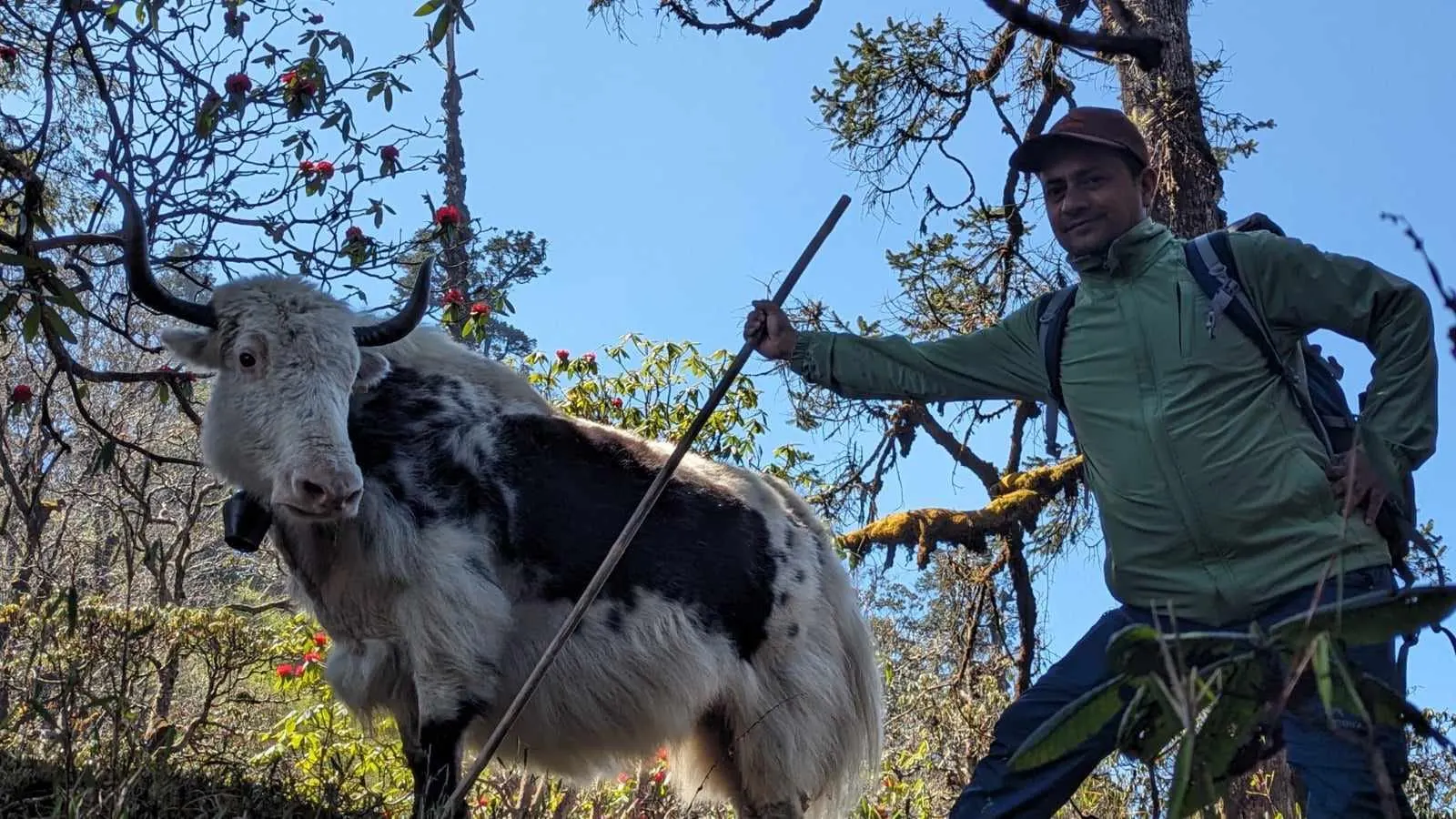
The main routes, explained
Ghorepani Poon Hill: the gentle introduction
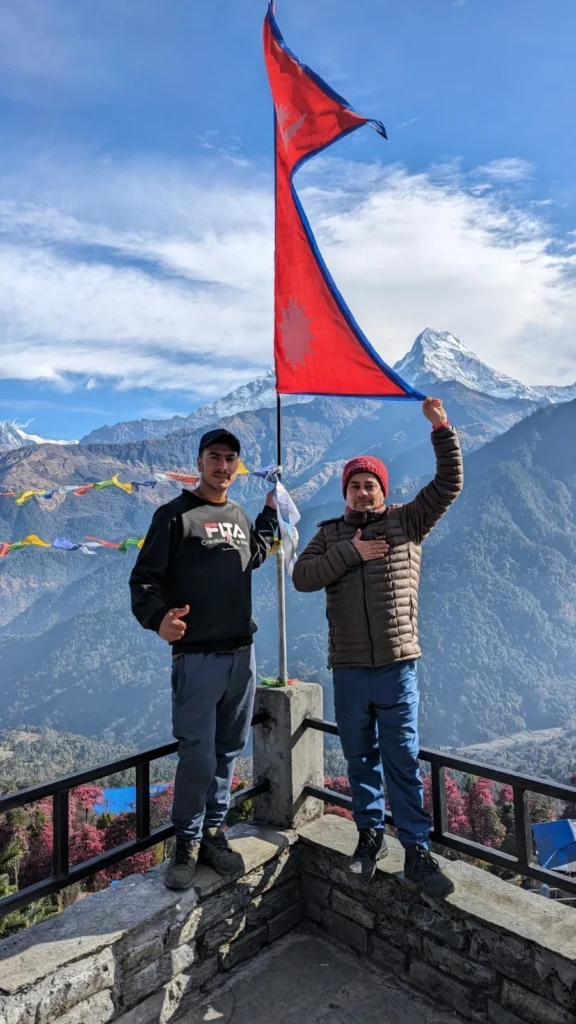
Poon Hill is the most popular short trek in Nepal, and for good reason. The trail climbs from Nayapul (around 1,070 m) through stone-stepped villages to Ghorepani (about 2,860 m), then makes a pre-dawn push to the Poon Hill viewpoint at 3,210 m for a sunrise panorama across Dhaulagiri, the Annapurnas, and Machhapuchhre. The loop returns through Tadapani and the large Gurung village of Ghandruk, so you rarely retrace your steps.
It’s a circuit of roughly 35–45 km over four to five days, well served by comfortable teahouses, and it stays low enough that altitude is only a minor concern. The one thing people underestimate is the staircase — the climb to Ghorepani is famously several thousand stone steps, and the descents are hard on the knees. But there’s no technical ground, and a reasonably active person with no trekking background can complete it comfortably. If you have a week or less, want mountain views without serious altitude, or are bringing children or older parents, this is the route.
Mardi Himal: the quiet ridge
Mardi Himal only opened as an official trekking route around 2012, and it still feels less trafficked than its neighbours. It leaves the road at Kande (about 1,770 m) and climbs a forested spur to a string of camps — Forest Camp, Low Camp (2,970 m), High Camp (around 3,550 m) — before the final ridge walk to Mardi Himal Base Camp at roughly 4,500 m, directly beneath the fishtail face of Machhapuchhre.
At five to seven days it’s a step up from Poon Hill in both altitude and effort. The pre-dawn push from High Camp to the base camp is the crux — steep, cold, and thin-aired, though never exposed to any real danger. What you get in return is solitude and an intimate, in-your-face mountain perspective that the busier trails can’t match. Mardi rewards trekkers who want a genuine alpine feel and a bit of challenge, but who don’t have two weeks or a desire to sleep above 4,000 metres for days on end.
Annapurna Base Camp: the classic sanctuary
The ABC trek is the route most people picture when they think “Annapurna hiking.” It threads up a river valley through Chhomrong — the last real village — then climbs through Bamboo, Dovan, and Deurali into the Annapurna Sanctuary, a glacial amphitheatre ringed almost completely by peaks. You sleep at Machhapuchhre Base Camp (3,700 m) before the final morning climb to Annapurna Base Camp at 4,130 m, where Annapurna I rises more than 4,000 metres straight above you.
Most itineraries run 7 to 12 days depending on where you start and whether you fold in Poon Hill. The trail is a walking route throughout — no ropes, no scrambling — and the daily altitude gain is gradual enough that ABC has earned its reputation as an accessible high-altitude trek. The catch is the same staircase problem as Poon Hill, stretched over more days, plus a genuinely thin-aired final push. It’s the sweet spot for people who want to stand deep in the high Himalaya without the commitment or altitude risk of the Circuit.
Annapurna Circuit: the big crossing
The Circuit is a different order of trek. It traditionally loops from Besisahar up the Marsyangdi valley through Manang, over Thorong La pass at 5,416 metres — one of the highest trekking passes in Nepal — and down to Muktinath and the Kali Gandaki. Road building has shortened the classic route over the years, so itineraries now run roughly 12 to 18 days depending on how much you drive and whether you add Tilicho Lake.
This is the route for changing worlds: you start in subtropical farmland and finish in the dry, wind-scoured high desert north of the main Himalaya. The reward is scale and variety; the cost is time, a serious high-pass day, and a real need to respect acclimatisation. Thorong La is not technical, but 5,416 m is high enough that a rushed ascent can end a trek — or worse. If you have the days and want the most complete Annapurna experience, the Circuit delivers it.
Worth knowing: the quieter alternatives
Two other routes deserve a mention because they solve specific problems. Khopra Ridge (Khopra Danda), topping out around 3,660 m, offers Poon Hill-caliber views with a fraction of the crowds and the option to add the sacred Khayer Lake higher up. Mohare Danda is a community-owned lodge trek in the same area, where trekking fees support local villages directly. And for travellers with more time, combining Mardi Himal with Poon Hill stitches a quiet ridge and an iconic sunrise into one nine-to-twelve-day trip. None of these are consolation prizes — they’re deliberate choices for people who want views without the foot traffic.
How to choose your route
The honest way to decide is to work backwards from three things: how many days you have, how you feel about altitude, and what you actually want to see.
Start with time. A four-to-five-day window points to Poon Hill or Khopra Ridge. A week to ten days opens up Mardi Himal or ABC. Two weeks or more makes the Circuit realistic without rushing the pass.
Then weigh altitude honestly. Poon Hill barely troubles most people. Mardi and ABC take you above 4,000 m, where altitude is manageable with sensible pacing but not something to ignore. The Circuit’s 5,416 m pass is the highest and demands proper acclimatisation days built into the plan.
Finally, match the scenery to the trip you want. Sunrise panoramas and cultural villages: Poon Hill. Close, dramatic peaks and solitude: Mardi. Standing inside a ring of 7,000ers: ABC. A landscape that transforms as you walk: the Circuit.
| If you have… | And you want… | Consider |
|---|---|---|
| 4–5 days | Views with minimal altitude | Poon Hill or Khopra Ridge |
| 5–7 days | Quiet trails, a taste of altitude | Mardi Himal |
| 7–12 days | The classic high-Himalaya trek | Annapurna Base Camp |
| 12+ days | Variety and a big pass crossing | Annapurna Circuit |
| Limited experience | A safe, well-supported first trek | Poon Hill, then ABC later |
There’s no wrong answer here, only mismatches — and the most common one is booking the Circuit on too tight a schedule. It’s better to do a shorter trek well than a longer one against the clock.
Difficulty and altitude, without the sugarcoating
None of the standard Annapurna hikes are technical. You won’t use a rope, an ice axe, or any climbing skill. What makes them tiring is the terrain and, higher up, the air.
The terrain surprises people. Large stretches of the lower and middle trails are stone staircases, and Annapurna’s valleys “rollercoaster” — you’ll often lose hard-won height at a river crossing before climbing back up the far side. That means the total ascent over a trek is usually more than the headline elevation suggests, and the descents punish knees more than the climbs punish lungs. Trekking poles earn their place here.
Altitude is the second factor, and it’s about behaviour more than fitness. The risk of acute mountain sickness begins above roughly 2,500 metres, and it rises with how high and how fast you go. Above about 3,000 m, the widely used guideline is to raise your sleeping altitude by no more than around 500 m per day and to build in easier days after big gains. Well-designed Annapurna itineraries already follow this, which is why ABC and the Circuit space out their higher nights.
The important thing to understand: strong, fit trekkers get altitude sickness too, often because they push the pace. The early signs — headache, nausea, poor sleep, breathlessness — are your body asking you to slow down. Mild symptoms usually settle with rest and fluids; symptoms that worsen mean you stop climbing and, if needed, descend. Going down even a few hundred metres is the most reliable fix there is. If you have a heart or lung condition, are pregnant, or have had altitude trouble before, talk to a doctor familiar with travel medicine before you book. This is general guidance, not personal medical advice.
When to go
Two windows stand out, and the difference between them is worth understanding rather than treating them as interchangeable.
Autumn (late September to November) is the classic season. After the monsoon washes the haze from the air, the skies are at their clearest and the high-mountain views their most reliable. It’s also the busiest and priciest time, and popular teahouses fill up — book ahead.
Spring (March to May) is the other peak. The lower and middle trails bloom with rhododendron, temperatures warm, and conditions stay good, though afternoon cloud builds more often than in autumn. Prices sit close to autumn’s.
Winter (December to February) is quiet and clear on lower routes like Poon Hill, but the high sanctuary and Thorong La turn cold and snowy, and the pass can close. Monsoon (June to August) brings rain, leeches on forested sections, obscured views, and landslide risk on some roads — generally not recommended for first-timers, though the rain-shadow upper Circuit stays drier.
| Season | Conditions | Trade-off |
|---|---|---|
| Autumn (late Sep–Nov) | Clearest skies, stable weather | Busiest, highest prices, book early |
| Spring (Mar–May) | Rhododendron bloom, warming | Afternoon cloud; still busy |
| Winter (Dec–Feb) | Quiet, clear low down | Cold and snowy up high; passes may close |
| Monsoon (Jun–Aug) | Green, few crowds, cheapest | Rain, leeches, poor views, landslide risk |
Whatever the month, the tops of the higher treks are cold at night year-round because of the altitude. Pack for below-freezing nights at ABC, Mardi Base Camp, or on the Circuit even in a warm season.
Permits and the guide rule you can’t skip in 2026
This is the area where outdated online information causes the most trouble, so here’s the current picture as clearly as it can be stated.
You need the ACAP. The Annapurna Conservation Area Permit costs NPR 3,000 (about US$22–23) for foreign nationals, fixed regardless of trek length. SAARC nationals pay less, and children under 10 are exempt. It’s mandatory, strictly enforced, and checked at trailhead and checkpoints throughout the region. Trek without it and you’ll be fined, charged double, or turned back.
A licensed guide is now mandatory. Since April 2023, and fully enforced through 2026, foreign trekkers in Nepal’s conservation areas — including every Annapurna route — must be accompanied by a licensed guide or porter-guide booked through a government-registered, TAAN-affiliated agency. Fully independent solo trekking is no longer permitted on these trails. This is the single biggest change from older guidebooks, and it’s the reason planning now runs through an agency rather than a solo permit desk.
TIMS is in transition. The Trekkers’ Information Management System card technically still exists at NPR 2,000, but its status on Annapurna trails is genuinely unsettled in 2026: multiple operators report that checkpoints now verify only the ACAP, and the old “green” card for independent trekkers has been abolished in favour of agency-issued cards. Some agencies still issue a TIMS as part of the paperwork; others don’t. Because this is exactly the kind of rule that shifts season to season, the practical answer is to let your operator handle it and confirm the current requirement close to departure rather than relying on any single article — including this one.
Permits are arranged before you start, in Kathmandu or Pokhara, not on the trail. A reputable operator folds all of this into your trip so it never becomes your problem.
What an Annapurna trek actually costs
Costs vary enough that a single number would be misleading, so here’s the realistic 2026 range by route, for a guided trek excluding international flights.
| Route | Typical guided package (2026) |
|---|---|
| Poon Hill (4–5 days) | ~US$300–600 |
| Mardi Himal (5–7 days) | ~US$450–800 |
| Annapurna Base Camp (7–12 days) | ~US$450–1,250 |
| Annapurna Circuit (12–18 days) | ~US$800–2,500 |
A standard package usually covers permits, a licensed guide, teahouse accommodation, three meals a day, and ground transport from Pokhara or Kathmandu. It typically excludes international airfare, travel insurance, the Kathmandu–Pokhara flight, personal gear, tips, and drinks or snacks bought along the trail.
On the trail itself, budget roughly US$25–50 a day for extras and, on independent-style arrangements, food and lodging. A plate of dal bhat runs about NPR 400–600 (US$3–5) in the lower villages and more the higher you climb, since everything up there is carried in on someone’s back. Hot showers cost a few dollars, Wi-Fi and device charging a dollar or two each, and prices rise noticeably with altitude. Peak-season demand in spring and autumn can push package and teahouse prices up by 10–35%, so booking early both secures your spot and, sometimes, a better rate.
One piece of practical advice worth more than any coupon: book through a Nepal-based operator rather than an overseas reseller. The reseller’s markup rarely buys you anything on the ground.
Getting there, sleeping, and eating
Pokhara is the hub. From Kathmandu you can fly (about 25 minutes) or drive (a longer, road-condition-dependent haul). From Pokhara, a road transfer gets you to the trailhead — Nayapul or Kimche for Poon Hill and ABC, Kande or Phedi for Mardi, Besisahar for the Circuit.
Accommodation is teahouse-based. These are family-run lodges offering a simple room, usually twin beds, and a shared dining area heated by a stove in the evenings. Lower down they can be surprisingly comfortable; higher up they get more basic, with thinner walls and colder nights. In peak season the best lodges at popular stops fill early, which is another argument for a planned, guided itinerary — your guide books ahead.
Food is reliable and carb-heavy, built around dal bhat (rice, lentils, vegetables, often with a free refill), plus noodles, potatoes, eggs, and momos. It’s fuel more than fine dining, and dal bhat is both the best value and the most trustworthy choice. Bring a water treatment method — filter, purification tablets, or a UV pen — so you can refill rather than buying bottled water, which is expensive up high and an environmental burden the region is trying to reduce.
What to pack, briefly
You don’t need mountaineering gear, but a few things make or break the experience:
- Layers, not bulk. A moisture-wicking base, an insulating mid-layer, and a windproof/waterproof shell handle everything from subtropical valleys to freezing high camps.
- Broken-in boots with grip for wet stone steps, plus trekking poles for the relentless descents.
- A warm sleeping bag (comfort-rated to around −10°C for the higher treks), a hat, gloves, and a headlamp for pre-dawn viewpoint pushes.
- Sun protection — the high-altitude sun is fierce — and a basic personal first-aid and blister kit.
- Enough cash in Nepali rupees. ATMs stop at the trailhead; the trail runs on cash.
A good operator provides a route-specific packing list, since the difference between a Poon Hill kit and a Circuit kit is real.
Common mistakes that derail Annapurna hikes
A handful of avoidable errors account for most spoiled trips.
Underestimating the stairs. People train their lungs for altitude and forget their quads for the descents. A few weeks of hill walking and stair repeats before you fly beats any last-minute fitness push.
Booking the wrong route for the time available. Squeezing the Circuit into ten days forces a rushed ascent to a 5,416 m pass — the exact recipe for altitude trouble. Choose a trek that fits your calendar with margin.
Ignoring acclimatisation logic. Skipping the Machhapuchhre Base Camp night on ABC, or the rest days at Manang on the Circuit, saves a day and risks the whole trek. The “wasted” acclimatisation day is what gets you to the top.
Relying on outdated permit information. The mandatory-guide rule and TIMS changes catch out returning trekkers who assume last decade’s rules still apply. Verify before you book.
Trekking in the wrong season for the route. Poon Hill is lovely in winter; ABC and the Circuit are a different proposition once snow arrives. Match the month to the altitude.
Where a good operator fits in
Now that a licensed guide is required, the question isn’t really whether to trek with support — it’s who you trek with. A strong local operator does three things that matter more than a glossy brochure: it builds an itinerary that respects acclimatisation instead of rushing you, it handles the permits and paperwork that now run through registered agencies, and it puts an experienced guide beside you who reads the early signs of altitude trouble before you’d notice them yourself.
Wonder Hikes Nepal plans Annapurna treks around that principle — sensible daily gains, the right acclimatisation nights on ABC and the Circuit, and permits and licensed guides arranged so you can focus on the walking. If you’re still weighing Poon Hill against Mardi, or wondering whether you have the days for the full Circuit, that’s exactly the conversation to have before you commit. A short, honest planning chat tends to save more money and hassle than any discount code — and it’s the difference between booking a trek and booking the right trek.
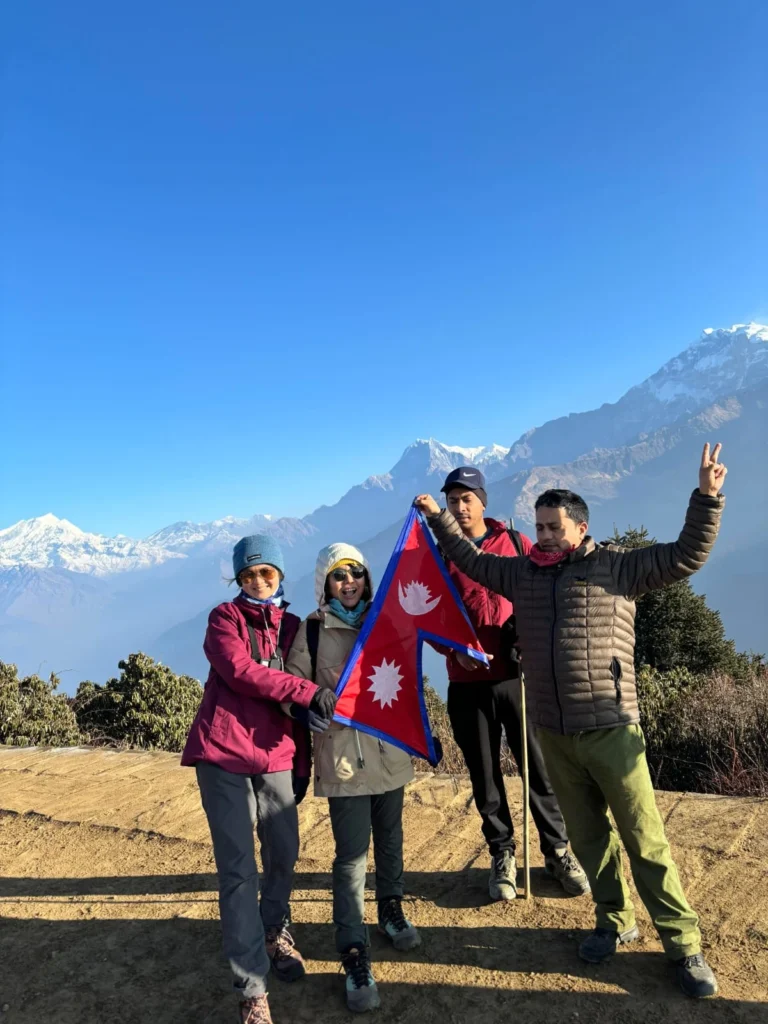
Frequently asked questions about Annapurna Hiking
1. What is the best Annapurna hike for beginners? Ghorepani Poon Hill. At a maximum of 3,210 m over four to five days, with comfortable teahouses and no serious altitude, it’s the standard first trek in the region. Khopra Ridge is a quieter alternative with similar views.
2. Do I need a guide to hike in the Annapurna region? Yes. Since April 2023 and fully enforced in 2026, foreign trekkers must have a licensed guide or porter-guide booked through a registered agency for all Annapurna routes. Independent solo trekking is no longer permitted here.
3. What permits do I need for Annapurna hiking? The ACAP (Annapurna Conservation Area Permit), about NPR 3,000 for foreign nationals, is required and strictly checked. A TIMS card technically exists but its enforcement on Annapurna trails is in flux in 2026; your operator will handle whatever is currently required.
4. How much does an Annapurna trek cost? Guided packages roughly run US$300–600 for Poon Hill, US$450–1,250 for Annapurna Base Camp, and US$800–2,500 for the Circuit, excluding international flights. On-trail extras add about US$25–50 a day.
5. How high do the Annapurna hikes go? Poon Hill reaches 3,210 m, Annapurna Base Camp 4,130 m, Mardi Himal about 4,500 m, and the Annapurna Circuit tops out at Thorong La pass, 5,416 m.
6. Which is better, Annapurna Base Camp or the Annapurna Circuit? ABC is shorter (7–12 days), lower, and focused on reaching one dramatic sanctuary. The Circuit is longer (12–18 days), higher, and about crossing changing landscapes over a big pass. Choose by how much time you have and whether you want a destination or a journey.
7. Is Annapurna hiking dangerous? The trails aren’t technical, so the main risks are altitude and weather rather than falls. Both are manageable with proper pacing, acclimatisation, a guide, and good travel insurance that covers high-altitude evacuation.
8. How fit do I need to be? Poon Hill suits anyone reasonably active. Mardi, ABC, and the Circuit ask for endurance — several hours of walking on steep, stepped ground day after day. Weeks of hill walking and stair training beforehand help more than raw fitness.
9. When is the best time for Annapurna hiking? Autumn (late September–November) for the clearest skies and stable weather, and spring (March–May) for warming temperatures and rhododendron blooms. Both are peak season; book early.
10. Can I do a short Annapurna hike in under a week? Yes. Poon Hill (4–5 days) and Mardi Himal (5–7 days) both fit inside a week, and short ABC itineraries can too. All start and end from Pokhara.
11. How do I get to the Annapurna trailheads? Almost everything starts from Pokhara — fly or drive there from Kathmandu, then take a short road transfer to the trailhead (Nayapul, Kimche, Kande, or Besisahar depending on the route).
12. What’s the altitude sickness risk on these treks? Risk begins above about 2,500 m and rises with altitude. Poon Hill is low enough to be a minor concern; ABC, Mardi, and especially the Circuit require gradual ascent and, higher up, keeping sleeping-altitude gains modest. Descend if symptoms worsen.
13. Where do I sleep and what do I eat on the trail? In family-run teahouses offering simple rooms and shared dining. Food centres on dal bhat plus noodles, potatoes, eggs, and momos — reliable and filling. Bring a water treatment method to refill instead of buying bottled water.
14. Can I combine two Annapurna routes in one trip? Yes. Poon Hill folds naturally into an ABC itinerary, and Mardi Himal pairs well with Poon Hill over nine to twelve days. Combining routes is a good way to see contrasting landscapes if you have the time.
15. How far in advance should I book? For spring and autumn, two to four months ahead is sensible — it secures teahouse space, guide availability, and often better rates before peak-season prices rise.
Conclusion to Annapurna Hiking
Hiking in the Annapurna region is less about finding “the best trek” than about finding the one that fits your days, your comfort with altitude, and the kind of landscape you came for. Poon Hill and Khopra Ridge open the door gently; Mardi Himal trades crowds for a quiet ridge; Annapurna Base Camp puts you inside a ring of giants; the Circuit carries you across the range into another world. Get the match right, respect the altitude, trek in the right season, and sort the permits and guide before you go, and the Annapurna region delivers some of the most rewarding walking anywhere in the Himalaya.
When you’re ready to turn a shortlist into a real plan, Wonder Hikes Nepal can help you choose the route that actually fits your trip and handle the logistics that now come with trekking here — so the only thing left to think about is the trail ahead.